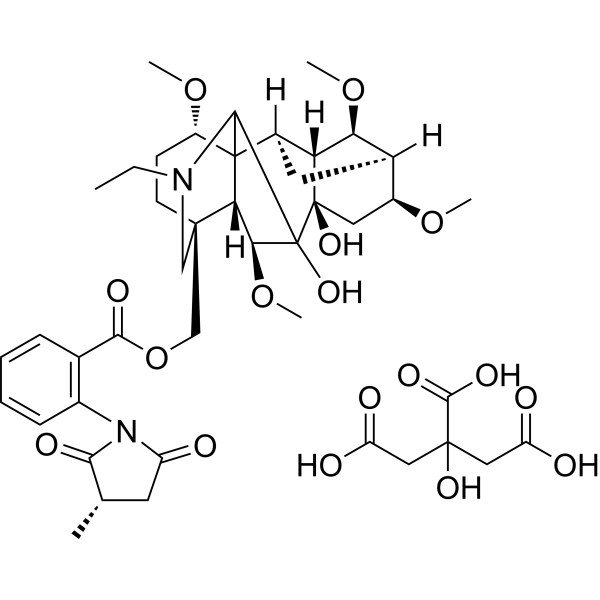
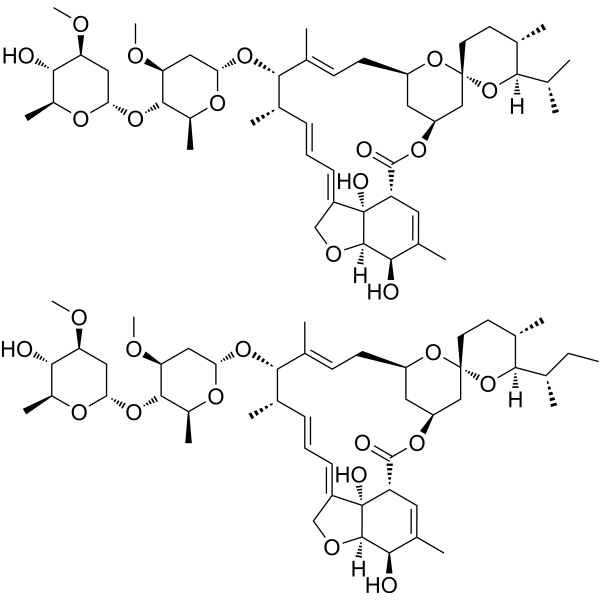
Delivery of temperature sensitive items including proteins and kits will be paused on 6/19 for the Juneteenth holiday. For urgent orders please contact customer service.
Varenicline (CP 526555) is an orally active partial agonist of α4β2 nicotinic acetylcholine receptor (α4β2 nAChR, IC50 = 250 nM), which is the principal mediator of nicotine dependence. Varenicline is also a partial agonist of α6β2 nAChR and a full agonist of α7β2 nAChR. Varenicline blocks the direct agonist effects of nicotine on nAChR while stimulates nAChR in a more moderate way, being widely used as an aid of smoking cessation [1] .
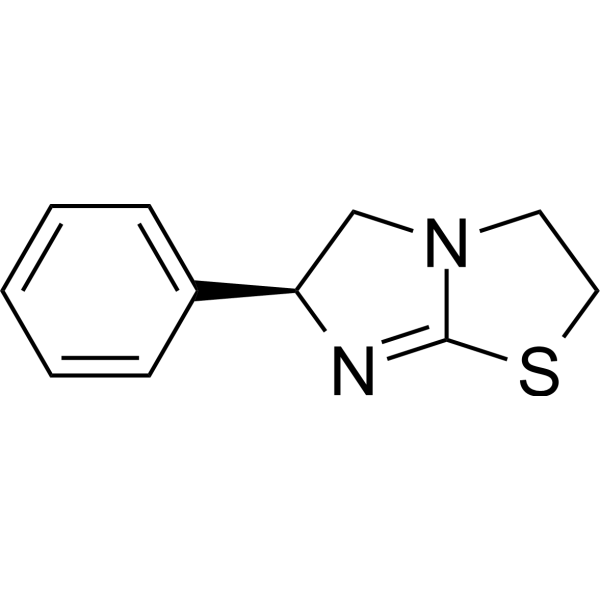
Levamisole ((-)-Levamisole), an anthelmintic agent with immunomodulatory properties. Levamisole acts as a positive allosteric modulator (PAM) for the α3β2 (EC50=300 μM) and α3β4 (EC50=100 μM) subtype of nAChRs. Orally active [1] .
Varenicline (CP 526555) is an orally active partial agonist of α4β2 nicotinic acetylcholine receptor (α4β2 nAChR, IC50 = 250 nM), which is the principal mediator of nicotine dependence. Varenicline is also a partial agonist of α6β2 nAChR and a full agonist of α6β2 nAChR. Varenicline blocks the direct agonist effects of nicotine on nAChR while stimulates nAChR in a more moderate way, being widely used as an aid of smoking cessation [1] .
Vecuronium (ORG NC 45) bromide is a non-depolarizing neuromuscular blocking agent that also acts as a nicotinic acetylcholine receptor (nAChR) inhibitor, a muscle relaxant, and can be used for pre-surgical anesthesia [1] .
Acetamiprid is a neonicotinoid insecticide used worldwide. Acetamiprid is a nicotinic acetylcholine receptor (nAChR) agonist, and is shown to be associated with neuromuscular and reproductive disorders [1] .
Adiphenine hydrochloride is a non-competitive inhibitor of nicotinic acetylcholine receptor (nAChR), with an IC50s of 1.9, 1.8, 3.7, and 6.3 μM for α1, α3β4, α4β2, and α4β4, respectively. Adiphenine hydrochloride has anticonvulsant effects [1] .
Cyproconazole is a triazole fungicide used to protect crops, fruits and vegetables against a wide range of fungal pathogens. Cyproconazole can cause hepatocellular adenomas and carcinomas in CD-1mice. Cyproconazole also exhibits low toxicity to zebrafish embryos and affects locomotor activity [1] .
6:2 Fluorotelomer alcohol (6:2 FTOH) is an orally active, blood-brain barrier-permeable modulator of cyclin D1 and ETS1. 6:2 Fluorotelomer alcohol downregulates cyclin D1 expression, upregulates ETS1 via the TNF-α/ERK 1/2 pathway, impairs mitochondrial membrane potential and respiratory function, increases reactive oxygen species levels, disrupts calcium homeostasis and activates endoplasmic reticulum stress markers, and induces cell proliferation inhibition and endothelial-mesenchymal transition. Furthermore, 6:2 Fluorotelomer alcohol induces morphological abnormalities in zebrafish embryos and liver developmental damage, while disrupting the brain immune microenvironment in mice, causing systemic toxicity and delayed pup maturation in CD-1mice. 6:2 Fluorotelomer alcohol also induces cortical neuron apoptosis, glial cell activation, synaptic abnormalities, colonic barrier damage, intestinal dysbiosis and autism spectrum disorder-like symptoms in mice. 6:2 Fluorotelomer alcohol shows no mutagenic, clastogenic, primary skin/eye irritation or skin sensitizing effects, exhibits no selective reproductive toxicity in CD-1mice, and is classified as GHS Category 4 for acute oral toxicity. 6:2 Fluorotelomer alcohol can be used in studies of neurodevelopmental disorders and autism spectrum disorders [1] .
Varenicline (CP 526555) is an orally active partial agonist of α4β2 nicotinic acetylcholine receptor (α4β2 nAChR, IC50 = 250 nM), which is the principal mediator of nicotine dependence. Varenicline is also a partial agonist of α6β2 nAChR and a full agonist of α6β2 nAChR. Varenicline blocks the direct agonist effects of nicotine on nAChR while stimulates nAChR in a more moderate way, being widely used as an aid of smoking cessation [1] .
Anabasine ((S)-Anabasine) is an alkaloid that found as a minor component in tobacco (Nicotiana). Anabasine is a botanical pesticide nicotine, acts as a full agonist of nicotinic acetylcholine receptors (nAChRs). Anabasine induces depolarization of TE671 cells endogenously expressing human fetal muscle-type nAChRs (EC50=0.7 μM) [1] .
Flupyradifurone is a systemic nAChR agonist that interferes with signal transduction in the central nervous system of sucking pests. Flupyradifurone can be used as a butenolide insecticide [1].
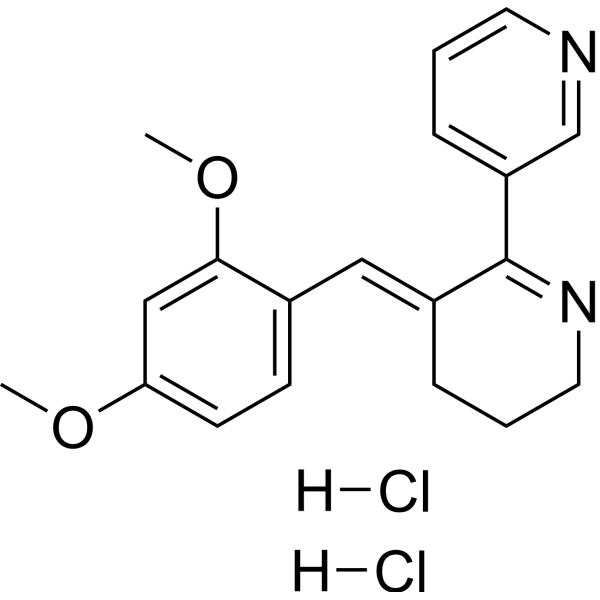
α7 nAchR-JAK2-STAT3 agonist 1 is a potent α7 nAchR-JAK2-STAT3 agonist, with an IC50 value of 0.32 μM for nitric oxide (NO). α7 nAchR-JAK2-STAT3 agonist 1 effectively suppresses the expression of iNOS, IL-1β, and IL-6 in murine RAW264.7 macrophages. α7 nAchR-JAK2-STAT3 agonist 1 can inhibit LPS-induced NO release, NF-κB activation and cytokine production. α7 nAchR-JAK2-STAT3 can be used for researching sepsis [1].
Varenicline (CP 526555-18) is an orally active partial agonist of α4β2 nicotinic acetylcholine receptor (α4β2 nAChR, IC50 = 250 nM), which is the principal mediator of nicotine dependence. Varenicline is also a partial agonist of α6β2 nAChR and a full agonist of α7β2 nAChR. Varenicline blocks the direct agonist effects of nicotine on nAChR while stimulates nAChR in a more moderate way, being widely used as an aid of smoking cessation [1] .
NS3861 is an agonist of nicotinic acetylcholine receptors (nAChRs) and binds with high affinity to heteromeric α3β4 nAChR. The binding Ki values of 0.62, 25, 7.8, 55 nM for α3β4, α3β2, α4β4, α4β2, respectively [1].
Pentapeptide-3 is a pentapeptide fragment of neurotoxin waglerin-1, it can be extracted from the venom of Temple Viper. Pentapeptide-3 is a competitive antagonist of nicotinic acetylcholine receptors (nAChRs), it can blocks nerves at the post-synaptic membrane. Pentapeptide-3 has anti-aging effects and it can be used together with other cosmetic peptides [1] .
Androgen receptor-IN-6 (compound 16) is an orally available androgen receptor (Androgen Receptor) potent inhibitor (IC50=0.12 μM in vitro), targeting the disordered N-terminal domain (NTD). Androgen receptor-IN-6 has good Caco2 cell membrane permeability and has an oral activity (F/%) of 16% in male CD-1mice[1].
5-Iodo-A-85380 dihydrochloride is a selective ligand of nAChR. 5-Iodo-A-85380 dihydrochloride binds to α4β2 nAChRs in rat and human brain with Kds of 12 and 14 pM,respectively [1].
Ispronicline (TC-1734), an orally active, brain-selective α4β2 nicotine acetylcholine receptor (nAChR) partial agonist, has shown memory-enhancing properties in rodents and a good tolerability profile. Ispronicline binds to the α4β2 nAChR with high affinity (Ki=11 nM) and is highly selective to other nAChRs such as α7 nAChR and α3β4 nAChR[1] .
Orphanin FQ(1-11), a orphanin FQ or nociceptin (OFQ/N) fragment, is a potent NOP receptor (ORL-1; OP4) agonist, with a Ki of 55 nM. Orphanin FQ(1-11) has no affinity for μ, δ, κ1 and κ3 receptors (Ki>1000 nM). Orphanin FQ(1-11) is analgesic in CD-1mice[1] .
A 85380 hydrochloride is a novel, high affinity neuronal nicotinic acetylcholine receptor (nAChR) agonist. A 85380 hydrochloride exhibits selectivity for the α4β2 nAChR subtypes. A 85380 hydrochloride has a broad-spectrum analgesic profile [1].
(±)-Pantothenic acid ((±)-Pantothenate), a B-vitamin, is an essential vitamin required for the biosynthesis of coenzyme A (CoA) in mammalian cells. Pantothenic acid has protective activity against valproic acid (VPA)-induced neural tube defects (NTD) in CD-1mice[1].
GZNL-P36 is an orally active inhibitor for SARS-CoV-2 papain-like protease (PL pro), with an IC50 of 6.45 nM. GZNL-P36 inhibits SARS-CoV and its variants with EC50 range from 58.2 nM to 2.66 μM. GZNL-P36 exhibits a peak plasma concentration Cmax of 549 ng/mL, a half-life T1/2 of 1.45 h and a bioavailability of 74.7% in CD-1 mouse. GZNL-P36 exhibits antiviral activity in SARS-CoV-2 XXB.1 infection in mouse [1].
bPiDI is a novel selectiveα6β2 nicotinic receptor antagonist. bPiDI inhibits nicotine-evoked striatal dopamine (DA) release through an interaction with α6β2-containing nAChRs[1].
Anti-Mouse CD1d Antibody (19G11) is a rat-derived IgG1 type antibody inhibitor, targeting to mouse CD1d. Anti-Mouse CD1d Antibody (19G11) can neutralize CD1d and inhibit the activation of invariant natural killer T (iNKT) cells. Anti-Mouse CD1d Antibody (19G11) can be used for the researches of inflammation and immunology, such as colitis [1] .
nAChR agonist 1 is a potent, blood-brain-barrier-permeable, and orally active allosteric modulator of α7 nicotinic acetylcholine receptor (α7 nAChR). nAChR agonist 1 has the EC50 of 0.32 μM in a Ca 2+ mobilization assay (PNU-282987-induced, FLIPR based) in human IMR-32 neuroblastoma cells that endogenously express α7 nAChR. nAChR agonist 1 can be develpoped for the treatment of Alzheimer’s disease [1].
(R)-α7 nAchR-JAK2-STAT3 agonist 1 is the R-enantiomer of α7 nAchR-JAK2-STAT3 agonist 1 (HY-146066). α7 nAchR-JAK2-STAT3 agonist 1 is a potent α7 nAchR-JAK2-STAT3 agonist, with an IC50 value of 0.32 μM for nitric oxide (NO). α7 nAchR-JAK2-STAT3 agonist 1 effectively suppresses the expression of iNOS, IL-1β, and IL-6 in murine RAW264.7 macrophages. α7 nAchR-JAK2-STAT3 agonist 1 can inhibit LPS-induced NO release, NF-κB activation and cytokine production. α7 nAchR-JAK2-STAT3 can be used for researching sepsis [1].
Cyproconazole (Standard) is the analytical standard of Cyproconazole. This product is intended for research and analytical applications. Cyproconazole is a triazole fungicide used to protect crops, fruits and vegetables against a wide range of fungal pathogens. Cyproconazole can cause hepatocellular adenomas and carcinomas in CD-1mice. Cyproconazole also exhibits low toxicity to zebrafish embryos and affects locomotor activity [1] .
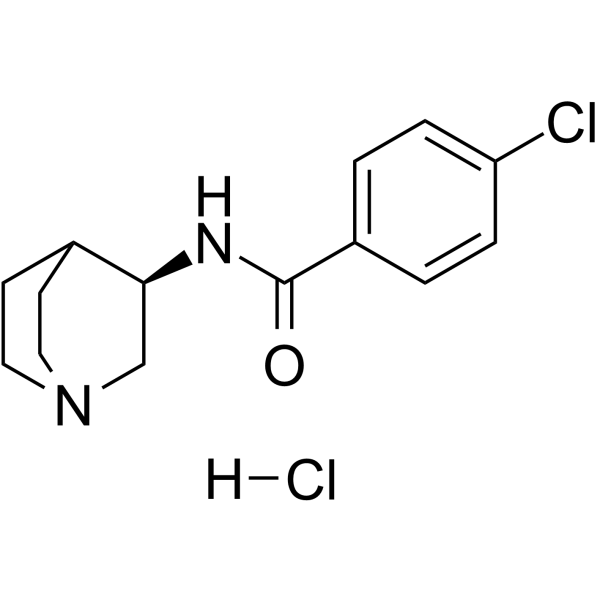
(Rac)-CP-601927 hydrochloride is the racemate of CP-601927. CP-601927 is a nAChR agonist with Ki values 1.2 nM and 102 nM for α4β2 and α3β4 nAChR, respectively [1].
Flupyrimin is the antagonist for insect nicotinic acetylcholine receptor (nAChR) that exhibits insecticidal effect by targeting insect nervous system [1] .
ABT-418 hydrochloride is a potent and selective agonist of nAChRs with cognitive enhancing and anxiolytic activities. ABT-418 hydrochloride activates cholinergic channel and can be used for research of Alzheimer's disease [1] .
NS3861 fumarate is an agonist of nicotinic acetylcholine receptors (nAChRs) and binds with high affinity to heteromeric α3β4 nAChR. The binding Ki values of 0.62, 25, 7.8, 55 nM for α3β4, α3β2, α4β4, α4β2, respectively [1].
Acetamiprid-N-desmethyl- 13C,d3 is the 13C and deuterium labeled isotope of Acetamiprid-N-desmethyl( 13C,d3)(HY-B0823).Acetamiprid is a nAChR agonist that has been implicated in neuromuscular and reproductive disorders.
F4-Trp (4,5,6,7-Tetrafluoro-L-tryptophan) is a ligand targeting the α3β4 nicotinic acetylcholine receptor (α3β4 nAChR). F4-Trp is promising for research of neurotransmission, addiction, and related diseases, such as neurological diseases [1].
AChE/nAChR-IN-1 (Compound 1a) is dual-functional inhibitor of AChE and nAChR. AChE/nAChR-IN-1 has potent toxicity and larvicidal effectiveness against Culex pipiens larvae with a LC50 of 4 ng/mL. AChE/nAChR-IN-1 can be used as larvicides for mosquito-borne diseases research [1].
nAChR-IN-1 (2,2,6,6-Tetramethylpiperidin-4-yl heptanoate) is a tetramethylpiperidine heptanoate, a selective nicotinic acetylcholine receptor(nAChR) inhibitor that inhibits nAChRs lacking α5, α6, or β3 subunits. nAChR-IN-1 has the effect of preventing nerve disorder, can be used for nicotinic acetylcholine receptor dysfunction or neurological disorders research [1].
Orphanin FQ(1-11) TFA, a orphanin FQ or nociceptin (OFQ/N) fragment, is a potent NOP receptor (ORL-1; OP4) agonist, with a Ki of 55 nM. Orphanin FQ(1-11) TFA has no affinity for μ, δ, κ1 and κ3 receptors (Ki>1000 nM). Orphanin FQ(1-11) TFA is analgesic in CD-1mice[1] .
WYE-103914 is an orally active α7 nAChR (EC50 = 0.49 µM for rat α7 nAChR, EC50 = 0.57 µM for human α7 nAChR) agonist. WYE-103914 exhibits the ability to enhance memory in multiple cognitive models. WYE-103914 is used in combination with antipsychotic drugs. WYE-103914 can be used for research on schizophrenia [1].
Varenicline (Tartrate) (Standard) is the analytical standard of Varenicline (Tartrate). This product is intended for research and analytical applications. Varenicline (CP 526555) is an orally active partial agonist of α4β2 nicotinic acetylcholine receptor (α4β2 nAChR, IC50 = 250 nM), which is the principal mediator of nicotine dependence. Varenicline is also a partial agonist of α6β2 nAChR and a full agonist of α6β2 nAChR. Varenicline blocks the direct agonist effects of nicotine on nAChR while stimulates nAChR in a more moderate way, being widely used as an aid of smoking cessation [1] .
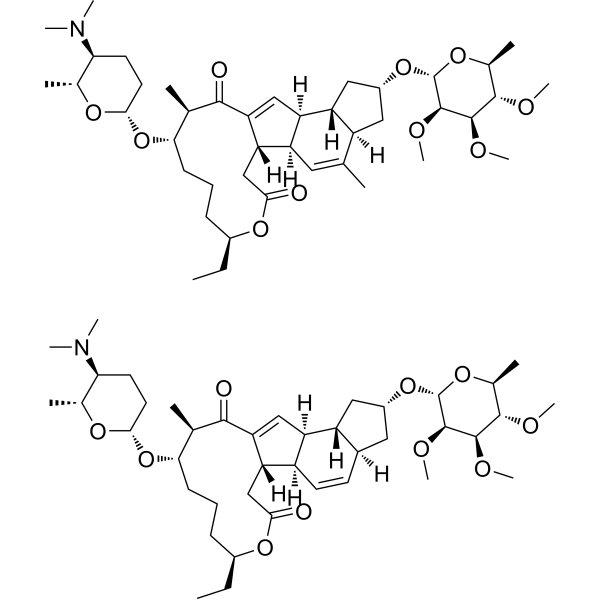
Spinosyn L is a selective nicotinic acetylcholine receptors (nAChR) agonist. Spinosyn L causes sustained neural excitation and paralysis in insects. Spinosyn L is promising for research of pesticides for controlling Lepidoptera, Diptera, and other agricultural pests [1].
Acetamiprid (Standard) is the analytical standard of Acetamiprid. This product is intended for research and analytical applications. Acetamiprid is a neonicotinoid insecticide used worldwide. Acetamiprid is a nicotinic acetylcholine receptor (nAChR) agonist, and is shown to be associated with neuromuscular and reproductive disorders [1] .
nAChR agonist CMPI hydrochloride is a potent and selective positive allosteric modulator (PAM) of nAChR containing a α4:α4 subunit interface. nAChR agonist CMPI hydrochloride enhances the response of (α4)3(β2)2nAChR to ACh (10 µM) with an EC50 of 0.26 µM. nAChR agonist CMPI hydrochloride has potential for the research of nicotine dependence and many neuropsychiatric conditions associated with decreased brain cholinergic activity [1] .
nAChR antagonist 1 (compound B15) is an excellent α7 nAChR antagonist with an IC50 value of 3.3 μM. nAChR antagonist 1 can be used for researching schizophrenia, Alzheimer’s disease and inflammatory disorders [1].
α7 nAChR modulator-3 (Compound 6p) is a α7 nAChR positive allosteric Modulator with a IC50 value of 1.3 μM. α7 nAChR Modulator-3 can be used to inhibit auditory gating defects in a mouse schizophrenic model [1].
WRN inhibitor 10 (Compound P24) is an inhibitor for the Werner helicase WRN with an IC50 of 1.1 nM. WRN inhibitor 10 inhibits the proliferation of cancer cell SW48 with IC50 of 39 nM. WRN inhibitor 10 exhibits good liver microsomal stability and film permeability. WRN inhibitor 10 exhibits good pharmacokinetic characteristics in CD-1mice[1].
Menin–KMT2A-IN-1 (Compound 20) is the inhibitor for menin–KMT2A that binds to menin with an IC50 of 8 nM, and inhibits the interaction between menin and lysine methyltransferase 2A (KMT2A). Menin–KMT2A-IN-1 inhibits hERG with an IC50 of 65 μM. Menin–KMT2A-IN-1 inhibits cell MV4-11 with an IC50 of 74 nM. Menin–KMT2A-IN-1 exhibits good pharmacokinetic characteristics in CD-1 mouse with an orally bioavailability of 74% [1].
nAChR-IN-1 (hydrochloride) is a tetramethylpiperidine heptanoate, a selective nicotinic acetylcholine receptor(nAChR) inhibitor that inhibits nAChRs lacking α5, α6, or β3 subunits. nAChR-IN-1 has the effect of preventing nerve disorder, can be used for nicotinic acetylcholine receptor dysfunction or neurological disorders research [1].
Influenza A virus-IN-14 (Compound 37) is an inhibitor for influenza virus type A (IAV), which inhibits H1N1 with an EC50 of 23 nM. Influenza A virus-IN-14 exhibits low cytotoxicity with CC50 of more than 100 μM. Influenza A virus-IN-14 inhibits cytopathic effect and improves the survival rates of cell Calu3. Influenza A virus-IN-14 exhibits synergistic activity with the neuraminidase inhibitor Oseltamivir (HY-13317). Influenza A virus-IN-14 exhibits poor pharmacokinetic properties in CD-1 mouse [1].
PRMT5-MTA-IN-1 (Compound A9a) is an inhibitor for protein arginine methyltransferase PRMT5-MTA. PRMT5-MTA-IN-1 inhibits the proliferation of colorectal cancer cell HCT116 wildtype and MTAP del mutant, with an IC50 of 16 nM and 2.47 μM. PRMT5-MTA-IN-1 exhibits good liver microsomal stability and film permeability. PRMT5-MTA-IN-1 exhibits good pharmacokinetic characteristics in CD-1mice[1].
NAB815 is a specific inhibitor of the Stx2a (Kd = 0.01 μM)/TLR4 interaction. NAB815 inhibits the neutrophil/Stx2a interaction (IC50 = 0.057 μg/mL). NAB815 inhibits the formation of Stx2-containing extracellular vesicles (EVs) produced by leukocytes and platelets and reduces their toxic effects in cellular (Vero cells) and animal models (CD-1mice). NAB815 reduces bacterial loads in the kidneys, urine, and bladders of Escherichia coli-infected mice. NAB815 is useful in the study of hemolytic uremic syndrome (HUS) [1] .
α7 nAChR Modulator-2 (Compound 7b) is a α7 nAChR positive allosteric modulator (PAM) with an EC50 of 2.1 μM. α7 nAChR Modulator-2 can be used for the research of cognitive disorders [1].
Antiproliferative agent-53-d3 (Compound C1) is an inhibitor for theta-mediated end joining (TMEJ) in HEK293 cell with an IC50 of 0.14 µM. Antiproliferative agent-53-d3 is the inhibitor for CYP2C19 and CYP2C9 with IC50 of 0.77 and 3.1 µM. Antiproliferative agent-53-d3 inhibits the proliferation of DNA repair-compromised cells, with IC50 of 8.1 µM for BRCA2 -/-DLD-1. Antiproliferative agent-53-d3 exhibits good pharmacokinetic characteristics in CD-1mice[1].
Levamisole (Standard) is the analytical standard of Levamisole. This product is intended for research and analytical applications. Levamisole ((-)-Levamisole), an anthelmintic agent with immunomodulatory properties. Levamisole acts as a positive allosteric modulator (PAM) for the α3β2 (EC50=300 μM) and α3β4 (EC50=100 μM) subtype of nAChRs. Orally active [1] .
KR31173 is an AT1 antagonist with an IC50 of 3.27 nM. KR31173 can be used as a positron emission tomography (PET) tracer after being labeled with 11C isotope. KR31173 shows promising biodistribution and pharmacological properties in mice. KR31173 selectively binds to organs known to contain a high density of AT1 angiotensin receptors in CD-1mice[1].
Anabasine ((S)-Anabasine) hydrochloride is an alkaloid that found as a minor component in tobacco (Nicotiana). Anabasine is a botanical pesticide nicotine, acts as a full agonist of nicotinic acetylcholine receptors (nAChRs). Anabasine induces depolarization of TE671 cells endogenously expressing human fetal muscle-type nAChRs (EC50=0.7 µM) [1] .
Varenicline (Standard) is the analytical standard of Varenicline. This product is intended for research and analytical applications. Varenicline (CP 526555) is an orally active partial agonist of α4β2 nicotinic acetylcholine receptor (α4β2 nAChR, IC50 = 250 nM), which is the principal mediator of nicotine dependence. Varenicline is also a partial agonist of α6β2 nAChR and a full agonist of α7β2 nAChR. Varenicline blocks the direct agonist effects of nicotine on nAChR while stimulates nAChR in a more moderate way, being widely used as an aid of smoking cessation [1] .
Varenicline (dihydrochloride) (Standard) is the analytical standard of Varenicline (dihydrochloride). This product is intended for research and analytical applications. Varenicline (CP 526555-18) is an orally active partial agonist of α4β2 nicotinic acetylcholine receptor (α4β2 nAChR, IC50 = 250 nM), which is the principal mediator of nicotine dependence. Varenicline is also a partial agonist of α6β2 nAChR and a full agonist of α7β2 nAChR. Varenicline blocks the direct agonist effects of nicotine on nAChR while stimulates nAChR in a more moderate way, being widely used as an aid of smoking cessation [1] .
Varenicline (Hydrochloride) (Standard) is the analytical standard of Varenicline (Hydrochloride). This product is intended for research and analytical applications. Varenicline (CP 526555) is an orally active partial agonist of α4β2 nicotinic acetylcholine receptor (α4β2 nAChR, IC50 = 250 nM), which is the principal mediator of nicotine dependence. Varenicline is also a partial agonist of α6β2 nAChR and a full agonist of α6β2 nAChR. Varenicline blocks the direct agonist effects of nicotine on nAChR while stimulates nAChR in a more moderate way, being widely used as an aid of smoking cessation [1] .
Varenicline- 15N, 13C,d2 is 15N and deuterated labeled Varenicline (HY-10019). Varenicline (CP 526555) is an orally active partial agonist of α4β2 nicotinic acetylcholine receptor (α4β2 nAChR, IC50=250 nM), which is the principal mediator of nicotine dependence. Varenicline is also a partial agonist of α6β2 nAChR and a full agonist of α7β2 nAChR. Varenicline blocks the direct agonist effects of nicotine on nAChR while stimulates nAChR in a more moderate way, being widely used as an aid of smoking cessation [1] .
DPNB-ABT594 is a nitrobenzyl-caged ABT594 (HY-14316A) and activates nAChRs containing the α4β2 subunits with good selectivity than the α7 subunit. DPNB-ABT594 can be used to map the distribution of nAChRs on neurons of the medial habenula (MHb) and helps to gain a deeper understanding of the nAChR-mediated Ca 2+ signalling in the MHb [1].
Spinosyn J is a non-competitive insect nicotinic acetylcholine receptor (nAChR) and γ-aminobutyric acid (GABA) receptor modulator with insecticidal activity. Spinosyn J is promising for research of agricultural pests [1].
Flupyrimin (Standard) is the analytical standard of Flupyrimin. This product is intended for research and analytical applications. Flupyrimin is the antagonist for insect nicotinic acetylcholine receptor (nAChR) that exhibits insecticidal effect by targeting insect nervous system [1] .
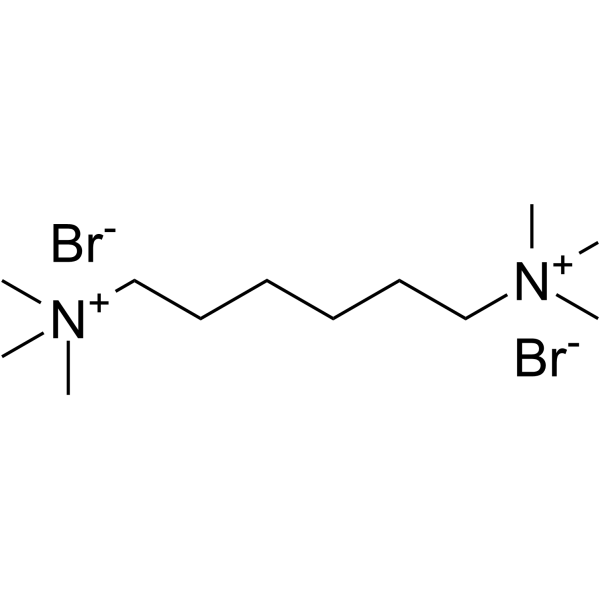
Benzoquinonium dibromide is a nicotinic acetylcholine receptors (nAChRs) antagonist, with an IC50 of 0.46 μM. Benzoquinonium dibromide can block neuromuscular and ganglionic transmission [1] .
A 844606 is a highly potent and selective α4β2 nAChR agonist. A 844606 can be used in the study of schizophrenia, Huntington's disease, Alzheimer's disease, and Parkinson's disease [1].
Anabasine (Standard) is the analytical standard of Anabasine. This product is intended for research and analytical applications. Anabasine ((S)-Anabasine) is an alkaloid that found as a minor component in tobacco (Nicotiana). Anabasine is a botanical pesticide nicotine, acts as a full agonist of nicotinic acetylcholine receptors (nAChRs). Anabasine induces depolarization of TE671 cells endogenously expressing human fetal muscle-type nAChRs (EC50=0.7 μM) [1] .
3-Pyr-Cytisine (3-Pyr-Cyt) is a cytisine derivative. 3-Pyr-Cytisine is a very weak α4β2 nAChR partial agonist that has been studied as an antidepressant [1].
Cd1a is a β-toxin derived from the African spider Ceratogyrus darlingi. Cd1a can regulate calcium ion channels. Cd1a inhibits human calcium ion channels (Cav2.2)(IC502.6 μM) and mouse sodium ion channels (Nav1.7).Cd1a can be used in the development of peripheral pain treatment drugs [1].
Anti-CD1a Antibody (OKT-6) is an anti-human CD1a IgG1 monoclonal antibody. Anti-CD1a Antibody (OKT-6) blocks T cell activation by blocking CD1a function. Anti-CD1a Antibody (OKT-6) can reduce the production of IFN-γ. Anti-CD1a Antibody (OKT-6) can be used for researches on cancer and inflammation such as leukemia. The recommend isotype control of Anti-CD1a Antibody (OKT-6): Mouse IgG1 kappa, Isotype Control (HY-P99977) [1] .
(rel)-Asperparaline A ((rel)-Aspergillimide), an anthelmintic metabolite, is isolated from okara that has been fermented with Aspergillus japonicas JV-23. (rel)-Asperparaline A is also a potent and selective antagonist of nAChR. (rel)-Asperparaline A exhibits paralytic activity in silk worms [1] .
Varenicline-d4 hydrochloride is a deuterium labeled Varenicline (dihydrochloride) (HY-10019A) [1]. Varenicline (CP 526555) dihydrochloride is a potent partial agonist for α4β2 nicotinic acetylcholine receptor (nAChR) with an EC50 value of 2.3 μM. Varenicline dihydrochloride is a full agonist for α3β4 and α7 nAChRs with EC50 values of 55 μM and 18 μM, respectively . Varenicline dihydrochloride is a nicotinic ligand based on the structure of cytosine, and has the potential for smoking cessation treatment .
Adiphenine is a non-competitive inhibitor of nicotinic acetylcholine receptor (nAChR), with an IC50s of 1.9, 1.8, 3.7, and 6.3 μM for α1, α3β4, α4β2, and α4β4, respectively. Adiphenine has anticonvulsant effects [1] .
SIB 1663 is a conformationally restricted analog of nicotine. SIB-1663 selectively activatedα2β4 and α4β4 human recombinant neuronal nAChRs. SIB 1663 can increase DA and NE release. SIB 1663 can be used for the research of neurological disease [1].
Adiphenine (hydrochloride) (Standard) is the analytical standard of Adiphenine (hydrochloride). This product is intended for research and analytical applications. Adiphenine hydrochloride is a non-competitive inhibitor of nicotinic acetylcholine receptor (nAChR), with an IC50s of 1.9, 1.8, 3.7, and 6.3 μM for α1, α3β4, α4β2, and α4β4, respectively. Adiphenine hydrochloride has anticonvulsant effects [1] .
CD1A Human Pre-designed siRNA Set A contains three designed siRNAs for CD1A gene (Human), as well as a negative control, a positive control, and a FAM-labeled negative control.
Insecticidal agent 21 (Compound 6) is an insecticide that is effective against Culex pipiens larvae (LC50: 0.4 μg/mL). Insecticidal agent 21 achieves multi-target neurotoxicity by inhibiting acetylcholinesterase (AChE) and simultaneously targeting other neural receptors (nicotinic acetylcholine receptors (nAChR), voltage-gated sodium channels (VGSC), and γ-aminobutyric acid receptors (GABAAR)). Insecticidal agent 21 has a strong insecticidal effect and can be used in the development of new insecticides to address the problem of mosquito resistance to traditional insecticides [1].
CD1C Human Pre-designed siRNA Set A contains three designed siRNAs for CD1C gene (Human), as well as a negative control, a positive control, and a FAM-labeled negative control.
CD1D Human Pre-designed siRNA Set A contains three designed siRNAs for CD1D gene (Human), as well as a negative control, a positive control, and a FAM-labeled negative control.
CD1B Human Pre-designed siRNA Set A contains three designed siRNAs for CD1B gene (Human), as well as a negative control, a positive control, and a FAM-labeled negative control.
CD1E Human Pre-designed siRNA Set A contains three designed siRNAs for CD1E gene (Human), as well as a negative control, a positive control, and a FAM-labeled negative control.
Vecuronium (bromide) (Standard) is the analytical standard of Vecuronium (bromide). This product is intended for research and analytical applications. Vecuronium (ORG NC 45) bromide is a non-depolarizing neuromuscular blocking agent that also acts as a nicotinic acetylcholine receptor (nAChR) inhibitor, a muscle relaxant, and can be used for pre-surgical anesthesia [1] .
Anti-Mouse CD1d Antibody (20H2 (HB323)) is a rat-derived IgG1 κ type antibody inhibitor, targeting to mouse CD1d. Anti-Mouse CD1d Antibody (20H2 (HB323)) can block CD1d and neutralize invariant natural killer
T (iNKT) cells. Anti-Mouse CD1d Antibody (20H2 (HB323)) can be used for the researches of cancer, infection, inflammation and immunology, such as melanoma, L. monocytogenes infection and arthritis [1] .
nAChR antagonist 3 is a selective α7 nAChR antagonist with an IC50 of 0.86 μM. nAChR antagonist 3 exerts a protective effect against paraoxon-induced toxicity. nAChR antagonist 3 can be used for the research of organophosphate poisoning [1].
nAChR antagonist 2 is a selective nAChR antagonist. nAChR antagonist 2 inhibits nAChR subtype including hα9α10, hα9, and hα7 with IC50 values of 16.0 nM, 26.2 nM, and 336.3 nM, respectively, in Xenopus oocytes. nAChR antagonist 2 suppresses ATP-induced IL-1β release at nanomolar concentrations. nAChR antagonist 2 can be used for nonopioid analgesics and immunomodulators research [1].
nAChR-IN-2 (Compound 2) is an inhibitor of insect nicotinic acetylcholine receptors (nAChR).nAChR-IN-2 inhibits the binding of α-bungarotoxin (HY-P1264) to the ACh site of insect nAChR in honeybee heads, with an IC50 of 360 μM. nAChR-IN-2 also inhibits the binding of Phencyclidine to the NCB/PCP site of insect nAChR in honeybee heads, with an IC50 of 84 μM [1].
α7 nAChR Modulator-4 is a positive allosteric modulator of α7 nAChR, with an EC50 of 910 nM. α7 nAChR Modulator-4 interacts with α7 nAChR to trigger downstream effects associated with inflammatory regulation. α7 nAChR Modulator-4 can be used in the research of Alzheimer's disease, Parkinson's disease and schizophrenia [1].
Anti-CD1d Antibody (D5) reacts with the human CD1d. CD1d belongs to the cluster of differentiation 1 (CD1) family of glycoproteins. Recommend Isotype Controls: Mouse IgG2b kappa, Isotype Control (HY-P99982) [1].
nAChR modulator-3 (Compound II-08) is a Mpα1/ratβ2 binder (EC50: 0.111 μM) and Mpα1/ratβ2 modulator. nAChR modulator-3 exhibits aphicidal activity and Mpα1/ratβ2 sensibility. nAChR modulator-3 exhibits a certain control efficacy against M. persicae[1].
PAM-2 is a potent, orally active, CNS-penetrant selective α7 nAChR positive allosteric modulator (human α7 nAChR EC50: 39 μM, rat α7 nAChR EC50: 12 μM) with anti-nociceptive and anti-inflammatory activity. PAM-2 exhibits selectivity over α9α10 nAChR(IC50 = 174 μM) and CaV2.2 channel (IC50 = 89 μM). PAM-2 decreases Streptozotocin (STZ) (HY-13753)- and Oxaliplatin (HY-17371)-inducned nuroparhic pain in mice by α7 nAChR potentiation. PAM-2 can be used for the research of neuropathic pain [1].
Insecticidal agent 25 (Compound WZ18) is an insecticide targeting the nicotinic acetylcholine receptors (nAChRs) in insect nervous systems. Insecticidal agent 25 disrupts neurotransmission by competitively binding to nAChRs, leading to insect paralysis and death [1].
Mr1.1[S4Dap, C16Pen] is a highly active and selective nAChR (human α9α10 nAChRIC50 = 4.0 nM, rat α9α10 nAChRIC50 = 2.7 nM) inhibitor. Mr1.1[S4Dap, C16Pen] can significantly relieve pain and has significant stability. Mr1.1[S4Dap, C16Pen] can be used for the study of neuropathic pain [1].
ABT-418 hydrochloride (Standard) is the analytical standard of ABT-418 hydrochloride (HY-105170B). This product is intended for research and analytical applications. ABT-418 hydrochloride is a potent and selective agonist of nAChRs with cognitive enhancing and anxiolytic activities. ABT-418 hydrochloride activates cholinergic channel and can be used for research of Alzheimer's disease [1] .
AT 1001 is an orally effective α3β4 nicotinic acetylcholine receptor (α3β4 nAChR) antagonist with a Ki value of 2.64 nM. AT 1001 reversibly blocks Epibatidine (HY-101078)-induced inward currents in HEK cells transfected with α3β4 nAChR. AT 1001 dose-dependently blocks nicotine self-administration behavior in rats, alleviates gluten-induced gastrointestinal symptoms, blocks tight junction toxin-induced immune responses, and reduces the incidence of type 1 diabetes in rats. AT 1001 can be used in the research of nicotine addiction and celiac disease [1] .
Microgrewiapine A is an antagonist of nAChR. Microgrewiapine A inhibits hα4β2 and hα3β4 activity with 60% and 70% inhibition, respectively. Microgrewiapine A has selective cytotoxic against HT-29 human colon cancer cells with an IC50 of 6.8 μM [1].
PHA-543613 hydrochloride is an oral or active α7 nAChR agonist with brain permeability, For α3β4, α1β1γδ, α4β2 and 5-HT3 receptors selective. PHA-543613 hydrochloride affects sensory gating and memory in an in vivo model of schizophrenia [1][1].
Anti-Mouse CD1d Antibody (1B1) is an antibody targeting mouse CD1d (Kd=12.5 nM). By inserting into the lipid-binding groove of CD1d, Anti-Mouse CD1d Antibody (1B1) overlaps with the binding sites of type I and type IINKT cell receptors (TCR), thereby effectively blocking TCR-mediated interactions. Anti-Mouse CD1d Antibody (1B1) activates antigen-presenting cells such as dendritic cells and macrophages, induces them to release IL-12p70, and increases the levels of key cytokines including IL-12, IFN-γ and IFN-α in mouse serum. Anti-Mouse CD1d Antibody (1B1) can be used in studies related to renal cancer, breast cancer and colon adenocarcinoma. When combined with anti-DR5 or anti-CD137 antibodies and chemotherapeutic drugs, Anti-Mouse CD1d Antibody (1B1) exhibits significant tumor inhibitory and even eradication effects in mice[1] .
AR-R17779 hydrochloride is a potent and selective full agonist of nAChR, with Kis of 92 and 16000 nM for α7 and α4β2 subtype, respectively. AR-R17779 hydrochloride can improve learning and memory in rats. AR-R17779 hydrochloride also has anxiolytic activity. AR-R17779 hydrochloride can reduce inflammation by activating antiinflammatory cholinergic (vagal) pathways [1] .
TC299423 is an orally active, brain-penetrant, selective and potent agonist for α6β2 ? and α4β2 ? nicotinic acetylcholine receptors (nAChRs) with anxiolytic and antinociceptive properties. TC299423 acts primarily through α6β2 ?nAChRs that are implicated in the anxiolytic effects of nicotine. TC299423 elicits reward-related behavior mediated through α6β2 ?nAChRs in hypersensitive α6L90’S mice. TC299423 elicits dopamine release and dose not suppress nicotine self-administration in rats. TC299423 is proming for rasearch of addiction and Parkinson’s disease [1] .
Flupyradifurone (Standard) is the analytical standard of Flupyradifurone. This product is intended for research and analytical applications. Flupyradifurone is a systemic nAChR agonist that interferes with signal transduction in the central nervous system of sucking pests. Flupyradifurone can be used as a butenolide insecticide [1].
RO5126946 is a selective, orally active α7 nAChR allosteric potentiator with EC50 values of 0.06 μM (hα7 nAChR) and 770 nM (α7 nAChR), and it crosses the blood-brain barrier. RO5126946 enhances synaptic transmission and positively modulates GABA-ergic responses by increasing peak current, slowing current decay, and elevating the frequency of spontaneous inhibitory postsynaptic currents, without affecting the recovery of receptors from the desensitized state. RO5126946 not only enhances subthreshold nicotine effects and improves associative learning, but also does not interfere with the original pro-cognitive effects of nicotine. RO5126946 can be used to study cognitive impairments associated with diseases such as Alzheimer's disease and schizophrenia [1].
Catestatin is a 21-amino acid residue, cationic and hydrophobic peptide. Catestatin is an endogenous peptide that regulates cardiac function and blood pressure [1]. Catestatin is a non-competitive nicotinic antagonist acting through nicotinic acetylcholine receptors (nAChRs) to inhibit catecholamine release .
(-)-(S)-B-973B is an allosteric activator of α7 nicotinic acetylcholine receptor (α7 nAChR). (-)-(S)-B-973B alleviates pain behaviors. (-)-(S)-B-973B can be used for the research of inflammatory pain [1].
Bradanicline (TC-5619) tosylate is an orally active agonist of α7 nAChR with moderate blood-brain barrier penetration. Bradanicline tosylate exhibits high affinity and subtype selectivity for human α7 nAChR. Bradanicline tosylate possesses antitussive activity that depends on sustained receptor binding and activation. Bradanicline tosylate requires systemic administration to dose-dependently inhibit cough induced by citric acid, bradykinin and inhaled nicotine. Bradanicline tosylate is well tolerated in preclinical studies and is widely used in research related to chronic refractory cough [1].
Catestatin TFA is a 21-amino acid residue, cationic and hydrophobic peptide. Catestatin TFA is an endogenous peptide that regulates cardiac function and blood pressure [1]. Catestatin TFA is a non-competitive nicotinic antagonist acting through nicotinic acetylcholine receptors (nAChRs) to inhibit catecholamine release .
BNC375 is a potent, selective, and orally available type I positive allosteric modulator of α7 nAChRs with an EC50 of 1.9 μM. BNC375 exhibits good CNS-agent like properties and clinical candidate potential. [1].
JWX-A0108 is a selective human α7 nAChR positive allosteric modulator with an EC50 of 4.35 μM. JWX-A0108 potentiates α7 nAChR currents only in the presence of acetylcholine, with no direct activating effect or alteration of desensitization. JWX-A0108 enhances hippocampal GABAergic synaptic transmission by increasing spontaneous inhibitory postsynaptic currents. JWX-A0108 reduces the brain expression levels of IL-1β, TNF-α, and IL-6 by blocking the NF-κB signaling pathway, and reduces microglial activation by downregulating Iba1. JWX-A0108 effectively improves cognitive deficits, neuroinflammation, and hippocampal neuronal damage in mouse models of schizophrenia and Alzheimer's disease. JWX-A0108 can be used for research related to schizophrenia and Alzheimer's disease [1] .
A-582941 dihydrochloride is a selective, orally active, blood-brain barrier-permeable α7 nAChR agonist, with Ki values of 10.8 nM and 17 nM in rat brain and human frontal cortex, respectively. A-582941 dihydrochloride exhibits agonistic activity at 5-HT3 receptors, with a Ki of 150 nM. A-582941 dihydrochloride triggers phosphorylation of ERK1/2 and CREB, inhibits GSK-3β via Ser-9 phosphorylation, increases acetylcholine release, induces the expression of Arc and c-Fos, activates brain regions associated with working memory and attention, and reduces cell death caused by nerve growth factor (NGF) deprivation. A-582941 dihydrochloride is applicable for the research of Alzheimer's disease and schizophrenia [1] .
Azemiopsin is a potent nicotinic acetylcholine receptor (nAChR) inhibitor with IC50s of 0.18 μM and 22 μM against T. californicanAChR and human α7 nAChR, respectively. Azemiopsin blocks acetylcholine-induced currents in Xenopus oocytes heterologously expressing human muscle-type nAChR[1].
A-582941 is a selective, orally active, blood-brain barrier-permeable α7 nAChR agonist, with Ki values of 10.8 nM and 17 nM in rat brain and human frontal cortex, respectively. A-582941 exhibits agonistic activity at 5-HT3 receptors, with a Ki of 150 nM. A-582941 triggers phosphorylation of ERK1/2 and CREB, inhibits GSK-3β via Ser-9 phosphorylation, increases acetylcholine release, induces the expression of Arc and c-Fos, activates brain regions associated with working memory and attention, and reduces cell death caused by nerve growth factor (NGF) deprivation. A-582941 is applicable for the research of Alzheimer's disease and schizophrenia [1] .
EQ-04 is a highly selective positive allosteric modulator (PAM) of α7 nAChR. EQ-04 has no direct inhibitory activity on AChE and BChE. EQ-04 inhibits Aβ aggregation. EQ-04 has safe cytotoxicity and potent neuroprotective activity. EQ-04 can be used for the study of Alzheimer's disease.
NS3956 is a blood-brain barrier-permeable human α4β2-nicotinic acetylcholine receptor (nAChR) agonist (Ki = 0.36 nM). NS3956 induces dopamine release, produces analgesic effects, modulates rotational behavior in 6-OHDA-lesioned rats, and potentiates the effects of SSRI/SNRI in the forced swim test in mice. NS3956 can be used in research related to depression, Parkinson's disease, and acute pain [1] .
Epiboxidine hydrochloride is a potent and selective neural nAChR agonist with Kis of 0.46 nM and 1.2 nM for rat and human α4β2 nAChRs, respectively. Epiboxidine hydrochloride is a methylisoxazole analog of the alkaloid Epibatidine, and is also an analog of another nAChR agonist, ABT 418 [1].
Epiboxidine is a potent and selective neural nAChR agonist with Kis of 0.46 nM and 1.2 nM for rat and human α4β2 nAChRs, respectively. Epiboxidine is a methylisoxazole analog of the alkaloid Epibatidine, and is also an analog of another nAChR agonist, ABT 418 [1].
Pozanicline dihydrochloride (ABT-089 dihydrochloride) is an orally bioavailable nicotinic acetylcholine receptor (nAChR) agonist with a Ki of 16.7 nM for binding to [ 3H]cytisine sites [1]. Pozanicline is an α4β2-selective nAChR agonist, which binds to rat brain α4β2 nAChR with a Ki of 17 nM while binding to α7 nAChR is insignificant .
VQW-765 (AQW-051) is a selective and orally active alpha-7 nicotinic acetylcholine receptor (α7-nAChR) agonist with a pKD value of 7.56 to recombinantly expressed human α7-nAChR. VQW-765 shows anxiolytic-like effect in vivo. VQW-765 can be used for the research of anxiety disorder and acute performance anxiety [1].
Lobelanidine is an antagonist for nicotinic acetylcholine receptor (nAChR), which inhibits α7 nAChR response and α3β2/α3β4 nAChR responses, with IC50 of 2.8 and 8.2 μM [1].
Tebanicline dihydrochloride (Ebanicline dihydrochloride) is a nAChR modulator with potent, orally effective analgesic activity. It inhibits the binding of cytisine to α4β2 neuronal nAChRs with a Ki of 37 pM [1].
Sulfoxaflor is an orally active full agonist of insect nicotinic acetylcholine receptors (nAChRs), targeting the α-bungarotoxin-insensitive nAChR1 and nAChR2 subtypes. Sulfoxaflor binding to nACh is not inhibited by d-Tubocurarine (HY-125901), but is partially inhibited by Mecamylamine (HY-B1395A). Sulfoxaflor induces inward currents by activating nAChRs, leading to insect neurotoxicity. Sulfoxaflor can be used in the research of agricultural pest control, pesticide toxicology, insect neural receptor pharmacology, etc[1] .
Tebanicline hydrochloride (Ebanicline hydrochloride) is a nAChR modulator with potent, orally effective analgesic activity. Tebanicline hydrochloride inhibits the binding of cytisine to α4β2 neuronal nAChRs with a Ki of 37 pM [1].
CCMI (AVL-3288) is a potent and selective α7 nAChR-positive allosteric modulator, does not bind to or activate α7 nAChRs via the orthosteric site, and causes significant positive modulation of agonist-induced currents at α7 nAChRs. CCMI has potential in CNS diseases with cognitive dysfunction [1].
Varenicline- 13C 15N (CP 526555- 13C 15N) is 13C and 15N labeled Varenicline. Varenicline (CP 526555) is an orally active partial agonist of α4β2 nicotinic acetylcholine receptor (α4β2 nAChR, IC50 = 250 nM), which is the principal mediator of nicotine dependence. Varenicline is also a partial agonist of α6β2 nAChR and a full agonist of α7β2 nAChR. Varenicline blocks the direct agonist effects of nicotine on nAChR while stimulates nAChR in a more moderate way, being widely used as an aid of smoking cessation [1] .
SIB-1553A is an orally bioavailable nicotinic acetylcholine receptors (nAChRs) agonist, with selectivity for β4 subunit-containing nAChRs. SIB-1553A is also a selective neuronal nAChR ligand. SIB-1553A is a cognitive enhancer, and has therapeutic potential for the symptomatic treatment of Alzheimer’s disease and other cognitive disorders [1] .
LY-2087101 is an allosteric potentiator of α7 nAChRs. LY-2087101 causes potentiation of agonist-evoked α7 responses by binding within the nAChR transmembrane region [1].
Varenicline-15N3 Hydrochloride (CP 526555-15N3 Hydrochloride) is the 15N labeled isotope of Varenicline hydrochloride (HY-10020). Varenicline (CP 526555) is an orally active partial agonist of α4β2 nicotinic acetylcholine receptor (α4β2 nAChR, IC50 = 250 nM), which is the principal mediator of nicotine dependence. Varenicline is also a partial agonist of α6β2 nAChR and a full agonist of α6β2 nAChR. Varenicline blocks the direct agonist effects of nicotine on nAChR while stimulates nAChR in a more moderate way, being widely used as an aid of smoking cessation [1] .
Sulfoxaflor-d3 is the deuterium labeled Sulfoxaflor (HY-118504). Sulfoxaflor is an orally active full agonist of insect nicotinic acetylcholine receptors (nAChRs), targeting the α-bungarotoxin-insensitive nAChR1 and nAChR2 subtypes. Sulfoxaflor binding to nACh is not inhibited by d-Tubocurarine (HY-125901), but is partially inhibited by Mecamylamine (HY-B1395A). Sulfoxaflor induces inward currents by activating nAChRs, leading to insect neurotoxicity. Sulfoxaflor can be used in the research of agricultural pest control, pesticide toxicology, insect neural receptor pharmacology, etc [1] .
A 85380 is a novel, high affinity neuronal nicotinic acetylcholine receptor (nAChR) agonist. A 85380 exhibits selectivity for the α4β2 nAChR subtypes. A 85380 has a broad-spectrum analgesic profile [1].
NS 1738 (NSC 213859) is a novel positive allosteric modulator of the α7 nAChR, with respect to positive modulation of α7 nAChR (EC50=3.4 μM in oocyte experiments).
(S)-UFR2709 (hydrochloride) is a competitive nAChR antagonist?and displays higher affinity for α4β2nAChRs than for α7nAChRs. (S)-UFR2709 (hydrochloride) decreases anxiety and reduces ethanol consumption and ethanol preference in alcohol-preferring rats. (S)-UFR2709 (hydrochloride) acts as an anxiolytic agent and can be used for the study of nicotine addiction [1] .
(S)-UFR2709 is a competitive nAChR antagonist and displays higher affinity for α4β2nAChRs than for α7nAChRs. (S)-UFR2709 decreases anxiety and reduces ethanol consumption and ethanol preference in alcohol-preferring rats. (S)-UFR2709 acts as an anxiolytic agent and can be used for the study of nicotine addiction [1] .
SIB-1553A free base is an orally bioavailable nicotinic acetylcholine receptors (nAChRs) agonist, with selectivity for β4 subunit-containing nAChRs. SIB-1553A free base is also a selective neuronal nAChR ligand. SIB-1553A free base is a cognitive enhancer, and has therapeutic potential for the symptomatic treatment of Alzheimer’s disease and other cognitive disorders [1] .
GAT2711 is a full agonist of α9 nAChR with an EC50 of 230 nM. GAT2711 shows 340-fold selective for α9 over α7 nAChRs. GAT2711 inhibits ATP-induced IL-1β release in THP-1 cells. GAT2711 retains full analgesic activity in α7 nAChR knockout mice[1].
JN403 is an orally active and selective α7 nicotinic acetylcholine receptor agonist. JN403 can be used in the study of central nervous system disorders [1].
Altinicline (SIB-1508Y free base) is a selective α4β2 nicotinic acetylcholine receptor (nAChR) agonist, with no activity against α7 or α1β1γδnAChRs and only extremely low activity against α3β4nAChRs. Altinicline reverses escape deficits and increases avoidance responses. Altinicline is applicable to research related to depression [1].
bPiDDB is a potent nAChR antagonist. bPiDDB potently (IC50=2 nM) inhibits nicotine-evoked striatal dopamine (DA) release through an interaction with α6β2-containing nAChRs[1].
SSR180711 hydrochloride is an orally active, selective and reversible α7 acetylcholine nicotinic receptor (n-AChRs) partial agonist. SSR180711 hydrochloride can act on rat α7 n-AChR (Ki=22 nM; IC50=30 nM) and human α7 n-AChR (Ki=14 nM; IC50=18 nM). SSR180711 hydrochloride increases glutamatergic neurotransmission, ACh release and long-term potentiation (LTP) in the hippocampus [1].
Sulfoxaflor (Standard) is the analytical standard of Sulfoxaflor. This product is intended for research and analytical applications. Sulfoxaflor is a sulfoximine insecticide and is an agonist of nAChR1 and nAChR2 subtypes. Sulfoxaflor is used for the control of sap-feeding insects such as Myzus persicae, Aphis gossypii, Bemissia tabaci and Nilaparvata lugens [1].
Conofurin-Delta is a potent α7 nAChR inhibitor with an IC50 of 177 nM. Conofurin-Delta also inhibits α9α10 nAChR with an IC50 of 98.1 nM. Conofurin-Delta may be used in SARS-CoV-2 infection research [1].
Anagyrine ((-)-Anagyrine) is a quinolizidine alkaloid that has been found in Lupinus albus. Anagyrine binds to muscarinic and nicotinic acetylcholine receptors with IC50 values of 132 and 2096 µM respectively. Anagyrine is a potent and effective desensitizer of nAChR, and Anagyrine can directly, without metabolism, desensitize nAChR[1] .
Anagyrine ((-)-Anagyrine) hydrochloride is a quinolizidine alkaloid that has been found in Lupinus albus. Anagyrine hydrochloride binds to muscarinic and nicotinic acetylcholine receptors with IC50 values of 132 and 2096 µM respectively. Anagyrine hydrochloride is a potent and effective desensitizer of nAChR, and Anagyrine hydrochloride can directly, without metabolism, desensitize nAChR[1] .
PHA-543613 is a potent, orally active, brain-penetrant and selective α7 nAChR agonist with a Ki of 8.8 nM. PHA-543613 displays selectivity for α7-nAChR over α3β4, α1β1γδ, α4β2 and 5-HT3 receptors [1]. PHA-543613 can be used for the cognitive deficits of Alzheimer's disease and schizophrenia research .
PHA-543613 dihydrochloride is a potent, orally active, brain-penetrant and selective α7 nAChR agonist with a Ki value of 8.8 nM. PHA-543613 dihydrochloride displays selectivity for α7-nAChR over α3β4, α1β1γδ, α4β2 and 5-HT3 receptors [1]. PHA-543613 dihydrochloride can be used for the cognitive deficits of Alzheimer's disease and schizophrenia research .
Pozanicline (ABT-089) selectively activate neuronal nicotinic acetylcholine receptor (nAChR) subtypes, is a novel cholinergic agent that is a partial agonist at α4β2*nAChRs (Ki=16 nM) and shows high selectivity for α6β2* and α4α5β2nAChR subtypes, the binding affinity (Ki, rat) for Pozanicline to [ 3H] cytisine sites is 16.7 nM.
Pozanicline reverses nicotine withdrawal-induced cognitive deficits, may be an effective component of novel therapeutic strategies for nicotine addiction [1].
Dihydro-β-erythroidine (DHβE) hydrobromide is a potent, orally active, and competitive antagonist of neuronal nAChRs. Dihydro-β-erythroidine hydrobromide shows selectivity for α4β4 and α4β2 nAChRs, with IC50s of 0.19 and 0.37 μM, respectively. Antidepressant-like activities [1] .
bPiDDB (Standard) is the analytical standard of bPiDDB (HY-107674). This product is intended for research and analytical applications. bPiDDB is a potent nAChR antagonist. bPiDDB potently (IC50=2 nM) inhibits nicotine-evoked striatal dopamine (DA) release through an interaction with α6β2-containing nAChRs[1].
Decamethonium (iodide) is an organic compound containing ammonium and iodide ions. It is commonly used as a neuromuscular blocking agent in anesthesia to induce muscle relaxation during surgery. Decamethonium Iodide acts by binding to nicotinic acetylcholine receptors (nAChRs) in the neuromuscular junction, causing depolarization block and subsequent skeletal muscle paralysis. In addition, it can also serve as a reference standard for pharmacological studies of nAChRs.
Sazetidine A dihydrochloride is a potent ligand for the α4β2 nAChR, with high binding affinity and selectivity for this subtype. Sazetidine A dihydrochloride exhibits favorable pharmacological properties and may contribute to research targeting nicotinic receptor-related diseases. Sazetidine A dihydrochloride has been mentioned in studies investigating the binding affinity of various analogs, highlighting its importance in understanding the nAChR ligand subtype selectivity [1].
Radafaxine hydrochloride (GW-353162A) is a DAT (dopamine transporter) and NET(norepinephrine transporter) transporters inhibitor, and nAChR family modulator.
Dicloromezotiaz is a potent insecticide acting on nicotinic acetylcholine receptors (nAChRs). Dicloromezotiaz can be used to control a broad range of lepidoptera [1].
PHA-543613 (Standard) is the analytical standard of PHA-543613 (HY-105670). This product is intended for research and analytical applications. PHA-543613 is a potent, orally active, brain-penetrant and selective α7 nAChR agonist with a Ki of 8.8 nM. PHA-543613 displays selectivity for α7-nAChR over α3β4, α1β1γδ, α4β2 and 5-HT3 receptors [1]. PHA-543613 can be used for the cognitive deficits of Alzheimer's disease and schizophrenia research .
CP-601932 ((1S,5R)-CP-601927) is a high-affinity partial agonist at α3β4 nAChR (Ki=21 nM; EC50=~ 3 μM). CP-601932 has the same high-binding affinity at α4β2 nAChR (Ki=21 nM) and an order of magnitude lower affinity for α6 and α7 nAChR subtypes. CP-601932 selectively decreases ethanol but not sucrose consumption and operant self-administration following long-term exposure. CP-601932 can penetrate the CNS [1].
ABT-107 is a selective α7 neuronal nicotinic receptor agonist. ABT-107 protects against nigrostriatal damage in rats with unilateral 6-hydroxydopamine lesions [1] .
Derquantel, a spirocyclic anthelmintic, is a competitive, orally active nicotinic acetylcholine receptor (nAChR) antagonist. Derquantel inhibits ACh-induced depolarization with an IC50 of 0.22 μM. By selectively antagonizing nAChRs on the somatic muscles of nematodes, Derquantel causes flaccid paralysis of muscles, thereby dislodging parasites from the host's gastrointestinal tract. Derquantel is applicable to research related to Haemonchus contortus infection and Ascaris suum infection [1] .
(-)-Coclaurine hydrochloride (compound I) is a class of tetrahydroisoquinoline alkaloids that can be isolated from Sarcopetalum harveyanum. (-)-Coclaurine hydrochloride is a nicotinic acetylcholine receptor (nAChRs) antagonist [1].
(±) Anabasine is the racemate of Anabasine (HY-B1532). Anabasine is an agonist of α7nAChR and exhibits anti-inflammatory and insecticidal activities [1].
(±) Anabasine hydrochloride is the racemate of Anabasine (HY-B1532). Anabasine hydrochloride is an agonist of α7nAChR and exhibits anti-inflammatory and insecticidal activities [1].
(±) Anabasine is the racemate of Anabasine (HY-B1532). Anabasine is an agonist of α7nAChR and exhibits anti-inflammatory and insecticidal activities [1].
KRAS G12D inhibitor 23 (compound 46-3) is a potent inhibitor of KRAS G12D, with the IC50 of 0.007 μM. KRAS G12D inhibitor 23 plays an important role in cancer research [1].
Bfl-1-IN-5 (Compound (R,R,S)-26) is a selective inhibitor for Bfl-1 with an IC50 of 0.022 μM. Bfl-1-IN-5 promotes the caspase-3/7 activity with an EC50 of 0.37 μM, and inhibits the cell viability of SU-DHL-1 with an EC50 of 1.3 μM [1].
PNU-120596 (NSC 216666) is a potent and selective α7 nAChR positive allosteric modulator (PMA) that can cross the blood-brain barrier, with an EC50 of 216 nM. PNU-120596 is inactive against α4β2, α3β4, and α9α10 nAChRs. PNU-120596 has the potential for psychiatric and neurological disorders research [1].
(Rac)-ABT-202 dihydrochloride is a racemate of ABT-202. ABT-202 is an agonist of nicotinic acetylcholine receptors (nAChRs) and can be used as an analgesic [1].
NS-6740 is a partial agonist of α7 nicotinic acetylcholine receptor (α7 nAChR) with an IC50 of 3 nM. NS-6740 also acts as a potent modulator of the cholinergic anti-inflammatory pathway. NS-6740 alters the signaling pattern of α7 in an ion channel-independent manner, thereby reducing synaptic function. NS-6740 induces the desensitized state of α7 nAChR. NS-6740 generates robust nAChR-mediated currents. NS-6740 reduces LPS (HY-D1056)-induced TNF-α release from microglia. NS-6740 can be used in the research of neuroinflammation and neuropathic pain [1] .
NS-6740 hydrochloride is a partial agonist of α7 nicotinic acetylcholine receptor (α7 nAChR) with an IC50 of 3 nM. NS-6740 hydrochloride also acts as a potent modulator of the cholinergic anti-inflammatory pathway. NS-6740 hydrochloride alters the signaling pattern of α7 in an ion channel-independent manner, thereby reducing synaptic function. NS-6740 hydrochloride induces the desensitized state of α7 nAChR. NS-6740 hydrochloride generates robust nAChR-mediated currents. NS-6740 hydrochloride reduces LPS (HY-D1056)-induced TNF-α release from microglia. NS-6740 hydrochloride can be used in the research of neuroinflammation and neuropathic pain [1] .
SEN 12333 (WAY-317538) is a potent, selective and orally active α7 nAChR agonist. SEN12333 displays high affinity for the rat α7 nAChRs expressed in GH4C1 cells (K>i=260 nM) and acts as full agonist in functional Ca 2+ flux studies (EC50=1.6 μM). SEN 12333 is used for AD and schizophrenia research [1].
Hepzidine (compound 40) is a novel nicotinic acetylcholine receptor (nAChR) ligand. Hepzidine can bind to AChBP. Hepzidine can be used in neuro-related research [1].
Sofiniclin (ABT 894), an agonist of nicotinic acetylcholine receptor (nAChR), is used as a potential non-stimulant research for attention-deficit/hyperactivity disorder (ADHD) [1] .
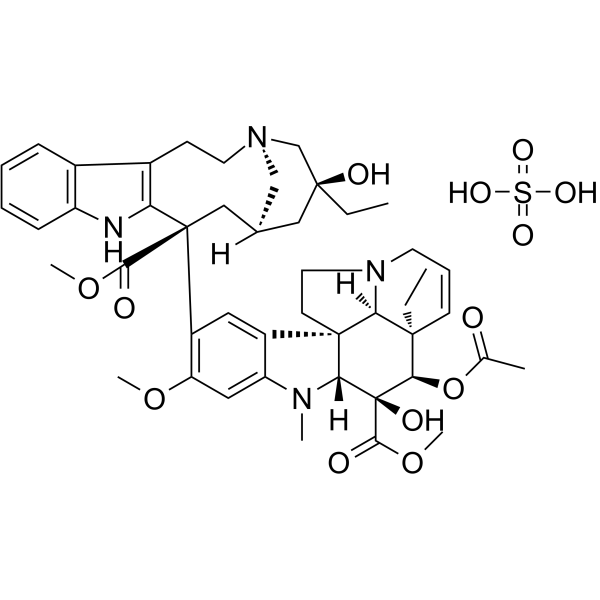
Vinblastine sulfate is a cytotoxic alkaloid used against various cancer types. Vinblastine sulfate inhibits the formation of microtubule and suppresses nAChR with an IC50 of 8.9 μM.
GSK575594A is a modulator of the nicotinic acetylcholine receptor (nAChR) in Ascaris suum. GSK575594A enhances muscle contractions induced by acetylcholine (ACh) by binding to the allosteric binding site between subunits within the transmembrane domain of nAChR. At a concentration of 3 μM, GSK575594A significantly increased the contraction induced by ACh in Ascaris suum (Emax increased from 1.19 g to 1.51 g). GSK575594A may be used in research within the field of antiparasitic studies [1].
GTS-21 dihydrochloride is a selective alpha7 nicotinic acetylcholine receptor (α7-nAChR) agonist with anti inflammatory and cognition enhancing activities. GTS-21 dihydrochloride is also a α4β2 (Ki=20 nM for humanα4β2) and 5-HT3A receptor(IC50=3.1 μM) antagonist [1] .
Varenicline-d4 is deuterium labeled Varenicline. Varenicline (CP 526555) is a potent partial agonist for α4β2 nicotinic acetylcholine receptor (nAChR) with an EC50 value of 2.3 μM. Varenicline is a full agonist for α3β4 and α7 nAChRs with EC50 values of 55 μM and 18 μM, respectively [1]. Varenicline is a nicotinic ligand based on the structure of cytisine, has the potential for smoking cessation treatment .
Myosmine, a specific tobacco alkaloid in nuts and nut products, has low affinity for a4b2 nicotinic acetylcholinergic receptors (nAChR) with a Ki of 3300 nM [1] .
CP-810123 is a brain-permeable agonist of α7 nAChR for the research of cognitive impairment associated with psychiatric or neurological disorders such as schizophrenia and Alzheimer's disease [1].
(±) Anabasine-d4 dihydrochloride is deuterium labeled (±) Anabasine dihydrochloride. (±) Anabasine dihydrochloride is the racemate of Anabasine dihydrochloride. Anabasine dihydrochloride is an agonist of α7nAChR and exhibits anti-inflammatory and insecticidal activities [1].
1,1-Dimethyl-4-acetylpiperazinium iodide is an agonist for nicotinic acetylcholine receptor(nAChR) that open ion channels and causes cell membrane depolarization [1].
(±)-Coniine hydrochloride (2-Propylpiperidine hydrochloride) is a potent nAChR agonist with an EC50 value of 0.3 mM. (±)-Coniine hydrochloride shows acute toxicity with an LD50 value of 7.7 mg/kg [1].
Bradanicline (TC-5619) tosylate is an orally active agonist of α7 nAChR with moderate blood-brain barrier penetration. Bradanicline hydrochloride exhibits high affinity and subtype selectivity for human α7 nAChR. Bradanicline hydrochloride possesses antitussive activity that depends on sustained receptor binding and activation. Bradanicline hydrochloride requires systemic administration to dose-dependently inhibit cough induced by citric acid, bradykinin and inhaled nicotine. Bradanicline hydrochloride is well tolerated in preclinical studies and is widely used in research related to chronic refractory cough [1].
Bradanicline (TC-5619) is an orally active agonist of α7 nAChR with moderate blood-brain barrier penetration. Bradanicline exhibits high affinity and subtype selectivity for human α7 nAChR. Bradanicline possesses antitussive activity that depends on sustained receptor binding and activation. Bradanicline requires systemic administration to dose-dependently inhibit cough induced by citric acid, bradykinin and inhaled nicotine. Bradanicline is well tolerated in preclinical studies and is widely used in research related to chronic refractory cough [1].
IND8 is a α7 nAChRactivator and cognitive enhancer. IND8 mediates cognitive enhancement by activating α7 nAChR. IND8 improves spatial working memory, episodic short-term memory and spatial long-term memory in amnesic mice induced by Scopolamine (HY-N0296). IND8 improves memory function in mice with delayed natural memory decline. IND8 can be used in research related to Alzheimer's disease [1].
Chlorisondamine (diiodide) is a potent nicotinic acetylcholine receptor (nAChR) antagonist and a ganglion blocker. Chlorisondamine antagonizes some of nicotine's central actions in a potent, long-lasting and pharmacologically selective way [1].
(Rac)-Monepantel-d5 is deuterium labeled Monepantel. Monepantel is organic anthelmintic, and acts as a positive allosteric modulator of a nematode-specific clade of nicotinic acetylcholine receptor (nAChR) subunits.
Amitivir (LY 217896), a thiadiazole derivative, possesses broad antiviral activity against orthomyxo- and paramyxoviruses. Amitivir is effective against influenza A and B viruses [1] .
Palmitoylcarnitine chloride is a fatty acid-derived mitochondrial substrate, and selectively decreases cell survival in colorectal and prostate cancer cells by affecting on pro-inflammatory pathways, Ca 2+ influx, and DHT-like effects [1].
Clovibactin TFA is the TFA salt form of Clovibactin (HY-P10027). Clovibactin TFA is an antibiotic for drug-resistant bacterial pathogens without detectable resistance. Clovibactin TFA inihibits cell wall synthesis by targeting pyrophosphate of peptidoglycan precursors [1].
DC-174 is an orally active inhibitor of snake venom metalloproteinases (SVMP) with a broad spectrum of inhibitory activity against a variety of snake venom SVMPs. DC-174 acts directly on the active site of SVMPs via zinc-binding groups, inhibiting their enzymatic activity and procoagulant toxicity. DC-174 can significantly prolong the survival time of mice attacked by snake venom. DC-174 can be used in the study of first aid for snake bites [1].
SGC-CAMKK2-1, a chemical probe, is the selective, inhibitor for calcium/calmodulin-dependent protein kinase kinase 2 (CAMKK2) with an IC50 of 30 nM. SGC-CAMKK2-1 inhibits AMPK phosphorylation in cell C4-2 with an IC50 of 1.6 μM [1].
HLB-0532259 is a PROTAC degrader for Aurora-A and N-Myc. HLB-0532259 degrades Aurora-Ain a non-MYCN amplified MCF-7 with a DC50 of 20.2 nM, degrades N-Myc in MYCN amplified cells SK-N-BE and Kelly with DC50 of 179 nM and 229 nM. HLB-0532259 exhibits antitumor efficacy in mouse models [1]. (Pink: ligand for target protein (HY-168440); Black: linker (HY-W007957); Blue: ligand for E3 ligase Cereblon (HY-41547))
Methyl-4-oxoretinoate is a derivative of Retinoic acid (HY-14649). Methyl-4-oxoretinoate inhibits TPA (HY-18739)-induced ornithine decarboxylase (ODC) activity, and carcinogen-induced papillomas in mouse skin [1].
α-Nicotine is the α-isomer of Nicotine. Nicotine is a nicotinic acetylcholine receptor (nAChR) agonist. Nicotine is promising for research of neuropsychiatric disorders (e.g., schizophrenia, ADHD) [1] .
(Rac)-Monepantel sulfone-d5 is deuterium labeled Monepantel. Monepantel is organic anthelmintic, and acts as a positive allosteric modulator of a nematode-specific clade of nicotinic acetylcholine receptor (nAChR) subunits.
Nitenpyram is a calss of neonicotinoid and an insect nicotinic acetylcholine receptor (nAChR) agonist with an IC50 of 14 nM. Nitenpyram is an oral fast-acting insecticide used to suppress sucking insects on companion animals [1] .
A-867744 is a highly potent and selective type II positive allosteric modulator (PAM) of the alpha7 nicotinic acetylcholine receptors (nAChR) with an EC50 of 1.0 μM [1].
CVN417 is an orally active α6 subunit-containing nAChR antagonist, modulating phasic dopaminergic neurotransmission in an impulse-dependent manner. CVN417 inhibits Ca(2+) effluents mediated by nAChR subunits with IC50s of 0.086 μM (α6), 2.56 μM (α3) and 0.657 μM (α4), respectively. CVN417 attenuates resting tremor in Rodent models, displays the potential to improve movement dysfunction, in conditions such as Parkinson's disease [1].
(±)-Coniine (2-Propylpiperidine) is a piperidine alkaloid and nAChR agonist (EC50=0.3 mM). (±)-Coniine is acutely toxic to mice with an LD50 value of 7.7 mg/kg [1] .
LtIA-F, a novel fluorescent analogue of LtIA, provides a wealth of pharmacological tools to explore the structure–function relationship, distribution, and ligand binding domain of the α3β2nAChR subtype.
BMS-902483 is a quinuclidine-containing spirooxazolidine that is a partial agonist of the α7 nicotinic acetylcholine receptor (nAChR). BMS-902483 improves cognitive ability in preclinical rodent models. [1].
Monepantel (Standard) is the analytical standard of Monepantel. This product is intended for research and analytical applications. Monepantel is organic anthelmintic, and acts as a positive allosteric modulator of a nematode-specific clade of nicotinic acetylcholine receptor (nAChR) subunits.
R-(+)-Cotinine ((+)-Cotinine), a Nicotine metabolite, lacks significant activity across a wide range of pharmacological targets. R-(+)-Cotinine can enhance the Ach-evoked current in human α7 nAChRs[1].
Tribendimidine is an orally active, broad-spectrum anthelmintic agent, with particularly high activity against A. lumbricoides and N. americanus. Tribendimidine is also an L-type nicotinic acetylcholine receptor (nAChR) agonist [1] .
PNU-282987 S enantiomer free base is the S-enantiomer of PNU-282987 free base. PNU-282987 is an α7 nicotinic acetylcholine receptor (α7 nAChR) agonist.
GTS-21 dihydrochloride is a selective alpha7 nicotinic acetylcholine receptor (α7-nAChR) agonist with anti inflammatory and cognition enhancing activities. GTS-21 dihydrochloride is also a α4β2 (Ki=20 nM for humanα4β2) and 5-HT3A receptor(IC50=3.1 μM) antagonist. GTS-21 can be used in age-associated memory impairment (AAMI) and Alzheimer's disease research [1] .
SEN12333 (Standard) is the analytical standard of SEN12333 (HY-107678). This product is intended for research and analytical applications. SEN 12333 (WAY-317538) is a potent, selective and orally active α7 nAChR agonist. SEN12333 displays high affinity for the rat α7 nAChRs expressed in GH4C1 cells (K>i=260 nM) and acts as full agonist in functional Ca2+ flux studies (EC50=1.6 μM). SEN 12333 is used for AD and schizophrenia research [1].
FITC-labeled α-Bungarotoxin is FITC-conjugated α-Bungarotoxin (HY-P1264). α-Bungarotoxin acts as a competitive antagonist of nicotinic acetylcholine receptors (nAChRs)[1] .
Bensultap (Bancol) is an insecticide, which can control Colorado beetle and some other insect pests. Bensultap is a modulator for nicotinic acetylcholine receptor (nAChR), and exhibits mild and temporary neuromodulatory efficacy on rat nervous system [1].
Simpinicline (OC-02), a highly selective nicotinic acetylcholine receptor (nAChR) agonist, shows potent antiviral activity against the SARS-CoV-2 variants in cell culture with an IC50 of 0.04 µM [1].
RJR-2429 is a nAChR agonist (EC50: 59 nM). RJR-2429 binds with high affinity to α4β2 receptor subtype (Ki = 1 nM). RJR-2429 induces ileum contraction [1].
Pipecuronium bromide is a potent long-acting nondepolarizing steroidal neuromuscular blocking agent (NMBA), and a bisquaternary ammonium compound. Pipecuronium bromide is a powerful competitive nAChR antagonist with a Kd of 3.06 μM [1] .
(E/Z)-Acetamiprid is the E/Z mixture of Acetamiprid (HY-B0823). Acetamiprid is a neonicotinoid insecticide used worldwide. Acetamiprid is a nicotinic acetylcholine receptor (nAChR) agonist, and is shown to be associated with neuromuscular and reproductive disorders [1].
Flupyradifurone-d5 is the deuterium labeled Flupyradifurone (HY-145295). Flupyradifurone is a systemic?nAChR?agonist that interferes with signal transduction in the central nervous system of sucking pests. Flupyradifurone can be used as a butenolide?insecticide [1].
Flupyradifurone-d3 is the deuterium labeled Flupyradifurone (HY-145295). Flupyradifurone is a systemic nAChR agonist that interferes with signal transduction in the central nervous system of sucking pests. Flupyradifurone can be used as a butenolide insecticide [1].
Myosmine-d4 is the deuterium labeled Myosmine. Myosmine, a specific tobacco alkaloid in nuts and nut products, has low affinity for a4b2 nicotinic acetylcholinergic receptors (nAChR) with a Ki of 3300 nM [1] .
Soclenicant (BNC210) is an orally active α7 nAChR negative alteration modulator (NAM) with no apparent side effects. Soclenicant exhibits acute anxiolytic activity in rodent models of anxiety. Soclenicant inhibits rat and human α7 nAChR currents (in stably transfected cell lines) induced by acetylcholine, nicotine, choline, and the a7-specific agonist PNU-282987 (HY-12560A) with IC50 values in the range of 1.2 to 3 μM. Soclenicant can be used in studies of anxiety, trauma, and stressor-related disorders [1] .
COG 133 is a fragment of Apolipoprotein E (APOE) peptide. COG 133 competes with the ApoE holoprotein for binding the LDL receptor, with potent anti-inflammatory and neuroprotective effects. COG 133 is also a nAChR antagonist with an IC50 of 445 nM [1] .
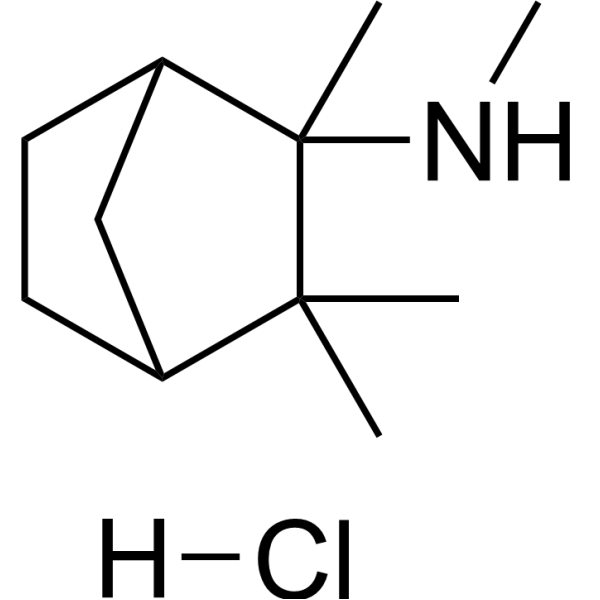
Mecamylamine is an orally active, nonselective, noncompetitive nAChR antagonist. Mecamylamine is also a ganglionic blocker. Mecamylamine can across the blood-brain barrier. Mecamylamine can be used in the research of neuropsychiatric disorders, hypertension, antidepressant area [1] .
(±) Anabasine-d4 is the deuterium labeled (±) Anabasine (HY-W052144). (±) Anabasine is the racemate of Anabasine (HY-B1532). Anabasine is an agonist of α7nAChR and exhibits anti-inflammatory and insecticidal activities [1].
Iptakalim hydrochloride, a lipophilic para-amino compound, is a novel ATP-sensitive potassium channel (KATP) opener, as well as an α4β2-containing nicotinic acetylcholine receptor (nAChR) antagonist [1].
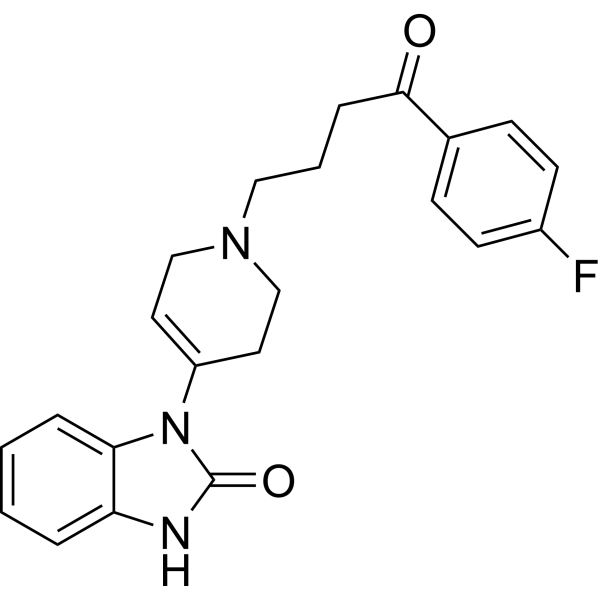
Droperidol (Dehydrobenzperidol) is a butyrophenone pamine-2 receptor antagonist that inhibits the activation of GABA(A) and neuronal nicotinic receptors (nAChR), with IC50 values of 12.6 nM and 5.8 μM. Droperidol has anesthetic and sedative properties [1] .
Mecamylamine hydrochloride is an orally active, nonselective, noncompetitive nAChR antagonist. Mecamylamine hydrochloride is also a ganglionic blocker. Mecamylamine hydrochloride can across the blood-brain barrier. Mecamylamine hydrochloride can be used in the research of neuropsychiatric disorders, hypertension, antidepressant area [1] .
5-HT1AR agonist 2 (Compound 4f) is a 5-HT1A receptor agonist (Ki: 10.0 nM). 5-HT1AR agonist 2 also binds to the SERT, D2 receptor and 5-HT6 receptor (Ki: SERT, 2.8 nM; D2, 23 nM; 5-HT6, 192 nM). 5-HT1AR agonist 2 is stabilized in microsomes and induces hypothermia in mice[1].
Phenylpiracetam (Carphedon) is a positive allosteric modulator of nicotinic acetylcholine receptors (nAChR) with an IC50 of 5.86 μM. Phenylpiracetam is applicable to studies on scopolamine (Scopolamine) (HY-N0296)-induced amnesia, depression and immune stress [1] .
Mivacurium dichloride is a benzylisoquinoline derivative and is a short-acting non-depolarizing neuromuscular blocking agent and skeletal muscle relaxant. Mivacurium dichloride couples with the nAChR to reduce or inhibit the depolarizing effect of acetylcholine on the terminal disc of the muscle cell [1] .
Desformylflustrabromine hydrochloride (Standard) is the analytical standard of Desformylflustrabromine hydrochloride (HY-107675). This product is intended for research and analytical applications. Desformylflustrabromine hydrochloride is a selective agonist of α4β2 neuronal nicotinic acetylcholine receptor (nAChR) with a pEC50 of 6.48.
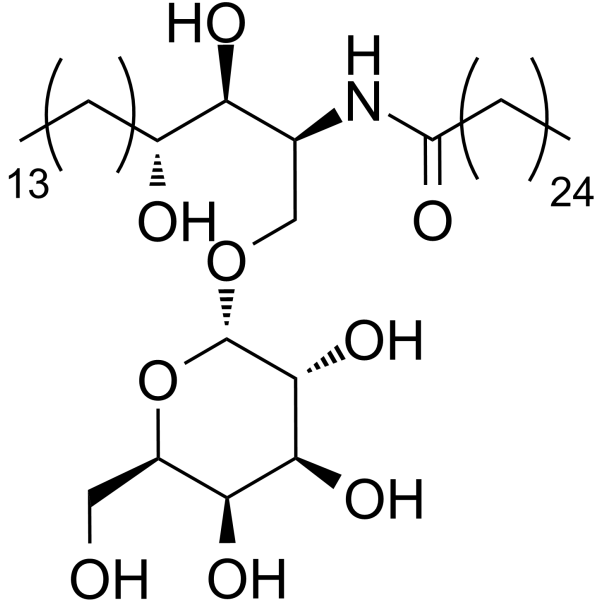
GCB-27a is a CD1d-binding immunostimulant and antitumor agent. GCB-27a binds to CD1d to form a stable complex and presents it to NKT cells, enhancing hydrophobic interactions within the A' pocket of CD1d through branched-chain conformation restriction. GCB-27a induces a Th1-biased immune response, drives IFN?γ production and limits IL-4 levels. GCB-27a is applicable to research related to melanoma lung metastasis [1].
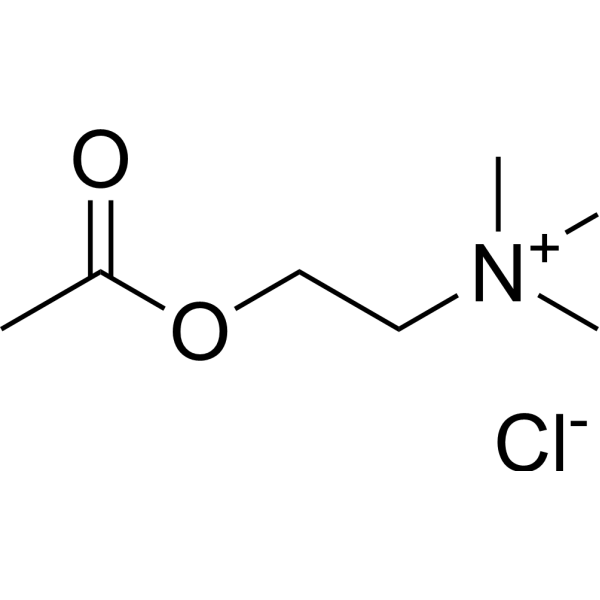
Acetylcholine chloride (ACh chloride), a neurotransmitter, is a potent and BBB-permeable cholinergic agonist. Acetylcholine chloride is a modulator of the activity of dopaminergic (DAergic) neurons through the stimulation of nicotinic acetylcholine receptors (nAChRs) [1] . Acetylcholine chloride inhibits p53 mutant peptide aggregation in vitro .
SEN 78702 is an orally active, selective, full α7 nAChR agonist, with a pEC50 of 6.13. SEN 78702 has an acceptable hERG inhibition (IC50: 15.8 μM). SEN 78702 induces memory enhancement [1].
Myosmine (Standard) is the analytical standard of Myosmine. This product is intended for research and analytical applications. Myosmine, a specific tobacco alkaloid in nuts and nut products, has low affinity for a4b2 nicotinic acetylcholinergic receptors (nAChR) with a Ki of 3300 nM [1] .
Hydrodolasetron is a metabolite of Dolasetron (HY-B0750). Hydrodolasetron is more potent than Dolasetron in inhibiting nAChR. Hydrodolasetron is a 5-HT(3A)R blocker with an IC50 of 0.29 nM. Hydrodolasetron has antiemetic activity [1].
COG 133 TFA is a fragment of Apolipoprotein E (APOE) peptide. COG 133 TFA competes with the ApoE holoprotein for binding the LDL receptor, with potent anti-inflammatory and neuroprotective effects. COG 133 TFA is also a nAChR antagonist with an IC50 of 445 nM [1] .
Triflumezopyrim, a mesoionic insecticide, has high efficiency at a low dosage, and is mainly used to control hopper species. Triflumezopyrim mainly acts on the nicotinic acetylcholine receptor (nAChR) inhibition, which is very highly efficient, rapidly effective, and nearly nontoxic to nontarget arthropods [1].
2-Chloropyridine-4-boronic acid is an intermediate. 2-Chloropyridine-4-boronic acid can be used in the synthesis of nAChR agonists. 2-Chloropyridine-4-boronic acid can be used in cancer research [1].
Altinicline (maleate) is an orally active and selective nAChR agonist. Altinicline (maleate) has the potential to study parkinsonism [1] . Altinicline (maleate) is a click chemistry reagent, it contains an Alkyne group and can undergo copper-catalyzed azide-alkyne cycloaddition (CuAAc) with molecules containing Azide groups.
MB327 is a bipyridine nonoxime compound that restores neuromuscular function. MB327 restores the activity of nicotinamide acetylcholine receptors (nAChRs) for carbachol desensitization in a typical type II PAM manner. MB327 can neutralize nerve agent poisoning [1] .
Vinblastine (sulfate) (Standard) is the analytical standard of Vinblastine (sulfate). This product is intended for research and analytical applications. Vinblastine sulfate is a cytotoxic alkaloid used against various cancer types. Vinblastine sulfate inhibits the formation of microtubule and suppresses nAChR with an IC50 of 8.9 μM.
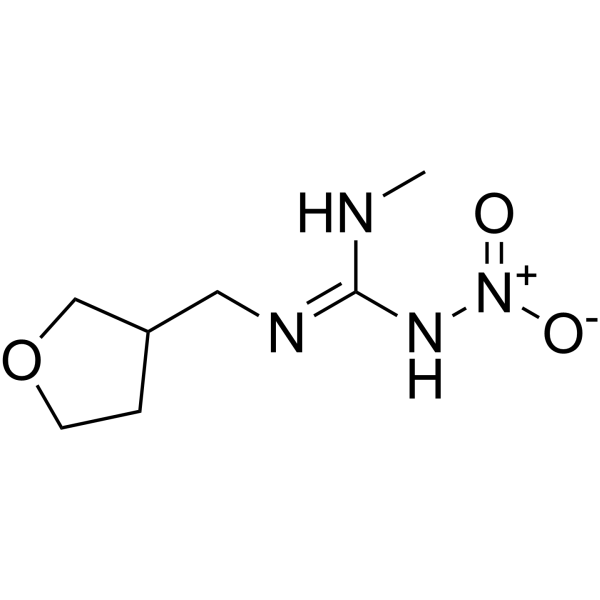
(S)-Dinotefuran ((S)-MTI-446), a neonicotinoid pesticide, is toxic by binding to α8 subunit of nAChR of honeybee Apis mellifera (Apis mellifera Linnaeus). (S)-Dinotefuran shows more toxic than R-dinotefuran to honeybee Apis mellifera[1].
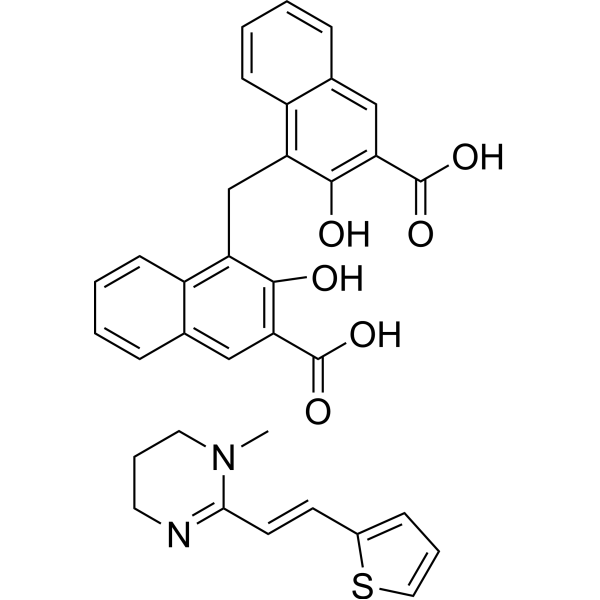
Pyrantel is an orally active anthelmintic and an agonist of the nicotinic acetylcholine receptor(nAChR). Pyrantel can cause spasmodic muscle paralysis in parasites. Pyrantel can be used in the study of parasitic infections such as ascariasis, hookworm infections, intestinal worms (pinworm infections), trichinosis and trichinosis [1] .
Cypenamine hydrochloride is an antidepressant agent. Cypenamine binds to the human nAchR subtypes, α2β4, α3β4 and α4β4, with Ki values of 4.65 μM, 2.69 and 4.11 μM, respectively [1].
Nitenpyram (Standard) is the analytical standard of Nitenpyram. This product is intended for research and analytical applications. Nitenpyram is a calss of neonicotinoid and an insect nicotinic acetylcholine receptor (nAChR) agonist with an IC50 of 14 nM. Nitenpyram is an oral fast-acting insecticide used to suppress sucking insects on companion animals [1] .
Nelonicline (ABT-126) is an orally active and selective α7 nicotinic receptor agonist with high affinity to α7 nAChRs in human brain (Ki=12.3 nM). Nelonicline is used for the research of shizophrenia and Alzheimer's disease [1] .
NP-BTA is an allosteric inhibitor for glutaminyl-tRNA synthetase (GlnRS). NP-BTA exhibits antifungal efficacy against Candida albicans, with MIC50 of 6.25 μM [1].
Fanotaprim is a dihydrofolate reductase (DHFR) inhibitor with IC50s of 1.57 and 308 nM for tgDHFR (Toxoplasma gondii DHFR) and hDHFR (human DHFR), respectively. Fanotaprim has the potential for the research of toxoplasmosis [1].
SOS1-IN-20 (Compound 12f) is an orally active SOS1 inhibitor with an IC50 of 5.11 nM against KRAS G12C::SOS1. By disrupting the interaction between KRAS and SOS1, SOS1-IN-20 inhibits KRAS activation and downstream signal transduction. SOS1-IN-20 has an IC50 of 253 nM for p-ERK in PC-9 cells and 16.71 μM for hERG channel . SOS1-IN-20 can inhibit the proliferation of tumor cells and has antitumor activity [1].
LDHA-IN-7 (compound 21) is an oral bioactive inhibitor of lactate dehydrogenase-A (LDHA) and LDHB, with the IC50s of 72 nM and 1.2 Μm, respectively [1].
Mecamylamine-d3 hydrochloride is the deuterium labeled Mecamylamine hydrochloride. Mecamylamine hydrochloride is an orally active, nonselective, noncompetitive nAChR antagonist that can treat various neuropsychiatric disorders. Mecamylamine hydrochloride is originally used as a ganglionic blocker in treating hypertension. Mecamylamine hydrochloride can easily crosses the blood-brain barrier [1] .
Cytisinicline (Cytisine) is an alkaloid. Cytisinicline (Cytisine) is a partial agonist of α4β2 nAChRs[1], and partial to full agonist at β4 containing receptors and α7 receptors . Has been used medically to help with smoking cessation .
DSPE-PEG5000-RVG29 is a PEG compound which composed of DSPE and a Rabies virus glycoprotein 29 (RVG29). RVG29 can bind specifically to the nicotinic acetylcholine receptor (nAChR) at the blood-brain barrier (BBB) and cross over the BBB [1].
Dequalinium chloride is an Apamin (HY-P0256)-sensitive potassium channel selective blocker. Dequalinium chloride is a cationic, lipophilic mitochondrial poison. Dequalinium chloride is also an antagonist pf α7 nAChR, and an anti-microbial antiseptic agent with a broad bactericidal and fungicidal activity [1] .
WAY-361789 (SEN15924) is an orally active agonist for α7 nicotinic acetylcholine receptor (α7 nAChR) with an EC50 of 0.18 μM. WAY-361789 improves the cognitive function, exhibits potential in ameliorating Alzheimer’s Disease and schizophrenia [1].
DSPE-PEG1000-RVG29 is a PEG compound which composed of DSPE and a Rabies virus glycoprotein 29 (RVG29). RVG29 can bind specifically to the nicotinic acetylcholine receptor (nAChR) at the blood-brain barrier (BBB) and cross over the BBB [1].
N-Methylcytisine (Caulophylline), a tricyclic quinolizidine alkaloid, exerts hypoglycaemic, analgesic and anti-inflammatory activities. N-methylcytisine is a selective ligand of nicotinic receptors of acetylcholine in the central nervous system and has a high affinity (Kd = 50 nM) to nicotinic acetylcholine receptors (nAChR) from squid optical ganglia [1] .
Nitenpyram-d3-1 is the deuterium labeled Nitenpyram (HY-B0820). Nitenpyram is a calss of neonicotinoid and an insect nicotinic acetylcholine receptor (nAChR) agonist with an IC50 of 14 nM. Nitenpyram is an oral fast-acting insecticide used to suppress sucking insects on companion animals [1] .
Nelonicline (ABT-126) citrate is an orally active and selective α7 nicotinic receptor agonist with high affinity to α7 nAChRs in human brain (Ki=12.3 nM). Nelonicline citrate is used for the research of shizophrenia and Alzheimer's disease [1] .
Pyrantel tartrate is an orally active anthelmintic and an agonist of the nicotinic acetylcholine receptor(nAChR). Pyrantel tartrate can cause spasmodic muscle paralysis in parasites. Pyrantel tartrate can be used in the study of parasitic infections such as ascariasis, hookworm infections, intestinal worms (pinworm infections), trichinosis and trichinosis [1] .
DPPE-PEG350 is a CD1d-dependent lipid antagonist thus blocking the ERK phosphorylation pathway in iNKT cells [1] . DPPE-PEG350 is a PEG lipid functional end group used in the synthesis of liposomes (LPs) for the design of conjugated polymer nanoparticles.
Marcfortine A is an indole alkaloid originally isolated from P. roqueforti. It has nematocidal activity against the parasitic nematode H. contortus (LD99=0.06 μg/mL) and inhibits motility of adult worms (EC50=2 μM). Marcfortine A eliminates H. contortus, T. colubriformis, and O. ostertagi from experimentally infected jirds (ED95s=0.33, 0.11, and 2.5 mg/animal, respectively). It dose-dependently inhibits nicotine-induced calcium mobilization in SH-SY5Y and TE-671 cells expressing α3 subunit-containing human nicotinic acetylcholine receptors (nAChRs) and muscle-type nAChRs, respectively.
Acetylcholine-d4 (chloride) is the deuterium labeled Acetylcholine chloride. Acetylcholine chloride (ACh chloride), a neurotransmitter, is a potent and BBB-permeable cholinergic agonist. Acetylcholine chloride is a modulator of the activity of dopaminergic (DAergic) neurons through the stimulation of nicotinic acetylcholine receptors (nAChRs) [1] . Acetylcholine chloride inhibits p53 mutant peptide aggregation in vitro .
Pyrantel pamoate (Pyrantel embonate) is an orally active anthelmintic and an agonist of the nicotinic acetylcholine receptor(nAChR). Pyrantel pamoate can cause spasmodic muscle paralysis in parasites. Pyrantel pamoate can be used in the study of parasitic infections such as ascariasis, hookworm infections, intestinal worms (pinworm infections), trichinosis and trichinosis [1] .
(S)-VQW-765 ((S)-AQW-051) is an orally active, selective and effective α7 nicotinic ACh receptor(nAChR) partial agonist. (S)-VQW-765 has potential applications in cognitive disorders related to neurological diseases, such as Alzheimer's disease or schizophrenia [1] .
Acetylcholine-d9 (chloride) is the deuterium labeled Acetylcholine chloride. Acetylcholine chloride (ACh chloride), a neurotransmitter, is a potent and BBB-permeable cholinergic agonist. Acetylcholine chloride is a modulator of the activity of dopaminergic (DAergic) neurons through the stimulation of nicotinic acetylcholine receptors (nAChRs) [1] . Acetylcholine chloride inhibits p53 mutant peptide aggregation in vitro .
Spinosad, a mixture of spinosyns A and D known as fermentation products of a soil actinomycete (Saccharopolyspora spinosa), is a biological neurotoxic insecticide with a broader action spectrum. Spinosad targets the nicotinic acetylcholine receptor (nAChRs) of the insect nervous system. Spinosad has an excellent environmental and mammalian toxicological profile. Larvicidal activity [1] .
(±)-Anatoxin A fumarate is a natural alkaloid isolated from freshwater cyanobacterium.(±)-Anatoxin A fumarate is a potent nicotinic receptor agonist and exhibits Ki values of 1.25 nM and 1.84 μM for binding to α4β2- and α7-type nicotinic receptors in rat brain membranes, respectively. (±)-Anatoxin A fumarate stimulates [ 3H]-dopamine release from rat striatal synaptosomes (EC50=134 nM). (±)-Anatoxin A fumarate has toxic effect on fish [1] .
PNU-282987 is a potent α7 nicotinic acetylcholine receptor (nAChR) agonist with an EC50 of 154 nM. PNU-282987 is also a functional antagonist of the 5-HT3 receptor with an IC50 of 4541 nM. PNU-282987 can be used for the research of central and peripheral nervous systems [1].
Mecamylamine (hydrochloride) (Standard) is the analytical standard of Mecamylamine (hydrochloride). This product is intended for research and analytical applications. Mecamylamine hydrochloride is an orally active, nonselective, noncompetitive nAChR antagonist. Mecamylamine hydrochloride is also a ganglionic blocker. Mecamylamine hydrochloride can across the blood-brain barrier. Mecamylamine hydrochloride can be used in the research of neuropsychiatric disorders, hypertension, antidepressant area [1] .
GeX-2 is a truncated analogue of αO-conotoxin. GeX-2 activates GABAB receptor. GeX-2 inhibits α9α10 nAChR and CaV2.2 channels. GeX-2 alleviates pain in the rat model of chronic constriction injury [1].
DBO-83 free base is a brain-penetrant nicotinic acetylcholine receptor(nAChR) agonist. DBO-83 free base activates peripheral nicotinic acetylcholine receptors to evoke non-stimulated ileum contractions. DBO-83 free base shows antinociceptive and anti-amnesic activities [1] .
α-Galactosylceramide (α-GalCer) is a synthetic glycolipid with antitumorial and immunostimulatory. α-Galactosylceramide is a very potent NKT cell agonist and binds effectively to CD1d. The complex of α-Galactosylceramide plus CD1d binds the NKT cell TCR (T cell antigen receptor) [1] .
Elisrasib (D3S-001) is an orally active and selective inhibitor for KRAS. Elisrasib inhibits the proliferation of KRAS G12C mutant H358 and MIA-PA-CA-2. D3S-001 also inhibits the phosphorylation of cellular ERK1/2. Elisrasib exhibits good metabolic stability in hepatocytes, liver microsomes, plasma and whole blood in various species. D3S-001 exhibits good pharmacokinetic characteristics and antitumor efficacy in mice[1].
SI-2 (EPH 116) is an inhibitor for steroid receptor coactivator-3 (SRC-3), which reduces the transcriptional activity and protein concentration of SRC-3 in cells, exhibits cytotoxicity in cancer cell, inhibits migration of MDA-MB-468, induces apoptosis of MDA-MB-468. SI-2 inhibits the tumor growth in mouse models, without significant toxicity for heart and other major organs (20 mg/kg) [1].
SCH 57790 is a selective antegonist for muscarinic M2 receptor, which increases acetylcholine release, and thus improves cognitive performance. SCH 57790 reverses Scopolamine (HY-N0296)-induced memory deficits in mice, without significant toxicity (100 mg/kg).
DA-0157 is the orally active inhibitor for EGFR and ALK that overcomes drug-resistant mutations of EGFR C797S and ALK in NSCLC) cells. DA-0157 inhibits the proliferation of Ba/F3-EGFR Del19/T790M/C797S (IC50 = 6.9 nM), Ba/F3-EGFR WT (IC50 = 0.83 μM), Ba/F3-EML4-ALK-L1196M (IC50 = 5.5 nM), and Ba/F3-EML4-ALK (IC50 = 7.4 nM). DA-0157 inhibits CYP2D6 with IC50 of 5.26 μM. DA-0157 exhibits antitumor efficacy in mouse models [1].
LQ-38 is an orally active inhibitor for soluble epoxide hydrolase (sEH) with an IC50 of 5.2 nM. LQ-38 exhibits anti-inflammatory activity in rat foot edema model and mouse acute pancreatitis model, exhibits analgesic effect in Acetic acid (HY-Y0319)-induced writhing mouse model [1].
KYLO-0603 is an orally active, selective THR-β agonist (EC50 : 31.07 nM). KYLO-0603 has significant activity in lowering serum cholesterol and low-density lipoprotein cholesterol. KYLO-0603 upregulates the expression of THR-regulated genes (including iodothyronine deiodinase 1 (Dio1), malic enzyme 1 (Me1), and thyroid hormone response (Thrsp) gene) and inhibits the expression of inflammatory and fibrotic genes (low-density lipoprotein receptor (LDL-R) gene) by activating THR-β receptors. KYLO-0603 can be used to treat metabolic dysfunction-associated steatohepatitis (MASH) and liver fibrosis research [1].
α-Bungarotoxin is a competitive antagonist at nicotinic acetylcholine receptors (nAChRs). α-Bungarotoxin, a selective α7 receptor blocker, blocks α7 currents with an IC50 of 1.6 nM and has no effects on α3β4 currents at concentrations up to 3 μM [1] .
RGH-560 (compound 53) shows highly advanced α7 nAChR positive modulator properties and favorable physicochemical features. RGH-560 has robust procognitive in vivo potential. RGH-560 can be used to study Scopolamine (HY-N0296) -induced amnesia in mice[1].
TC-6683 (AZD1446) is a selective α4β2 nicotinic acetylcholine receptor (nAChR) agonist. TC-6683 does not show significant therapeutic effects in the animal model of DYT1 dystonia.TC-6683 can be used for the research of neurological disease, such as cognitive disorder [1] .
Acetylcholine (chloride) (Standard) is the analytical standard of Acetylcholine (chloride). This product is intended for research and analytical applications. Acetylcholine chloride (ACh chloride), a neurotransmitter, is a potent and BBB-permeable cholinergic agonist. Acetylcholine chloride is a modulator of the activity of dopaminergic (DAergic) neurons through the stimulation of nicotinic acetylcholine receptors (nAChRs) [1] . Acetylcholine chloride inhibits p53 mutant peptide aggregation in vitro .
Lemairamin (Wgx-50) is a hydroxylamine compound. Lemairamin can be isolated from the pericarps of the Zanthoxylum plants. Lemairamin activates α7nAChR, stimulates the expression of IL-10 and POMC. Lemairamin shows a decrease in Akt. Lemairamin attenuates DSS-induced intestinal inflammation. Lemairamin alleviates pain hypersensitivity [1] .
Facinicline (RG3487) is an orally active nicotinic α7 receptor partial agonist, with a Ki of 6 nM for α7 human nAChR. Facinicline improves cognition and sensorimotor gating in rodents. Facinicline hydrochloride shows high affinity (antagonist) to 5-HT3Rs with a Ki value of 1.2 nM [1].
Cynandione A is an acetophenone that can be isolated from Cynanchum Wilfordii Radix. Cynandione A protects hepatocytes and cortical neurons from toxicity and improves neurological deficits in a rat model of cerebral ischemia. On the other hand, cynandione A has significant anti-inflammatory effects and inhibits inflammation by activating macrophage α7 nAChR and IL-10 expression [1].
Anabaseine-d4 is the deuterium labeled Anabaseine (HY-115766). Anabaseine is a non-selective nicotinic agonist. Anabaseine stimulates all AChRs, preferentially stimulates skeletal muscle and brain α7 subtypes [1] . Anabaseine is also a weak partial agonist at α4β2 nAChRs .
Mecamylamine (hydrochloride)- 13C4, 15N is the 13C-labeled and 15N-labeled Mecamylamine hydrochloride. Mecamylamine hydrochloride is an orally active, nonselective, noncompetitive nAChR antagonist that can treat various neuropsychiatric disorders. Mecamylamine hydrochloride is originally used as a ganglionic blocker in treating hypertension. Mecamylamine hydrochloride can easily crosses the blood-brain barrier [1] .
Anabaseine (Standard) is the analytical standard of Anabaseine. This product is intended for research and analytical applications. Anabaseine is a non-selective nicotinic agonist. Anabaseine stimulates all AChRs, preferentially stimulates skeletal muscle and brain α7 subtypes [1] . Anabaseine is also a weak partial agonist at α4β2 nAChRs .
Sofinicline benzenesulfonate (ABT 894 benzenesulfonate) is a novel nicotinic acetylcholine receptor agonist, specifically acting on the α4β2 subtype of nAChR(IC50=0.1 nM). Sofinicline benzenesulfonate has the potential to improve cognitive function, including attention, memory and working memory. Sofinicline benzenesulfonate can be used in studies of attention deficit, hyperactivity disorder (ADHD) [1].
Mivacurium (dichloride) (Standard) is the analytical standard of Mivacurium (dichloride). This product is intended for research and analytical applications. Mivacurium dichloride is a benzylisoquinoline derivative and is a short-acting non-depolarizing neuromuscular blocking agent and skeletal muscle relaxant. Mivacurium dichloride couples with the nAChR to reduce or inhibit the depolarizing effect of acetylcholine on the terminal disc of the muscle cell [1] .
Cytisinicline (Standard) is the analytical standard of Cytisinicline. This product is intended for research and analytical applications. Cytisinicline (Cytisine) is an alkaloid. Cytisinicline (Cytisine) is a partial agonist of α4β2 nAChRs[1], and partial to full agonist at β4 containing receptors and α7 receptors . Has been used medically to help with smoking cessation .
PNU-282987 (free base) is a potent α7 nicotinic acetylcholine receptor (nAChR) agonist with an EC50 of 154 nM. PNU-282987 (free base) is also a functional antagonist of the 5-HT3 receptor with an IC50 of 4541 nM. PNU-282987 (free base) can be used for the research of central and peripheral nervous systems [1].
Nefiracetam is a cognition-enhancing agent. Nefiracetam is an activator of nAChR, N-methyl-D-aspartate receptor (NMDAR), mGluR5, PKC, gamma-aminobutyric acid (GABA), and N/L-type Ca 2+ channels. Nefiracetam promotes neuroplasticity and enhances neuroprotection. Nefiracetam can be used in Alzheimer's disease, epilepsy, and cerebral ischemia research [1] .
Methyllycaconitine (MLA) is a potent, selective, CNS-penetrant, competitive α7nAChR antagonist. Methyllycaconitine alleviates amyloid-β peptides-induced cytotoxicity in SH-SY5Y cells. Methyllycaconitine prevents methamphetamine-induced effects in mouse striatum. Methyllycaconitine can be used for neurological disease research, such as Alzheimer’s disease [1] .
(2S,6S)-Hydroxynorketamine hydrochloride is a neurorelaxant with potential antidepressant and analgesic effects. (2S,6S)-Hydroxynorketamine hydrochloride can activate the mTOR pathway, increase the phosphorylation level of downstream targets, and antagonize α7-nicotinic acetylcholine receptor (nAChR) to exert neuroactive properties [1].
Facinicline hydrochloride (RG3487 hydrochloride) is an orally active nicotinic α7 receptor partial agonist, with a Ki of 6 nM for α7 human nAChR. Facinicline hydrochloride (RG3487 hydrochloride) improves cognition and sensorimotor gating in rodents. Facinicline hydrochloride (RG3487 hydrochloride) shows high affinity (antagonist) to 5-HT3Rs with a Ki value of 1.2 nM [1].
Diacylglyceride, a natural scaffolding lipid, is a hapten that binds to CD1b. Diacylglyceride can be combined with carrier proteins and used in the design of antigens [1].
GABAA receptor modulator-13 is an orally active, blood-brain barrier-permeable α4β1δ GABAA receptor modulator (IC50 = 9.02 μM). GABAA receptor modulator-13 reduces GABA-induced currents, impairs the stability of the transmembrane domain M2-M3 loop of α4β1δ GABAA receptors, and exhibits selectivity for γ2-containing GABAA receptor subtypes and α6β3δ GABAA receptor subtypes. GABAA receptor modulator-13 is applicable to the research of nervous system diseases with altered tonic inhibition, such as neurodevelopmental disorders and epilepsy [1].
Ligritinib (AB801) is an orally active AXL receptor tyrosine kinase inhibitor. Ligritinib blocks the downstream signaling pathway by inhibiting the kinase activity of AXL. Ligritinib can be used in cancer research, especially in combination with chemotherapy for non-small cell lung cancer (NSCLC) [1].
GPR17 modulator-1 (Compound 2-046) is a modulator for G protein-coupled receptor 17 GPR17, with an IC50<10 nM for hGPR17 in CHO. GPR17 modulator-1 exhibits moderate pharmacokinetic characteristics in mice. GPR17 modulator-1 ix blood-brain barrier (BBB) permeable [1].
GSK3739936 (BMS-986180) is a potent HIV-1 allosteric integrase inhibitor with an IC50 value of 11.1 nM and an EC50 value of 1.7 nM. GSK3739936 is also a weak CYP inhibitor (IC50>24.3 μM). GSK3739936 shows favorable pharmacokinetic property in preclinical species with rapid absorption, low to moderate clearance and excellent oral bioavailability [1].
Dibenzothiophene is an orally active and a noncompetitive CYP1A inhibitor. Dibenzothiophene inhibits CYP1A-mediatedEROD activity with a Km of 0.592 μM. Dibenzothiophene interacts with the AHR pathway. Dibenzothiophene enhances the embryotoxicity of β-naphthoflavone (HY-114740). Dibenzothiophene shows acute toxicity in mice. Dibenzothiophene is mainly used for the study of the mechanism of developmental toxicity in organisms [1] .
Cytisine-d4 is the deuterium labeled Cytisinicline (HY-N0175). Cytisinicline (Cytisine) is an alkaloid. Cytisinicline (Cytisine) is a partial agonist of α4β2 nAChRs[1], and partial to full agonist at β4 containing receptors and α7 receptors . Has been used medically to help with smoking cessation .
Anabaseine, a brain-penetrant occurring alkaloid toxin, is potent agonist of multiple nicotinic acetylcholine receptors (AChRs). Anabaseine stimulates the neuromuscular α12β1γδ or α12β1γɛ and α7 AChRs. Anabaseine is also a weak partial agonist at α4β2 nAChRs[1] .
Dequalinium (Chloride) (Standard) is the analytical standard of Dequalinium (Chloride). This product is intended for research and analytical applications. Dequalinium chloride is an Apamin (HY-P0256)-sensitive potassium channel selective blocker. Dequalinium chloride is a cationic, lipophilic mitochondrial poison. Dequalinium chloride is also an antagonist pf α7 nAChR, and an anti-microbial antiseptic agent with a broad bactericidal and fungicidal activity [1] .
Nefiracetam (Standard) is a cognition-enhancing agent. Nefiracetam is an activator of nAChR, N-methyl-D-aspartate receptor (NMDAR), mGluR5, PKC, gamma-aminobutyric acid (GABA), and N/L-type Ca 2+ channels. Nefiracetam promotes neuroplasticity and enhances neuroprotection. Nefiracetam can be used in Alzheimer's disease, epilepsy, and cerebral ischemia research [1] .
Zaldaride maleate (CGS-9343B) is a potent, orally active and selective inhibitor of calmodulin. Zaldaride maleate inhibits CaM (calmodulin)-stimulated cAMP phosphodiesterase activity, with an IC50 of 3.3 nM [1] . Zaldaride maleate prevents estrogen-induced transcription activation by ER, reversibly blocks voltage-activated Na +, Ca 2+ and K + currents in PC12 cells and inhibits nAChR .
(R)-(+)-Anatabine is an less active R-enantiomer of Anatabine. Anatabine is a potent α4β2 nAChR agonist [1]. Anatabine inhibits NF-κB activation lower amyloid-β (Aβ) production by preventing the β-cleavage of amyloid precursor protein (APP). Anatabine has anti-inflammatory effects and has the potential for neurodegenerative disorders treatment .
Cytidine-5'-triphosphate- 13C,d1 (Cytidine triphosphate- 13C,d1 dilithium; 5'-CTP- 13C,d1) dilithium is deuterium and 13C-labeled Cytidine-5'-triphosphate (HY-125818). Cytidine 5′-triphosphate (Cytidine triphosphate; 5'-CTP) is a nucleoside triphosphate and serves as a building block for nucleotides and nucleic acids, lipid biosynthesis. Cytidine triphosphate synthase can catalyze the formation of cytidine 5′-triphosphate from uridine 5′-triphosphate (UTP). Cytidine 5′-triphosphate is an essential biomolecule in the de novo pyrimidine biosynthetic pathway in T. gondii.
Zaldaride (CGS-9343B free base) is a potent, orally active and selective inhibitor of calmodulin. Zaldaride inhibits CaM (calmodulin)-stimulated cAMP phosphodiesterase activity, with an IC50 of 3.3 nM [1] . Zaldaride prevents estrogen-induced transcription activation by ER, reversibly blocks voltage-activated Na +, Ca 2+ and K + currents in PC12 cells and inhibits nAChR .
Pyrantel (tartrate) (Standard) is the analytical standard of Pyrantel (tartrate). This product is intended for research and analytical applications. Pyrantel tartrate is an orally active anthelmintic and an agonist of the nicotinic acetylcholine receptor (nAChR). Pyrantel tartrate can cause spasmodic muscle paralysis in parasites. Pyrantel tartrate can be used in the study of parasitic infections such as ascariasis, hookworm infections, intestinal worms (pinworm infections), trichinosis and trichinosis [1] .
N-Methylcytisine (Standard) is the analytical standard of N-Methylcytisine. This product is intended for research and analytical applications. N-Methylcytisine (Caulophylline), a tricyclic quinolizidine alkaloid, exerts hypoglycaemic, analgesic and anti-inflammatory activities. N-methylcytisine is a selective ligand of nicotinic receptors of acetylcholine in the central nervous system and has a high affinity (Kd = 50 nM) to nicotinic acetylcholine receptors (nAChR) from squid optical ganglia [1] .
(±)-Nornicotine is a major metabolite of Nicotine. (±)-Nornicotine is a partial nAChRs agonist, specifically activating receptor subtypes containing α7 and α6 subunits. (±)-Nornicotine disrupts β-catenin and ZO-1, and induces F-actin depolymerization. (±)-Nornicotine supports self-administration behavior. (±)-Nornicotine can be used in the research of atherosclerosis, Alzheimer's disease, and schizophrenia [1] .
Methyllycaconitine (MLA) citrate is a potent, selective, CNS-penetrant, competitive α7nAChR antagonist. Methyllycaconitine citrate alleviates amyloid-β peptides-induced cytotoxicity in SH-SY5Y cells. Methyllycaconitine citrate prevents methamphetamine-induced effects in mouse striatum. Methyllycaconitine citrate can be used for neurological disease research, such as Alzheimer’s disease [1] .
TC-2559 free base is a α4β2 nicotinic acetylcholine receptor (nAChR) agonists with an EC50 of 0.18 μM. TC-2559 free base shows much weaker potencies on the group of b4-containing nAChR subtypes, α2β4, α4β4 and α3β4 receptors, with EC50s in the range of 10-30 µM. TC-2559 free base can increase the discharge of dopamine cells in the ventral tegmental area (VTA) of rats in vitro, enhancing the excitability and aggressive behavior of VTA dopamine neurons. TC-2559 free base inhibits STAT3 to exert anti-inflammatory properties and relieves mice mechanical allodynia and improve rats cognitive deficits. TC-2559 free base can be used for the study of nerve pain [1] .
Galanthamine hydrobromide (Galantamine hydrobromide) is a selective, reversible, competitive, alkaloid AChE inhibitor, with an IC50 of 0.35 µM. Galanthamine hydrobromide is a potent allosteric potentiating ligand (APL) of human α3β4, α4β2, α6β4 nicotinic receptors (nAChRs). Galanthamine hydrobromide is developed for the research of Alzheimer's disease (AD) [1] .
Pyrantel (pamoate) (Standard) is the analytical standard of Pyrantel (pamoate). This product is intended for research and analytical applications. Pyrantel pamoate (Pyrantel embonate) is an orally active anthelmintic and an agonist of the nicotinic acetylcholine receptor(nAChR). Pyrantel pamoate can cause spasmodic muscle paralysis in parasites. Pyrantel pamoate can be used in the study of parasitic infections such as ascariasis, hookworm infections, intestinal worms (pinworm infections), trichinosis and trichinosis [1] .
Rivanicline (RJR-2403) is a neuronal nicotinic receptor agonist. Rivanicline is highly selective for the rat brain cortex nAChRs (Ki = 26 nM, EC50 of 732 nM) and α4β2 subtype (Ki = 26 nM, EC50 = 16 μM). Rivanicline can significantly restore the learning impairment and cognitive dysfunction. Rivanicline can be used for the study of neurodegenerative diseases (such as schizophrenia or Alzheimer's disease) [1] .
Rivanicline (RJR-2403) hydrochloride is a neuronal nicotinic receptor agonist. Rivanicline hydrochloride is highly selective for the rat brain cortex nAChRs (Ki = 26 nM, EC50 of 732 nM) and α4β2 subtype (Ki = 26 nM, EC50 = 16 μM). Rivanicline hydrochloride can significantly restore the learning impairment and cognitive dysfunction. Rivanicline hydrochloride can be used for the study of neurodegenerative diseases (such as schizophrenia or Alzheimer's disease) [1] .
AChE-IN-73 (compound 6) is an insecticide with higher toxicity than HY-B0815. The LC50 for C. pipiens is 78.0 mg/L. AChE-IN-73 has high affinity for acetylcholinesterase (AChE) and nicotinic acetylcholine receptors (nAChR), with binding energies of -8.11 kcal/mol and -6.27 kcal/mol, respectively. AChE-IN-73 is a potentially potent mosquito inhibitor [1].
Rivanicline (RJR-2403) fumarate is a neuronal nicotinic receptor agonist. Rivanicline fumarate is highly selective for the rat brain cortex nAChRs (Ki = 26 nM, EC50 of 732 nM) and α4β2 subtype (Ki = 26 nM, EC50 = 16 μM). Rivanicline fumarate can significantly restore the learning impairment and cognitive dysfunction. Rivanicline fumarate can be used for the study of neurodegenerative diseases (such as schizophrenia or Alzheimer's disease) [1] .
D-(-)-Pantolactone is an important intermediate that can be used in the synthesis of other active compounds, such as the molluscicide Cyanolide A. D-(-)-Pantolactone is also a calibrant for circular dichroism (CD) .
VNPP433-3β (Galeterone 3β-imidazole) dihydrochloride is an orally active molecular glue degrader, which degrades androgen receptor (AR) and its splice variants (AR-Vs) and MAP kinase-interacting serine/threonine protein kinase Mnk1/2. VNPP433-3β dihydrochloride induces cell apoptosis. VNPP433-3β dihydrochloride inhibits tumor growth in the CWR22Rv1 xenograft mouse model. VNPP433-3β dihydrochloride can be used for the study of castration resistant prostate cancer (CRPC) and pancreatic ductal adenocarcinoma (PDAC) [1].
VNPP433-3β (Galeterone 3β-imidazole) is an orally active molecular glue degrader, which degrades androgen receptor (AR) and its splice variants (AR-Vs) and MAP kinase-interacting serine/threonine protein kinase Mnk1/2. VNPP433-3β induces cell apoptosis. VNPP433-3β inhibits tumor growth in the CWR22Rv1 xenograft mouse model. VNPP433-3β can be used for the study of castration resistant prostate cancer (CRPC) and pancreatic ductal adenocarcinoma (PDAC) [1].
GEM144 is a potent and orally active DNA polymerase α(POLA1) and HDAC 11 dual inhibitor. GEM144 induces acetylation of p53, activation of p21, G1/S cell cycle arrest, and apoptosis. GEM144 has significant antitumor activity in human orthotopic malignant pleural mesothelioma xenografts [1].
VNPP433-3β (Galeterone 3β-imidazole) hydrochloride is an orally active molecular glue degrader, which degrades androgen receptor (AR) and its splice variants (AR-Vs) and MAP kinase-interacting serine/threonine protein kinase Mnk1/2. VNPP433-3β hydrochloride induces cell apoptosis. VNPP433-3β hydrochloride inhibits tumor growth in the CWR22Rv1 xenograft mouse model. VNPP433-3β hydrochloride can be used for the study of castration resistant prostate cancer (CRPC) and pancreatic ductal adenocarcinoma (PDAC) [1].
α-Galactosylceramide (Standard) is the analytical standard of α-Galactosylceramide (HY-102022). This product is intended for research and analytical applications. α-Galactosylceramide (α-GalCer) is a synthetic glycolipid with antitumorial and immunostimulatory. α-Galactosylceramide is a very potent NKT cell agonist and binds effectively to CD1d. The complex of α-Galactosylceramide plus CD1d binds the NKT cell TCR (T cell antigen receptor) [1] .
Glycolipid C34, α-GalCer (HY-102022) analog, is a CD1d-binding glycolipid antinfection agent. Glycolipid C34 mediates invariant natural killer T cell activation and increases the secretion of IFN-γ and IL-4. Glycolipid C34 promotes clearance of bacterial infections in murine models and enhances protective immunity against viral infections. Glycolipid C34 can be used for the research of bacterial infection, viral infection [1].
Monepantel (AAD1566, NUZ-001), an antiparasitic agent, is an orally active mTOR inhibitor. Monepantel triggers autophagy through the deactivation of mTOR/p70S6K signalling pathway. Monepantel is a positive allosteric modulator of a nematode-specific clade of nAChR subunits. Monepantel can be used for the study of amyotrophic lateral sclerosis (ALS) and ovarian cancer [1] .
Anatabine dicitrate is a tobacco alkaloid that can cross the blood-brain barrier. Anatabine dicitrate is a potent α4β2 nAChR agonist. Anatabine dicitrate inhibits NF-κB activation lower amyloid-β (Aβ) production by preventing the β-cleavage of amyloid precursor protein (APP). Anatabine dicitrate has anti-inflammatory effects and has the potential for neurodegenerative disorders treatment [1] .
Sazetidine A hydrochloride is a potent ligand for the α4β2 nicotinic acetylcholine receptor, exhibiting high binding affinities and selectivity towards this subtype. Sazetidine A hydrochloride demonstrates promising pharmacological properties that could potentially contribute to the development of therapies targeting nicotinic receptor-related conditions. Sazetidine A hydrochloride has been implicated in studies examining the binding affinities of various analogs, highlighting its significance in understanding subtype selectivity among nAChR ligands.
JNJ-1930942 is a selective and blood-brain barrier (BBB) penetrant α(7) nAChR positive allosteric modulator.JNJ-1930942 enhances the Choline (HY-B0282)-evoked rise in intracellular Ca 2+ levels and neurotransmission at hippocampal dentate gyrus synapses. JNJ-1930942 reverses the naturally occurring sensory gating deficit in DBA/2 mice[1].
Dexmecamylamine ((+)-Mecamylamine) is the antagonist for nicotinic acetylcholine receptor(nAChR), that antagonises the α3β4/α4β2/α7/α1β1γδ receptor with IC50 of micromolare levels. Dexmecamylamine exhibits anxiolytic and antidepressant-like activities [1].
Rivanicline (RJR-2403) oxalate is a neuronal nicotinic receptor agonist. Rivanicline oxalate is highly selective for the rat brain cortex nAChRs (Ki = 26 nM, EC50 of 732 nM) and α4β2 subtype (Ki = 26 nM, EC50 = 16 μM). Rivanicline oxalate can significantly restore the learning impairment and cognitive dysfunction. Rivanicline oxalate can be used for the study of neurodegenerative diseases (such as schizophrenia or Alzheimer's disease) [1] .
QND8 is a selective and potent α7 nicotinic acetylcholine receptor (nAChR) agonist. QND8 can alleviate thermal hyperalgesia and mechanical hyperalgesia in carrageenan-induced inflammatory pain mouse model. QND8 can reduce the swelling of the mice feet, inhibit the release of pro-inflammatory factors at the inflammatory site, and prevent the infiltration of white blood cells. QND8 can be used for the research of inflammation and neurological disease, such as arthritis [1].
Rivanicline (RJR-2403) hemioxalate is a neuronal nicotinic receptor agonist. Rivanicline hemioxalate is highly selective for the rat brain cortex nAChRs (Ki = 26 nM, EC50 of 732 nM) and α4β2 subtype (Ki = 26 nM, EC50 = 16 μM). Rivanicline hemioxalate can significantly restore the learning impairment and cognitive dysfunction. Rivanicline hemioxalate can be used for the study of neurodegenerative diseases (such as schizophrenia or Alzheimer's disease) [1] .
α7 Nicotinic receptor agonist-1 (Preparation 5) is an α7 nAChR agonist. α7 Nicotinic receptor agonist-1 can be used in studies of psychiatric disorders (such as schizophrenia, manic or hypomanic depression and anxiety disorders) and intellectual disorders (such as alzheimer's disease, learning deficits, cognitive deficits, attention deficits, memory loss, lewy body dementia and attention deficit hyperactivity disorder) [1].
PKC-IN-4 (compound 7l) is a potent and orally active aPKC inhibitor with an IC50 of 0.52 µM. PKC-IN-4 inhibits TNF-α induced NF-κB activity in vitro. PKC-IN-4 blocks VEGF- and TNFα-induced permeability across the retinal vasculature [1].
Endo CNTinh-03 is inhibitor for the elevation of cAMP and cGMP induced by agonist, such as G protein-coupled receptors, adenylate cyclase, and guanylate cyclase (IC50 is 4 μM). Endo CNTinh-03 inhibits cholera toxin- and Escherichia coli (STa) toxin- induced CFTR chloride current, ameliorates secretory diarrhea in mouse models, and prevents cyst growth in polycystic kidney disease model [1].
sEH inhibitor-20 is an orally active and metabolically stable sEH inhibitor (IC50: 0.2 nM). sEH inhibitor-20 has significant analgesic and anti-inflammatory activities and is expected to become a potential candidate compound for the study of neuropathic pain [1].
SUN-1334H free base is an orally active inhibitor for histamine H1 receptor, with an IC50 of 20.3 nM and Ki of 9.7 nM. SUN-1334H free base inhibits histamine-induced contractions of isolated guinea-pig ileum with an IC50 of 0.198 μM. SUN-1334H free base inhibits histamine-induced bronchoconstriction in guinea pigs, histamine-induced skin wheals in beagle dogs, and ovalbumin-induced rhinitis in guinea pigs [1].
GNF2133 is a potent, selective and orally active DYRK1A inhibitor with IC50s of 0.0062, >50 µM for DYRK1A and GSK3β, respectively. GNF2133 shows good proliferation potency and efficacy on rat and human primary β-cell. GNF2133 significantly improves glucose disposal capacity and increases insulin secretion. GNF2133 has the potential for the research of type 1 diabetes [1].
GNF2133 hydrochloride is a potent, selective and orally active DYRK1A inhibitor with IC50s of 0.0062, >50 µM for DYRK1A and GSK3β, respectively. GNF2133 hydrochloride shows good proliferation potency and efficacy on rat and human primary β-cell. GNF2133 hydrochloride significantly improves glucose disposal capacity and increases insulin secretion. GNF2133 hydrochloride has the potential for the research of type 1 diabetes [1].
Galanthamine-d3 (hydrobromide) is deuterium labeled Galanthamine (hydrobromide). Galanthamine hydrobromide (Galantamine hydrobromide) is a selective, reversible, competitive, alkaloid AChE inhibitor, with an IC50 of 0.35 μM. Galanthamine hydrobromide is a potent allosteric potentiating ligand (APL) of human α3β4, α4β2, α6β4 nicotinic receptors ( nAChRs). Galanthamine hydrobromide is developed for the research of Alzheimer's disease (AD) [1] .
Facinicline hydrochloride (Standard) is the analytical standard of Facinicline (hydrochloride) (HY-108057A). This product is intended for research and analytical applications. Facinicline hydrochloride (RG3487 hydrochloride) is an orally active nicotinic α7 receptor partial agonist, with a Ki of 6 nM for α7 human nAChR. Facinicline hydrochloride (RG3487 hydrochloride) improves cognition and sensorimotor gating in rodents. Facinicline hydrochloride (RG3487 hydrochloride) shows high affinity (antagonist) to 5-HT3Rs with a Ki value of 1.2 nM [1].
Dipeptide diaminobutyroyl benzylamide diacetate, a Wagerlin-1-mimicking peptide, is a nAChR antagonist. Dipeptide diaminobutyroyl benzylamide diacetate mimics Waglerin-1 to block neuromuscular junction nicotinic acetylcholine receptors, partially inhibits neuronal signal transduction, and relaxes muscles. Dipeptide diaminobutyroyl benzylamide diacetate reduces appearance of facial wrinkles linked to repeated muscle movement.Dipeptide diaminobutyroyl benzylamide diacetate can be used for the research of mild-to-moderate fine and coarse periocular and perioral wrinkles and periorbital ageing [1] .
(S)-PNU-282987 hydrochloride is an isoform of PNU-282987 (HY-12560). PNU-282987 (free base) is a potent α7 nicotinic acetylcholine receptor (nAChR) agonist with an EC50 of 154 nM. PNU-282987 (free base) is also a functional antagonist of the 5-HT3 receptor with an IC50 of 4541 nM. PNU-282987 (free base) can be used for the research of central and peripheral nervous systems [1].
GCB-27b is an immunostimulant that binds to CD1d. GCB-27b forms a stable and long-lasting complex with CD1d, which is presented to the TCR of NKT cells to drive immune responses. GCB-27b induces a Th1-skewed immune response in *Mus musculus*, resulting in high expression of IFN?γ with restricted IL-4 levels. GCB-27b is applicable to research related to lung metastasis of melanoma [1].
Crebanine is an isoquinoline-like alkaloid that can be derived from Stephania. Crebanine is an antagonist of the α7-nAChR with an IC50 of 19.1 μM. Crebanine suppresses the proliferation, migration, and invasion of cancer cells, triggers reactive oxygen species (ROS) burst, and promotes apoptosis. Crebanine inhibits the AKT/FoxO3a, NF-κB and MAPK signaling pathways. Crebanine attenuates NOX2 hyperactivation, exhibits antioxidant properties by reducing reactive oxygen species and peroxidation in microglia cells. Crebanine inhibits voltage-dependent Na + current in guinea-pig ventricular myocytes. Crebanine has high inhibitory activity against gram-positive animal pathogenic bacteria. Crebanine ameliorates ischemia-reperfusion brain damage in middle cerebral artery occlusion and reperfusion (MCAO/R) rats. Crebanine significantly improves Scopolamine (HY-N0296)-induced cognitive deficits in ICR mice. Crebanine can be used for the study of hepatocellular carcinoma (HCC), cerebral ischemia and Alzheimer's disease [1] .
(±)-Nornicotine (Standard) is the analytical standard of (±)-Nornicotine (HY-W002112). This product is intended for research and analytical applications. (±)-Nornicotine is a major metabolite of Nicotine. (±)-Nornicotine is a partial nAChRs agonist, specifically activating receptor subtypes containing α7 and α6 subunits. (±)-Nornicotine disrupts β-catenin and ZO-1, and induces F-actin depolymerization. (±)-Nornicotine supports self-administration behavior. (±)-Nornicotine can be used in the research of atherosclerosis, Alzheimer's disease, and schizophrenia [1] .
(±)-Nornicotine-d7 is the deuterium labeled (±)-Nornicotine (HY-W002112). (±)-Nornicotine is a major metabolite of Nicotine. (±)-Nornicotine is a partial nAChRs agonist, specifically activating receptor subtypes containing α7 and α6 subunits. (±)-Nornicotine disrupts β-catenin and ZO-1, and induces F-actin depolymerization. (±)-Nornicotine supports self-administration behavior. (±)-Nornicotine can be used in the research of atherosclerosis, Alzheimer's disease, and schizophrenia [1] .
(±)-Nornicotine-d4 is the deuterium labeled (±)-Nornicotine (HY-W002112). (±)-Nornicotine is a major metabolite of Nicotine. (±)-Nornicotine is a partial nAChRs agonist, specifically activating receptor subtypes containing α7 and α6 subunits. (±)-Nornicotine disrupts β-catenin and ZO-1, and induces F-actin depolymerization. (±)-Nornicotine supports self-administration behavior. (±)-Nornicotine can be used in the research of atherosclerosis, Alzheimer's disease, and schizophrenia [1] .
Galanthamine (hydrobromide) (Standard) is the analytical standard of Galanthamine (hydrobromide). This product is intended for research and analytical applications. Galanthamine hydrobromide (Galantamine hydrobromide) is a selective, reversible, competitive, alkaloid AChE inhibitor, with an IC50 of 0.35 µM. Galanthamine hydrobromide is a potent allosteric potentiating ligand (APL) of human α3β4, α4β2, α6β4 nicotinic receptors (nAChRs). Galanthamine hydrobromide is developed for the research of Alzheimer's disease (AD) [1] .
Omilancor (BT-11) is an orally active lanthionine synthetase cyclase-like receptor 2 (LANCL2) activator. Omilancor can be used for the study of psoriasis, inflammatory bowel disease (IBD), and Crohn's disease (CD) .
(E/Z)-E64FC26 is a mixture complex of E-E64FC26 and Z-E64FC26. E64FC26 (E-E64FC26) is a potent pan-inhibitor of the protein disulfide isomerase (PDI) family, with IC50s of 1.9, 20.9, 25.9, 16.3, and 25.4 μM against PDIA1, PDIA3, PDIA4, TXNDC5, and PDIA6. E64FC26 shows anti-myeloma activity [1] .
Ocifisertib hydrochloride (CFI-400945 hydrochloride) is the hydrochloride salt form of Ocifisertib (HY-12300). Ocifisertib hydrochloride is an orally active PLK4 inhibitor with a Ki and an IC50 of 0.26 nM and 2.8 nM. Ocifisertib hydrochloride inhibits growth of various cancer cells, arrests cell cycles at G2/M phase, and induces apoptosis. Ocifisertib hydrochloride exhibits antitumor efficacy in mouse model [1] .
Triethylene glycol diacetate is an orally active Triethylene glycol (HY-W017440) derivative with reproduction toxicity. Triethylene glycol diacetate reduces body weights of nursing mouse pups during lactation, with effects reversing by young adulthood, and increases combined kidney/adrenal weight in adult. Triethylene glycol diacetate can be used for the research of reproductive and developmental toxicity [1].
E64FC26 is a potent pan-inhibitor of the protein disulfide isomerase (PDI) family, with IC50s of 1.9, 20.9, 25.9, 16.3, and 25.4 μM against PDIA1, PDIA3, PDIA4, TXNDC5, and PDIA6, respectively. E64FC26 shows anti-myeloma activity [1].
D-Glucose- 13C,d-1 is the deuterium and 13C labeled D-Glucose. D-Glucose (Glucose), a monosaccharide, is an important carbohydrate in biology. D-Glucose is a carbohydrate sweetener and critical components of the general metabolism, and serve as critical si
Asoxime dimesylate (HI-6 dimesylate) is an orally active thiosemicarbazone-based antidote. Asoxime dimesylate is a reversible inhibitor of AChE, and its core mechanism of action is to re-activate AChE inhibited by nerve toxins, thereby restoring the cholinergic nerve function. Asoxime dimesylate significantly restores the function of poisoned muscles without reactivating AChE. Asoxime dimesylate is an antagonist of acetylcholine receptors (AChRs), including nicotinic receptor and α7 nAChR. Asoxime dimesylate can serve as an effective immunomodulator, improving the immune effect of the nervous system [1] .
(S)-oxiracetam (S-ORC) is an inhibitor targeting apoptosis. S-ORC reduces brain infarct size and lessens neurological dysfunction in middle cerebral artery occlusion/reperfusion (MCAO/R) models. S-ORC prevents neuronal apoptosis via activating PI3K/Akt/GSK3β signaling pathway via α7 nAChR after ischemic stroke. S-ORC can prevent neuronal death after ischemic stroke [1].
TC-2559 idifumarate is a CNS-selective, orally active α4β2 subtype of nicotinic acetylcholine receptor (nAChR) partial agonist (EC50=0.18 μM). TC-2559 difumarate shows selectivity for α4β2 over α2β4, α4β4 and α3β4 receptors, with EC50s in the range of 10-30 µM. Antinociceptive effect [1] .
AChE-IN-117 is an AChE/nAChR inhibitor with larvicidal activity against Culex pipiens third-instar larvae. AChE-IN-117 forms stable catalytic site interactions to disrupt cholinergic signaling. AChE-IN-117 binds to its receptor via hydrogen bonding and π-cation interactions to interfere with cholinergic synaptic transmission. AChE-IN-117 induces neurotoxic symptoms including hyperactivity, erratic movement, tremors, paralysis, and larval mortality. AChE-IN-117 can be used for the research of mosquito-borne infectious diseases [1].
Asoxime dichloride (HI-6) is an orally active thiosemicarbazone-based antidote. Asoxime dichloride is a reversible inhibitor of AChE, and its core mechanism of action is to re-activate AChE inhibited by nerve toxins, thereby restoring the cholinergic nerve function. Asoxime dichloride significantly restores the function of poisoned muscles without reactivating AChE. Asoxime dichloride is an antagonist of acetylcholine receptors (AChRs), including nicotinic receptor and α7 nAChR. Asoxime dichloride can serve as an effective immunomodulator, improving the immune effect of the nervous system [1] .
Ac-rC Phosphoramidite- 13C,d1 is deuterium and 13C-labeled Ac-rC Phosphoramidite (HY-W042357). Ac-rC Phosphoramidite is used for the oligoribonucleotide phosphorodithioate modification (PS2-RNA).
GCS-12–6 is a potent Th2-selective NKT cell agonist targeting CD1d protein. GCS-12–6 is promising for research of autoimmune diseases (e.g., inflammatory bowel disease, multiple sclerosis) [1].
BChE-IN-41 is a highly selective Butyrylcholinesterase (BChE) inhibitor (IC50 =12 nM, Ki= 6.6 nM). BChE-IN-41 has high brain penetration with a brain-to-plasma ratio of 9.0. BChE-IN-41 has pro-cognitive effects on mice with AD-like symptoms induced by Scopolamine (HY-N0296) and Aβ1-42[1].
Genz-669178 is an inhibitor for dihydroorotate dehydrogenase (DHODH) with IC50 of 0.015-0.05 μM in Plasmodium spp.. Genz-669178 inhibits P. berghei, P. falciparum strains 3D7 and Dd2 with IC50 of 0.068, 0.008 and 0.01 μM, respectively. Genz-669178 exhibits anti-malarial efficacy in P. berghei-infected mice with ED50 of 13-21 mg/kg/day. Genz-669178 exhibits good pharmacokinetic characteristics in mice[1].
Tropisetron-d5 (SDZ-ICS-930-d5 (free base)) is deuterium labeled Tropisetron. Tropisetron (SDZ-ICS-930 free base) is an orally active anti-inflammatory and antiemetic agent. Tropisetron is 5-HT3R antagonists with a Ki of 5.3 nM. Tropisetron is also a partial agonist of α7 nicotinic receptor (α7 nAChR) with an EC50 of 1.3 μM. In addition, Tropisetron has antitumor and neuroprotective effects [1] .
3-Bromocytisine (3-Br-cytisine) is a potent nACh receptors agonist, with IC50s are 0.28, 0.30 and 31.6 nM for hα4β4, hα4β2, and hα7-nACh, respectively. 3-Bromocytisine (3-Br-cytisine) shows different effects on high (HS) and low (LS) ACh sensitivity α4β2 nAChRs with EC50s are 8 and 50 nM, respectively [1] .
AR420626 is a selective agonist of free fatty acid receptor 3 (FFAR3) (IC50=117 nM). AR420626 has anti-inflammatory, anticancer and antidiabetic activities. AR420626 improves neurogenic diarrhea by inhibiting nAChR mediated neural pathways. AR420626 inhibits the growth of HepG2 xenografts and inhibits the proliferation of hepatoma cells by inducing apoptosis. AR420626 also suppresses allergic asthma and eczema and has the ability to activate GPR41 to increase Ca 2+ signal-mediated glucose uptake and improve diabetes [1] .
D-(-)-Pantolactone (Standard) is the analytical standard of D-(-)-Pantolactone (HY-W010396). This product is intended for research and analytical applications. D-(-)-Pantolactone is an important intermediate that can be used in the synthesis of other active compounds, such as the molluscicide Cyanolide A. D-(-)-Pantolactone is also a calibrant for circular dichroism (CD) .
PIM-IN-4 is a Pim kinase inhibitor with Ki values of 2, 3, and 0.5 nM against Pim-1, 2, 3, respectively. PIM-IN-4 blocks the phosphorylation of the pro-apoptotic protein Bad. PIM-IN-4 inhibits the growth of leukemia cells. PIM-IN-4 is applicable for leukemia-related research [1].
Lobelane hydrochloride is a biologically active compound that has the activity of inhibiting vesicular monoamine transporter-2 (VMAT2). Lobelane hydrochloride has a low affinity for nicotinic acetylcholine receptors (nAChR), thereby enhancing its selectivity for VMAT2. Synthetic structural changes of lobelane hydrochloride have led to some related analogs that show mild changes in affinity for VMAT2. The most potent synthetic lobelane hydrochloride obtained after structural modification has a K(i) value of 630 nM, showing significant VMAT2 selectivity. The biological activity of lobelane hydrochloride suggests that it has the potential to be used in the development of compounds to inhibit methamphetamine abuse [1].
Coclaurine is a class of tetrahydroisoquinoline alkaloids that can be isolated from Sarcopetalum harveyanum with anticancer activity. Coclaurine is a nicotinic acetylcholine receptor(nAChRs) antagonist. Coclaurine is a key molecule in S. tetrandra responsible for EFHD2 inhibition. Coclaurine can downregulate EFHD2-related NOX4-ABCC1 signaling and enhanced Cisplatin (HY-17394) sensitivity. Coclaurine suppresses the stemness and metastatic properties of NSCLC cells. Coclaurine disrupts the interaction between the transcription factor FOXG1 and the EFHD2 promoter, leading to a reduction in EFHD2 transcription [1] .
Cotinine ((-)-Cotinine) is an orally active alkaloid found in tobacco and is the primary metabolite of nicotine. Cotinine is metabolized by CYP2A13 into trans-3'-hydroxycotinine. Cotinine is used as a biomarker to measure exposure to tobacco smoke components. Cotinine has vasodepressor activity. The mixture of cotinine and nicotine (Nicotine) has antiproliferative activity against pterygium. (S)-(-)-Cotinine activates nicotinic acetylcholine receptors (nAChR) in a calcium-dependent manner, leading to the release of dopamine (Dopamine, HY-B0451). Cotinine ((-)-Cotinine) is used in research related to cardiovascular and inflammatory diseases [1] .
GCS-12 is a Th1/2-balanced sulfonamide glycolipid with improved interaction with CD1d. GCS-12 is an agonist for natural killer T (NKT) cell, that induces the secretion of cytokine IFN-γ and IL-4, and exhibits immunomodulatory and anti-tumor activities in mice[1].
BD-1063 is a selective σ-1receptor antagonist with inhibitory activity against TRPC5 and TRPM3. BD-1063 exerts anti-hyperalgesic and anti-allodynic effects by inhibiting sustained calcium influx mediated by TRPC5 and TRPM3, and reverses the effects of Carrageenan (HY-125474). BD-1063 also significantly reduces excessive ethanol self-administration behavior. BD-1063 is widely used in studies on the mechanisms underlying neuropathic pain, inflammatory hyperalgesia, and alcohol abuse and dependence [1] .
Br-PBTC is a potent, 2/4 subtype-selective positive allosteric modulator of nAChRs (nicotinic acetylcholine receptors) with α2β2, α2β4, α4β2, α4β4, (α4β2)2α4 and (α4β2)2β2 EC50 ranges from 0.1-0.6 μM. Br-PBTC acts from the c-tail of an α subunit [1].
Eseroline is a potent μ-opioid receptor agonist, which is the hydrolytic metabolite of Physostigmine (HY-N6608). Eseroline is a selective and competitive acetylcholinesterase (AChE) inhibitor, with its Ki values for AChE and BuChE being 0.1 μM and 200 μM respectively. Eseroline has nicotinic acetylcholine receptor allosteric enhancing ligand (nAChR-APL) activity, meaning it does not activate the receptor but significantly enhances the signal transduction of Ach triggered by the receptor. Eseroline is neurotoxic, causing cell membrane damage (LDH leakage) and energy metabolism collapse (ATP depletion). Eseroline can be used for the study of Alzheimer's disease [1] .
DSPE-PEG2000-RVG29 is a PEG conjugate composed of DSPE and rabies virus glycoprotein 29 (RVG29). RVG29 specifically binds to nicotinic acetylcholine receptors (nAChR) at the blood-brain barrier (BBB), crosses the BBB, and mediates receptor-dependent transcytosis. DSPE-PEG2000-RVG29 can be used for brain-targeted drug delivery, surface modification of nanocarriers, as well as gene and nucleic acid delivery. DSPE-PEG2000-RVG29 is applicable to research related to hypoxic-ischemic brain injury, Parkinson's disease, and other conditions .
Asoxime-d4 dichloride (HI-6-d4) is the deuterium labeled Asoxime dichloride. Asoxime dichloride is an orally active thiosemicarbazone-based antidote. Asoxime dichloride is a reversible inhibitor of AChE, and its core mechanism of action is to re-activate AChE inhibited by nerve toxins, thereby restoring the cholinergic nerve function. Asoxime dichloride significantly restores the function of poisoned muscles without reactivating AChE. Asoxime dichloride is an antagonist of acetylcholine receptors (AChRs), including nicotinic receptor and α7 nAChR. Asoxime dichloride can serve as an effective immunomodulator, improving the immune effect of the nervous system.
DSPE-PEG3400-RVG29 is a PEG conjugate composed of DSPE and rabies virus glycoprotein 29 (RVG29). RVG29 specifically binds to nicotinic acetylcholine receptors (nAChR) at the blood-brain barrier (BBB), crosses the BBB, and mediates receptor-dependent transcytosis. DSPE-PEG3400-RVG29 can be used for brain-targeted drug delivery, surface modification of nanocarriers, as well as gene and nucleic acid delivery. DSPE-PEG3400-RVG29 is applicable to research related to hypoxic-ischemic brain injury, Parkinson's disease, and other conditions
NUAK1-IN-3 is a potent and selective NUAK1 inhibitor with an IC50 of 0.49 nM. NUAK1-IN-3 also inhibits NUAK2 and JAK3 with IC50 values of265 and 225 nM. NUAK1-IN-3 engages Glu139 of NUAK1, forms a salt bridge between its bicyclic ring nitrogen and Asp142, and uses a fluorine atom to enhance hydrophobic binding interactions. NUAK1-IN-3 attenuates MYPT1 phosphorylation, suppresses the NUAK1-MYPT1 signaling axis, and inhibits proliferation, migration, and invasion of triple-negative breast cancer cells. NUAK1-IN-3 reverses TGF-β1-induced epithelial-mesenchymal transition (EMT) marker alterations, downregulates Snail and N-cadherin, and upregulates E-cadherin in tumor tissues. NUAK1-IN-3 suppresses tumor growth in triple-negative breast cancer xenograft models. NUAK1-IN-3 can be used for the research of triple-negative breast cancer [1].
EGFR-IN-48 is a potent and orally active EGFR inhibitor with IC50s of 0.193 nM, 0.251 nM, 10.4 nM for EGFR d19/TM/CS, EGFR LR/TM/CS, EGFR WT, respectively. EGFR-IN-48 inhibits the proliferation of BaF3 EGFR del19/T790M/C797S and PC-9 EGFR del19/T790M/C797S cells with IC50s of 1.526, 66.7 nM, respectively [1].
C24:1 Ganglioside GM2 (d18:1/24:1) (ammonium) is an endogenous monosialylated ganglioside. C24:1 Ganglioside GM2 (d18:1/24:1) (ammonium) is a self-lipid that can bind to CD1d in HEK293T cells [1] .
Duvakitug (TEV-48574) is a humanized IgG1-λ2 monoclonal antibody targeting to TNFSF15/TL1A. Duvakitug' main expression system is CHOK1SV cells endogenously expressing glutamine synthetase (GS). Duvakitug can be used in the study of Crohn's Disease (CD) .
BAL-1516 is an orally active NLRP3 inhibitor with human NLRP3Kd of 14.2 nM, mouse NLRP3Kd of 200 nM, and blood-brain barrier penetration.BAL-1516 binds to a surface groove of the NLRP3 nucleotide-binding domain, contacts FISNA and WHD subdomains, forms three hydrogen bonds to the peripheral β-strand of the triple-ATPase, and does not alter NLRP3 ATP-hydrolysis activity.BAL-1516 shows specificity for NLRP3 over other NOD-like receptors, directly binds mouse NLRP3, and inhibits inflammasome formation in monocytes and microglia [1].
AN317 is a selective agonist for α6β2-containing nicotinic acetylcholine receptor(nAChR) with Ki of 6.2 nM and 4.1 nM, for α6/α3β2β3 receptor and α4β2 receptor, respectively. AN317 induces dopamine release in the synaptosomes of the rat striatum, enhances dopaminergic neuronal activity in substantia nigra, and exhibits protective efficacy to rat neurons against dopamine neurotoxin MPP +. AN317 exhibits good pharmacokinetic characteristics in rats. AN317 penetrates the blood-brain barrier (BB) [1].
Ivermectin (MK-933) is a broad-spectrum anti-parasite agent. Ivermectin (MK-933) is a specific inhibitor of Impα/β1-mediated nuclear import and has potent antiviral activity towards both HIV-1 and dengue virus. It is a positive allosteric effector of P2X4 and the α7 neuronal nicotinic acetylcholine receptor (nAChRs). Ivermectin also inhibits bovine herpesvirus1(BoHV-1) replication and inhibits BoHV-1 DNA polymerase nuclear import [1] . Ivermectin is a candidate therapeutic against SARS-CoV-2/COVID-19 .
ATR-107 (PF-05230900) is a humanized monoclonal antibody inhibitor that targets the interleukin-21 receptor (IL-21R). The Ka value of ATR-107 is 2-4 nM in cynomolgus monkeys, 16 nM in mice, and 71 nM in rats. ATR-107 can be used in research related to systemic lupus erythematosus and air pouch inflammation [1] .
CHF-2993 is an orally active anticonvulsant. CHF-2993 antagonizes Bicuculline (HY-N0219)- and Picrotoxin (HY-101391)-induced tonic convulsions in mice, shows no activity against Pentylenetetrazole-induced clonic convulsions in mice, and partially reduces Veratridine (HY-N6691)-induced aspartate efflux in rat cortical synaptosomes. CHF-2993 can be used in the research of epilepsy [1].
Cylindrospermopsin, a cyanotoxin, is a polycyclic uracil derivative containing guanidine and sulfate groups, which can inhibit protein synthesis and covalently modify DNA or RNA. Cylindrospermopsin induces hepatocellular hypertrophy, renal cellular hypertrophy, intracellular reactive oxygen species (ROS), DNA strand breaks, mitochondrial hyperpolarisation, ultrastructural damage, and altered gene expression in liver, kidney, and intestinal cells. Cylindrospermopsin can be used in research including hepatocellular carcinoma and water quality testing [1] .
Chimeric Rabies Virus Glycoprotein Fragment (RVG-9R) is a cell-penetrating peptide that is synthesized by adding nona-arginine motif to the carboxy terminus of RVG (rabies virus glycoprotein). Chimeric Rabies Virus Glycoprotein Fragment (RVG-9R) binds to nAChR on neuronal cells to mediate receptor-mediated endocytosis and targeted siRNA delivery.Chimeric Rabies Virus Glycoprotein Fragment (RVG-9R) protects complexed siRNA from degradation, enhances transcellular siRNA delivery in neuronal cells, and promotes efficient, pecific gene silencing.Chimeric Rabies Virus Glycoprotein Fragment (RVG-9R) can be used for the researches of neurological disease and cancer [1] .
HW201877 is a potent and orally active 15-prostaglandin dehydrogenase (15-PGDH) inhibitor with an IC50 of 3.6 nM. HW201877 demonstrates robust cellular efficacy in elevating PGE2 levels in A549 cells and exhibits remarkable efficacy in animal models of tissue injury and fibrosis. HW201877 can be used for the study of inflammatory bowel disease (IBD), idiopathic pulmonary fibrosis (IPF) and Crohn’s disease (CD) .
SW203668 is an irreversible stearoyl CoA desaturase (SCD) inhibitor with an IC50 of 54 nM. SW203668 covalently binds and inhibits SCD, depletes unsaturated fatty acids, and triggers cell death in sensitive cells. SW203668 requires demethylation by CYP4F11 to form its active SCD-inhibiting form; differential CYP4F11 expression drives selective cytotoxicity. SW203668 exerts cytotoxicity toward CYP4F11-expressing non-small cell lung cancer (NSCLC) cells and spares CYP4F11-lacking NSCLC cells. SW203668 inhibits tumor growth in immunodeficient mice bearing CYP4F11-expressing NSCLC xenografts and spares mouse skin sebocytes. SW203668 can be used for the research of non-small cell lung cancer [1].
ART0380 is a potent, selective and orally active ATR kinase inhibitor. ART0380 potently inhibits human ATR-ATRIP complex with an IC50 of 51.7 nM. ART0380 binds the ATP pocket of the ATR-ATRIP complex, blocks ATR-dependent Chk1 serine 345 phosphorylation, and induces cell cycle disorder and DNA damage. ART0380 demonstrates potent and selective antitumor activity in preclinical models with varying types of ataxia-telangiectasia mutated (ATM) gene aberrancy. ART0380 can be used for the research of cancer, such as colorectal cancer and prostate cancer [1].
SMT-738 is a bacterial bactericide. SMT-738 targets the small molecules responsible for lipoprotein transport in Enterobacteriaceae, causing abnormal lipoprotein localization and bacterial cell death. SMT-738 inhibits the growth of E. coli and K. pneumoniae. SMT-738 reduces bacterial loads in mouse models of urinary tract infection, bloodstream infection, and pulmonary infection caused by Enterobacterales. SMT-738 can be used in the research of Enterobacteriaceae infections, urinary tract infections, bloodstream infections, and pneumonia [1].
Dimethyl trisulfide is a cyanide scavenger. Dimethyl trisulfide can be isolated from garlic, onions, broccoli and similar plants. Dimethyl trisulfide converts cyanide into thiocyanate. Dimethyl trisulfide is used by saprophagous insects to locate breeding sites (decaying organic matter), and is also used by deceptive flowers in brood sites to attract such insects. Dimethyl trisulfide induces electrophysiological responses in houseflies [1] .
Dinotefuran is an orally active and competitive inhibitor and insecticide targeting insect nicotinic acetylcholine receptors(nAChRs). Dinotefuran blocks neural signaling and induces neural dysfunction in insects. Dinotefuran binds to [ 3H]epibatidine in the neural cord membrane of American cockroach with an IC50 of 890 nM and to [ 3H]α-bungarotoxin with an IC50 of 36.1 μM. Dinotefuran exhibits knockdown activity (KD50=0.351 nmol/g) and lethal activity (LD50=0.173 nmol/g) against German cockroach. Dinotefuran is mainly used for agricultural pest control, such as field control of piercing-sucking and chewing insects (e.g., aphids, planthoppers), while its environmental toxicological effects (e.g., oxidative stress and reproductive neurotoxicity on earthworms) are also a research focus to assess ecological risks [1] .
PSMA ligand 2 is a prostate specific membrane antigen (PSMA) ligand with a glutamate-urea-lysine (GUL) moiety. PSMA ligand 2 can be efficiently labeled with radioactive nuclides such as 68Ga and 177Lu and specifically binds to PSMA-positive tumor cells. PSMA ligand 2 can be used for imaging of PSMA-expressing tumors or cells via PET or SPECT imaging. PSMA ligand 2 can be used for the research of prostate cancer [1].
Sodium formate- 13C,d1 is the deuterium and 13C labeled Sodium formate.Sodium formate is a biochemical assay reagent. Sodium formate can react with zinc sources (such as ZnCl2) on the surface of alpha alumina support to form a zinc oxide layer. Sodium formate acts as a deprotonating agent, promoting the deprotonation of ligands (such as 2-methylimidazole) at high temperatures. Sodium formate provides the required reducing force in the catalytic oxidation of methane to methanol by methane monooxygenase (sMMO) and inhibits further oxidation of methanol [1] .
Terbucarb is a phenylcarbamate herbicide. Terbucarb disrupts the mitotic microtubule organizing centers in plant cells, leading to the formation of multipolar spindles and branched phragmoplasts, thereby inhibiting plant growth. An "anaphase star" pattern induced by Terbucarb is observed in onion root tips. Terbucarb is cytotoxic to isolated rat hepatocytes, inducing cell death accompanied by depletion of intracellular ATP, protein thiols and glutathione [1].
PROTAC KAT2A/B degrader-1 is an orally active CRBN-baed histone acetyltransferase KAT2A/KAT2BPROTAC degrader. PROTAC KAT2A/B degrader-1 induces degradation of KAT2A and KAT2B proteins. PROTAC KAT2A/B degrader-1 inhibits proliferation of acute myeloid leukemia and small cell lung cancer cells. PROTAC KAT2A/B degrader-1 can be used for the research of acute myeloid leukemia, small cell lung cance [1].
KRAS G12C-IN-75 is an orally active, blood-brain barrier penetrant KRAS G12C inhibitor with an IC50 of 0.53 nM. KRAS G12C-IN-75 attenuates active transport mediated by P-glycoprotein (P-gp) and breast cancer resistance protein (BCRP). KRAS G12C-IN-75 inhibits tumor growth, regulates the expression of downstream MAPK target genes DUSP6 and SPRY4, and exhibits dose-dependent KRAS G12C alkylation in KRAS G12C-positive xenograft models. KRAS G12C-IN-75 can be used for research related to non-small cell lung cancer [1].
TTFB (N-(4-tert-butyl-1,3-thiazol-2-yl)-3-fluorobenzamide) is a selective, non-competitive zinc-activated channel (ZAC) antagonist. TTFB inhibits Zn 2+- and H +-induced ZAC currents with IC50 values of 3 μM and 8.5 μM, respectively, and has an IC50 of 4.7 μM against spontaneous activity. TTFB shows no significant agonistic, antagonistic or modulatory activity towards representative classical Cys-loop receptors including m5-HT3AR, hα3β4 nAChR, hα1β2γ2S GABAAR and hα1 GlyR. TTFB can be used to investigate the physiological and pathological functions of ZAC.
Thiacloprid is an orally active neurotoxic insecticide and also a nAChR agonist. Thiacloprid reduces the viability of healthy cells, depletes reduced glutathione, and increases MDA levels, thereby inducing cytotoxicity and oxidative stress damage. In practical applications, Thiacloprid has lower acute toxicity to honeybees than other compounds of the same class such as Imidacloprid (HY-B0838), but it still significantly impairs the learning and memory function, immune capacity and survival status of honeybees. Thiacloprid induces intestinal microbial dysbiosis and reduces survival rate in middle-aged honeybees, increases the risk of premature collapse in bumblebee colonies, and significantly decreases the final colony weight and reproductive output. Thiacloprid is used in broad-spectrum agricultural pest control, often alone or in combination with Deltamethrin (HY-B1971), and meets the pest management needs of various crops including potatoes, cabbages, various fruits and vegetables, and nuts [1] .
CYP4Z1-IN-3 is a selective CYP4Z1 inhibitor with a human IC50 of 55.3 nM. CYP4Z1-IN-3 inhibits breast cancer cell migration and induces apoptosis. CYP4Z1-IN-3 can be used for the research of breast cancer [1].
Perfluorononanoic acid (PFNA) is an orally active PPARα activator. Perfluorononanoic acid activates PPARα-mediated gene expression, including upregulating target genes associated with lipid metabolism and triglyceride storage. Perfluorononanoic acid exhibits certain developmental and reproductive toxicity. Perfluorononanoic acid causes hepatomegaly in pregnant mice, induces high postnatal mortality in neonatal mice, and leads to dose-dependent delays in eye-opening time and puberty onset in mouse offspring [1] .
Thiacloprid-d4 is the deuterium labeled Thiacloprid. Thiacloprid is an orally active neurotoxic insecticide and also a nAChR agonist. Thiacloprid reduces the viability of healthy cells, depletes reduced glutathione, and increases MDA levels, thereby inducing cytotoxicity and oxidative stress damage. In practical applications, Thiacloprid has lower acute toxicity to honeybees than other compounds of the same class such as Imidacloprid (HY-B0838), but it still significantly impairs the learning and memory function, immune capacity and survival status of honeybees. Thiacloprid induces intestinal microbial dysbiosis and reduces survival rate in middle-aged honeybees, increases the risk of premature collapse in bumblebee colonies, and significantly decreases the final colony weight and reproductive output. Thiacloprid is used in broad-spectrum agricultural pest control, often alone or in combination with Deltamethrin (HY-B1971), and meets the pest management needs of various crops including potatoes, cabbages, various fruits and vegetables, and nuts [1] .
Pyridomycin-4-F, Pyridomycin (HY-111402) derivative, is an antimycobacterial agent targeting fatty acid synthesis enzyme InhA (enoyl ACP reductase). Pyridomycin-4-F binds to the pyridomycin binding pocket of InhA, forms hydrogen bond interactions with Lys-165. Pyridomycin-4-F can be used for the research of tuberculosis [1].
Thunberginol C is an orally active, selective, and non-competitive inhibitor of AChE and BChE, with IC50 values of 41.96 and 42.36 μM, respectively. Thunberginol C exerts cytoprotective, pro-collagen type I restorative, MMP-1 inhibitory, hyaluronic acid restorative, anti-photoaging effects in skin cells. Thunberginol C exerts neuroprotective, anxiolytic, TNF-α inhibitory, neuroinflammation inhibitory, and oxidative stress inhibitory effects. Thunberginol C can be used for the research of Alzheimer’s disease, UVB-induced skin photoaging, allergic reactions, oral bacterial infections, and stress-induced anxiety [1] .
CCG-203586 is a brain-penetrant glucosylceramide synthase (GCS) inhibitor. CCG-203586 reduces GCS production and brain levels, blocks the first committed step in ganglioside biosynthesis, and lowers downstream ganglioside levels. CCG-203586 can be used for the research of Tay-Sachs, Sandhoff disease, and types 2 and 3 Gaucher disease [1] .
PSMA I&S TFA is a PSMA-targeted imaging agent. PSMA I&S TFA undergoes PSMA-mediated internalization into PSMA-expressing cells, with uptake into PSMA-positive tissues competitively inhibited by a potent PSMA inhibitor. PSMA I&S TFA can be used for the research of prostate cancer [1].
DprE1-IN-15 is a covalent Mycobacterium tuberculosis essential cell wall enzyme DprE1 inhibitor with an IC50 of 0.073 μM. DprE1-IN-15 forms an irreversible covalent adduct with its target enzyme. DprE1-IN-15 shows inhibitory effects against multiple Mycobacterium tuberculosis[1].
Thiacloprid (Standard) is the analytical standard of Thiacloprid. This product is intended for research and analytical applications. Thiacloprid is an orally active neurotoxic insecticide and also a nAChR agonist. Thiacloprid reduces the viability of healthy cells, depletes reduced glutathione, and increases MDA levels, thereby inducing cytotoxicity and oxidative stress damage. In practical applications, Thiacloprid has lower acute toxicity to honeybees than other compounds of the same class such as Imidacloprid (HY-B0838), but it still significantly impairs the learning and memory function, immune capacity and survival status of honeybees. Thiacloprid induces intestinal microbial dysbiosis and reduces survival rate in middle-aged honeybees, increases the risk of premature collapse in bumblebee colonies, and significantly decreases the final colony weight and reproductive output. Thiacloprid is used in broad-spectrum agricultural pest control, often alone or in combination with Deltamethrin (HY-B1971), and meets the pest management needs of various crops including potatoes, cabbages, various fruits and vegetables, and nuts [1] .
WK-X-34 is a low-toxicity, highly effective multidrug resistance reversal agent. By potently inhibiting the transport functions of P-glycoprotein (P-gp, ABCB1) and breast cancer resistance protein (BCRP), WK-X-34 significantly increases the intracellular accumulation of anticancer drugs and radiotracers in drug-resistant cells. WK-X-34 exerts no significant effect on MRP transporters. WK-X-34 not only restores the chemosensitivity of multidrug-resistant ovarian cancer cells, but also significantly enhances the uptake of 99mTc-Sestamibi in P-gp-positive xenograft tumors, brain and intestinal tissues. WK-X-34 exhibits extremely low toxicity and favorable safety profiles both in vitro and in mice (at doses up to 50 mg/kg), and can be used for research on overcoming multidrug resistance in ovarian cancer [1].
IB001 is a humanized anti-BAG3 antibody that inhibits BAG3, with a KD value of 14.4 nM for human BAG3. IB001 blocks BAG3-dependent monocyte/macrophage activation, interferes with the interaction between BAG3 and IFITM-2, and disrupts tumor microenvironment signaling pathways. IB001 inhibits tumor growth, reduces α-SMA-positive fibroblasts, and blocks BAG3-dependent IL-6 release. IB001 accumulates in a time-dependent manner in pancreatic ductal adenocarcinoma tumors. IB001 can be used for research related to pancreatic ductal adenocarcinoma [1].
Anti-Mouse CD38 Antibody (NIMR5) is an anti-mouse CD38 IgG2a monoclonal antibody. Anti-Mouse CD38 Antibody (NIMR5) can activate the ERK signaling pathway and promote cell apoptosis. Anti-Mouse CD38 Antibody (NIMR5) can restore T cell function. Anti-Mouse CD38 Antibody (NIMR5) upregulates the expression of CD1d protein and enhances spleen cell proliferation, dendritic cell (DC) and natural killer T cell (NKT) expansion. Anti-Mouse CD38 Antibody (NIMR5) can be used for researches on cancer and immunology such as melanoma and colon cancer [1] .
Calamenene is a sesquiterpene compound . Calamenene promotes dendritic cell maturation, upregulates CD1a, CD80, CD83, CD86, HLA-DR and CCR7 on the cell surface, reduces endocytic activity, enhances T cell-stimulating capacity, drives Th1 polarization through the secretion of IL-12, induces IFN-γ production, decreases IL-4 generation, and triggers intracellular Ca2+ mobilization as well as dendritic cell migration towards MIP-3β. Calamenene exerts bacteriostatic and bactericidal growth-inhibitory effects against pathogenic *Vibrio harveyi*. Calamenene can be used in studies related to cancer and bacterial infections [1] .
Inotersen (GSK-2998728; ISIS-420915) is a 2'-O-methoxyethyl-modified antisense oligonucleotide and transthyretin (TTR) inhibitor with low genotoxicity. Inotersen triggers RNase H1-mediated degradation by binding to TTR mRNA, thereby effectively reducing the production of both mutant and wild-type transthyretin in the liver. Inotersen significantly reduces amyloid fiber deposition, yet specific toxicities such as inflammation or tumors are observed at high doses in some animal models. Inotersen is used in studies of hereditary transthyretin amyloidosis and the associated polyneuropathy and cardiomyopathy [1] .
SRP-001 is an orally active, blood-brain barrier-permeable analgesic and antipyretic agent. SRP-001 reduces the expression level of FAAH, mildly inhibits hERG currents, generates AM404 (HY-101388), and maintains the integrity of hepatic tight junctions. SRP-001 exerts analgesic, antipyretic, and antinociceptive effects [1].
JR4-187 is an orally active, copper-dependent anticancer agent. JR4-187 downregulates genes involved in oxidative phosphorylation, MYC targets and E2F targets in cancer cells, while upregulates genes involved in the TNF-α signaling pathway, p53 pathway and KRAS signaling pathway, and downregulates CTR1 protein . JR4-187 induces ROS production, apoptosis, copper-dependent cytotoxicity, and exhibits selective cytotoxicity against KRAS-mutant cancer cells. JR4-187 is well tolerated in mouse models of pancreatic cancer. JR4-187 can be used in research related to cancers such as pancreatic ductal adenocarcinoma, colon cancer and rectal cancer [1] .
Garsevil (LSL 60101) is a biphasic, selective imidazoline I2 receptor (I2-IR) ligand, with a pKi of 9.03 and a Ki of 0.9 nM at the high-affinity site, and a pKi of 5.25 and a Ki of 5.6 nM at the low-affinity site. Garsevil is applicable to research related to Alzheimer's disease [1].
Trioxifene mesylate (LY133314) is an orally active and selective estrogen receptor (ER) modulator with human ERαIC50 of 203.49 nM and Ki of 20.84 nM. Trioxifene mesylate binds estradiol receptors, inhibits ERα-mediated gene expression, reduces circulating gonadotrophin levels. Trioxifene mesylate can be used for the research of advanced breast cancer and androgen-independent, metastatic prostatic adenocarcinoma [1] .
Trioxifene (LY133314 free base) is an orally active and selective estrogen receptor (ER) modulator with human ERαIC50 of 203.49 nM and Ki of 20.84 nM. Trioxifene binds estradiol receptors, inhibits ERα-mediated gene expression, reduces circulating gonadotrophin levels. Trioxifene can be used for the research of advanced breast cancer and androgen-independent, metastatic prostatic adenocarcinoma [1] .
STIM1-TFR1-IN-1 is an orally active stromal interaction molecule 1(STIM1)-transferrin receptor 1(TFR1) protein complex inhibitor with a Kd of 2.18 μM for STIM1-CD protein. STIM1-TFR1-IN-1 blocks STIM1-TFR1 interaction and reduce TFR1-mediated iron uptake activity. STIM1-TFR1-IN-1 inhibits ferroptosis, lipid peroxidation and ROS production, enhances glutathione peroxidase 4 (GPX4) activity and glutathione/oxidized glutathione ratio, and rescues ferroptosis-associated mitochondrial morphological changes. STIM1-TFR1-IN-1 exhibits neuroprotective effects and reduces brain injury. STIM1-TFR1-IN-1 can be used for the research of intracerebral hemorrhage [1].
SLC-391 is an orally active AXL kinase inhibitor with an IC50 of 9.6 nM against AXL kinase. SLC-391 inhibits Gas6-induced AXL-dependent phosphorylation of Akt. SLC-391 inhibits SARS-CoV-2 infection, entry and replication in cells. SLC-391 suppresses cancer cell proliferation. SLC-391 inhibits tumor growth in mouse solid tumor xenograft models. SLC-391 can be used for the research of COVID-19, influenza virus infection, triple-negative breast cancer, chronic myeloid leukemia and non-small cell lung cancer [1] .
Neurotransmitter (NT) receptors, also known as neuroreceptors, are a broadly diverse group of membrane proteins that bind neurotransmitters for neuronal signaling. There are two major types of neurotransmitter receptors: ionotropic and metabotropic. Ionotropic receptors are ligand-gated ion channels, meaning that the receptor protein includes both a neurotransmitter binding site and an ion channel. The binding of a neurotransmitter molecule (the ligand) to the binding site induces a conformational change in the receptor structure, which opens, or gates, the ion channel. The term “metabotropic receptors” is typically used to refer to transmembrane G-protein-coupled receptors. Metabotropic receptors trigger second messenger-mediated effects within cells after neurotransmitter binding.
In some neurological diseases, the neurotransmitter receptor itself appears to be the target of the disease process. Many neuroactive drugs act by modifying neurotransmitter receptors. A better understanding of neurotransmitter receptor changes in disease may lead to improvements in therapy.
MCE designs a unique collection of 2,526 compounds targeting a variety of neurotransmitter receptors. MCE Neurotransmitter Receptor Compound Library is a useful tool for neurological diseases drug discovery.
Alzheimer’s Disease (AD) is a progressive degenerative brain disease which causes mental and physical decline, gradually resulting in death. Despite the significant public health issue that it poses, only few medical treatments have been approved for Alzheimer’s Disease (AD) and these act to control symptoms rather than alter the course of the disease. Discovery of new therapeutic approaches depends on the study of pathology of AD. Recent research findings have led to greater understanding of disease neurobiology in Alzheimer's Disease (AD) and identification of unique targets for drug development. Several important mechanisms have been proposed to explain the underlying pathology of AD, such as Amyloid cascade hypothesis, Tau hypothesis and Cholinergic hypothesis, etc.
MCE offers a unique collection of 2,101 compounds with anti-Alzheimer’s Disease activities or targeting the unique targets of AD. MCE Anti-Alzheimer’s Disease Compound Library is a useful tool for exploring the mechanism of AD and discovering new drugs for AD.
Parkinson’s disease (PD), the second most common age-associated neurodegenerative disorder, is characterized by the loss of dopaminergic (DA) neurons and the presence of α-synuclein-containing aggregates in the substantia nigra pars compacta (SNpc). Motor features such as tremor, rigidity, bradykinesia and postural instability are common traits of PD. To date, there is no treatment to stop or at least slow down the progression of the disease. The etiology and pathogenesis of PD is still elusive, however, a large body of evidence suggests a prominent role of oxidative stress, inflammation, apoptosis, mitochondrial dysfunction and proteasome dysfunction in the pathogenesis of PD.
MCE offers a unique collection of 2,113 compounds with anti- Parkinson’s Disease activities or targeting the unique targets of PD. MCE Anti- Parkinson's Disease Compound Library is a useful tool for exploring the mechanism of PD and discovering new drugs for PD.
Neurodegenerative diseases are incurable and life-threatening conditions that result in progressive degeneration and/or death of nerve cells. Some common neurodegenerative diseases include Alzheimer’s Disease (AD), Parkinson’s Disease (PD), Motor Neuron Disease (MND), Huntington’s Disease (HD), Spino-Cerebellar Ataxia (SCA), Spinal Muscular Atrophy (SMA), and Amyotrophic Lateral Sclerosis (ALS). Because the pathophysiology of neurodegenerative disorders is generally poorly understood, it is difficult to identify promising molecular targets and validate them. At the same time, about 85% of the drugs fail in clinical trials. Therefore, validating new targets and discovering new drugs to mitigate neurodegenerative disorders is need of the hour.
MCE offers a unique collection of 3,605 compounds with anti-Neurodegenerative Diseases activities or targeting the unique targets of neurodegenerative diseases. MCE Neurodegenerative Disease-related Compound Library is a useful tool for exploring the mechanism of neurodegenerative diseases and discovering new drugs for neurodegenerative diseases.
DSPE-PEG5000-RVG29 is a PEG compound which composed of DSPE and a Rabies virus glycoprotein 29 (RVG29). RVG29 can bind specifically to the nicotinic acetylcholine receptor (nAChR) at the blood-brain barrier (BBB) and cross over the BBB [1].
DPPE-PEG350 is a CD1d-dependent lipid antagonist thus blocking the ERK phosphorylation pathway in iNKT cells [1] . DPPE-PEG350 is a PEG lipid functional end group used in the synthesis of liposomes (LPs) for the design of conjugated polymer nanoparticles.
DSPE-PEG2000-RVG29 is a PEG conjugate composed of DSPE and rabies virus glycoprotein 29 (RVG29). RVG29 specifically binds to nicotinic acetylcholine receptors (nAChR) at the blood-brain barrier (BBB), crosses the BBB, and mediates receptor-dependent transcytosis. DSPE-PEG2000-RVG29 can be used for brain-targeted drug delivery, surface modification of nanocarriers, as well as gene and nucleic acid delivery. DSPE-PEG2000-RVG29 is applicable to research related to hypoxic-ischemic brain injury, Parkinson's disease, and other conditions .
2-Chloropyridine-4-boronic acid is an intermediate. 2-Chloropyridine-4-boronic acid can be used in the synthesis of nAChR agonists. 2-Chloropyridine-4-boronic acid can be used in cancer research [1].
Decamethonium (iodide) is an organic compound containing ammonium and iodide ions. It is commonly used as a neuromuscular blocking agent in anesthesia to induce muscle relaxation during surgery. Decamethonium Iodide acts by binding to nicotinic acetylcholine receptors (nAChRs) in the neuromuscular junction, causing depolarization block and subsequent skeletal muscle paralysis. In addition, it can also serve as a reference standard for pharmacological studies of nAChRs.
DSPE-PEG1000-RVG29 is a PEG compound which composed of DSPE and a Rabies virus glycoprotein 29 (RVG29). RVG29 can bind specifically to the nicotinic acetylcholine receptor (nAChR) at the blood-brain barrier (BBB) and cross over the BBB [1].
DSPE-PEG3400-RVG29 is a PEG conjugate composed of DSPE and rabies virus glycoprotein 29 (RVG29). RVG29 specifically binds to nicotinic acetylcholine receptors (nAChR) at the blood-brain barrier (BBB), crosses the BBB, and mediates receptor-dependent transcytosis. DSPE-PEG3400-RVG29 can be used for brain-targeted drug delivery, surface modification of nanocarriers, as well as gene and nucleic acid delivery. DSPE-PEG3400-RVG29 is applicable to research related to hypoxic-ischemic brain injury, Parkinson's disease, and other conditions
α-Bungarotoxin is a competitive antagonist at nicotinic acetylcholine receptors (nAChRs). α-Bungarotoxin, a selective α7 receptor blocker, blocks α7 currents with an IC50 of 1.6 nM and has no effects on α3β4 currents at concentrations up to 3 μM [1] .
Dipeptide diaminobutyroyl benzylamide diacetate, a Wagerlin-1-mimicking peptide, is a nAChR antagonist. Dipeptide diaminobutyroyl benzylamide diacetate mimics Waglerin-1 to block neuromuscular junction nicotinic acetylcholine receptors, partially inhibits neuronal signal transduction, and relaxes muscles. Dipeptide diaminobutyroyl benzylamide diacetate reduces appearance of facial wrinkles linked to repeated muscle movement.Dipeptide diaminobutyroyl benzylamide diacetate can be used for the research of mild-to-moderate fine and coarse periocular and perioral wrinkles and periorbital ageing [1] .
FITC-labeled α-Bungarotoxin is FITC-conjugated α-Bungarotoxin (HY-P1264). α-Bungarotoxin acts as a competitive antagonist of nicotinic acetylcholine receptors (nAChRs)[1] .
COG 133 TFA is a fragment of Apolipoprotein E (APOE) peptide. COG 133 TFA competes with the ApoE holoprotein for binding the LDL receptor, with potent anti-inflammatory and neuroprotective effects. COG 133 TFA is also a nAChR antagonist with an IC50 of 445 nM [1] .
Chimeric Rabies Virus Glycoprotein Fragment (RVG-9R) is a cell-penetrating peptide that is synthesized by adding nona-arginine motif to the carboxy terminus of RVG (rabies virus glycoprotein). Chimeric Rabies Virus Glycoprotein Fragment (RVG-9R) binds to nAChR on neuronal cells to mediate receptor-mediated endocytosis and targeted siRNA delivery.Chimeric Rabies Virus Glycoprotein Fragment (RVG-9R) protects complexed siRNA from degradation, enhances transcellular siRNA delivery in neuronal cells, and promotes efficient, pecific gene silencing.Chimeric Rabies Virus Glycoprotein Fragment (RVG-9R) can be used for the researches of neurological disease and cancer [1] .
Pentapeptide-3 is a pentapeptide fragment of neurotoxin waglerin-1, it can be extracted from the venom of Temple Viper. Pentapeptide-3 is a competitive antagonist of nicotinic acetylcholine receptors (nAChRs), it can blocks nerves at the post-synaptic membrane. Pentapeptide-3 has anti-aging effects and it can be used together with other cosmetic peptides [1] .
Catestatin is a 21-amino acid residue, cationic and hydrophobic peptide. Catestatin is an endogenous peptide that regulates cardiac function and blood pressure [1]. Catestatin is a non-competitive nicotinic antagonist acting through nicotinic acetylcholine receptors (nAChRs) to inhibit catecholamine release .
Orphanin FQ(1-11), a orphanin FQ or nociceptin (OFQ/N) fragment, is a potent NOP receptor (ORL-1; OP4) agonist, with a Ki of 55 nM. Orphanin FQ(1-11) has no affinity for μ, δ, κ1 and κ3 receptors (Ki>1000 nM). Orphanin FQ(1-11) is analgesic in CD-1mice[1] .
F4-Trp (4,5,6,7-Tetrafluoro-L-tryptophan) is a ligand targeting the α3β4 nicotinic acetylcholine receptor (α3β4 nAChR). F4-Trp is promising for research of neurotransmission, addiction, and related diseases, such as neurological diseases [1].
Catestatin TFA is a 21-amino acid residue, cationic and hydrophobic peptide. Catestatin TFA is an endogenous peptide that regulates cardiac function and blood pressure [1]. Catestatin TFA is a non-competitive nicotinic antagonist acting through nicotinic acetylcholine receptors (nAChRs) to inhibit catecholamine release .
Azemiopsin is a potent nicotinic acetylcholine receptor (nAChR) inhibitor with IC50s of 0.18 μM and 22 μM against T. californicanAChR and human α7 nAChR, respectively. Azemiopsin blocks acetylcholine-induced currents in Xenopus oocytes heterologously expressing human muscle-type nAChR[1].
Clovibactin TFA is the TFA salt form of Clovibactin (HY-P10027). Clovibactin TFA is an antibiotic for drug-resistant bacterial pathogens without detectable resistance. Clovibactin TFA inihibits cell wall synthesis by targeting pyrophosphate of peptidoglycan precursors [1].
Orphanin FQ(1-11) TFA, a orphanin FQ or nociceptin (OFQ/N) fragment, is a potent NOP receptor (ORL-1; OP4) agonist, with a Ki of 55 nM. Orphanin FQ(1-11) TFA has no affinity for μ, δ, κ1 and κ3 receptors (Ki>1000 nM). Orphanin FQ(1-11) TFA is analgesic in CD-1mice[1] .
GeX-2 is a truncated analogue of αO-conotoxin. GeX-2 activates GABAB receptor. GeX-2 inhibits α9α10 nAChR and CaV2.2 channels. GeX-2 alleviates pain in the rat model of chronic constriction injury [1].
NAB815 is a specific inhibitor of the Stx2a (Kd = 0.01 μM)/TLR4 interaction. NAB815 inhibits the neutrophil/Stx2a interaction (IC50 = 0.057 μg/mL). NAB815 inhibits the formation of Stx2-containing extracellular vesicles (EVs) produced by leukocytes and platelets and reduces their toxic effects in cellular (Vero cells) and animal models (CD-1mice). NAB815 reduces bacterial loads in the kidneys, urine, and bladders of Escherichia coli-infected mice. NAB815 is useful in the study of hemolytic uremic syndrome (HUS) [1] .
Cd1a is a β-toxin derived from the African spider Ceratogyrus darlingi. Cd1a can regulate calcium ion channels. Cd1a inhibits human calcium ion channels (Cav2.2)(IC502.6 μM) and mouse sodium ion channels (Nav1.7).Cd1a can be used in the development of peripheral pain treatment drugs [1].
Mr1.1[S4Dap, C16Pen] is a highly active and selective nAChR (human α9α10 nAChRIC50 = 4.0 nM, rat α9α10 nAChRIC50 = 2.7 nM) inhibitor. Mr1.1[S4Dap, C16Pen] can significantly relieve pain and has significant stability. Mr1.1[S4Dap, C16Pen] can be used for the study of neuropathic pain [1].
Conofurin-Delta is a potent α7 nAChR inhibitor with an IC50 of 177 nM. Conofurin-Delta also inhibits α9α10 nAChR with an IC50 of 98.1 nM. Conofurin-Delta may be used in SARS-CoV-2 infection research [1].
Duvakitug (TEV-48574) is a humanized IgG1-λ2 monoclonal antibody targeting to TNFSF15/TL1A. Duvakitug' main expression system is CHOK1SV cells endogenously expressing glutamine synthetase (GS). Duvakitug can be used in the study of Crohn's Disease (CD) .
ATR-107 (PF-05230900) is a humanized monoclonal antibody inhibitor that targets the interleukin-21 receptor (IL-21R). The Ka value of ATR-107 is 2-4 nM in cynomolgus monkeys, 16 nM in mice, and 71 nM in rats. ATR-107 can be used in research related to systemic lupus erythematosus and air pouch inflammation [1] .
Anti-Mouse CD38 Antibody (NIMR5) is an anti-mouse CD38 IgG2a monoclonal antibody. Anti-Mouse CD38 Antibody (NIMR5) can activate the ERK signaling pathway and promote cell apoptosis. Anti-Mouse CD38 Antibody (NIMR5) can restore T cell function. Anti-Mouse CD38 Antibody (NIMR5) upregulates the expression of CD1d protein and enhances spleen cell proliferation, dendritic cell (DC) and natural killer T cell (NKT) expansion. Anti-Mouse CD38 Antibody (NIMR5) can be used for researches on cancer and immunology such as melanoma and colon cancer [1] .
Anti-Mouse CD1d Antibody (19G11) is a rat-derived IgG1 type antibody inhibitor, targeting to mouse CD1d. Anti-Mouse CD1d Antibody (19G11) can neutralize CD1d and inhibit the activation of invariant natural killer T (iNKT) cells. Anti-Mouse CD1d Antibody (19G11) can be used for the researches of inflammation and immunology, such as colitis [1] .
Anti-CD1a Antibody (OKT-6) is an anti-human CD1a IgG1 monoclonal antibody. Anti-CD1a Antibody (OKT-6) blocks T cell activation by blocking CD1a function. Anti-CD1a Antibody (OKT-6) can reduce the production of IFN-γ. Anti-CD1a Antibody (OKT-6) can be used for researches on cancer and inflammation such as leukemia. The recommend isotype control of Anti-CD1a Antibody (OKT-6): Mouse IgG1 kappa, Isotype Control (HY-P99977) [1] .
Anti-Mouse CD1d Antibody (20H2 (HB323)) is a rat-derived IgG1 κ type antibody inhibitor, targeting to mouse CD1d. Anti-Mouse CD1d Antibody (20H2 (HB323)) can block CD1d and neutralize invariant natural killer
T (iNKT) cells. Anti-Mouse CD1d Antibody (20H2 (HB323)) can be used for the researches of cancer, infection, inflammation and immunology, such as melanoma, L. monocytogenes infection and arthritis [1] .
Anti-CD1d Antibody (D5) reacts with the human CD1d. CD1d belongs to the cluster of differentiation 1 (CD1) family of glycoproteins. Recommend Isotype Controls: Mouse IgG2b kappa, Isotype Control (HY-P99982) [1].
Anti-Mouse CD1d Antibody (1B1) is an antibody targeting mouse CD1d (Kd=12.5 nM). By inserting into the lipid-binding groove of CD1d, Anti-Mouse CD1d Antibody (1B1) overlaps with the binding sites of type I and type IINKT cell receptors (TCR), thereby effectively blocking TCR-mediated interactions. Anti-Mouse CD1d Antibody (1B1) activates antigen-presenting cells such as dendritic cells and macrophages, induces them to release IL-12p70, and increases the levels of key cytokines including IL-12, IFN-γ and IFN-α in mouse serum. Anti-Mouse CD1d Antibody (1B1) can be used in studies related to renal cancer, breast cancer and colon adenocarcinoma. When combined with anti-DR5 or anti-CD137 antibodies and chemotherapeutic drugs, Anti-Mouse CD1d Antibody (1B1) exhibits significant tumor inhibitory and even eradication effects in mice[1] .
IB001 is a humanized anti-BAG3 antibody that inhibits BAG3, with a KD value of 14.4 nM for human BAG3. IB001 blocks BAG3-dependent monocyte/macrophage activation, interferes with the interaction between BAG3 and IFITM-2, and disrupts tumor microenvironment signaling pathways. IB001 inhibits tumor growth, reduces α-SMA-positive fibroblasts, and blocks BAG3-dependent IL-6 release. IB001 accumulates in a time-dependent manner in pancreatic ductal adenocarcinoma tumors. IB001 can be used for research related to pancreatic ductal adenocarcinoma [1].
Acetylcholine chloride (ACh chloride), a neurotransmitter, is a potent and BBB-permeable cholinergic agonist. Acetylcholine chloride is a modulator of the activity of dopaminergic (DAergic) neurons through the stimulation of nicotinic acetylcholine receptors (nAChRs) [1] . Acetylcholine chloride inhibits p53 mutant peptide aggregation in vitro .
Ivermectin (MK-933) is a broad-spectrum anti-parasite agent. Ivermectin (MK-933) is a specific inhibitor of Impα/β1-mediated nuclear import and has potent antiviral activity towards both HIV-1 and dengue virus. It is a positive allosteric effector of P2X4 and the α7 neuronal nicotinic acetylcholine receptor (nAChRs). Ivermectin also inhibits bovine herpesvirus1(BoHV-1) replication and inhibits BoHV-1 DNA polymerase nuclear import [1] . Ivermectin is a candidate therapeutic against SARS-CoV-2/COVID-19 .
Vinblastine sulfate is a cytotoxic alkaloid used against various cancer types. Vinblastine sulfate inhibits the formation of microtubule and suppresses nAChR with an IC50 of 8.9 μM.
Cytisinicline (Cytisine) is an alkaloid. Cytisinicline (Cytisine) is a partial agonist of α4β2 nAChRs[1], and partial to full agonist at β4 containing receptors and α7 receptors . Has been used medically to help with smoking cessation .
Cylindrospermopsin, a cyanotoxin, is a polycyclic uracil derivative containing guanidine and sulfate groups, which can inhibit protein synthesis and covalently modify DNA or RNA. Cylindrospermopsin induces hepatocellular hypertrophy, renal cellular hypertrophy, intracellular reactive oxygen species (ROS), DNA strand breaks, mitochondrial hyperpolarisation, ultrastructural damage, and altered gene expression in liver, kidney, and intestinal cells. Cylindrospermopsin can be used in research including hepatocellular carcinoma and water quality testing [1] .
Dihydro-β-erythroidine (DHβE) hydrobromide is a potent, orally active, and competitive antagonist of neuronal nAChRs. Dihydro-β-erythroidine hydrobromide shows selectivity for α4β4 and α4β2 nAChRs, with IC50s of 0.19 and 0.37 μM, respectively. Antidepressant-like activities [1] .
Cotinine ((-)-Cotinine) is an orally active alkaloid found in tobacco and is the primary metabolite of nicotine. Cotinine is metabolized by CYP2A13 into trans-3'-hydroxycotinine. Cotinine is used as a biomarker to measure exposure to tobacco smoke components. Cotinine has vasodepressor activity. The mixture of cotinine and nicotine (Nicotine) has antiproliferative activity against pterygium. (S)-(-)-Cotinine activates nicotinic acetylcholine receptors (nAChR) in a calcium-dependent manner, leading to the release of dopamine (Dopamine, HY-B0451). Cotinine ((-)-Cotinine) is used in research related to cardiovascular and inflammatory diseases [1] .
Spinosad, a mixture of spinosyns A and D known as fermentation products of a soil actinomycete (Saccharopolyspora spinosa), is a biological neurotoxic insecticide with a broader action spectrum. Spinosad targets the nicotinic acetylcholine receptor (nAChRs) of the insect nervous system. Spinosad has an excellent environmental and mammalian toxicological profile. Larvicidal activity [1] .
(±)-Nornicotine is a major metabolite of Nicotine. (±)-Nornicotine is a partial nAChRs agonist, specifically activating receptor subtypes containing α7 and α6 subunits. (±)-Nornicotine disrupts β-catenin and ZO-1, and induces F-actin depolymerization. (±)-Nornicotine supports self-administration behavior. (±)-Nornicotine can be used in the research of atherosclerosis, Alzheimer's disease, and schizophrenia [1] .
Galanthamine hydrobromide (Galantamine hydrobromide) is a selective, reversible, competitive, alkaloid AChE inhibitor, with an IC50 of 0.35 µM. Galanthamine hydrobromide is a potent allosteric potentiating ligand (APL) of human α3β4, α4β2, α6β4 nicotinic receptors (nAChRs). Galanthamine hydrobromide is developed for the research of Alzheimer's disease (AD) [1] .
Coclaurine is a class of tetrahydroisoquinoline alkaloids that can be isolated from Sarcopetalum harveyanum with anticancer activity. Coclaurine is a nicotinic acetylcholine receptor(nAChRs) antagonist. Coclaurine is a key molecule in S. tetrandra responsible for EFHD2 inhibition. Coclaurine can downregulate EFHD2-related NOX4-ABCC1 signaling and enhanced Cisplatin (HY-17394) sensitivity. Coclaurine suppresses the stemness and metastatic properties of NSCLC cells. Coclaurine disrupts the interaction between the transcription factor FOXG1 and the EFHD2 promoter, leading to a reduction in EFHD2 transcription [1] .
Dimethyl trisulfide is a cyanide scavenger. Dimethyl trisulfide can be isolated from garlic, onions, broccoli and similar plants. Dimethyl trisulfide converts cyanide into thiocyanate. Dimethyl trisulfide is used by saprophagous insects to locate breeding sites (decaying organic matter), and is also used by deceptive flowers in brood sites to attract such insects. Dimethyl trisulfide induces electrophysiological responses in houseflies [1] .
Anabasine ((S)-Anabasine) is an alkaloid that found as a minor component in tobacco (Nicotiana). Anabasine is a botanical pesticide nicotine, acts as a full agonist of nicotinic acetylcholine receptors (nAChRs). Anabasine induces depolarization of TE671 cells endogenously expressing human fetal muscle-type nAChRs (EC50=0.7 μM) [1] .
Palmitoylcarnitine chloride is a fatty acid-derived mitochondrial substrate, and selectively decreases cell survival in colorectal and prostate cancer cells by affecting on pro-inflammatory pathways, Ca 2+ influx, and DHT-like effects [1].
Crebanine is an isoquinoline-like alkaloid that can be derived from Stephania. Crebanine is an antagonist of the α7-nAChR with an IC50 of 19.1 μM. Crebanine suppresses the proliferation, migration, and invasion of cancer cells, triggers reactive oxygen species (ROS) burst, and promotes apoptosis. Crebanine inhibits the AKT/FoxO3a, NF-κB and MAPK signaling pathways. Crebanine attenuates NOX2 hyperactivation, exhibits antioxidant properties by reducing reactive oxygen species and peroxidation in microglia cells. Crebanine inhibits voltage-dependent Na + current in guinea-pig ventricular myocytes. Crebanine has high inhibitory activity against gram-positive animal pathogenic bacteria. Crebanine ameliorates ischemia-reperfusion brain damage in middle cerebral artery occlusion and reperfusion (MCAO/R) rats. Crebanine significantly improves Scopolamine (HY-N0296)-induced cognitive deficits in ICR mice. Crebanine can be used for the study of hepatocellular carcinoma (HCC), cerebral ischemia and Alzheimer's disease [1] .
Myosmine, a specific tobacco alkaloid in nuts and nut products, has low affinity for a4b2 nicotinic acetylcholinergic receptors (nAChR) with a Ki of 3300 nM [1] .
N-Methylcytisine (Caulophylline), a tricyclic quinolizidine alkaloid, exerts hypoglycaemic, analgesic and anti-inflammatory activities. N-methylcytisine is a selective ligand of nicotinic receptors of acetylcholine in the central nervous system and has a high affinity (Kd = 50 nM) to nicotinic acetylcholine receptors (nAChR) from squid optical ganglia [1] .
Anagyrine ((-)-Anagyrine) is a quinolizidine alkaloid that has been found in Lupinus albus. Anagyrine binds to muscarinic and nicotinic acetylcholine receptors with IC50 values of 132 and 2096 µM respectively. Anagyrine is a potent and effective desensitizer of nAChR, and Anagyrine can directly, without metabolism, desensitize nAChR[1] .
(±)-Coniine hydrochloride (2-Propylpiperidine hydrochloride) is a potent nAChR agonist with an EC50 value of 0.3 mM. (±)-Coniine hydrochloride shows acute toxicity with an LD50 value of 7.7 mg/kg [1].
Vinblastine (sulfate) (Standard) is the analytical standard of Vinblastine (sulfate). This product is intended for research and analytical applications. Vinblastine sulfate is a cytotoxic alkaloid used against various cancer types. Vinblastine sulfate inhibits the formation of microtubule and suppresses nAChR with an IC50 of 8.9 μM.
Acetylcholine (chloride) (Standard) is the analytical standard of Acetylcholine (chloride). This product is intended for research and analytical applications. Acetylcholine chloride (ACh chloride), a neurotransmitter, is a potent and BBB-permeable cholinergic agonist. Acetylcholine chloride is a modulator of the activity of dopaminergic (DAergic) neurons through the stimulation of nicotinic acetylcholine receptors (nAChRs) [1] . Acetylcholine chloride inhibits p53 mutant peptide aggregation in vitro .
Cynandione A is an acetophenone that can be isolated from Cynanchum Wilfordii Radix. Cynandione A protects hepatocytes and cortical neurons from toxicity and improves neurological deficits in a rat model of cerebral ischemia. On the other hand, cynandione A has significant anti-inflammatory effects and inhibits inflammation by activating macrophage α7 nAChR and IL-10 expression [1].
(-)-Coclaurine hydrochloride (compound I) is a class of tetrahydroisoquinoline alkaloids that can be isolated from Sarcopetalum harveyanum. (-)-Coclaurine hydrochloride is a nicotinic acetylcholine receptor (nAChRs) antagonist [1].
Cytisinicline (Standard) is the analytical standard of Cytisinicline. This product is intended for research and analytical applications. Cytisinicline (Cytisine) is an alkaloid. Cytisinicline (Cytisine) is a partial agonist of α4β2 nAChRs[1], and partial to full agonist at β4 containing receptors and α7 receptors . Has been used medically to help with smoking cessation .
D-(-)-Pantolactone is an important intermediate that can be used in the synthesis of other active compounds, such as the molluscicide Cyanolide A. D-(-)-Pantolactone is also a calibrant for circular dichroism (CD) .
(±)-Pantothenic acid ((±)-Pantothenate), a B-vitamin, is an essential vitamin required for the biosynthesis of coenzyme A (CoA) in mammalian cells. Pantothenic acid has protective activity against valproic acid (VPA)-induced neural tube defects (NTD) in CD-1mice[1].
Calamenene is a sesquiterpene compound . Calamenene promotes dendritic cell maturation, upregulates CD1a, CD80, CD83, CD86, HLA-DR and CCR7 on the cell surface, reduces endocytic activity, enhances T cell-stimulating capacity, drives Th1 polarization through the secretion of IL-12, induces IFN-γ production, decreases IL-4 generation, and triggers intracellular Ca2+ mobilization as well as dendritic cell migration towards MIP-3β. Calamenene exerts bacteriostatic and bactericidal growth-inhibitory effects against pathogenic *Vibrio harveyi*. Calamenene can be used in studies related to cancer and bacterial infections [1] .
(±)-Coniine (2-Propylpiperidine) is a piperidine alkaloid and nAChR agonist (EC50=0.3 mM). (±)-Coniine is acutely toxic to mice with an LD50 value of 7.7 mg/kg [1] .
Thunberginol C is an orally active, selective, and non-competitive inhibitor of AChE and BChE, with IC50 values of 41.96 and 42.36 μM, respectively. Thunberginol C exerts cytoprotective, pro-collagen type I restorative, MMP-1 inhibitory, hyaluronic acid restorative, anti-photoaging effects in skin cells. Thunberginol C exerts neuroprotective, anxiolytic, TNF-α inhibitory, neuroinflammation inhibitory, and oxidative stress inhibitory effects. Thunberginol C can be used for the research of Alzheimer’s disease, UVB-induced skin photoaging, allergic reactions, oral bacterial infections, and stress-induced anxiety [1] .
Spinosyn L is a selective nicotinic acetylcholine receptors (nAChR) agonist. Spinosyn L causes sustained neural excitation and paralysis in insects. Spinosyn L is promising for research of pesticides for controlling Lepidoptera, Diptera, and other agricultural pests [1].
Lobelanidine is an antagonist for nicotinic acetylcholine receptor (nAChR), which inhibits α7 nAChR response and α3β2/α3β4 nAChR responses, with IC50 of 2.8 and 8.2 μM [1].
(±) Anabasine is the racemate of Anabasine (HY-B1532). Anabasine is an agonist of α7nAChR and exhibits anti-inflammatory and insecticidal activities [1].
Galanthamine (hydrobromide) (Standard) is the analytical standard of Galanthamine (hydrobromide). This product is intended for research and analytical applications. Galanthamine hydrobromide (Galantamine hydrobromide) is a selective, reversible, competitive, alkaloid AChE inhibitor, with an IC50 of 0.35 µM. Galanthamine hydrobromide is a potent allosteric potentiating ligand (APL) of human α3β4, α4β2, α6β4 nicotinic receptors (nAChRs). Galanthamine hydrobromide is developed for the research of Alzheimer's disease (AD) [1] .
Spinosyn J is a non-competitive insect nicotinic acetylcholine receptor (nAChR) and γ-aminobutyric acid (GABA) receptor modulator with insecticidal activity. Spinosyn J is promising for research of agricultural pests [1].
Anabasine (Standard) is the analytical standard of Anabasine. This product is intended for research and analytical applications. Anabasine ((S)-Anabasine) is an alkaloid that found as a minor component in tobacco (Nicotiana). Anabasine is a botanical pesticide nicotine, acts as a full agonist of nicotinic acetylcholine receptors (nAChRs). Anabasine induces depolarization of TE671 cells endogenously expressing human fetal muscle-type nAChRs (EC50=0.7 μM) [1] .
(rel)-Asperparaline A ((rel)-Aspergillimide), an anthelmintic metabolite, is isolated from okara that has been fermented with Aspergillus japonicas JV-23. (rel)-Asperparaline A is also a potent and selective antagonist of nAChR. (rel)-Asperparaline A exhibits paralytic activity in silk worms [1] .
Microgrewiapine A is an antagonist of nAChR. Microgrewiapine A inhibits hα4β2 and hα3β4 activity with 60% and 70% inhibition, respectively. Microgrewiapine A has selective cytotoxic against HT-29 human colon cancer cells with an IC50 of 6.8 μM [1].
Anagyrine ((-)-Anagyrine) hydrochloride is a quinolizidine alkaloid that has been found in Lupinus albus. Anagyrine hydrochloride binds to muscarinic and nicotinic acetylcholine receptors with IC50 values of 132 and 2096 µM respectively. Anagyrine hydrochloride is a potent and effective desensitizer of nAChR, and Anagyrine hydrochloride can directly, without metabolism, desensitize nAChR[1] .
(±) Anabasine is the racemate of Anabasine (HY-B1532). Anabasine is an agonist of α7nAChR and exhibits anti-inflammatory and insecticidal activities [1].
Myosmine (Standard) is the analytical standard of Myosmine. This product is intended for research and analytical applications. Myosmine, a specific tobacco alkaloid in nuts and nut products, has low affinity for a4b2 nicotinic acetylcholinergic receptors (nAChR) with a Ki of 3300 nM [1] .
Marcfortine A is an indole alkaloid originally isolated from P. roqueforti. It has nematocidal activity against the parasitic nematode H. contortus (LD99=0.06 μg/mL) and inhibits motility of adult worms (EC50=2 μM). Marcfortine A eliminates H. contortus, T. colubriformis, and O. ostertagi from experimentally infected jirds (ED95s=0.33, 0.11, and 2.5 mg/animal, respectively). It dose-dependently inhibits nicotine-induced calcium mobilization in SH-SY5Y and TE-671 cells expressing α3 subunit-containing human nicotinic acetylcholine receptors (nAChRs) and muscle-type nAChRs, respectively.
N-Methylcytisine (Standard) is the analytical standard of N-Methylcytisine. This product is intended for research and analytical applications. N-Methylcytisine (Caulophylline), a tricyclic quinolizidine alkaloid, exerts hypoglycaemic, analgesic and anti-inflammatory activities. N-methylcytisine is a selective ligand of nicotinic receptors of acetylcholine in the central nervous system and has a high affinity (Kd = 50 nM) to nicotinic acetylcholine receptors (nAChR) from squid optical ganglia [1] .
(±)-Nornicotine (Standard) is the analytical standard of (±)-Nornicotine (HY-W002112). This product is intended for research and analytical applications. (±)-Nornicotine is a major metabolite of Nicotine. (±)-Nornicotine is a partial nAChRs agonist, specifically activating receptor subtypes containing α7 and α6 subunits. (±)-Nornicotine disrupts β-catenin and ZO-1, and induces F-actin depolymerization. (±)-Nornicotine supports self-administration behavior. (±)-Nornicotine can be used in the research of atherosclerosis, Alzheimer's disease, and schizophrenia [1] .
D-(-)-Pantolactone (Standard) is the analytical standard of D-(-)-Pantolactone (HY-W010396). This product is intended for research and analytical applications. D-(-)-Pantolactone is an important intermediate that can be used in the synthesis of other active compounds, such as the molluscicide Cyanolide A. D-(-)-Pantolactone is also a calibrant for circular dichroism (CD) .
Lemairamin (Wgx-50) is a hydroxylamine compound. Lemairamin can be isolated from the pericarps of the Zanthoxylum plants. Lemairamin activates α7nAChR, stimulates the expression of IL-10 and POMC. Lemairamin shows a decrease in Akt. Lemairamin attenuates DSS-induced intestinal inflammation. Lemairamin alleviates pain hypersensitivity [1] .
Methyllycaconitine (MLA) is a potent, selective, CNS-penetrant, competitive α7nAChR antagonist. Methyllycaconitine alleviates amyloid-β peptides-induced cytotoxicity in SH-SY5Y cells. Methyllycaconitine prevents methamphetamine-induced effects in mouse striatum. Methyllycaconitine can be used for neurological disease research, such as Alzheimer’s disease [1] .
The CD1A protein is a key antigen-presenting molecule that binds self and non-self lipid and glycolipid antigens and presents them to T cell receptors on natural killer T cells. CD1A, as a B2M (beta-2-microglobulin) heterodimer, plays a central role in immune surveillance and regulation. CD1A Protein, Human (HEK293, His) is the recombinant human-derived CD1A protein, expressed by HEK293 , with C-His labeled tag.
The CD1D protein, a key antigen-presenting molecule, binds self and non-self glycolipids, presenting them to T-cell receptors on natural killer T-cells. Partnering with B2M, it centrally orchestrates immune responses, and its interactions with MHC II emphasize its significance in the intricate network of immune system regulation. CD1D Protein, Human (His-SUMO) is the recombinant human-derived CD1D, expressed by E. coli, with N-6*His, N-SUMO labeled tag. The total length of CD1D Protein, Human (His-SUMO) is 282 a.a..
The CD1B protein is a key antigen-presenting molecule that binds self- and non-self lipid and glycolipid antigens and presents them to T-cell receptors on natural killer T cells. As a B2M (beta-2-microglobulin) heterodimer, CD1B is crucially involved in immune surveillance and responses. CD1B Protein, Human (HEK293, Fc) is the recombinant human-derived CD1B protein, expressed by HEK293 , with C-hFc labeled tag.
CD1D protein, in partnership with B2M, functions as an antigen-presenting protein, binding self and non-self glycolipids. It presents these molecules to T-cell receptors on natural killer T-cells, playing a pivotal role in immune responses. CD1D also interacts with MHC II and CD74, contributing to the coordination of the adaptive immune system. CD1D Protein, Mouse (HEK293, His) is the recombinant mouse-derived CD1D protein, expressed by HEK293 , with C-His labeled tag.
CD1D protein, in partnership with B2M, functions as an antigen-presenting protein, binding self and non-self glycolipids. It presents these molecules to T-cell receptors on natural killer T-cells, playing a pivotal role in immune responses. CD1D also interacts with MHC II and CD74, contributing to the coordination of the adaptive immune system. CD1D Protein, Mouse (HEK293, His-Fc) is the recombinant mouse-derived CD1D protein, expressed by HEK293 , with C-hFc, C-His labeled tag.
The CCND1 protein is a regulatory component of the cyclin D1-CDK4 complex that coordinates phosphorylation and RB family inhibition to regulate the G(1)/S transition. This promotes the dissociation of E2F from the RB/E2F complex and promotes the transcription of E2F target genes critical for G(1) phase progression. CCND1 Protein, Human (His) is the recombinant human-derived CCND1 protein, expressed by E. coli , with N-6*His labeled tag.
CD1D protein, in partnership with B2M, functions as an antigen-presenting protein, binding self and non-self glycolipids. It presents these molecules to T-cell receptors on natural killer T-cells, playing a pivotal role in immune responses. CD1D also interacts with MHC II and CD74, contributing to the coordination of the adaptive immune system. CD1D1-B2M Heterodimer Protein, Mouse (HEK293, His) is a recombinant protein dimer complex containing mouse-derived CD1D1-B2M Heterodimer protein, expressed by HEK293 , with C-His labeled tag. CD1D1-B2M Heterodimer Protein, Mouse (HEK293, His), has molecular weight of ~40-50 & 12 KDa, respectively.
The CD1D2 protein plays a crucial role as an antigen-presenting molecule, binding self and non-self glycolipids and presenting them to T-cell receptors on natural killer T-cells. In partnership with B2M, it mediates immune responses, and its interactions with MHC II and CD74 highlight its significance in the complex network of immune system regulation. CD1D2-B2M Heterodimer Protein, Mouse (HEK293, His) is a recombinant protein dimer complex containing mouse-derived CD1D2-B2M Heterodimer protein, expressed by HEK293 , with C-His labeled tag.
CD1A-B2M Heterodimer Protein, Rhesus Macaque (HEK293, His) is the recombinant Rhesus Macaque-derived CD1A-B2M Heterodimer protein, expressed by HEK293, with C-His labeled tag., has molecular weight of ~45.2 (33.6+11.6) KDa.
CD1B belongs to family 1 of the transmembrane glycoprotein CD1 family and plays a critical role in immune surveillance and response. As a key antigen-presenting molecule, CD1B protein has shown the ability to bind both self and non-self-lipid and glycolipid antigens. CD1B is a potential prognostic biomarker associated with tumor mutation burden and promotes antitumor immunity in lung adenocarcinoma. CD1B-B2M Heterodimer Protein, Rhesus Macaque (HEK293, His) is a recombinant protein dimer complex containing Rhesus Macaque-derived CD1B-B2M Heterodimer protein, expressed by HEK293 , with C-His labeled tag. CD1B-B2M Heterodimer Protein, Rhesus Macaque (HEK293, His), has molecular weight of ~38-45 & 12 KDa.
CD1C belongs to Group 1 of the transmembrane glycoprotein CD1 family. CD1C protein, as a key antigen-presenting molecule, has shown the ability to bind both self and non-self lipid and glycolipid antigens, mediating host defense against tuberculosis. CD1C is associated with breast cancer prognosis and immune invasion. CD1C-B2M Heterodimer Protein, Rhesus Macaque (HEK293, His) is a recombinant protein dimer complex containing Rhesus Macaque-derived CD1C-B2M Heterodimer protein, expressed by HEK293 , with C-His labeled tag. CD1C-B2M Heterodimer Protein, Rhesus Macaque (HEK293, His), has molecular weight of ~44.7 (33.1+ 11.6) KDa.
The CD1D protein, a key antigen-presenting molecule, binds self and non-self glycolipids, presenting them to T-cell receptors on natural killer T-cells. Partnering with B2M, it centrally orchestrates immune responses, and its interactions with MHC II emphasize its significance in the intricate network of immune system regulation. CD1D-B2M Heterodimer Protein, Human (HEK293, His) is a recombinant protein dimer complex containing human-derived CD1D-B2M Heterodimer protein, expressed by HEK293 , with C-His labeled tag. CD1D-B2M Heterodimer Protein, Human (HEK293, His), has molecular weight of ~48 & 12 kDa, respectively.
TREM-2 Protein is an immune receptor expressed on immune and non-immune cells. It is an anti-inflammatory molecule and considered a marker for microglia activation. CD1E-B2M Heterodimer Protein, Cynomolgus (HEK293, His) is a recombinant protein dimer complex containing cynomolgus-derived CD1E-B2M Heterodimer protein, expressed by HEK293 , with N-His labeled tag.
Acetylcholine-d4 (chloride) is the deuterium labeled Acetylcholine chloride. Acetylcholine chloride (ACh chloride), a neurotransmitter, is a potent and BBB-permeable cholinergic agonist. Acetylcholine chloride is a modulator of the activity of dopaminergic (DAergic) neurons through the stimulation of nicotinic acetylcholine receptors (nAChRs) [1] . Acetylcholine chloride inhibits p53 mutant peptide aggregation in vitro .
Acetylcholine-d9 (chloride) is the deuterium labeled Acetylcholine chloride. Acetylcholine chloride (ACh chloride), a neurotransmitter, is a potent and BBB-permeable cholinergic agonist. Acetylcholine chloride is a modulator of the activity of dopaminergic (DAergic) neurons through the stimulation of nicotinic acetylcholine receptors (nAChRs) [1] . Acetylcholine chloride inhibits p53 mutant peptide aggregation in vitro .
(Rac)-Monepantel sulfone-d5 is deuterium labeled Monepantel. Monepantel is organic anthelmintic, and acts as a positive allosteric modulator of a nematode-specific clade of nicotinic acetylcholine receptor (nAChR) subunits.
(Rac)-Monepantel-d5 is deuterium labeled Monepantel. Monepantel is organic anthelmintic, and acts as a positive allosteric modulator of a nematode-specific clade of nicotinic acetylcholine receptor (nAChR) subunits.
Myosmine-d4 is the deuterium labeled Myosmine. Myosmine, a specific tobacco alkaloid in nuts and nut products, has low affinity for a4b2 nicotinic acetylcholinergic receptors (nAChR) with a Ki of 3300 nM [1] .
(±) Anabasine-d4 is the deuterium labeled (±) Anabasine (HY-W052144). (±) Anabasine is the racemate of Anabasine (HY-B1532). Anabasine is an agonist of α7nAChR and exhibits anti-inflammatory and insecticidal activities [1].
(±)-Nornicotine-d4 is the deuterium labeled (±)-Nornicotine (HY-W002112). (±)-Nornicotine is a major metabolite of Nicotine. (±)-Nornicotine is a partial nAChRs agonist, specifically activating receptor subtypes containing α7 and α6 subunits. (±)-Nornicotine disrupts β-catenin and ZO-1, and induces F-actin depolymerization. (±)-Nornicotine supports self-administration behavior. (±)-Nornicotine can be used in the research of atherosclerosis, Alzheimer's disease, and schizophrenia [1] .
Acetamiprid-N-desmethyl- 13C,d3 is the 13C and deuterium labeled isotope of Acetamiprid-N-desmethyl( 13C,d3)(HY-B0823).Acetamiprid is a nAChR agonist that has been implicated in neuromuscular and reproductive disorders.
Flupyradifurone-d5 is the deuterium labeled Flupyradifurone (HY-145295). Flupyradifurone is a systemic?nAChR?agonist that interferes with signal transduction in the central nervous system of sucking pests. Flupyradifurone can be used as a butenolide?insecticide [1].
D-Glucose- 13C,d-1 is the deuterium and 13C labeled D-Glucose. D-Glucose (Glucose), a monosaccharide, is an important carbohydrate in biology. D-Glucose is a carbohydrate sweetener and critical components of the general metabolism, and serve as critical si
Asoxime-d4 dichloride (HI-6-d4) is the deuterium labeled Asoxime dichloride. Asoxime dichloride is an orally active thiosemicarbazone-based antidote. Asoxime dichloride is a reversible inhibitor of AChE, and its core mechanism of action is to re-activate AChE inhibited by nerve toxins, thereby restoring the cholinergic nerve function. Asoxime dichloride significantly restores the function of poisoned muscles without reactivating AChE. Asoxime dichloride is an antagonist of acetylcholine receptors (AChRs), including nicotinic receptor and α7 nAChR. Asoxime dichloride can serve as an effective immunomodulator, improving the immune effect of the nervous system.
Sodium formate- 13C,d1 is the deuterium and 13C labeled Sodium formate.Sodium formate is a biochemical assay reagent. Sodium formate can react with zinc sources (such as ZnCl2) on the surface of alpha alumina support to form a zinc oxide layer. Sodium formate acts as a deprotonating agent, promoting the deprotonation of ligands (such as 2-methylimidazole) at high temperatures. Sodium formate provides the required reducing force in the catalytic oxidation of methane to methanol by methane monooxygenase (sMMO) and inhibits further oxidation of methanol [1] .
Anabaseine-d4 is the deuterium labeled Anabaseine (HY-115766). Anabaseine is a non-selective nicotinic agonist. Anabaseine stimulates all AChRs, preferentially stimulates skeletal muscle and brain α7 subtypes [1] . Anabaseine is also a weak partial agonist at α4β2 nAChRs .
Antiproliferative agent-53-d3 (Compound C1) is an inhibitor for theta-mediated end joining (TMEJ) in HEK293 cell with an IC50 of 0.14 µM. Antiproliferative agent-53-d3 is the inhibitor for CYP2C19 and CYP2C9 with IC50 of 0.77 and 3.1 µM. Antiproliferative agent-53-d3 inhibits the proliferation of DNA repair-compromised cells, with IC50 of 8.1 µM for BRCA2 -/-DLD-1. Antiproliferative agent-53-d3 exhibits good pharmacokinetic characteristics in CD-1mice[1].
Varenicline- 15N, 13C,d2 is 15N and deuterated labeled Varenicline (HY-10019). Varenicline (CP 526555) is an orally active partial agonist of α4β2 nicotinic acetylcholine receptor (α4β2 nAChR, IC50=250 nM), which is the principal mediator of nicotine dependence. Varenicline is also a partial agonist of α6β2 nAChR and a full agonist of α7β2 nAChR. Varenicline blocks the direct agonist effects of nicotine on nAChR while stimulates nAChR in a more moderate way, being widely used as an aid of smoking cessation [1] .
Varenicline-d4 hydrochloride is a deuterium labeled Varenicline (dihydrochloride) (HY-10019A) [1]. Varenicline (CP 526555) dihydrochloride is a potent partial agonist for α4β2 nicotinic acetylcholine receptor (nAChR) with an EC50 value of 2.3 μM. Varenicline dihydrochloride is a full agonist for α3β4 and α7 nAChRs with EC50 values of 55 μM and 18 μM, respectively . Varenicline dihydrochloride is a nicotinic ligand based on the structure of cytosine, and has the potential for smoking cessation treatment .
Varenicline- 13C 15N (CP 526555- 13C 15N) is 13C and 15N labeled Varenicline. Varenicline (CP 526555) is an orally active partial agonist of α4β2 nicotinic acetylcholine receptor (α4β2 nAChR, IC50 = 250 nM), which is the principal mediator of nicotine dependence. Varenicline is also a partial agonist of α6β2 nAChR and a full agonist of α7β2 nAChR. Varenicline blocks the direct agonist effects of nicotine on nAChR while stimulates nAChR in a more moderate way, being widely used as an aid of smoking cessation [1] .
Varenicline-15N3 Hydrochloride (CP 526555-15N3 Hydrochloride) is the 15N labeled isotope of Varenicline hydrochloride (HY-10020). Varenicline (CP 526555) is an orally active partial agonist of α4β2 nicotinic acetylcholine receptor (α4β2 nAChR, IC50 = 250 nM), which is the principal mediator of nicotine dependence. Varenicline is also a partial agonist of α6β2 nAChR and a full agonist of α6β2 nAChR. Varenicline blocks the direct agonist effects of nicotine on nAChR while stimulates nAChR in a more moderate way, being widely used as an aid of smoking cessation [1] .
Sulfoxaflor-d3 is the deuterium labeled Sulfoxaflor (HY-118504). Sulfoxaflor is an orally active full agonist of insect nicotinic acetylcholine receptors (nAChRs), targeting the α-bungarotoxin-insensitive nAChR1 and nAChR2 subtypes. Sulfoxaflor binding to nACh is not inhibited by d-Tubocurarine (HY-125901), but is partially inhibited by Mecamylamine (HY-B1395A). Sulfoxaflor induces inward currents by activating nAChRs, leading to insect neurotoxicity. Sulfoxaflor can be used in the research of agricultural pest control, pesticide toxicology, insect neural receptor pharmacology, etc [1] .
Varenicline-d4 is deuterium labeled Varenicline. Varenicline (CP 526555) is a potent partial agonist for α4β2 nicotinic acetylcholine receptor (nAChR) with an EC50 value of 2.3 μM. Varenicline is a full agonist for α3β4 and α7 nAChRs with EC50 values of 55 μM and 18 μM, respectively [1]. Varenicline is a nicotinic ligand based on the structure of cytisine, has the potential for smoking cessation treatment .
(±) Anabasine-d4 dihydrochloride is deuterium labeled (±) Anabasine dihydrochloride. (±) Anabasine dihydrochloride is the racemate of Anabasine dihydrochloride. Anabasine dihydrochloride is an agonist of α7nAChR and exhibits anti-inflammatory and insecticidal activities [1].
Mecamylamine-d3 hydrochloride is the deuterium labeled Mecamylamine hydrochloride. Mecamylamine hydrochloride is an orally active, nonselective, noncompetitive nAChR antagonist that can treat various neuropsychiatric disorders. Mecamylamine hydrochloride is originally used as a ganglionic blocker in treating hypertension. Mecamylamine hydrochloride can easily crosses the blood-brain barrier [1] .
Mecamylamine (hydrochloride)- 13C4, 15N is the 13C-labeled and 15N-labeled Mecamylamine hydrochloride. Mecamylamine hydrochloride is an orally active, nonselective, noncompetitive nAChR antagonist that can treat various neuropsychiatric disorders. Mecamylamine hydrochloride is originally used as a ganglionic blocker in treating hypertension. Mecamylamine hydrochloride can easily crosses the blood-brain barrier [1] .
Cytisine-d4 is the deuterium labeled Cytisinicline (HY-N0175). Cytisinicline (Cytisine) is an alkaloid. Cytisinicline (Cytisine) is a partial agonist of α4β2 nAChRs[1], and partial to full agonist at β4 containing receptors and α7 receptors . Has been used medically to help with smoking cessation .
Cytidine-5'-triphosphate- 13C,d1 (Cytidine triphosphate- 13C,d1 dilithium; 5'-CTP- 13C,d1) dilithium is deuterium and 13C-labeled Cytidine-5'-triphosphate (HY-125818). Cytidine 5′-triphosphate (Cytidine triphosphate; 5'-CTP) is a nucleoside triphosphate and serves as a building block for nucleotides and nucleic acids, lipid biosynthesis. Cytidine triphosphate synthase can catalyze the formation of cytidine 5′-triphosphate from uridine 5′-triphosphate (UTP). Cytidine 5′-triphosphate is an essential biomolecule in the de novo pyrimidine biosynthetic pathway in T. gondii.
Galanthamine-d3 (hydrobromide) is deuterium labeled Galanthamine (hydrobromide). Galanthamine hydrobromide (Galantamine hydrobromide) is a selective, reversible, competitive, alkaloid AChE inhibitor, with an IC50 of 0.35 μM. Galanthamine hydrobromide is a potent allosteric potentiating ligand (APL) of human α3β4, α4β2, α6β4 nicotinic receptors ( nAChRs). Galanthamine hydrobromide is developed for the research of Alzheimer's disease (AD) [1] .
(±)-Nornicotine-d7 is the deuterium labeled (±)-Nornicotine (HY-W002112). (±)-Nornicotine is a major metabolite of Nicotine. (±)-Nornicotine is a partial nAChRs agonist, specifically activating receptor subtypes containing α7 and α6 subunits. (±)-Nornicotine disrupts β-catenin and ZO-1, and induces F-actin depolymerization. (±)-Nornicotine supports self-administration behavior. (±)-Nornicotine can be used in the research of atherosclerosis, Alzheimer's disease, and schizophrenia [1] .
Ac-rC Phosphoramidite- 13C,d1 is deuterium and 13C-labeled Ac-rC Phosphoramidite (HY-W042357). Ac-rC Phosphoramidite is used for the oligoribonucleotide phosphorodithioate modification (PS2-RNA).
Tropisetron-d5 (SDZ-ICS-930-d5 (free base)) is deuterium labeled Tropisetron. Tropisetron (SDZ-ICS-930 free base) is an orally active anti-inflammatory and antiemetic agent. Tropisetron is 5-HT3R antagonists with a Ki of 5.3 nM. Tropisetron is also a partial agonist of α7 nicotinic receptor (α7 nAChR) with an EC50 of 1.3 μM. In addition, Tropisetron has antitumor and neuroprotective effects [1] .
Thiacloprid-d4 is the deuterium labeled Thiacloprid. Thiacloprid is an orally active neurotoxic insecticide and also a nAChR agonist. Thiacloprid reduces the viability of healthy cells, depletes reduced glutathione, and increases MDA levels, thereby inducing cytotoxicity and oxidative stress damage. In practical applications, Thiacloprid has lower acute toxicity to honeybees than other compounds of the same class such as Imidacloprid (HY-B0838), but it still significantly impairs the learning and memory function, immune capacity and survival status of honeybees. Thiacloprid induces intestinal microbial dysbiosis and reduces survival rate in middle-aged honeybees, increases the risk of premature collapse in bumblebee colonies, and significantly decreases the final colony weight and reproductive output. Thiacloprid is used in broad-spectrum agricultural pest control, often alone or in combination with Deltamethrin (HY-B1971), and meets the pest management needs of various crops including potatoes, cabbages, various fruits and vegetables, and nuts [1] .
Flupyradifurone-d3 is the deuterium labeled Flupyradifurone (HY-145295). Flupyradifurone is a systemic nAChR agonist that interferes with signal transduction in the central nervous system of sucking pests. Flupyradifurone can be used as a butenolide insecticide [1].
Nitenpyram-d3-1 is the deuterium labeled Nitenpyram (HY-B0820). Nitenpyram is a calss of neonicotinoid and an insect nicotinic acetylcholine receptor (nAChR) agonist with an IC50 of 14 nM. Nitenpyram is an oral fast-acting insecticide used to suppress sucking insects on companion animals [1] .
KRAS G12D inhibitor 23 (compound 46-3) is a potent inhibitor of KRAS G12D, with the IC50 of 0.007 μM. KRAS G12D inhibitor 23 plays an important role in cancer research [1].
Altinicline (maleate) is an orally active and selective nAChR agonist. Altinicline (maleate) has the potential to study parkinsonism [1] . Altinicline (maleate) is a click chemistry reagent, it contains an Alkyne group and can undergo copper-catalyzed azide-alkyne cycloaddition (CuAAc) with molecules containing Azide groups.
Altinicline (SIB-1508Y free base) is a selective α4β2 nicotinic acetylcholine receptor (nAChR) agonist, with no activity against α7 or α1β1γδnAChRs and only extremely low activity against α3β4nAChRs. Altinicline reverses escape deficits and increases avoidance responses. Altinicline is applicable to research related to depression [1].
Inotersen (GSK-2998728; ISIS-420915) is a 2'-O-methoxyethyl-modified antisense oligonucleotide and transthyretin (TTR) inhibitor with low genotoxicity. Inotersen triggers RNase H1-mediated degradation by binding to TTR mRNA, thereby effectively reducing the production of both mutant and wild-type transthyretin in the liver. Inotersen significantly reduces amyloid fiber deposition, yet specific toxicities such as inflammation or tumors are observed at high doses in some animal models. Inotersen is used in studies of hereditary transthyretin amyloidosis and the associated polyneuropathy and cardiomyopathy [1] .
DSPE-PEG5000-RVG29 is a PEG compound which composed of DSPE and a Rabies virus glycoprotein 29 (RVG29). RVG29 can bind specifically to the nicotinic acetylcholine receptor (nAChR) at the blood-brain barrier (BBB) and cross over the BBB [1].
DPPE-PEG350 is a CD1d-dependent lipid antagonist thus blocking the ERK phosphorylation pathway in iNKT cells [1] . DPPE-PEG350 is a PEG lipid functional end group used in the synthesis of liposomes (LPs) for the design of conjugated polymer nanoparticles.
DSPE-PEG2000-RVG29 is a PEG conjugate composed of DSPE and rabies virus glycoprotein 29 (RVG29). RVG29 specifically binds to nicotinic acetylcholine receptors (nAChR) at the blood-brain barrier (BBB), crosses the BBB, and mediates receptor-dependent transcytosis. DSPE-PEG2000-RVG29 can be used for brain-targeted drug delivery, surface modification of nanocarriers, as well as gene and nucleic acid delivery. DSPE-PEG2000-RVG29 is applicable to research related to hypoxic-ischemic brain injury, Parkinson's disease, and other conditions .
CD1A Human Pre-designed siRNA Set A contains three designed siRNAs for CD1A gene (Human), as well as a negative control, a positive control, and a FAM-labeled negative control.
CD1C Human Pre-designed siRNA Set A contains three designed siRNAs for CD1C gene (Human), as well as a negative control, a positive control, and a FAM-labeled negative control.
CD1D Human Pre-designed siRNA Set A contains three designed siRNAs for CD1D gene (Human), as well as a negative control, a positive control, and a FAM-labeled negative control.
CD1B Human Pre-designed siRNA Set A contains three designed siRNAs for CD1B gene (Human), as well as a negative control, a positive control, and a FAM-labeled negative control.
CD1E Human Pre-designed siRNA Set A contains three designed siRNAs for CD1E gene (Human), as well as a negative control, a positive control, and a FAM-labeled negative control.
DSPE-PEG1000-RVG29 is a PEG compound which composed of DSPE and a Rabies virus glycoprotein 29 (RVG29). RVG29 can bind specifically to the nicotinic acetylcholine receptor (nAChR) at the blood-brain barrier (BBB) and cross over the BBB [1].
온라인 문의
Your information is safe with us. * Required Fields.
Western blot analysis of extracts from THP-1(lane 2(20μg), Jurkat (lane 3(20μg) and NIH3T3(lane 4(20μg) using FOXO1A (HY-P80132) Rabbit mAb. Proteins were transferred
to a PVDF membrane and blocked with 5% non-fat milk in TBST for 2 hour at room temperature. The primary antibody (1/1000) and Loading control antibody (Beta Actin, HY-P80438, 1/10000) was
used in 5% non-fat milk in TBST at 4°C overnight. Goat Anti-Mouse/Rabbit IgG-HRP Secondary Antibody (1/10000) was used for 1 hour at room temperature.
Western blot analysis of extracts from THP-1(lane 2(20μg), Jurkat (lane 3(20μg) and NIH3T3(lane 4(20μg) using FOXO1A (HY-P80132) Rabbit mAb. Proteins were transferred
to a PVDF membrane and blocked with 5% non-fat milk in TBST for 2 hour at room temperature. The primary antibody (1/1000) and Loading control antibody (Beta Actin, HY-P80438, 1/10000) was
used in 5% non-fat milk in TBST at 4°C overnight. Goat Anti-Mouse/Rabbit IgG-HRP Secondary Antibody (1/10000) was used for 1 hour at room temperature.
Western blot analysis of extracts from THP-1(lane 2(20μg), Jurkat (lane 3(20μg) and NIH3T3(lane 4(20μg) using FOXO1A (HY-P80132) Rabbit mAb. Proteins were transferred
to a PVDF membrane and blocked with 5% non-fat milk in TBST for 2 hour at room temperature. The primary antibody (1/1000) and Loading control antibody (Beta Actin, HY-P80438, 1/10000) was
used in 5% non-fat milk in TBST at 4°C overnight. Goat Anti-Mouse/Rabbit IgG-HRP Secondary Antibody (1/10000) was used for 1 hour at room temperature.
Western blot analysis of extracts from THP-1(lane 2(20μg), Jurkat (lane 3(20μg) and NIH3T3(lane 4(20μg) using FOXO1A (HY-P80132) Rabbit mAb. Proteins were transferred
to a PVDF membrane and blocked with 5% non-fat milk in TBST for 2 hour at room temperature. The primary antibody (1/1000) and Loading control antibody (Beta Actin, HY-P80438, 1/10000) was
MedchemExpress Validation 03
Western blot analysis of extracts from THP-1(lane 2(20μg), Jurkat (lane 3(20μg) and NIH3T3(lane 4(20μg) using FOXO1A (HY-P80132) Rabbit mAb. Proteins were transferred
MedchemExpress Validation 04
Western blot analysis of extracts from THP-1(lane 2(20μg), Jurkat (lane 3(20μg) and NIH3T3(lane 4(20μg) using FOXO1A (HY-P80132) Rabbit mAb. Proteins were transferred
to a PVDF membrane and blocked with 5% non-fat milk in TBST for 2 hour at room temperature. The primary antibody (1/1000) and Loading control antibody (Beta Actin, HY-P80438, 1/10000) was
used in 5% non-fat milk in TBST at 4°C overnight. Goat Anti-Mouse/Rabbit IgG-HRP Secondary Antibody (1/10000) was used for 1 hour at room temperature.
MedchemExpress Validation
Western blot analysis of extracts from THP-1(lane 2(20μg), Jurkat (lane 3(20μg) and NIH3T3(lane 4(20μg) using FOXO1A (HY-P80132) Rabbit mAb. Proteins were transferred
to a PVDF membrane and blocked with 5% non-fat milk in TBST for 2 hour at room temperature. The primary antibody (1/1000) and Loading control antibody (Beta Actin, HY-P80438, 1/10000) was
used in 5% non-fat milk in TBST at 4°C overnight. Goat Anti-Mouse/Rabbit IgG-HRP Secondary Antibody (1/10000) was used for 1 hour at room temperature.
Western blot analysis of extracts from THP-1(lane 2(20μg), Jurkat (lane 3(20μg) and NIH3T3(lane 4(20μg) using FOXO1A (HY-P80132) Rabbit mAb. Proteins were transferred
to a PVDF membrane and blocked with 5% non-fat milk in TBST for 2 hour at room temperature. The primary antibody (1/1000) and Loading control antibody (Beta Actin, HY-P80438, 1/10000) was
used in 5% non-fat milk in TBST at 4°C overnight. Goat Anti-Mouse/Rabbit IgG-HRP Secondary Antibody (1/10000) was used for 1 hour at room temperature.
MedchemExpress Validation
Western blot analysis of extracts from THP-1(lane 2(20μg), Jurkat (lane 3(20μg) and NIH3T3(lane 4(20μg) using FOXO1A (HY-P80132) Rabbit mAb. Proteins were transferred
to a PVDF membrane and blocked with 5% non-fat milk in TBST for 2 hour at room temperature. The primary antibody (1/1000) and Loading control antibody (Beta Actin, HY-P80438, 1/10000) was
used in 5% non-fat milk in TBST at 4°C overnight. Goat Anti-Mouse/Rabbit IgG-HRP Secondary Antibody (1/10000) was used for 1 hour at room temperature.
MedchemExpress Validation
Western blot analysis of extracts from THP-1(lane 2(20μg), Jurkat (lane 3(20μg) and NIH3T3(lane 4(20μg) using FOXO1A (HY-P80132) Rabbit mAb. Proteins were transferred
to a PVDF membrane and blocked with 5% non-fat milk in TBST for 2 hour at room temperature. The primary antibody (1/1000) and Loading control antibody (Beta Actin, HY-P80438, 1/10000) was
used in 5% non-fat milk in TBST at 4°C overnight. Goat Anti-Mouse/Rabbit IgG-HRP Secondary Antibody (1/10000) was used for 1 hour at room temperature.
MedchemExpress Validation
Western blot analysis of extracts from THP-1(lane 2(20μg), Jurkat (lane 3(20μg) and NIH3T3(lane 4(20μg) using FOXO1A (HY-P80132) Rabbit mAb. Proteins were transferred
to a PVDF membrane and blocked with 5% non-fat milk in TBST for 2 hour at room temperature. The primary antibody (1/1000) and Loading control antibody (Beta Actin, HY-P80438, 1/10000) was
used in 5% non-fat milk in TBST at 4°C overnight. Goat Anti-Mouse/Rabbit IgG-HRP Secondary Antibody (1/10000) was used for 1 hour at room temperature.
MedchemExpress Validation
Western blot analysis of extracts from THP-1(lane 2(20μg), Jurkat (lane 3(20μg) and NIH3T3(lane 4(20μg) using FOXO1A (HY-P80132) Rabbit mAb. Proteins were transferred
to a PVDF membrane and blocked with 5% non-fat milk in TBST for 2 hour at room temperature. The primary antibody (1/1000) and Loading control antibody (Beta Actin, HY-P80438, 1/10000) was
used in 5% non-fat milk in TBST at 4°C overnight. Goat Anti-Mouse/Rabbit IgG-HRP Secondary Antibody (1/10000) was used for 1 hour at room temperature.
MedchemExpress Validation
Western blot analysis of extracts from THP-1(lane 2(20μg), Jurkat (lane 3(20μg) and NIH3T3(lane 4(20μg) using FOXO1A (HY-P80132) Rabbit mAb. Proteins were transferred
to a PVDF membrane and blocked with 5% non-fat milk in TBST for 2 hour at room temperature. The primary antibody (1/1000) and Loading control antibody (Beta Actin, HY-P80438, 1/10000) was
used in 5% non-fat milk in TBST at 4°C overnight. Goat Anti-Mouse/Rabbit IgG-HRP Secondary Antibody (1/10000) was used for 1 hour at room temperature.
MedchemExpress Validation
Western blot analysis of extracts from THP-1(lane 2(20μg), Jurkat (lane 3(20μg) and NIH3T3(lane 4(20μg) using FOXO1A (HY-P80132) Rabbit mAb. Proteins were transferred
to a PVDF membrane and blocked with 5% non-fat milk in TBST for 2 hour at room temperature. The primary antibody (1/1000) and Loading control antibody (Beta Actin, HY-P80438, 1/10000) was
used in 5% non-fat milk in TBST at 4°C overnight. Goat Anti-Mouse/Rabbit IgG-HRP Secondary Antibody (1/10000) was used for 1 hour at room temperature.
MedChemExpress values your privacy and your trust is important to us. We use cookies to enhance your website experience. Some cookies are necessary to run the website.
Privacy and Cookie Policy

