1. Search Result
Search Result
Results for "

Influenza A virus

" in MedChemExpress (MCE) Product Catalog:

436

Inhibitors & Agonists

4

Screening Libraries

4

Fluorescent Dyes

4

Biochemical Assay Reagents

33

Peptides

16

Inhibitory Antibodies

87

Natural
Products

7

Recombinant Proteins

30

Isotope-Labeled Compounds

1

Antibodies

1

Click Chemistry

3

Oligonucleotides

Targets Recommended:
Cat. No. Product Name Target Research Areas Chemical Structure
  • HY-W019823
    4-MUNANA
    2 Publications Verification

    Fluorescent Dye Infection Neurological Disease
    4-MUNANA is a substrate of influenza virus neuraminidase (NA) with high selectivity and irreversible reaction. In the enzymatic reaction, 4-MUNANA is hydrolyzed by NA to generate fluorescent 4-methylumbelliferone (4-MU). By detecting the fluorescence intensity of 4-MU, quantitative analysis of NA activity can be achieved. 4-MUNANA can be used in influenza-related research, such as screening NA inhibitors, developing new anti-influenza drugs, and studying the infection mechanism of influenza viruses .
    4-MUNANA
  • HY-N0035
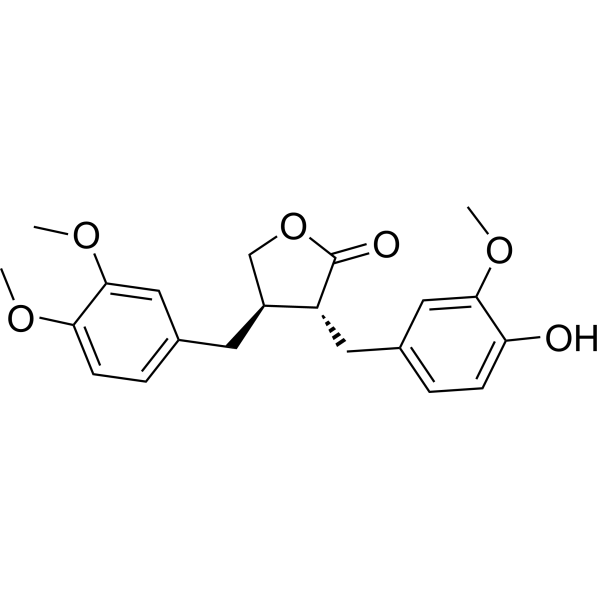
    Arctigenin
    10+ Cited Publications

    (-)-Arctigenin

    MMP Influenza Virus Autophagy Apoptosis Infection Neurological Disease Metabolic Disease Inflammation/Immunology Cancer
    Arctigenin ((-)-Arctigenin), a biologically active lignan, can be used as an antitumor agent. Arctigenin exhibits potent antioxidant, anti-inflammatory and antiviral (influenza A virus) activities. Arctigenin can be used for the research of metabolic disorders, and central nervous system dysfunctions .
    Arctigenin
  • HY-145586

    ZSP1273

    Influenza Virus DNA/RNA Synthesis Infection
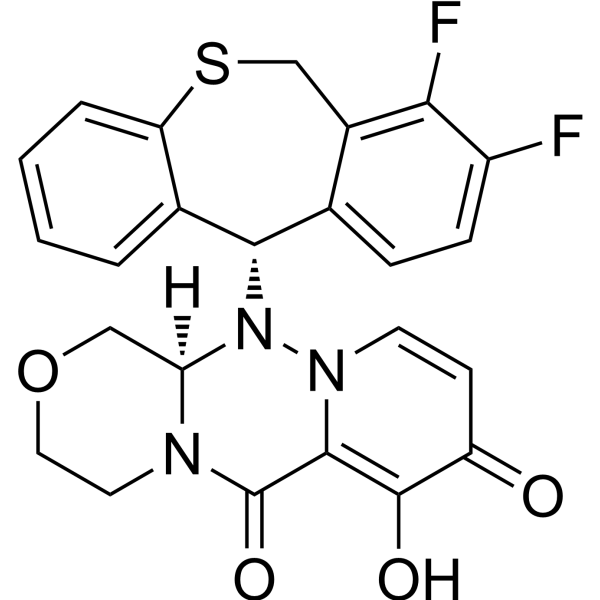
    Onradivir (ZSP1273) is an orally active antiviral agent targeting influenza A virus RNA polymerase PB2 subunit with an IC50 of 0.562 nM. Onradivir inhibits cap binding to influenza A virus RNA polymerase PB2 subunit, suppresses viral replication, reduces viral titres and RNA loads, and inhibits influenza A virus infection. Onradivir maintains high survival rates in influenza A virus-infected mice, and reduces influenza A virus titers in a murine model. Onradivir can be used for the research of influenza A virus infection .
    Onradivir
  • HY-B1589A
    Carbinoxamine maleate salt
    1 Publications Verification

    Histamine Receptor Influenza Virus Infection Inflammation/Immunology
    Carbinoxamine maleate salt is a blood-brain barrier-permeable histamine H1 receptor antagonist. Carbinoxamine maleate salt blocks the action of histamine on H1 receptors, reducing symptoms such as sneezing, rhinitis, rhinorrhea, erythema, pruritus and urticaria. Carbinoxamine maleate salt inhibits influenza virus entry into cells via endocytosis, targets the early stage of the viral life cycle, and simultaneously reduces viral replication levels in the lungs, alleviating pathological damage and inflammatory responses in lung tissues. Carbinoxamine maleate salt can be used in research on allergic rhinitis, influenza, etc.
    Carbinoxamine maleate salt
  • HY-N0224
    Epigoitrin
    1 Publications Verification

    Influenza Virus Infection Metabolic Disease Cancer
    Epigoitrin is a natural alkaloid that provides protection against influenza infection by reducing the host’s susceptibility to influenza virus under stress. Epigoitrin exerts antiviral activity against influenza A1 virus FM1 via inhibiting virus attachment and multiplication in vitro. Epigoitrin also has lipid-lowering effects .
    Epigoitrin
  • HY-P991446

    Influenza Virus Infection
    MEDI-8852 is a human IgG1 monoclonal antibody against influenza A virus hemagglutinin (HA). MEDI-8852 binds to the conserved HA stalk epitope and neutralizes viral infectivity. MEDI-8852 reduces viral titers in mouse lung tissues. MEDI-8852 is applicable to research related to pandemic influenza . Recommended isotype control: Human IgG1 kappa, Isotype Control (HY-P99001).
    MEDI-8852
  • HY-P99750

    CT-P23

    Influenza Virus Infection
    Navivumab (CT-P23) is a monoclonal antibody targeting the hemagglutinin (HA) of influenza A virus. Navivumab binds to the HA2 stem fusion domain and the low-variability HA2 region of influenza viruses. Navivumab neutralizes influenza A viruses of subtypes H1, H2, H5, and H9. Navivumab is applicable to research related to influenza and influenza A .
    Navivumab
  • HY-W011518
    2′-Deoxy-2′-fluoroguanosine
    1 Publications Verification

    Nucleoside Antimetabolite/Analog Influenza Virus Infection
    2′-Deoxy-2′-fluoroguanosine is a nucleoside analog and potent influenza virus inhibitor with an EC90 value of <0.35 μM against influenza A and B viruses. 2′-Deoxy-2′-fluoroguanosine inhibits influenza virus replication in the upper respiratory tract, thereby ameliorating fever and nasal inflammation .
    2′-Deoxy-2′-fluoroguanosine
  • HY-14837

    Enisamium iodide

    Influenza Virus SARS-CoV Infection
    Amizon is an orally effective antiviral and anti-inflammatory agent. Amizon inhibits influenza virus replication and restricts viral RNA synthesis. Amizon reduces the mRNA expression of COX-1, COX-2, NF-κB, TGF1β, IL-1 and IL-6, and stimulates the secretion and mRNA expression of IL-10. Amizon inhibits the oxidative activity of macrophages and possesses antioxidant and free radical-scavenging activities. Amizon is applicable to research related to influenza and acute respiratory viral infections .
    Amizon
  • HY-B1537

    2',3',5'-Tri-O-acetyl-6-azauridine

    Virus Protease Influenza Virus Infection Inflammation/Immunology
    Azaribine (2',3',5'-Tri-O-acetyl-6-azauridine) is a potent orotidine monophosphate decarboxylase (OMPD) inhibitor. Azaribine is an antiviral inhibitor of several RNA viruses and inhibits viral genome replication and gene transcription. Azaribine shows broad-spectrum antiviral activity (EC50=3.80 nM-1.73 μM against influenza A and B viruses; EC50=1.62 μM against ZIKV Paraiba). Azaribine, a triacetate salt of Azauridine, has the potential for psoriasis research .
    Azaribine
  • HY-165613

    Dipalmitoyl-S-glyceryl-cysteine; S-[2,3-Bis(palmitoyloxy)propyl]cysteine

    Toll-like Receptor (TLR) Influenza Virus NF-κB Infection Inflammation/Immunology
    Pam2Cys (Dipalmitoyl-S-glyceryl-cysteine; S-[2,3-Bis(palmitoyloxy)propyl]cysteine) is a TLR2 agonist and immunostimulant. Pam2Cys binds to TLR2 to activate dendritic cells and trigger the TLR2-dependent NF-κB signaling pathway. Pam2Cys also induces dendritic cell maturation by upregulating the expression of cell surface MHC II molecules. Pam2Cys activates innate immune signaling pathways, drives pro-inflammatory and antimicrobial responses, enhances the expression of macrophage activation markers, increases phagocytic activity, induces the release of IL-12 and pro-inflammatory cytokines, and polarizes macrophages into a pro-inflammatory, antimicrobial phenotype without interfering with IL-10-induced macrophage polarization. Pam2Cys also serves as the lipid moiety in synthetic lipopeptide vaccines and possesses self-adjuvant properties. Pam2Cys enhances the immunogenicity of conjugated peptide segments and induces cellular and humoral immune responses. However, it does not activate CD4 T cells in mouse splenocyte cultures when used alone. Pam2Cys activates pulmonary TLR2 signaling pathways, triggers innate immune responses, recruits neutrophils and macrophages, induces the secretion of various cytokines, alleviates symptoms and damages associated with influenza A virus infection in mice without impairing adaptive immunity. Pam2Cys can be used in studies related to tuberculosis and influenza A virus infection .
    Pam2Cys
  • HY-158312
    UH15-38
    1 Publications Verification

    Necroptosis RIP kinase Influenza Virus Infection Inflammation/Immunology
    UH15-38 is a potent RIPK3 inhibitor with an IC50 value of 20 nM. UH15-38 blocks IAV (influenza A virus)-activated necroptosis. UH15-38 dampens IAV-induced lung injury .
    UH15-38
  • HY-14818A

    CS-8958

    Influenza Virus Infection
    Laninamivir octanoate (CS-8958), a proagent of Laninamivir, is a long-acting neuraminidase (NA) inhibitor with anti-influenza virus activity. Laninamivir octanoate shows anti-influenza activity against Oseltamivir-resistant viruses, and also against the pandemic influenza viruses .
    Laninamivir octanoate
  • HY-DY1034

    Fluorescent Dye Infection Neurological Disease
    4-MUNANA (solution) is a substrate of influenza virus neuraminidase (NA) with high selectivity and irreversible reaction. In the enzymatic reaction, 4-MUNANA is hydrolyzed by NA to generate fluorescent 4-methylumbelliferone (4-MU). By detecting the fluorescence intensity of 4-MU, quantitative analysis of NA activity can be achieved. 4-MUNANA can be used in influenza-related research, such as screening NA inhibitors, developing new anti-influenza drugs, and studying the infection mechanism of influenza viruses .
    Solvent and Concentration: Sterile water: 10 mM
    4-MUNANA (solution)
  • HY-P990811

    Influenza Virus Infection
    Anti-Influenza A virus NP Antibody (H16-L10-4R5 (HB-65)) is mouse-derived IgG2a κ type antibody inhibitor, targeting to influenza virus nucleoprotein. Anti-Influenza A virus NP Antibody (H16-L10-4R5 (HB-65)) reacts with influenza virus nucleoprotein (NP). Anti-Influenza A virus NP Antibody (H16-L10-4R5 (HB-65)) can induce passive immunity to influenza A virus. Anti-Influenza A virus NP Antibody (H16-L10-4R5 (HB-65)) can be used for the detections of western blot, flow cytometry and immunohistochemistry in Influenza A virus infection .
    Anti-Influenza A virus NP Antibody (H16-L10-4R5 (HB-65))
  • HY-P99620

    CT-P22; CT120

    Influenza Virus Infection
    Firivumab (CT-P22; CT120) is a human IgG1 monoclonal influenza A virus hemagglutinin (Anti-IAV HA) antibody. Firivumab is capable of neutralizing H1N1, H5N1, H6N1, H6N2, H8N4, H8N8, H9N2 and H12N7. Firivumab shows protection against H1N1 virus in mice .
    Firivumab
  • HY-P990187

    MHC Influenza Virus Infection Inflammation/Immunology
    Anti-Mouse MHC Class II (I-A/I-E) Antibody (M5/114) is a rat-derived IgG2b type antibody inhibitor, targeting to mouse MHC Class II. Anti-Mouse MHC Class II (I-A/I-E) Antibody (M5/114) reacts with mouse MHC Class II haplotypes I-Ab, I-Ad, I-Aq, I-Ed, and I-Ek. Anti-Mouse MHC Class II (I-A/I-E) Antibody (M5/114) does not react with I-Af, I-Ak, or I-As haplotypes. Anti-Mouse MHC Class II (I-A/I-E) Antibody (M5/114) blocks MHC Class II and inhibit T cell generation. Anti-Mouse MHC Class II (I-A/I-E) Antibody (M5/114) can be used for the researches of infection and immunology, such as influenza A virus (IAV) infection .
    Anti-Mouse MHC Class II (I-A/I-E) Antibody (M5/114)
  • HY-121473

    Antibiotic Bacterial Fungal Parasite Infection
    Aklavin is a structural analog of Aclacinomycin A (HY-N2306) produced by Streptomyces strain A 1165. Aklavin possesses Z-DNA-inducing and stabilizing activities, along with antibiotic, anti-phage and broad-spectrum antimicrobial activities. Aklavin inhibits the proliferation of various viruses (such as influenza virus and poliovirus) and interferes with their nucleoprotein synthesis, while also exhibiting inhibitory effects on staphylococci, mycobacteria and specific fungi. Aklavin blocks phage-induced bacterial lysis by regulating host-parasite interactions. Aklavin shows specific toxicity to fertilized eggs and mice, and does not alter the splicing of the SMN2 gene .
    Aklavin
  • HY-P1749

    Influenza Virus Infection
    Influenza HA (307-319) is 13 amino acids 307 to 319 fragment of Influenza HA. Influenza HA is a glycoprotein found on the surface of influenza viruses .
    Influenza HA (307-319)
  • HY-177555

    Influenza Virus Endonuclease Infection
    AV5116 is a cap-dependent endonuclease inhibitor (CENI) that binds to the active site of the cap-dependent endonuclease (CEN) located in the N-terminal domain of the polymerase acidic. AV5116 exhibits potent inhibitory activity against influenza viruses (influenza A, B, and C viruses). AV5116 can be used for the study of influenza virus infections .
    AV5116
  • HY-134922

    Influenza Virus Infection
    NS1-IN-1 (compound 3) is a potent NS1 inhibitor. NS1 is a major influenza A virus virulence factor that inhibits host gene expression. NS1-IN-1 decreases viral protein levels, contributing to the reduction of virus replication. NS1-IN-1 shows antiviral activity by repressing the activity of mTORC1 in a TSC1-TSC2-dependent manner .
    NS1-IN-1
  • HY-N12110

    Toll-like Receptor (TLR) SARS-CoV Infection
    SMU-CX1 is a specific TLR3 inhibitor (IC50: 0.11 μM) with IC50 ranging from 0.14-0.33 μM against multiple influenza A virus subtypes. SMU-CX1 inhibits the viral PB2 and NP proteins with an IC50 of 0.43 μM for SARS-CoV-2 activity. SMU-CX1 also inhibits inflammatory factors in host cells, including IFN-β, IP-10, and CCL-5 .
    SMU-CX1
  • HY-143494

    RSV Influenza Virus Infection
    RSV/IAV-IN-3 (compound 14'i) is a dual inhibitor of respiratory syncytial virus (RSV) and influenza A virus (IAV) with EC50 values of 2.92 µM and 1.90 µM,respectively. RSV/IAV-IN-3 has antiviral effect against H1N1 and H3N2 with EC50 values of 3.25 µM and 1.50 µM in MDCK cells, respectively. RSV/IAV-IN-3 significantly inhibits the activity of luciferase in a dose-dependent manner, with an EC50 of 3.89 µM. RSV/IAV-IN-3 inhibits IAV infectivity and RdRp activity. RSV/IAV-IN-3 inhibits IAV and RSV replication at the post-entry stage .
    RSV/IAV-IN-3
  • HY-W892911

    Influenza Virus Infection
    AV-5080 is an orally active neuraminidase inhibitor. AV-5080 can be used for the research of influenza A and B viruses .
    AV-5080
  • HY-123304

    Influenza Virus Infection
    MBX2546 is a influenza A virus inhibitor with the Kd values of 5.3μM and > 100 μM for H1 Hemagglutinin and H3 Hemagglutinin, respectively .
    MBX2546
  • HY-131069A

    Influenza Virus Infection
    MBX2329, a potent influenza virus inhibitor, specifically inhibits hemagglutinin (HA)-mediated viral entry with HIV/HA(H5) displaying IC90 of 8.6 μM. MBX2329 inhibits a wide spectrum of influenza A viruses, which includes the 2009 pandemic influenza virus A/H1N1/2009, highly pathogenic avian influenza (HPAI) virus A/H5N1, and oseltamivir-resistant A/H1N1 strains .
    MBX2329
  • HY-N7346

    HSV Cholinesterase (ChE) Infection
    Lucidadiol is a natural compound isolated from Ganoderma lucidum. Lucidadiol exhibits acetylcholinesterase-inhibitory activity, with IC50 values of 31 μM. Lucidadiol shows antiviral activity against influenza virus type A and HSV type 1 .
    Lucidadiol
  • HY-112543

    Influenza Virus Infection
    S119-8 is a broad spectrum inhibitor of influenza A and B viruses, showing activity against multiple influenza B viruses and an oseltamivir-resistant influenza A virus, but does not inhibit a non-influenza virus, vesicular stomatitis nirus (VSV) .
    S119-8
  • HY-131179

    Influenza Virus Infection
    Influenza A virus-IN-1 is a dihydropyrrolidones derivative and is a potent inhibitor against wide subtypes of influenza A virus (IAV) with IC50 values from 3.11 μM to 7.13 μM. Influenza A virus-IN-1 efficiently inhibits replication of IAV, up-regulates the expression of key antiviral cytokines IFN-β and antiviral protein MxA .
    Influenza A virus-IN-1
  • HY-145586A

    ZSP1273 monohydrate

    Influenza Virus DNA/RNA Synthesis Infection
    Onradivir (ZSP1273) monohydrate is an orally active antiviral agent targeting influenza A virus RNA polymerase PB2 subunit with an IC50 of 0.562 nM. Onradivir monohydrate inhibits cap binding to influenza A virus RNA polymerase PB2 subunit, suppresses viral replication, reduces viral titres and RNA loads, and inhibits influenza A virus infection. Onradivir monohydrate maintains high survival rates in influenza A virus-infected mice, and reduces influenza A virus titers in a murine model. Onradivir monohydrate can be used for the research of influenza A virus infection .
    Onradivir monohydrate
  • HY-170646

    Influenza Virus Infection
    Influenza A virus-IN-15 (Compound 9b), a quinoline derivative, is a broad-spectrum inhibitor of influenza A viruses with acceptable cytotoxicity (IC50: 0.88-6.33 μM). Influenza A virus-IN-15 can inhibit the transcription and replication of viral RNA and is used in research for its antiviral effects against influenza A viruses (IAV) .
    Influenza A virus-IN-15
  • HY-177791

    PROTACs Influenza Virus Infection
    vRNPs degrader-1 is a potent PROTAC viral ribonucleoproteins (vRNPs) degrader. vRNPs degrader-1 shows broad-spectrum anti-influenza A viruses (IAV) activity by targeting the conserved 5′ end of viral RNA, thereby inducing proteasomal degradation of viral proteins. vRNPs degrader-1 inhibits H1N1, H9N2, and H3N2 infection in mice. vRNPs degrader-1 can be used for influenza research .
    vRNPs degrader-1
  • HY-P1937

    Influenza Virus Infection
    Cyclo(-Met-Pro) is a cyclic dipeptide consisting of the amino acids methionine and proline. Cyclo(-Met-Pro) exhibits weak inhibitory activity against the influenza A virus (H3N2) (5 mM, 2.1% inhibition), while cis-cyclo(Leu-Pro) and cis-cyclo(Phe-Pro) shows significant antiviral activity .
    Cyclo(-Met-Pro)
  • HY-P991054

    Influenza Virus Infection
    CR-8020 is a human IgG1 antibody that targets influenza A virus H3N2. CR-8020 binds to hemagglutinin (HA) of H3N2 strains with IC50s of 3.36 nM and 0.06 nM for A/Brisbane/10/2007 and A/Wyoming/3/2003, respectively. The isotype control for CR-8020 can refer to Human IgG1 kappa, Isotype Control (HY-P99001) .
    CR-8020
  • HY-N0035R

    (-)-Arctigenin (Standard)

    Reference Standards MMP Influenza Virus Autophagy Apoptosis Infection Neurological Disease Metabolic Disease Inflammation/Immunology Cancer
    Arctigenin (Standard) is the analytical standard of Arctigenin. This product is intended for research and analytical applications. Arctigenin ((-)-Arctigenin), a biologically active lignan, can be used as an antitumor agent. Arctigenin exhibits potent antioxidant, anti-inflammatory and antiviral (influenza A virus) activities. Arctigenin can be used for the research of metabolic disorders, and central nervous system dysfunctions .
    Arctigenin (Standard)
  • HY-149034

    S5

    Influenza Virus Infection Cancer
    Influenza A virus-IN-8 (S5) is a macrocyclic peptide with no cytotoxic. Influenza A virus-IN-8 is also a potent Influenza A Virus (IAV) inhibitor (with sufficient protease stability) with IC50s of 6.7 and 6.6 nM for H1 and H5 variants, respectively. Influenza A virus-IN-8 shows good affinitiescan to H1 variants, binds to a conserved region in the HA stem with a Kd of 1.0 nM .
    Influenza A virus-IN-8
  • HY-P5550

    Influenza Virus Infection
    Urumin has antiviral activity against the human influenza A virus. Urumin inhibits the growth of PR8 influenza virus (IC50: 3.8 μM). Urumin targets the conserved stalk of H1 hemagglutini, and is effective at neutralizing drug-resistant H1 influenza viruses. Urumin protects naive mice from lethal influenza infection .
    Urumin
  • HY-172515

    Influenza Virus Virus Protease Drug Isomer Infection
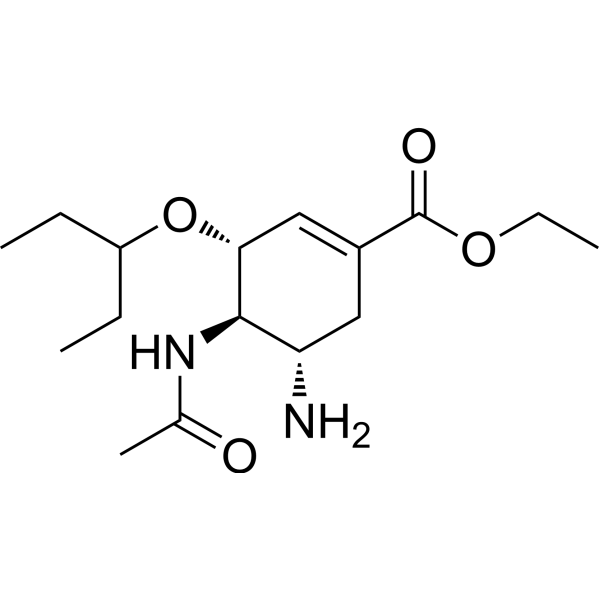
    ent-Oseltamivir, the enantiomer of Oseltamivir (HY-13317), is a neuraminidase (NA) of influenza virus inhibitor. ent-Oseltamivir is promising for research of influenza virus infections .
    ent-Oseltamivir
  • HY-N15389

    Influenza Virus Infection
    Noformicin has inhibitory effect on mumps virus and Newcastle disease virus in chicken embryo. Noformicin also extended the survival of mice infected with swine, influenza A (PR8) and influenza B (Lee) viruses .
    Noformicin
  • HY-P0289

    Influenza Virus Infection
    CEF3 (SIIPSGPLK) corresponds to aa 13-21 of the influenza A virus M1 protein. The matrix (M1) protein of influenza A virus is a multifunctional protein that plays essential structural and functional roles in the virus life cycle.
    CEF3
  • HY-N2216

    Onjisaponin F

    Influenza Virus Infection
    Polygalasaponin XXXI (Onjisaponin F) is an effective adjuvant for intranasal administration of influenza Influenza hemagglutinin (HA) vaccine to protect influenza virus infection .
    Polygalasaponin XXXI
  • HY-146004

    Influenza Virus Infection
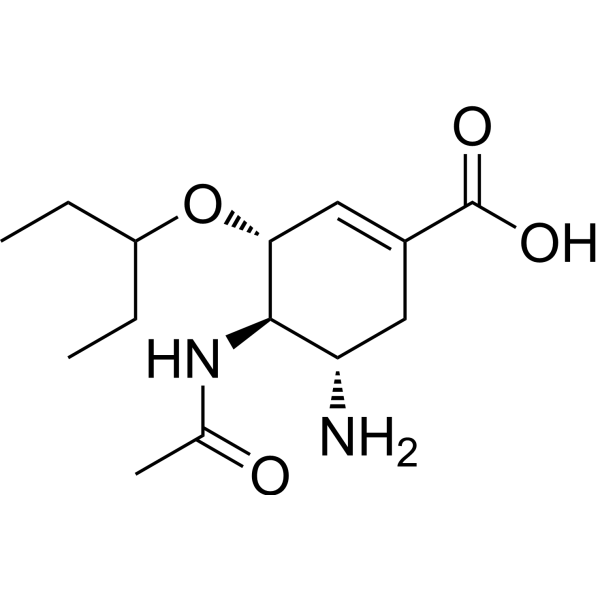
    Influenza A virus-IN-4 (compound 23b), an Oseltamivir derivative, is a potent inhibitor of neuraminidase. Influenza A virus-IN-4 exerts powerful inhibitions on influenza viruses .
    Influenza A virus-IN-4
  • HY-162492

    Influenza Virus Infection
    Influenza A virus-IN-14 (Compound 37) is an inhibitor for influenza virus type A (IAV), which inhibits H1N1 with an EC50 of 23 nM. Influenza A virus-IN-14 exhibits low cytotoxicity with CC50 of more than 100 μM. Influenza A virus-IN-14 inhibits cytopathic effect and improves the survival rates of cell Calu3. Influenza A virus-IN-14 exhibits synergistic activity with the neuraminidase inhibitor Oseltamivir (HY-13317). Influenza A virus-IN-14 exhibits poor pharmacokinetic properties in CD-1 mouse .
    Influenza A virus-IN-14
  • HY-172913

    Influenza Virus Infection
    Influenza A virus-IN-16 (compound 10) is a potent anti-viral agent. Influenza A virus-IN-16 inhibits pseudotyped H7N1 with an EC50 of 0.09 μM .
    Influenza A virus-IN-16
  • HY-144066

    Influenza Virus Infection
    Cap-dependent endonuclease-IN-21 is a potent inhibitor of cap-dependent endonuclease (CEN). Cap-dependent endonuclease-IN-21 inhibits the replication of influenza virus. ap-dependent endonuclease-IN-21 has the potential for the research of influenza virus infection (influenza A) (extracted from patent WO2021233302A1, compound 8B or 8A) .
    Cap-dependent endonuclease-IN-21
  • HY-144067

    Influenza Virus Infection
    Cap-dependent endonuclease-IN-23 is a potent inhibitor of cap-dependent endonuclease (CEN). Cap-dependent endonuclease-IN-23 inhibits the replication of influenza virus. ap-dependent endonuclease-IN-23 has the potential for the research of influenza virus infection (influenza A) (extracted from patent WO2021233302A1, compound 8A or 8B) .
    Cap-dependent endonuclease-IN-23
  • HY-N15302

    Influenza Virus Infection
    Ostamycin A is a cyclic diterpene with antiviral activity. Ostamycin A inhibits the replication of influenza A virus by targeting the nucleoprotein, with an IC50 of 4.72 μM .
    Ostamycin A
  • HY-143495

    RSV Influenza Virus Infection
    RSV-IN-3 (Compound 1) is a dual inhibitor of respiratory syncytial virus (RSV) and influenza virus A (IAV). RSV-IN-3 shows anti-RSV activity (EC50 = 32.70 μM) .
    RSV-IN-3
  • HY-143496

    RSV Influenza Virus Infection
    RSV-IN-4 (Compound 2) is a dual inhibitor of respiratory syncytial virus (RSV) and influenza virus A (IAV). RSV-IN-4 shows anti-RSV activity (EC50 = 11.76 μM) .
    RSV-IN-4
  • HY-P5644

    Bacterial Infection
    Retrocyclin-3 is an antimicrobial peptide against human immunodeficiency virus, influenza A and herpes simplex virus .
    Retrocyclin-3

Inquiry Online

Your information is safe with us. * Required Fields.

Salutation


Country or Region *

Applicant Name *


Organization Name *

Department *


Email Address *


Product Name *

Cat. No.


Requested quantity *

Phone Number *


Remarks

Inquiry Online

Inquiry Information

Product Name:
Cat. No.:
Quantity:
MCE Japan Authorized Agent:

