1. Search Result
Search Result
Pathways Recommended: Stem Cell/Wnt Cell Cycle/DNA Damage
Results for "

Proliferating cancer cells

" in MedChemExpress (MCE) Product Catalog:

319

Inhibitors & Agonists

1

Screening Libraries

2

Biochemical Assay Reagents

4

Peptides

6

Inhibitory Antibodies

40

Natural
Products

3

Isotope-Labeled Compounds

4

Click Chemistry

1

Oligonucleotides

Cat. No. Product Name Target Research Areas Chemical Structure
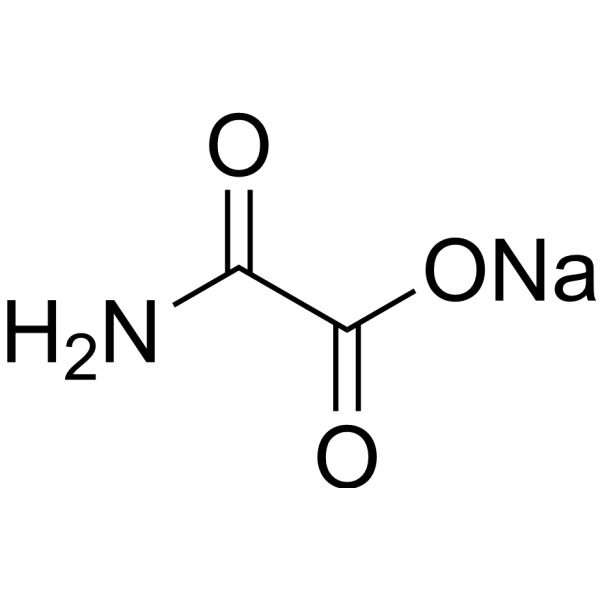
  • HY-W013032A
    Oxamic acid sodium
    55+ Cited Publications

    Sodium oxamate

    Lactate Dehydrogenase Apoptosis Cancer
    Oxamic acid (oxamate) sodium salt is a lactate dehydrogenase-A (LDH-A) inhibitor. Oxamic acid sodium salt shows anti-tumor activity, and anti-proliferative activity against cancer cells, and can induce apoptosis .
    Oxamic acid sodium
  • HY-50767
    Palbociclib
    235+ Cited Publications

    PD 0332991

    CDK Cancer
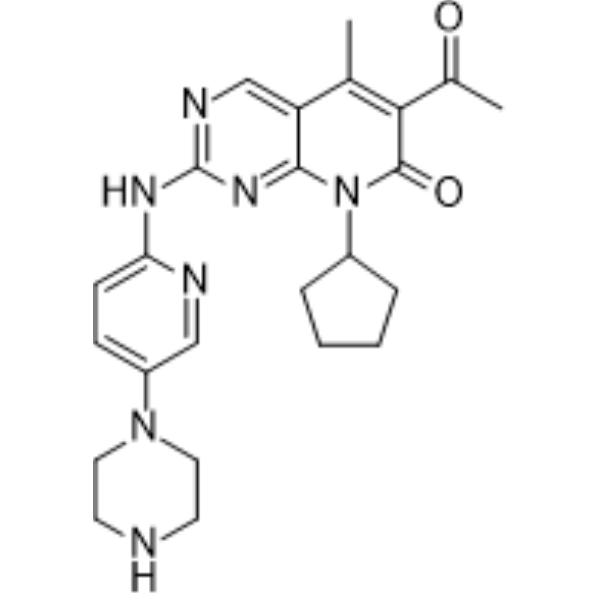
    Palbociclib (PD 0332991) is an orally active selective CDK4 and CDK6 inhibitor with IC50 values of 11 and 16 nM, respectively. Palbociclib has potent anti-proliferative activity and induces cell cycle arrest in cancer cells, which can be used in the research of HR-positive and HER2-negative breast cancer and hepatocellular carcinoma .
    Palbociclib
  • HY-15372
    GW6471
    65+ Cited Publications

    PPAR Apoptosis Cancer
    GW6471 is a selective peroxisome proliferator-activated receptor α (PPARα) antagonist. GW6471 reduces cancer stem cell viability, proliferation, and spheroid formation. GW6471 induces apoptosis and causes metabolic impairment including energy imbalance. GW6471 can be used for the research of paragangliomas and triple-negative breast cancer .
    GW6471
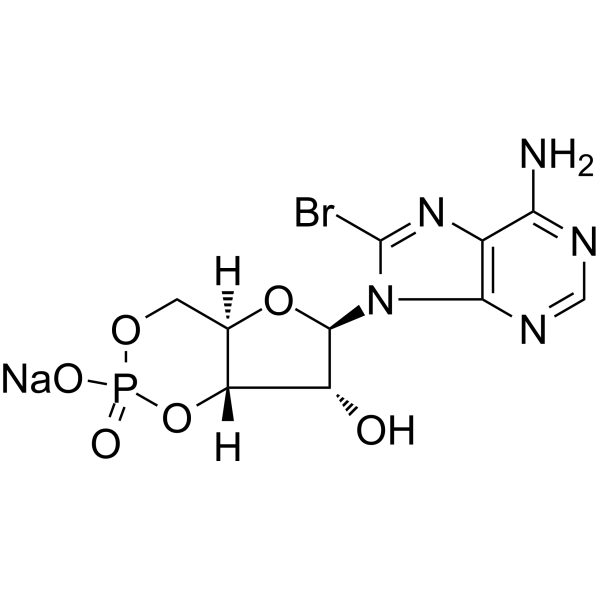
  • HY-12306
    8-Bromo-cAMP sodium salt
    35+ Cited Publications

    8-Br-Camp sodium salt

    PKA Apoptosis Cancer
    8-Bromo-cAMP sodium (8-Br-Camp) sodium salt, a cyclic AMP analog, is an activator of cyclic AMP-dependent protein kinase (PKA). 8-Bromo-cAMP sodium salt has anti-proliferative and apoptotic effects against cancer cells .
    8-Bromo-cAMP sodium salt
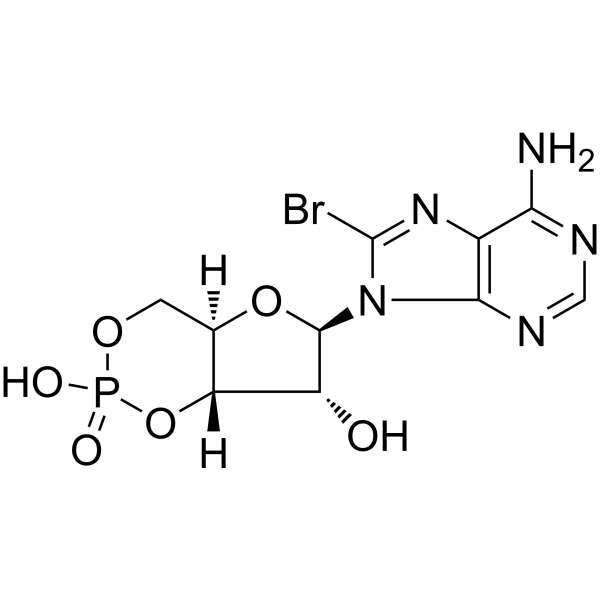
  • HY-12306A
    8-Bromo-cAMP
    35+ Cited Publications

    8-Br-Camp

    PKA Apoptosis Cancer
    8-Bromo-cAMP (8-Br-Camp), a cyclic AMP analog, is an activator of cyclic AMP-dependent protein kinase (PKA). 8-Bromo-cAMP has anti-proliferative and apoptotic effects against cancer cells .
    8-Bromo-cAMP
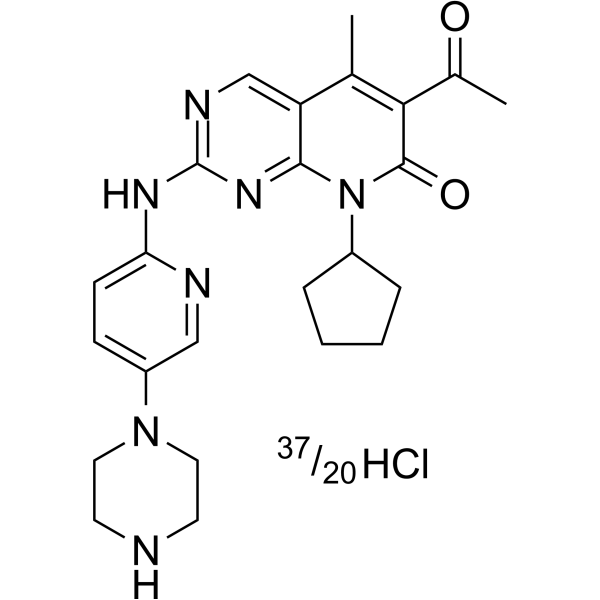
  • HY-50767C
    Palbociclib hydrochloride
    215+ Cited Publications

    PD-0332991 hydrochloride

    CDK Cancer
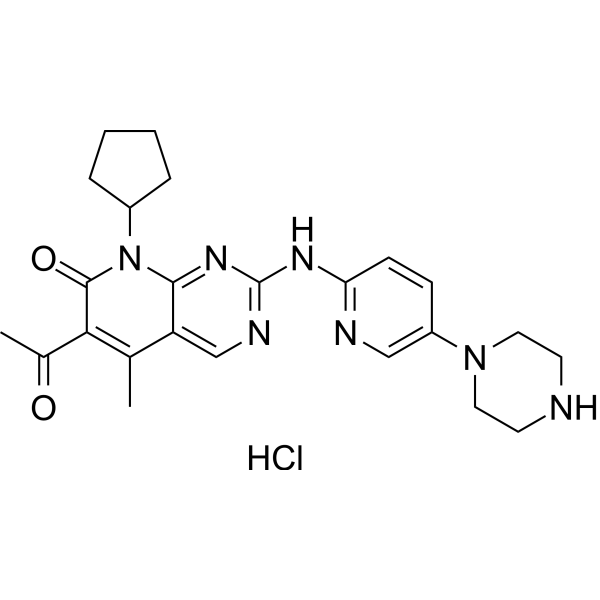
    Palbociclib (PD 0332991) hydrochloride is an orally active selective CDK4 and CDK6 inhibitor with IC50 values of 11 and 16 nM, respectively. Palbociclib hydrochloride has potent anti-proliferative activity and induces cell cycle arrest in cancer cells. Palbociclib hydrochloride can be used in the research of HR-positive and HER2-negative breast cancer and hepatocellular carcinoma .
    Palbociclib hydrochloride
  • HY-50767A
    Palbociclib monohydrochloride
    235+ Cited Publications

    PD 0332991 monohydrochloride

    CDK Cancer
    Palbociclib (PD 0332991) monohydrochloride is an orally active selective CDK4 and CDK6 inhibitor with IC50 values of 11 and 16 nM, respectively. Palbociclib monohydrochloride has potent anti-proliferative activity and induces cell cycle arrest in cancer cells, which can be used in the research of HR-positive and HER2-negative breast cancer and hepatocellular carcinoma .
    Palbociclib monohydrochloride
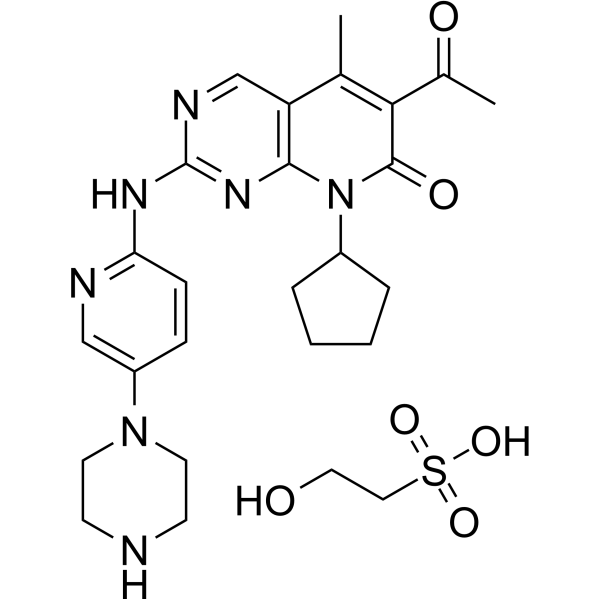
  • HY-A0065
    Palbociclib isethionate
    230+ Cited Publications

    PD 0332991 isethionate

    CDK Infection Neurological Disease Cancer
    Palbociclib (PD 0332991) isethionate is an orally active selective CDK4 and CDK6 inhibitor with IC50 values of 11 and 16 nM, respectively. Palbociclib isethionate has potent anti-proliferative activity and induces cell cycle arrest in cancer cells, which can be used in the research of HR-positive and HER2-negative breast cancer and hepatocellular carcinoma .
    Palbociclib isethionate
  • HY-W013032
    Oxamic acid
    Maximum Cited Publications
    58 Publications Verification

    Oxamidic acid

    Lactate Dehydrogenase Apoptosis Cancer
    Oxamic acid is a lactate dehydrogenase-A (LDH-A) inhibitor. Oxamic acid shows anti-tumor activity, and anti-proliferative activity against cancer cells, and can induce apoptosis .
    Oxamic acid
  • HY-13065
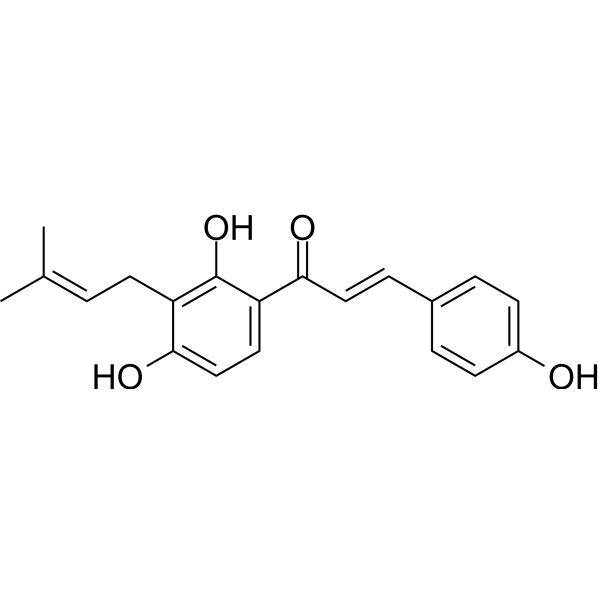
    Isobavachalcone
    5+ Cited Publications

    Corylifolinin; Isobacachalcone

    Akt Reactive Oxygen Species (ROS) Apoptosis Autophagy Cancer
    Isobavachalcone (Corylifolinin) is derived from Psoralea corylifolia Linn. and is a potent inhibitor of Akt signaling pathway, which induces apoptosis in human cancer cells (Inhibits OVCAR-8 cell growth with an IC50 value of 7.92 μM). Isobavachalcone also induces Reactive Oxyen Species (ROS) generation in OVCAR-8 cells and has exhibit cancer anti-promotive and anti-proliferative activity .
    Isobavachalcone
  • HY-N2959
    Brevilin A
    5 Publications Verification

    JAK STAT Apoptosis Autophagy Cancer
    Brevilin A is an orally active STAT3/JAK inhibitor (STAT3 IC50=?10.6 μM). Brevilin A shows anti-tumor activity, anti-proliferative activity to cancer cells, and can induce apoptosis and autophagy .
    Brevilin A
  • HY-15995
    Tubulysin A
    1 Publications Verification

    TubA

    Antibiotic Microtubule/Tubulin ADC Payload Mitosis Cancer
    Tubulysin A (TubA) is an anticancer and antiangiogenic agent with anti-microtubule, anti-mitosis and anti-proliferative activity against a variety of cancer cells with IC50 values in the pmol range. It can induce apoptosis of cancer cells and has no effect on normal cells. Tubulysins are a group of potent cytotoxins consisting of nine members (A-I). Tubulysin A can synthesize ADC as ADC Cytotoxin .
    Tubulysin A
  • HY-128588
    STAT3-IN-3
    5+ Cited Publications

    STAT Apoptosis Cancer
    STAT3-IN-3 is a potent and selective inhibitor of signal transducer and activator of transcription 3 (STAT3), with anti-proliferative activity. STAT3-IN-3 induces apoptosis in breast cancer cells. STAT3-IN-3 acts as a promising mitochondria-targeting STAT3 inhibitor for cancer research .
    STAT3-IN-3
  • HY-147298
    Plogosertib
    1 Publications Verification

    CYC140

    Polo-like Kinase (PLK) Cancer
    Plogosertib (CYC140) is a selective, potent, and orally active ATP-competitive PLK1 inhibitor (IC50: 3 nM). Plogosertib is an anti-cancer agent with anti-proliferative activity. Plogosertib can be used in the research of several tumors, including esophageal, gastric, leukemia, non–small cell lung cancer, ovarian, and squamous cell cancers .
    Plogosertib
  • HY-N7072
    Grape seed extract
    2 Publications Verification

    Apoptosis Metabolic Disease Inflammation/Immunology Cancer
    Grape seed extract is a natural product, with anti-inflammatory and anti-proliferative effects. Grape seed extract shows inhibitory activity on the fat-metabolizing enzymes pancreatic lipase and lipoprotein lipase. Grape seed extract induces apoptotic in human colorectal cancer cells .
    Grape seed extract
  • HY-N6635

    Fungal Infection Cancer
    trans-Nerolidol improves the anti-proliferative effect of Doxorubicin (DOX) (HY-15142A) against intestinal cancer and breast cancer cells in vitro. trans-Nerolidol increases accumulation of DOX inside cells in vitro. trans-Nerolidol activates apoptosis in vivo .
    trans-Nerolidol
  • HY-168660
    CPD-10
    1 Publications Verification

    PROTACs Apoptosis CDK Cancer
    CPD-10 is a potent CCND1 and CDK4 PROTAC degrader. CPD-10 exhibits anti-proliferative effects on tumor cells and can also induce apoptosis. CPD-10 can be used for the study of breast cancer and lung cancer .
    CPD-10
  • HY-N3755

    Estrogen Receptor/ERR Cancer
    Dihydroresveratrol, a potent phytoestrogen, is a hormone receptor modulator. Dihydroresveratrol exhibits proliferative effects in androgen-independent prostate and breast cancer cells at picomolar and nanomolar concentrations .
    Dihydroresveratrol
  • HY-15587

    DNA/RNA Synthesis Cancer
    L82 is a selective and uncompetitive DNA ligase 1 (DNA Lig1) inhibitor (hLig1 IC50=12 μM). L82 shows anti-proliferative activity to breast cancer cells .
    L82
  • HY-W016794

    Reactive Oxygen Species (ROS) Apoptosis Cancer
    NSC3852 exhibits anti-proliferative activity against cancer cell MCF-7. NSC3852 promotes the ROS generation, DNA damage, and apoptosis in MCF-7. NSC3852 exhibits anti-tumor against leukemia in mouse model
    NSC3852
  • HY-N12503

    Apoptosis Caspase Cancer
    Patuletin is a flavonol, that can be isolated from the flowers of Tagetes patula. Patuletin shows anti-proliferative activity against cancer cells. Patuletin causes significant nuclear fragmentation and has a great capacity to induce caspase-3 activation .
    Patuletin
  • HY-W005130

    NF-κB Metabolic Disease Cancer
    2,4,6-Trihydroxybenzaldehyde is an orally active NF- B inhibitor. 2,4,6-Trihydroxybenzaldehyde shows anti-tumor activity, anti-cancer cell proliferative activity and anti-obesity activity .
    2,4,6-Trihydroxybenzaldehyde
  • HY-120069

    Apoptosis Cancer
    APX2009 is a specific APE1/REF-1 redox inhibitor with anticancer activities which decreases the proliferative, migratory, and invasive properties of breast cancer cell and induces apoptosis in breast cancer cell .
    APX2009
  • HY-139054

    Apoptosis Cancer
    4'-Methoxyflavone is a flavonoid with antioxidant properties and anti-proliferative activity against cancer cells. 4'-Methoxyflavone can inhibit cycle-dependent kinases leading to cell cycle arrest and regulate cell signaling pathways to influence cell proliferation and apoptosis. 4'-Methoxyflavone can be used in cancer chemoprevention research .
    4'-Methoxyflavone
  • HY-165245

    Transmembrane Glycoprotein Cancer
    SBI-183 is an orally active inhibitor of QSOX1 (Kd: 20 μM). SBI-183 suppresses the proliferative and invasive phenotype of renal cancer cell lines, including triple negative breast cancer cell line, lung adenocarcinoma cell line and pancreatic ductal adenocarcinoma. SBI-183 inhibits tumor growth in two human xenograft mouse models of renal cell carcinoma in vivo .
    SBI-183
  • HY-111538
    MAGL-IN-1
    1 Publications Verification

    MAGL Cancer
    MAGL-IN-1 is a potent, selective, reversible and competitive inhibitor of MAGL, with an IC50 of 80 nM. MAGL-IN-1 exhibits anti-proliferative effects against human breast, colorectal, and ovarian cancer cells. MAGL-IN-1 blocks MAGL in cell-based as well as in vivo assays .
    MAGL-IN-1
  • HY-151106

    Fat Mass and Obesity-associated Protein (FTO) Cancer
    FTO-IN-8 (FTO-43) is a N6-methyladenosine demethylase (FTO) (fat mass- and obesity-associated protein) inhibitor with the IC50 value of 5.5 μM. FTO-IN-8 has anti-cancer cell proliferative activity .
    FTO-IN-8
  • HY-125612

    5'-Hydroxymorusin

    Apoptosis Cancer
    Artonin E (5'-Hydroxymorusin) is a known prenylated flavonoid that induces apoptosis and arrests the cell cycle in S phase. Artonin E can induce anti-proliferative effects through mitochondrial pathway dysregulation and can be used in cancer research .
    Artonin E
  • HY-129371

    ADC Linker Cancer
    SPDV is a cleavable ADC linker used for diagnosis and treatment of cancer or B cell proliferative diseas.
    SPDV
  • HY-149100

    Polo-like Kinase (PLK) Epigenetic Reader Domain Cancer
    PLK1-IN-6 is a potent and selective PLK1 inhibitor, with an IC50 of 0.45 nM. PLK1-IN-6 shows significant anti-proliferative activities against cancer cells .
    PLK1-IN-6
  • HY-50767B

    PD-0332991 dihydrochloride

    CDK Cancer
    Palbociclib (PD 0332991) dihydrochloride is an orally active selective CDK4 and CDK6 inhibitor with IC50 values of 11 and 16 nM, respectively. Palbociclib dihydrochloride has potent anti-proliferative activity and induces cell cycle arrest in cancer cells, which can be used in the research of HR-positive and HER2-negative breast cancer and hepatocellular carcinoma .
    Palbociclib dihydrochloride
  • HY-160543

    ADC Payload Topoisomerase Cancer
    Exatecan-amide-CH2-O-CH2-CH2-OH (Compound 4) is a derivative of Exatecan (HY-13631). Exatecan-amide-CH2-O-CH2-CH2-OH can be used for the research of cell proliferative diseases such as cancer .
    Exatecan-amide-CH2-O-CH2-CH2-OH
  • HY-116938

    Apoptosis Cancer
    Farnesiferol C is a sesquiterpene coumarin with anti-cancer activity. Farnesiferol C inhibits the proliferative and apoptotic of AGS cells .
    Farnesiferol C
  • HY-N10699

    Others Cancer
    6-Methoxykaempferol is a flavone that can be found in brazilian propolis. 6-Methoxykaempferol shows anti-proliferative activity for cancer cells .
    6-Methoxykaempferol
  • HY-151609

    PARP Cancer
    PARP7-IN-12 is a potent PARP7 Inhibitor with an IC50 value of 7.836 nM. PARP7-IN-12 can be used in research of cancer .
    PARP7-IN-12
  • HY-116135

    Apoptosis Reactive Oxygen Species (ROS) Cancer
    R24 is a type of flavonoid derivative. R24 exhibits strong anti-angiogenic and anti-proliferative effects. R24 induces cell apoptosis and promotes the production of reactive oxygen species (ROS). R24 can be used for the study of cancers such as lung cancer and colorectal cancer .
    R24
  • HY-123024

    BL-S-640; SK&F 60771

    Apoptosis Bacterial Antibiotic Infection Cancer
    Cefatrizine (BL-S-640) is an orally active and broad-spectrum cephalosporin antibiotic. Cefatrizine is also a eEF2K inhibitor, with anti-proliferative activity in human breast cancer cells, which could induce ER stress, leading to cell death. Cefatrizine can be used in studies of cancer and bacterial infection .
    Cefatrizine
  • HY-W877997

    E3 Ligase Ligand-Linker Conjugates Drug Derivative Cancer
    Pomalidomide 5'-pip-acid is an E3 ligase ligand-linker conjugate derived from the molecular glue Pomalidomide (HY-10984), which can be used to synthesize the dual-target PROTAC degrader PROTAC CBP/p300/BRD4 Degrader-1 (HY-181758) targeting CBP/p300 and BRD4. Pomalidomide 5'-pip-acid shows anti-proliferative activity against cancer cells with an IC50 of 2.73 nM. Pomalidomide 5'-pip-acid induces anti-proliferative effects in cancer cells. Pomalidomide 5'-pip-acid is applicable to research related to prostate cancer and colorectal cancer .
    Pomalidomide 5'-pip-acid
  • HY-121333

    Antibiotic Wnt β-catenin Bacterial Infection Neurological Disease Cancer
    Dinactin, an antibiotic ionophore produced by Streptomyces species, as an effective small molecule targeting Wnt/β-catenin signaling pathway in cancer cells. Dinactin shows marked inhibition of HCT-116 cell growth with an IC50 of 1.1 μM. Dinactin shows anti-proliferative activity against the cancer cells in apoptosis-independent manner. Dinactin is also an effective agent for the research of neuropathic pain .
    Dinactin
  • HY-145857

    HSP Apoptosis Cancer
    GRP78-IN-1 exhibits several interactions with GRP78 residues with binding energy of -8.07 kcal/mol. GRP78-IN-1 shows the potent cytotoxic, anti-proliferative in cancer cells. GRP78-IN-1 exhibits promising apoptosis in breast cancer cells and stalls wound healing properties .
    GRP78-IN-1
  • HY-178158

    Farnesyl Transferase Apoptosis DNA/RNA Synthesis Cancer
    SQS-IN-1 is a squalene synthase (SQS) inhibitor. SQS-IN-1 exhibits potent and broad-spectrum anti-proliferative effects on both mouse and human lung cancer cell lines. SQS-IN-1 inhibits DNA replication and the cell cycle, causing mitochondrial hyperpolarization and inducing cell apoptosis. SQS-IN-1 inhibits cell migration and invasion. SQS-IN-1 can be used to the study of lung cancer .
    SQS-IN-1
  • HY-175555

    Microtubule/Tubulin Apoptosis Cancer
    Tubulin-IN-54 is a tubulin inhibitor. Tubulin-IN-54 exhibits anti-proliferative activity against various cancer cells. Tubulin-IN-54 inhibits tubulin polymerization, disrupts microtubule networks, induces G2/M cell cycle arrest, and promotes cancer cell apoptosis. Tubulin-IN-54 demonstrates significant anti-tumor efficacy in mice bearing PC-3/TxR xenografts. Tubulin-IN-54 can be used for the study of taxane-resistant cancers (prostate cancer, melanoma) .
    Tubulin-IN-54
  • HY-N7640

    Others Inflammation/Immunology Cancer
    Desoxylimonin is an orally active triterpenoid compound found from grapefruit seed. Desoxylimonin shows anti-proliferative activities to breast cancer cells. Desoxylimonin derivatives shows better anticancer, analgesic and anti-inflammatory activity than the lead compound .
    Deoxylimonin
  • HY-178511

    Kinesin Cancer
    KIF18A-IN-17 (Example 37A) is a KIF18A inhibitor with racemic form with an IC50 of 48 nM. KIF18A-IN-17 exhibits anti-proliferative activity against HT29 cells. KIF18A-IN-17 can be used for the study of cancers such as breast cancer and ovarian cancer .
    KIF18A-IN-17
  • HY-50767D

    PD 0332991 orotate

    CDK Cancer
    Palbociclib (PD 0332991) orotate is an orally active selective CDK4 and CDK6 inhibitor with IC50 values of 11 and 16 nM, respectively. Palbociclib orotate has potent anti-proliferative activity and induces cell cycle arrest in cancer cells. Palbociclib orotate can be used in the research of HR-positive and HER2-negative breast cancer and hepatocellular carcinoma .
    Palbociclib orotate
  • HY-N15657

    Apoptosis COX Caspase Microtubule/Tubulin Monoamine Oxidase Cancer
    Geiparvarin is an anticancer agent and an inhibitor of MAO-B (pIC50 = 6.84 μM). Geiparvarin exerts anti-tumor effects by downregulating COX2 expression and inhibiting angiogenesis. Geiparvarin blocks the cell cycle at the G1 phase and induces apoptosis of cancer cells. Geiparvarin has anti-microtubule activity and destroys the cytoskeleton to exert anti-proliferative effects. Geiparvarin has research significance for lung cancer, leukemia, and breast cancer .
    Geiparvarin
  • HY-W783415

    FAK Cancer
    STARD3-IN-1 (Compound VS1) is a STARD3 inhibitor with an IC₅₀ of 35 μM. STARD3 is a protein that is overexpressed in various cancers and is involved in cholesterol transport. STARD3-IN-1 exhibits anti-proliferative activity in breast cancer and colon cancer cells, significantly weakening the clonogenic ability of cancer cells. STARD3-IN-1 increases the protein levels of FAK and pTyr397-FAK. STARD3-IN-1 can be used for research on breast cancer and colon cancer .
    STARD3-IN-1
  • HY-177501

    CDK Apoptosis Cancer
    Otviciclib (Compound 86) is a CDK inhibitor. Otviciclib has potent anti-proliferative activity against solid tumor cells (such as HCT116, NCIH82 and DU145 cells) with no significant toxicity to normal cells, and effectively induces the G2/M phase cells arrest and apoptosis. Otviciclib has a broad-spectrum anticancer activity, such as colon, pancreatic and lung cancer .
    Otviciclib
  • HY-178960

    Microtubule/Tubulin Apoptosis Cancer
    Tubulin-IN-59 (Compound 8g) is an orally active Tubulin inhibitor. Tubulin-IN-59 exhibits potent anti-proliferative activity against HCT116 colorectal cancer, HeLa cervical cancer, and HepG2 liver cancer cell lines, with its IC₅₀ value ranging from 16 to 35 nM. Tubulin-IN-59 arrests HeLa cells in the G2/M phase and induces cell apoptosis. Tubulin-IN-59 demonstrates significant anti-tumor activity in the HT29 human colon cancer mouse xenograft model. Tubulin-IN-59 can be used for the study of colorectal cancer and cervical cancer .
    Tubulin-IN-59
  • HY-W654305

    PD 0332991-d4

    Isotope-Labeled Compounds CDK Cancer
    Palbociclib-d4 is deuterium labeled Palbociclib. Palbociclib (PD 0332991) is an orally active selective CDK4 and CDK6 inhibitor with IC50 values of 11 and 16 nM, respectively. Palbociclib has potent anti-proliferative activity and induces cell cycle arrest in cancer cells, which can be used in the research of HR-positive and HER2-negative breast cancer and hepatocellular carcinoma .
    Palbociclib-d4

Inquiry Online

Your information is safe with us. * Required Fields.

Salutation


Country or Region *

Applicant Name *


Organization Name *

Department *


Email Address *


Product Name *

Cat. No.


Requested quantity *

Phone Number *


Remarks

Inquiry Online

Inquiry Information

Product Name:
Cat. No.:
Quantity:
MCE Japan Authorized Agent:

