1. Search Result
Search Result
Results for "

basic

" in MedChemExpress (MCE) Product Catalog:

858

Inhibitors & Agonists

10

Screening Libraries

216

Fluorescent Dye

514

Biochemical Assay Reagents

29

Peptides

17

MCE Kits

13

Natural
Products

46

Recombinant Proteins

8

Isotope-Labeled Compounds

88

Antibodies

18

Click Chemistry

12

Oligonucleotides

Cat. No. Product Name Target Research Areas Chemical Structure
  • HY-D0218
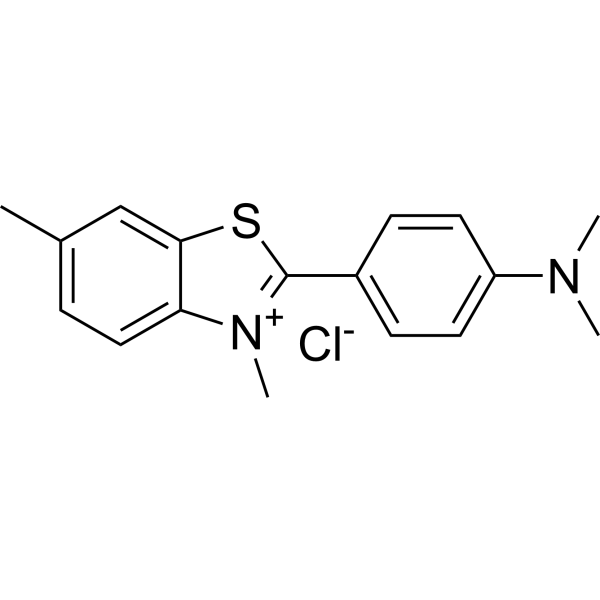
    Thioflavin T
    25+ Cited Publications

    basic Yellow 1

    Amyloid-β Others
    Thioflavin T is a cationic Benzothiazole dye that shows enhanced fluorescence upon binding to amyloid in tissue sections. Excitation max.: ~385 nm (free); ~450 nm (bound); Emission max.: ~445 nm (free); ~485 nm (bound) .
    Thioflavin T
  • HY-B0324A
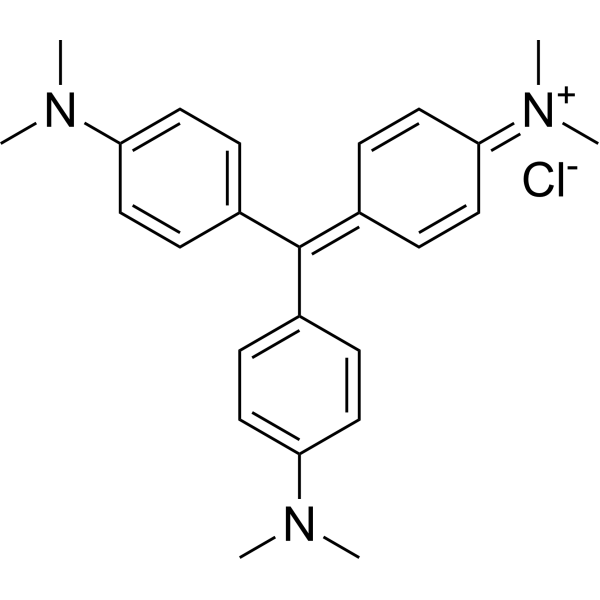
    Crystal Violet
    Maximum Cited Publications
    64 Publications Verification

    basic Violet 3; Gentian Violet; Methyl Violet 10B

    Environmental Pollutants Fluorescent Dye Influenza Virus Bacterial Infection
    Crystal Violet, also known as Gentian violet, methyl violet 10B, is a triphenyl-methane, an alkaline dye that binds to DNA in the nucleus of a cell, staining it a deep purple. It is often used for Gram staining to classify bacteria, or for cell or histological staining[1].
    Crystal Violet
  • HY-14536
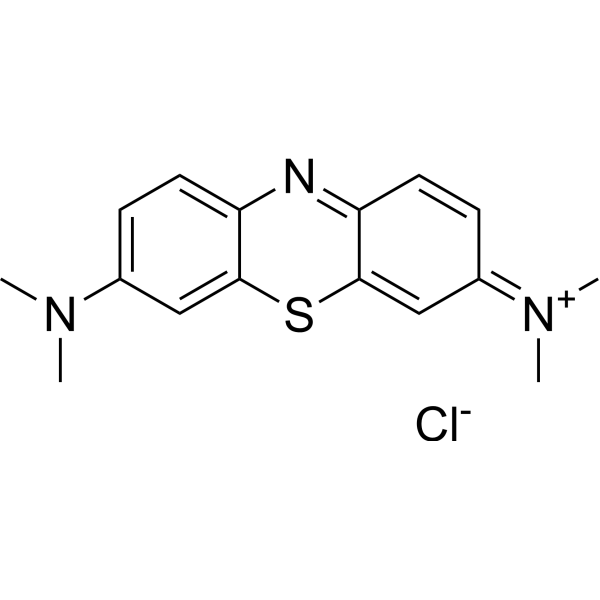
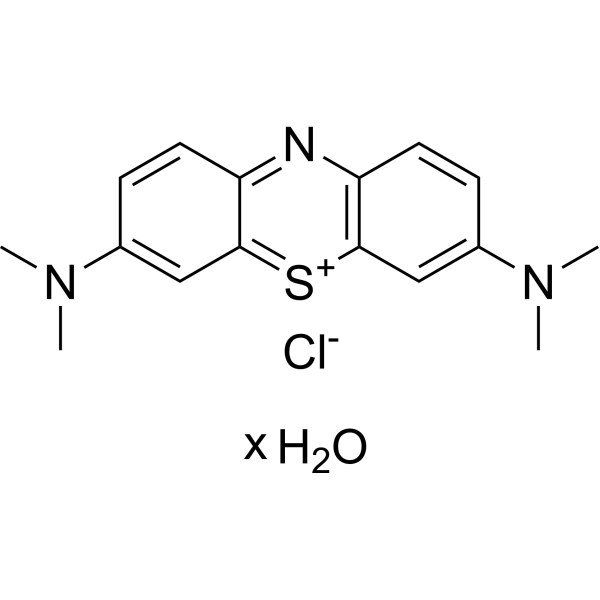
    Methylene Blue
    25+ Cited Publications

    basic Blue 9; CI-52015; Methylthioninium chloride

    Environmental Pollutants Monoamine Oxidase Guanylate Cyclase Microtubule/Tubulin NO Synthase Infection Neurological Disease Cancer
    Methylene blue (Basic Blue 9) is a guanylyl cyclase (sGC), monoamine oxidase A (MAO-A) and NO synthase (NOS) inhibitor. Methylene blue is a vasopressor and is often used as a dye in several medical procedures. Methylene blue through the nitric oxide syntase/guanylate cyclase signalling pathway to reduce prepulse inhibition. Methylene blue is a REDOX cycling compound and able to cross the blood-brain barrier. Methylene blue is a Tau aggregation inhibitor. Methylene Blue is a photosensitizer and redox agent. Methylene blue reduces cerebral edema, attenuated microglial activation and reduced neuroinflammation .
    Methylene Blue
  • HY-Y0016
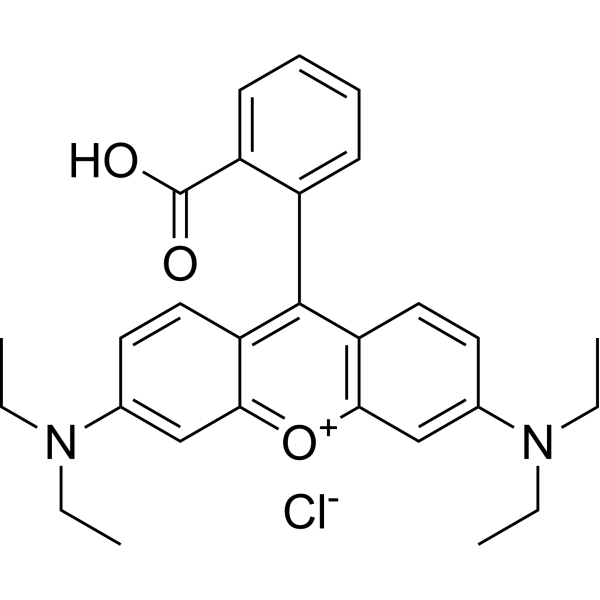
    Rhodamine B
    15+ Cited Publications

    basic Violet 10; Brilliant Pink B; Rhodamine O; Tetraethylrhodamine

    Environmental Pollutants Fluorescent Dye Others
    Rhodamine B is a staining fluorescent dye, commonly used for dyeing textiles, paper, soap, leather, and agents.
    Rhodamine B
  • HY-B1359
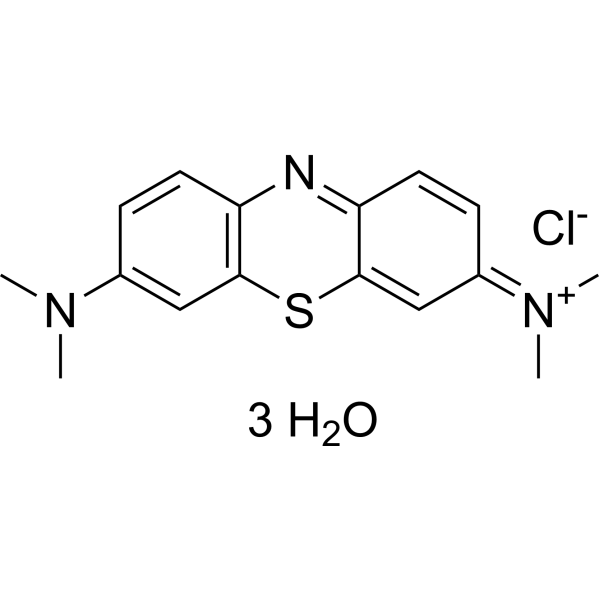
    Methylene blue trihydrate
    25+ Cited Publications

    C.I. basic Blue 9 trihydrate

    Guanylate Cyclase Monoamine Oxidase NO Synthase Parasite Infection Neurological Disease Cancer
    Methylene blue trihydrate (C.I. Basic Blue 9 trihydrate) is a guanylyl cyclase (sGC), monoamine oxidase A (MAO-A) and NO synthase (NOS) inhibitor. Methylene blue trihydrate is a vasopressor and is often used as a dye in several medical procedures. Methylene blue trihydrate has antinociception, antimalarial, antidepressant and anxiolytic activity effects. Methylene Blue trihydrate has the potential for methemoglobinemias, neurodegenerative disorders and ifosfamide-induced encephalopathytreatment .
    Methylene blue trihydrate
  • HY-N9470
    λ-Carrageenan
    2 Publications Verification

    Others Inflammation/Immunology Cancer
    λ-Carrageenan is a seaweed polysaccharide which has been generally used as proinflammatory agent in the basic research. λ-Carrageenan is a potent antitumor agent .
    λ-Carrageenan
  • HY-D0309
    Rhodamine 6G
    4 Publications Verification

    basic Red 1

    Environmental Pollutants Fluorescent Dye Cancer
    Rhodamine dyes are membrane-permeable cationic fluorescent probes that specifically recognize mitochondrial membrane potentials, thereby attaching to mitochondria and producing bright fluorescence, and at certain concentrations, rhodamine dyes have low toxicity to cells, so they are commonly used to detect mitochondria in animal cells, plant cells, and microorganisms .
    Rhodamine 6G
  • HY-D0203

    Malachite green

    Environmental Pollutants Fluorescent Dye Others
    Basic green 4 (Malachite green) is a cationic dye that is widely used as a bactericide in aquaculture and is also commonly used in laboratories for the determination of phosphates. Basic green 4 exhibits high cytotoxicity and carcinogenicity to mammalian cells, specifically shown by its IC50 values of 2.03 µM for HEp-2 human laryngeal cells and 13.8 µM for Caco-2 human colorectal adenocarcinoma cells, and it can promote the development of liver tumors. The maximum absorbance wavelength is 621 nm .
    Basic green 4
  • HY-P1821
    Myelin Basic Protein
    2 Publications Verification

    MHP4-14

    PKC Neurological Disease
    Myelin Basic Protein (MHP4-14), a synthetic peptide comprising residues 4-14 of myelin basic protein, is a very selective PKC substrate (Km=7 μM). Myelin Basic Protein is not phosphorylated by cyclic AMP-dependent protein kinase, casein kinases I and II, Ca 2+/calmodulin-dependent protein kinase II, or phosphorylase kinase, and can be routinely used for the assay of protein kinase C with low background in the crude tissue extracts .
    Myelin Basic Protein
  • HY-B1539A

    Magenta base monohydrochloride; basic Fuchsin monohydrochloride; Rosaniline Base monohydrochloride

    Fluorescent Dye Bacterial Fungal Infection
    Fuchsine base (Magenta base; Basic Fuchsin) monohydrochloride is a triaminotriphenylmethane dye. Fuchsine base monohydrochloride has anesthetic, bactericidal and fungicidal properties. Fuchsine base monohydrochloride can be used for the staining of collagen, muscle, mitochondria and tuberculosis. Fuchsine base monohydrochloride is commonly used as a counterstain in Gram staining .
    Fuchsine base monohydrochloride
  • HY-D0958
    Methylene blue hydrate
    20+ Cited Publications

    basic Blue 9 hydrate; CI-52015 hydrate; Methylthioninium chloride hydrate

    Guanylate Cyclase Monoamine Oxidase NO Synthase Microtubule/Tubulin Infection Inflammation/Immunology Cancer
    Methylene blue (Basic Blue 9) hydrate is a guanylyl cyclase (sGC), monoamine oxidase A (MAO-A) and NO synthase (NOS) inhibitor. Methylene blue is a vasopressor and is often used as a dye in several medical procedures. Methylene blue hydrate through the nitric oxide syntase/guanylate cyclase signalling pathway to reduce prepulse inhibition. Methylene blue hydrate is a REDOX cycling compound and able to cross the blood-brain barrier. Methylene blue hydrate is a Tau aggregation inhibitor. Methylene blue hydrate reduces cerebral edema, attenuated microglial activation and reduced neuroinflammation .
    Methylene blue hydrate
  • HY-14536A

    basic Blue 9 (purity≥70%); CI-52015 (purity≥70%); Methylthioninium chloride (purity≥70%)

    Environmental Pollutants Monoamine Oxidase Guanylate Cyclase Microtubule/Tubulin NO Synthase Infection Neurological Disease Cancer
    Methylene blue (purity≥70%) is a guanylyl cyclase (sGC), monoamine oxidase A (MAO-A) and NO synthase (NOS) inhibitor. Methylene blue (purity≥70%) is a vasopressor and is often used as a dye in several medical procedures. Methylene blue (purity≥70%) through the nitric oxide syntase/guanylate cyclase signalling pathway to reduce prepulse inhibition. Methylene blue (purity≥70%) is a REDOX cycling compound and able to cross the blood-brain barrier. Methylene blue (purity≥70%) is a Tau aggregation inhibitor. Methylene blue reduces cerebral edema, attenuated microglial activation and reduced neuroinflammation .
    Methylene blue (purity≥70%)
  • HY-W127770

    basic red 9

    Fluorescent Dye Infection
    Pararosaniline hydrochloride (Basic red 9) is a pH-responsive basic dye, as a biological stain to track certain proteins. The pH of the acidified Pararosaniline hydrochloride reagent has a significant effect on the color and the maximum absorption wavelength (λmax) of the reaction system, with its optimum pH 0.48 and a λmax at 549 nm. Pararosaniline hydrochloride is also a strong modifier of RNA splicing. Pararosaniline hydrochloride has been used in the analysis of SO2 and formaldehyde and staining of bacteria or other organisms. Pararosaniline hydrochloride is extensively used in industries like textile, printing, paper, cosmetic, and leather .
    Pararosaniline hydrochloride
  • HY-D1694

    Fluorescent Dye Others
    LysoTracker Yellow HCK 123 is a potent yellow membrane-permeable fluorescent probe. LysoTracker Yellow HCK 123 is a weakly basic amine that selectively accumulates in cellular compartments with low luminal pH .
    LysoTracker Yellow HCK 123
  • HY-101493
    SUN11602
    2 Publications Verification

    FGFR Neurological Disease
    SUN11602 is a novel aniline compound with basic fibroblast growth factor-like activity.
    SUN11602
  • HY-W250147

    Victoria blue B

    Biochemical Assay Reagents Others
    Basic blue 26 (Victoria blue B) is a synthetic cationic dye belonging to the class of triarylmethane dyes. It has a bright blue color and is commonly used as a colorant for a variety of applications, including textiles, paper and leather. Basic Blue 26 is also used as a biological stain for DNA and protein detection in laboratories. Due to its ability to bind negatively charged materials, it can be used as an indicator of the presence of specific molecules in biological samples. However, Basic blue 26 has been reported to have potentially harmful effects on human health and the environment and its use is regulated in some countries. Proper handling and disposal procedures are necessary to minimize its impact on the environment.
    Basic blue 26
  • HY-W046325

    Diethylaminoethyl cellulose

    Biochemical Assay Reagents Others
    DEAE-Cellulose (Diethylaminoethyl cellulose), a common biopolymer derivative. DEAE-Cellulose is a weakly basic cellulose anion exchanger .
    DEAE-Cellulose
  • HY-W133967

    Environmental Pollutants Biochemical Assay Reagents Inflammation/Immunology
    Calcium alginate is a biopolymer that can be used for developing oral agent-delivery systems . Calcium alginate is a pH sensitive hydrogel stable in acidic media and soluble in basic media .
    Calcium alginate
  • HY-W040265

    N-Phenylanthranilic acid

    Chloride Channel Inflammation/Immunology
    Fenamic acid (N-Phenylanthranilic acid, NPAA) is an orally active chloride channel blocker. Fenamic acid is the basic constituent of non-steroidal anti-inflammatory agents (NSAIA), and derives into mefenamic, tofenacin, flufenac acid and melofenac acid. Fenamic acid also acts as antibacterial and analgesic agent - .
    Fenamic acid
  • HY-P3601

    FGF basic (1-24)

    Bacterial HBV Infection Inflammation/Immunology
    Brain Derived Basic Fibroblast Growth Factor (1-24) (FGF basic 1-24) is a synthetic peptide, shows anti-bacterial and anti-HBV activities. Brain Derived Basic Fibroblast Growth Factor (1-24) can be used in infection disease and immune disease research .
    Brain Derived Basic Fibroblast Growth Factor (1-24)
  • HY-159051

    Biochemical Assay Reagents Others
    Dragendorff reagent is used for detecting alkaloids and other nitrogen-containing compounds. Dragendorff reagent is a solution of potassium bismuth iodide composing of Basic bismuth nitrate (Bi(NO3)3), Tartaric acid (HY-N2436), and Potassium iodide (KI). When contact with alkaloids, Dragendorff reagent produces an orange or orange red precipitate .
    Dragendorff reagent
  • HY-P10532

    PKC Others Inflammation/Immunology
    Myelin basic protein, MBP (68-86) is the portion of the 68th to 86th amino acid residues in the MBP protein sequence. Myelin basic protein, MBP (68-86) can act as an autoantigen, triggering the immune system to attack its own myelin. Myelin basic protein, MBP (68-86) is used as one of the immunogens in the experimental autoimmune encephalomyelitis (EAE) animal model to study immune responses associated with multiple sclerosis (MS) .
    Myelin basic protein, MBP (68-86)
  • HY-P2818B
    Alkaline phosphatase, Chicken Intestine
    1 Publications Verification

    Apase, Chicken Intestine

    Endogenous Metabolite Phosphatase Glutathione Peroxidase Bacterial Infection Inflammation/Immunology
    Alkaline Phosphatase (Apase), Chicken Intestine is an alkaline phosphatase from Chicken Intestine, and is one of the most active alkaline phosphatases. Alkaline phosphatase, Chicken Intestine is an orally active membrane-bound glycoprotein that catalyzes the hydrolysis of phosphate monoesters at alkaline pH. Alkaline phosphatase, Chicken Intestine reduces myeloperoxidase activity and bacterial translocation. Alkaline phosphatase, Chicken Intestine improves survival rate of mice infected with E. coli. Alkaline phosphatase, Chicken Intestine improves TNBS-induced colon inflammation .
    Alkaline phosphatase, Chicken Intestine
  • HY-D0265

    Environmental Pollutants Fluorescent Dye Others
    Thymolphthalein is an electrochemically active dye due to the presence of thymol fragments. Thymolphthalein is a Phthalein dye used as an acid-base indicator. It is colourless in acid pH and is blue in basic pH .
    Thymolphthalein
  • HY-Y0016R

    basic Violet 10 (Standard); Brilliant Pink B (Standard); Rhodamine O (Standard); Tetraethylrhodamine (Standard)

    Fluorescent Dye Reference Standards Others
    Rhodamine B (Standard) is the analytical standard of Rhodamine B. This product is intended for research and analytical applications. Rhodamine B is a staining fluorescent dye, commonly used for dyeing textiles, paper, soap, leather, and agents.
    Rhodamine B (Standard)
  • HY-P3828

    Fluorescent Dye Neurological Disease
    Biotin-myelin basic protein (94-102) is a peptide fragemt. Myelin basic protein is responsible for adhesion of the cytosolic surfaces of multilayered compact myelin, it plays an important role in the process of myelination of nerves in the nervous system. Myelin basic protein also acts as a membrane actin-binding protein, which might allow it to participate in transmission of extracellular signals to the cytoskeleton in oligodendrocytes and tight junctions in myelin .
    Biotin-myelin basic protein (94-102)
  • HY-Y0870

    Copper dihydroxide carbonate

    Environmental Pollutants Biochemical Assay Reagents Others
    Cupric carbonate basic (Copper dihydroxide carbonate) is a kind of biological materials or organic compounds that are widely used in life science research .
    Cupric carbonate basic
  • HY-D0492

    Fluorescent Dye
    C.I. Basic blue 41 is an alkaline dye that can be removed from aqueous solutions in intermittent adsorption systems using tree ferns as biosorbents.
    C.I. Basic blue 41
  • HY-D0478

    Fluorescent Dye
    C.I. Basic red 14 is an alkaline dye that can be removed from aqueous solutions in intermittent adsorption systems using tree ferns as biosorbents.
    C.I. Basic red 14
  • HY-P1821A
    Myelin basic protein (4-14) TFA
    2 Publications Verification

    MHP4-14 TFA

    PKC Neurological Disease
    Myelin Basic Protein (MHP4-14) TFA, a synthetic peptide comprising residues 4-14 of myelin basic protein, is a very selective PKC substrate (Km=7 μM). Myelin Basic Protein TFA is not phosphorylated by cyclic AMP-dependent protein kinase, casein kinases I and II, Ca 2+/calmodulin-dependent protein kinase II, or phosphorylase kinase, and can be routinely used for the assay of protein kinase C with low background in the crude tissue extracts .
    Myelin basic protein (4-14) TFA
  • HY-D1129

    Coumarin 40

    Fluorescent Dye
    Basic yellow 40 is an alkaline dye that can be removed from aqueous solutions in intermittent adsorption systems using tree ferns as biosorbents.
    Basic yellow 40
  • HY-D0253

    basic Blue 11

    Fluorescent Dye Others
    Victoria Blue R (Basic Blue 11) is a multifunctional dye. Dyes are important tools in biological experiments. They can help researchers observe and analyze cell structures, track biomolecules, evaluate cell functions, distinguish cell types, detect biomolecules, study tissue pathology and monitor microorganisms. Their applications range from basic scientific research to clinical A wide range of diagnostics. Dyes are also widely used in traditional fields such as textile dyeing, as well as in emerging fields such as functional textile processing, food pigments and dye-sensitized solar cells.
    Victoria Blue R
  • HY-14536R

    basic Blue 9 (Standard); CI-52015 (Standard); Methylthioninium chloride (Standard)

    Reference Standards Guanylate Cyclase Monoamine Oxidase NO Synthase Microtubule/Tubulin Infection Neurological Disease Cancer
    Methylene Blue (Standard) is the analytical standard of Methylene Blue. This product is intended for research and analytical applications. Methylene blue (Basic Blue 9) is a guanylyl cyclase (sGC), monoamine oxidase A (MAO-A) and NO synthase (NOS) inhibitor. Methylene blue is a vasopressor and is often used as a dye in several medical procedures. Methylene blue through the nitric oxide syntase/guanylate cyclase signalling pathway to reduce prepulse inhibition. Methylene blue is a REDOX cycling compound and able to cross the blood-brain barrier. Methylene blue is a Tau aggregation inhibitor. Methylene blue reduces cerebral edema, attenuated microglial activation and reduced neuroinflammation .
    Methylene Blue (Standard)
  • HY-D0309R

    basic Red 1 (Standard)

    Fluorescent Dye Reference Standards Cancer
    Rhodamine 6G (Standard) is the analytical standard of Rhodamine 6G. This product is intended for research and analytical applications. Rhodamine dyes are membrane-permeable cationic fluorescent probes that specifically recognize mitochondrial membrane potentials, thereby attaching to mitochondria and producing bright fluorescence, and at certain concentrations, rhodamine dyes have low toxicity to cells, so they are commonly used to detect mitochondria in animal cells, plant cells, and microorganisms .
    Rhodamine 6G (Standard)
  • HY-W034869

    Diamino-tetraisothiocyanato-chromium

    Biochemical Assay Reagents Others
    Reinecke (Diamino-tetraisothiocyanato-chromium) is an ammonium salt. Reinecke participates in the quantitative precipitation of histones and basic compounds present in acidic tissue extracts by forming Reinecke complexes .
    Reinecke
  • HY-D0319

    Fluorescent Dye
    C.I. Basic Blue 8 is a basic dye.
    C.I. Basic Blue 8
  • HY-D0468

    Fluorescent Dye Others
    Basic Brown 1 is a diazo dyes .
    Basic Brown 1
  • HY-124237

    Bacterial Others
    N-Octanoyl-DL-homoserine lactone is a member of N-acyl homoserine lactones (AHLs) family, also one of the signal molecule of quorum-sensing (QS) signals. N-Octanoyl-DL-homoserine lactone can regulate the production of siderophores and present positive correlation in Aeromonas sobria strain AS7. N-Octanoyl-DL-homoserine lactone can also regulate the secretion of proteases and stimulate the production of total volatile basic nitrogen (TVB-N) .
    N-Octanoyl-DL-homoserine lactone
  • HY-D1181

    basic violet 2

    Biochemical Assay Reagents Others
    New Fuchsin is a biochemical reagent that can be used as a biological material or organic compound for life science related research.
    New Fuchsin
  • HY-141490

    Drug Derivative Others
    Beta-D-Glucopyranosyl nitromethane, as a salt of a strongly basic anion exchanger in the OH cycle, is a glycosyl derivative of nitromethane .
    Beta-D-Glucopyranosyl nitromethane
  • HY-116536

    oxo-C14-HSL

    Bacterial Infection
    N-3-Oxo-tetradecanoyl-L-homoserine lactone (oxo-C14-HSL) is a rhizobacterial inducer and can improve basic defense against nematodes .
    N-3-Oxo-tetradecanoyl-L-homoserine lactone
  • HY-W133997

    Fluorescent Dye Others
    Chromotrope 2R can be used as a chromogenic analytical probe for the quantification of proteins. Basic proteins stained red and the peak wavelength red shifts from 501.6 nm to 567 nm .
    Chromotrope 2R
  • HY-D0404

    Fluorescent Dye Neurological Disease
    Direct Red 254 is a bisazo dye for textile applications. Direct Red 254 can be used for amyloid tissue staining in basic research on neurodegenerative diseases (e.g., Alzheimer's disease) .
    Direct red 254
  • HY-W848699

    Fluorescent Dye Others
    FAM NHS ester, 6-isomer is a hydrophilic fluorophore. The NHS ester can react specifically and efficiently with primary amines such as the side chain of lysine residue or aminosilane-coated surfaces at neutral or slight basic conditions to form a covalent bond.
    FAM NHS ester, 6-isomer
  • HY-16984

    Itk Inflammation/Immunology
    GNE-4997 is a potent and selective interleukin-2-inducible T-cell kinase (ITK) inhibitor with a Ki of 0.09 nM, and the correlation between the basicity of solubilizing elements in GNE-4997 and off-target antiproliferative effects reduces cytotoxicity .
    GNE-4997
  • HY-B0324AS

    basic Violet 3-d6; Gentian Violet-d6; Methyl Violet 10B-d6

    Isotope-Labeled Compounds Others
    Crystal Violet-d6 is the deuterium labeled Crystal Violet (HY-B0324A). Crystal Violet, also known as Gentian violet, methyl violet 10B, is a triphenyl-methane, an alkaline dye that binds to DNA in the nucleus of a cell, staining it a deep purple. It is often used for Gram staining to classify bacteria, or for cell or histological staining .
    Crystal Violet-d6
  • HY-W110781

    DNA Stain Others
    Basic Blue 20 is a very convenient red-emitting DNA stains. Basic Blue 20 has relatively narrow excitation and emission spectra, with peaks at 633 and 677 nm, respectively. Basic Blue 20 also has a very high resistance to photobleaching .
    Basic Blue 20
  • HY-D1036

    Fluorescent Dye
    Basic red 18 (acetate) is an alkaline dye that can be removed from aqueous solutions in intermittent adsorption systems using tree ferns as biosorbents.
    Basic red 18 acetate
  • HY-D0724

    Fluorescent Dye
    Basic violet 16 (phosphate) is an alkaline dye that can be removed from aqueous solutions in intermittent adsorption systems using tree ferns as biosorbents.
    Basic violet 16 phosphate
  • HY-D0578

    Fluorescent Dye Others
    Basic yellow 28 is a multifunctional dye. Dyes are important tools in biological experiments. They can help researchers observe and analyze cell structures, track biomolecules, evaluate cell functions, distinguish cell types, detect biomolecules, study tissue pathology and monitor microorganisms. Their applications range from basic scientific research to clinical A wide range of diagnostics. Dyes are also widely used in traditional fields such as textile dyeing, as well as in emerging fields such as functional textile processing, food pigments and dye-sensitized solar cells.
    Basic yellow 28

Inquiry Online

Your information is safe with us. * Required Fields.

Salutation


Country or Region *

Applicant Name *


Organization Name *

Department *


Email Address *


Product Name *

Cat. No.


Requested quantity *

Phone Number *


Remarks

Inquiry Online

Inquiry Information

Product Name:
Cat. No.:
Quantity:
MCE Japan Authorized Agent:

