
188 Results for "

chromosomal

" in MedChemExpress (MCE) Product Catalog:
Products (188)

188 Results for "chromosomal" in MCE Product Catalog:

  • Targets Recommended:
21
21 Publications Verification
Cat. No.: HY-15842
CAS No.: 345630-40-2
Purity:  98.57%
Target:  

PTEN Phosphatase Autophagy

Research Areas:  

Cancer

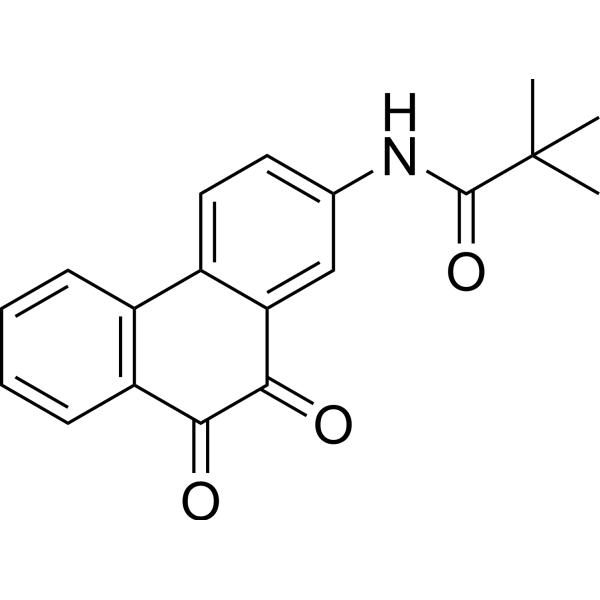
SF1670 is a potent and specific phosphatase and tensin homolog deleted on chromosome 10 (PTEN) inhibitor .
loading...
    loading...
8
8 Cited Publications
Cat. No.: HY-W004544
CAS No.: 66-71-7
Synonyms: 1,10-Phenanthroline
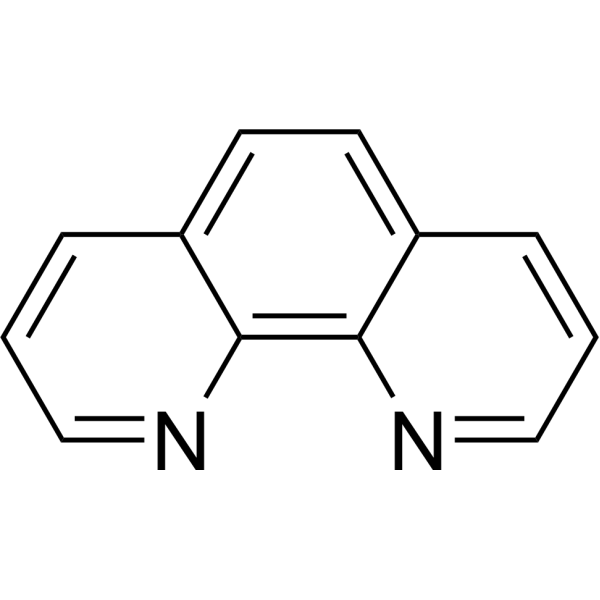
o-Phenanthroline (1,10-Phenanthroline), a metal chelator, prevents the induction of chromosomal aberrations in streptozotocin-treated cells. o-Phenanthroline (1,10-Phenanthroline) forms a red chelate with Fe 2+ that absorbs maximally at 510 nm. o-Phenanthroline (1,10-Phenanthroline) is also a MMP inhibitor .
loading...
    loading...
8
8 Cited Publications
Cat. No.: HY-Y1841
CAS No.: 5144-89-8
Synonyms: 1,10-Phenanthroline monohydrate
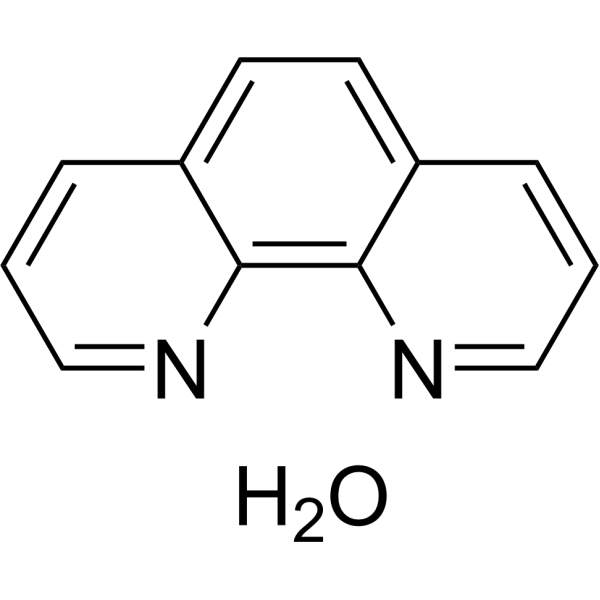
o-Phenanthroline (1,10-Phenanthroline) monohydrate, a metal chelator, prevents the induction of chromosomal aberrations in streptozotocin-treated cells. o-Phenanthroline monohydrate forms a red chelate with Fe 2+ that absorbs maximally at 510 nm. o-Phenanthroline (1,10-Phenanthroline) monohydrate is also a MMP inhibitor .
loading...
    loading...
7
7 Cited Publications
Cat. No.: HY-80002
CAS No.: 1431525-23-3
Synonyms: BMX kinase inhibitor
Target:  

Btk BMX Kinase

Research Areas:  

Cancer

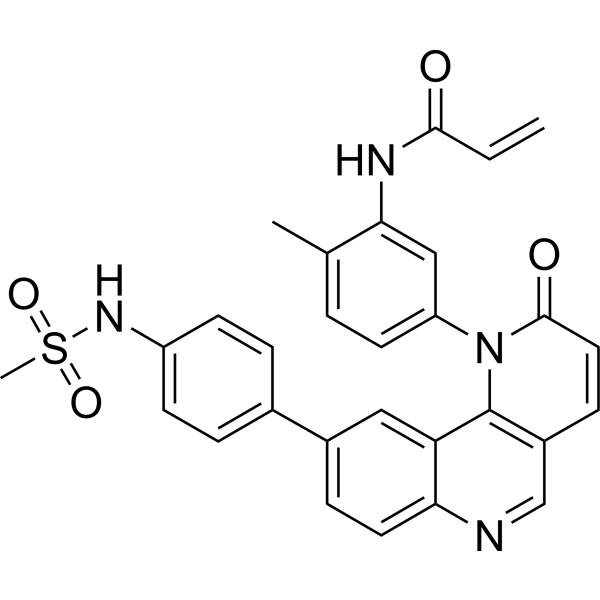
BMX-IN-1 is a selective, irreversible inhibitor of bone marrow tyrosine kinase on chromosome X (BMX) that targets Cys 496 in the BMX ATP binding domain with an IC50 of 8 nM, also targets the related Bruton’s tyrosine kinase (BTK) with an IC50 value of 10.4 nM, but is more than 47-656-fold less potent against Blk, JAK3, EGFR, Itk, or Tec activity.
loading...
    loading...
4
4 Cited Publications
Cat. No.: HY-N6779
CAS No.: 149-29-1
Synonyms: Terinin
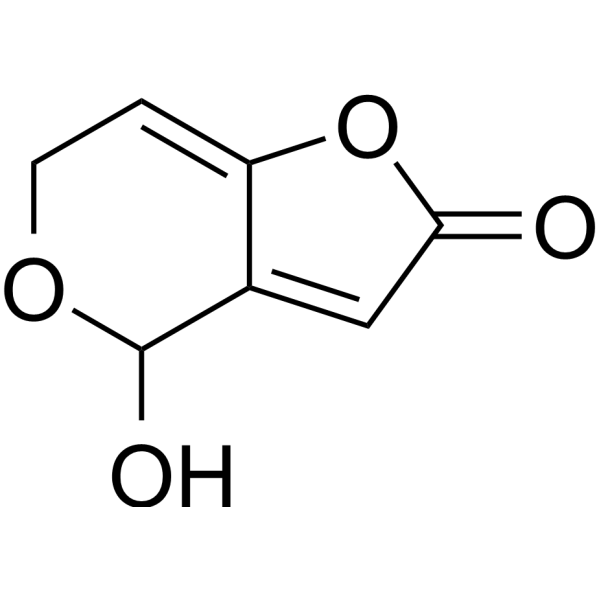
Patulin (Terinin) is a mycotoxin produced by fungi including the Aspergillus, Penicillium, and Byssochlamys species, causes chromosome breakage, mutation, teratogenic and cytotoxic. Patulin induces autophagy-dependent apoptosis through lysosomal-mitochondrial axis, and causes DNA damage .
loading...
    loading...
3
3 Cited Publications
Cat. No.: HY-D0186
CAS No.: 951-78-0
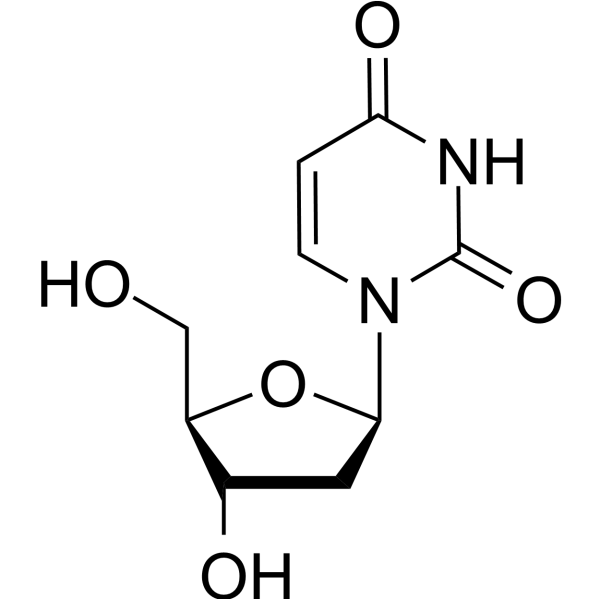
2’-deoxyuridine is a brain-penetrant pyrimidines nucleotide that is associated with nervous system diseases. 2'-Deoxyuridine could increase chromosome breakage and results in a decreased thymidylate synthetase activity. 2'-Deoxyuridine is a precursor in the synthesis of Edoxudine (HY-B1011) and also an analogue of 5-ethynyl-2'-deoxyuridine, EdU (HY-118411). 2’-deoxyuridine reduces microglial activation and improve oxidative stress damage by modulating glycolytic metabolism on the Aβ25-35-induced brain injury, which is promising for research of Alzheimer’s disease (AD) .
loading...
    loading...
3
3 Cited Publications
Cat. No.: HY-110185
CAS No.: 203115-63-3
Purity:  99.18%
Target:  

DNA/RNA Synthesis

Research Areas:  

Cancer

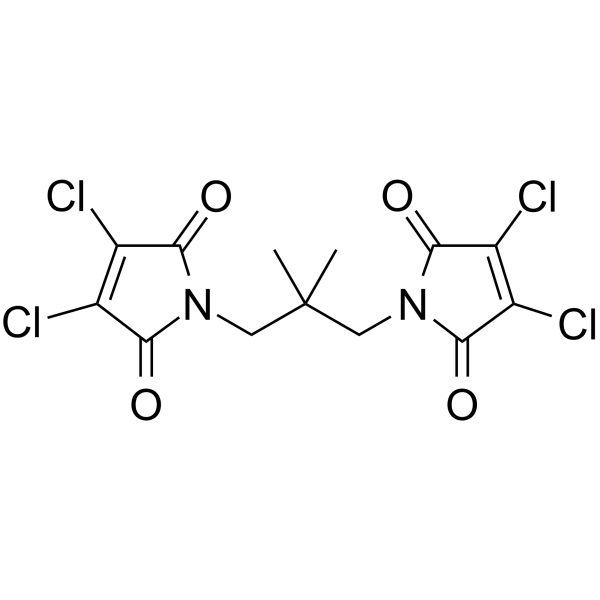
NSC 617145 is a selective werner syndrome helicase (WRN) helicase inhibitor with an IC50 value of 230 nM. NSC 617145 inhibits WRN ATPase, and induces double-strand breaks (DSB) and chromosomal abnormalities. NSC 617145 shows selective for WRN over BLM, FANCJ, ChlR1, RecQ, and UvrD helicases .
loading...
    loading...
3
3 Cited Publications
Cat. No.: HY-B0035
CAS No.: 57-68-1
Synonyms: Sulfadimidine; Sulfadimerazine
Target:  

Antibiotic Bacterial

Research Areas:  

Infection Neurological Disease

Sulfamethazine (Sulfadimidine) is a brain-penetrant sulfonamide antibiotic. Sulfamethazine inhibits bacterial growth by blocking the synthesis of folic acid. Sulfamethazine can be used for research on bacterial infections .
loading...
    loading...
3
3 Cited Publications
Cat. No.: HY-B0035A
CAS No.: 1981-58-4
Synonyms: Sulfadimidine sodium; Sulfadimerazine sodium
Target:  

Antibiotic Bacterial

Research Areas:  

Infection Neurological Disease

Sulfamethazine (Sulfadimidine) sodium is a brain-penetrant sulfonamide antibiotic. Sulfamethazine sodium inhibits bacterial growth by blocking the synthesis of folic acid. Sulfamethazine sodium can be used for research on bacterial infections .
loading...
    loading...
2
2 Cited Publications
Cat. No.: HY-D1746
CAS No.: 162303-59-5
Synonyms: EDTA acetoxymethyl ester; Ethylenediaminetetraacetic acid acetoxymethyl ester
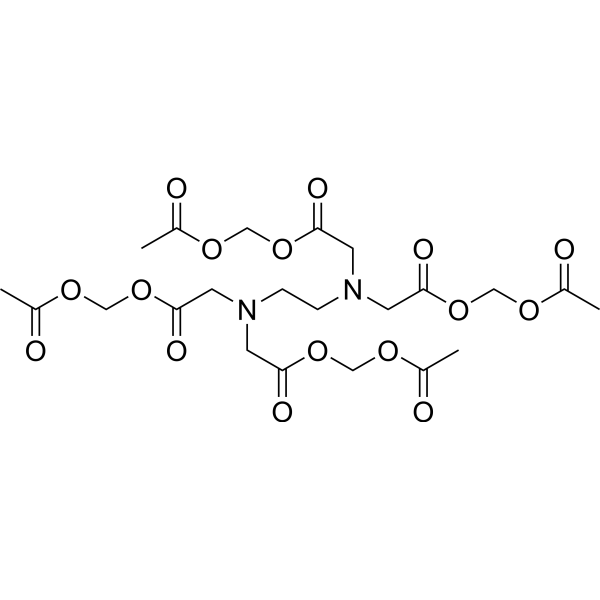
EDTA-AM (ethylenediaminetetraacetic acid, acetoxymethyl ester) is the membrane-permeant form of the metal chelator EDTA (HY-Y0682). Live cells passively load EDTA-AM by incubating with EDTA-AM. Once internalized, cytoplasmic esterase decomposes AM esters, releasing the active ligand EDTA, which isolates metal ions within the cell. EDTA-AM induces an arrest of mitotic progression and chromosome decondensation .
loading...
    loading...
2
2 Cited Publications
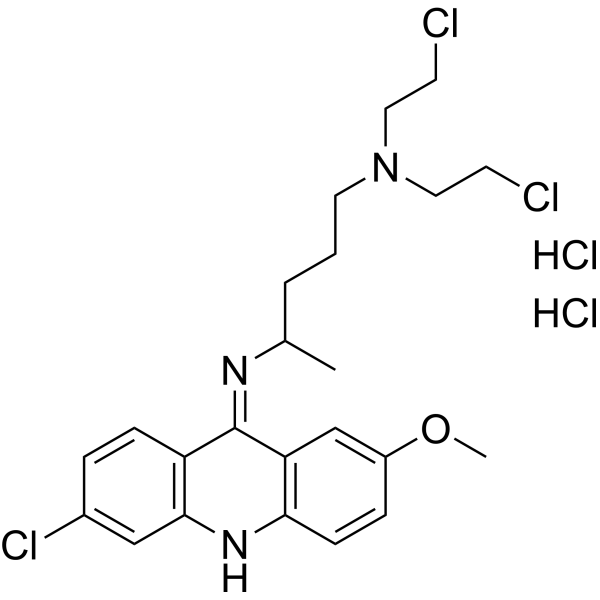
Cat. No.: HY-W127705
CAS No.: 4213-45-0
Quinacrine mustard dihydrochloride is a fluorochrome. Quinacrine mustard dihydrochloride as a polycyclic aromatic agent can be used as mutagenic agent induces the mutants of bacteria. Quinacrine mustard dihydrochloride induces cell cycle arrest at G2/M-phase. Quinacrine mustard dihydrochloride has the potential for the research of plant, animal, or human chromosomes .
loading...
    loading...
1
1 Cited Publications
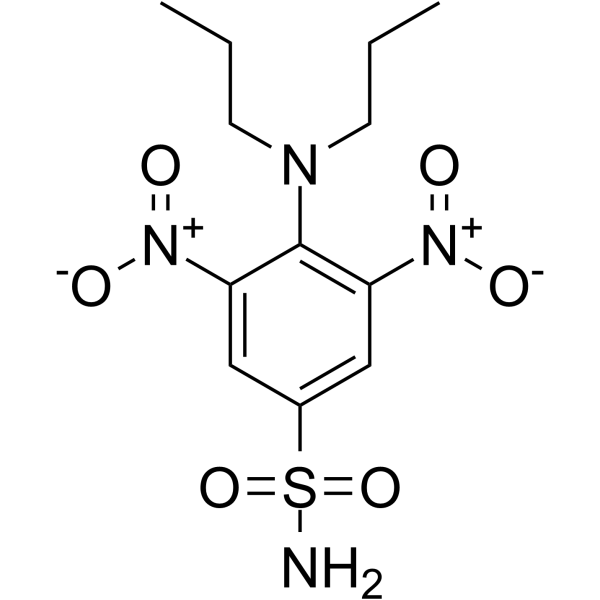
Cat. No.: HY-147092
CAS No.: 19044-88-3
Purity:  99.62%
Oryzalin is a dinitroaniline herbicide with antimitotic and antileishmanial activities. Oryzalin can bind to plant tubulin, inhibit the polymerization of microtubules in plant cells, and affect chromosome migration. Oryzalin can also be used to induce chromosome doubling .
loading...
    loading...
1
1 Cited Publications
Cat. No.: HY-145967
CAS No.: 2413991-74-7
Purity:  98.03%
Target:  

Deubiquitinase Mitosis

Research Areas:  

Cancer

FT709 is a potent and selective USP9X inhibitor, an IC50 of 82 nM. USP9X has been linked with centrosome function, chromosome alignment during mitosis, EGF receptor degradation, chemo-sensitization, and circadian rhythms .
loading...
    loading...
1
1 Cited Publications
Cat. No.: HY-N4183
CAS No.: 72357-31-4
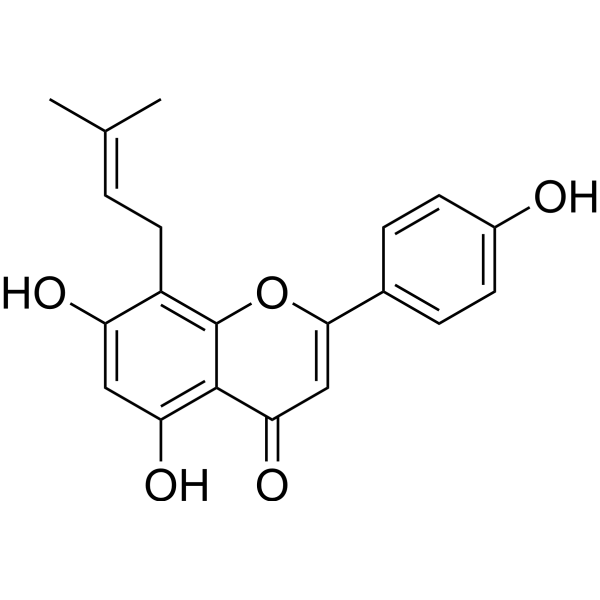
Licoflavone C is a broad-spectrum antiviral inhibitor with estrogen-like properties. Licoflavone C binds to viral endonuclease (CEN) and inhibits the replication of various bunyaviruses including severe fever with thrombocytopenia syndrome virus (SFTSV) and lymphocytic choriomeningitis virus in a non-substrate competitive manner. The IC50 values of Licoflavone C against SFTSV CEN and SFTSV CEN are 35.5 μM and 135.8 μM, respectively, and its Kd value against SFTSV CEN is 9.53 μM. After viral entry into cells, Licoflavone C reduces viral loads in mouse tissues in a dose-dependent manner, and exhibits extremely low cytotoxicity and genotoxicity. Licoflavone C induces apoptosis by increasing caspase 3/7 activity, blocks the cell cycle, and alleviates chemotherapy-induced chromosomal damage. Licoflavone C is applicable to the research on severe fever with thrombocytopenia syndrome and related viral infection mechanisms .
loading...
    loading...
1
1 Cited Publications
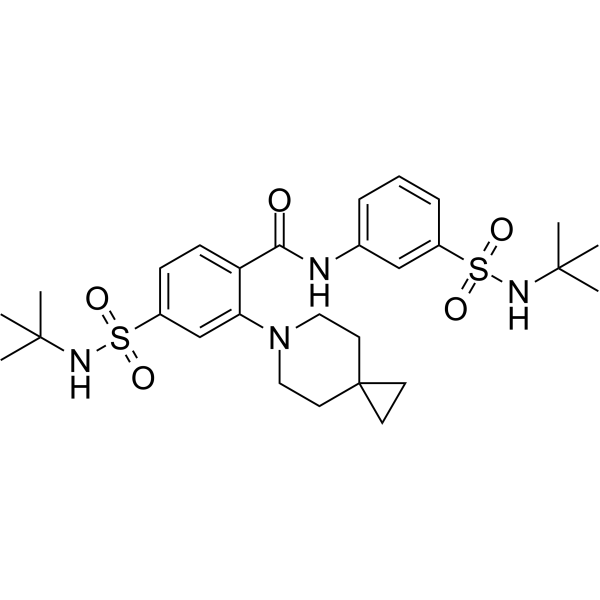
Cat. No.: HY-145034
CAS No.: 2600559-12-2
Purity:  98.39%
Target:  

Kinesin

Research Areas:  

Cancer

KIF18A-IN-1 is an inhibitor of the mitotic kinesin KIF18A with anti-tumor activity. KIF18A targeted inhibitors may activate mitotic checkpoints and selectively kill chromosomally unstable cancer cells .
loading...
    loading...
1
1 Cited Publications
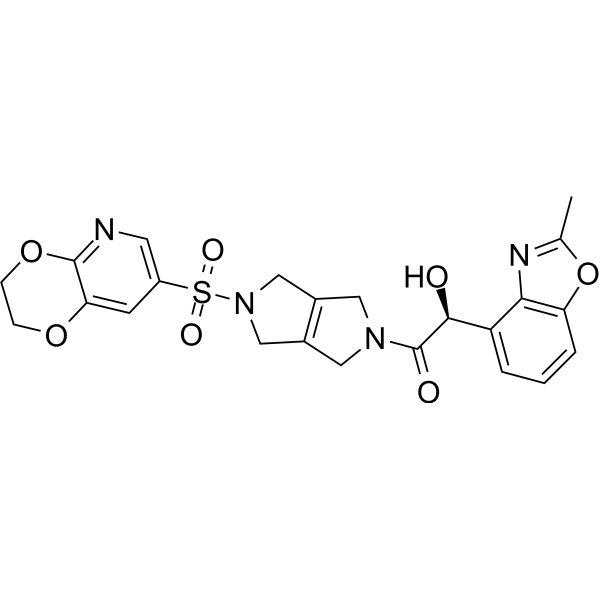
Cat. No.: HY-110374
CAS No.: 1992047-61-6
Purity:  99.40%
Research Areas:  

Cancer

NVS-CECR2-1, a non-BET family Bromodomain (BRD) inhibitor, is a potent and selective cat eye syndrome chromosome region, candidate 2 (CECR2) inhibitor. NVS-CECR2-1 binds to CECR2 BRD with high affinity (IC50=47 nM; KD=80 nM). NVS-CECR2-1 exhibits cytotoxic activity and induces apoptosis against various cancer cells by targeting CECR2 as well as via CECR2-independent mechanism . NVS-CECR2-1 is a chemical probe.
loading...
    loading...
1
1 Cited Publications
Cat. No.: HY-P79315
Purity:  ≥ 95%, as determined by reducing SDS-PAGE.
Synonyms: Non-histone chromosomal protein HMG-14; HMGN1; High mobility group nucleosome-binding domain-containing protein 1; HMG14; High Mobility Group Nucleosome Binding Domain 1
Species:  
Source:  
loading...
    loading...
1
1 Cited Publications
Cat. No.: HY-N0857
CAS No.: 79233-15-1
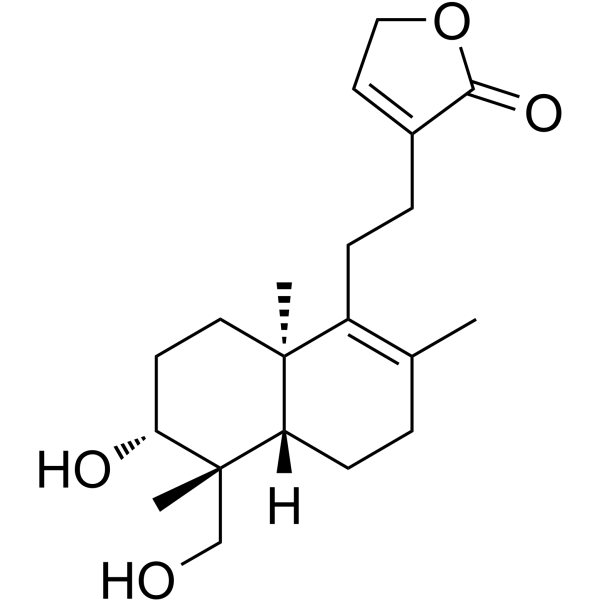
Deoxyandrographolide is an orally active lactone found in the Andrographis paniculata Nees. Deoxyandrographolide shows a KD of 38.4 μM of HDAC1. Deoxyandrographolide enhances GLUT4 plasma membrane translocation, activates PI3K and AMPK-dependent signaling pathways, suppresses fasting blood glucose, serum insulin, triglycerides, and LDL-cholesterol levels. Deoxyandrographolide enhances HDAC1 expression via inhibited ubiquitination degradation, represses H3K4me3, improves chromosome stability, and restrains aging biomarkers p16, p21, γH2A.X, p53 and ROS production. Deoxyandrographolide interacts with Foot-and-Mouth Disease Virus 3Cpro active site, inhibits protease and IFN-antagonist activity, derepresses ISG expression, and inhibits viral replication. Deoxyandrographolide can be used for the researches of type 2 diabetes mellitus, vascular senescence and virus infection .
loading...
    loading...
1
1 Cited Publications
Cat. No.: HY-W017113
CAS No.: 149-30-4
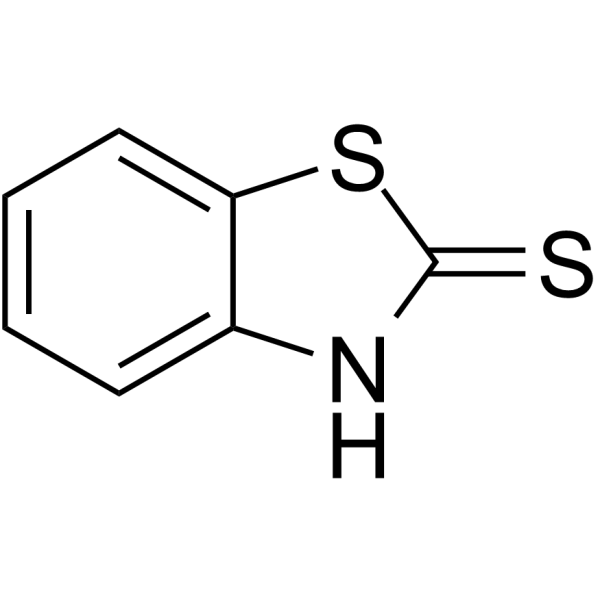
2-Mercaptobenzothiazole is an activator of the aryl hydrocarbon receptor (AhR) , inhibiting thyroid hormone synthesis and dopamine beta-hydroxylase activity . 2-Mercaptobenzothiazole promotes bladder cancer cell invasion by altering the conformation of the AhR ligand binding domain (LBD), activating AhR transcription, and upregulating the mRNA and protein expression of target genes CYP1A1 and CYP1B1 . 2-Mercaptobenzothiazole inhibits thyroid peroxidase (TPO) with an IC50 value of 11.5 μM, induces histological changes such as follicular cell hypertrophy in Xenopus laevis tadpoles, delaying metamorphosis . 2-Mercaptobenzothiazole increases chromosomal aberrations and sister chromatid exchanges (SCEs) in Chinese hamster ovary (CHO) cells, and enhances carcinogenicity in F344/N rats . 2-Mercaptobenzothiazole inhibits norepinephrine synthesis in mice and completely blocks the conversion of exogenous dopamine to norepinephrine in rat cardiomyocytes .
loading...
    loading...
1
1 Cited Publications
Cat. No.: HY-136248
CAS No.: 174961-75-2
Purity:  96.15%
Synonyms: Tyramide-Cy3
Cyanine 3 Tyramide (Tyramide-Cy3) is an orange fluorescent dye used as a reporter fluorescent substrate for horseradish peroxidase (HRP)-catalyzed deposition, which serves as a signal amplification technique in immunoassays and in situ nucleic acid hybridization .
loading...
    loading...

