21 Results for "

chronotropic

" in MedChemExpress (MCE) Product Catalog:
Products (21)

21 Results for "chronotropic" in MCE Product Catalog:

6
6 Cited Publications
Cat. No.: HY-P1071
CAS No.: 90954-53-3
Synonyms: Calcitonin gene-related peptide
Target:  

CGRP Receptor

Research Areas:  

Cardiovascular Disease

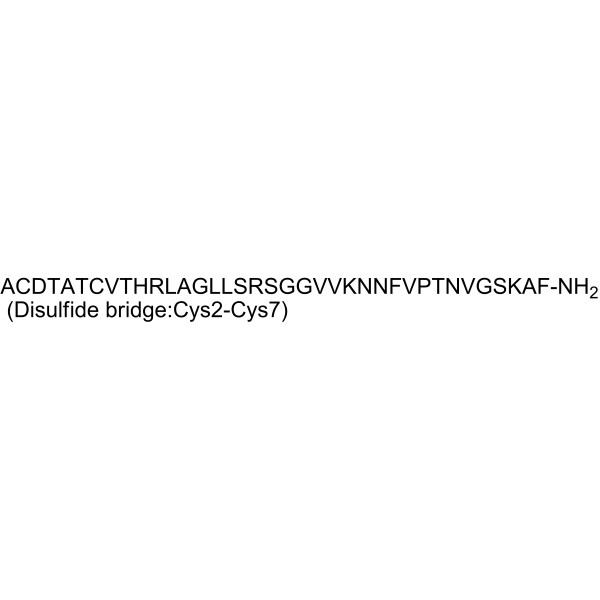
α-CGRP (human) (Calcitonin gene-related peptide) is a regulatory neuropeptide of 37 amino acids. α-CGRP (human) is widely distributed in the central and peripheral nervous system. α-CGRP (human) is a potent vasodilator and has inotropic and chronotropic effects .
loading...
    loading...
6
6 Cited Publications
Cat. No.: HY-P1071A
Synonyms: Calcitonin gene-related peptide TFA
Target:  

CGRP Receptor

Research Areas:  

Cardiovascular Disease

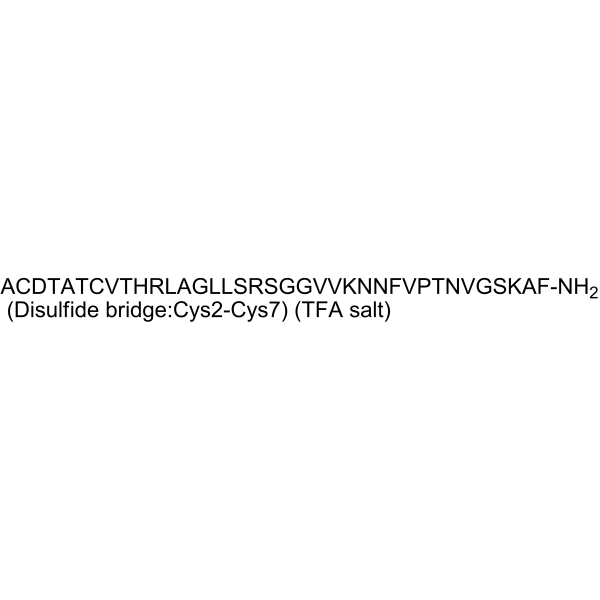
α-CGRP (human) (TFA) is a regulatory neuropeptide of 37 amino acids. α-CGRP (human) (TFA) is widely distributed in the central and peripheral nervous system. α-CGRP (human) (TFA) is a potent vasodilator and has inotropic and chronotropic effects .
loading...
    loading...
Cat. No.: HY-B1233
CAS No.: 543-82-8
Synonyms: 2-Amino-6-methylheptane; 1,5-Dimethylhexylamine; 6-Methyl-2-heptylamine
Octodrine (2-Amino-6-methylheptane) is a central nervous stimulant that increases the uptake of dopamine and noradrenaline. Octodrine is found to increase the pain threshold, cardiac rate (positive chronotropic effect) and myocardial contractility (positive inotropic effect) .
loading...
    loading...
Cat. No.: HY-N1433
CAS No.: 1802-12-6
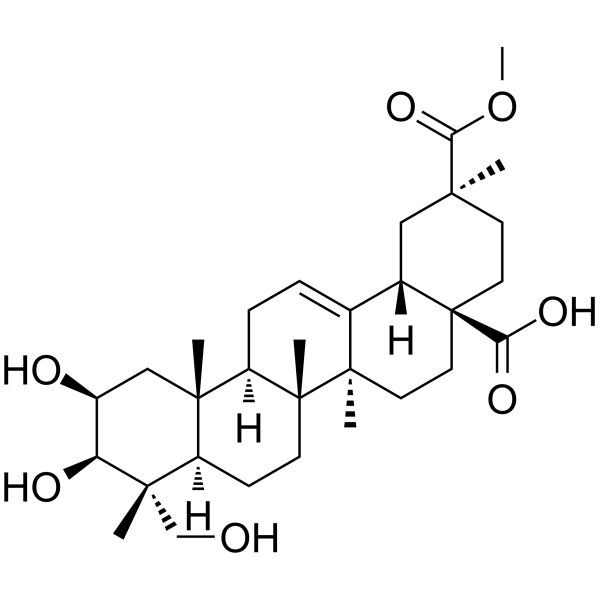
Phytolaccagenin is a triterpenoid saponin aglycone, Antifungal agent, vasodilator, antihypertensive agent, and anti-inflammatory agent. Phytolaccagenin activates vascular and cardiac Muscarinic receptors, blocks cardiac β-adrenergic receptors, and inhibits voltage-dependent calcium channels in blood vessels. Phytolaccagenin inhibits the growth of Candida albicans and Cryptococcus neoformans. Phytolaccagenin induces vasodilation, produces negative inotropic and negative chronotropic effects, reduces mean arterial pressure, and inhibits LPS-induced inflammation. Phytolaccagenin exhibits enhanced antihypertensive effects in high salt-induced hypertensive rats. Phytolaccagenin can be used in the research of candidiasis, cryptococcosis, hypertension, and inflammation-related diseases .
loading...
    loading...
Cat. No.: HY-B1233A
CAS No.: 5984-59-8
Synonyms: 2-Amino-6-methylheptane hydrochloride; 1,5-Dimethylhexylamine hydrochloride; 6-Methyl-2-heptylamine hydrochloride
Target:  

Dopamine Receptor

Research Areas:  

Neurological Disease

Octodrine (2-Amino-6-methylheptane) is a central nervous activator that increases the uptake of dopamine and noradrenaline. Octodrine is found to increase the pain threshold, cardiac rate (positive chronotropic effect) and myocardial contractility (positive inotropic effect) .
loading...
    loading...
Cat. No.: HY-114792
CAS No.: 35700-26-6
Synonyms: (15S)-15-Methyl-PGE1
Research Areas:  

Cardiovascular Disease

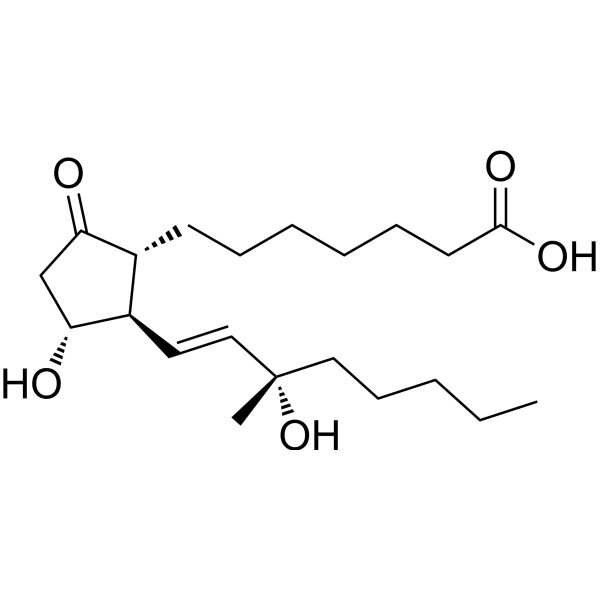
15-Methylprostaglandin E1 (15S-15-Methyl-PGE1) exhibits a positiv chronotropic effect, increases the heart rate and levels of nicardipine .
loading...
    loading...
Cat. No.: HY-122364
CAS No.: 36556-75-9
Target:  

Adrenergic Receptor

Research Areas:  

Cardiovascular Disease

Bucumolol hydrochloride is a β-adrenergic receptor antagonist that can slow heart rate (negative chronotropic effect) and reduce cardiac contractility (negative inotropic effect). Bucumolol hydrochloride has antiarrhythmic and local anesthetic activity and can be used in the study of cardiovascular diseases .
loading...
    loading...
Cat. No.: HY-101355
CAS No.: 137888-49-4
Target:  

Adrenergic Receptor

Research Areas:  

Cardiovascular Disease

CGP 20712 is a highly selective β1-adrenoceptor antagonist (Ki=0.3 nmol/L). CGP 20712’s primary mechanism of action is through competitively binding to β1-receptors, thereby blocking the positive chronotropic effects of adrenaline and noradrenaline .
loading...
    loading...
Cat. No.: HY-117135
CAS No.: 186086-10-2
Research Areas:  

Cardiovascular Disease

HNS-32 is a compound with antiarrhythmic and vasodilatory effects in canine hearts, showing superior protective effects against ischemic and reperfusion arrhythmias compared to an equivalent dose of Mexiletine hydrochloride (HY-A0093). Furthermore, HNS-32 exhibits significant negative chronotropic effects on mammalian ventricular myocardium, indicating its potential application value in the study of acute coronary syndrome .
loading...
    loading...
Cat. No.: HY-P2601A
Target:  

CGRP Receptor

Research Areas:  

Others

Tyr-α-CGRP (human) TFA is an N-terminally extended human α-CGRP analog. Tyr-α-CGRP (human) TFA can bind to membrane preparations from rat brain and spleen with IC50 values of 0.2 nM and 0.5 nM, respectively, and induce positive chronotropic and inotropic effects in isolated guinea pig right and left atria with EC50 values of 282 nM and 74 nM, respectively. Tyr-α-CGRP (human) TFA also inhibits contractile responses in rat vas deferens with an EC50 value of 1.9 nM .
loading...
    loading...
Cat. No.: HY-105521A
CAS No.: 94096-42-1
Synonyms: (S)-Nafenodone; LU-43706
Research Areas:  

Neurological Disease

Dexnafenodone hydrochloride ((S)-Nafenodone; LU-43706) is a novel antidepressant candidate molecule that selectively inhibits the norepinephrine synaptosomal uptake transporter. Dexnafenodone hydrochloride inhibits the fast inward Na + current and slow inward Ca 2+ current in cardiomyocytes. Dexnafenodone hydrochloride inhibits voltage-gated and receptor-activated Ca 2+ influx in vascular smooth muscle, depletes norepinephrine-sensitive intracellular Ca 2+ stores, suppresses agonist-stimulated Ca 2+ influx, relaxes precontracted vascular smooth muscle, inhibits spontaneous myogenic activity, and modulates cardiac electrophysiology, exerting negative chronotropic and negative inotropic effects. Dexnafenodone hydrochloride can be used in the research of depression .
loading...
    loading...
Cat. No.: HY-W676530
CAS No.: 5852-92-6
Carnegine hydrochloride is a fungicide with broad-spectrum antibacterial activity, as well as a stereoselective inhibitor of MAO-A/MAO-B. Carnegine hydrochloride has no antioxidant activity and does not affect cerebral PDE, but it antagonizes the chronotropic effects of adrenaline and noradrenaline at low concentrations and induces tolerance in *Drosophila melanogaster*. Carnegine hydrochloride stimulates respiration, exerts mild spasmolytic and hypotensive effects, inhibits cancer cell respiration, and exhibits central nervous system excitatory toxicity and negative chronotropic effects on the cardiovascular system .
loading...
    loading...
Cat. No.: HY-183859
CAS No.: 88017-05-4
Target:  

Adrenergic Receptor

Research Areas:  

Cardiovascular Disease

H142/08 is a β1-adrenergic receptor-selective agonist. H142/08 induces concentration-dependent relaxation of isolated rat uterus and acts as a chronotropic stimulant to increase atrial rate, and its effects are effectively antagonized by Pafenolol (HY-165495). H142/08 also antagonizes the chronotropic effect of isoproterenol on isolated rat right atrium, but requires a higher proportion of receptor occupancy to produce sufficient stimulatory effects .
loading...
    loading...
Cat. No.: HY-187722
CAS No.: 83982-78-9
Synonyms: MDL 19438
Target:  

Drug Metabolite

Research Areas:  

Cardiovascular Disease

Enoximone sulfoxide (MDL 19438) is the primary sulfoxide metabolite of Enoximone (HY-B1639). Enoximone sulfoxide is also a cardiotonic agent with positive inotropic, positive chronotropic, and vasodilatory activities. Enoximone sulfoxide can be used in the research of congestive heart failure .
loading...
    loading...
Cat. No.: HY-N18500
CAS No.: 550-49-2
Synonyms: Adlumidine
(+)-Adlumidine (Adlumidine) is an isoquinoline alkaloid. (+)-Adlumidine efficiently binds to two key targets of SARS-CoV-2, Mpro and RBD, with IC50 values of 953.86 nM and 9.48 μM, respectively. (+)-Adlumidine exerts significant positive inotropic effects and certain positive chronotropic effects on cultured mouse embryonic cardiomyocytes. (+)-Adlumidine can be used for research on cardiovascular-related diseases and SARS-CoV-2 infection.
loading...
    loading...
Cat. No.: HY-184377
CAS No.: 166181-63-1
Synonyms: IQB-9302
Target:  

Potassium Channel

Research Areas:  

Others

Ipravacaine (IQB-9302) is a long-acting amide-based local anesthetic. Ipravacaine blocks open-state hKv1.5, with stereoselective, time-dependent and voltage-dependent inhibitory effects, and exerts stronger activity on the R (+) enantiomer. Ipravacaine blocks Kv2.1, Kv4.3 and HERG potassium channels. Ipravacaine induces negative chronotropic effects, increases mean arterial pressure, and exhibits vasodilatory effects at high concentrations .
loading...
    loading...
Cat. No.: HY-N8421
CAS No.: 83-94-3
Tabernanthine is a negative chronotropic and negative inotropic agent that selectively acts on sinoatrial node receptors, regulating heart rhythm and myocardial contractility. Tabernanthine exhibits atropine resistance and direct non-cholinergic binding properties, acting directly on the sinoatrial node rather than relying on vagal nerve or cholinergic pathways to exert its key activity of slowing heart rate and weakening myocardial contractility. Tabernanthine is useful in cardiovascular pharmacology research, particularly in the areas of sinoatrial node function regulation, mechanisms related to bradycardia, and studies of cardiac receptor subtype differences .
loading...
    loading...
Cat. No.: HY-P1071S
Synonyms: Calcitonin gene-related peptide-13C9,15N TFA
α-CGRP (human)- 13C9, 15N (Calcitonin gene-related peptide- 13C5, 15N) TFA is the 13C, 15N-labeled α-CGRP (human) (TFA) (HY-P1071A). α-CGRP (human) (TFA) is a regulatory neuropeptide of 37 amino acids. α-CGRP (human) (TFA) is widely distributed in the central and peripheral nervous system. α-CGRP (human) (TFA) is a potent vasodilator and has inotropic and chronotropic effects .
loading...
    loading...
Cat. No.: HY-105521
CAS No.: 92629-87-3
Synonyms: (S)-Nafenodone free base; LU-43706 free base
Research Areas:  

Neurological Disease

Dexnafenodone ((S)-Nafenodone free base; LU-43706 free base) is a novel antidepressant candidate molecule that selectively inhibits the norepinephrine synaptosomal uptake transporter. Dexnafenodone inhibits the fast inward Na + current and slow inward Ca 2+ current in cardiomyocytes. Dexnafenodone inhibits voltage-gated and receptor-activated Ca 2+ influx in vascular smooth muscle, depletes norepinephrine-sensitive intracellular Ca 2+ stores, suppresses agonist-stimulated Ca 2+ influx, relaxes precontracted vascular smooth muscle, inhibits spontaneous myogenic activity, and modulates cardiac electrophysiology, exerting negative chronotropic and negative inotropic effects. Dexnafenodone can be used in the research of depression .
loading...
    loading...
Cat. No.: HY-183853
CAS No.: 35516-99-5
Arecaidine-propargyl ester is a selective M2 muscarinic receptor agonist with blood-brain barrier permeability, with a pKi of 5.91 for hm1, 7.06 for hm2, 6.07 for hm3, 6.01 for hm4, and 6.03 for hm5. Arecaidine-propargyl ester stimulates central and peripheral muscarinic receptors. Arecaidine-propargyl ester increases intracellular ROS, induces DNA damage and Apoptosis, and upregulates the expression of MnSOD and SIRT1. Arecaidine-propargyl ester reduces sympathetic nerve outflow, induces dose-dependent hypotension, and triggers negative chronotropic effects at high peripheral doses. Arecaidine-propargyl ester can be used in research related to Alzheimer's disease and glioblastoma .
loading...
    loading...

