10055 Results for "

groups

" in MedChemExpress (MCE) Product Catalog:
Products (10055)

10055 Results for "groups" in MCE Product Catalog:

119
119 Publications Verification
Cat. No.: HY-D0938
CAS No.: 150347-59-4
Synonyms: CFSE; 5(6)-Carboxyfluorescein diacetate succinimidyl ester; 5(6)-CFDA N-succinmidyl ester
CFDA-SE is a fluorescent dye that can penetrate the cell membrane. It can react with the free amine group in the cytoskeleton protein inside the cell, and finally form a protein complex with fluorescence. After entering the cell, CFDA-SE locates in the cell membrane, cytoplasm and nucleus, and the fluorescence staining is strongest in the nucleus . CFDA-SE dye can be uniformly inherited by the cells with cell division and proliferation, and its attenuation is proportional to the number of cell divisions. This phenomenon can be detected and analyzed by flow cytometry under the excitation light of 488 nm, and can be used to detect the proliferation of cells .
loading...
    loading...
102
102 Cited Publications
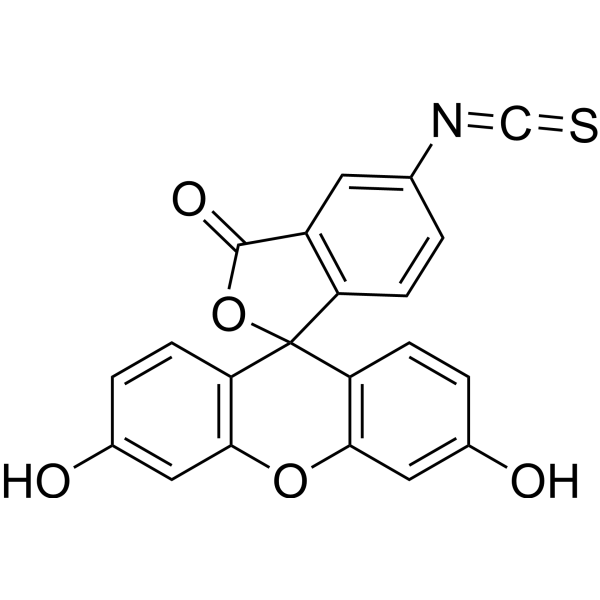
Cat. No.: HY-66019
CAS No.: 3326-32-7
Synonyms: Fluorescein 5-isothiocyanate
FITC (Fluorescein Isothiocyanate), is one of the green fluorescein derivatives widely used in biology. FITC has the characteristics of high absorptivity and excellent fluorescence quantum yield. The isothiocyanate group of FITC can be combined with amino, sulfhydryl, imidazole, tyrosyl, carbonyl and other groups on the protein, so as to achieve protein labeling including antibodies and lectins. In addition to its use as a protein marker, FITC can also be used as a fluorescent protein tracer to rapidly identify pathogens by labeling antibodies, or for microsequencing of proteins and peptides (HPLC). The maximum excitation wavelength of FITC is 494 nm. Once excited, it fluoresces yellow-green at a maximum emission wavelength of 520 nm. In addition, FITC is also a hapten that can induce contact hypersensitivity (CHS) and induce an atopic dermatitis model .
loading...
    loading...
45
45 Cited Publications
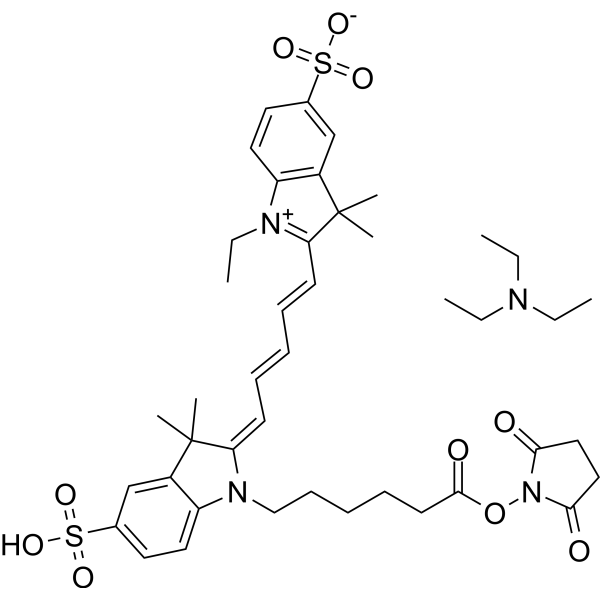
Cat. No.: HY-D0819A
CAS No.: 1497420-70-8
Synonyms: Cy5 NHS Ester triethylamine salt; Sulfo-Cyanine5 Succinimidyl Ester triethylamine salt
Cy5-SE (Cy5 NHS Ester) triethylamine salt is a reactive dye for the labeling of amino-groups in peptides, proteins, and oligonucleotides. Cy5-SE triethylamine salt is ideal for very cost-efficient labeling of soluble proteins, as well as all kinds of peptides and oligonucleotides Ex=649 nm; Em=670 nm) .
loading...
    loading...
45
45 Cited Publications
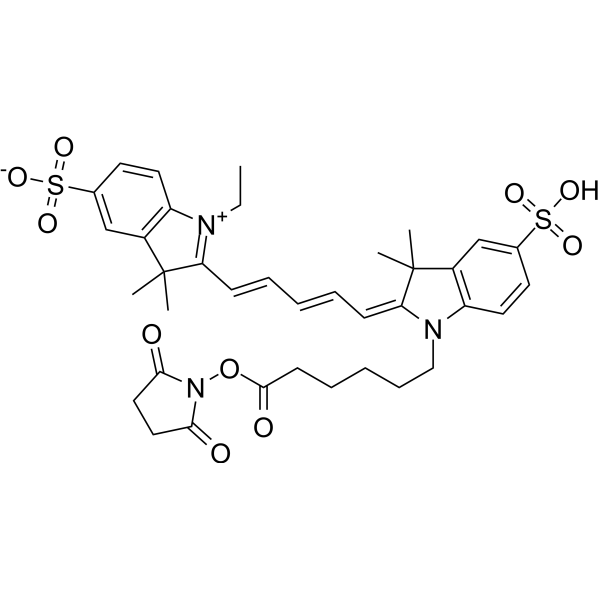
Cat. No.: HY-D0819
CAS No.: 146368-14-1
Synonyms: Cy5 NHS Ester; Sulfo-Cyanine5 Succinimidyl Ester
Cy5-SE (Cy5 NHS Ester) is a reactive dye for the labeling of amino-groups in peptides, proteins, and oligonucleotides. This dye requires small amount of organic co-solvent (such as DMF or DMSO) to be used in labeling reaction. This reagent is ideal for very cost-efficient labeling of soluble proteins, as well as all kinds of peptides and oligonucleotides. This reagent also works well in organic solvents for small molecule labeling. Excitation (nm):649, Emission (nm): 670.
loading...
    loading...
37
37 Cited Publications
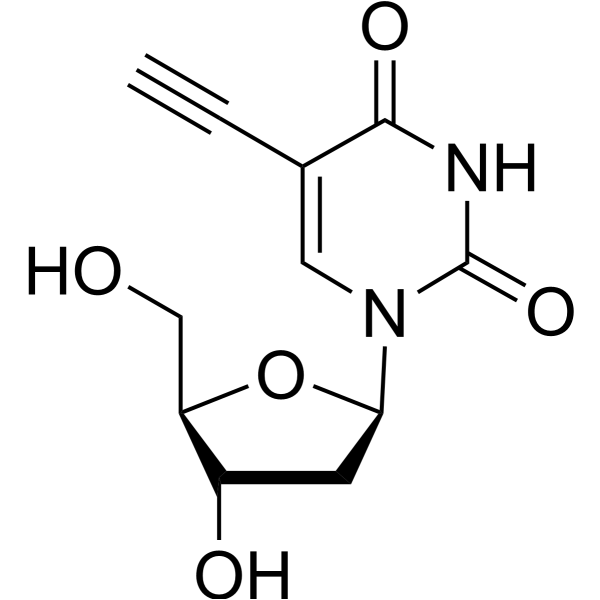
Cat. No.: HY-118411
CAS No.: 61135-33-9
Purity:  99.78%
Synonyms: EdU
Target:  

PROTAC Linkers

Research Areas:  

Cancer

5-Ethynyl-2'-deoxyuridine (EdU), a thymidine analogue, is incorporated into cellular DNA during DNA replication and the subsequent reaction of EdU with a fluorescent azide in a “Click” reaction. EdU staining is a fast, sensitive and reproducible method to study cell proliferation . 5-Ethynyl-2'-deoxyuridine is an alkyl chain-based PROTAC linker that can be used in the synthesis of PROTACs . 5-Ethynyl-2'-deoxyuridine is a click chemistry reagent, it contains an Alkyne group and can undergo copper-catalyzed azide-alkyne cycloaddition (CuAAc) with molecules containing Azide groups.
loading...
    loading...
35
35 Cited Publications
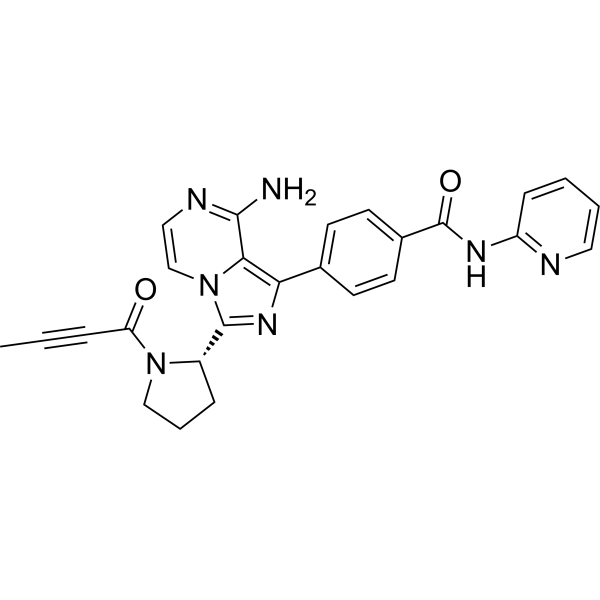
Cat. No.: HY-17600
CAS No.: 1420477-60-6
Synonyms: Calquence; ACP-196
Target:  

Btk

Research Areas:  

Inflammation/Immunology Cancer

Acalabrutinib (ACP-196) is an orally active, irreversible, and highly selective second-generation BTK inhibitor. Acalabrutinib binds covalently to Cys481 in the ATP-binding pocket of BTK. Acalabrutinib demonstrates potent on-target effects and efficacy in mouse models of chronic lymphocytic leukemia (CLL). Acalabrutinib can be used for CLL research . Acalabrutinib is a click chemistry reagent, itcontains an Alkyne group and can undergo copper-catalyzed azide-alkyne cycloaddition (CuAAc) with molecules containing Azide groups.
loading...
    loading...
33
33 Cited Publications
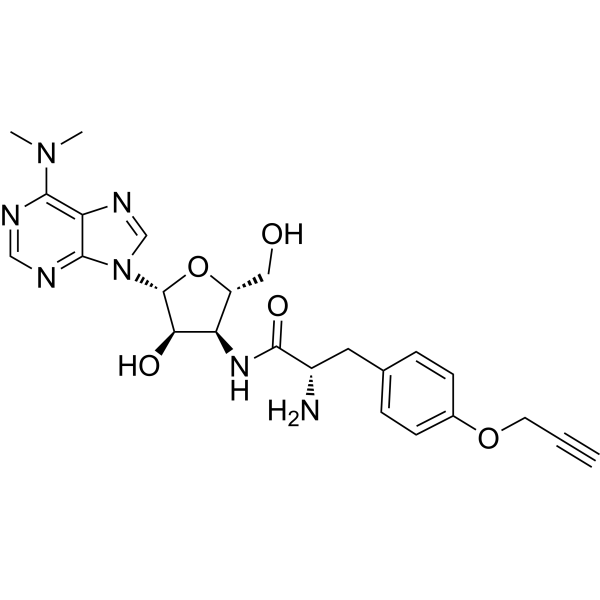
Cat. No.: HY-15680
CAS No.: 1416561-90-4
Purity:  98.41%
Research Areas:  

Others

O-Propargyl-Puromycin, an alkyne analog of puromycin, is a potent protein synthesis inhibitor. O-Propargyl-Puromycin is a click chemistry reagent, it contains an Alkyne group and can undergo copper-catalyzed azide-alkyne cycloaddition (CuAAc) with molecules containing Azide groups.
loading...
    loading...
28
28 Cited Publications
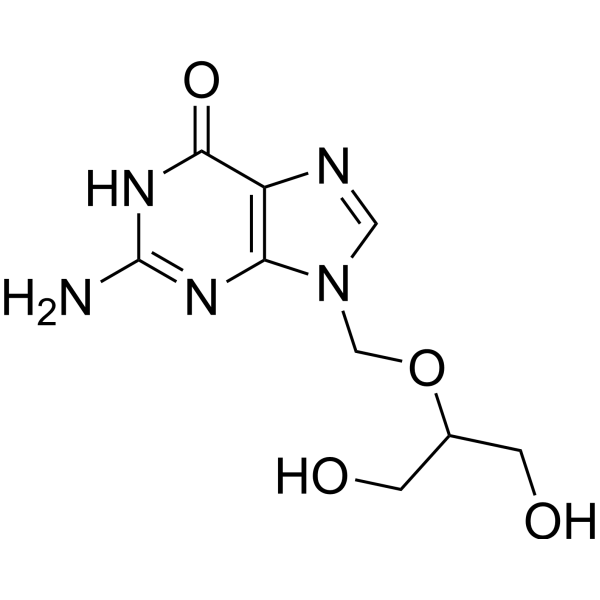
Cat. No.: HY-13637
CAS No.: 82410-32-0
Purity:  99.89%
Synonyms: BW 759; 2'-Nor-2'-deoxyguanosine
Ganciclovir (BW 759), a nucleoside analogue, is an orally active antiviral agent with activity against CMV. Ganciclovir also has activity in vitro against members of the herpes group and some other DNA viruses. Ganciclovir inhibits the in vitro replication of human herpes viruses (HSV 1 and 2, CMV) and adenovirus serotypes 1, 2, 4, 6, 8, 10, 19, 22 and 28. Ganciclovir has an IC50 of 5.2 μM for feline herpesvirus type-1 (FHV-1) and can diffuse into the brain .
loading...
    loading...
28
28 Cited Publications
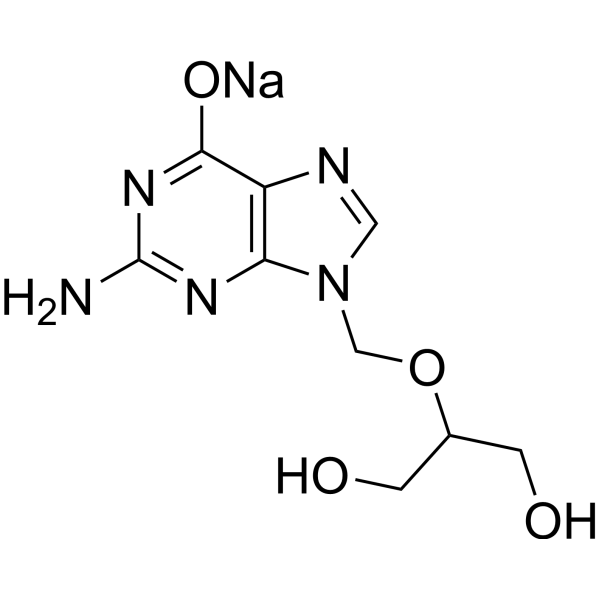
Cat. No.: HY-13637A
CAS No.: 107910-75-8
Purity:  99.92%
Synonyms: BW 759 sodium; 2'-Nor-2'-deoxyguanosine sodium
Ganciclovir (BW 759) sodium, a nucleoside analogue, is an orally active antiviral agent with activity against CMV. Ganciclovir sodium also has activity in vitro against members of the herpes group and some other DNA viruses. Ganciclovir sodium inhibits the in vitro replication of human herpes viruses (HSV 1 and 2, CMV) and adenovirus serotypes 1, 2, 4, 6, 8, 10, 19, 22 and 28. Ganciclovir sodium has an IC50 of 5.2 μM for feline herpesvirus type-1 (FHV-1) and can diffuse into the brain .
loading...
    loading...
28
28 Cited Publications
Cat. No.: HY-W018746
CAS No.: 139-33-3
Synonyms: Ethylenediaminetetraacetic acid disodium
EDTA disodium salt, also known as ethylenediaminetetraacetic acid disodium, belongs to the chelating agent category, which is formed by chelating a central metal ion with four carboxylate groups and two amine groups. This compound, with its ability to bind and chelate metal ions such as calcium, magnesium and iron, is commonly used in a variety of applications, including industrial, medical and research settings. It is used as a preservative in food and beverage, as a stabilizer in medicine, as a chelating agent in water treatment, and as a reagent in biochemical and biomedical research. In addition, EDTA disodium salt has been studied for potential research effects such as improving heavy metal poisoning and cardiovascular disease.
loading...
    loading...
28
28 Cited Publications
Cat. No.: HY-16637
CAS No.: 59-30-3
Synonyms: Vitamin B9; Vitamin M
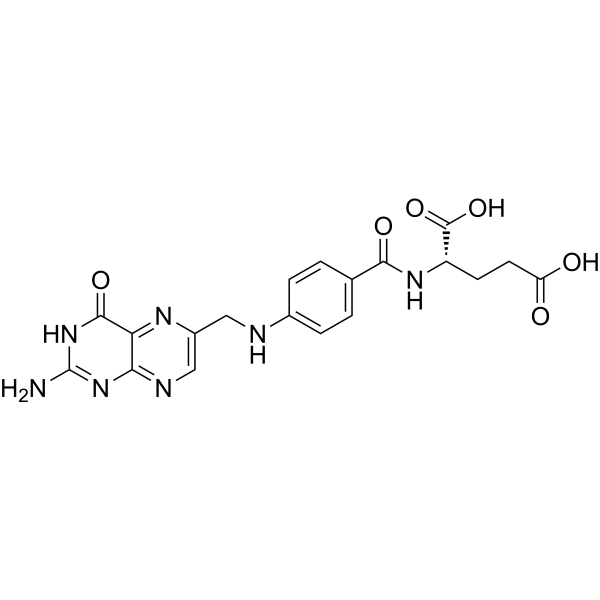
Folic acid (Vitamin B9) is a orally active essential nutrient from the B complex group of vitamins. Folic acid shows antidepressant-like effect. Folic acid sodium reduces the risk of neonatal neural tube defects. Folic acid can be used to the research of megaloblastic and macrocytic anemias due to folic deficiency .
loading...
    loading...
24
24 Cited Publications
Cat. No.: HY-19725
CAS No.: 1235034-55-5
Target:  

Bcl-2 Family

Research Areas:  

Cancer

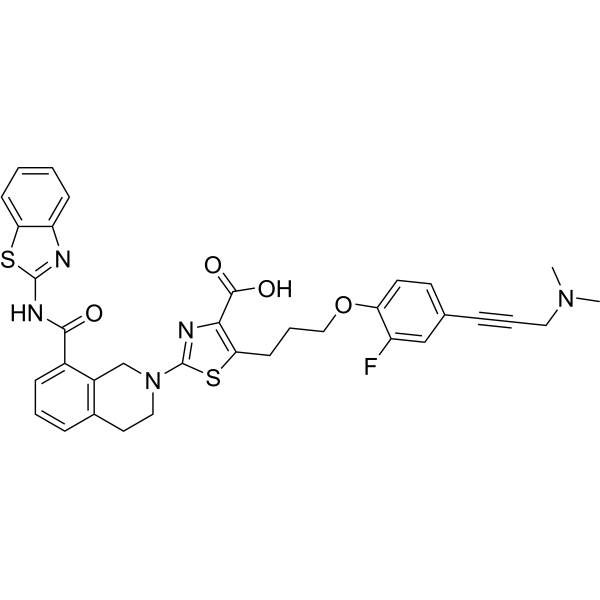
A-1155463, a chemical probe, is a highly potent and selective BCL-XL inhibitor with an EC50 of 70 nM in Molt-4 cell. A-1155463 is a click chemistry reagent, it contains an Alkyne group and can undergo copper-catalyzed azide-alkyne cycloaddition (CuAAc) with molecules containing Azide groups.
loading...
    loading...
24
24 Cited Publications
Cat. No.: HY-B0617
CAS No.: 29908-03-0
Synonyms: S-Adenosyl methionine; Ademetionine; AdoMet
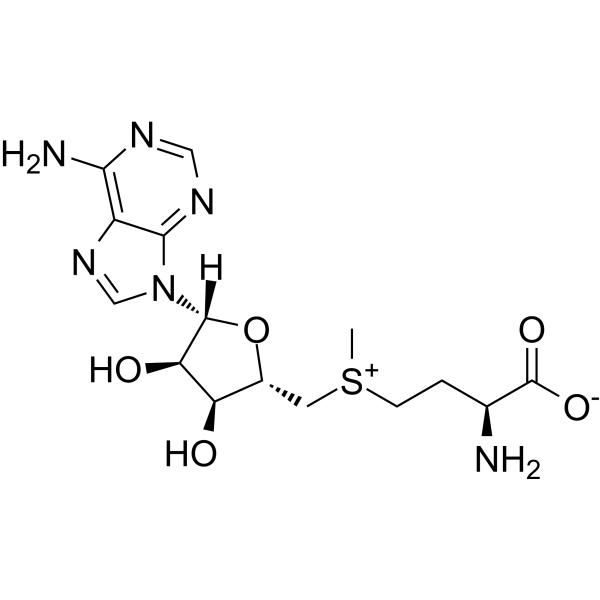
S-Adenosyl-L-methionine (S-Adenosyl methionine) is an orally active methyl group donor. S-Adenosyl-L-methionine is a dietary supplement with potent antidepressant effects. S-Adenosyl-L-methionine also has anti‑proliferative, pro‑apoptotic and anti‑metastatic roles in cancers. S-Adenosyl-L-methionine has the potential for, cancer, liver disease and osteoarthritis research .
loading...
    loading...
23
23 Cited Publications
Cat. No.: HY-W017770
CAS No.: 97540-22-2
Synonyms: Ademetionine disulfate tosylate; S-Adenosyl methionine disulfate tosylate; AdoMet disulfate tosylate
S-Adenosyl-L-methionine (Ademetionine) disulfate tosylate is the disulfate tosylate form of S-Adenosyl-L-methionine (HY-B0617). S-Adenosyl-L-methionine disulfate tosylate is an orally active methyl group donor. S-Adenosyl-L-methionine disulfate tosylate is a dietary supplement with potent antidepressant effects. S-Adenosyl-L-methionine disulfate tosylate also has anti‑proliferative, pro‑apoptotic and anti‑metastatic roles in cancers. S-Adenosyl-L-methionine disulfate tosylate has the potential for, cancer, liver disease and osteoarthritis research .
loading...
    loading...
22
22 Cited Publications
Cat. No.: HY-B0617A
CAS No.: 52248-03-0
Synonyms: S-Adenosyl methionine tosylate; Ademetionine tosylate; AdoMet tosylate
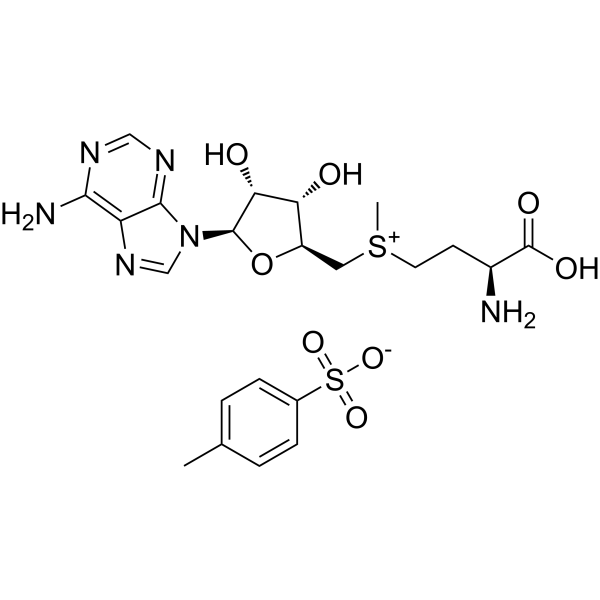
S-Adenosyl-L-methionine (S-Adenosyl methionine) tosylate is an orally active methyl group donor. S-Adenosyl-L-methionine tosylate is a dietary supplement with potent antidepressant effects. S-Adenosyl-L-methionine tosylate also has anti‑proliferative, pro‑apoptotic and anti‑metastatic roles in cancers. S-Adenosyl-L-methionine tosylate has the potential for, cancer, liver disease and osteoarthritis research .
loading...
    loading...
19
19 Cited Publications
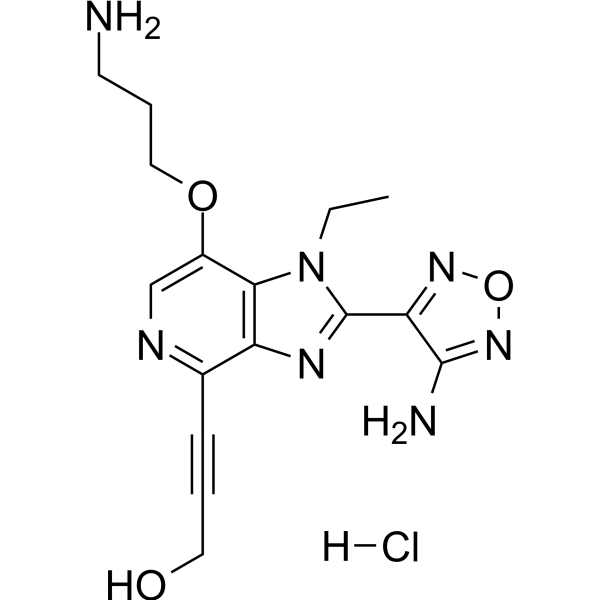
Cat. No.: HY-120501
CAS No.: 1202764-53-1
Purity:  99.37%
Target:  

NF-κB

Research Areas:  

Inflammation/Immunology

B022 is a potent and selective NF-κB-inducing kinase (NIK) inhibitor (Ki of 4.2 nM; IC50=15.1 nM). B022 protects liver from toxin-induced inflammation, oxidative stress, and injury . B022 is a click chemistry reagent, it contains an Alkyne group and can undergo copper-catalyzed azide-alkyne cycloaddition (CuAAc) with molecules containing Azide groups.
loading...
    loading...
19
19 Cited Publications
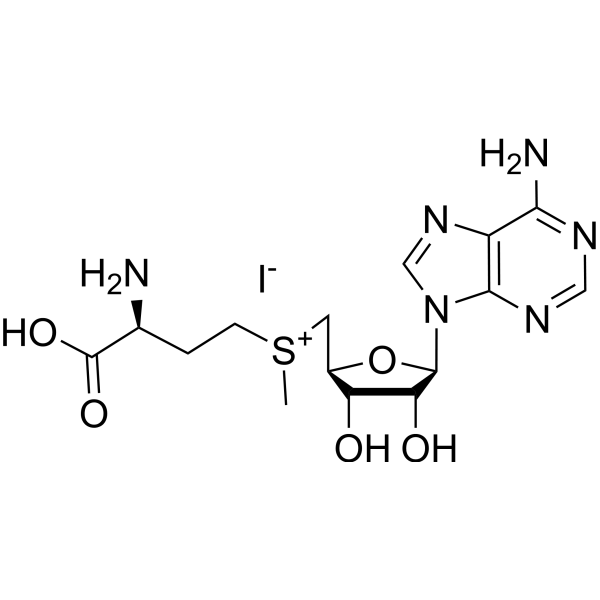
Cat. No.: HY-14614D
CAS No.: 3493-13-8
Synonyms: S-Adenosyl methionine iodide; Ademetionine iodide; AdoMet iodide
S-Adenosyl-L-methionine (S-Adenosyl methionine) iodide is an orally active methyl group donor. S-Adenosyl-L-methionine iodide is a dietary supplement with potent antidepressant effects. S-Adenosyl-L-methionine iodide also has anti‑proliferative, pro‑apoptotic and anti‑metastatic roles in cancers. S-Adenosyl-L-methionine iodide has the potential for, cancer, liver disease and osteoarthritis research .
loading...
    loading...
18
18 Cited Publications
Cat. No.: HY-10249D
CAS No.: 3026697-00-4
Purity:  99.39%
Target:  

Akt

Research Areas:  

Cancer

AKT Kinase Inhibitor hydrochloride is an Akt kinase inhibitor with anti-tumor activity . AKT Kinase Inhibitor (hydrochloride) is a click chemistry reagent, it contains an Alkyne group and can undergo copper-catalyzed azide-alkyne cycloaddition (CuAAc) with molecules containing Azide groups.
loading...
    loading...
18
18 Cited Publications
Cat. No.: HY-17395
CAS No.: 78628-80-5
Synonyms: TDT 067 hydrochloride
Research Areas:  

Infection

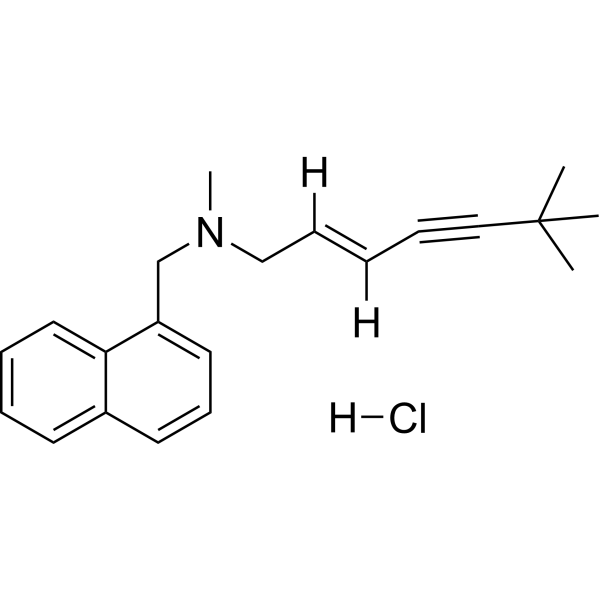
Terbinafine hydrochloride (TDT 067 hydrochloride) is an orally active and potent antifungal agent. Terbinafine hydrochloride is a potent non-competitive inhibitor of squalene epoxidase from Candida, with a Ki of 30 nM. Terbinafine hydrochloride also shows antibacterial activity against certain Gram-positive and Gram-negative bacteria . Terbinafine hydrochloride is a click chemistry reagent, it contains an Alkyne group and can undergo copper-catalyzed azide-alkyne cycloaddition (CuAAc) with molecules containing Azide groups.
loading...
    loading...
18
18 Cited Publications
Cat. No.: HY-17395A
CAS No.: 91161-71-6
Synonyms: TDT 067
Research Areas:  

Infection

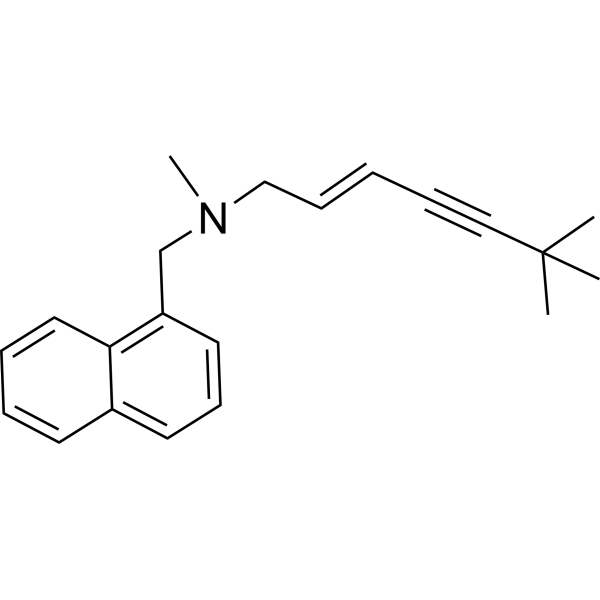
Terbinafine (TDT 067) is an orally active and potent antifungal agent. Terbinafine is a potent non-competitive inhibitor of squalene epoxidase from Candida, with a Ki of 30 nM. Terbinafine also shows antibacterial activity against certain Gram-positive and Gram-negative bacteria . Terbinafine is a click chemistry reagent, it contains an Alkyne group and can undergo copper-catalyzed azide-alkyne cycloaddition (CuAAc) with molecules containing Azide groups.
loading...
    loading...

