

1. Search Result
Search Result
Pathways Recommended: Stem Cell/Wnt Cell Cycle/DNA Damage
Results for "

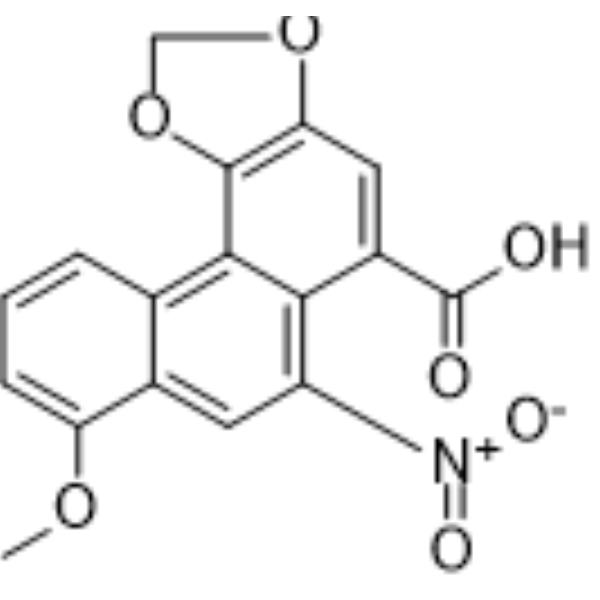
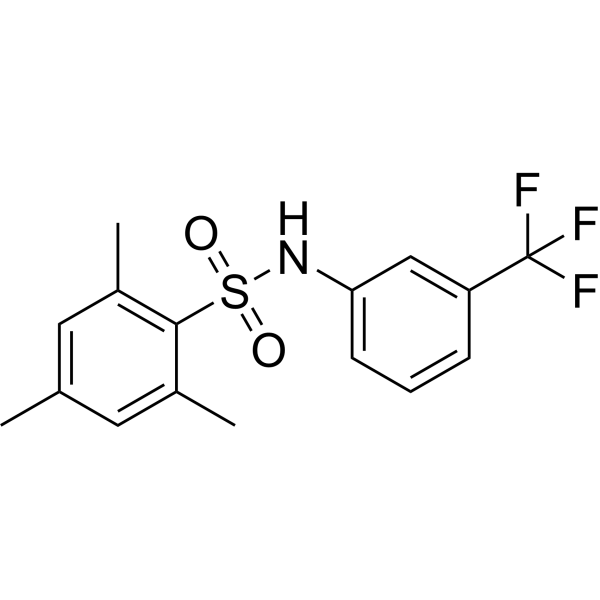
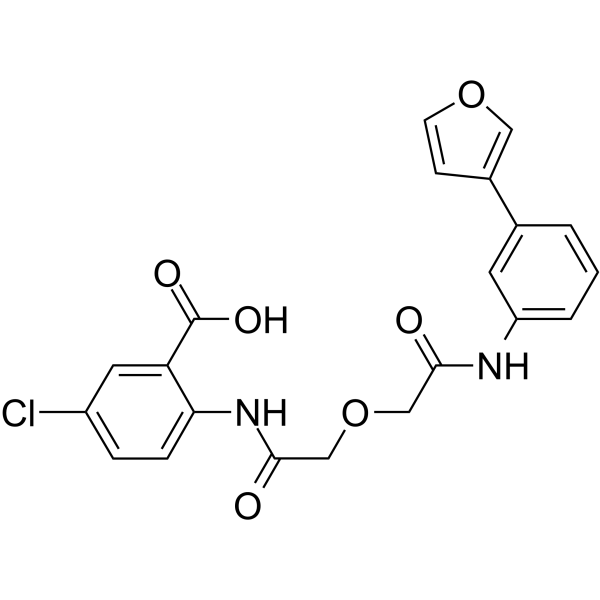
human cell lines

" in MedChemExpress (MCE) Product Catalog:

363

Inhibitors & Agonists

6

Fluorescent Dye

4

Biochemical Assay Reagents

10

Peptides

1

MCE Kits

20

Inhibitory Antibodies

112

Natural
Products

4

Isotope-Labeled Compounds

3

Click Chemistry

11

Oligonucleotides

Cat. No. Product Name Target Research Areas Chemical Structure
  • HY-N0162
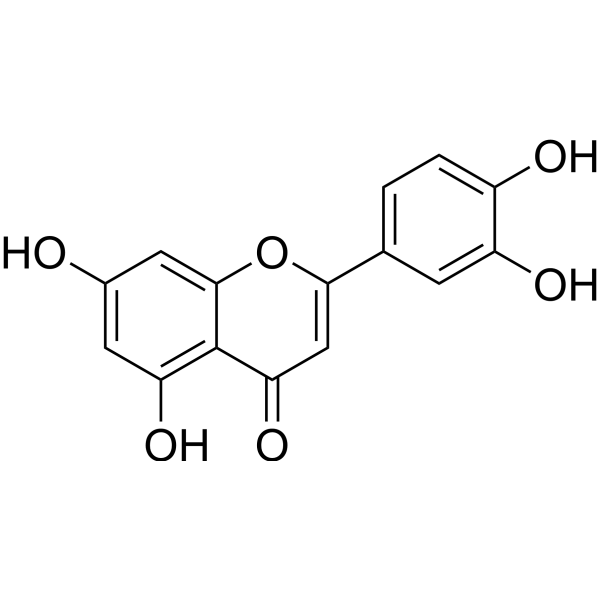
    Luteolin
    Maximum Cited Publications
    89 Publications Verification

    Luteoline; Luteolol; Digitoflavone

    Keap1-Nrf2 Apoptosis Autophagy Endogenous Metabolite Inflammation/Immunology Cancer
    Luteolin (Luteoline), a flavanoid compound, is a potent Nrf2 inhibitor. Luteolin has anti-inflammatory, anti-cancer properties, including the induction of apoptosis and cell cycle arrest, and the inhibition of metastasis and angiogenesis, in several cancer cell lines, including human non-small lung cancer cells .
    Luteolin
  • HY-B0673
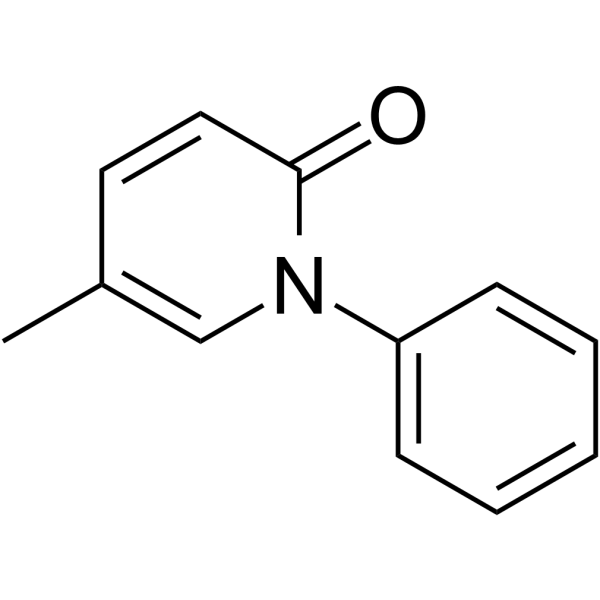
    Pirfenidone
    75+ Cited Publications

    AMR69

    TGF-beta/Smad CCR Inflammation/Immunology Cancer
    Pirfenidone (AMR69) is an antifibrotic agent that attenuates CCL2 and CCL12 production in fibrocyte cells. Pirfenidone has growth-inhibitory effect and reduces TGF-β2 protein levels in human glioma cell lines. Pirfenidone also has anti-inflammatory activities .
    Pirfenidone
  • HY-108730
    Avelumab
    Maximum Cited Publications
    10 Publications Verification

    Anti-human PD-L1, human Antibody; MSB 0010718C; MSB0010718C

    PD-1/PD-L1 Inflammation/Immunology Cancer
    Avelumab (Anti-Human PD-L1) a fully human IgG1 anti-PD-L1 monoclonal antibody (mAb) with potential antibody-dependent cell-mediated cytotoxicity (ADCC). Avelumab enhances ADCC on several cancer cell lines expressing PD-L1. Avelumab can be used for the study of chordoma .
    Avelumab
  • HY-110042

    HSP Apoptosis CDK PERK Metabolic Disease Inflammation/Immunology Cancer
    CCT018159 is an ATP-competitive HSP90β inhibitor, with an IC50 of 3.2 μM against human HSP90β ATPase and 6.6 μM against yeast HSP90β ATPase. CCT018159 induces cell cycle arrest and apoptosis in tumor cells, and inhibits invasion and angiogenesis. CCT018159 is applicable to cancer-related research .
    CCT018159
  • HY-145584

    JPI-547/OCN-201

    PARP Wnt β-catenin Neurological Disease Cancer
    Nesuparib (JPI-547) is the orally active inhibitor for PARP 1/2 and Tankyrase 1/2 that inhibits tankyrases 1, tankyrases 2, and PARP 1 with IC50s of 5, 1 and 2 nM, respectively. Nesuparib exhibits antitumor activity and can be used in research of advanced solid tumor .
    Nesuparib
  • HY-N0128
    Sclareol
    3 Publications Verification

    Environmental Pollutants Apoptosis Cancer
    Sclareol is isolated from Salvia sclarea with anticarcinogenic activity. Sclareol shows strong cytotoxic activity against mouse leukemia (P-388), human epidermal carcinoma (KB) cells and human leukemia cell lines. Sclareol induces cell apoptosis .
    Sclareol
  • HY-P99798

    AMG 420; BI-836909

    CD3 Cancer
    Pacanalotamab (AMG 420; BI-836909) is a bispecific T-cell engager (BiTE) targeting to BCMA and CD3E. BCMA refers to B cell maturation antigen, as Pacanalotamab redirecting T cells to BCMA expressing cells on the cell surface. Pacanalotamab conducts T-cell redirected lysis of human multiple myeloma (MM) cell lines .
    Pacanalotamab
  • HY-12892
    SKI-178
    1 Publications Verification

    SphK Apoptosis Cancer
    SKI-178 is a potent sphingosine kinase-1 (SphK1) and SphK2 inhibitor. SKI-178 is cytotoxic at IC50 concentrations ranging from 1.8 to 0.1 μM in both agent sensitive and multi-agent resistant cancer cell lines (i.e., MTR3, NCI-ADR and HL60/VCR cells). SKI-178 induces apoptosis in a CDK1-dependent manner in human acute myeloid leukemia cell lines .
    SKI-178
  • HY-121382

    Cholinesterase (ChE) Apoptosis Necroptosis Neurological Disease Cancer
    Gypsogenin is a selective mixed-type BChE inhibitor (Ki=19.99 μM) that also exhibits significant cytotoxicity against various human cancer cell lines. Gypsogenin inhibits tumor growth by inducing cell cycle arrest and triggering apoptosis. Gypsogenin displays antibacterial activity against bacteria such as Bacillus subtilis and Bacillus thuringiensis, and often serves as a key parent nucleus for the synthesis of anticancer compounds. Gypsogenin is widely used in research on Alzheimer's disease and various cancers including colon cancer, melanoma, and leukemia .
    Gypsogenin
  • HY-100395

    Apoptosis Cancer
    F16 is a potent growth inhibitor of the neu-overexpressing cells and also selectively inhibits proliferation of mammary epithelial as well as a variety of mouse mammary tumor and human breast cancer cell lines.
    F16
  • HY-100948

    Myosin Cancer
    ATM-3507 is a potent tropomyosin inhibitor with IC50s from 3.83-6.84 μM in human melanoma cell lines.
    ATM-3507
  • HY-142997

    Liposome Cancer
    DOSPA is a cationic lipid. DOSPA can form lipid nanoparticles with DOPE (HY-112005) to serve as a carrier for nucleic acid transfection. DOSPA is applicable in research related to drug delivery .
    DOSPA
  • HY-119529

    3,8-Quinolinediol

    Tyrosinase Bacterial Cancer
    Jineol is a cytotoxic alkaloid from the centipede Scolopendra subspinipes. Jineol exhibits modest cytotoxic activity in vitro against the growth of human tumor cell lines .
    Jineol
  • HY-P1632

    Bacterial Infection Cancer
    Tachyplesin I is a β-hairpin antimicrobial peptide that contains 17 amino acid residues. Tachyplesin I exhibits cytotoxic properties against various human tumor cell lines acting primarily by impairing the integrity of the outer cell membrane .
    Tachyplesin I
  • HY-123901

    Apoptosis Cancer
    Garcinone E is a natural xanthone found in the rind of the mangosteen fruit. Garcinone E induces apoptosis and inhibits cancer cell migration. Garcinone E has anticancer effects on different human cancer cell lines, including colorectal, breast, and hepatocellular carcinomas .
    Garcinone E
  • HY-N6946

    NF-κB Interleukin Related Inflammation/Immunology
    Mitraphylline is the major pentacyclic oxindolic alkaloid presented in Uncaria tomentosa. Mitraphylline inhibits lipopolysaccharide-mediated activation of primary human neutrophils. Mitraphylline exhibits antiproliferative activity in human glioma and neuroblastoma cell lines. Mitraphylline can inhibit interleukin release in vivo .
    Mitraphylline
  • HY-118762

    Cathepsin Cancer
    KGP94 is a selective inhibitor of cathepsin L with an IC50 of 189 nM . KGP94 inhibits migration and invasion of metastatic carcinoma and shows low cytotoxicity (GI50=26.9 µM) against various human cell lines .
    KGP94
  • HY-W303895
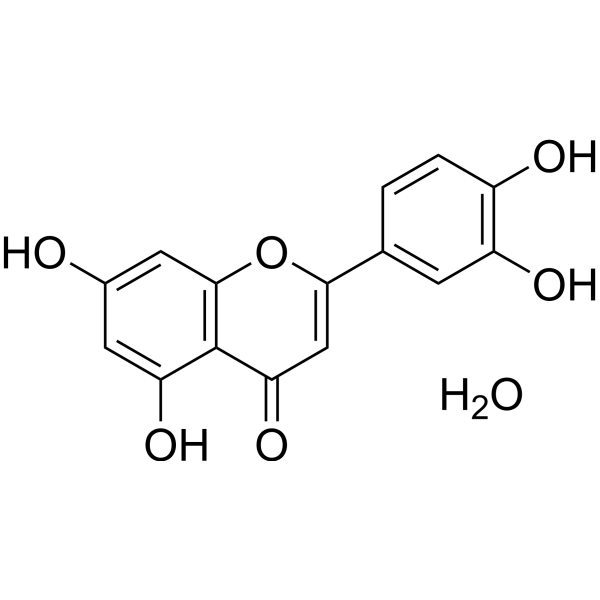
    Luteolin monohydrate
    Maximum Cited Publications
    89 Publications Verification

    Keap1-Nrf2 Apoptosis Autophagy Endogenous Metabolite Others Cancer
    Luteolin (monohydrate) is the monohydrate of Luteolin. Luteolin (Luteoline), a flavonoid, is also a potent Nrf2 inhibitor. Luteolin has anti-inflammatory and anticancer properties, induces apoptosis and cell cycle arrest in multiple human cancer cell lines, including non-small lung cancer cells, and inhibits cell metastasis and angiogenesis .
    Luteolin monohydrate
  • HY-148413
    Aprinocarsen sodium
    1 Publications Verification

    ISIS 3521 sodium

    PKC Cancer
    Aprinocarsen (ISIS 3521) sodium, a specific antisense oligonucleotide inhibitor of protein kinase C-alpha (PKC-α). Aprinocarsen sodium is a 20-mer oligonucleotide, it regulates cell differentiation and proliferation. Aprinocarsen sodium inhibits the growth of human tumor cell lines in nude mice. Aprinocarsen sodium shows the value as a chemotherapeutic compound of human cancers .
    Aprinocarsen sodium
  • HY-115406A

    Apoptosis Cancer
    CPTH6 hydrobromide is a thiazole derivative which activates apoptotic program and increases autophagic features in human acute myeloid leukemia cell lines. CPTH6 can be used for cancer research .
    CPTH6 hydrobromide
  • HY-N6990

    Others Cancer
    Anhydrosecoisolariciresinol is from the flower of Wedelia biflora, has anti-tumor activities . Anhydrosecoisolariciresinol decreases the growth of human breast cancer MCF-7 and MDA-MB-231 cell lines .
    Anhydrosecoisolariciresinol
  • HY-165245

    Transmembrane Glycoprotein Cancer
    SBI-183 is an orally active inhibitor of QSOX1 (Kd: 20 μM). SBI-183 suppresses the proliferative and invasive phenotype of renal cancer cell lines, including triple negative breast cancer cell line, lung adenocarcinoma cell line and pancreatic ductal adenocarcinoma. SBI-183 inhibits tumor growth in two human xenograft mouse models of renal cell carcinoma in vivo .
    SBI-183
  • HY-N3514

    Others Cancer
    Kuwanon E is a flavonoid isolated from Morus alba, cytotoxic to human monocytic leukemic cell lines, and reduces the level of IL-1β .
    Kuwanon E
  • HY-121199

    Apoptosis Cancer
    Germanicol is a selective antineoplastic agent against human colon cancer cell lines HCT-116 and HT29 . Germanicol induces apoptosis via chromatin condensation and DNA damage .
    Germanicol
  • HY-N7205

    Others Cancer
    Glaucocalyxin D is a ent-kauranoid-type diterpenoid that can be isolated from Rabdosia japonica. Glaucocalyxin D shows cytotoxicity against various human tumor cell lines. Glaucocalyxin D can be used for cancer research .
    Glaucocalyxin D
  • HY-N10904

    Others Cancer
    Broussonol E is a diprenylated flavonol. Broussonol E can be isolated from the leaves of Broussonetia kazinoki. Unlike some dinonylated flavonol derivatives, Broussonol E has no cytotoxicity to human tumor cell lines (A549, HCT-8, KB) .
    Broussonol E
  • HY-N1261

    Others Cancer
    Scutebarbatine B shows significant cytotoxic activities against three human cancer lines, namely, HONE-1 nasopharyngeal, KB oral epidermoid carcinoma, and HT29 colorectal carcinoma cells, with IC50 values in the range 3.5-8.1 mM [1]<
    Scutebarbatine B
  • HY-121352

    Drug Derivative Cancer
    Kibdelone C is a hexacyclic tetrahydroxanthone natural product and anticancer agent with sub-nanomolar GI50 activity against human SR leukemia and SN12C renal carcinoma cell lines. Kibdelone C disrupts the actin cytoskeleton in human cancer cells, leading to cell contraction and actin stress fiber formation, without direct actin binding, actin polymerization effects, topoisomerase I/II inhibition, or DNA binding. Kibdelone C can be used for the research of leukemia, and renal cell carcinoma .
    Kibdelone C
  • HY-P3571

    Endothelin Receptor Cancer
    [Ala2] Endothelin-3, human is a linear analog of endothelin-3 (ET-3) where substitution of Ala for Cys residues. TE-3 is a vasoactive peptide, produced by human rhabdomyosarcoma cell lines, whereas it is not expressed by human sarcoma cell lines of non-muscle origin. ET-3 acts as a paracrine factor, since it promotes migration of endothelial cells .
    [Ala2] Endothelin-3, human
  • HY-147971

    Parasite Topoisomerase Infection Cancer
    Anticancer agent 75 is a potent anticancer agent. Anticancer agent 75 shows cytotoxicity and selectivity in cancer cell lines. Anticancer agent 75 shows cytotoxicity to normal human kidney cell lines is at least 35 times lower than that of the Doxorubicin standard. Anticancer agent 75 shows good activity of antiplasmodial .
    Anticancer agent 75
  • HY-121278

    Benzotriptum

    Cholecystokinin Receptor Inflammation/Immunology Cancer
    Benzotript (Benzotriptum) is a cholecystokinin-receptor (CCK) and gastrin receptor antagonist. Benzotript shows antiproliferative effects in human colon carcinoma cell lines .
    Benzotript
  • HY-100948B

    Myosin Cancer
    ATM-3507 trihydrochloride is a potent tropomyosin inhibitor with IC50s from 3.83-6.84 μM in human melanoma cell lines.
    ATM-3507 trihydrochloride
  • HY-107584

    NO Synthase Metabolic Disease
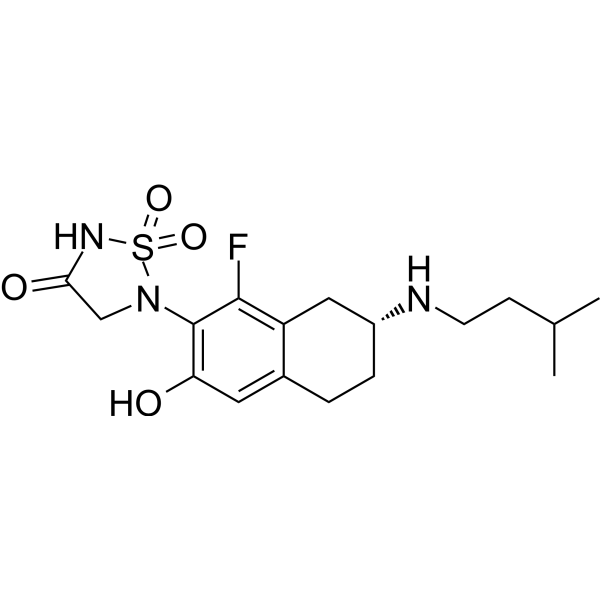
    BYK 191023 is a highly selective inducible nitric-oxide synthase (iNOS) inhibitor. BYK 191023 interacts with the catalytic center of the enzyme. BYK 191023 can be used to study the in vivo and in vitro effects mediated by iNOS .
    BYK 191023 dihydrochloride
  • HY-162156

    Mps1 Cancer
    TTK inhibitor 4 (compound 16) is a potent inhibitor of threonine tyrosine kinase (TTK), with the IC50 value of 0.016 μM, that has anti-tumor activity .
    TTK inhibitor 4
  • HY-W643128

    Cholinesterase (ChE) Infection
    Carlina oxide is an AChE inhibitor and antioxidant that kills Culex pipiens larvae (LC50=1.39 μg/mL). Carlina oxide is cytotoxic to vertebrate cells, human dermis, HCT116 and MDA-MB231 cell lines .
    Carlina oxide
  • HY-N9507

    Apoptosis FGFR Cancer
    Picrasidine Q, an alkaloid component extracted from Angelica keiskei species, has the capacity of anti-cell transformation and anti-cancer. Picrasidine Q induces cell apoptosis and G1 phase arrest in human esophageal cancer cell lines, and directly inhibits FGFR2 kinase activity .
    Picrasidine Q
  • HY-N10777

    Others Cancer
    1-Ketoaethiopinone is an abietane-diterpenoid. 1-Ketoaethiopinone has an α, β-unsaturated carbonyl function. 1-Ketoaethiopinone shows cytotoxic activity against human cancer cell lines MOLT-4 (human lymphoblastic leukemia) and MCF-7 (human breast adenocarcinoma) .
    1-Ketoaethiopinone
  • HY-12458

    DNA/RNA Synthesis Infection Cancer
    Pyrindamycin A is an antibiotic that inhibits DNA synthesis. Pyrindamycin A shows antitumor activities against murine leukemia, exhibits stronger cytotoxic activities towards murine and human tumor cell lines and especially towards doxorubicin-resistant cells, inhibits P388 and P388/ADR cells with the same IC50 of 3.9 μg/ml .
    Pyrindamycin A
  • HY-N2298

    Apoptosis Cancer
    Camellianin A, the main flavonoid in A. nitida leaves, displays anticancer activity and angiotensin converting enzyme (ACE)-inhibitory activity. Camellianin A inhibits the proliferation of the human Hep G2 and MCF-7 cell lines and induces the significant increase of the G0/G1 cell population .
    Camellianin A
  • HY-W278944

    Drug Derivative Cancer
    Antiproliferative agent-15 is an thienopyrimidine derivated anticancer agent. Antiproliferative agent-15 shows antiproliferative activity against human colon (HCT116 and HCT15) and brain (LN-229 and GBM-10) cancer cell lines .
    Antiproliferative agent-15
  • HY-113700

    Antibiotic Cancer
    PD 116779 is an Antibiotic with anticancer activity. PD 116779 demonstrates moderate cytotoxicity against L1210 lymphocytic leukemia and HCT-8 human colon adenocarcinoma cell lines with IC50 values of 3.55x10 -7 and 4.08x10 -7 M, respectively .
    PD 116779
  • HY-174512

    mRNA Cancer
    Human TNFSF8 mRNA encodes the human TNF superfamily member 8 (TNFSF8) protein, a cytokine that belongs to the tumor necrosis factor (TNF) ligand family. TNFSF8 was shown to enhance cell proliferation of some lymphoma cell lines, while to induce cell death and reduce cell proliferation of other lymphoma cell lines.
    Human TNFSF8 mRNA
  • HY-N14293

    Antibiotic Bacterial Infection Cancer
    4-Methylaeruginoic acid is an antibiotic and is cytotoxic to several human tumor cell lines .
    4-Methylaeruginoic acid
  • HY-N8617

    DNA/RNA Synthesis Caspase PARP Bcl-2 Family Mitochondrial Metabolism Apoptosis Cancer
    Trijuganone C is a tanshinone-type diterpenoid compound. Trijuganone C can be isolated from the roots of Salvia miltiorrhiza Bunge. Trijuganone C induces chromatin condensation, DNA fragmentation, activation of Caspase-3, -8 and -9, as well as cleavage of PARP. Trijuganone C activates Bid and Bax, leading to loss of mitochondrial membrane potential and inducing the release of cytochrome c from mitochondria into the cytosol. Trijuganone C exerts antiproliferative effects through Apoptosis induction mediated by Mitochondrial dysfunction and Caspase activation. Trijuganone C exhibits significant antiproliferative activity against leukemia cells and colon cancer cells .
    Trijuganone C
  • HY-111761

    Drug Derivative Cancer
    DIQ3 is a potent anti-cancer agent, nontoxic to normal human cell lines .
    DIQ3
  • HY-19162

    NSC-625487

    Reverse Transcriptase HIV Infection
    Thiazolobenzimidazole (NSC-625487) is a highly potent nonnucleoside HIV-1 reverse transcriptase inhibitor. Thiazolobenzimidazole inhibits HIV-induced cell killing and viral replication in a variety of human cell lines .
    Thiazolobenzimidazole
  • HY-129584

    Others Inflammation/Immunology
    Lepidiline B is a flavonolignan isolated from the roots of Brassicaceae Lepidium meyenii. Lepidiline B exhibits anti-inflammation activities in human cancer cell lines .
    Lepidiline B
  • HY-N10265

    Endogenous Metabolite Cancer
    Stephacidin B is a fungal metabolite. Stephacidin B shows in vitro cytotoxicity against a panel of human tumor cell lines. Stephacidin B shows the strongest cytotoxicity against testosterone-dependent prostate LNCaP cancer cells .
    Stephacidin B
  • HY-149896

    Biochemical Assay Reagents Cancer
    Antitumor agent-107 (compound 5h) is an anticancer agent that shows excellent inhibitory activity against leukemia cell lines (GI50=0.32-1.34 μM). Antitumor agent-107 also shows antitumor activity against various other human cancer cell lines (GI50 range 0.35-9.43 μM) .
    Antitumor agent-107
  • HY-W848341

    NSC 338947; CIEtSoSo

    DNA Alkylator/Crosslinker Cancer
    Clomesone (NSC 338947) is a compound with antitumor activity. Clomesone induces the formation of cross-links between DNA strands in cell lines. Clomesone is inactive against most human colorectal cancer solid tumor cell lines in vitro, has no significant activity against mouse tumors in vivo, and is accompanied by bone marrow suppression. Its pharmacokinetic behavior indicates that it cannot reach effective concentrations at the tumor site.
    Clomesone

Inquiry Online

Your information is safe with us. * Required Fields.

Salutation


Country or Region *

Applicant Name *


Organization Name *

Department *


Email Address *


Product Name *

Cat. No.


Requested quantity *

Phone Number *


Remarks

Inquiry Online

Inquiry Information

Product Name:
Cat. No.:
Quantity:
MCE Japan Authorized Agent:

