



381 Results for "

lead

" in MedChemExpress (MCE) Product Catalog:
Products (381)

381 Results for "lead" in MCE Product Catalog:

626
626 Publications Verification
Cat. No.: HY-10256
CAS No.: 152121-47-6
Purity:  99.92%
Synonyms: SB 203580; RWJ 64809
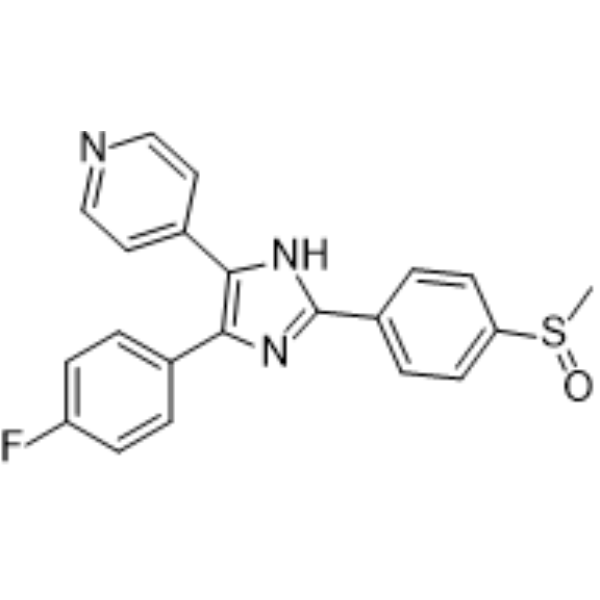
Adezmapimod (SB 203580) is a selective and ATP-competitive p38 MAPK inhibitor with IC50s of 50 nM and 500 nM for SAPK2a/p38 and SAPK2b/p38β2, respectively. Adezmapimod inhibits LCK, GSK3β and PKBα with IC50s of 100-500-fold higher than that for SAPK2a/p38. Adezmapimod can inhibit p38 MAPK and lead to the inhibition of downstream HSP27 phosphorylation. Adezmapimod does not disrupt JNK activity and is an autophagy and mitophagy activator .
loading...
    loading...
58
58 Cited Publications
Cat. No.: HY-B0356
CAS No.: 85721-33-1
Synonyms: Bay-09867
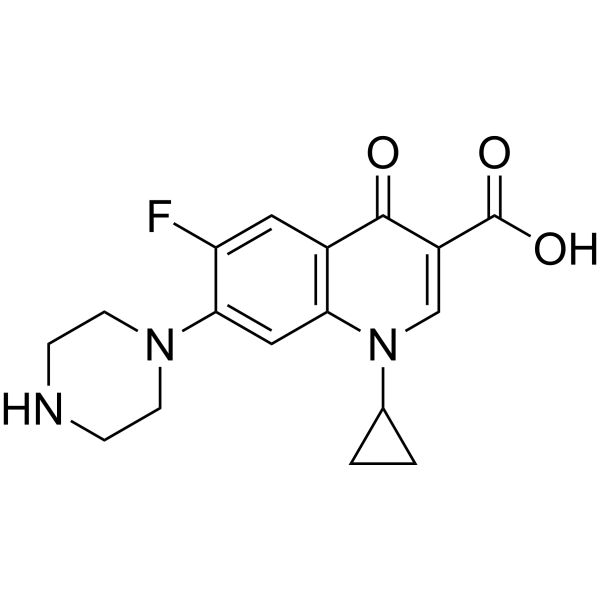
Ciprofloxacin (Bay-09867) is a potent, orally active topoisomerase IV inhibitor. Ciprofloxacin induces mitochondrial DNA and nuclear DNA damage and lead to mitochondrial dysfunction, ROS production. Ciprofloxacin has anti-proliferative activity and induces apoptosis. Ciprofloxacin is a fluoroquinolone antibiotic, exhibiting potent antibacterial activity .
loading...
    loading...
27
27 Cited Publications
Cat. No.: HY-W250119
CAS No.: 23411-34-9
Synonyms: EDTA disodium calcium salt hydrate; Ethylenediaminetetraacetic acid disodium calcium salt hydrate
Calcium disodium edetate hydrate (EDTA disodium calcium salt hydrate) is a metal chelator and antifungal agent. Calcium disodium edetate hydrate chelates Mn 2+, damages mitochondria, and interferes with carbohydrate metabolic pathways, particularly the synthesis of pyruvate in glycolysis. Calcium disodium edetate hydrate inhibits Penicillium digitatum and delays conidial germination. Calcium disodium edetate (hydrate) enhances the host defense system of citrus fruits. Calcium disodium edetate hydrate is applicable to research related to citrus green mold .
loading...
    loading...
15
15 Cited Publications
Cat. No.: HY-13991
CAS No.: 285986-88-1
Purity:  99.88%
Target:  

Ras Apoptosis

Research Areas:  

Cancer

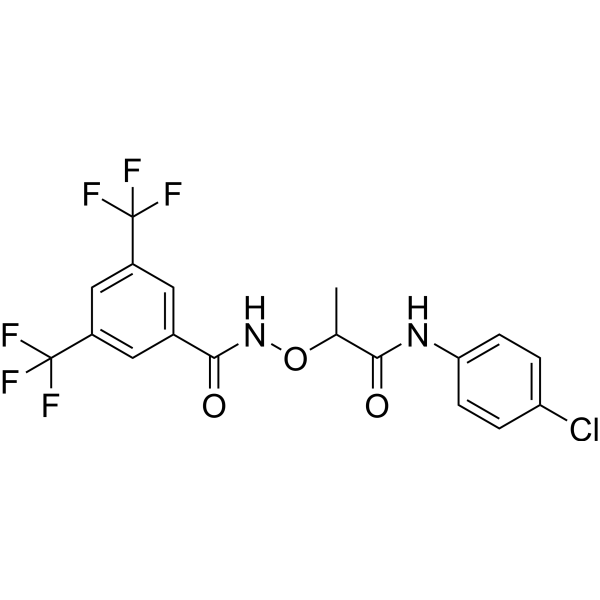
CCG-1423 is an inhibitor of Rho/MRTF/SRF pathway. CCG-1423 shows activities in several cancer cells. CCG-1423 is a promising lead compound for the development of novel pharmacologic tools, and it can be used for the research of cancer and diabetes .
loading...
    loading...
9
9 Cited Publications
Cat. No.: HY-P0203
CAS No.: 83651-90-5
Synonyms: CGRP (83-119), mouse, rat
α-CGRP (mouse, rat), a neuropeptide (calcitonin gene-related peptide (CGRP)) mainly expressed in neuromuscular junction, is a potent vasodilator. α-CGRP (mouse, rat) can lead to a fall in blood pressure and an increase in heart rate by peripheral administration, also relax colonie smooth muscle. α-CGRP (mouse, rat) has the potential in cardiovascular, pro-inflammatory, migraine and metabolic studies .
loading...
    loading...
9
9 Cited Publications
Cat. No.: HY-P0203A
Synonyms: CGRP (83-119), mouse, rat TFA
α-CGRP (mouse, rat) TFA, a neuropeptide (calcitonin gene-related peptide (CGRP)) mainly expressed in neuromuscular junction, is a potent vasodilator. α-CGRP (mouse, rat) TFA can lead to a fall in blood pressure and an increase in heart rate by peripheral administration, also relax colonie smooth muscle. α-CGRP (mouse, rat) TFA has the potential in cardiovascular, pro-inflammatory, migraine and metabolic studies .
loading...
    loading...
8
8 Cited Publications
Cat. No.: HY-P1068
CAS No.: 9001-63-2
Synonyms: Muramidase
Lysozyme (Muramidase) is a conserved antimicrobial protein. Lysozyme exerts its bactericidal effect by hydrolyzing bacterial cell wall peptidoglycan (PG). Lysozyme plays an important role in limiting bacterial growth on mucosal surfaces and other sites, not only controlling potential pathogens but also limiting overgrowth of microbiota to prevent dysbiosis. Extracellular lysozyme can also degrade polymeric PG into soluble fragments, activate NOD receptors in mucosal epithelial cells, and lead to the secretion of chemokines and activating factors by neutrophils and macrophages .
loading...
    loading...
7
7 Cited Publications
Cat. No.: HY-P99731
CAS No.: 899796-83-9
Synonyms: hLL1; MEDI-115

Target:  

CD74

Research Areas:  

Cancer

Milatuzumab (hLL1; MEDI-115) is a humanized anti-CD74 monoclonal antibody. CD74, a integral membrane protein, is associated with the promotion of B-cell growth and survival. Milatuzumab causes free radical oxygen generation, and loss of mitochondrial membrane potential. Milatuzumaba also decreases CD20/CD74 aggregates and cell adhesion, to lead to cell death .
loading...
    loading...
5
5 Cited Publications
Cat. No.: HY-100226
CAS No.: 251992-66-2
Purity:  98.25%
Target:  

Integrin

Research Areas:  

Inflammation/Immunology

A-205804 is an orally bioavailable, potent and selective lead inhibitor of E-selectin and ICAM-1 expression, with an IC50 of 20 nM and 25 nM for E-selectin and ICAM-1, respectively. A-205804 can be used in the research of chronic inflammatory diseases .
loading...
    loading...
4
4 Cited Publications
Cat. No.: HY-N0596
CAS No.: 19666-76-3
Synonyms: 20(R)-Panaxadiol
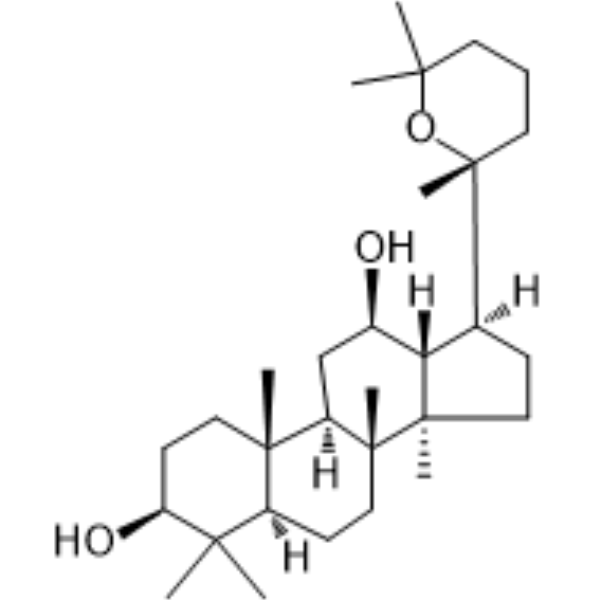
Panaxadiol (20(R)-Panaxadiol) is an orally active HIF-1α/STAT3 inhibitor. Panaxadiol can suppress HIF-1α and STAT3 then lead to downregulation of programmed cell death-ligand 1 (PD-L1) expression. Panaxadiol shows anticancer, cardioprotective, anti-arrhythmic, and antioxidative activities .
loading...
    loading...
4
4 Cited Publications
Cat. No.: HY-N0498
CAS No.: 13063-04-2
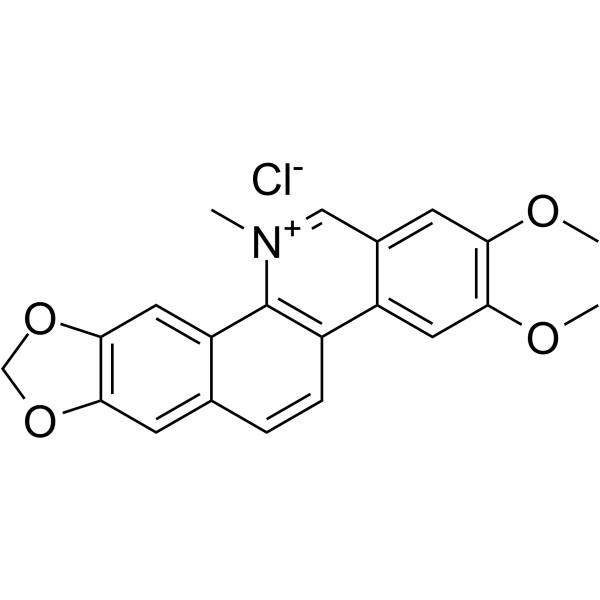
Nitidine chloride, a potential anti-malarial lead compound derived from Zanthoxylum nitidum (Roxb) DC, exerts potent anticancer activity through diverse pathways, including inducing apoptosis, inhibiting STAT3 signaling cascade, DNA topoisomerase 1 and 2A, ERK and c-Src/FAK associated signaling pathway, also has anti-inflammatory activity. Nitidine chloride inhibits LPS-induced inflammatory cytokines production via MAPK and NF-kB pathway .
loading...
    loading...
3
3 Cited Publications
Cat. No.: HY-Y0061
CAS No.: 59-48-3
Synonyms: 2-Indolinone
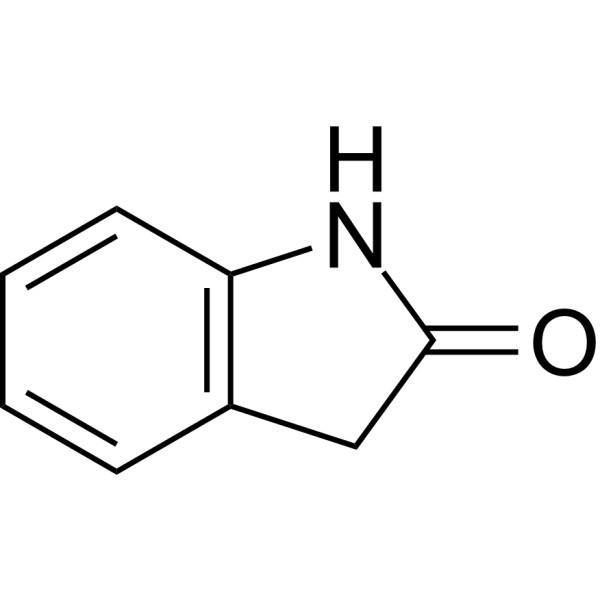
Oxindole (Indolin-2-one) is an aromatic heterocyclic building block. 2-indolinone derivatives have become lead compounds in the research of kinase inhibitors.
loading...
    loading...
3
3 Cited Publications
Cat. No.: HY-Y0351
CAS No.: 103-85-5
Synonyms: Phenylthiocarbamide
Research Areas:  

Others

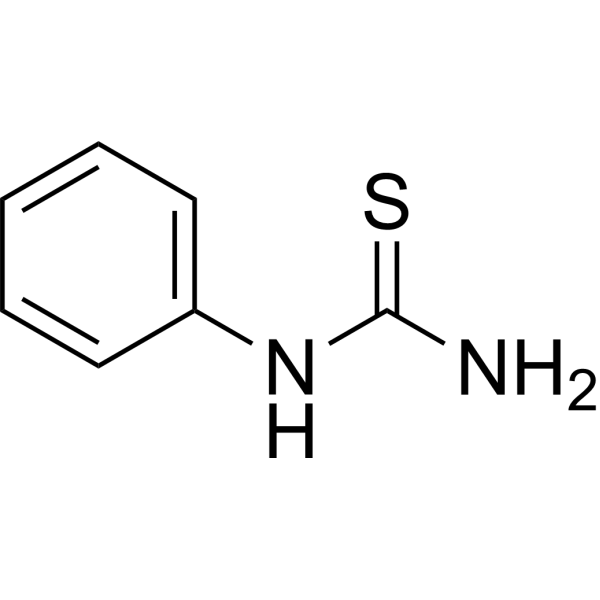
Phenylthiourea (Phenylthiocarbamide) is an inhibitor for phenoloxidase. Phenylthiourea inhibits enzymatic oxidation of DOPA by phenoloxidase (Ki = 0.21 μM). Phenylthiourea is an effective inhibitor for tyrosinase. Phenylthiourea can lead to graying of hair in black rats due to the interference with melanin formation .
loading...
    loading...
3
3 Cited Publications
Cat. No.: HY-143228
CAS No.: 2143952-36-5
Purity:  99.80%
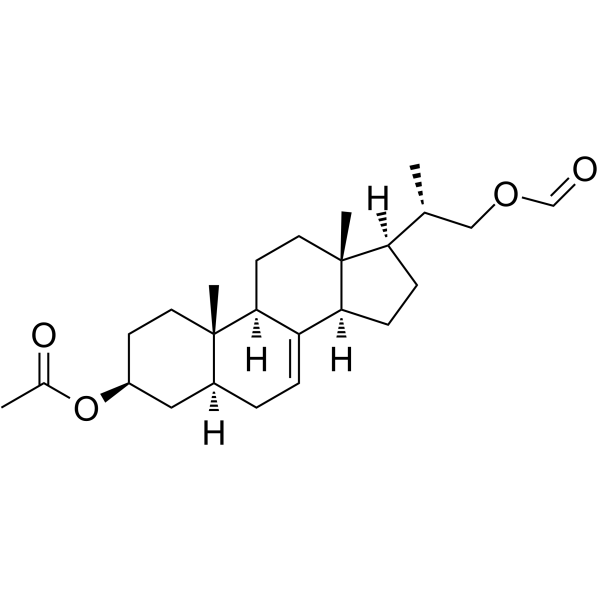
SH-42 is a potent and selective inhibitor of human Δ 24-dehydrocholesterol reductase (DHCR24), with an IC50 of 42 nM. SH-42 can lead to a significant increase in plasma desmosterol levels of mice .
loading...
    loading...
3
3 Cited Publications
Cat. No.: HY-Y0525
CAS No.: 2997-92-4
Synonyms: 2,2'-Azodiisobutyramidine dihydrochloride
Research Areas:  

Inflammation/Immunology

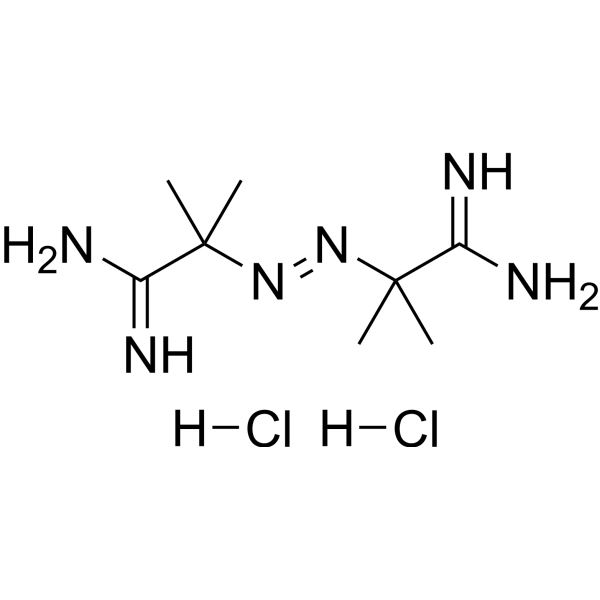
AAPH (2,2'-Azodiisobutyramidine dihydrochloride) has an effect of radical generation. AAPH induces oxidative stress and erythrocyte hemolysis . AAPH decomposes at 37°C to generate an alkyl radical, is used as an initiator. In the presence of oxygen, these alkyl radicals will be converted to peroxyl radicals that can cause lipid peroxidation and loss of erythrocyte membrane integrity, which could ultimately lead to hemolysis .
loading...
    loading...
3
3 Cited Publications
Cat. No.: HY-163731
CAS No.: 3077196-25-6
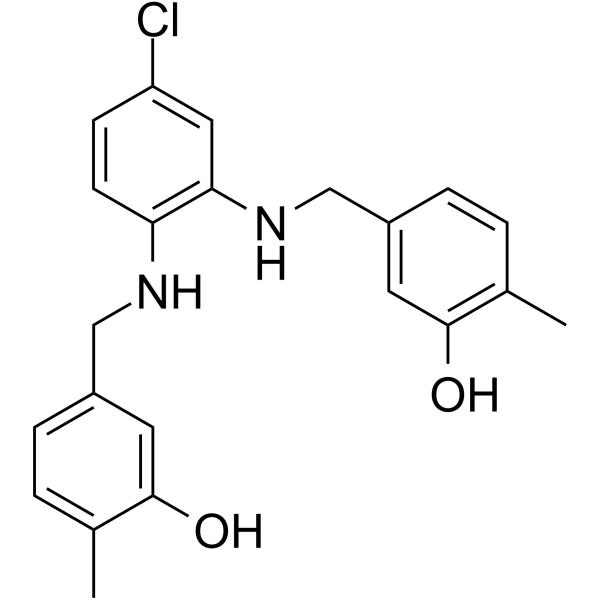
EGR-1-IN-1 is a EGR-1 inhibitor with an IC50 of 1.86 μM. EGR-1-IN-1 binds to the zinc finger DNA-binding domain of EGR-1 and promotes the dissociation of the EGR-1-DNA complex. EGR-1-IN-1 reduces the mRNA expression levels of EGR-1-regulated inflammatory genes induced by TNFα. EGR-1-IN-1 alleviates atopic dermatitis-like lesions in the ear skin of mice. EGR-1-IN-1 serves as a lead compound for the development of targeted compounds for inflammatory skin diseases. EGR-1-IN-1 can be used in studies related to atopic dermatitis .
loading...
    loading...
2
2 Cited Publications
Cat. No.: HY-139399
CAS No.: 2230273-76-2
Purity:  99.63%
Synonyms: JNJ-67856633
Target:  

MALT1

Research Areas:  

Cancer

Safimaltib (JNJ-67856633) is an orally active, first-in-class, potent, selective and allosteric MALT1 protease inhibitor. Safimaltib in some cases lead to tumor stasis .
loading...
    loading...
2
2 Cited Publications
Cat. No.: HY-128204
CAS No.: 1268335-33-6
Purity:  99.89%
Target:  

Parasite

Research Areas:  

Infection

AN3661, a potent antimalarial lead compound, targets a Plasmodium falciparum cleavage and polyadenylation specificity factor homologue subunit 3 (PfCPSF3). AN3661 inhibits Plasmodium falciparum laboratory-adapted strains (mean IC50=32 nM), Ugandan field isolates (mean ex vivo IC50=64 nM), and murine P. berghei and P. falciparum infections .
loading...
    loading...
2
2 Cited Publications
Cat. No.: HY-109520
CAS No.: 147245-92-9
Purity:  ≥98.0%
Target:  

MHC

Research Areas:  

Inflammation/Immunology Cancer

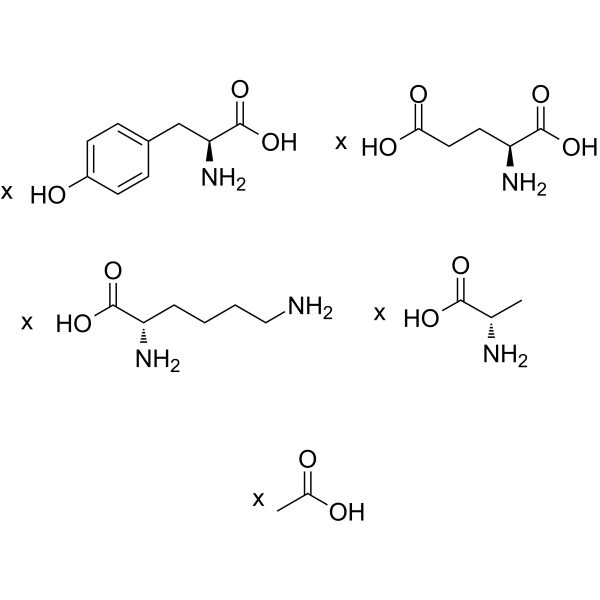
Glatiramer acetate, a synthetic analogue of myelin basic protein and an immunomodulating agent, inhibits Experimental autoimmune encephalomyelitis (EAE), and can be used for the research of multiple sclerosis. Glatiramer acetate exhibits strong and promiscuous binding to MHC molecules and consequent competition with various myelin antigens for their presentation to T cells. A further aspect of its action is potent induction of specific suppressor cells of the T helper 2 (Th2) type that migrate to the brain and lead to in situ bystander suppression .
loading...
    loading...
2
2 Cited Publications
Cat. No.: HY-136379
CAS No.: 1222513-26-9
Purity:  99.84%
Synonyms: Cdc42-IN-1
Target:  

Ras

Research Areas:  

Cancer

CID44216842 (Cdc42-IN-1) is a potent Cdc42-selective guanine nucleotide binding lead inhibitor. The EC50s for Cdc42 WT and Cdc42Q61L mutant are 1.0 and 1.2 μM in GTP binding assay, respectively. The EC50s for Cdc42 WT and Cdc42Q61L mutant are 0.3 and 0.5 μM in GDP binding assay, respectively. Use as a molecular probe .
loading...
    loading...

