1119 Results for "

toad bladder preparations

" in MedChemExpress (MCE) Product Catalog:
Products (1119)

1119 Results for "toad bladder preparations" in MCE Product Catalog:

627
627 Publications Verification
Cat. No.: HY-12041
CAS No.: 129-56-6
Purity:  99.73%
Research Areas:  

Cancer

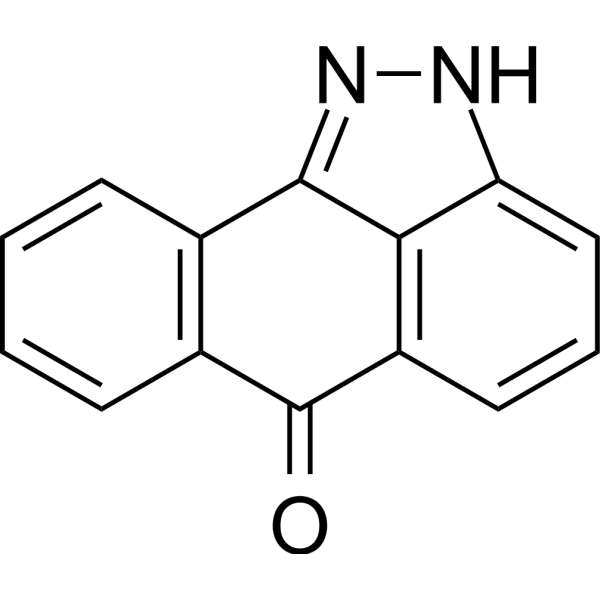
SP600125 is an orally active, reversible, and ATP-competitive JNK inhibitor with IC50s of 40, 40 and 90 nM for JNK1, JNK2 and JNK3, respectively. SP600125 is a potent ferroptosis inhibitor. SP600125 induces the transformation of bladder cancer cells from autophagy to apoptosis .
loading...
    loading...
197
197 Cited Publications
Cat. No.: HY-W008923
CAS No.: 17086-28-1
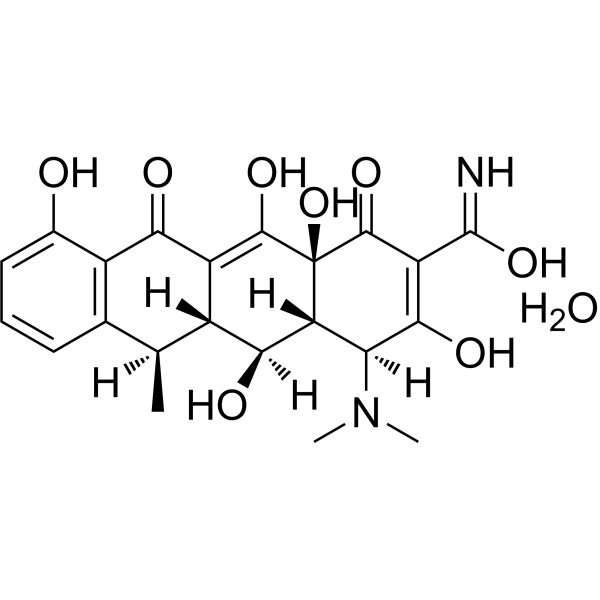
Doxycycline monohydrate is an orally active highly lipophilic, tissue-permeable MMP inhibitor with broad-spectrum antibacterial activity. Doxycycline monohydrate is also a semi-synthetic antibiotic with chelating properties, which blocks bacterial protein synthesis and inhibits extracellular matrix degradation through interactions with zinc and calcium atoms. Doxycycline monohydrate also inhibits mitochondrial biogenesis, translation, and the expression of respiratory chain proteins. Doxycycline monohydrate induces apoptosis, inhibits autophagy and EMT, downregulates stem cell markers, and activates the PI3K-AKT pathway, thereby effectively inhibiting the viability and proliferation of cancer cells such as breast cancer cells. Doxycycline monohydrate also promotes the survival and self-renewal of embryonic stem cells and neural stem cells, and reduces the frequency of medium changes in culture. Doxycycline monohydrate has been applied in studies related to breast cancer, prostate cancer, bladder cancer, and other cancers .
loading...
    loading...
52
52 Cited Publications
Cat. No.: HY-B0573
CAS No.: 318-98-9
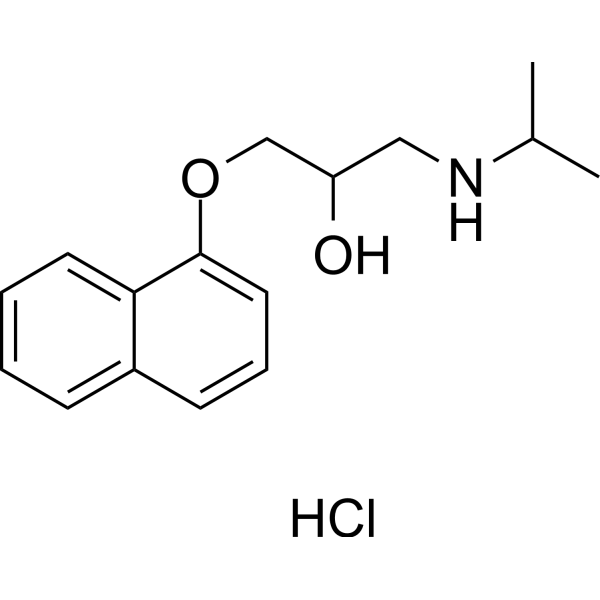
Propranolol hydrochloride is a nonselective and BBB-permeableβ-adrenergic receptor (βAR) antagonist, has high affinity for the β1AR and β2AR with Ki values of 1.8 nM and 0.8 nM, respectively. Propranolol hydrochloride inhibits [ 3H]-DHA binding to rat brain membrane preparation with an IC50 of 12 nM. Propranolol hydrochloride is used for study of hypertension, pheochromocytoma, myocardial infarction, cardiac arrhythmias, angina pectoris, and hypertrophic cardiomyopathy .
loading...
    loading...
52
52 Cited Publications
Cat. No.: HY-B0573B
CAS No.: 525-66-6
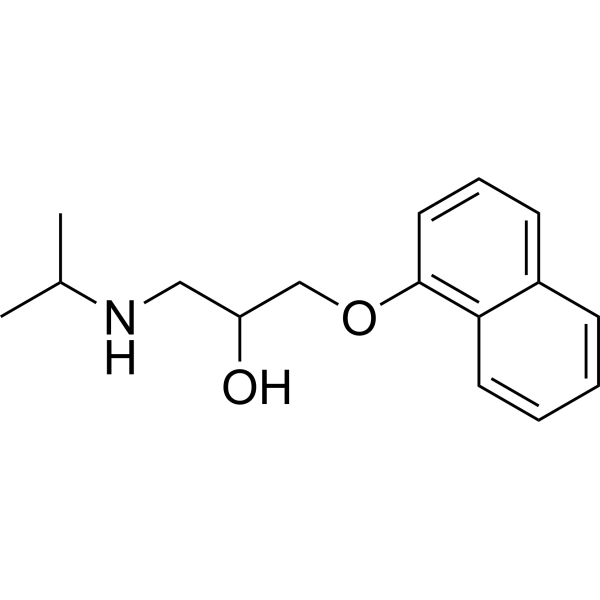
Propranolol is a nonselective and BBB-permeable β-adrenergic receptor (βAR) antagonist, has high affinity for the β1AR and β2AR with Ki values of 1.8 nM and 0.8 nM, respectively . Propranolol inhibits [ 3H]-DHA binding to rat brain membrane preparation with an IC50 of 12 nM . Propranolol is used for the study of hypertension, pheochromocytoma, myocardial infarction, cardiac arrhythmias, angina pectoris, and hypertrophic cardiomyopathy .
loading...
    loading...
27
27 Cited Publications
Cat. No.: HY-112764
CAS No.: 160743-62-4
Purity:  98.40%
Target:  

Liposome

Research Areas:  

Metabolic Disease

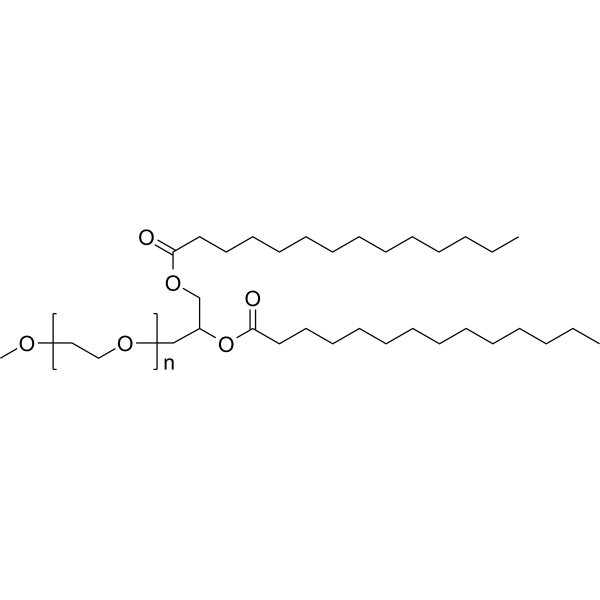
mPEG2000-DMG is used for the preparation of liposome for siRNA delivery with improved transfection efficiency in vitro. mPEG2000-DMG is also used for the lipid nanoparticle for an oral plasmid DNA delivery approach in vivo through a facile surface modification to improve the mucus permeability and delivery efficiency of the nanoparticles .
loading...
    loading...
24
24 Cited Publications
Cat. No.: HY-D0802
CAS No.: 35013-72-0
Synonyms: Biotin N-hydroxysuccinimide ester; NHS-Biotin
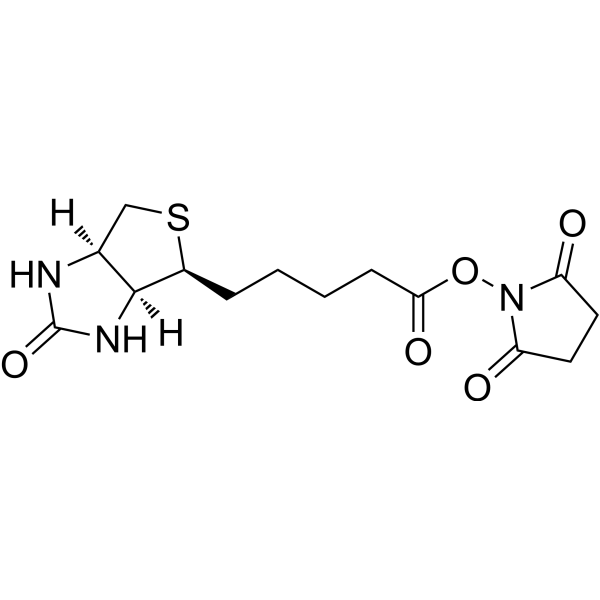
Biotin NHS is an amino reactive biotin reagent used in the preparation of biotinylated surfaces or polypeptides.
loading...
    loading...
23
23 Cited Publications
Cat. No.: HY-B1247
CAS No.: 553-12-8
Synonyms: PPIX
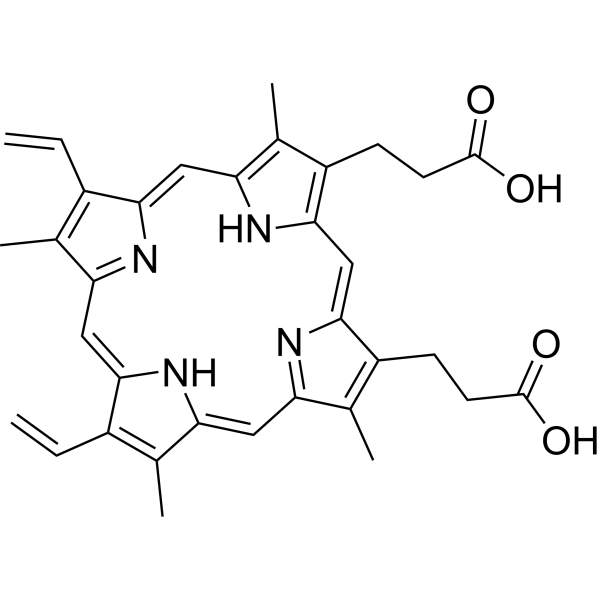
Protoporphyrin IX is a final intermediate in the heme biosynthetic pathway, which acts as a radiation sensitizer enhancing ROS generation even in a hypoxic state and inducing DNA damage. Protoporphyrin IX also acts as a photo sensitizer undergoing photobleaching that occurs through direct degradation by light irradiation. Protoporphyrin IX is formed and accumulated following 5-aminolevulinic acid (5-ALA) (HY-W000450) administration in the tumor cells of rats. Protoporphyrin IX causes selective improvement of basal cell carcinoma when activated red fluorescence of a peak wavelength at 405 nm. Protoporphyrin IX is promising for research of sonodynamic and photodynamic agents for a wide range of cancers, such as bladder cancer and nodular basal cell carcinoma .
loading...
    loading...
23
23 Cited Publications
Cat. No.: HY-B1247A
CAS No.: 50865-01-5
Synonyms: PPIX disodium
Target:  

Endogenous Metabolite

Research Areas:  

Cancer

Protoporphyrin IX disodium is a final intermediate in the heme biosynthetic pathway, which acts as a radiation sensitizer enhancing ROS generation even in a hypoxic state and inducing DNA damage. Protoporphyrin IX disodium also acts as a photo sensitizer undergoing photobleaching that occurs through direct degradation by light irradiation. Protoporphyrin IX disodium is formed and accumulated following 5-aminolevulinic acid (5-ALA) (HY-W000450) administration in the tumor cells of rats. Protoporphyrin IX disodium causes selective improvement of basal cell carcinoma when activated red fluorescence of a peak wavelength at 405 nm. Protoporphyrin IX disodium is promising for research of sonodynamic and photodynamic agents for a wide range of cancers, such as bladder cancer and nodular basal cell carcinoma .
loading...
    loading...
20
20 Cited Publications
Cat. No.: HY-W854659
CAS No.: 72984-36-2
Synonyms: Ce6 trisodium
Chlorin e6 Ce6 (trisodium) is a water-soluble derivative of chlorophyll, belonging to the chlorin class of photosensitizers with an absorption wavelength range of 600-670 nm. Chlorin e6 trisodium emits characteristic red fluorescence upon light excitation, enabling real-time identification of tumor boundaries and progression. Chlorin e6 trisodium can be used for the study of photodynamic therapy (PDT) of cancers (bladder cancer) and fluorescence diagnosis of neoplastic lesions .
loading...
    loading...
15
15 Cited Publications
Cat. No.: HY-16993
CAS No.: 1801787-56-3
Target:  

Apoptosis WDR5

Research Areas:  

Cancer

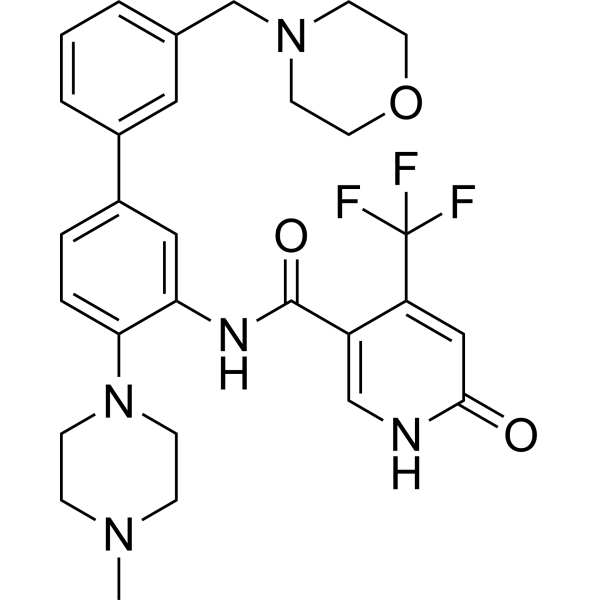
OICR-9429, a chemical probe, is high affinity WD repeat domain 5 (WDR5) inhibitor, competitively blocks WDR5 interaction with MLL protein via binding the central peptide-binding pocket of WDR5. OICR-9429 can suppress histone H3K4 trimethylation and can be used for the research of various cancers including non-MLL-rearranged leukaemia, colon, pancreatic, prostate cancer and bladder cancer (BCa) .
loading...
    loading...
13
13 Cited Publications
Cat. No.: HY-34477
CAS No.: 144-48-9
Synonyms: Iodoacetamide
Research Areas:  

Others

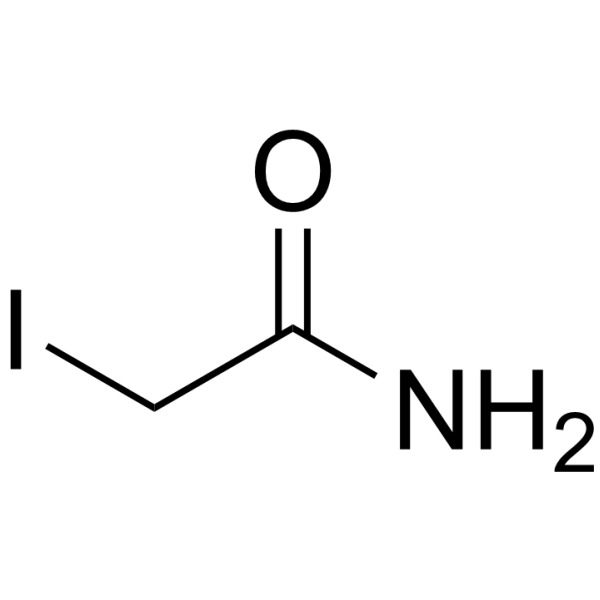
2-Iodoacetamide (Iodoacetamide), an alkylating agent, is a commonly used agent for alkylation of cysteine during sample preparation for proteomics .
loading...
    loading...
12
12 Cited Publications
Cat. No.: HY-N1372A
CAS No.: 436-77-1
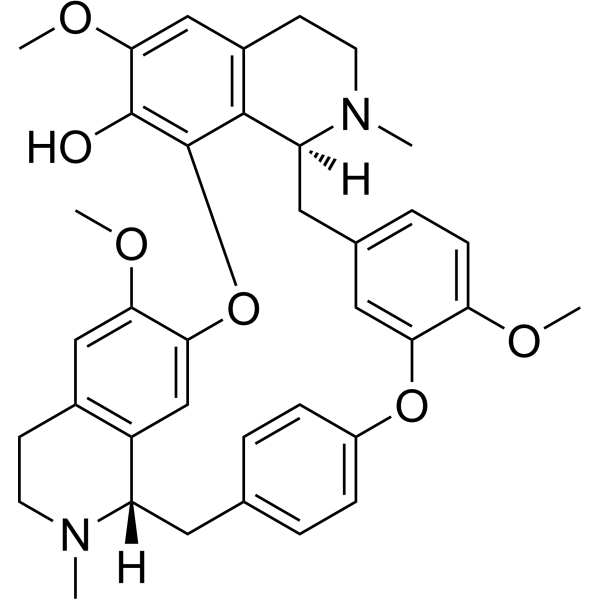
Fangchinoline is isolated from Stephania tetrandra with extensive biological activities, such as enhancing immunity, anti-inflammatory sterilization and anti-atherosclerosis. Fangchinoline, a novel HIV-1 inhibitor, inhibits HIV-1 replication by impairing gp160 proteolytic processing . Fangchinoline targets Focal adhesion kinase (FAK) and suppresses FAK-mediated signaling pathway in tumor cells which highly expressed FAK . Fangchinoline induces apoptosis and adaptive autophagy in bladder cancer .
loading...
    loading...
10
10 Cited Publications
Cat. No.: HY-K1025

MCE TBS-T Powder (1 L of 1×) consists of NaCl, KCl, Tris and Tween 20, and is widely used as washing buffer in immunocytochemistry, FISH or ELISA, and can also be used for antibody dilution and preparation of blocking solution. The 20 pouches are defined as the base specification. All larger sizes correspond to incremental volumes of this base.

loading...
    loading...
9
9 Cited Publications
Cat. No.: HY-N0421
CAS No.: 470-37-1
Synonyms: Cinobufagine
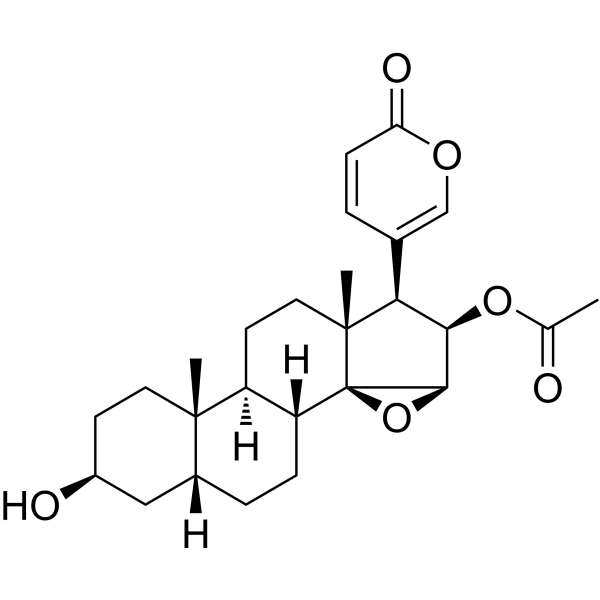
Cinobufagin is an anticancer agent that can be secreted by the Asiatic toad Bufo gargarizans. Cinobufagin induces the cell cycle arrests in the G1 phase or G2/M phase, leading to apoptosis in cancer cells. Cinobufagin inhibits tumor growth in melanoma and glioblastoma multiforme xenograft mouse models .
loading...
    loading...
9
9 Cited Publications
Cat. No.: HY-B0371
CAS No.: 63590-64-7
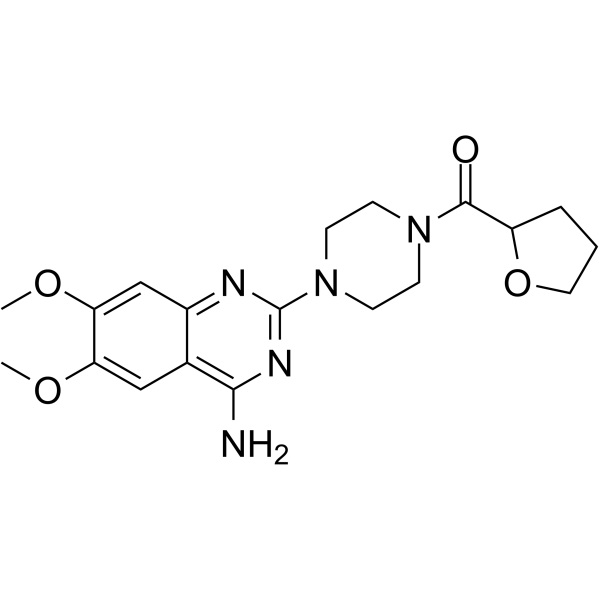
Terazosin is a quinazoline derivative and a competitive and orally active α1-adrenoceptor antagonist. Terazosin works by relaxing blood vessels and the opening of the bladder. Terazosin has the potential for benign prostatic hyperplasia (BPH) and high blood pressure treatment .
loading...
    loading...
9
9 Cited Publications
Cat. No.: HY-B0371F
CAS No.: 63074-08-8
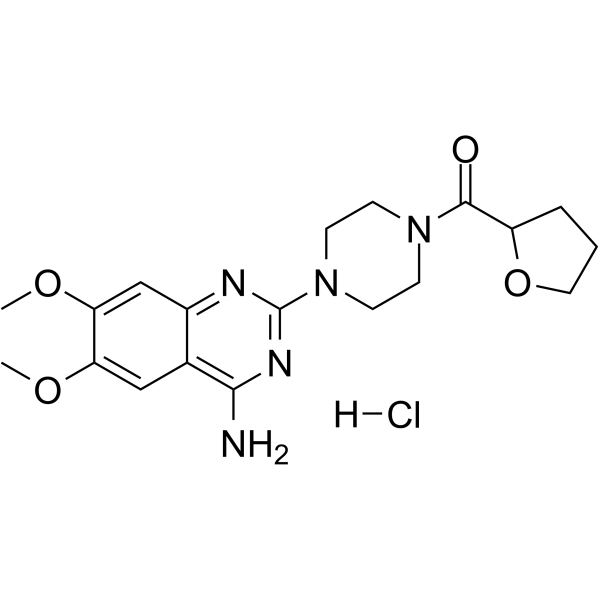
Terazosin hydrochloride is a quinazoline derivative and a competitive and orally active α1-adrenoceptor antagonist. Terazosin hydrochloride works by relaxing blood vessels and the opening of the bladder. Terazosin hydrochloride has the potential for benign prostatic hyperplasia (BPH) and high blood pressure treatment .
loading...
    loading...
9
9 Cited Publications
Cat. No.: HY-B0371A
CAS No.: 70024-40-7
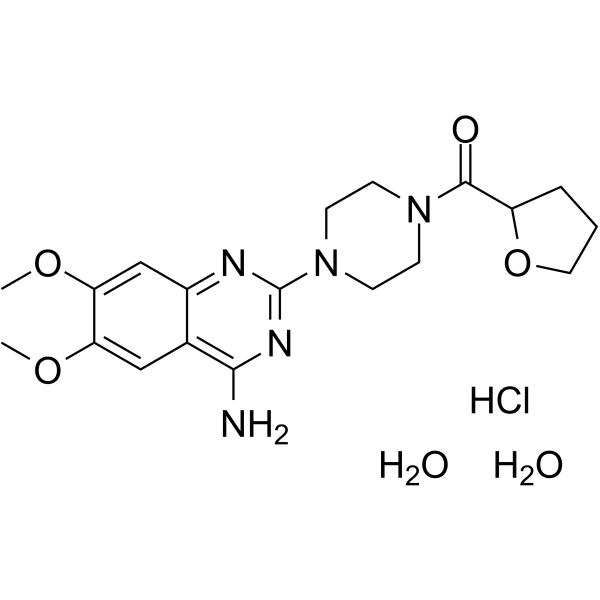
Terazosin hydrochloride dihydrate is a quinazoline derivative and a competitive and orally active α1-adrenoceptor antagonist. Terazosin hydrochloride dihydrate works by relaxing blood vessels and the opening of the bladder. Terazosin hydrochloride dihydrate has the potential for benign prostatic hyperplasia (BPH) and high blood pressure treatment .
loading...
    loading...
9
9 Cited Publications
Cat. No.: HY-A0033
CAS No.: 133099-04-4
Synonyms: UK-88525
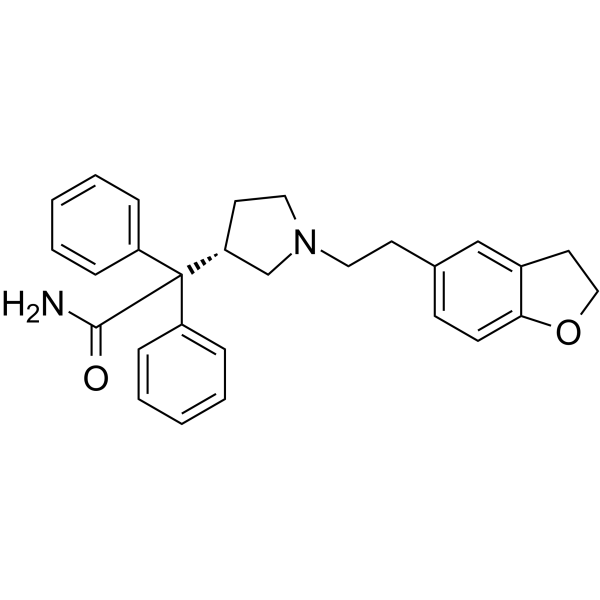
Darifenacin (UK-88525) is a selective and orally active M3 muscarinic receptor (M3R) antagonist with a pKi of 8.9. Darifenacin binds >20-fold more specifically to M3R than to other muscarinic receptors. Darifenacin can be used in the study of urinary incontinence and other symptoms of overactive bladder. Darifenacin inhibits tumor growth in colorectal cancer cells and has anti-tumor effects .
loading...
    loading...
9
9 Cited Publications
Cat. No.: HY-A0012
CAS No.: 133099-07-7
Synonyms: UK-88525 hydrobromide
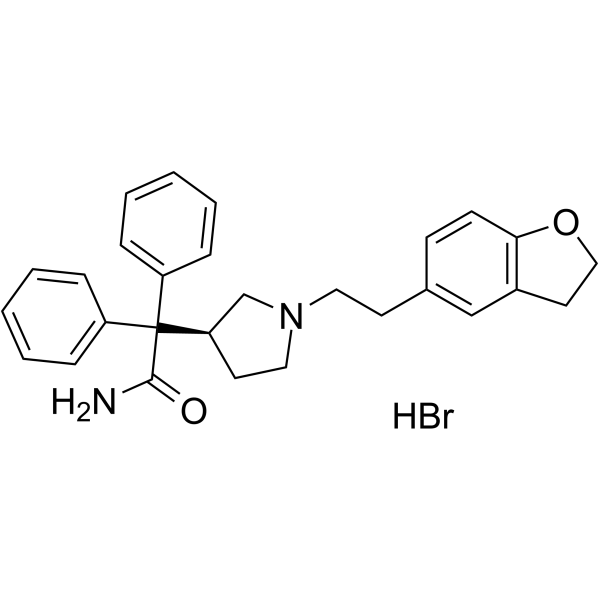
Darifenacin (UK-88525) hydrobromide is a selective and orally active M3 muscarinic receptor (M3R) antagonist with a pKi of 8.9. Darifenacin hydrobromide binds >20-fold more specifically to M3R than to other muscarinic receptors. Darifenacin hydrobromide can be used in the study of urinary incontinence and other symptoms of overactive bladder. Darifenacin hydrobromide inhibits tumor growth in colorectal cancer cells and has anti-tumor effects .
loading...
    loading...
9
9 Cited Publications
Cat. No.: HY-Y0623
CAS No.: 6066-82-6
Synonyms: HOSu; 1-Hydroxy-2,5-pyrrolidinedione
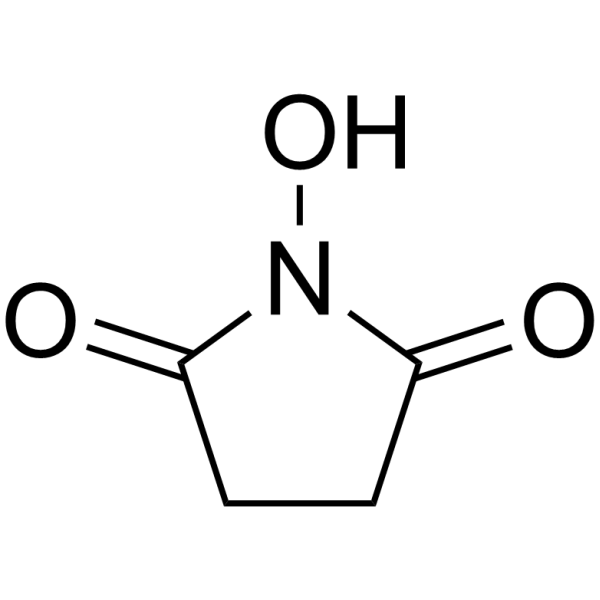
N-Hydroxysuccinimide (HOSu; 1-Hydroxy-2,5-pyrrolidinedione) is a covalent crosslinker commonly used in bioconjugation technology with a primary amine group. N-Hydroxysuccinimide reacts with amino groups (-NH2) to form a stable amide bond, which can modify amino-containing biomolecules. N-Hydroxysuccinimide can be used, for example, for protein labeling with fluorescent dyes and enzymes, surface activation of chromatography supports, microbeads, nanoparticles and microarray slides, and chemical synthesis of peptides. N-Hydroxysuccinimide has a wide range of applications in biomaterial synthesis (such as collagen, chitosan crosslinking), drug delivery systems (such as hydrogel preparation) and tissue engineering .
loading...
    loading...

