



Cancer Immunotherapy
Cancer immunotherapy (CIT) is a type of biological therapy, aiming to improve anti-tumor immune responses with fewer off-target effects than chemotherapy. Several types of immunotherapy include: oncolytic virus therapies, cancer vaccines, cytokine therapies, adoptive cell transfer (ACT), and immune checkpoint inhibitors (ICIs). In particular, ICIs and ACT have obtained immense clinical response, but their efficacy varies from person to person. Immune cells can be harnessed to eliminate tumor cells, such as T cells, B cells, NK cells, and myeloid cells. T cells have potent tumor-killing capability, therefore, a plethora of cancer immunotherapy research have focused on inducing T-cell-mediated anti-tumor responses. CTLA-4 and PD-1 are found on the cell surface of T cells as co-inhibitory receptors. The breakthrough in cancer immunotherapy results from the identification and subsequent targeting of checkpoint mechanisms in T cells with monoclonal antibodies against CTLA-4 and programmed death-ligand 1/programmed death-1 (PD-L1/PD-1).
Several types of cancers (e.g., melanoma, mismatch repair-deficient cancers, bladder cancer, and non-small cell lung cancer) have achieved significant clinical responses in T-cell checkpoint blockade therapies. However, single-mode immunotherapy faces challenges such as low immune response, low tumor infiltration, and complex immunosuppressive tumor microenvironment. Recently, combined therapies based on tumor immunity have received extensive attention in the research of enhancing tumor cells immunogenicity and inhibiting their growth. For example, anti CTLA-4 and PD-1, immune checkpoint blockade (ICB) combined with chemotherapy, anti-angiogenic drugs and kinase inhibitors.
-
NH2-NODAGA TFA
 0 ImagesCat. No.: HY-164575ACAS No.: 3053227-80-5
NH2-NODAGA TFA is an amino-modified NODAGA-type bifunctional chelator, specifically designed for amidation coupling with targeting ligands via squaric acid (SA), followed by coordination with radionuclides (e.g., 68Ga, 177Lu). NH2-NODAGA TFA can be coupled with diethyl squarate to form a PSMA inhibitor conjugate, which is used in prostate cancer research.
-
WHN-11
 0 ImagesCat. No.: HY-175221
WHN-11 is an amino-Artemisinin (HY-B0094) derivative with anti-cancer activity against various cancer cell lines. WHN-11 deprives the cell of ATP, activates autophagy, and causes subsequent cell death by apoptosis. WHN-11 alters cellular protein homeostasis pathways to induce mitochondrial fission and dysfunction. WHN-11's anti-cancer activity is independent of substantive ROS production. WHN-11 can be used for the study of triple-negative breast cancer (TNBC).


-
Diallyl disulfide (Standard)
 0 ImagesCat. No.: HY-W015635RCAS No.: 2179-57-9
Diallyl disulfide (Standard) is the analytical standard of Diallyl disulfide. This product is intended for research and analytical applications. Diallyl disulfide is an orally active decomposition product of allicin and has a pungent odor. Diallyl disulfide can act as a hydrogen sulfide donor. Diallyl disulfide has inhibitory activity against squalene monooxygenase with an IC50 of 400 μM. Diallyl disulfide can alleviate the cytotoxicity and apoptosis of intestinal and liver cells induced by Ethyl Carbamate (HY-B1207). Diallyl disulfide can prevent emphysema induced by cigarette smoke. Diallyl disulfide also has anti-colon cancer and anti-inflammatory neurogenic activities, and can reverse the depressive-like behavior of mice.
-
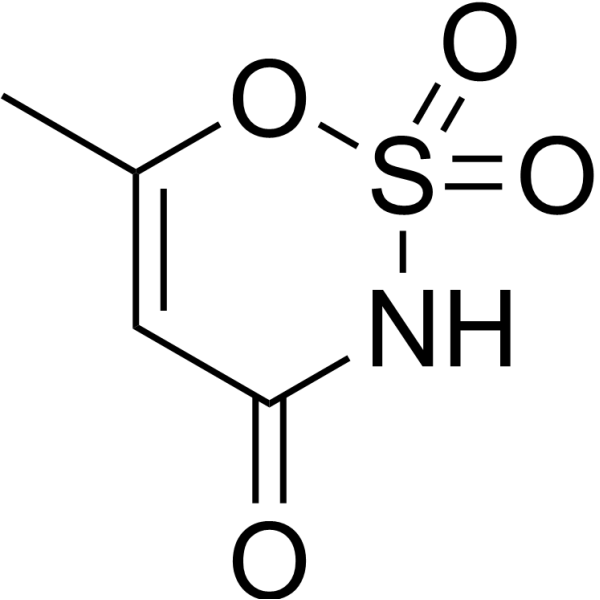
Acesulfame
 0 Images
Acesulfame is a synthetic sweetener. Long-term use of Acesulfame can affect cognitive function. Acesulfame potassium can suppress autophagic degradation of PD-L1 in RIL-175 and SK-Hep1 cells through the ERK1/2-mTORC1-ULK1 pathway, which may be related to immune evasion in cancer cells. Acesulfame can be used in research on neurological diseases, metabolic disorders, cancer, and immune evasion.
-
PD-1/PD-L1-IN-66
 0 ImagesCat. No.: HY-184295
PD-1/PD-L1-IN-66 is a PD-1/PD-L1 immune checkpoint inhibitor with an IC50 of 3 nM for blocking the PD-1/PD-L1 interaction. PD-1/PD-L1-IN-66 shows good affinity for PD-L1 dimers with a Kd value of 0.75 nM. PD-1/PD-L1-IN-66 can reactivate the proliferation of cytotoxic T cells. PD-L1 ligand-2 is applicable for cancer research.
-
Cyclopamine-COO-2-ethoxy-1,3-benzodioxole-O-C-Triazole-C5-AC
 0 ImagesCat. No.: HY-181058
Cyclopamine-COO-2-ethoxy-1,3-benzodioxole-O-C-Triazole-C5-AC is a drug-linker conjugate, with Cyclopamine (HY-17024) as its drug moiety. Cyclopamine-COO-2-ethoxy-1,3-benzodioxole-O-C-Triazole-C5-AC itself exhibits no significant anti-tumor activity. Cyclopamine-COO-2-ethoxy-1,3-benzodioxole-O-C-Triazole-C5-AC can be used for the synthesis of ADC molecules.
-
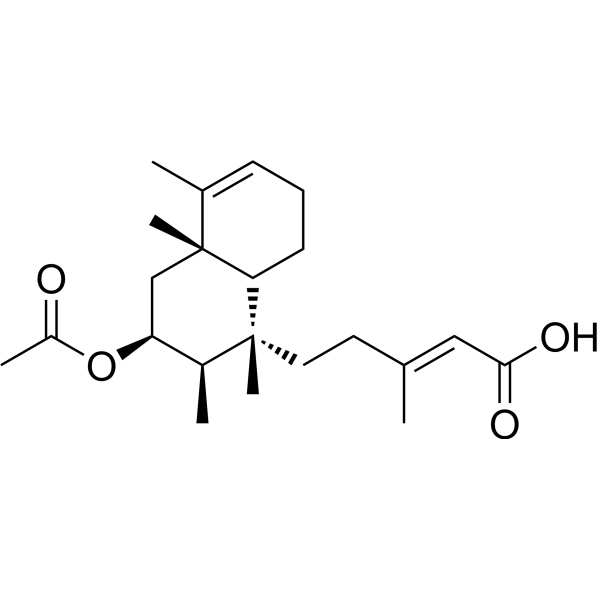
Solidagonic acid
 0 ImagesCat. No.: HY-N11128CAS No.: 19941-91-4
Solidagonic acid is an acidic bitter principle that can be found in the root and rhizomes of Solidago altissima L. Solidagonic acid binds HSET/KIFC1, restores growth in HSET-overproducing fission yeast cells and reverts mitotic spindles from monopolar to bipolar morphology. Solidagonic acid can be used for the research of breast adenocarcinoma.
-
REGN2878
 0 ImagesCat. No.: HY-P992449Synonyms: PRLR ADC antibody
REGN2878 (PRLR ADC antibody) is a monoclonal antibody targeting the prolactin receptor (PRLR) and can block prolactin‑mediated activation of PRLR. REGN2878 exhibits an equilibrium dissociation constant (KD) of 1.05 nM and an IC50 of 0.344 nM for human PRLR. REGN2878 can be rapidly internalized and degraded in lysosomes by PRLR‑positive tumor cells, showing antigen‑specific binding and targeted enrichment properties. REGN2878 derivatives can be used as an immunoPET agent for antigen‑specific imaging of PRLR‑related tumors, and can also serve as a component of ADCs to exert anti‑tumor activity in breast cancer xenograft models. REGN2878 can be used in the research of breast cancer and prostate cancer. Isotype Comparison HY-P99001.
-
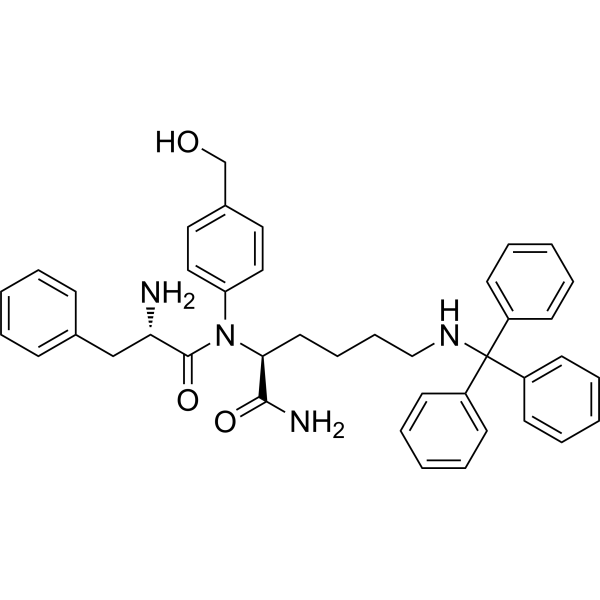
Phe-Lys(Trt)-PAB
 0 ImagesCat. No.: HY-129349CAS No.: 1116085-99-4
Phe-Lys(Trt)-PAB is a cathepsin B substrate, and a cleavable ADC linker. Phe-Lys(Trt)-PAB acts as a lysosomally cleavable substrate for cysteine protease cathepsin B, with cleavage enabling linked anticancer drug release via self-immolative spacer . Phe-Lys(Trt)-PAB can be used for synthesis of ADCs.
-
Annamycin
 0 ImagesCat. No.: HY-13554CAS No.: 92689-49-1
Annamycin is an anthracycline antibiotic with antitumor activity. Annamycin interacts with topoisomerase II, induces double-strand DNA breaks, triggers cell death, and exerts cytotoxic effects. In mice, Annamycin inhibits the growth of advanced subcutaneous melanoma and subcutaneous squamous cell carcinoma, and prolongs the survival of mice with subcutaneous reticulosarcoma and in lung cancer lung metastasis models. Annamycin can be used in research related to melanoma, reticulum cell sarcoma, lung cancer, non-small cell lung cancer, small cell lung cancer.
-
SMU-C68
 0 ImagesCat. No.: HY-175293CAS No.: 2677039-75-5
-
CPI-644
 0 ImagesCat. No.: HY-122081CAS No.: 1904647-34-2
-
MiADMSA
 0 ImagesCat. No.: HY-177995CAS No.: 142609-62-9Synonyms: Monoisoamyl meso-2,3-dimercaptosuccinic acid
MiADMSA (Monoisoamyl meso-2,3-dimercaptosuccinic acid) is an orally active thiol chelator that can effectively remove heavy metals such as arsenic and lead from the body of animals. Arsenic binds with two vicinal sulfhydryl groups available in MiADMSA leading to marked reduction in body arsenic burden and also marked reduction in various oxidative stress parameters and antioxidant enzymes like-ROS, nitrite, TBARS, GSH, SOD and catalase. MiADMSA attenuates urinary bladder carcinogenesis, protects against oxidative stress, ameliorates copper-induced histopathology, reverses neurotoxicity, and is safe in animals. MiADMSA can be used in studies of bladder cancer, arsenic, and lead-induced developmental neurotoxicity.
-
(E/Z)-Sinigrin free base
 0 ImagesSynonyms: (E/Z)-Allyl-glucosinolate free base; (E/Z)-2-Propenyl-glucosinolate free base
(E/Z)-Sinigrin ((E/Z)-Allyl-glucosinolate; (E/Z)-2-Propenyl-glucosinolate) free base is an orally active aliphatic thioglucoside anti-leukemia compound. Allyl isothiocyanate, produced by the hydrolysis of (E/Z)-sinigrin free base by myrosinase, has an IC50 of 2.71 μM against HL60 leukemia cells. The hydrolysis products of (E/Z)-sinigrin free base can further activate apoptosis pathways, inhibit NF-κB and MAPK signaling pathways, and induce phase II metabolic enzyme activity, thus exhibiting anti-cancer, anti-inflammatory, antibacterial, antioxidant, and wound healing activities. (E/Z)-Sinigrin free base can be used in research on cancer, inflammation-related diseases (such as atherosclerosis), and infectious diseases. (E/Z)-Sinigrin free base can be naturally extracted from the seeds of Brassica nigra, Brassica juncea, and other Brassicaceae plants such as broccoli and Brussels sprouts. Methyl pechueloate is a guaiane-type sesquiterpene ester compound and a potential precursor of xerantholide. It is useful in the structural elucidation and biosynthetic pathway studies of sesquiterpenoids. Methyl pechueloate can be naturally extracted from the aerial parts of Pechuel-Loeschea leibnitziae (Kuntze) O. Hoffm.
-
MSH-TP15e
 0 ImagesCat. No.: HY-P991250
MSH-TP15e is a humanized monoclonal antibody inhibitor targeting intercellular adhesion molecule-1 (ICAM-1). MSH-TP15e recruits natural killer cells and significantly triggers antibody-dependent cell-mediated cytotoxicity (ADCC) to inhibit tumor cell growth. MSH-TP15e is promising for research of multiple myeloma (MM).
-
YZZ-24
 0 ImagesCat. No.: HY-184419
YZZ-24 is a highly potent and selective STAT3 inhibitor featuring a Ki of 0.26 μM. YZZ-24 directly binds to STAT3 (STAT3 SH2 domain) and effectively inhibits STAT3 phosphorylation at tyrosine 705 (p-STAT3Tyr705) and STAT3 phosphorylation at serine 727 (p-STAT3Ser727), thereby blocking downstream oncogenic signaling and inducing apoptosis, while having minimal impact on upstream kinases. YZZ-24 can be used in colorectal cancer research.
-
Gossypin (Standard)
 0 ImagesCat. No.: HY-125911RCAS No.: 652-78-8
Gossypin (Standard) is the analytical standard of Gossypin. This product is intended for research and analytical applications. Gossypin is an orally active flavone isolated from Hibiscus vitifolius. Gossypin has antioxidant, antiinflammatory, anticancer, anticataract, antidiabetic, and hepatoprotective activities. Gossypin inhibits NF-κB and NF-κB-regulated gene expression. Gossypin inhibits AURKA and RSK2. Gossypin inhibits invasion and induces apoptosis. Gossypin can be used for gastric cancer study.
-
Antitumor agent-156
 0 ImagesCat. No.: HY-161647
Antitumor agent-156 (Compound 20) causes DNA damage and mitochondrial dysfunction, promotes reactive oxygen species generation, activates endoplasmic reticulum stress, and induce apoptosis, autophagy and ferroptosis. Antitumor agent-156 shows superior antitumor activity against cancer cells including Cisplatin (HY-17394) resistance cells. Antitumor agent-156 displayS good liver-targeting ability.



