Infection (感染症)
-
Infection 関連製品 (18904)
関連製品 (18904)

-
抗体 (22)
-
Succinimide-AFK-AMC acetate
 0 Images製品番号: HY-P10355CAS 番号: 117756-27-1
Succinimide-AFK-AMC acetate is a marker for P. aeruginosa protease activity using cultured reference strains.
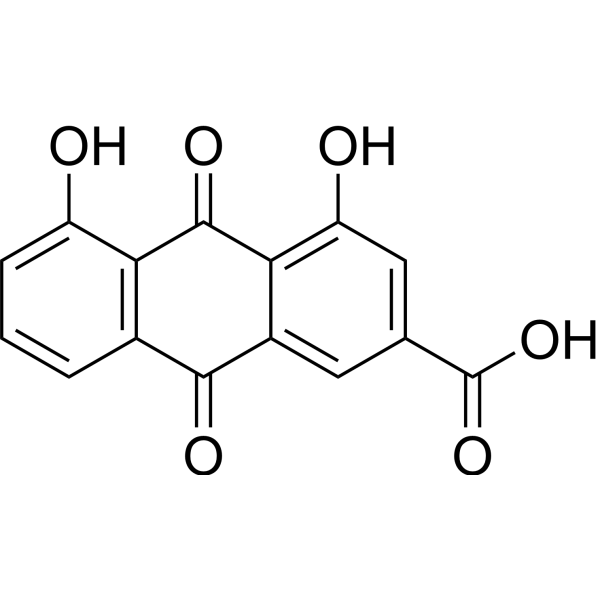
-
MC-VC-PAB-Daptomycin
 0 Images製品番号: HY-186048CAS 番号: 1639428-78-6
MC-VC-PAB-Daptomycin (Compound 54) is the linker-payload of an antibody-drug conjugate (ADC). β-Glucuronide-dPBD-PEG6-NH2 is composed of Daptomycin (HY-13631), a lipopeptide antibiotic, and the linker.
-
Amitivir
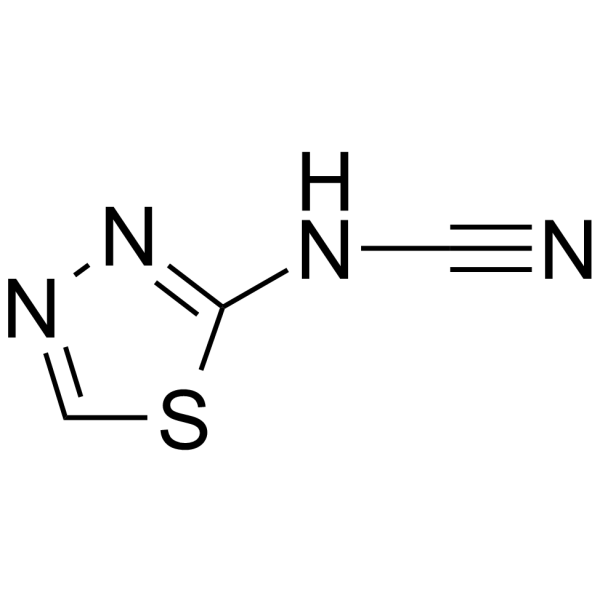 0 Images製品番号: HY-106817CAS 番号: 111393-84-1別名: LY 217896
Amitivir (LY 217896), a thiadiazole derivative, possesses broad antiviral activity against orthomyxo- and paramyxoviruses. Amitivir is effective against influenza A and B viruses.
-
Thiabendazole (Standard)
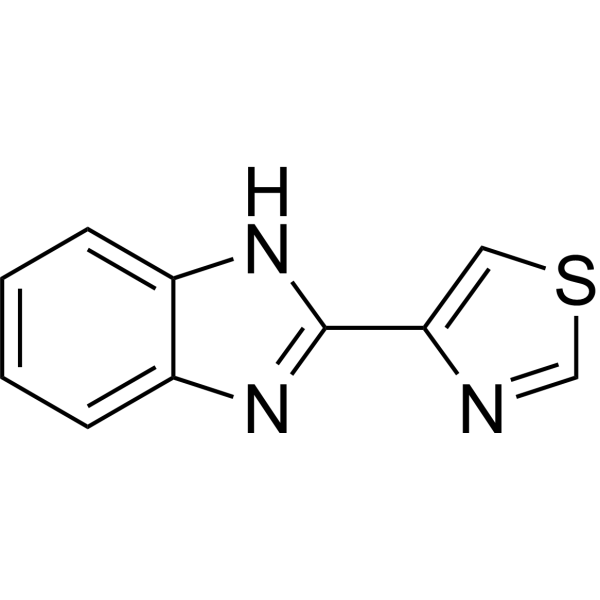 0 Images別名: Tiabendazole (Standard); 2-(4-Thiazolyl)benzimidazole (Standard)
Thiabendazole (Standard) is the analytical standard of Thiabendazole. This product is intended for research and analytical applications. Thiabendazole inhibits worm-specific fumarate reductase and has anthelmintic properties.
-
Pentamidine-d4 dihydrochloride
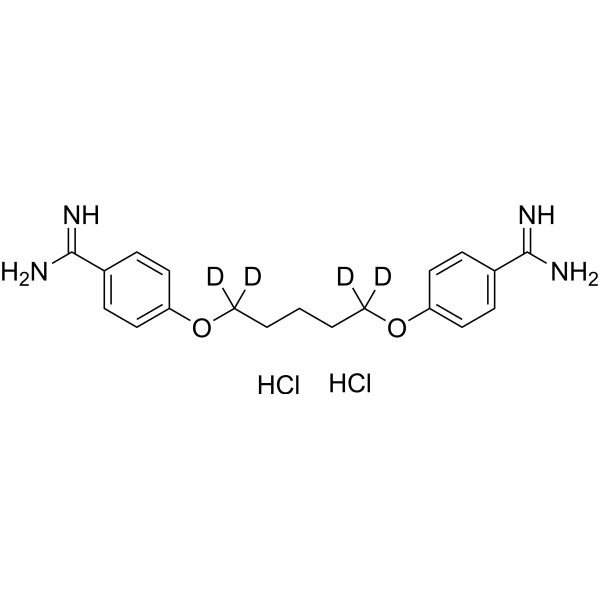 0 Images別名: MP-601205-d4 dihydrochloride
Pentamidine-d4 (dihydrochloride) is the deuterium labeled Pentamidine dihydrochloride. Pentamidine dihydrochloride (MP-601205 dihydrochloride) is an antimicrobial agent and interferes with DNA biosynthetics. Pentamidine dihydrochloride inhibits parasite Leishmania infantum with an IC50 of 2.5 μM. Pentamidine dihydrochloride is a potent and selective protein tyrosine phosphatases (PTPases) and phosphatase of regenerating liver (PRL) inhibitor. Pentamidine dihydrochloride has the potential for Gambian trypanosomiasis, antimony-resistant leishmaniasis, and Pneumocystis carinii pneumonia treatment. Antitumor and antibacterial activities.
-
IL-6-IN-2
 0 Images
IL-6-IN-2 is an interleukin-6 (IL-6) inhibitor. IL-6-IN-2 binds to IL-6 at Lys66, Phe74, Gln175, Ser176, and Arg179 via π-π, π-alkyl, hydrogen bond, and hydrophobic interactions to block IL-6/IL-6R heterocomplex formation. IL-6-IN-2 exhibits low gastrointestinal absorption rate. IL-6-IN-2 can be used for the research of cytokine release syndrome, covid-19.
-
Bacimethrin
 0 Images
Bacimethrin (NSC 66577) is an antibacterial agent and is thiamin biosynthesis antagonist.Bacimethrin inhibits bacterial and yeast growth.
-
UDP-3-O-acyl-GlcNAc
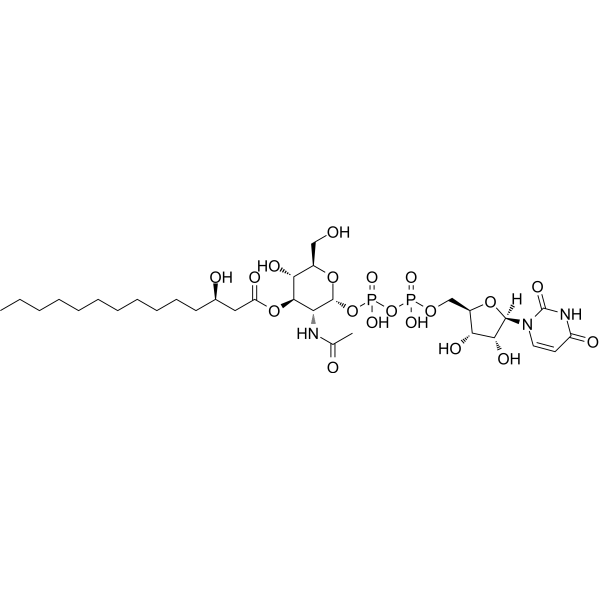 0 Images製品番号: HY-N8515CAS 番号: 108636-29-9別名: UDP-3-O-(3-hydroxytetradecanoyl)-N-acetylglucosamine
UDP-3-O-acyl-GlcNAc (UDP-3-O-(3-hydroxytetradecanoyl)-N-acetylglucosamine) is an E. coli metabolite that is involved in 3-deoxy-D-manno-octulosonate (KDO) biosynthesis pathway.
-
Grepafloxacin
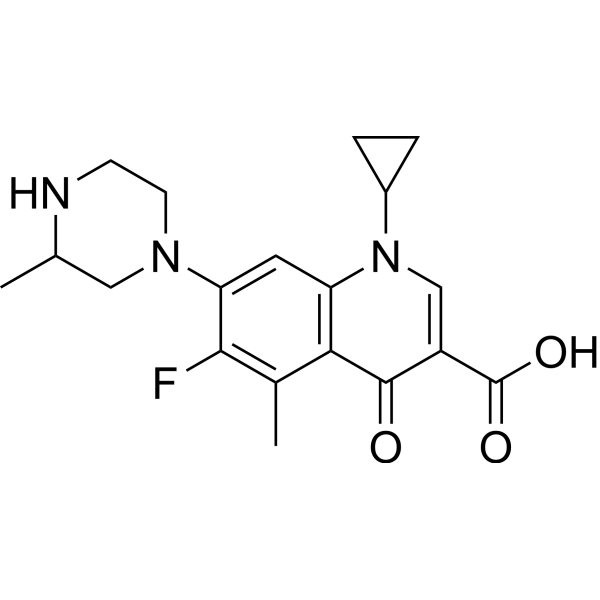 0 Images製品番号: HY-A0147CAS 番号: 119914-60-2別名: OPC-17116; dl-Grepafloxacin
Grepafloxacin (OPC-17116) is an oral actively fluoroquinolone antibiotic with potent activity against community-acquired respiratory pathogens including Streptococcus pneumonia. Grepafloxacin has high tissue penetration and a promising pharmacodynamic profile.
-
Afzelin (Standard)
 0 Images
Afzelin (Standard) is the analytical standard of Afzelin. This product is intended for research and analytical applications. Afzelin (Kaempferol-3-O-rhamnoside)It is a flavonol glycoside that has anti-inflammatory, anti-oxidative stress response, anti-apoptotic, and anti-cardiac cytotoxic effects. AfzelinIt can reduce mitochondrial damage, enhance mitochondrial biosynthesis, and reduce mitochondria-related proteins. Parkinand PTENinduced putative kinase 1 (putative kinase 1)s level. AfzelinCan be improved D-galactosamine(GalN)/LPSSurvival rate of mice treated with doxorubicin prophylaxis (HY-15142A)Induced cardiotoxicity and scopolamine (HY-N0296)-induced neurological injury. AfzelinAlso inhibits asthma and allergies caused by ovalbumin.
-
Flucytosine-13C,15N2
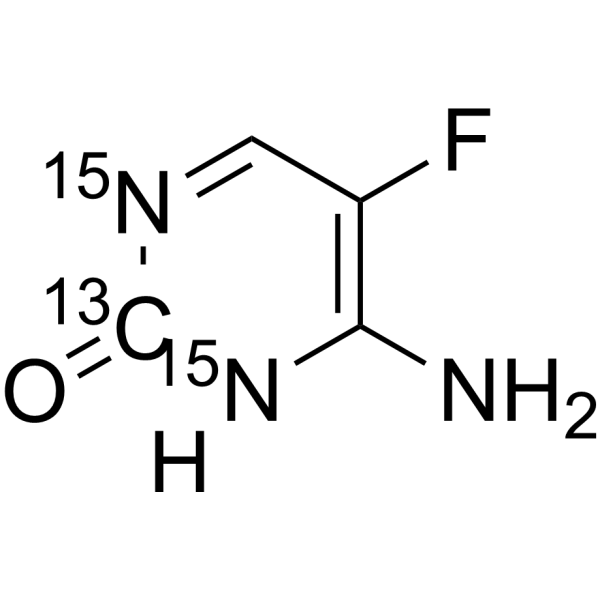 0 Images製品番号: HY-B0139SCAS 番号: 1216616-31-7別名: 5-Fluorocytosine-13C,15N2; NSC 103805-13C,15N2; Ro 2-9915-13C,15N2
Flucytosine-13C,15N2 (NSC 103805-13C,15N2; Ro 2-9915-13C,15N2) is a 13C- and 15N-labeled Flucytosine (HY-B0139).
-
Rifamycin B
 0 Images製品番号: HY-162836CAS 番号: 13929-35-6別名: 4-O-(Carboxymethyl)-Rifamycin
Rifamycin B (4-O-(Carboxymethyl)-Rifamycin) is a member of ansamycin antibiotics family with an anti-mycobacterial activity against tuberculosis, leprosy and AIDS-related mycobacterial infections. Rifamycin B is a metabolic product of Nocardia inediterranei, which can yield Rifamycin O and Rifamycin S (HY-125365) by microbial transformation.
-
Anti-virulence factor-IN-2
 0 Images製品番号: HY-176224純度: 98.41%
Anti-virulence factor-IN-2 (compound C7) is an inhibitor targeting the virulence factor KpsM in Escherichia coli. kpsM mediates the translocation of capsular polysaccharides to the cell surface, allowing kpsM-positive E. coli to escape the phagocytosis of the scavenger receptor Marco on liver Kupffer cells, leading to bacterial dissemination. kpsM-positive E. coli exacerbates ethanol-induced liver disease. Anti-virulence factor-IN-2 can inhibit the ethanol-induced liver disease model caused by kpsM-dependent capsid in mice and has anti-infective activity. Anti-virulence factor-IN-2 can be used for the study of alcoholic hepatitis.
-
IFN-α Receptor Recognition Peptide 1 acetate
 0 Images製品番号: HY-P1758A純度: 99.29%別名: IRRP1 acetate
IFN-α Receptor Recognition Peptide 1 acetate (IRRP1 acetate) is an amino acid synthetic peptide and also a regulator of IFN-α Receptor. IFN-α Receptor Recognition Peptide 1 acetate binds to IFNAR2, enhances the binding capacity of IFN-α receptor, and slightly increases the IFN-α-induced growth inhibitory activity. IFN-α Receptor Recognition Peptide 1 acetate inhibits IFN-α-induced STAT1 phosphorylation and STAT-DNA binding by blocking the activation of IFNAR by IFN-α. IFN-α Receptor Recognition Peptide 1 acetate increases the occupancy of IFN-α on cell surface receptors, enhances the phosphorylation activation of ISGF3, and elevates IFN-α-induced antiviral activity. IFN-α Receptor Recognition Peptide 1 acetate can be used in studies related to encephalomyocarditis virus infection.
-
Streptomycin (Standard)
 0 Images別名: Agrept (Standard); Agrimycin (Standard); Streptomycin A (Standard)
Streptomycin (Standard) is the analytical standard of Streptomycin. This product is intended for research and analytical applications. Streptomycin (Agrept) is an effective antibiotic against M. tuberculosis, is used for the research of tuberculosis (TB). Streptomycin also is a bacteriocidal agent that can be used for the research of a number of bacterial infections. Streptomycin can bind strongly to nucleic acids, interferes and blocks protein synthesis while permitting continued RNA and DNA synthesis. Streptomycin, as a common antibiotic used in culture media, also is a blocker of stretch-activated and mechanosensitive ion channels in neurons and cardiac myocytes .
-
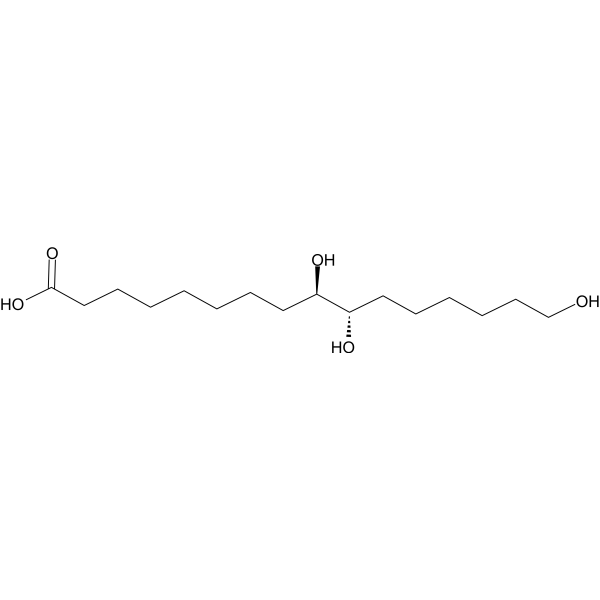
Aleuritic acid
 0 Images
Aleuritic acid ((±)-erythro-Aleuritic acid; α-Aleuritic acid) is a polyhydroxy fatty acid found in plant cutin and shellac. Aleuritic acid disrupts the Mycobacterium tuberculosis Nei2-β-clamp (DnaN) interaction and binds to the Mycobacterium tuberculosis β-clamp without affecting the intrinsic DNA glycosylase activity of Nei2. Aleuritic acid self-assembles with pectin to form cutin body nanoparticles. Aleuritic acid is the major component of Croton crassifolius. Aleuritic acid is used in mycobacterial and fragrance-related research.
-
6-Amino-5-azacytidine
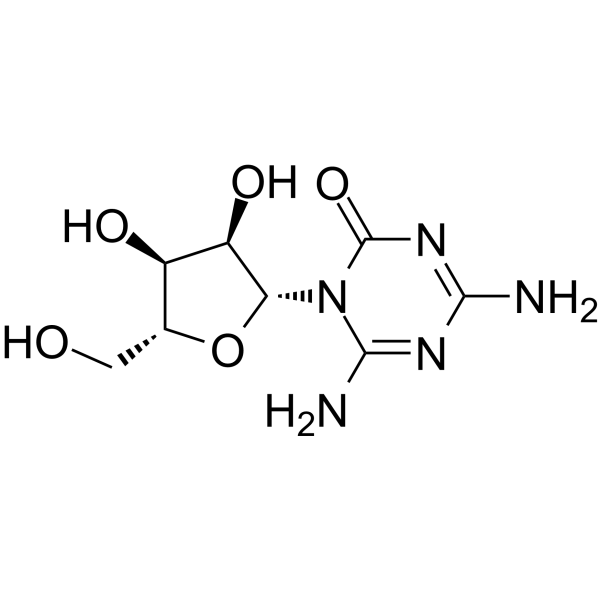 0 Images製品番号: HY-111643CAS 番号: 105331-00-8
6-Amino-5-azacytidine inhibits the growth of bacteria E. coli.
-
Diminazene
 0 Images製品番号: HY-W342283CAS 番号: 536-71-0
Diminazene is an antiparasitic agent widely used to treat parasitic diseases caused by hemoparasites (such as trypanosomes and babesia). Diminazene acts as an ACE2 activator and exerts cardiovascular protective effects by activating the ACE2/Ang-(1-7)/Mas receptor axis. By regulating gut microbiota-tryptophan metabolism, Diminazene inhibits the activation of core inflammatory signaling pathways including MAPK, STAT and NF-κB, increases central 5-HT levels, and suppresses splenic TNF-α production, thereby alleviating systemic inflammation.