



Apoptosis
Apoptosis
Apoptosis is a distinctive form of cell death exhibiting specific morphological and biochemical characteristics, including cell membrane blebbing, chromatin condensation, genomic DNA fragmentation, and exposure of specific phagocytosis signaling molecules on the cell surface. Cells undergoing apoptosis differ from those dying through necrosis. Necrotic cells are usually recognized by the immune system as a danger signal and, thus, resulting in inflammation; in contrast, apoptotic death is quiet and orderly.
There are two major pathways of apoptotic cell death induction: The intrinsic pathway, also called the Bcl-2-regulated or mitochondrial pathway, is activated by various developmental cues or cytotoxic insults, such as viral infection, DNA damage and growth-factor deprivation, and is strictly controlled by the BCL-2 family of proteins. The extrinsic or death-receptor pathway is triggered by ligation of death receptors (members of the tumor necrosis factor (TNF) receptor family, such as Fas or TNF receptor-1 (TNFR1)) that contain an intracellular death domain, which can recruit and activate caspase-8 through the adaptor protein Fas-associated death domain (FADD; also known as MORT1) at the cell surface. This recruitment causes subsequent activation of downstream (effector) caspases, such as caspase-3, -6 or -7, without any involvement of the BCL-2 family.
Studies suggest that alterations in cell survival contribute to the pathogenesis of a number of human diseases, including cancer, viral infections, autoimmune diseases, neurodegenerative disorders, and AIDS (acquired immunodeficiency syndrome). Treatments designed to specifically alter the apoptotic threshold may have the potential to change the natural progression of some of these diseases.
All Product Categories
-
Apoptosis Inhibitors
(904)
View all products
-
Apoptosis Agonists
(7)
View all products
-
Apoptosis Antagonists
(9)
View all products
-
Apoptosis Activators
(363)
View all products
-
Apoptosis Modulators
(60)
View all products
-
Apoptosis Inducers
(7944)
View all products
-
Apoptosis Degrader
(1)
View all products
-
Apoptosis Controls
(33)
View all products
-
Apoptosis Related Products (9888)
Related Products (9888)

-
Antibodies (120)
-
MK-2206 free base
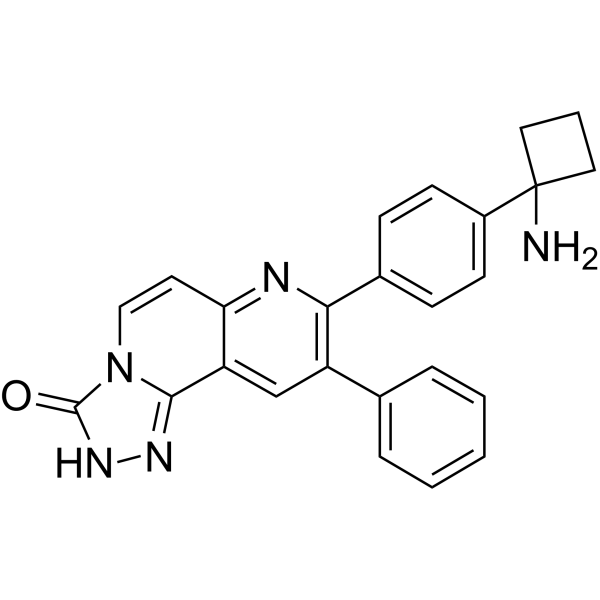 0 ImagesCat. No.: HY-10357CAS No.: 1032349-93-1MK-2206 free base is an orally active pan-AKT inhibitor, with IC50 values of 8 nM, 12 nM and 65 nM against AKT1, AKT2 and AKT3, respectively. MK-2206 free base inhibits the Akt/mTOR signaling pathway and reduces the levels of downstream GSK3β and Mcl-1 via proteasomal degradation. MK-2206 free base induces G1-phase cell cycle arrest, apoptosis, epithelial-mesenchymal transition, fibroblast activation and extracellular matrix deposition. MK-2206 free base causes transient hyperglycemia and hyperinsulinemia in animals. MK-2206 free base can be used in research related to solid tumors, renal fibrosis and hypercholesterolemia.
-
Simmitecan hydrochloride
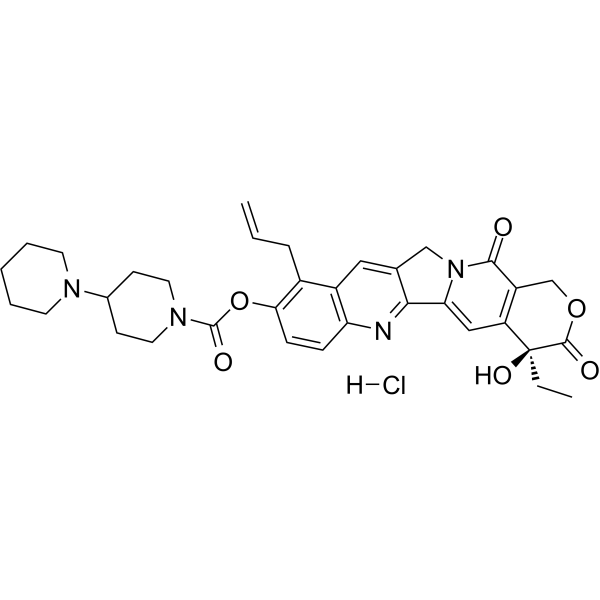 0 ImagesCat. No.: HY-107133CAS No.: 1247847-78-4Simmitecan hydrochloride is a potent topoisomerase I (TOP1) inhibitor, which is a 9-substituted lipophilic camptothecin (Camptothecin (HY-16560)) derivative. Simmitecan hydrochloride blocks DNA replication and transcription, thereby inducing tumor cell apoptosis by inhibiting the activity of TOP1. Simmitecan hydrochloride can be used for research on cancers such as liver cancer.
-
3-Hydroxypyridine (Standard)
 0 Images3-Hydroxypyridine (Standard) is the analytical standard of 3-Hydroxypyridine (HY-Y1129). This product is intended for research and analytical applications. 3-Hydroxypyridine is a compound that can be isolated from bamboo grass. As an endogenous photosensitizer present in human skin, 3-hydroxypyridine can mediate oxidative stress, proliferation inhibition and apoptosis of skin cells through UVA/UVB excitation.
-
Abacavir monosulfate
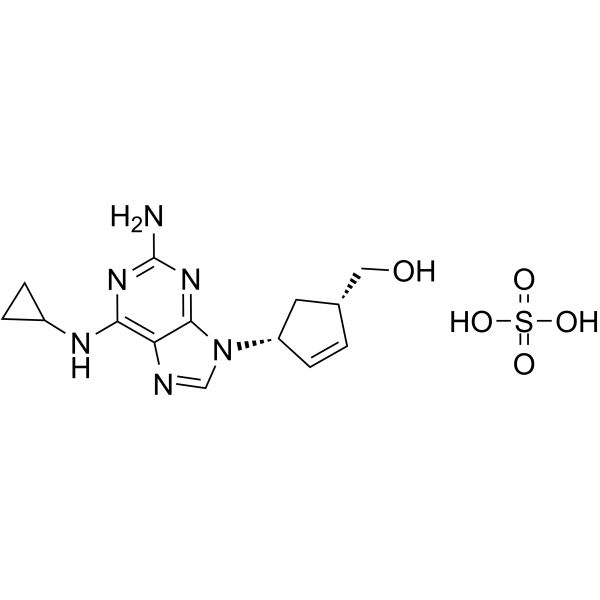 0 ImagesAbacavir monosulfate is a competitive, orally active nucleoside reverse transcriptase inhibitor. Abacavir monosulfate can inhibits the replication of HIV. Abacavir monosulfate shows anticancer activity in prostate cancer cell lines. Abacavir monosulfate can trespass the blood-brain-barrier and suppresses telomerase activity.
-
Glychionide A (Standard)
 0 ImagesCat. No.: HY-N8034RCAS No.: 119152-50-03-Indoleacetic acid (Standard) is the analytical standard of 3-Indoleacetic acid. This product is intended for research and analytical applications. 3-Indoleacetic acid is is an IAA hormone and growth regulator that can promote plant nutritional growth through processes such as cell expansion, differentiation, morphogenesis, and organogenesis.
-
Norfluoxetine-d5
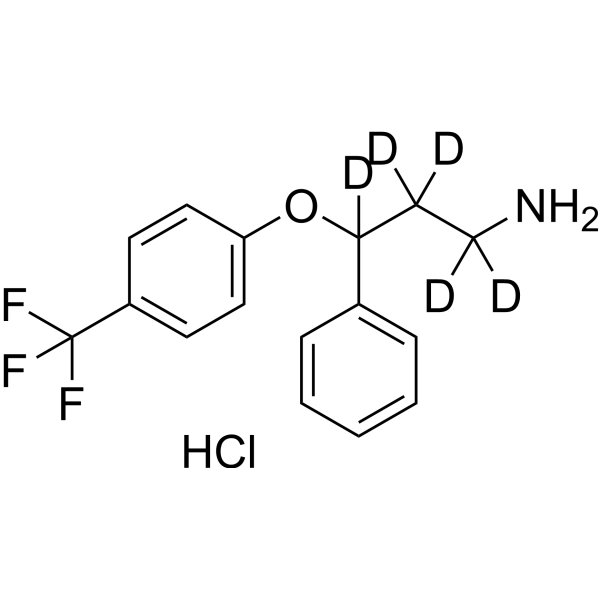 0 ImagesCat. No.: HY-135556ASCAS No.: 1185132-92-6Norfluoxetine-d5 is the d5-labeled Norfluoxetine (HY-135556). Norfluoxetine is the active metabolite of the antidepressant Fluoxetine (HY-B0102); it is also a TREK-2 K2P potassium channel inhibitor. Norfluoxetine exhibits neuroimmunological activity, induces apoptosis in primary microglial cells, and inhibits the release of pro-inflammatory factors. Norfluoxetine inhibits high-threshold voltage-gated Ca2+ currents in neurons with an EC50 of 20.4 μM. Norfluoxetine can be used in research related to depression, ischemic stroke, and epilepsy.
-
Capsaicin-d3
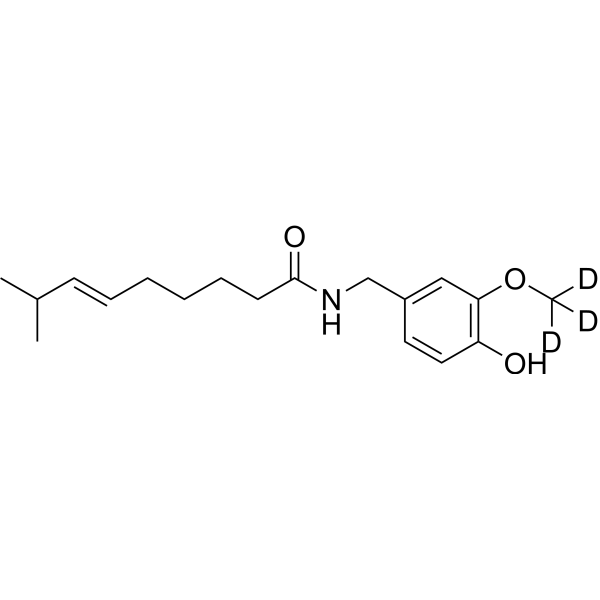 0 ImagesCat. No.: HY-10448S1CAS No.: 1217899-52-9Synonyms: (E)-Capsaicin-d3Capsaicin-d3 is the deuterium labeled Capsaicin. Capsaicin ((E)-Capsaicin), an active component of chili peppers, is a TRPV1 agonist. Capsaicin induces a nociceptive response by binding to its receptors. Capsaicin has analgesic effects on neurological disorders. Capsaicin has antioxidant, anti-inflammatory, anti-cancer effects.
-
(S)-Verapamil-d6 (hydrochloride)
 0 ImagesCat. No.: HY-135336AS1CAS No.: 1329611-24-6Synonyms: (S)-(-)-Verapamil-d6 (hydrochloride)(S)-Verapamil-d6 ((S)-(-)-Verapamil-d6) hydrochloride is the deuterium labeled (S)-Verapamil hydrochloride. (S)-Verapamil hydrochloride (S(-)-Verapamil hydrochloride) inhibits leukotriene C4 (LTC4) and calcein transport by MRP1. (S)-Verapamil hydrochloride leads to the death of potentially resistant tumor cells.
-
Desipramine-d3
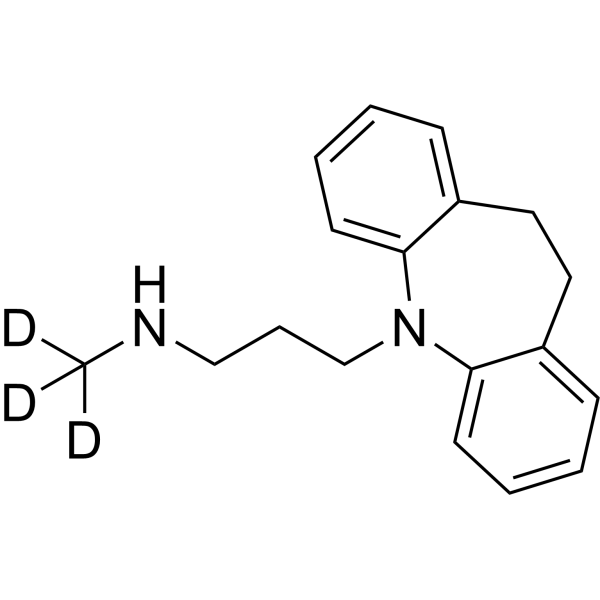 0 ImagesCat. No.: HY-B1272AS1CAS No.: 65100-49-4Desipramine-d3 is the deuterium labeled Desipramine (HY-B1272A). Desipramine is a first-generation tricyclic antidepressant. Desipramine selectively binds to norepinephrine transporter and blocks neuronal norepinephrine reuptake. Desipramine activates MAPK signaling via ERK1/2, JNK, and p38, represses NF-κB and AP-1 activity, and induces apoptosis via ROS elevation, mitochondrial membrane potential reduction, and intracellular calcium increase. Desipramine also shows anyi-inflammatory activity, inhibiting TNF-α production. Desipramine can be used for the research of hepatocellular cancer, inflammation, and neurological diseases.
-
Abacavir-d4
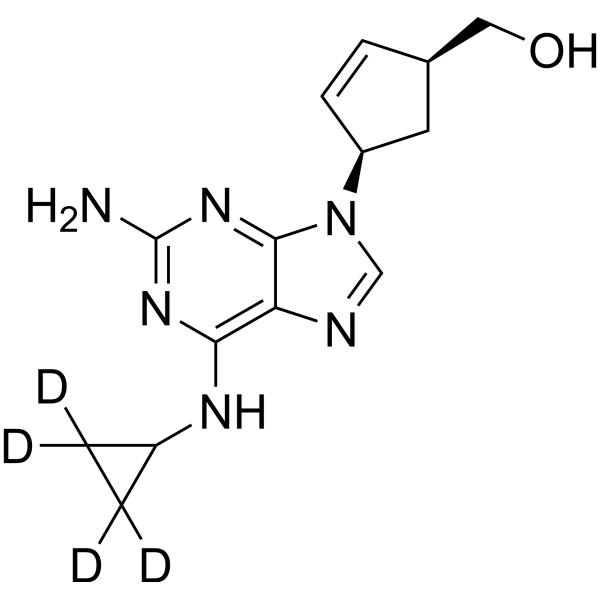 0 ImagesCat. No.: HY-17423SCAS No.: 1260619-56-4Abacavir-d4 is the deuterium labeled Abacavir. Abacavir is a potent nucleoside analog reverse-transcriptase inhibitor (NRTI)[1][2].
-
Adapalene-d3
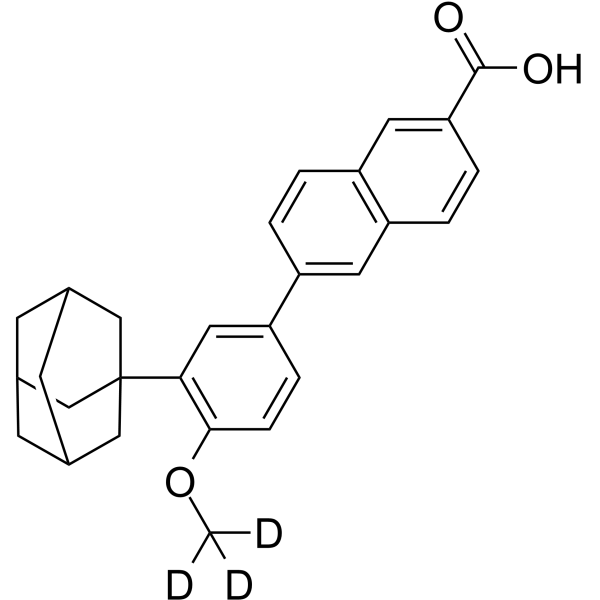 0 ImagesCat. No.: HY-B0091SCAS No.: 1276433-89-6Adapalene-d3 is the deuterium labeled Adapalene. Adapalene (CD271), a third-generation synthetic retinoid, is widely used for the research of acne. Adapalene is a potent RAR agonist, with AC50s of 2.3 nM, 9.3 nM, and 22 nM for RARβ, RARγ, RARα, respectively. Adapalene also inhibits the enzymatic activity of GOT1 in a non-competitive manner. Adapalene exhibits anti-tumor activity.
-
Tauroursodeoxycholate-d5
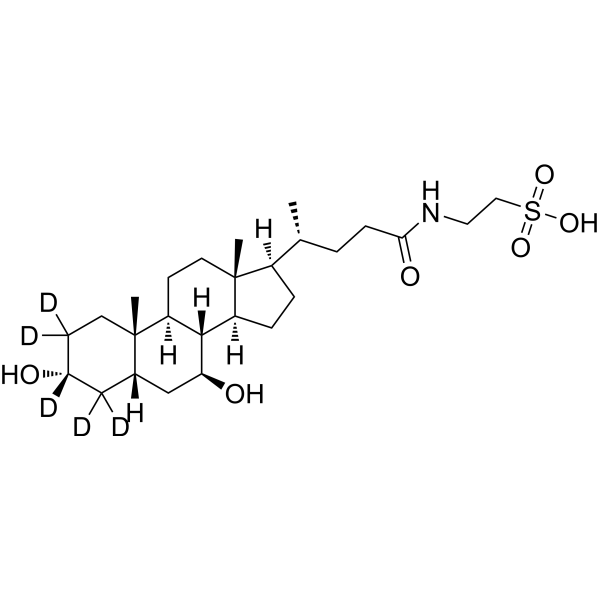 0 ImagesCat. No.: HY-19696SCAS No.: 1207294-25-4Synonyms: Tauroursodeoxycholic acid-d5; TUDCA-d5; UR 906-d5Tauroursodeoxycholate-d5 is the deuterium labeled Tauroursodeoxycholate. Tauroursodeoxycholate (Tauroursodeoxycholic acid) is an endoplasmic reticulum (ER) stress inhibitor. Tauroursodeoxycholate significantly reduces expression of apoptosis molecules, such as caspase-3 and caspase-12. Tauroursodeoxycholate also inhibits ERK.

-
4-tert-Octylphenol-3,5-d2
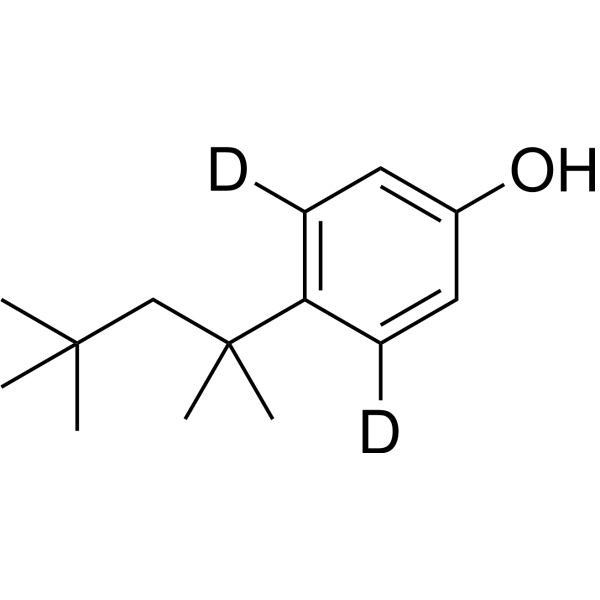 0 ImagesCat. No.: HY-B1941SCAS No.: 1173021-20-9Synonyms: p-Octylphenol-d24-tert-Octylphenol-3,5-d2 is the deuterium labeled 4-tert-Octylphenol-3,5.
-
Sildenafil-d8
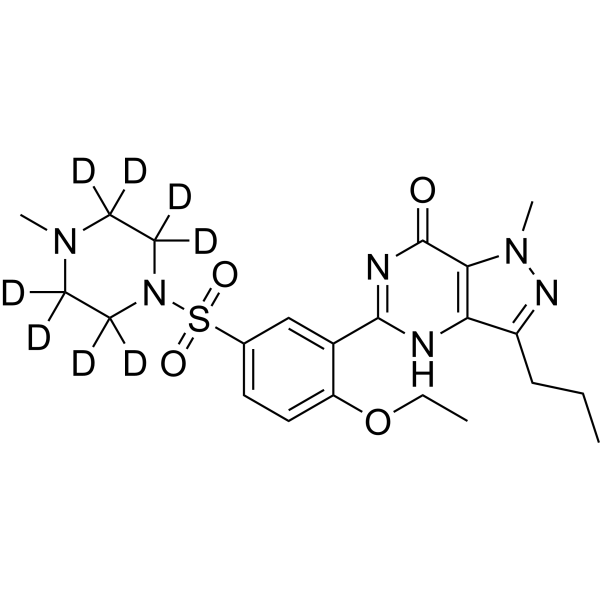 0 ImagesCat. No.: HY-15025S1CAS No.: 951385-68-5Synonyms: UK-92480-d8Sildenafil-d8 is the deuterium labeled Sildenafil. Sildenafil (UK-92480) is a potent phosphodiesterase type 5 (PDE5) inhibitor with an IC50 of 5.22 nM.
-
Benzyl isothiocyanate-d7
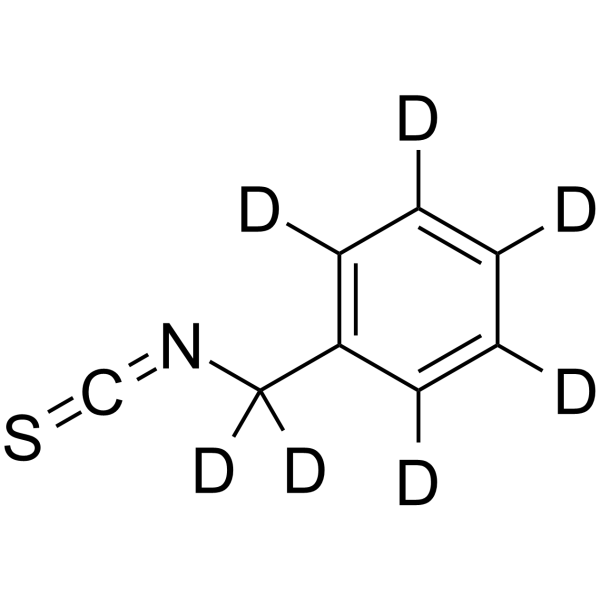 0 ImagesCat. No.: HY-77813SCAS No.: 1246818-63-2Benzyl isothiocyanate-d7 is the deuterium labeled Benzyl isothiocyanate. Benzyl isothiocyanate is a member of natural isothiocyanates with antimicrobial activity. Benzyl isothiocyanate potent inhibits cell mobility, migration and invasion nature and matrix metalloproteinase-2 (MMP-2) activity of murine melanoma cells.
-
Ibandronic acid-d3
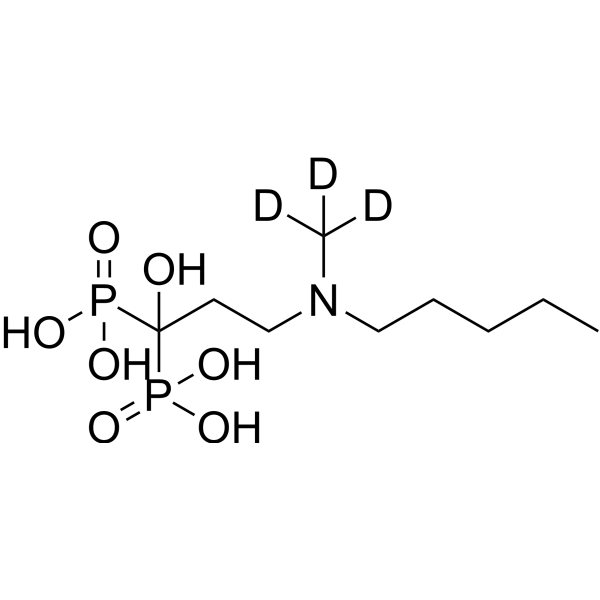 0 ImagesCat. No.: HY-B0515AS1CAS No.: 1130899-41-0Ibandronic acid-d3 is the deuterium labeled Ibandronic acid. Ibandronic acid is a highly potent nitrogen-containing bisphosphonate used for the treatment of osteoporosis.

-
Calcimycin quartercalcium quartermagnesium
 0 ImagesCat. No.: HY-N6687CSynonyms: A-23187 quartercalcium quartermagnesium; Antibiotic A-23187 quartercalcium quartermagnesiumCalcimycin (A-23187) hemicalcium hemimagnesium is an antibiotic and a unique divalent cation ionophore (like calcium and magnesium). Calcimycin hemicalcium hemimagnesium induces Ca2+-dependent cell death by increasing intracellular calcium concentration. Calcimycin hemicalcium hemimagnesium inhibits the growth of Gram-positive bacteria and some fungi. Calcimycin hemicalcium hemimagnesium also inhibits the activity of ATPase and uncouples oxidative phosphorylation (OXPHOS) of mammalian cells. Calcimycin hemicalcium hemimagnesium induces apoptosis and autophagy.
-
PI3Kα-IN-6
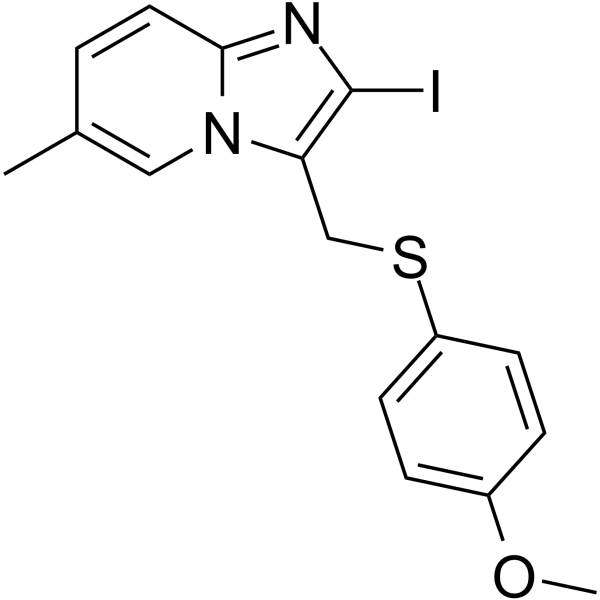 0 ImagesCat. No.: HY-147767CAS No.: 2272894-14-9PI3Kα-IN-6 (Compound 5b) is a PI3Kα inhibitor. PI3Kα-IN-6 exhibits anticancer potential and no toxicity in normal cells. PI3Kα-IN-6 increases generation of ROS, reduces mitochondrial membrane potential (MMP) and induces apoptosis.




