



Autophagy
Autophagy is a conserved cellular degradation and recycling process in the lysosome. In mammalian cells, there are three primary types of autophagy: microautophagy, macroautophagy, and chaperone-mediated autophagy (CMA). Microphagy captures cargoes by means of invaginations or protrusions of the lysosomal membrane directly, CMA uses chaperones to identify cargo proteins and then unfolds and transfers them into the lysosomal, while macroautophagy sequesters cargo by autophagosomes-de novo synthesized of double-membrane vesicles-and subsequently transport it to the lysosome.
Macroautophagy is the best studied and it occurs at a low level constitutively and can also be further induced under stress conditions, such as nutrient or energy starvation with a salient feature of autophagy protein degradation. Stress-induced macrophagy plays an important role in protein catabolism with another key protein degradation pathway, the ubiquitin–proteasome system (UPS).
As the study progressed, autophagy gains its importance under basal, nutrient-rich conditions, and is now recognized as a critical housekeeping pathway in catabolism of diverse cellular constituents, such as protein aggregates (aggrephagy), lipid droplets (lipophagy), iron complex (Ferritinophagy) and carbohydrate. Except for macromolecules, autophagy can also target several organelles and structures, such as mitochondria (mitophagy), peroxisome (pexophagy), endoplasmic reticulum (reticulophagy or ER-phagy), ribosome (ribophagy), spermatozoon-inherited organelles following fertilization (allophagy), secretory granules within pancreatic cells (zymophagy) and intracellular pathogens (xenophagy).
Autophagy and its dysfunction are associated with a variety of human pathologies, including ageing, cancer, neurodegenerative disease, heart disease and metabolic diseases, such as diabetes. Plenty of drugs and natural products are involved in autophagy modulation through multiple signaling pathways. Small molecules that can regulate autophagy seem to have great potential to intervene such diseases in animal models or clinical courses.
All Product Categories
-
Autophagy Inhibitors
(488)
View all products
-
Autophagy Agonists
(6)
View all products
-
Autophagy Activators
(124)
View all products
-
Autophagy Modulators
(59)
View all products
-
Autophagy Chemicals
(2)
View all products
-
Autophagy Inducers
(2220)
View all products
-
Autophagy Controls
(5)
View all products
-
Autophagy Ligand
(1)
View all products
-
Autophagy Related Products (3441)
Related Products (3441)

-
Antibodies (31)
-
Autophagy Signaling Pathway
-
Hydroxychloroquine-d4-1 sulfate
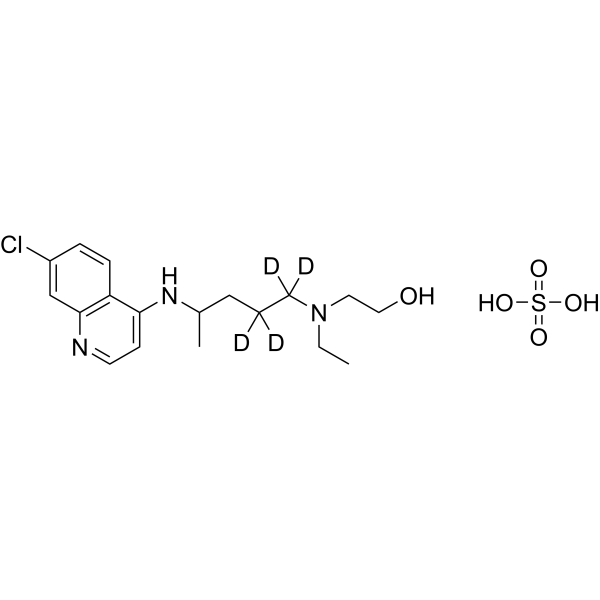 0 ImagesCat. No.: HY-W031727SCAS No.: 1216432-56-2Hydroxychloroquine-d4-1 (sulfate) is the deuterium labeled Hydroxychloroquine. Hydroxychloroquine is a synthetic antimalarial agent which can also inhibit Toll-like receptor 7/9 (TLR7/9) signaling. Hydroxychloroquine is efficiently inhibits SARS-CoV-2 infection in vitro.
-
Forigerimod
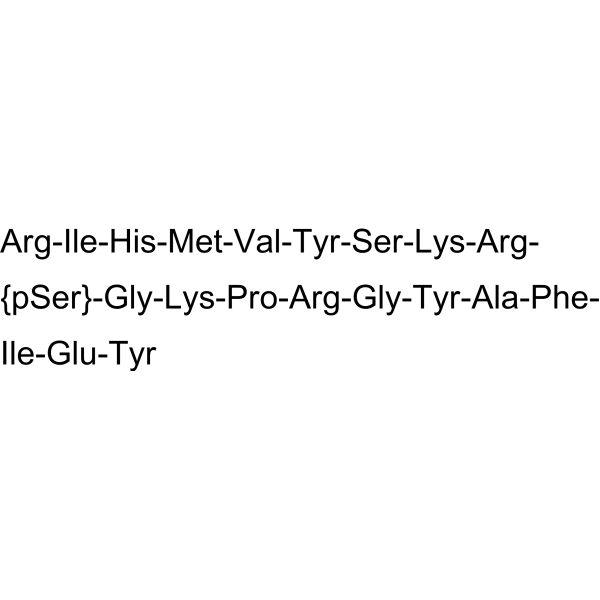 0 ImagesSynonyms: IPP-201101; Rigerimod; Peptide P140Forigerimod (IPP-201101) is a CD4 T-cell modulator. Forigerimod is a 21-amino-acid fragment of U1 small nuclear ribonucleoprotein 70 kDa that is phosphorylated at Ser140. Forigerimod can potently inhibit autophagy. Forigerimod can be used for the research of autoimmune disorders, such as systemic lupus erythematosus (SLE) .
-
Autophagy-IN-8
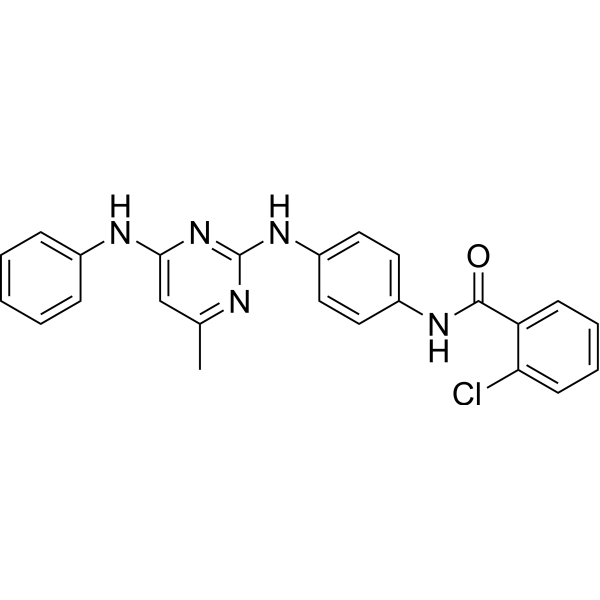
 0 ImagesCat. No.: HY-183803CAS No.: 2027550-79-2Autophagy-IN-8 is an autophagy inhibitor. Autophagy-IN-8 exhibits antiproliferative activity against cancer cells. Autophagy-IN-8 can be used in the research of melanoma and pancreatic cancer.
-
Clotrimazole-d10
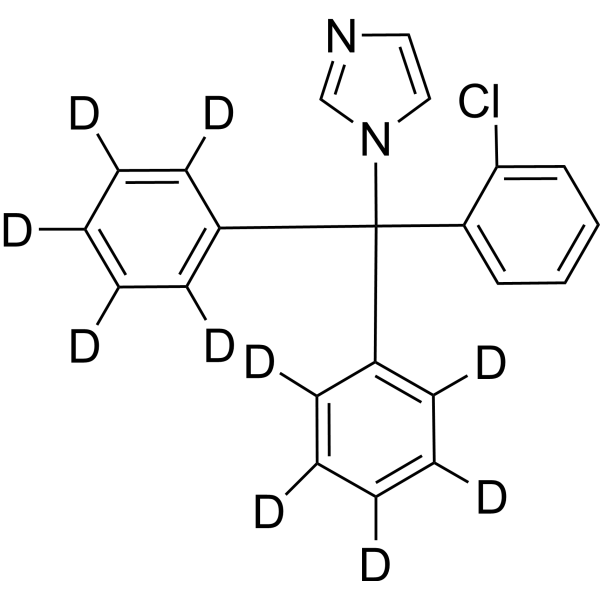 0 ImagesCat. No.: HY-10882S1Clotrimazole-d10 is deuterated labeled Clotrimazole (HY-10882). Clotrimazole is an imidazole derivative, an antifungal compound and is a CYP (cytochrome P450) inhibitor. Clotrimazole has antibacterial activity.
-
Atropine-d5
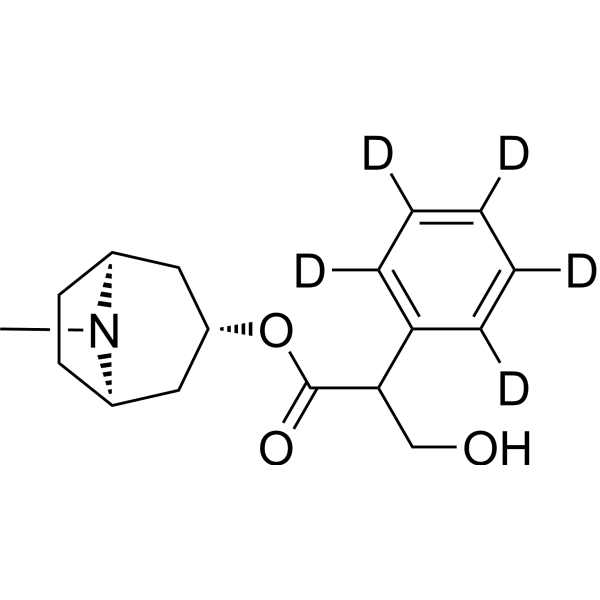 0 ImagesCat. No.: HY-B0394SSynonyms: Tropine tropate-d5; DL-Hyoscyamine-d5Atropine-d5 is the deuterium labeled Atropine (sulfate monohydrate). Atropine (Tropine tropate) sulfate monohydrate is a broad-spectrum and competitive muscarinic acetylcholine receptor (mAChR) antagonist with anti-myopia effect.
-
EAD1 (trihydrochloride)
 0 ImagesCat. No.: HY-123056BEAD1 trihydrochloride is a Chloroquine (HY-17589A) analog with anticancer activity. EAD1 trihydrochloride blocks autophagy, leading to the intracellular accumulation of autophagosome-related proteins LC3-II and p62. EAD1 trihydrochloride induces cancer cell apoptosis and inhibits cancer cell proliferation. EAD1 trihydrochloride can be used in the research of lung cancer and pancreatic cancer.
-
MR-2088
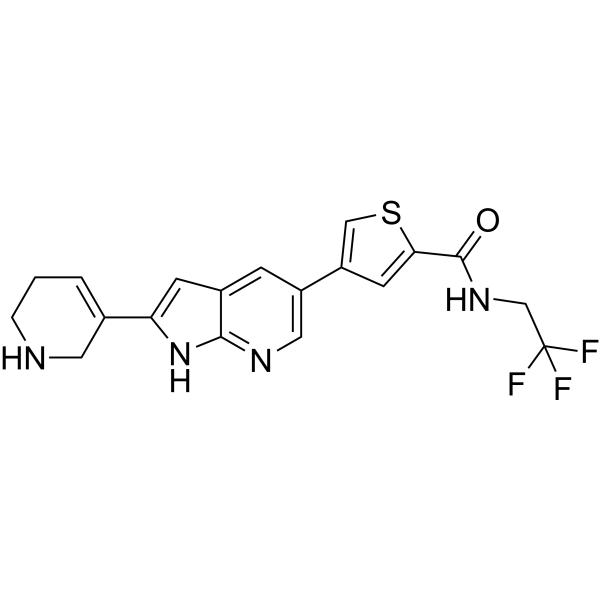 0 ImagesMR-2088 is a reversible, ATP-competitive, and selective ULK1/2 inhibitor with pEC50 values of 8.3 and 8.7 respectively. MR-2088 effectively inhibits autophagic flux and demonstrates a synergistic antiproliferative effect with Trametinib (HY-10999) (MEK inhibitor) in vitro. MR-2088 can be used for non-small lung cell cancer (NSCLC) research.
-
Brefeldin A (Standard)
 0 ImagesSynonyms: BFA (Standard); Cyanein (Standard); Decumbin (Standard)Brefeldin A (Standard) (BFA (Standard)) is the analytical standard of Rutin. This product is intended for research and analytical applications. Brefeldin A (BFA) is a lactone antibiotic and a specific inhibitor of protein trafficking. Brefeldin A blocks the transport of secreted and membrane proteins from endoplasmic reticulum to Golgi apparatus. Brefeldin A is also an autophagy and mitophagy inhibitor. Brefeldin A inhibits HSV-1 and has anti-cancer activity.
-
Indomethacin-d4
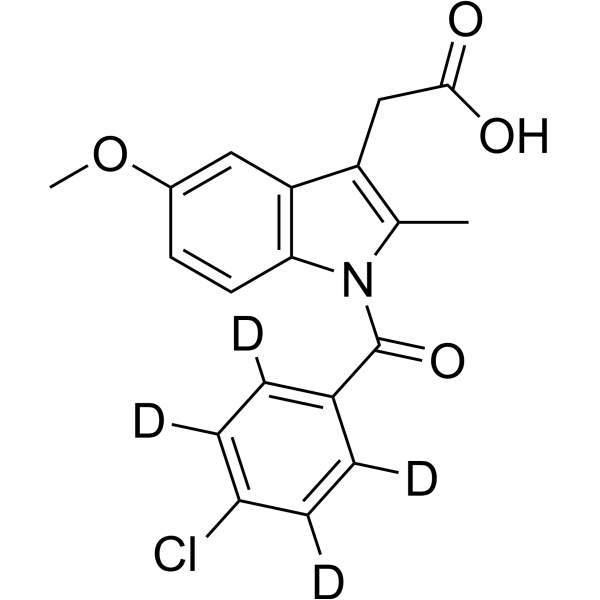 0 ImagesCat. No.: HY-14397SCAS No.: 87377-08-0Synonyms: Indometacin-d4Indomethacin-d4 (Indometacin-d4) is a deuterium labeled Indomethacin. Indomethacin is a potent, blood-brain permeable and nonselective inhibitor of COX1 and COX2, with IC50s of 18 nM and 26 nM for human COX-1 and COX-2, respectively, in CHO cells. Indomethacin disrupts autophagic flux by disturbing the normal functioning of lysosomes.
-
Poloppin
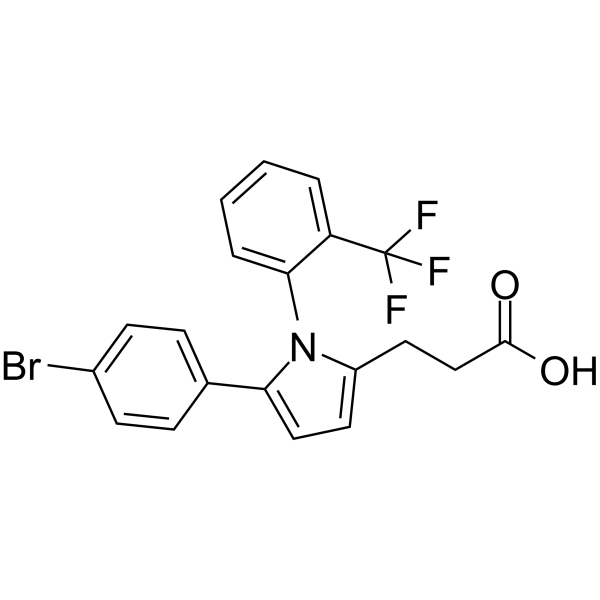 0 ImagesPoloppin is a potent, cell penetrant inhibitor of the mitotic Polo-like kinase (PLK) (IC50=26.9 μM) and prevents the protein-protein interaction via the Polo-box domain (PBD) (Kd= 29.5 μM). Poloppin selectively kills cells expressing mutant KRAS, enhancing death in mitosis. Poloppin is used for the study of KRAS-mutant cancers as single agents, or in combination with c-MET inhibitors.
-
Trifluoperazine dihydrochloride (Standard)
 0 ImagesTrifluoperazine (dihydrochloride) (Standard) is the analytical standard of Trifluoperazine (dihydrochloride). This product is intended for research and analytical applications. Trifluoperazine dihydrochloride, an antipsychotic agent, acts by blocking central dopamine receptors. Trifluoperazine dihydrochloride is a potent α1-adrenergic receptor antagonist. Trifluoperazine dihydrochloride is a potent NUPR1 inhibitor exerting anticancer activity. Trifluoperazine dihydrochloride is a calmodulin inhibitor, and also inhibits P-glycoprotein. Trifluoperazine dihydrochloride can be used for the research of schizophrenia. Trifluoperazine dihydrochloride acts as a reversible inhibitor of influenza virus morphogenesis.
-
Autophagy-IN-8 hydrochloride
 0 ImagesCat. No.: HY-183803ACAS No.: 2027550-81-6Autophagy-IN-8 (DQ 660) hydrochloride is an autophagy inhibitor with antiproliferative activity against cancer cells. Autophagy-IN-8 hydrochloride exhibits antiproliferative activity against melanoma and pancreatic cancer cells. Autophagy-IN-8 hydrochloride can be used in the research of melanoma and pancreatic cancer.
-
Liensinine perchlorate
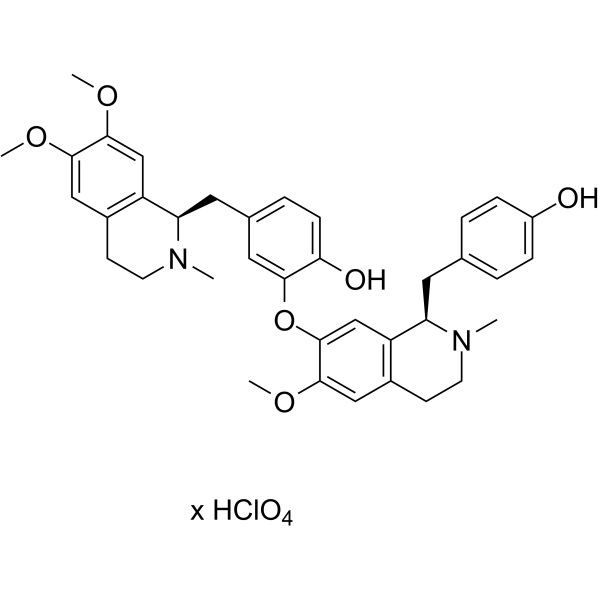 0 ImagesLiensinine perchlorate is a bisbenzylisoquinoline alkaloid. By inhibiting the PI3K/AKT and JNK/p38-MAPK signaling pathways, Liensinine perchlorate suppresses autophagy and apoptosis, clears Aβ, and exerts anti-inflammatory, antioxidant and neuroprotective effects. Liensinine perchlorate activates AMPK and inhibits the expression of HIF-1α and VEGF, thereby suppressing angiogenesis. Liensinine perchlorate exerts anti-tumor effects through ROS-mediated inhibition of the JAK2/STAT3 signaling pathway. Liensinine perchlorate can be used for the research of diseases such as Alzheimer's disease, hepatocellular carcinoma, osteosarcoma, sepsis-induced organ injury and stroke.
-
RK-682
 0 ImagesCat. No.: HY-135564ACAS No.: 150627-37-5RK-682 is the inhibitor for protein tyrosine phosphatase (PTPase), heparanase, phospholipase A2 and HIV-1 protease. RK-682 inhibits the dephosphorylation of CD45 (IC50 is 54 μM) and VHR (IC50 is 2.0 μM), and thereby inhibits the ERK signaling pathway. RK-682 inhibits the cell viability of cancer cell MGH-U3, T24 and UROtsa with IC50s of 78.2, 43.2 and 145 nM, respectively, arrests the cell cycle at G1/S phase, inhibits the cell migration and autophagy in MGH-U3 and T24.
-
PHY34
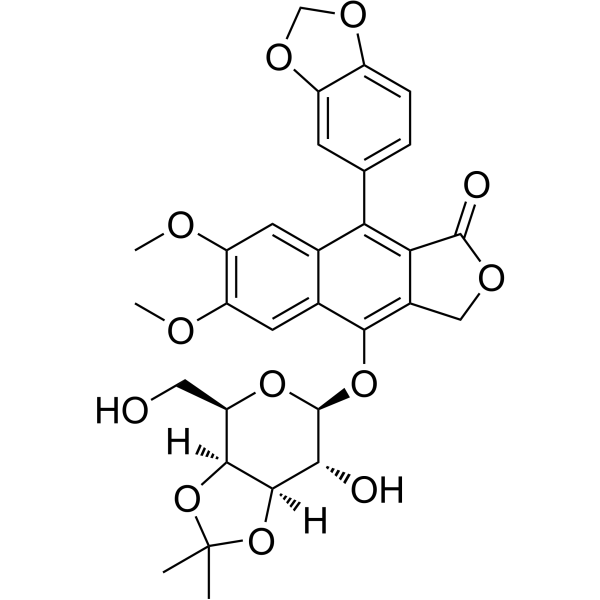 0 ImagesPHY34 is an inhibitor that inhibits ATP6V0A2 and CAS thereby inhibiting autophagy, and has a nanomolar effect. PHY34 inhibits cancer cell growth by inducing apoptosis and inhibits tumor growth in xenograft models. PHY34 can be used for research on high grade serous ovarian cancer.
-
Methylprednisolone-d3
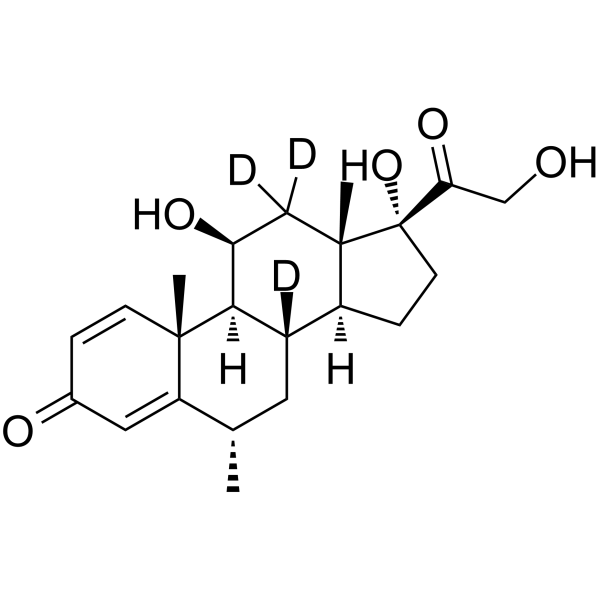 0 ImagesCat. No.: HY-B0260SSynonyms: U 7532-d3Methylprednisolone-d3 is the deuterium labeled Methylprednisolone. Methylprednisolone is a synthetic corticosteroid with anti-inflammatory and immunomodulating properties. Methylprednisolone improve severe or critical COVID-19 by activating ACE2 and reducing IL-6 levels.
-
Manzamine A
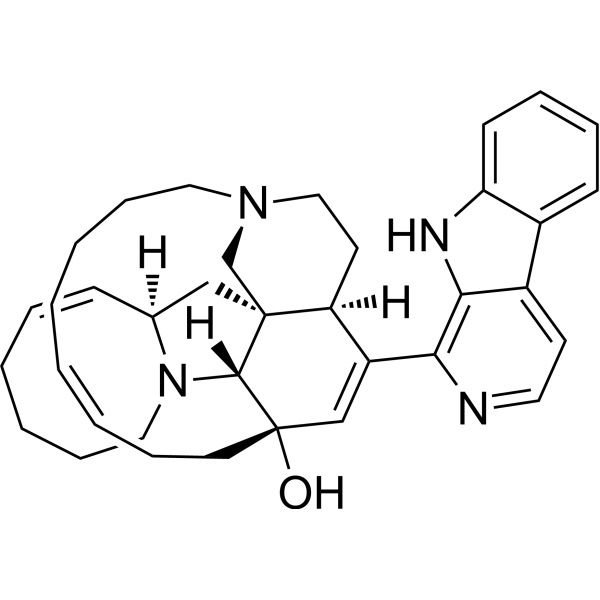 0 ImagesSynonyms: Keramamine AManzamine A, an orally active beta-carboline alkaloid, inhibits specifically GSK-3β and CDK-5 with IC50s of 10.2 μM and 1.5 μM, respectively. Manzamine A targets vacuolar ATPases and inhibits autophagy in pancreatic cancer cells. Manzamine A has antimalarial and anticancer activities. Manzamine A also shows potent activity against HSV-1.
-
Phoxim
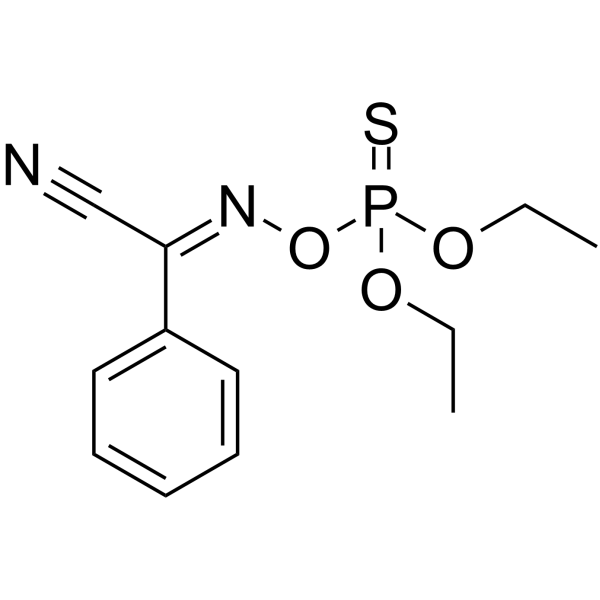 0 ImagesCat. No.: HY-B0819CAS No.: 14816-18-3Phoxim is an organophosphorus pesticide and an orally active inhibitor of cholinesterase and CYP3A, which induces neurotoxicity in Caenorhabditis elegans and causes nephrotoxicity characterized by glomerular atrophy and interstitial fibrosis. Phoxim induces inhibition of the autophagy pathway. Phoxim induces dopaminergic neuron degeneration and exacerbates Aβ-induced paralysis. Phoxim damages enterocytes and disrupts intestinal barrier integrity. Phoxim induces ROS accumulation. Phoxim induces mitochondrial apoptosis, involving upregulation of Bad, Bax, caspase-3, and caspase-9 and downregulation of Bcl-2. Phoxim inhibits mitochondrial functional enzymes (COX, Ca2+-Mg2+-ATPase, SDH). Phoxim upregulates Nrf2 mRNA expression in the jejunal mucosa. Phoxim increases TNF-α and decreases IL-6 and IL-8 in the intestinal mucosa. Phoxim alters gut microbial composition by increasing total bacteria and Escherichia coli and reducing Lactobacillus. Phoxim enhances energy metabolism in silver carp by upregulating key glycolytic and gluconeogenic enzymes. Phoxim is used in research on neurodegenerative diseases, nephrotoxicity, intestinal oxidative stress and barrier dysfunction, and bacterial sepsis.




