



CDK
Cyclin dependent kinase
CDKs (Cyclin-dependent kinases) are serine-threonine kinases first discovered for their role in regulating the cell cycle. They are also involved in regulating transcription, mRNA processing, and the differentiation of nerve cells. CDKs are relatively small proteins, with molecular weights ranging from 34 to 40 kDa, and contain little more than the kinase domain. In fact, yeast cells can proliferate normally when their CDK gene has been replaced with the homologous human gene. By definition, a CDK binds a regulatory protein called a cyclin. Without cyclin, CDK has little kinase activity; only the cyclin-CDK complex is an active kinase.
There are around 20 Cyclin-dependent kinases (CDK1-20) known till date. CDK1, 4 and 5 are involved in cell cycle, and CDK 7, 8, 9 and 11 are associated with transcription.
CDK levels remain relatively constant throughout the cell cycle and most regulation is post-translational. Most knowledge of CDK structure and function is based on CDKs of S. pombe (Cdc2), S. cerevisia (CDC28), and vertebrates (CDC2 and CDK2). The four major mechanisms of CDK regulation are cyclin binding, CAK phosphorylation, regulatory inhibitory phosphorylation, and binding of CDK inhibitory subunits (CKIs).
CDK Isoform Specific Products
-
CDK
(487)
View all products
-
CDK1
(195)
View all products
-
CDK2
(314)
View all products
-
CDK3
(28)
View all products
-
CDK4
(230)
View all products
-
CDK5
(98)
View all products
-
CDK6
(177)
View all products
-
CDK7
(118)
View all products
-
CDK8
(57)
View all products
-
CDK9
(204)
View all products
-
CDK11
(9)
View all products
-
CDK12
(52)
View all products
-
CDK13
(26)
View all products
-
CDK14
(6)
View all products
-
CDK16
(8)
View all products
-
CDK19
(25)
View all products
-
CDC
(21)
View all products
-
CLK
(31)
View all products
-
Pho85
(1)
View all products
-
CDK10
(1)
View all products
-
CDK15
(1)
View all products
-
CDK17
(2)
View all products
-
CDK18
(1)
View all products
-
CDK20
(1)
View all products
-
PITSLRE
(1)
View all products
All Product Categories
-
CDK Inhibitors
(1073)
View all products
-
CDK Agonists
(3)
View all products
-
CDK Antagonists
(2)
View all products
-
CDK Activators
(18)
View all products
-
CDK Modulators
(15)
View all products
-
CDK Degraders
(94)
View all products
-
CDK Controls
(4)
View all products
-
CDK Substrate
(1)
View all products
-
CDK Ligands
(16)
View all products
-
Cyclin-Dependent Kinases (CDKs) Proteins
(80)
View all products
-
Cyclin Dependent Kinase 1 (CDK1) Proteins
(9)
View all products
-
Cyclin-Dependent Kinase 2 (CDK2) Proteins
(12)
View all products
-
Cyclin-Dependent Kinase 3 (CDK3) Proteins
(6)
View all products
-
Cyclin-Dependent Kinase 4 (CDK4) Proteins
(4)
View all products
-
Cyclin-Dependent Kinase 5 (CDK5) Proteins
(5)
View all products
-
Cyclin-Dependent Kinase 6 (CDK6) Proteins
(6)
View all products
-
Cyclin-Dependent Kinase 7 (CDK7) Proteins
(4)
View all products
-
CDK Related Products (1348)
Related Products (1348)

-
Recombinant Proteins (82)
-
Antibodies (42)
-
CDK Isoform Comparison

-
CDK7-IN-16
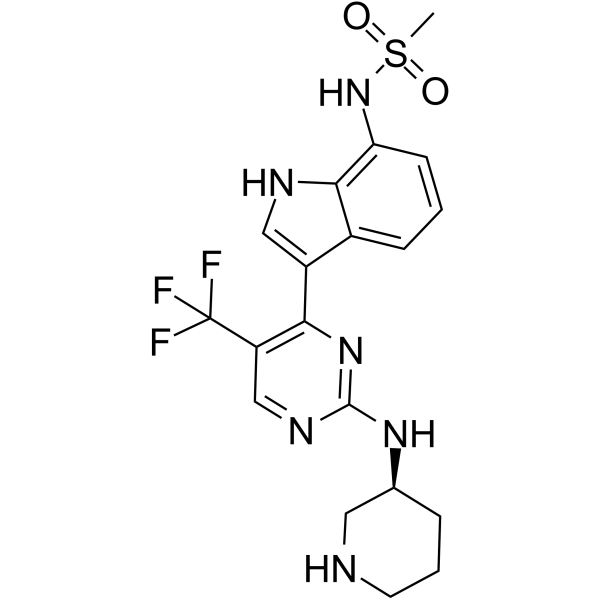 0 ImagesCat. No.: HY-147601CAS No.: 2765676-32-0CDK7-IN-16 (compound 9) is a potent CDK 7 inhibitor with an IC50 range of 1 ~ 10 nM. CDK7-IN-16 can be used for researching anticancer, especially the cancer with transcriptional dysregulation.
-
CDK8-IN-6
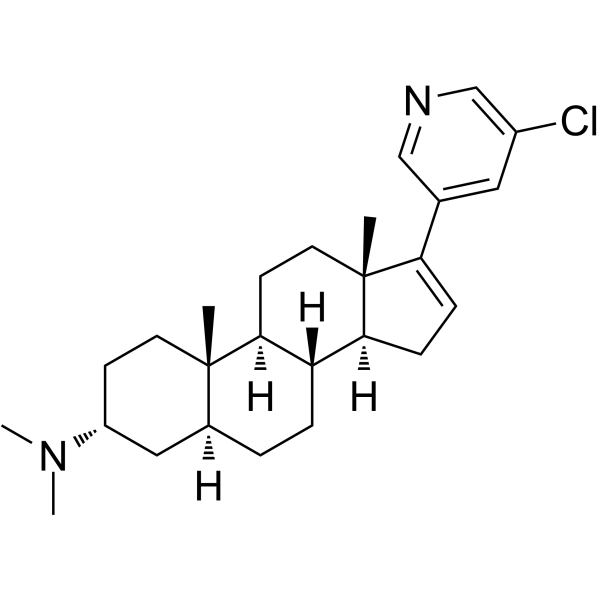 0 ImagesCat. No.: HY-147716CAS No.: 2415156-27-1CDK8-IN-6 (compound 9) is a potent cyclin-dependent kinase 8 (CDK8) inhibitor with an Kd of 13 nM. CDK8-IN-6 shows cytotoxicity for MOLM-13, OCI-AML3, MV4-11, NRK and H9c2 cells with IC50s of 11.2, 7.5, 8.6, 20.5, 12.5-25 µM, respectively. CDK8-IN-6 has the potential for the research of AML-cancer.
-
ZnPc-PEG2-VH032
 0 ImagesCat. No.: HY-181906ZnPc-PEG2-VH032 is a VHL-pathway-dependent photodegradation targeting chimera (PDTAC) and cytotoxic agent. ZnPc-PEG2-VH032 (HY-120217) binds to the VHL ligand domain, and then specifically degrades VHL under light irradiation, a process independent of non-specific ROS-mediated protein damage. ZnPc-PEG2-VH032 uses Zinc phthalocyanine (HY-19204) as a photosensitizer, and generates ROS via type I and type II photodynamic pathways under 680 nm LED irradiation. On one hand, it targets and degrades the bound VHL protein through ROS; on the other hand, it exerts direct photodynamic cytotoxicity. Meanwhile, the degradation of VHL downregulates the phosphorylation level of CDK2/4, induces cell cycle arrest in tumor cells, further enhances the sensitivity of tumor cells to oxidative damage caused by ROS, and achieves a synergistic anti-tumor effect. ZnPc-PEG2-VH032 exerts significant in vivo efficacy in an orthotopic mouse model of non-muscle invasive bladder cancer (NMIBC).

-
Haspin-IN-2
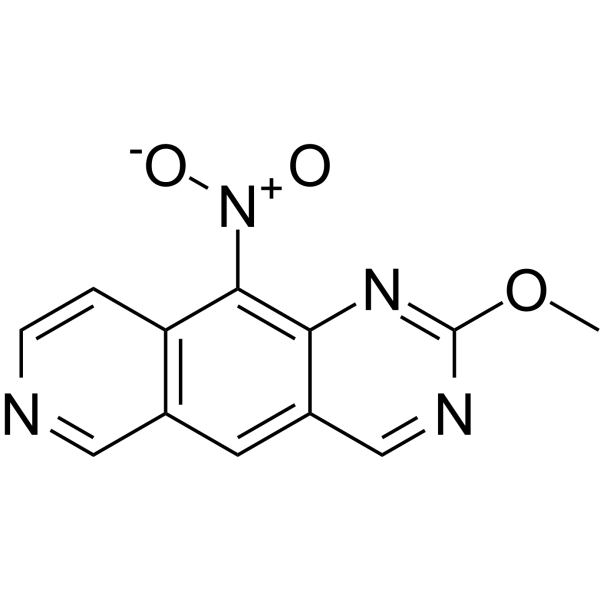 0 ImagesCat. No.: HY-146587CAS No.: 2768474-47-9
-
CDK3/CycE1 Recombinant Human Active Protein Kinase
 0 ImagesCat. No.: HY-E70678CDK3 is a major player driving retinoblastoma (Rb) phosphorylation during the G0/G1 transition and in the early G1 phase of the cell cycle. CDK3 interacts with various transcription factors involved in cell proliferation, differentiation, and transformation driven by the EGFR/Ras signaling pathway. CDK3/CycE1 Recombinant Human Active Protein Kinase is an ortholog of CDK3.
-
CDK4/9-IN-1
 0 ImagesCat. No.: HY-170815CAS No.: 2577288-83-4CDK4/9-IN-1 (Compound 29) is a selective dual CDK4/9 inhibitor with IC50 values of 23 nM and 12 nM, respectively. CDK4/9-IN-1 is promising for research of cancers.
-
(S)-LY3177833
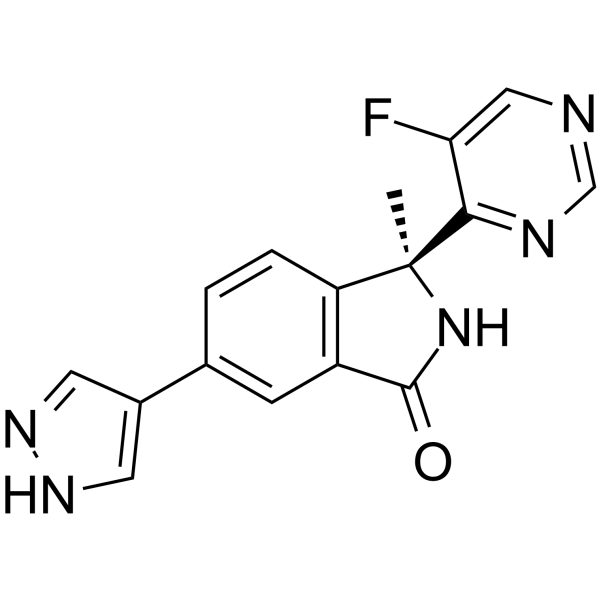 0 ImagesCat. No.: HY-143430CAS No.: 1627696-52-9(S)-LY3177833 ((S)-Example 2) is an orally active CDC7 kinase inhibitor. (S)-LY3177833 shows broad in vitro anticancer activity.

-
CDK8/CycC Recombinant Human Active Protein Kinase
 0 ImagesCat. No.: HY-E70690CDK8 modulates the transcriptional output from distinct transcription factors involved in oncogenic control, including the Wnt/β-catenin pathway, Notch, p53, and transforming growth factor β. Abnormal activity ofCDK8 along with its partner protein cyclin C (CycC) is a common feature of many diseases including colorectal cancer. CDK8/CycC Recombinant Human Active Protein Kinase can be used to study the function of CDK8/CycC.
-
DSS30
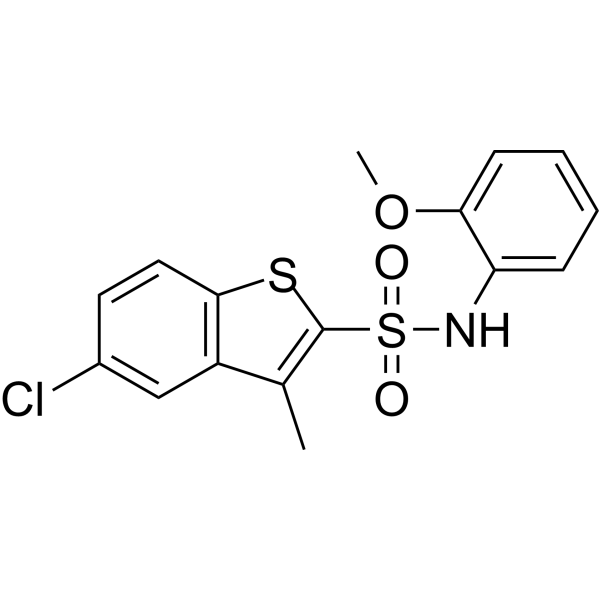 0 ImagesCat. No.: HY-147387CAS No.: 883027-32-5DSS30 is a P25/CDK5 inhibitor that reduces β-amyloid (Aβ) secretion by inhibiting amyloid precursor protein lyase 1 (BACEl) phosphorylation. DSS30 can be used in the study of neurodegenerative diseases such as Alzheimer's disease.
-
CDK4/6-IN-28
 0 ImagesCat. No.: HY-183771CAS No.: 3110098-09-1CDK4/6-IN-28 is a potent, orally active, and selective CDK4/6 inhibitor IC50 values of 14.02 and 10.03 nM, respectively. CDK4/6-IN-28 inhibits breast cancer cell colony formation, migration, and proliferation. CDK4/6-IN-28 induces G1-phase cell cycle arrest and apoptosis in breast cancer cells. CDK4/6-IN-28 exhibits tumor inhibitory activity in breast cancer xenograft mouse models. CDK4/6-IN-28 can be used for the research of breast cancer.

-
Anticancer agent 302
 0 ImagesCat. No.: HY-185164CAS No.: 3078069-29-8Anticancer agent 302 (Example 1) is an anticancer agent. Anticancer agent 302 has a DC50 value of 199 nM for Cyclin E1 and an IC50 value of 133 nM for pRB. Anticancer agent 302 can be used for tumor research.
-
EGFR/CDK2-IN-3
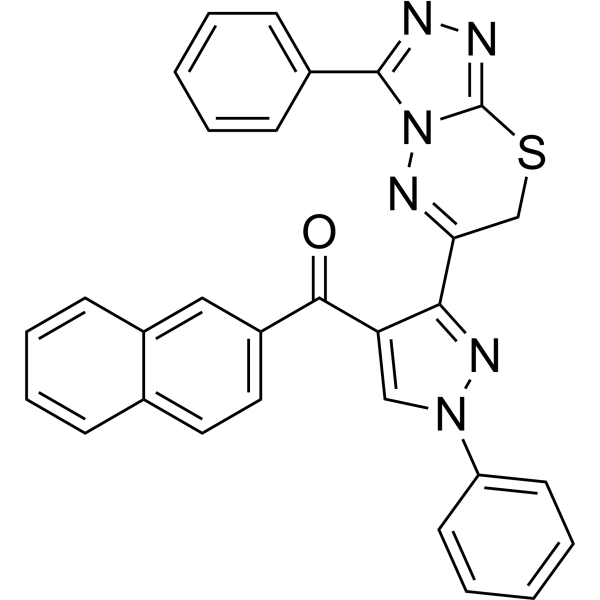 0 ImagesCat. No.: HY-156115EGFR/CDK2-IN-3 (compound 4b) is a dual inhibitor of EGFR and CDK-2 with IC50s of 71.7 and 113.7 nM, respectively. EGFR/CDK2-IN-3 induces apoptosis in MCF-7 cells and arrests the cell cycle in the S phase. EGFR/CDK2-IN-3 has significant anti-cancer cell toxicity and inhibits MCF-7 with an IC50 of 3.16 μM.
-
CDK8-IN-17
 0 ImagesCat. No.: HY-169633CAS No.: 451458-32-5

-
HLDA-212
 0 ImagesCat. No.: HY-173499CAS No.: 3077339-88-6HLDA-212 is a non-covalent RIPTAC that targets FKBP (target protein, TP) and multiple CDK (effector protein, EP). HLDA-212 binds to FKBP and CDK to form a stable ternary complex (TP:RIPTAC:EP), and induces cell death by blocking FKBP function. HLDA-212 selectively inhibits the proliferation of CDK-expressing cells and accumulates in CDK-expressing cells in a CDK-dependent manner. HLDA-212 exhibits antiproliferative activity in 293_HFL cells (with a GI50 of 0.011 μM). HLDA-212 holds promise for the treatment of cancers with high FKBP expression.
-
CDK9-IN-51
 0 ImagesCat. No.: HY-183698CAS No.: 2853500-43-1CDK9-IN-51 is a CDK9 inhibitor. CDK9-IN-51 binds stably to purified CDK9 protein via interactions with key active-site residues Cys106, Asp109, and Phe103. CDK9-IN-51 exhibits antiproliferative activity against multiple cancer cells. CDK9-IN-51 can be used for the research of cancer, such as lung carcinoma, cervical carcinoma and breast carcinoma.




