



CDK4 Inhibitor
-
CDK4/6-IN-8
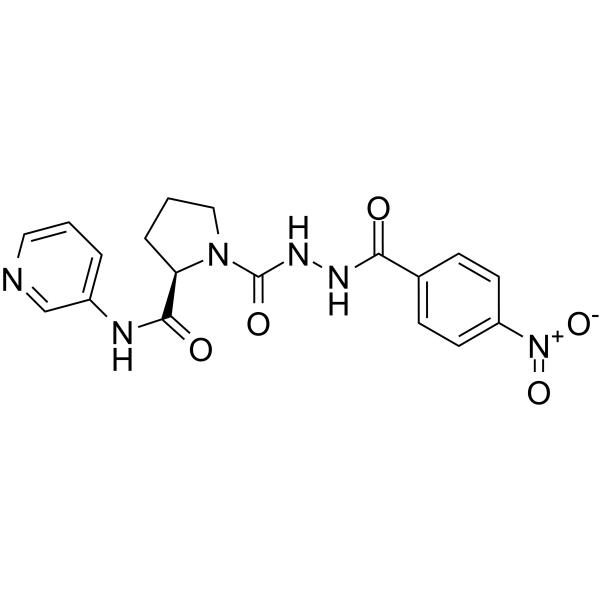 0 ImagesCat. No.: HY-143258CAS No.: 2649120-22-7
-
PROTAC CDK2/4/6 Degrader-1
 0 ImagesCat. No.: HY-171826CAS No.: 2541626-55-3
-
Indirubin-5-sulfonate
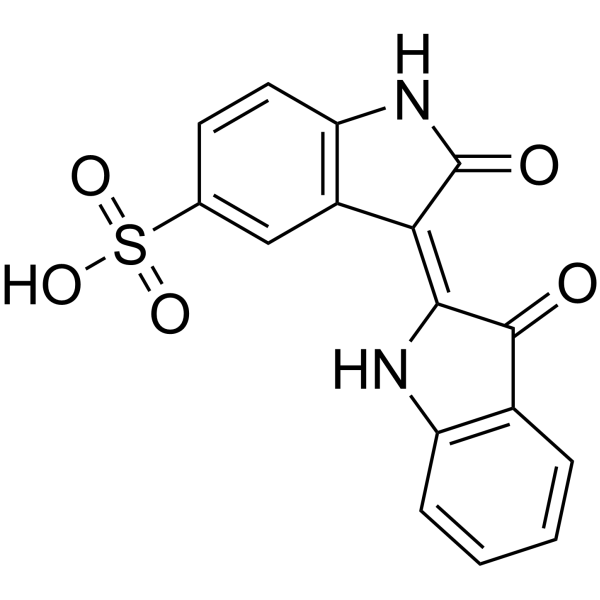 0 ImagesCat. No.: HY-111932CAS No.: 244021-67-8
Indirubin-5-sulfonate is a cyclin-dependent kinase (CDK) inhibitor, with IC50 values of 55 nM, 35 nM, 150 nM, 300 nM and 65 nM for CDK1/cyclin B, CDK2/cyclin A, CDK2/cyclin E, CDK4/cyclin D1, and CDK5/p35, respectively. Indirubin-5-sulfonate also shows inhibitory activity against GSK-3β.
-
CDK1-IN-9
 0 ImagesCat. No.: HY-182752
CDK1-IN-9 is an orally active and selective CDK1 inhibitor with an IC50 of 5.5 nM. CDK1-IN-9 exhibits broad antiproliferative activity, particularly against HCT116 colon cancer cells. CDK1-IN-9 induces G2/M phase arrest and downregulates CDK1, cyclin B1, and the replication initiation factor CDC45. CDK1-IN-9 induces severe DNA replication stress, subsequently activating the p53 signaling pathway to trigger apoptosis. CDK1-IN-9 can be used for research on colon cancer, liver cancer and gastric cancer.
-
CDK4/6-IN-19
 0 ImagesCat. No.: HY-162529CAS No.: 3033950-86-3
CDK4/6-IN-19 (Compound II-7) is a CDK4/CDK6 inhibitor with IC50 values of 0.2, 5.0 nM, respectively. CDK4/6-IN-19 also inhibits cell proliferation and can be used in cancer research.
-
HS-36
 0 ImagesCat. No.: HY-180912
HS-36 is a highly selective and orally active dual inhibitor of CDK4 and CDK9 with IC50 values of 18.9 and 4.2 nM respectively. HS-36 exhibits nanomolar-level potent activity against various cancer cells, inducing G0/G1 phase arrest and promoting cell apoptosis. HS-36 efficiently inhibits tumor growth in a mouse model of MV-4-11 tumors. HS-36 can be used for the study of acute myeloid leukemia.
-
CDK4-IN-4
 0 ImagesCat. No.: HY-171740CAS No.: 3027994-03-9
-
LS-Q2
 0 ImagesCat. No.: HY-182986
LS-Q2 is a highly selective CDK4/9 inhibitor with IC50 values of 1.4 nM and 6.2 nM. LS-Q2 inhibits cancer cells proliferation, induces G2/M phase arrest, apoptosis and reduces pSer2 RNA polymerase II expression. LS-Q2 interacts synergistically with BET and Bcl-2 inhibitors to drive antitumor activity. LS-Q2 can be used for the research of cancer, such as malignant solid tumors.
-
CDK4/6-IN-10
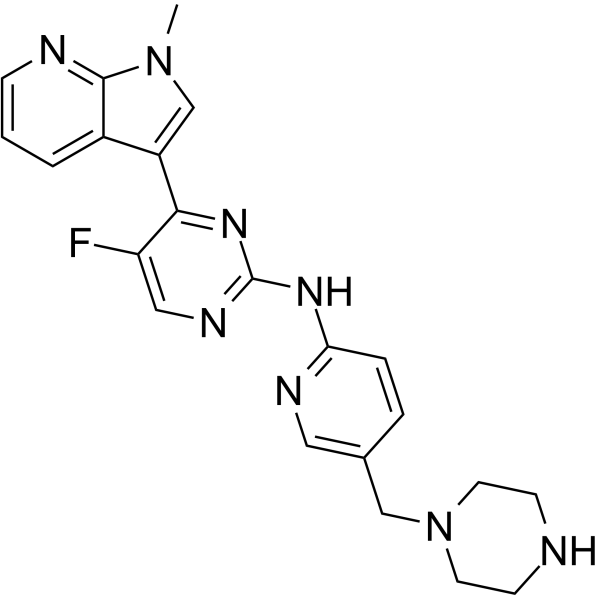 0 ImagesCat. No.: HY-115993CAS No.: 2688098-11-3
CDK4/6-IN-10 is a potent, selective and orally active CDK4 and CDK6 inhibitor with IC50s of 22 nM and 10 nM, respectively. CDK4/6-IN-10 shows antitumor activity. CDK4/6-IN-10 has the potential for the research of Multiple myeloma (MM).
-
MRTX849-amide-C4-(o)-carborane
 0 ImagesCat. No.: HY-182044
MRTX849-amide-C4-(o)-carborane is a KRASG12C inhibitor with mutation selectivity for cells expressing KRASG12C. MRTX849-amide-C4-(o)-carborane shows low intrinsic cytotoxicity in cancer cells. MRTX849-amide-C4-(o)-carborane covalently binds to Cys12 of KRASG12C, recruits Hsp70, promotes ubiquitination, and induces proteasome-dependent degradation of the target protein. MRTX849-amide-C4-(o)-carborane inhibits the activity of the downstream ERK signaling pathway and induces apoptosis signaling in cancer cells. MRTX849-amide-C4-(o)-carborane is applicable for the research of KRASG12C-positive cancers.
-
AG-012986 dihydrochloride
 0 ImagesCat. No.: HY-182470CAS No.: 486414-32-8AG-012986 (dihydrochloride) is a pan-CDK inhibitor with Ki values of 44 nM (CDK1), 9.2 nM (CDK4), 94 nM (CDK2), and IC50 values of 22 nM (CDK5), 4 nM (CDK9). AG-012986 (dihydrochloride) causes apoptosis of T-cells by targeting upstream kinases in the p38 Mitogen-activated protein kinase (MAPK) pathway and impairing cellular survival. AG-012986 (dihydrochloride) induces cell cycle arrest, retinoblastoma protein hypophosphorylation, and reduces Ki-67 expression. AG-012986 (dihydrochloride) exerts antiproliferative activity in tumor cells, demonstrates antitumor efficacy in human xenograft models, and causes retinal and peripheral neurotoxicity, plus immune cell toxicity. AG-012986 (dihydrochloride) can be used for the research of colon carcinoma, non-small cell lung carcinoma, lung carcinoma, breast carcinoma, ovarian tumor, pancreatic carcinoma, osteosarcoma, lymphoma, leukemia, retinotoxicity.
-
UNC10112785
 0 ImagesCat. No.: HY-128491CAS No.: 748142-06-5
UNC10112785 is a serine/threonine kinase inhibitor with a human GSK-3β IC50 of 0.031 μM, human CDK-2 IC50 of 0.016 μM, and human CDK-4 IC50 of 1.99 μM. UNC10112785 can be used for the research of type 2 diabetes.
-
FLT3/CDK4-IN-1
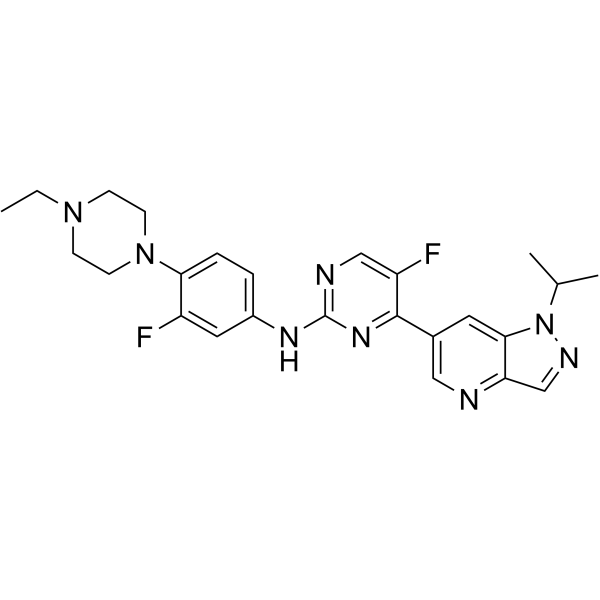 0 ImagesCat. No.: HY-115904CAS No.: 2762296-44-4
-
Isosilybin B (Standard)
 0 ImagesCat. No.: HY-N7045RCAS No.: 142796-22-3
Isosilybin B (Standard) is the analytical standard of Isosilybin B (HY-N7045). This product is intended for research and analytical applications. Isosilybin B is a flavonolignan. Isosilybin B can be isolated from Silybum marianum. Isosilybin B can regulate cell cycle-related proteins (e.g., reduce cyclins (D3, D1, A, E), Cdk4, Cdk2, Cdc25A), and activate Caspases (Caspase-9 and Caspase-3). Isosilybin B can promote Apoptosis, reduce androgen receptor (AR) and PSA. Isosilybin B has anticancer activity against prostate cancer.

-
Alisol B 23-acetate (Standard)
 0 ImagesSynonyms: 23-Acetylalismol B (Standard); 23-O-Acetylalisol B (Standard); Alisol B monoacetate (Standard)
Alisol B 23-acetate (Standard) is the analytical standard of Alisol B 23-acetate (HY-N0805). This product is intended for research and analytical applications. Alisol B 23-acetate is an orally active prototerpane-type triterpenoid. Alisol B 23-acetate can be isolated from Alisma orientalis. Alisol B 23-acetate induces Apoptosis, promotes ROS generation, downregulates CDK4/6, MMP-2/9, upregulates cleaved PARP, activates FXR and inhibits Syk. Alisol B 23-acetate has anti-inflammatory and hepatoprotective activities. Alisol B 23-acetate protects the kidney from ischemia-reperfusion injury. Alisol B 23-acetate has anticancer activity against ovarian cancer, colon cancer, lung cancer, and gastric cancer. Alisol B 23-acetate can be used in the study of atherosclerosis and allergic asthma.
-
PHA-793887 hydrochloride
 0 ImagesCat. No.: HY-11001ACAS No.: 718630-60-5
PHA-793887 hydrochloride is a CDK inhibitor (with IC50 values of 8 nM for Cdk2, 60 nM for Cdk1, 62 nM for Cdk4, 138 nM for Cdk9). PHA-793887 hydrochloride inhibits purified GSK3β (IC50 79 nM). PHA-793887 hydrochloride reduces the phosphorylation level of nucleophosmin/cdc6, induces G1/G2/M phase arrest, and triggers Apoptosis by activating Caspase-3. PHA-793887 hydrochloride exhibits anticancer activity against leukemia. PHA-793887 hydrochloride can be used in research related to acute leukemia, chronic myeloid leukemia, and advanced/metastatic solid tumors.
-
CGC-11144 hydrochloride
 0 ImagesCat. No.: HY-187643CAS No.: 304911-07-7
CGC-11144 hydrochloride is a polyamine analog. CGC-11144 hydrochloride reduces the kinase activities of CDK4, CDK2 and CDK6, induces activation of the p53 pathway and p53-dependent p21 expression, and mediates cell cycle regulation, growth inhibition and apoptosis. CGC-11144 hydrochloride induces G1 phase cell cycle arrest, downregulates cyclin D1 and cyclin B1, upregulates cyclin E, induces dephosphorylation of pRb, and inhibits ERα-mediated transcriptional activity by disrupting the DNA binding of Sp1/Sp3 to the ERα promoter, while also stimulating activation of the JNK/AP-1 pathway. CGC-11144 hydrochloride can be used in research related to breast cancer, choroidal neovascularization and cancer.
-
Tabersonine hydrochloride
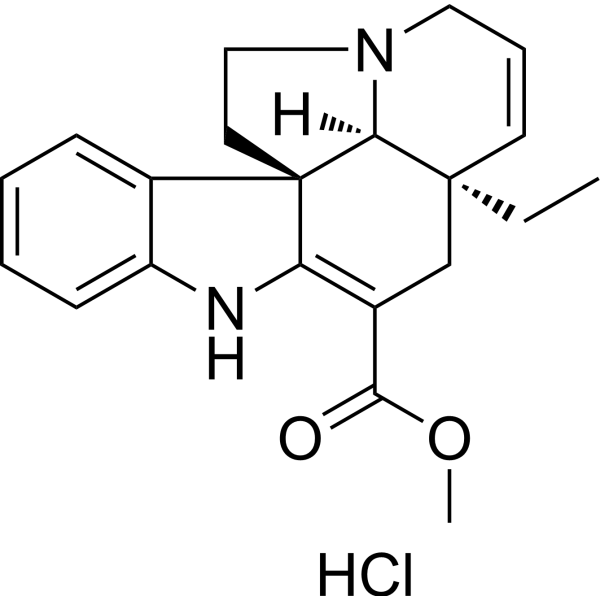 0 Images
Tabersonine hydrochloride is a selective, orally active NLRP3 inhibitor. Tabersonine hydrochloride directly binds to the NACHT domain of NLRP3, inhibiting its ATPase activity and oligomerization, thereby blocking ASC spot formation and caspase-1 activation, and reducing the release of pro-inflammatory cytokines such as IL-1β. Tabersonine hydrochloride also inhibits K63-linked ubiquitination of TRAF6, blocking NF-κB, PI3K/Akt, and p38 MAPK signaling pathways. Tabersonine hydrochloride can inhibit inflammatory responses, induce apoptosis of liver cancer cells through mitochondrial pathways and death receptor pathways, reduce mitochondrial membrane potential, promote cytochrome c release, and activate caspase proteins. Tabersonine hydrochloride is mainly used in the study of NLRP3-driven inflammatory diseases (such as acute lung injury, sepsis, peritonitis) and tumors such as liver cancer.




