



ERK
Extracellular signal regulated kinases
ERKs (Extracellular-signal-regulated kinases) are widely expressed protein kinase intracellular signalling molecules that are involved in functions including the regulation of meiosis, mitosis, and postmitotic functions in differentiated cells. Many different stimuli, including growth factors, cytokines, virus infection, ligands for heterotrimeric G protein-coupled receptors, transforming agents, and carcinogens, activate the ERK pathway. In the MAPK/ERK pathway, Ras activates c-Raf, followed by mitogen-activated protein kinase kinase (abbreviated as MKK, MEK, or MAP2K) and then MAPK1/2 (below). Ras is typically activated by growth hormones through receptor tyrosine kinases and GRB2/SOS, but may also receive other signals. ERKs are known to activate many transcription factors, such as ELK1, and some downstream protein kinases. Disruption of the ERK pathway is common in cancers, especially Ras, c-Raf and receptors such as HER2.
ERK Isoform Specific Products
All Product Categories
-
ERK Inhibitors
(762)
View all products
-
ERK Agonists
(10)
View all products
-
ERK Activators
(267)
View all products
-
ERK Modulators
(19)
View all products
-
ERK Chemical
(1)
View all products
-
ERK Inducers
(17)
View all products
-
ERK Degraders
(2)
View all products
-
ERK Controls
(3)
View all products
-
ERK Ligands
(2)
View all products
-
ERK Related Products (1167)
Related Products (1167)

-
Antibodies (22)
-
ERK Isoform Comparison
-
ETI60
 0 ImagesETI60 is an orally active, selective TLR inhibitor that targets the nucleoside-binding Site I on TLR7 (IC50 = 0.68 μM) and TLR9 (IC50 = 0.12 μM), sparing surface TLRs (including TLR1/TLR2, TLR2/TLR6, TLR4 and TLR5). ETI60 potently inhibits endosomal TLR-mediated pro-inflammatory signaling with nanomolar activity in cellular, biophysical and in vivo assays. ETI60 modulates the expression of genes associated with inflammation. ETI60 effectively ameliorates symptoms in mouse models of psoriasis, and systemic lupus erythematosus (SLE). ETI60 can be used for autoimmune and inflammatory diseases research.
-
LJ-2698
 0 ImagesCat. No.: HY-153149CAS No.: 945457-84-1Synonyms: FM101LJ-2698 (FM101) is an orally active adenosine A3 receptor (Adenosine A3 Receptor) antagonist. LJ-2698 blocks adenosine A3 receptor-dependent pro-inflammatory JNK, ERK, and NF-κB signaling pathways. LJ-2698 prevents alveolar cavity enlargement, restores pulmonary function, and inhibits matrix metalloproteinase activity and pulmonary cell apoptosis (apoptosis) in mice. LJ-2698 induces mitochondrial dysfunction, necroptosis, and intrinsic apoptosis. LJ-2698 ameliorates renal injury in mice with diabetic nephropathy, and alleviates diet-induced hepatic inflammation and fibrosis. LJ-2698 can be used in the research of emphysema, diabetic nephropathy, and metabolic dysfunction-associated steatotic liver disease.
-
Hordenine (Standard)
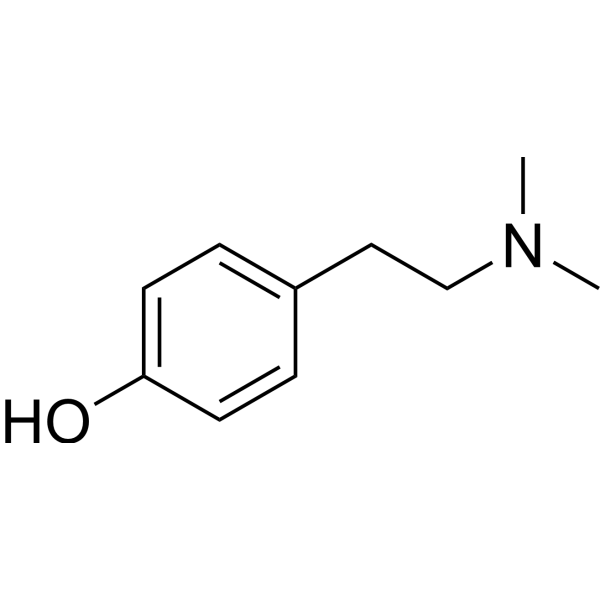 0 ImagesSynonyms: Ordenina (Standard); Peyocactine (Standard)Hordenine (Standard) (Ordenina (Standard); Peyocactine (Standard)) is the analytical standard of Hordenine (HY-N0113). This product is intended for research and analytical applications. Hordenine (Ordenina; Peyocactine) is a multifunctional alkaloid with oral activity and blood-brain barrier penetration. Hordenine inhibits LPS-induced phosphorylation of p38, JNK, ERK1/2, p65, IκB, and AKT, prevents p65 nuclear translocation, and suppresses inflammatory cytokines and mediators. Hordenine promotes M2 macrophage polarization, restores blood-milk barrier integrity, alleviates oxidative stress by reducing ROS and MDA, and attenuates LPS-induced lung injury and pulmonary edema. Hordenine inhibits cAMP production, CREB phosphorylation, and MITF expression, thereby suppressing melanin synthesis in melanocytes and reconstructed epidermis. Hordenine activates the Wnt/β-catenin signaling pathway, promotes dermal papilla cell proliferation and hair shaft elongation, and accelerates hair regeneration. Hordenine activates DRD2, acts as a D3R partial agonist, α2A-AR full agonist, and 5-HT2A-R antagonist, and inhibits SERT and DAT. Hordenine inhibits α-synuclein accumulation and ameliorates motor deficits in Parkinson's disease models. Hordenine limits alcohol intake, reduces relapse drinking behavior, and modulates alcohol-induced conditioned place preference. Hordenine can be used for research on mastitis, skin pigmentation, acute lung injury, foodborne diseases, hair loss, Parkinson's disease, bacterial infections, and alcohol use disorder.
-
UNC1666
 0 ImagesCat. No.: HY-120089CAS No.: 1429882-12-1UNC1666 is an ATP-competitive dual-target Mer/Flt3 tyrosine kinase inhibitor with IC50 values of 0.55 nM and 0.69 nM, and Ki values of 0.16 nM and 0.67 nM, respectively. UNC1666 reduces the phosphorylation levels of Mer and Flt3, suppresses downstream pro-survival signaling pathways (Erk1/2, Akt and Stat), induces cell apoptosis, and decreases colony formation of acute myeloid leukemia cells. UNC1666 is applicable to research related to acute myeloid leukemia.
-
GQ127
 0 ImagesCat. No.: HY-182405CAS No.: 2625582-70-7GQ127 is an orally active Gαq/11 inhibitor with an IC50 of 22.6 μM. GQ127 binds directly to Gαq/11 protein and inhibits its activity. GQ127 induces Apoptosis, suppresses viability, migration and invasion of uveal melanoma cells. GQ127 increases the phosphorylation level of YAP and decreases the phosphorylation level of ERK. GQ127 inhibits the growth of uveal melanoma xenografts in mouse models. GQ127 can be used for research related to uveal melanoma.
-
KRAS G12D-IN-35
 0 ImagesCat. No.: HY-180885SKRAS G12D-IN-35 (example 7) is a potent and orally active KRAS G12D inhibitor. KRAS G12D-IN-35 suppresses p-ERK in AGS cells and potently inhibits the proliferation of various KRAS G12D-mutant cancer cell lines. KRAS G12D-IN-35 inhibits tumor growth in HPAC and GP2D mouse models. KRAS G12D-IN-35 can be used for cancer research, such as pancreatic and colorectal cancer.
-
Lumichrome-d8
 0 ImagesCat. No.: HY-W708917Lumichrome-d8 is the deuterium labeled Lumichrome (HY-115385). Lumichrome, a photodegradation product of Riboflavin, is an endogenous compound in humans. Lumichrome inhibits human lung cancer cell growth and induces apoptosis via a p53-dependent mechanism. Lumichrom is the inhibitor for AKT/β-catenin signaling pathway.
-
Cyclazosin
 0 ImagesCat. No.: HY-184086CAS No.: 139953-73-4Cyclazosin is an α1D-adrenergic receptor antagonist and a partial agonist of CXCR4/ACKR3. The pKi values of Cyclazosin for cloned human α1D, α1B and α1A adrenergic receptors are 9.28, 9.23 and 8.18, respectively. Cyclazosin induces β-arrestin recruitment in CXCR4 and ACKR3 with EC50 values of 16 μM and 10 μM, respectively, stimulates ERK1/2 phosphorylation, and induces receptor internalization. Cyclazosin potently inhibits CXCL12-induced chemotaxis of primary human aortic vascular smooth muscle cells. Cyclazosin alters MDMA-induced thermoregulatory responses in mice, converting monophasic hyperthermia to a biphasic pattern without affecting resting core body temperature. Cyclazosin can be used for diseases related to tumor metastasis, MDMA-induced hyperthermia and vasoconstriction.
-
STE-MEK1(13)
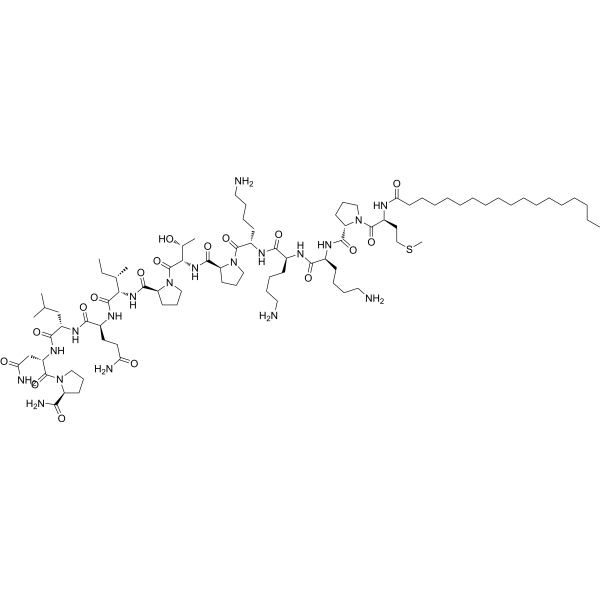 0 ImagesCat. No.: HY-P5977CAS No.: 566872-15-9Synonyms: Ste-MPKKKPTPIQLNP-NH₂; ERK Activation Inhibitor PeptideSTE-MEK1(13) (Ste-MPKKKPTPIQLNP-NH ) is a cell permeable ERK1/2 inhibitor (IC50: 13-30 μM). STE-MEK1(13) inhibits ERK1/2 phosphorylation.
-
Biotin-ERK2 Recombinant Human Active Protein Kinase
 0 ImagesCat. No.: HY-E70798ERK2 is a serine/threonine-specific protein kinase capable of phosphorylating multiple protein substrates within a cell. Biotin-ERK2 Recombinant Human Active Protein Kinase is obtained by expressing ERK2 proteins and is biotinylated.
-
AGW-11
 0 ImagesCat. No.: HY-175820AGW-11 is a potent dual inhibitor of EGFR (IC50 = 556 nM) and VEGFR2 (IC50 = 289.7 nM). AGW-11 induces apoptosis and suppresses phosphorylation of EGFR, VEGFR2, and ERK1/2 in HUVECs. AGW-11 effectively inhibits cancer cell growth, reduces HUVEC proliferation, tube formation, and invasion, thereby blocking angiogenesis. AGW-11 significantly suppresses tumor growth and decreases lung metastasis in a 4T1 xenograft mouse model. AGW-11 can be used for the study of breast cancer.
-
Tubulozole
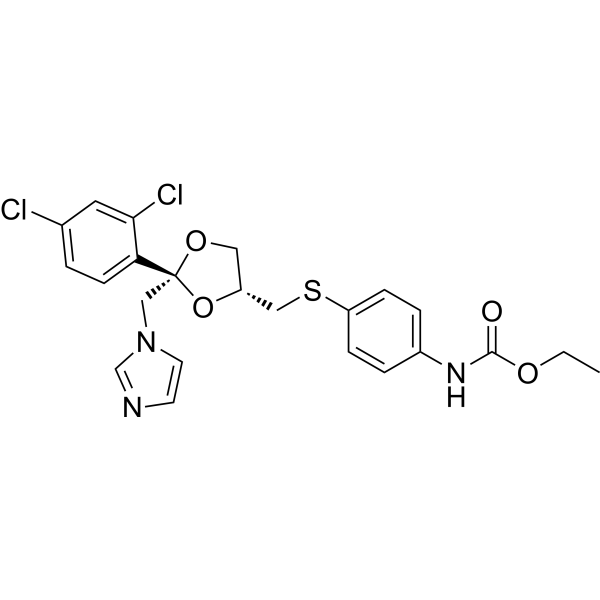 0 ImagesCat. No.: HY-119169CAS No.: 84697-22-3Synonyms: R 46846Tubulozole (R 46846) is an orally active inhibitor of tubulin polymerization with an ID50 of 0.34 μM. Tubulozole induces activation of the Chk1 kinase and phosphorylation of ERK1/2, which is required for microtubule formation. Tubulozole arrests Mitosis at the metaphase stage. Tubulozole causes cells to accumulate in the radiosensitive mitotic phase of the cell cycle. Tubulozole exerts anticancer activity against colon cancer. Tubulozole produces a radiosensitizing effect in mouse tumor models and enhances the tumor growth delay effect when combined with γ-ray irradiation. Tubulozole is used in studies related to colon cancer, fascioliasis, MO4 fibrosarcoma, and Lewis lung carcinoma.
-
ERK-IN-2 free base
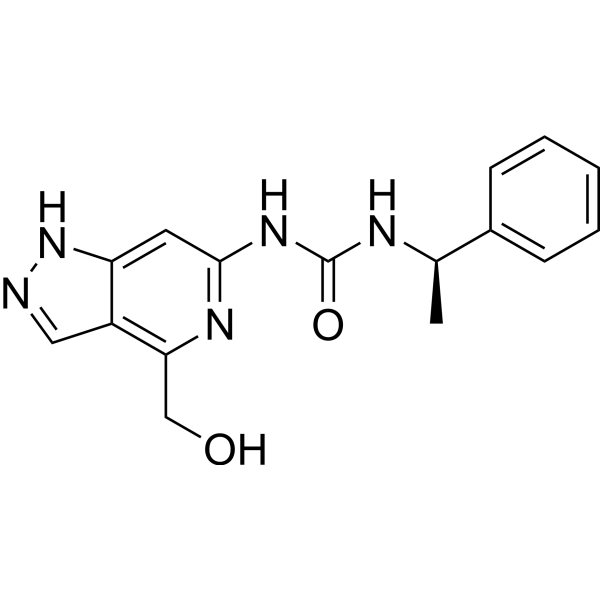 0 ImagesCat. No.: HY-133084ACAS No.: 2743576-55-6ERK-IN-2 free base is a ERK2 inhibitor with an IC50 value of 1.8 nM. ERK-IN-2 free base might lead to off-target toxicity and/or off-target activity at dose >10 μM.

-
FLT3-IN-41
 0 ImagesCat. No.: HY-182281FLT3-IN-41 is a highly potent FLT3 inhibitor. The IC50 values of FLT3-IN-41 against human FLT3-ITD and FLT3-WT are 3.16 nM and 294.7 nM, respectively. By binding to the ATP-binding pockets of FLT3-ITD and FLT3-WT and forming hydrogen bonds with hinge region residues and Phe830, FLT3-IN-41 inhibits the STAT5, Akt and Erk signaling pathways. FLT3-IN-41 induces G2/M phase arrest and promotes apoptosis in FLT3-ITD-positive acute myeloid leukemia cells, exhibiting significant antiproliferative activity. FLT3-IN-41 serves as a valuable tool for the study of acute myeloid leukemia.
-
c-Met-IN-32
 0 ImagesCat. No.: HY-189651c-Met-IN-32 is an orally active c-Met inhibitor with an IC50 of 18 nM, blocking autophosphorylation and downstream PI3K/AKT and RAS/ERK signaling pathways. c-Met-IN-32 inhibits MER, FYN, and SRC kinases. c-Met-IN-32 induces apoptosis, inhibits migration and invasion, suppresses the proliferation of MET-amplified cancer cells, and exhibits selectivity against non-MET-dependent cancer cell lines. c-Met-IN-32 can be used for research on non-small cell lung cancer.
-
Nitidine chloride (Standard)
 0 ImagesCat. No.: HY-N0498RCAS No.: 13063-04-2Nitidine (chloride) (Standard) is the analytical standard of Nitidine (chloride). This product is intended for research and analytical applications. Nitidine chloride, a potential anti-malarial lead compound derived from Zanthoxylum nitidum (Roxb) DC, exerts potent anticancer activity through diverse pathways, including inducing apoptosis, inhibiting STAT3 signaling cascade, DNA topoisomerase 1 and 2A, ERK and c-Src/FAK associated signaling pathway. Nitidine chloride inhibits LPS-induced inflammatory cytokines production via MAPK and NF-kB pathway.
-
COG449
 0 ImagesCat. No.: HY-P12219Synonyms: OP449COG449 (OP449) is a cell-penetrating peptide that binds to SET, prevents the formation of the SET-PP2A complex, and restores PP2A phosphatase activity. COG449 decreases the phosphorylation levels of AKT308, ERK1/2, NFkB p65, and c-MYC S62, and reduces c-MYC stability and target gene expression. COG449 induces apoptosis, autophagy, and histone H3 hyperacetylation, and decreases the levels of SET, CIP2A, SETBP1, and Mcl-1. COG449 reduces cancer cell viability and decreases tumor mass in xenograft models. COG449 can be used for research on various cancers such as oral squamous cell carcinoma, T-cell acute lymphoblastic leukemia, B-CLL, non-Hodgkin lymphoma, and breast cancer.
-
BAY-693
 0 ImagesCat. No.: HY-182398CAS No.: 2306302-48-5
-
SHR-A1403 Antibody
 0 ImagesCat. No.: HY-P992464SHR-A1403 Antibody is an anti-c-Met monoclonal antibody. SHR-A1403 Antibody down-regulates phosphorylated c-Met, Akt, ERK, weakens intracellular signal cascades, and mediates antibody-c-Met complex endocytosis. SHR-A1403 Antibody can be used for the research of c-met-overexpressing cancers and pancreatic ductal adenocarcinoma.




