



MMP-9 Inhibitor
-
MMP-2/9-IN-1
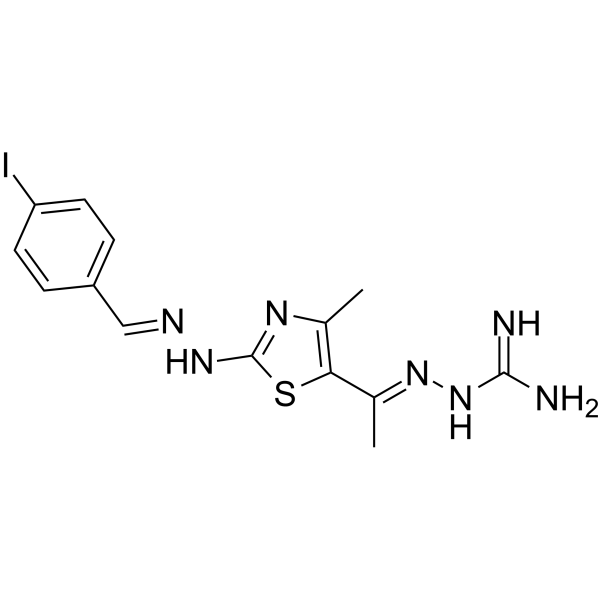 0 ImagesCat. No.: HY-147867CAS No.: 2415311-84-9
-
STK899704
 0 ImagesCat. No.: HY-120339CAS No.: 1578247-29-6
STK899704 is a tubulin polymerization inhibitor. STK899704 exhibits broad-spectrum inhibitory activity against various cancer cell lines with IC50 values ranging from 0.2 to 1.0 μM. STK899704 disrupts the mitotic spindle structure, inducing G2/M phase cell cycle arrest. STK899704 inhibits the migration ability of HT29 cells by downregulating the FAK-MEK-ERK signaling pathway, thereby suppressing the expression and activity of MMP-2 and MMP-9. STK899704 activates caspase-3/7/8/9, leading to PARP cleavage and inducing apoptosis. STK899704 induces cellular senescence through the p53 pathway. STK899704 can be used in research on skin cancer, lung cancer, colon cancer, and other cancers.
-
PEG9MA10-PAB10-GalMA10
 0 ImagesCat. No.: HY-184926
PEG9MA10-PAB10-GalMA10 is a CD147 LYTAC degrader. PEG9MA10-PAB10-GalMA10 binds to the asialoglycoprotein receptor (ASGPR) via its galactose methacrylate domain, mediating its uptake by hepatoma cells. PEG9MA10-PAB10-GalMA10 induces lysosome-dependent degradation of CD147, resulting in concurrent loss of associated MCT1 and MCT4. PEG9MA10-PAB10-GalMA10 reduces extracellular lactate levels, increases intracellular lactate accumulation, inhibits glycolytic activity, and enhances mitochondrial respiratory capacity. PEG9MA10-PAB10-GalMA10 decreases the secretion of MMP-2 and MMP-9, and upregulates the expression of E-cadherin. PEG9MA10-PAB10-GalMA10 exhibits anti-tumor efficacy in hepatoma models. PEG9MA10-PAB10-GalMA10 can be used for research on liver cancer (hepatocellular carcinoma).
-
BRK/PTK6-IN-1
 0 ImagesCat. No.: HY-178460
BRK/PTK6-IN-1 (Compound 51) is a highly efficient and selective BRK inhibitor (IC50 = 3.37 nM, Kd = 44 nM). BRK/PTK6-IN-1 can reduce MMP-9 protein expression and inhibit IGF-1 induced AKT phosphorylation in MDA-MB-231 cells. BRK/PTK6-IN-1 significantly inhibits migration, invasion, and colony formation but does not affect cell proliferation. BRK/PTK6-IN-1 is often used in the research of breast cancer and other cancers.
-
PI3K/AKT-IN-7
 0 ImagesCat. No.: HY-189668
PI3K/AKT-IN-7 is a PI3K/Akt signaling pathway inhibitor with selective antiproliferative activity against hepatocellular carcinoma cells. PI3K/AKT-IN-7 downregulates the phosphorylation of PI3K and Akt and binds to NCF2 (Kd = 1.40 μM). PI3K/AKT-IN-7 induces apoptosis, S-phase cell cycle arrest, loss of mitochondrial membrane potential, and ROS accumulation, while inhibiting proliferation, migration, invasion, and DNA synthesis. PI3K/AKT-IN-7 inhibits tumor growth in a Hep3B xenograft BALB/c mouse model and reduces the expression of Ki67, PCNA, and MMP9. PI3K/AKT-IN-7 can be used for research on hepatocellular carcinoma.
-
MMP-2/9-IN-2
 0 ImagesCat. No.: HY-180117
MMP-2/9-IN-2 (Compound 6k) is a MMP-2 and MMP-9 inhibitor, with IC50 values of 29.27 and 24.87 μM respectively. MMP-2/9-IN-2 exhibits good selective toxicity against multiple human hepatoma cell lines. MMP-2/9-IN-2 induces cell cycle arrest and apoptosis, significantly inhibits cell migration and invasion. MMP-2/9-IN-2 inhibits the phosphorylation of the STAT3 signaling pathway. MMP-2/9-IN-2 shows strong anti-tumor activity in a nude mouse xenograft model of HepG2 liver cancer cells.
-
MG-3C
 0 ImagesCat. No.: HY-173500
MG-3C is a potent matrix metalloproteinase 9 (MMP-9) inhibitor. MG-3C can selectively kill non-small-cell lung cancer (NSCLC) cells harboring the EGFR T790M mutation. MG-3C blocks the EGFR/STAT3 signaling pathway, inducing G2/M phase arrest, growth inhibition, and apoptosis of cancer cells. MG-3C is promising for research of lung cancer.
-
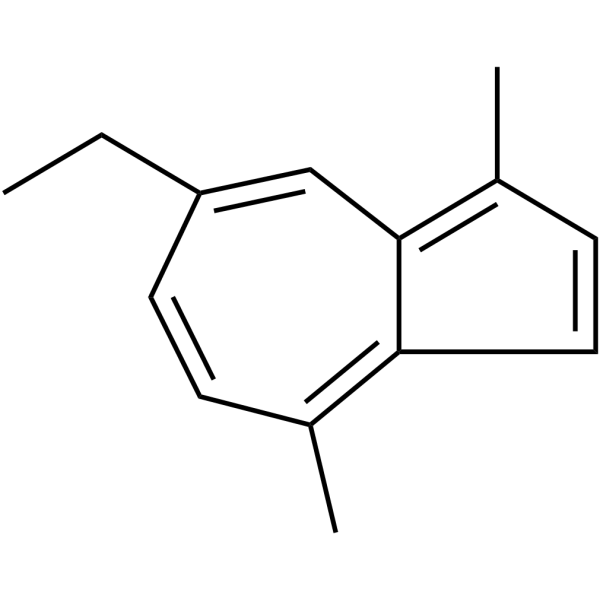
Ageladine A dihydrochloride
 0 ImagesCat. No.: HY-113621BCAS No.: 2757574-06-2
Ageladine A dihydrochloride is an inhibitor of matrix metalloproteinase (MMP) isolated from the marine sponge Agelas nakamurai, possessing anti-angiogenic activity. Ageladine A dihydrochloride not only inhibits MMP-2 but also MMP-1, MMP-8, MMP-9, MMP-12, and MMP-13, with IC50 values of 4.65 μM, 2.79 μM, 907.12 nM, 1.83 μM, 767.57 nM, and 1.09 μM, respectively. Additionally, Ageladine A dihydrochloride is a pH-sensitive membrane-permeable dye that emits fluorescence in the blue-green range upon UV excitation, featuring a maximum absorption peak at 370 nm. Furthermore, Ageladine A dihydrochloride serves as a reliable and stable fluorescent pH sensor for detecting changes in intracellular pH values.
-
MAHS-3
 0 ImagesCat. No.: HY-187513
MAHS-3 is a thymidylate synthase (TS) and dihydrofolate reductase (DHFR) inhibitor, with IC50 values of 5.279 μM and 52.60 μM against human targets, respectively. MAHS-3 exhibits broad-spectrum antiproliferative activity against cancer cells, induces cell cycle arrest, activates endogenous caspase-dependent apoptosis, reduces MMP levels, inhibits cell migration, increases intracellular NO levels, and promotes autophagy activity. MAHS-3 can be used in cancer-related research.
-
Anti-inflammatory agent 121
 0 ImagesCat. No.: HY-137839CAS No.: 927827-98-3
Anti-inflammatory agent 121 is a protease inhibitor, with IC50 values against different targets as follows: 1.3 μM (Staphylococcus aureus type I staphylokinase), 2.2 μM (Staphylococcus aureus type II staphylokinase), 2.3 μM (human MMP-1), 2.7 μM (human MMP-2), 1.4 μM (human MMP-8), 4.6 μM (human MMP-9), and 79 μM (human ADAM17). Anti-inflammatory agent 121 inhibits the activities of staphylococcal serine protease glutamyl endopeptidase (V8 protease) and cysteine protease staphylococcal protease B in Staphylococcus aureus cultures. Anti-inflammatory agent 121 inhibits protease activity in skin wash samples, metalloprotease (staphylokinase) activity in Staphylococcus aureus culture supernatants, and staphylokinase-mediated activation of pro-urokinase-type plasminogen activator (pro-uPA). Anti-inflammatory agent 121 can be used in the research of atopic dermatitis.
-
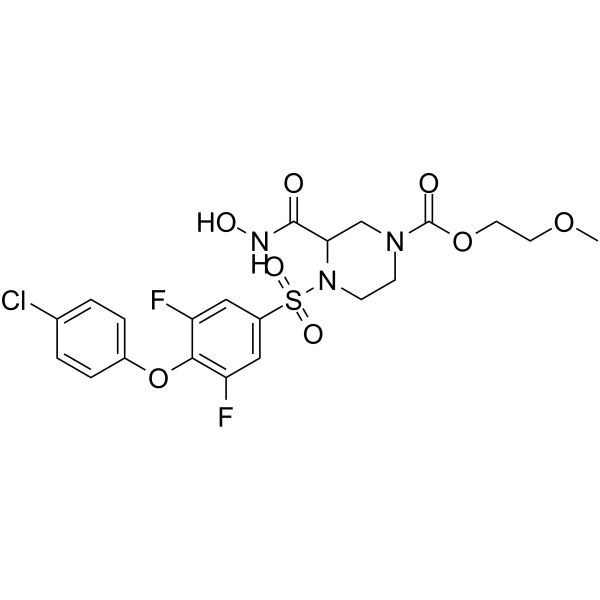
LAS194046
 0 ImagesCat. No.: HY-150101CAS No.: 1798578-61-6
LAS194046 is a selective pan-JAK inhibitor, with an IC50 of 5.46 nM against JAK1, 0.4 nM against JAK2, and 2.07 nM against JAK3. LAS194046 reduces the levels of IL-8 and MMP-9. LAS194046 enhances the activation of glucocorticoid response elements by Fluticasone propionate. LAS194046 inhibits T2-type allergic pulmonary inflammation, allergen-induced airway inflammation, and late-phase asthmatic responses in rats. LAS194046 can be used in research related to non-T2 severe asthma, chronic obstructive pulmonary disease, and asthma.
-
Famotidine-13C,d3
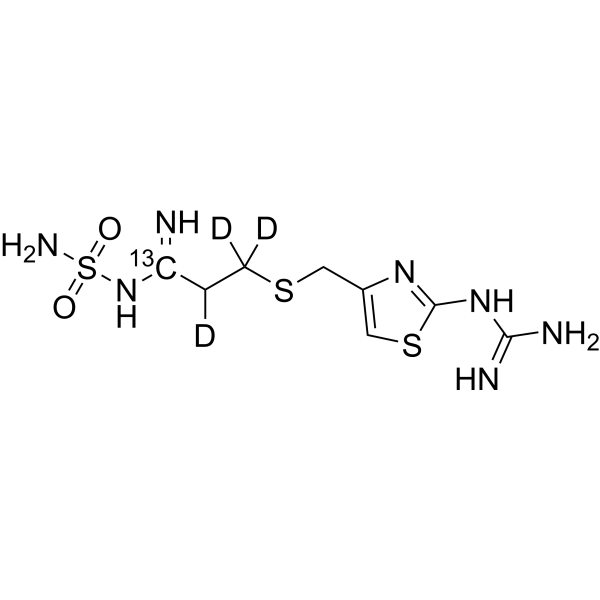 0 ImagesCat. No.: HY-B0377SCAS No.: 2744683-81-4Synonyms: MK-208-13C,d3
Famotidine-13C,d3 (MK-208-13C,d3) is the deuterated, 13C-labeled Famotidine (HY-B0377). Famotidine (MK-208) is an orally active and highly selective histamine H2 receptor antagonist. It inhibits gastric acid secretion by blocking the Gs signaling pathway, and regulates intracellular cAMP and ERK pathways. Famotidine inhibits TLR3-mediated inflammatory pathways, and reduces the expression of various inflammatory mediators and interferon-related genes. Famotidine scavenges DPPH and nitric oxide free radicals, alleviates oxidative stress damage in gastric tissue, inhibits proMMP-9, improves vascular endothelial permeability, and restores the normal physiological functions of neutrophils and eosinophils. Famotidine crosses intestinal epithelial cells via facilitated diffusion and passive diffusion, blocks paracellular cation transport, and increases intestinal transepithelial electrical resistance. Famotidine reduces serum levels of transaminases and alkaline phosphatase, exerts analgesic effects and gastric protective effects simultaneously. Famotidine can be used in studies related to COVID-19, liver injury and acute gastric ulcer.
-
RANKL-IN-1 formate
 0 ImagesCat. No.: HY-175703APurity: 99.74%
RANKL-IN-1 formate is a selective receptor activator of nuclear factor-κB ligand inhibitor ligand (RANKL) inhibitor with a KD value of 7.6 μM. RANKL-IN-1 formate exhibits inhibitory activity and selectivity against osteoclastogenesis with an IC50 value of 0.07 μM and SI of 82.57. RANKL-IN-1 formate binds directly to RANKL and blocks the RANKL-induced activation of the NF-κB and MAPK pathways. RANKL-IN-1 formate can be used for the research of metabolic disease, such as osteoporosis.
-
Pipoxolan hydrochloride
 0 ImagesCat. No.: HY-105854CAS No.: 18174-58-8
Pipoxolan hydrochloride is an anti-spasmotic agent. Pipoxolan hydrochloride induces Apoptosis, increases intracellular ROS. Pipoxolan hydrochloride down-regulates phosphorylation JNK and p38, and then, MMP-2 and -9. Pipoxolan hydrochloride relieves smooth muscle spasms in the digestive, urinary, and gynecological systems. Pipoxolan hydrochloride also exhibits anticancer activity against leukemia, oral squamous cell carcinoma, and lung adenocarcinoma.

-
BSc2118
 0 ImagesCat. No.: HY-123255CAS No.: 863924-64-5
BSc2118 is a 20S proteasome inhibitor with an IC50 of approximately 50 nM. BSc2118 induces G2/M phase cell cycle arrest and apoptosis in myeloma cells, inhibits cytoprotective autophagy, and suppresses tumor angiogenesis. BSc2118 reduces MMP9 activity, promotes angioneurogenesis, and alleviates recombinant tissue-type plasminogen activator-induced cerebral toxicity. BSc2118 is applicable to studies related to cerebral ischemia and multiple myeloma.
-
Alvelestat tosylate
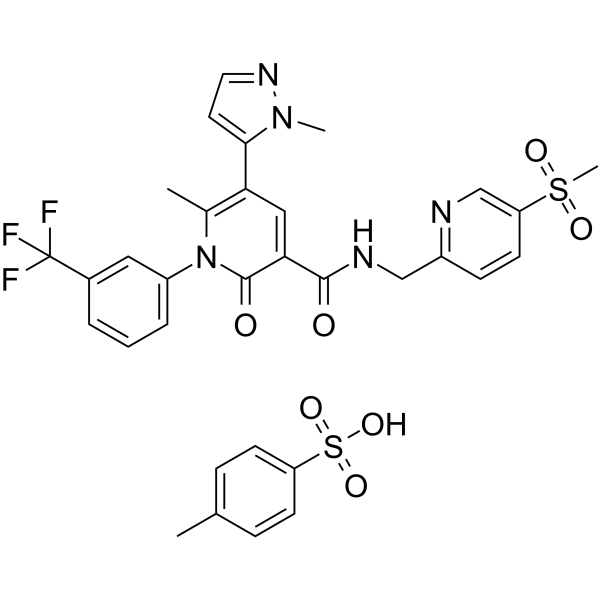 0 ImagesCat. No.: HY-15651ACAS No.: 1240425-05-1Synonyms: AZD9668 tosylate
Alvelestat tosylate (AZD9668 tosylate) is an orally active, selective inhibitor of neutrophil elastase. Alvelestat tosylate reduces elastase activity, myeloperoxidase release, neutrophil recruitment and activation, and calcium phosphate precipitation; promotes smooth muscle cell colonization and collagen deposition; and inhibits the formation of neutrophil extracellular traps (NETs) as well as NET-derived neutrophil elastase activity. Alvelestat tosylate restores endothelial dysfunction, regulates antioxidant factors, improves the expression of endothelial tight junctions, reduces vascular leakage, and accelerates wound healing. Alvelestat tosylate prevents pulmonary hemorrhage, matrix protein degradation, airspace enlargement, and small airway wall remodeling; and alleviates cigarette-induced inflammatory responses. Alvelestat tosylate inhibits the growth of abdominal aortic aneurysms exacerbated by Porphyromonas gingivalis. Alvelestat tosylate can be used in research related to chronic obstructive pulmonary disease, abdominal aortic aneurysm, radiation-induced skin injury, and bronchiectasis.
-
MAHS-4
 0 ImagesCat. No.: HY-187514
MAHS-4 is an inhibitor of thymidylate synthase (TS) and dihydrofolate reductase (DHFR), with IC50 values of 1.918 μM and 83.53 μM, respectively. MAHS-4 inhibits thymidylate biosynthesis, reduces tetrahydrofolate pool maintenance, and interferes with extracellular matrix remodeling. MAHS-4 induces G2/M phase cell cycle arrest, activates endogenous caspase-dependent apoptosis, decreases MMP protein levels, inhibits cell migration, increases intracellular NO levels, and promotes autophagy activity. MAHS-4 is applicable for cancer-related research.



