



NO Synthase
Nitric oxide synthases; NOS
Nitric oxide synthases (NOSs) are a family of enzymes catalyzing the production of nitric oxide (NO) from L-arginine. NO synthases catalyze the oxidation of L-arginine to NO and L-citrulline. Mammals contain three NOS isoforms: neuronal NOS (nNOS), inducible NOS (iNOS), and endothelial NOS (eNOS). NO produced from these different NOS isoforms is involved in a wide range of physiologic functions in the nervous, immune, and cardiovascular systems. Unregulated NO production can lead to pathologic conditions such as stroke, inflammation, and hypertension. Therefore, the control of NOS activity by isoform selective NOS inhibitors has great potential for therapeutic treatments of NO-related diseases.
NO Synthase Isoform Specific Products
All Product Categories
-
NO Synthase Inhibitors
(755)
View all products
-
NO Synthase Agonists
(5)
View all products
-
NO Synthase Antagonists
(4)
View all products
-
NO Synthase Activators
(111)
View all products
-
NO Synthase Modulators
(14)
View all products
-
NO Synthase MDM2 Inhibitor
(1)
View all products
-
NO Synthase Inducers
(7)
View all products
-
NO Synthase Controls
(6)
View all products
-
NO Synthase Substrates
(2)
View all products
-
NO Synthase Ligand
(1)
View all products
-
NO Synthase Related Products (1009)
Related Products (1009)

-
Antibodies (6)
-
NO Synthase Isoform Comparison
-
Nitric oxide production-IN-2
 0 ImagesCat. No.: HY-187019CAS No.: 2418576-62-0Nitric oxide production-IN-2 (compound 39) is an inhibitor of nitric oxide (NO) production. Nitric oxide production-IN-2 inhibits LPS (HY-D1056)-induced nitric oxide production in RAW 264.7 cells, and it can be used in studies related to inflammation and nitric oxide production.
-
Efadirelaxin alfa
 0 ImagesCat. No.: HY-P992108CAS No.: 3061442-66-5Synonyms: RELAX10Efadirelaxin alfa (RELAX10) is a highly selective agonist of relaxin/insulin-like family peptide receptor RXFP1. After subcutaneous administration in animal experiments, Efadirelaxin alfa exhibits a significantly prolonged terminal half-life (7 days in mice, 3.75 days in rats), and shows no activity against related receptors such as RXFP2 and RXFP3. Efadirelaxin alfa has significant anti-cardiac hypertrophy and anti-fibrotic effects. Efadirelaxin alfa effectively attenuates and reverses cardiac hypertrophy and collagen deposition by regulating the TGF-β1/Smad2 and AKT/eNOS signaling pathways. Efadirelaxin alfa improves cardiac systolic function without causing fluctuations in blood pressure or heart rate, demonstrating favorable safety. Efadirelaxin alfa is currently mainly used in studies related to heart failure.
-
AMT hydrochloride (Standard)
 0 ImagesCat. No.: HY-101251RCAS No.: 21463-31-0AMT (hydrochloride) (Standard) is the analytical standard of AMT (hydrochloride). This product is intended for research and analytical applications. AMT hydrochloride is a selective inhibitor of inducible NOS (iNOS) with Ki of 4.2 nM.
-
Neoandrographolide (Standard)
 0 ImagesCat. No.: HY-N0721RCAS No.: 27215-14-1Synonyms: Neoandrographiside (Standard)Neoandrographolide (Standard) is the analytical standard of Neoandrographolide. This product is intended for research and analytical applications. Neoandrographolide is a diterpenoid compound isolated from Andrographis paniculata. Neoandrographolide inhibits osteoclasts differentiation and bone resorption through inhibition of MAPK/NF-κB/PI3K/AKT/GSK3β/PPAR/CAMK signaling pathway. Neoandrographolide inhibits apoptosis in rat embryonic ventricular cardiomyocytes. Neoandrographolide inhibits iNOS and the generation of ROS, activates eNOS, exhibiting anti-inflammatory and hypolipidemic activity.
-
Harpagoside (Standard)
 0 ImagesCat. No.: HY-N0396RCAS No.: 19210-12-9Harpagoside (Standard) is the analytical standard of Harpagoside. This product is intended for research and analytical applications. Harpagoside can be obtained by Harpagophytum procumbens, which has anti-inflammatory, anti-cancer, protective activity, and efficacy. Harpagoside has an inhibitory effect on COX-1 and COX-2 active, and suppresses NO production. Harpagoside inhibits HepG2 cell lipid polysaccharide, which is a protein that is expressed horizontally and selectively, and has anti-inflammatory and latent pain effects. Harpagoside has the ability to protect the body, and has a degenerative effect on the β-oxidation (Aβ).
-
Methylophiopogonone A (Standard)
 0 ImagesCat. No.: HY-N2441RCAS No.: 74805-90-6Methylophiopogonone A (Standard) is the analytical standard of Methylophiopogonone A (HY-N2441). This product is intended for research and analytical applications. Methylophiopogonone A is a homoisoflavonoid compound found in the tuberous roots of Ophiopogon japonicus. Methylophiopogonone A inhibits lipopolysaccharide-induced NO production in mouse microglia with an IC50 of 19.2 μM. Methylophiopogonone A blocks the proliferation of LX-2 hepatic stellate cells and downregulates TGF-β1-induced expressions of type I collagen and α-SMA. Methylophiopogonone A blocks RELA/EGFR-mediated hepatic stellate cell activation, inhibits the MAPK12 pathway to reduce extracellular matrix accumulation, and simultaneously suppresses inflammatory signal transduction. Methylophiopogonone A can be used in studies related to chronic hepatitis B-associated hepatic fibrosis and neuroinflammation.
-
Quinolinic acid-13C7
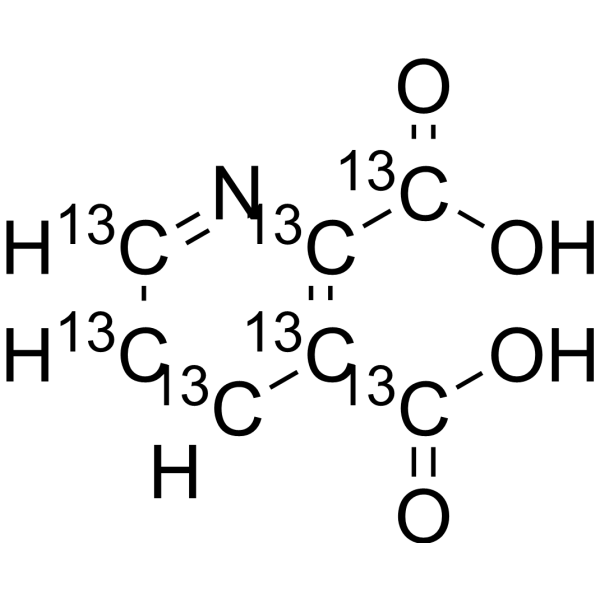 0 ImagesCat. No.: HY-100807S1CAS No.: 1346642-91-8Quinolinic acid-13C7 is the 13C labeled Quinolinic acid (HY-100807). Quinolinic acid, an endogenous metabolite of tryptophan, is a N-methyl-D-aspartate receptor (NMDA receptor) agonist. Quinolinic acid increases glutamate efflux, induces the generation of ROS, activates nitric oxide synthase, produces excessive NO, leading to calcium ion influx and neuronal apoptosis.
-
CGP-43182
 0 ImagesCat. No.: HY-116192CAS No.: 150379-37-6CGP-43182 is a secretory phospholipase A2 group II (sPLA2) inhibitor with an IC50 of 2.8 μM. CGP-43182 binds to the active site of the enzyme, blocks IL1β-stimulated gene expression and NFκB activation, and inhibits the production of prostaglandin and nitric oxide (NO). CGP-43182 exhibits anti-inflammatory activity in multiple inflammatory models and can be used for studies on adjuvant arthritis, carrageenan-induced edema, pertussis pleurisy, and glomerular inflammatory responses.
-
Tristin
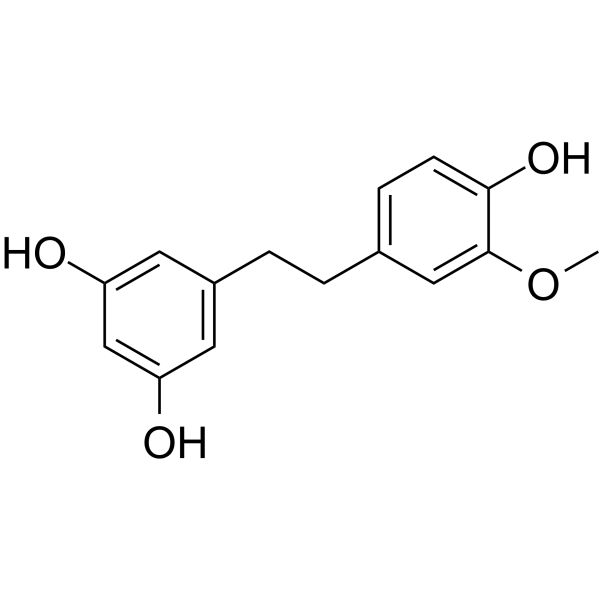 0 ImagesTristin is a PTP1B inhibitor (IC50=21.2 μM) with antioxidant and antifungal activities. Tristin inhibits lipid peroxidation and NO production in LPS-stimulated macrophages, and also exhibits activity against a variety of phytopathogenic fungi. Tristin is also able to inhibit cancer cell proliferation. Tristin can be used in the research of diseases associated with phytopathogenic fungal infection, leukemia, type 2 diabetes and inflammatory responses.
-
L-NMMA acetate (Standard)
 0 ImagesSynonyms: Tilarginine acetate (Standard); Methylarginine acetate (Standard)L-NMMA (Tilarginine) acetate (Standard) is the analytical standard of L-NMMA acetate (HY-18732A). This product is intended for research and analytical applications. L-NMMA (Tilarginine) acetate is a non-selective and competitive inhibitor of nitric oxide synthase. L-NMMA acetate inhibits three subtypes, namely nNOS, eNOS, and iNOS, and reduces NO production. L-NMMA acetate alleviates mechanical allodynia, thermal hyperalgesia, and choroidal fibrosis. L-NMMA acetate is applicable to research related to nociception, bone cancer pain, and myopia.
-
Phenyl β-D-glucopyranoside (Standard)
 0 ImagesPhenyl β-D-glucopyranoside (Standard) is the analytical standard of Phenyl β-D-glucopyranoside (HY-W011849). This product is intended for research and analytical applications. Phenyl β-D-glucopyranoside is a component isolated from Phellodendron amurense, which has anti-inflammatory and anti-tumor activities. Phenyl β-D-glucopyranoside inhibits nitric oxide (NO) production, and the expression of iNOS and COX-2. Phenyl β-D-glucopyranoside also inhibits the nuclear translocation of NF-κB. Phenyl β-D-glucopyranoside inhibits the expression of pro-inflammatory cytokines and related genes.
-
Anti-Mouse Delta-like protein 4/DLL4 Antibody (HMD4-2)
 0 ImagesCat. No.: HY-P990252Anti-Mouse Delta-like protein 4/DLL4 Antibody (HMD4-2) is an anti-mouse Delta-like protein 4/DLL4 IgG monoclonal antibody. Anti-Mouse Delta-like protein 4/DLL4 Antibody (HMD4-2) can reduce angiogenesis and density by blocking the DLL4-Notch signaling pathway. Anti-Mouse Delta-like protein 4/DLL4 Antibody (HMD4-2) reduces inflammatory response by decreasing NF-κB activity and pro-inflammatory factors (IL-1β, iNOS, IL-6) levels. Anti-Mouse Delta-like protein 4/DLL4 Antibody (HMD4-2) can inhibit Th17 cell differentiation and IL-17A production. Anti-Mouse Delta-like protein 4/DLL4 Antibody (HMD4-2) can reduce macrophage infiltration and alleviate insulin resistance. Anti-Mouse Delta-like protein 4/DLL4 Antibody (HMD4-2) can be used for researches on inflammation, metabolic conditions and cancer such as atherosclerosis, pancreatic cancer and asthma.
-
Methyl 5-hydroxypyridine-2-carboxylate (Standard)
 0 ImagesCat. No.: HY-W005963RCAS No.: 30766-12-2Methyl 5-hydroxypyridine-2-carboxylate (Standard) is the analytical standard of Methyl 5-hydroxypyridine-2-carboxylate (HY-W005963). This product is intended for research and analytical applications. Methyl 5-hydroxypyridine-2-carboxylate is a phenolic acid that can found in the stems of Mahonia fortune. Methyl 5-hydroxypyridine-2-carboxylate exhibits NO inhibitory effects in vitro.
-
Lubiprostone-d7
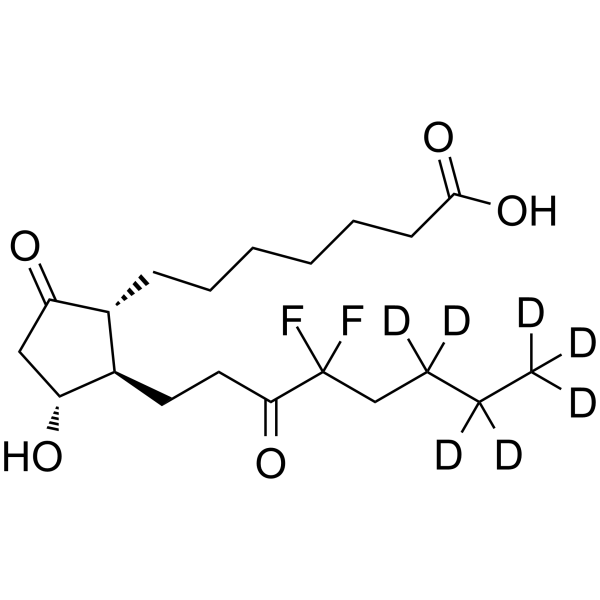 0 ImagesCat. No.: HY-B0679SCAS No.: 1217675-13-2Synonyms: RU-0211-d7; SPI-0211-d7Lubiprostone-d7 (RU-0211-d7) is the deuterium labeled Lubiprostone. Lubiprostone (SPI-0211) increases intestinal fluid secretion through generation of CIC-2/CFTR and activation of cAMP signaling pathway. Lubiprostone inhibits myeloperoxidase (MPO) activity, downregulates Indomethacin (HY-14397)-induced iNOS and TNFα expression. Lubiprostone can be used for chronic constipation research.
-
O-Methylbulbocapnine
 0 ImagesO-Methylbulbocapnine is an aporphine alkaloid that acts as an inhibitor of LPS-induced inflammatory signaling and a dopamine D1R antagonist. O-Methylbulbocapnine inhibits LPS-induced phosphorylation of p38, ERK1/2, c-Jun, NF-κB p65 at Ser536, and Akt, decreases MyD88 protein levels, and reduces NF-κB nuclear translocation and DNA-binding activity. O-Methylbulbocapnine inhibits LPS-induced production of IL-6, TNF-α, PGE2, and NO, and decreases COX-2 and iNOS expression. O-Methylbulbocapnine can be used for research on Alzheimer's disease, cervical cancer, breast cancer, and malaria.
-
NO-Rosa5 chloride
 0 ImagesCat. No.: HY-172755Synonyms: Nitric Oxide-Rosa5 chlorideNO-Rosa5 (chloride) is a photocontrollable NO donor. NO-Rosa5 (chloride) is made up of the fluorescent dye rosamie that functions as the light-harvesting group.
-
ARL 17477 (Standard)
 0 ImagesCat. No.: HY-107720RCAS No.: 866914-87-6ARL 17477 (Standard) is the analytical standard of ARL 17477 (HY-107720). This product is intended for research and analytical applications. ARL-17477 is a dual inhibitor of NOS1and the autophagy-lysosomal system with anticancer activity and can inhibit tumor growth in KRAS-mutated cancers.
-
Saquinavir-13C6
 0 ImagesCat. No.: HY-17007S2Synonyms: Ro 31-8959-13C6Saquinavir-13C6 (Ro 31-8959-13C6) is 13C labeled Saquinavir (HY-17007). Saquinavir (Ro 31-8959) is an orally active HIV protease inhibitor that can be used in the research of AIDS. Saquinavir also has anti-inflammatory activity and can induce apoptosis of human red blood cells.
-
Multinoside A
 0 ImagesCat. No.: HY-N8012CAS No.: 59262-54-3Multinoside A (compound 6) is an antioxidant with DPPH free radical scavenging activity (IC50=54.3 μg/mL). Multinoside A can also downregulate COX-2 expression (IC50=9.6 μg/mL) and inhibit NO production (IC50=43.9 μg/mL).
-
Anti-inflammatory agent 63
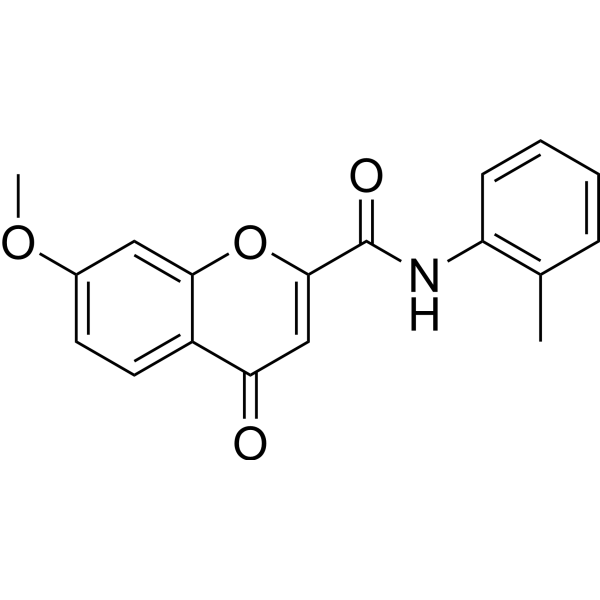 0 ImagesCat. No.: HY-149671CAS No.: 2347694-79-3Anti-inflammatory agent 63 is an anti-inflammatory agent that shows optimal inhibitory activity (EC50 = 5.33±0.57 μM) against the production of nitric oxide (NO) induced by lipopolysaccharide (LPS) in RAW264.7 cells.




