



NOD-like Receptor (NLR)
Nucleotide oligomerization domain (NOD)-like receptors (NLRs) are critical cytoplasmic pattern-recognition receptors (PRRs) that play an important role in the host innate immune response and immunity homeostasis. There are 23 NLR family members in humans and at least 34 NLR genes in mice. NLRs are expressed in many cell types including immune cells and epithelial cells, although certain NLR family members are expressed primarily in phagocytes including macrophages and neutrophils. The NLR family are most commonly classified according to their N-terminal domain, falling into one of four subfamilies; NLRA, NLRB, NLRC and NLRP.
The NLRs recognize various ligands from microbial pathogens (peptidoglycan, flagellin, viral RNA, fungal hyphae, etc.), host cells (ATPs, cholesterol crystals, uric acid, etc.), and environmental sources (alum, asbestos, silica, alloy particles, UV radiation, skin irritants, etc.). Most NLRs act as PRRs, recognizing the above ligands and activate inflammatory responses. However, some NLRs may not act as PRRs but instead respond to cytokines such as interferons. The activated NLRs show various functions that can be divided into four broad categories: inflammasome formation, signaling transduction, transcription activation, and autophagy.
NOD-like Receptor (NLR) Isoform Specific Products
All Product Categories
-
NOD-like Receptor (NLR) Inhibitors
(373)
View all products
-
NOD-like Receptor (NLR) Agonists
(25)
View all products
-
NOD-like Receptor (NLR) Antagonists
(8)
View all products
-
NOD-like Receptor (NLR) Activators
(48)
View all products
-
NOD-like Receptor (NLR) Modulators
(10)
View all products
-
NOD-like Receptor (NLR) Inducer
(1)
View all products
-
NOD-like Receptor (NLR) Degraders
(2)
View all products
-
NOD-like Receptor (NLR) Ligand
(1)
View all products
-
NOD-like Receptor Proteins
(1)
View all products
-
NLRP3 Proteins
(1)
View all products
-
NOD-like Receptor (NLR) Related Products (485)
Related Products (485)

-
Recombinant Proteins (1)
-
Antibodies (2)
-
NOD-like Receptor (NLR) Isoform Comparison
-
Furohyperforin
 0 ImagesCat. No.: HY-N21740CAS No.: 219793-20-1Furohyperforin is a natural product isolated from Hypericum perforatum L., possessing neuroprotective and antidepressant activities. Furohyperforin acts as an NLRP3 inflammasome inhibitor and also exhibits inhibitory effects on recombinant CYP3A4. Furohyperforin exerts neuroprotective effects against corticosterone-induced neuronal damage. Furohyperforin inhibits the NLRP3 inflammasome cascade and its downstream IL‑1β and GSDMD signaling pathways, and also reduces serum corticosterone levels in mice, regulating HPA axis function. Furohyperforin is applicable for depression-related research.
-
RIPK2-IN-9
 0 ImagesCat. No.: HY-210247CAS No.: 3066447-73-9RIPK2-IN-9 is a RIPK2 inhibitor with an IC50 < 2.5 nM. RIPK2-IN-9 inhibits NOD2-mediated NF-κB signaling and the protein-protein interaction between RIPK2 and XIAP, and inhibits NOD2 ligand-induced TNF-α secretion in human whole blood. RIPK2-IN-9 exhibits low inhibitory activity against the hERG channel. RIPK2-IN-9 can be used for research on RIPK2-related inflammatory diseases such as inflammatory bowel disease and rheumatoid arthritis.
-
QX-31
 0 ImagesCat. No.: HY-189659CAS No.: 3065380-90-4QX-31 is an orally active selective NLRP3 inhibitor with a Kd value of 2.8 μM for hNLRP3. QX-31 inhibits PI3K/AKT and HIF-1α signaling. QX-31 shows anti-fibrotic effects in mouse models of unilateral ureteral obstruction and ischemia-reperfusion injury. QX-31 can be used for research on renal fibrosis.
-
YM-I-26
 0 ImagesCat. No.: HY-168091CAS No.: 2585015-90-1
-
NLRP3-IN-85
 0 ImagesCat. No.: HY-179429NLRP3-IN-85 (compound 5d) is a potent NLRP3 inhibitor that targets mitochondria in a ΔΨm-independent manner. NLRP3-IN-85 protects mitochondria from oxidative stress and inflammation damage and suppresses key inflammatory factors (NO, TNF-α, IL-6). NLRP3-IN-85 relives acute lung injury in mice and inhibits paw edema in rats. NLRP3-IN-85 can be used for acute lung injury (ALI) research.
-
Articaine (Standard)
 0 ImagesCat. No.: HY-B0516ARCAS No.: 23964-58-1Synonyms: Hoe-045 free base (Standard)Articaine (Standard) is the analytical standard of Articaine (HY-B0516A). This product is intended for research and analytical applications. Articaine (Hoe-045) hydrochloride is a selective inhibitor of voltage-gated sodium channels (such as rNav1.4, hNav1.7, and rNav1.8), with an IC50 of 15.8 μM for open-state Na+ channels, and IC50 of 40.6 μM and 378 μM for inactivated and resting-state Na+ channels, respectively. Articaine hydrochloride exerts local anesthetic activity by inhibiting Na+ influx to block nerve impulse conduction, and can also inhibit NF-κB activation and NLRP3 inflammasome pathways, exhibiting anti-inflammatory function. Articaine hydrochloride can be used in the study of dental local anesthesia and inflammatory-related diseases (such as acute kidney injury).
-
Phoenixin-20 TFA
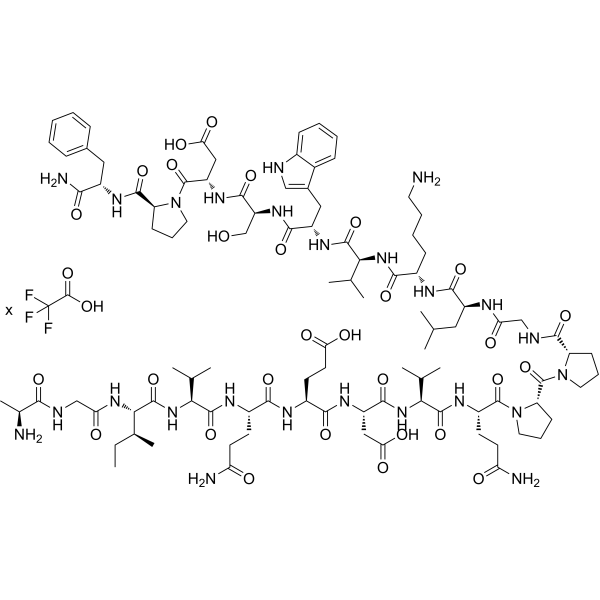 0 ImagesCat. No.: HY-P5763ASynonyms: PNX-20 TFAPhoenixin-20 TFA (PNX-20 TFA) is a neuropeptide that activates GPR173. Phoenixin-20 TFA inhibits LPS-induced TLR-4/MyD88/NF-κB signaling, pro-inflammatory cytokines, adhesion molecules, MMPs, and cytotoxicity. Phoenixin-20 TFA increases SIRT1 and inhibits NLRP3/ASC/caspase-1, oxidative stress, and IL-1β/IL-18. Phoenixin-20 TFA alleviates ox-LDL-induced endothelial dysfunction, monocyte adhesion, adhesion molecules, cytokines, NADPH oxidase/NOX-4, and ROS. Phoenixin-20 TFA promotes GPR173/STAT6-mediated anti-inflammatory polarization of microglia and neuroprotection. Phoenixin-20 TFA can be used in research on dental pulp infection, pulmonary arterial hypertension, atherosclerosis, neuroinflammation, anxiety, and neurodegenerative diseases.
-
AChE/BChE-IN-23
 0 ImagesCat. No.: HY-159898AChE/BChE-IN-23 (Compound 6e) is an AChE/BChE inhibitor (IC50: 0.91 μM, 1.19 μM and 1.01 μM for hAChE, eq BChE and hBChE, respectively). AChE/BChE-IN-23 has antioxidant activity and inhibits Aβ1-42 and Tau protein aggregation. AChE/BChE-IN-23 also inhibits microglial activation by reducing ROS release and mitochondrial injury. AChE/BChE-IN-23 suppresses NLRP3 inflammasome and pro-inflammatory cytokines in human microglial cells. AChE/BChE-IN-23 also reverses the Scopolamine (HY-N0296)-induced memory impairment in mice model.
-
α-Glucosidase/NLRP3-IN-1
 0 ImagesCat. No.: HY-168594α-Glucosidase/NLRP3-IN-1 (Compound 8) is a dual inhibitor of α-glucosidase and NLRP3, exhibiting an IC50 of 6.6 μM against α-glucosidase and inhibiting NLRP3 in multiple cell lines at a concentration of 100 μM. α-Glucosidase/NLRP3-IN-1 demonstrates neuroprotective and antidiabetic properties, and can be utilized in relevant research.
-
NLRP3-IN-27
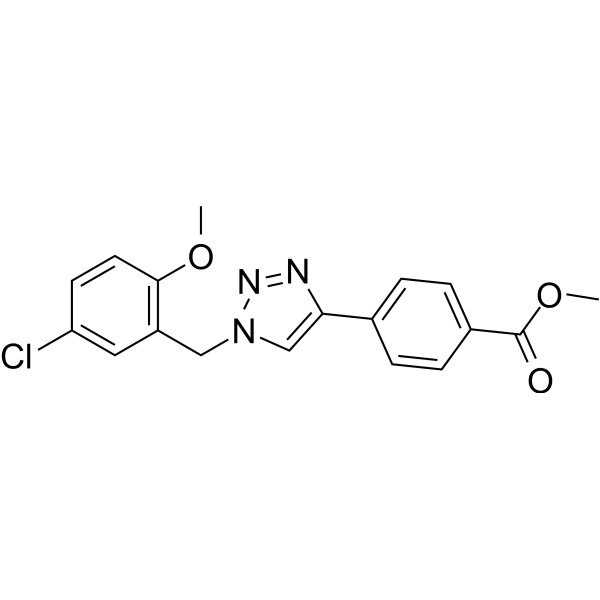 0 ImagesCat. No.: HY-161120CAS No.: 2997864-57-8NLRP3-IN-27 is a selective NLRP3 inhibitor with a IC50 value of 0.55 μM. NLRP3-IN-27 can be used in the study of inflammation and immunity.
-
Inclisiran sodium scrambled negative control
 0 ImagesCat. No.: HY-132591CInclisiran sodium scrambled negative control is the sequence scrambled negative control of Inclisiran sodium.
-
TriDAP
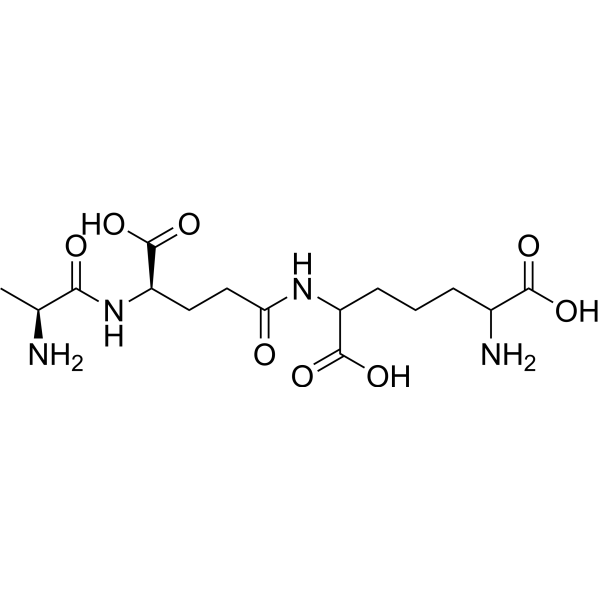 0 ImagesCat. No.: HY-P5522CAS No.: 877462-71-0Synonyms: L-Ala-γ-D-Glu-meso-diaminopimelic acidTriDAP (L-Ala-γ-D-Glu-meso-diaminopimelic acid) is a NOD1 agonist with a Kd value of 34.5 μM. TriDAP enhances the binding of NOD1-RICK, promotes RICK phosphorylation, and activates the NF-κB, TAK1, MEK/ERK, p38 and interferon response pathways. TriDAP downregulates Runx2 via increasing ubiquitination and reduces trabecular bone parameters. TriDAP decreases IκBα levels and increases p65 levels. TriDAP induces the secretion of proinflammatory mediators IL-8 and prostaglandins, triggers tissue inflammation and innate immune activation, and inhibits SARS-CoV-2 replication in lung epithelial cells. TriDAP increases the RANKL/OPG ratio in mice, reduces bone mass and enhances osteoclast activity, and inhibits new bone formation by decreasing the mineralization deposition rate in mice. TriDAP can be used in research related to pulpitis, chronic ulcerative colitis, Crohn's disease and SARS-CoV-2 infection.
-
P2Y14 antagonist 1
 0 ImagesCat. No.: HY-170950P2Y14 antagonist 1 (compound 45) is a high selective and orally active P2Y14R antagonist with an IC50 of 0.70 nM. P2Y14R antagonist 1 demonstrates significant anti-inflammatory efficacy, effectively mitigating the pulmonary infiltration of immune cells and inflammatory response through suppressing the NLRP3 signaling pathway. P2Y14R antagonist 1 has the potential for the research of acute lung injury.
-
Licochalcone B (Standard)
 0 ImagesCat. No.: HY-N0373RCAS No.: 58749-23-8Licochalcone B (Standard) is the analytical standard of Licochalcone B. This product is intended for research and analytical applications. Licochalcone B is an extract from the root of Glycyrrhiza uralensis. Licochalcone B inhibits amyloid β (42) self-aggregation (IC50=2.16 μM) and disaggregate pre-formed Aβ42 fibrils, reduce metal-induced Aβ42 aggregation through chelating metal ionsLicochalcone B inhibits phosphorylation of NF-κB p65 in LPS signaling pathway. Licochalcone B inhibits growth and induces apoptosis of NSCLC cells. Licochalcone B specifically inhibits the NLRP3 inflammasome by disrupting NEK7‐NLRP3 interaction.
-
NLRP3-IN-86
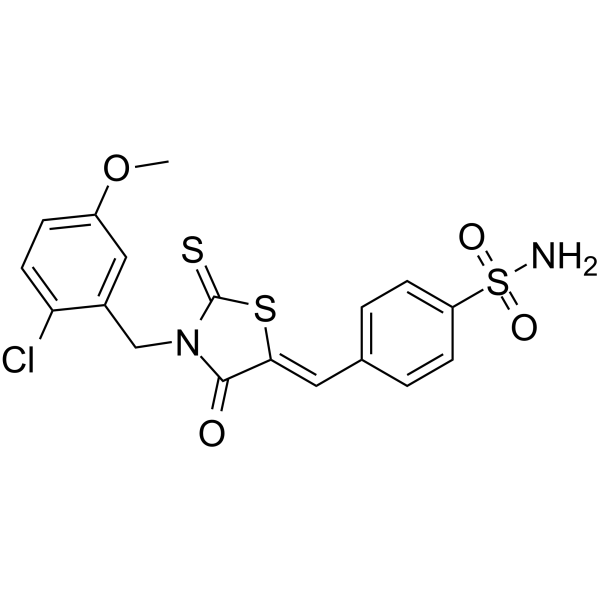
 0 ImagesCat. No.: HY-180830CAS No.: 2361570-54-7NLRP3-IN-86 (Compound 8a), a derivative of Songorine (HY-N2080), is a potent and selective NLRP3 inflammasome inhibitor. NLRP3-IN-86 can reduce LPS (HY-D1056)- and Nigericin (HY-127019)-stimulated lactate dehydrogenase (LDH) release (IC50 = 2.69 μM in THP-1 cells and 1.75 μ M in J774A.1 cells). NLRP3-IN-86 can inhibit gasdermin D (GSDMD) cleavage and IL-1β secretion. NLRP3-IN-86 can inhibit cell pyroptosis. NLRP3-IN-86 can be used for research of inflammation.
-
NOD2 agonist 3
 0 ImagesCat. No.: HY-168158CAS No.: 2289702-58-3NOD2 agonist 3 (Compound 5) is a potent NOD2 agonist, with an EC50 of 111.45 nM. NOD2 agonist 3 shows immunopotentiating effects.
-
NOD2 agonist 4
 0 ImagesCat. No.: HY-179009NOD2 agonist 4 (Compound 12b) is a potent NOD2 agonist with an EC50 of 44.1 nM. NOD2 agonist 4 induces cytokine production (MCP-1, IL-6 and IL-8) in peripheral blood mononuclear cells (PBMCs), both alone and in combination with Lipopolysaccharide (LPS) (HY-D1056). NOD2 agonist 4 can be used for the studies of NOD2-targeted immunomodulator or vaccine adjuvant.
-
URAT1-IN-16
 0 ImagesCat. No.: HY-184199CAS No.: 2864442-74-8URAT1-IN-16 is an orally active URAT1 inhibitor with an IC50 value of 0.19 μM. URAT1-IN-16 also functions as an NLRP3 inflammasome pathway inhibitor by effectively suppressing mature IL-1β secretion (IC50 = 2.52 μM). URAT1-IN-16 exhibits remarkable serum uric acid-lowering and anti-inflammatory activities in vivo, and can be used for hyperuricemia and gout research.
-
MNP2
 0 ImagesCat. No.: HY-P11581MNP2 is a NLRP3-ASC interaction inhibitor. MNP2 selectively binds to the PYD domain of ASC (Ka=149 nM) and blocks ASC-PYM binding (Ka=58 nM), thereby inhibiting the interaction between ASC and NLRP3 and suppressing the formation of the NLRP3 inflammasome. MNP2 inhibits IL-1β release and caspase-1 maturation, and reduces the efflux of potassium and chloride ions. MNP2 prevents mitochondrial damage and reactive oxygen species production, and significantly decreases NLRP3 inflammasome formation in neurodegenerative pathologies induced by β-amyloid, Tau protein and α-synuclein. MNP2 is applicable for the research of neurodegenerative diseases.




