



PPAR Inhibitor
-
Sinigrin (Standard)
 0 ImagesSynonyms: Allyl-glucosinolate (Standard); 2-Propenyl-glucosinolate (Standard)
Sinigrin (Standard) (Allyl-glucosinolate (Standard)) is the analytical standard of Sinigrin (HY-N0404). This product is intended for research and analytical applications. Sinigrin (Allyl-glucosinolate) is an orally active glucosinolate found in cruciferous plants. Sinigrin possesses multiple activities such as anti-cancer, antibacterial, antifungal, anti-inflammatory, antioxidant, and inhibition of fat synthesis. Sinigrin can be used in the research of tumors, inflammatory, and metabolic diseases.
-
Urolithin D (Standard)
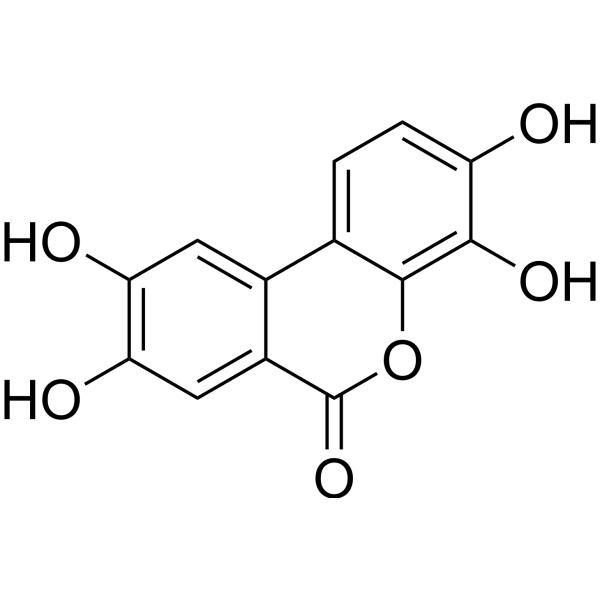 0 ImagesCat. No.: HY-133178RCAS No.: 131086-98-1Synonyms: 3,4,8,9-Tetrahydroxy urolithin (Standard)
Urolithin D (Standard) (3,4,8,9-Tetrahydroxy urolithin (Standard)) is the analytical standard of Urolithin D (HY-133178). This product is intended for research and analytical applications. Urolithin D (3,4,8,9-Tetrahydroxy urolithin) is a colonic metabolite of Ellagitannins and a competitive, reversible, and selective antagonist of the EphA receptor. Urolithin D inhibits EphA2-ephrin-A1 binding with an IC50 of 0.9 μM. Urolithin D is also a potent antioxidant that scavenges free radicals and repairs oxidized DNA damage. Additionally, Urolithin D suppresses triglyceride accumulation and promotes fatty acid oxidation by activating the AMPK signaling pathway. Urolithin D can be used for research on tumors, metabolic, and inflammatory diseases.
-
Ochratoxin A-D4
 0 ImagesCat. No.: HY-108385CAS No.: 1448049-50-0
Ochratoxin A-D4 (Phe-OTA-D4) is the deuterium labeled Ochratoxin A. Ochratoxin A is an orally active food-borne mycotoxin that can cross the blood-brain barrier. Ochratoxin A is a secondary metabolite of fungi belonging to the genera Aspergillus and Penicillium, and is classified as a Group 2B carcinogen. Ochratoxin A exerts its effects through multiple pathways, including inducing oxidative stress, inhibiting mitochondrial respiration, causing oxidative DNA damage, disrupting the PPAR-γ-CD36 axis, inducing immunosuppression, generating ROS, mediating mitochondria-dependent apoptosis, inhibiting glutamate uptake, triggering demyelination and neuroinflammation, inducing DNA hypomethylation, and inhibiting cell proliferation. Ochratoxin A can induce nephrotoxicity, hepatotoxicity, immunotoxicity, and neurotoxicity, and also exhibits mutagenicity, teratogenicity, and carcinogenicity.
-
(3R,5R)-3,5-Dihydroxy-1,7-bis(3,4-dihydroxyphenyl)heptane 3-O-β-D-glucopyranoside
 0 ImagesCat. No.: HY-N16637CAS No.: 408324-05-0
(3R,5R)-3,5-Dihydroxy-1,7-bis(3,4-dihydroxyphenyl)heptane 3-O-β-D-glucopyranoside is a diarylheptanol glycoside compound isolated from Tacca plantaginea. (3R,5R)-3,5-Dihydroxy-1,7-bis(3,4-dihydroxyphenyl)heptane 3-O-β-D-glucopyranoside significantly inhibit TNF-α-induced NF-κB transcriptional activity (IC50 = 9.4 μM). (3R,5R)-3,5-Dihydroxy-1,7-bis(3,4-dihydroxyphenyl)heptane 3-O-β-D-glucopyranoside significantly activates PPAR transcriptional activity (EC50 = 9.9 μM) and has a specific activating effect on PPAR β(δ) (EC50 = 23.1 μM). (3R,5R)-3,5-Dihydroxy-1,7-bis(3,4-dihydroxyphenyl)heptane 3-O-β-D-glucopyranoside is non-toxic to cells at the tested concentration. (3R,5R)-3,5-Dihydroxy-1,7-bis(3,4-dihydroxyphenyl)heptane 3-O-β-D-glucopyranoside can be used for research on inflammatory conditions.
-
Ppara Rat Pre-designed siRNA Set A
 0 ImagesCat. No.: HY-RS10921
Ppara Rat Pre-designed siRNA Set A contains three designed siRNAs for Ppara gene (Rat), as well as a negative control, a positive control, and a FAM-labeled negative control.
-
Soyasaponin Aa (Standard)
 0 ImagesCat. No.: HY-N3027RCAS No.: 117230-33-8
Soyasaponin Aa (Standard) is the analytical standard of Soyasaponin Aa (HY-N3027). Soyasaponin Aa is a soyasaponin that can be found in soy. Soyasaponin Aa suppresses PPARγ transcriptional activity, reduces PPARγ and C/EBPα expression, inhibits adipocyte differentiation and lipid accumulation, and reduces adipogenic marker gene expression. Soyasaponin Aa reduces hydrogen peroxide-induced reactive oxygen species (ROS) production and malondialdehyde levels. Soyasaponin Aa exhibits cellular antioxidant activity. Soyasaponin Aa can be used for the research of obesity.
-
PIISVYWK
 0 ImagesCat. No.: HY-P11589CAS No.: 2016043-80-2
-
Kihadanin B
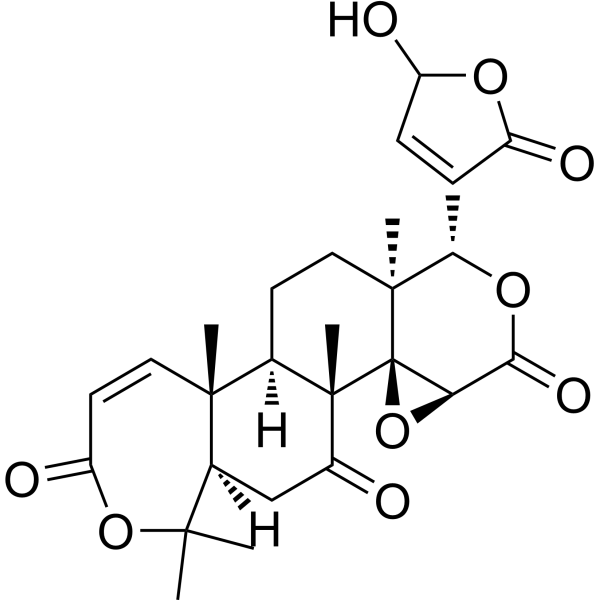 0 ImagesCat. No.: HY-122959CAS No.: 73793-68-7
Kihadanin B is a citrus limonoid that can be purified from the peels of immature Citrus unshiu. Kihadanin B suppresses adipogenesis through repression of the Akt-FOXO1-PPARγ axis in 3T3-L1 adipocytes.
-
Auraptene (Standard)
 0 Images
Auraptene (Standard) is the analytical standard of Auraptene. This product is intended for research and analytical applications. Auraptene is an orally active geranyloxycoumarin that can be isolated from plants in the Brassicaceae family, antibacterial, anti-pathogen, antioxidant, anti-tumor, and neuroprotective effects. Auraptene plays an important role in the treatment of various chronic diseases such as hypertension and cystic fibrosis.
-
Pparg Rat Pre-designed siRNA Set A
 0 ImagesCat. No.: HY-RS10927
Pparg Rat Pre-designed siRNA Set A contains three designed siRNAs for Pparg gene (Rat), as well as a negative control, a positive control, and a FAM-labeled negative control.
-
Cinnamyl Alcohol-d5
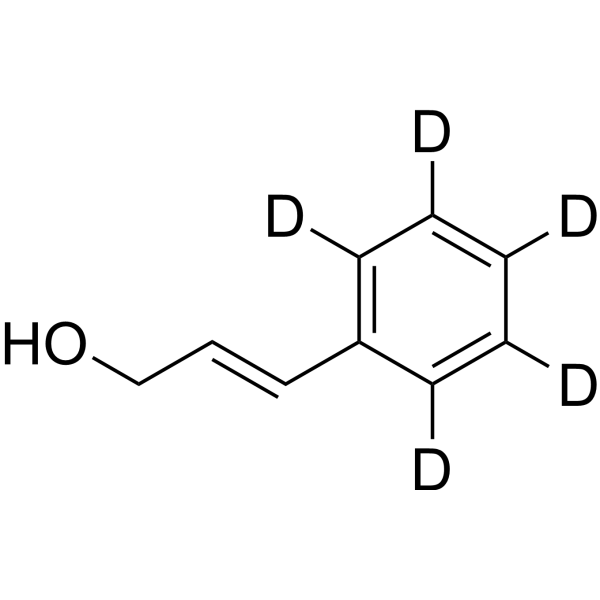 0 ImagesCat. No.: HY-Y0078SCAS No.: 1044940-87-5
-
Foenumoside B
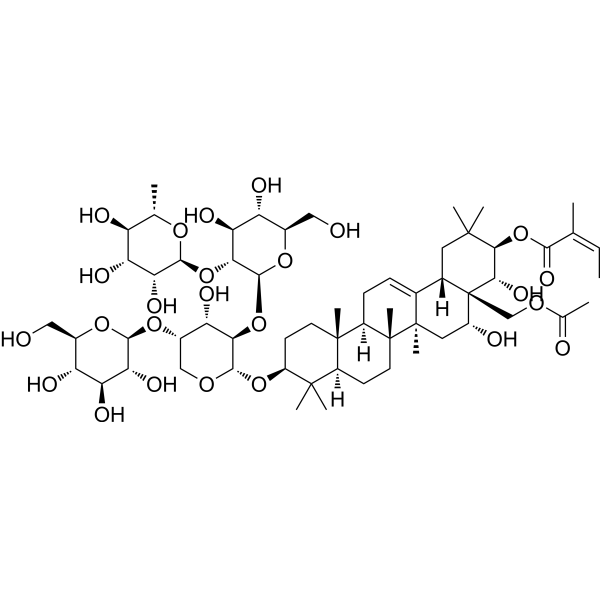 0 ImagesCat. No.: HY-N11924CAS No.: 877661-00-2
Foenumoside B is a triterpene saponin isolated from Lysimachia foenum-graecum. Foenumoside B activates AMPK signaling, inhibits PPARγ-induced adipogenesis, and shifts lipid metabolism toward lipolysis. Foenumoside B can be used in the study of obesity and obesity-related metabolic diseases.
-
GSK1820795A (Standard)
 0 ImagesCat. No.: HY-111616RCAS No.: 2650253-86-2
GSK1820795A (Standard) is the analytical standard of GSK1820795A (HY-111616). This product is intended for research and analytical applications. GSK1820795A, as a telmisartan analog, is a selective hGPR132a antagonist. GSK1820795A blocks activation of yeast cells expressing hGPR132a by N-acylamides. GSK1820795A is also a angiotensin II antagonists and partial PPARγ agonists (compound 38).
-
Mifobate (Standard)
 0 ImagesCat. No.: HY-100277RCAS No.: 76541-72-5Synonyms: SR-202 (Standard)
Mifobate (Standard) is the analytical standard of Mifobate. This product is intended for research and analytical applications. Mifobate (SR-202) is a potent and specific PPARγ antagonist. Mifobate (SR-202) selectively inhibits Thiazolidinedione (TZD)-induced PPARγ transcriptional activity (IC50=140 μM). Mifobate (SR-202) does not affect basal or ligand-stimulated transcriptional activity of PPARα, PPARβ, or the farnesoid X receptor (FXR). Mifobate (SR-202) shows antiobesity and antidiabetic effects.
-
Arecaidine hydrochloride (Standard)
 0 ImagesCat. No.: HY-N2368ARCAS No.: 6018-28-6
Arecaidine hydrochloride (Standard) is the analytical standard of Arecaidine hydrochloride (HY-N2368A). This product is intended for research and analytical applications. Arecaidine hydrochloride is a GABA transport system inhibitor. Arecaidine hydrochloride inhibits the proliferation of oral mucosal fibroblasts, increases the secretion of IL-6, TGF-β and TNF-α in cells, downregulates the expression of PPAR-γ and PCK1 in cells, and upregulates the expression of TGF-β1. Arecaidine hydrochloride inhibits the uptake of γ-aminobutyric acid and β-alanine by the central nervous system of cats. Arecaidine hydrochloride inhibits hPAT1-mediated L-[3H]proline uptake in cells. Arecaidine hydrochloride can be used in research related to neurological diseases.
-
Neoandrographolide (Standard)
 0 ImagesCat. No.: HY-N0721RCAS No.: 27215-14-1Synonyms: Neoandrographiside (Standard)
Neoandrographolide (Standard) is the analytical standard of Neoandrographolide. This product is intended for research and analytical applications. Neoandrographolide is a diterpenoid compound isolated from Andrographis paniculata. Neoandrographolide inhibits osteoclasts differentiation and bone resorption through inhibition of MAPK/NF-κB/PI3K/AKT/GSK3β/PPAR/CAMK signaling pathway. Neoandrographolide inhibits apoptosis in rat embryonic ventricular cardiomyocytes. Neoandrographolide inhibits iNOS and the generation of ROS, activates eNOS, exhibiting anti-inflammatory and hypolipidemic activity.
-
8(9)-EET
 0 ImagesCat. No.: HY-160431CAS No.: 82864-43-5
8(9)-EET is one of the main metabolites produced by the metabolism of arachidonic acid (HY-109590) through the cytochrome P450 epoxide pathway. 8(9)-EET is an effective substrate for COX-1 and COX-2. 8(9)-EET activates PPARα in HEK293 cells and inhibits the activity of NF-κB induced by IL-1β in a PPARα-dependent and -independent manner. The (8S,9R)-isomer of 8(9)-EET ([(8S,9R)-EET]) causes vasoconstriction, thereby reducing renal plasma flow and glomerular filtration rate.
-
Cefetecol hydrate
 0 ImagesCat. No.: HY-159796CAS No.: 127182-67-6Synonyms: GR69153 hydrate
Cefetecol hydrate (GR69153 hydrate) is a semisynthetic β-lactam antibacterial agent and α-glucosidase inhibitor (yeast IC50 = 2.1 μM; Ki = 5.78 μM) that crosses the blood-brain barrier. Cefetecol hydrate reduces blood glucose levels in Streptozotocin-induced diabetic mice. Cefetecol hydrate decreases the mRNA expression of GSK-3, PPAR-γ, and UCP-3. Cefetecol hydrate induces bacterial cell filamentation and exhibits bactericidal activity against Gram-positive and Gram-negative bacteria. Cefetecol hydrate is used in the study of diabetes and bacterial infections.
-
Cinnamyl Alcohol-d9
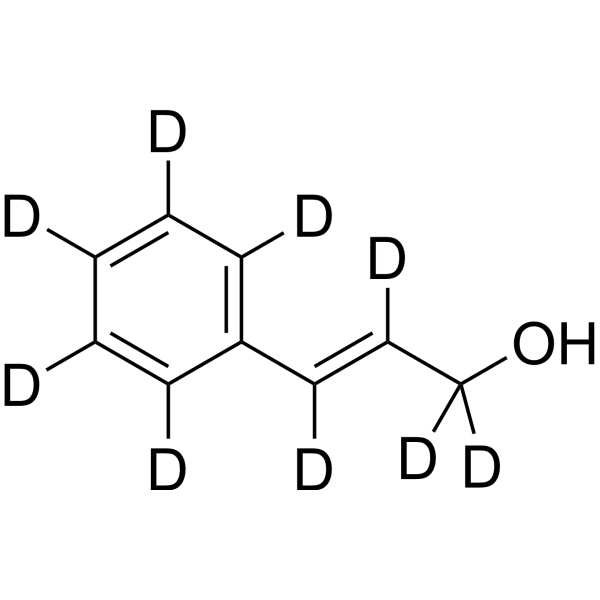 0 ImagesCat. No.: HY-Y0078S1CAS No.: 3028869-57-7
-
(±)-CBCQ
 0 ImagesCat. No.: HY-158934CAS No.: 2415352-36-0Synonyms: Cannabichromenquinone
(±)-CBCQ is an oxidative product of cannabichromene, with an EC50 of 14.7 μM for PPAR-γ.



