



mTOR
Mammalian target of Rapamycin
mTOR Isoform Specific Products
All Product Categories
-
mTOR Inhibitors
(563)
View all products
-
mTOR Agonists
(8)
View all products
-
mTOR Antagonist
(1)
View all products
-
mTOR Activators
(82)
View all products
-
mTOR Modulators
(16)
View all products
-
mTOR p53 Inhibitor
(1)
View all products
-
mTOR Degraders
(2)
View all products
-
mTOR Control
(1)
View all products
-
mTOR Substrate
(1)
View all products
-
mTOR Ligands
(2)
View all products
-
mTOR Related Products (717)
Related Products (717)

-
Antibodies (14)
-
mTOR Signaling Pathway
-
mTOR Isoform Comparison
-
KRASG12C IN-16
 0 ImagesCat. No.: HY-168919KRASG12C IN-16 (Compound SK-17) is a selective, covalent and an orally active KRASG12C inhibitor. KRASG12C IN-16 induces Apoptosis. KRASG12C IN-16 effectively prevents the activation of MAPK and PI3K/mTOR signaling pathways. KRASG12C IN-16 displays anti-tumor activity against pancreatic cancer.
 -
loading...Please select quantityGet Quote
August 31
-
Please select quantity
August 31
Get Quote
loading... -
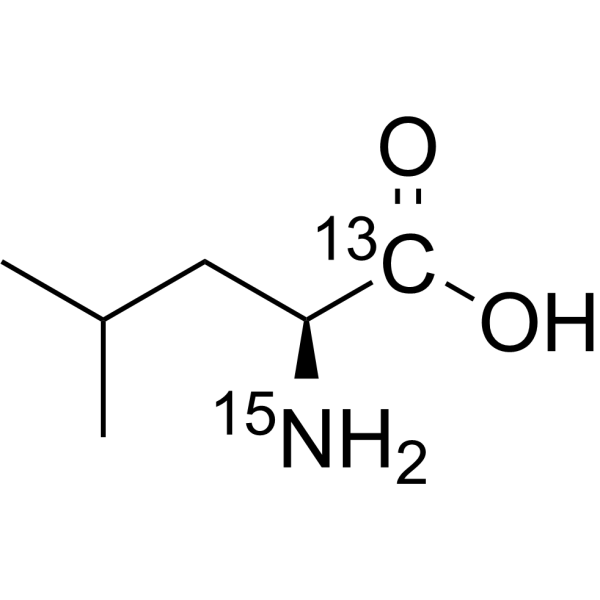
- L-Leucine-1-13C,15N
-
loading...Please select quantityGet Quote
August 31
-
Please select quantity
August 31
Get Quote
loading... -
-
PROTAC SHP2 degrader-1
 0 ImagesCat. No.: HY-189468CAS No.: 3128784-74-4PROTAC SHP2 degrader-1 is a potent SHP2 PROTAC degrader with a DC50 of 7.406 μM. PROTAC SHP2 degrader-1 recruits DCAF16 E3 ligase to induce ubiquitination and proteasomal degradation of SHP2, thereby inhibiting the RAS/MAPK and PI3K/AKT/mTOR signaling pathways while simultaneously inducing IFN-γ/JAK/STAT1, apoptosis, and cell cycle arrest. PROTAC SHP2 degrader-1 can be used for cancer research.
 -
loading...Please select quantityGet Quote
August 31
-
Please select quantity
August 31
Get Quote
loading... -
-
Rapamycin-13C,d3-1
 0 ImagesCat. No.: HY-W765245Synonyms: Sirolimus-13C,d3-1; AY-22989-13C,d3-1Rapamycin-13C,d3-1 (Sirolimus-13C,d3-1) is the deuterated, 13C-labeled Rapamycin (HY-10219). Rapamycin (Sirolimus; AY 22989) is a potent and specific blood-brain barrier-transmissible mTOR inhibitor with an IC50 of 0.1 nM in HEK293 cells. Rapamycin is a molecular glue that binds FKBP12 and mTOR proteins together, thereby inhibiting mTOR kinase activity. Rapamycin binds to FKBP12 and specifically acts as an allosteric inhibitor of mTORC1. Rapamycin is an autophagy activator, an immunosuppressant.
 -
loading...Please select quantityGet Quote
August 31
-
Please select quantity
August 31
Get Quote
loading... -
-
CC-M-1
 0 ImagesCat. No.: HY-179464CAS No.: 3079943-00-0CC-M-1 is a potent and selective PI3K/mTOR inhibitor. CC-M-1 inhibits PI3Kα/β/γ/δ and mTOR with IC50 values of 0.68, 1.02, 1.03, 8.03, and 15 nM, respectively. CC-M-1 inhibits the proliferation of colorectal cancer cell lines, including HCT-116 (IC50 = 0.38 μM) and HT-29 (IC50 = 1.70 μM). CC-M-1 can be used for colorectal cancer (CRC) research.
 -
loading...Please select quantityGet Quote
August 31
-
Please select quantity
August 31
Get Quote
loading... -
-
PI3K/mTOR Inhibitor-13
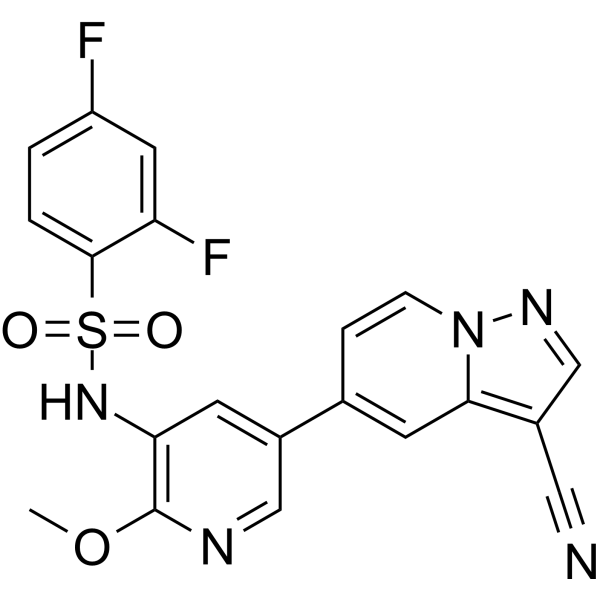 0 ImagesCat. No.: HY-153120CAS No.: 1621718-37-3
 -
loading...Please select quantityGet Quote
August 31
-
Please select quantity
August 31
Get Quote
loading... -
-
Hederacolchiside A1 (Standard)
 0 ImagesCat. No.: HY-N6950RCAS No.: 106577-39-3Hederacolchiside A1 (Standard) is the analytical standard of Hederacolchiside A1. This product is intended for research and analytical applications. Hederacolchiside A1, isolated from Pulsatilla chinensis, suppresses proliferation of tumor cells by inducing apoptosis through modulating PI3K/Akt/mTOR signaling pathway. Hederacolchiside A1 has antischistosomal activity, affecting parasite viability both in vivo and in vitro.
 -
loading...Please select quantityGet Quote
August 31
-
Please select quantity
August 31
Get Quote
loading... -
-
4-TCPA
 0 ImagesCat. No.: HY-1752204-TCPA is a potent VEGFR2 inhibitor. 4-TCPA induces apoptosis and cell cycle arrest, likely through inhibition of VEGFR2 and EGFR signaling with additional effects on the mTOR pathway. 4-TCPA can inhibit the vitality and proliferation of various cancer cell lines. 4-TCPA can be used for the study of cancers such as lung cancer, breast cancer and leukemia.
 -
loading...Please select quantityGet Quote
August 31
-
Please select quantity
August 31
Get Quote
loading... -
-
1-O-Hexadecyl-2-O-acetyl-sn-glycerol
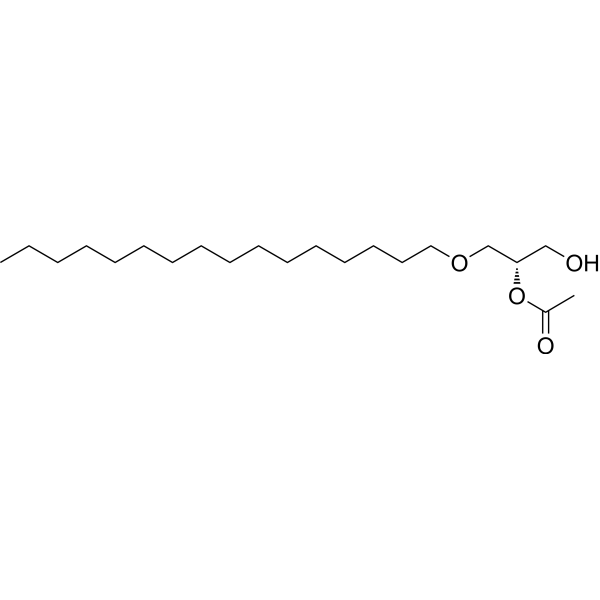 0 ImagesCat. No.: HY-W019868CAS No.: 77133-35-81-O-Hexadecyl-2-O-acetyl-sn-glycerol is an alkyl acylglycerol that may activate the amino acid transport activity of the A-system and stimulate the absorption of methylaminoisobutyric acid (MeAIB). MeAIB inhibits mTOR phosphorylation, which may affect intestinal amino acid absorption and signal transduction.
 -
loading...Please select quantityGet Quote
August 31
-
Please select quantity
August 31
Get Quote
loading... -
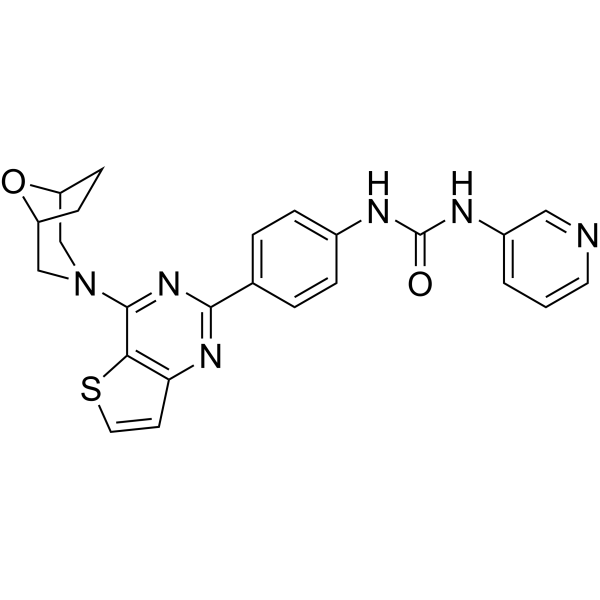
- mTOR inhibitor-13
-
loading...Please select quantityGet Quote
August 31
-
Please select quantity
August 31
Get Quote
loading... -
-
2,6-Dimethoxy-1,4-benzoquinone (Standard)
 0 Images2,6-Dimethoxy-1,4-benzoquinone (Standard) is the analytical standard of 2,6-Dimethoxy-1,4-benzoquinone (HY-N1677). This product is intended for research and analytical applications. 2,6-Dimethoxy-1,4-benzoquinone is a 1,4-benzoquinone derivative. 2,6-Dimethoxy-1,4-benzoquinone promotes phosphorylation of AKT, S6K, mTOR, 4E-BP1, and AMPK, and attenuates mTORC1 activity as part of the AKT/mTOR pathway. 2,6-Dimethoxy-1,4-benzoquinone stimulates myoblast differentiation, increases myotube size, elevates MHC protein expression, enhances mitochondrial biogenesis, respiration, and DNA content, and increases skeletal muscle weights, fiber size, grip strength, and treadmill performance. 2,6-Dimethoxy-1,4-benzoquinone exerts anti-cancer, anti-inflammatory, anti-adipogenic, antibacterial, and antimutagenic effects, inhibits adipogenic transcription factors, nitric oxide production, skin tumor development, Magnaporthe oryzae growth, spore germination, appressorium formation, and growth of select bacterial species, induces H2O2 generation and rice defense gene expression, and reduces rice blast lesion formation. 2,6-Dimethoxy-1,4-benzoquinone can be used for the research of obesity, skin tumorigenesis, rice blast disease, and food-borne illness.
 -
loading...Please select quantityGet Quote
August 31
-
Please select quantity
August 31
Get Quote
loading... -
-
Dihydromyricetin-d4
 0 ImagesCat. No.: HY-N0112SSynonyms: Ampelopsin-d4; Ampeloptin-d4Dihydromyricetin-d4 (Ampelopsin-d4) is deuterium labeled Dihydromyricetin. Dihydromyricetin is a potent inhibitor with an IC50 of 48 μM on dihydropyrimidinase. Dihydromyricetin can activate autophagy through inhibiting mTOR signaling. Dihydromyricetin suppresses the formation of mTOR complexes (mTORC1/2). Dihydromyricetin is also a potent influenza RNA-dependent RNA polymerase inhibitor with an IC50 of 22 μM.
 -
loading...Please select quantityGet Quote
August 31
-
Please select quantity
August 31
Get Quote
loading... -
-
Torkinib (Standard)
 0 ImagesCat. No.: HY-10474RCAS No.: 1092351-67-1Synonyms: PP 242 (Standard)Torkinib (Standard) is the analytical standard of Torkinib. This product is intended for research and analytical applications. Torkinib (PP 242) is a selective and ATP-competitive mTOR inhibitor with an IC50 of 8 nM. PP242 inhibits both mTORC1 and mTORC2 with IC50s of 30 nM and 58 nM, respectively.
 -
loading...Please select quantityGet Quote
August 31
-
Please select quantity
August 31
Get Quote
loading... -
-
PKi-179 (Standard)
 0 ImagesCat. No.: HY-11080RCAS No.: 1197160-28-3PKi-179 (Standard) is the analytical standard of PKi-179 (HY-11080). This product is intended for research and analytical applications. PKi-179 is a potent and orally active dual PI3K/mTOR inhibitor, with IC50s of 8 nM, 24 nM, 74 nM, 77 nM, and 0.42 nM for PI3K-α, PI3K-β, PI3K-γ, PI3K-δ and mTOR, respectively. PKi-179 also exhibits activity over E545K and H1047R, with IC50s of 14 nM and 11 nM, respectively. PKi-179 shows anti-tumor activity in vivo.
 -
loading...Please select quantityGet Quote
August 31
-
Please select quantity
August 31
Get Quote
loading... -
-
Ovalitenone
 0 ImagesCat. No.: HY-N15267CAS No.: 64280-22-4Ovalitenone is a flavonoid compound that can be isolated from the plant Millettia peguensis. It shows no cytotoxic effects on lung cancer H460 and A549 cells, but it significantly inhibits anchorage-independent growth, CSC-like phenotypes, colony formation, and the migration and invasion capabilities of cancer cells. Ovalitenone can significantly reduce the levels of N-cadherin, snail, and slug, while increasing E-cadherin, thus inhibiting the EMT pathway. Additionally, Ovalitenone suppresses the signaling pathways regulated by focal adhesion kinase (FAK), ATP-dependent tyrosine kinase (AKT), mammalian target of rapamycin (mTOR), and cell division cycle 42 (Cdc42).
 -
loading...Please select quantityGet Quote
August 31
-
Please select quantity
August 31
Get Quote
loading... -
-
Sapanisertib (Standard)
 0 ImagesSynonyms: INK-128 (Standard); MLN0128 (Standard); TAK-228 (Standard)Sapanisertib (INK-128; MLN0128; TAK-228) Standard is the analytical standard of Sapanisertib (HY-13328). This product is intended for research and analytical applications. Sapanisertib (INK-128; MLN0128; TAK-228) is an orally active dual mTORC1/mTORC2 inhibitor. Sapanisertib directly and simultaneously inhibits mTORC1/2 activity through competitive binding with ATP, thereby comprehensively blocking downstream processes such as protein and lipid synthesis and cytoskeletal reorganization, consequently suppressing tumor cell proliferation and promoting apoptosis. Sapanisertib is applicable to research on melanoma, ovarian cancer, pulmonary fibrosis, and hematological malignancies.
 -
loading...Please select quantityGet Quote
August 31
-
Please select quantity
August 31
Get Quote
loading... -
-
Isoacteoside (Standard)
 0 ImagesSynonyms: Isoverbascoside (Standard)Isoacteoside (Standard) is the analytical standard of Isoacteoside. This product is intended for research and analytical applications. Isoacteoside is a natural product that can significantly inhibit the formation of glycation end products. Isoacteoside Standard regulates the AKT/PI3K/m-TOR/NF-κB signaling pathway, induces apoptosis in OVCAR-3 cell. Isoacteoside Standard exhibits antitumor, anti-inflammatory, anti-obesity and neuroprotective activities.
 -
loading...Please select quantityGet Quote
August 31
-
Please select quantity
August 31
Get Quote
loading... -
- mTOR inhibitor-17
-
loading...Please select quantityGet Quote
August 31
-
Please select quantity
August 31
Get Quote
loading... -

-
Arenobufagin (Standard)
 0 ImagesArenobufagin is a natural bufadienolide that can be extracted from toad venom. Arenobufagin can induce apoptosis and autophagy in human hepatocellular carcinoma cells through inhibition of PI3K/Akt/mTOR pathway. Arenobufagin has potent antineoplastic activity against HCC HepG2 cells as well as corresponding multidrug-resistant HepG2/ADM cells. Arenobufagin can inhibit VEGF-mediated angiogenesis through suppression of VEGFR-2 signaling pathway.
 -
loading...Please select quantityGet Quote
August 31
-
Please select quantity
August 31
Get Quote
loading... -
-
FT-1518 (Standard)
 0 ImagesCat. No.: HY-107363RCAS No.: 1313026-58-2
 -
loading...Please select quantityGet Quote
August 31
-
Please select quantity
August 31
Get Quote
loading... -
No matching results
No matching results
No matching results
No matching results
No matching results
No matching results
No matching results
No matching results
No matching results
No matching results

The mammalian target of rapamycin (mTOR) signaling pathway integrates both intracellular and extracellular signals and serves as a central regulator of cell metabolism, growth, proliferation and survival[1]. mTOR is the catalytic subunit of two distinct complexes called mTORC1 and mTORC2. mTORC1 comprises DEPTOR, PRAS40, RAPTOR, mLST8, mTOR, whereas mTORC2 comprises DEPTOR, mLST8, PROTOR, RICTOR, mSIN1, mTOR[2]. Rapamycin binds to FKBP12 and inhibits mTORC1 by disrupting the interaction between mTOR and RAPTOR. mTORC1 negatively regulates autophagy through multiple inputs, including inhibitory phosphorylation of ULK1 and TFEB. mTORC1 promotes protein synthesis through activation of the translation initiation promoter S6K and through inhibition of the inhibitory mRNA cap binding 4E-BP1, and regulates glycolysis through HIF-1α. It promotes de novo lipid synthesis through the SREBP transcription factors. mTORC2 inhibits FOXO1,3 through SGK and Akt, which can lead to increased longevity. The complex also regulates actin cytoskeleton assembly through PKC and Rho kinase[3].
Growth factors: Growth factors can signal to mTORC1 through both PI3K-Akt and Ras-Raf-MEK-ERK axis. For example, ERK and RSK phosphorylate TSC2, and inhibit it.
Insulin Receptor: The activated insulin receptor recruits intracellular adaptor protein IRS1. Phosphorylation of these proteins on tyrosine residues by the insulin receptor initiates the recruitment and activation of PI3K. PIP3 acts as a second messenger which promotes the phosphorylation of Akt and triggers the Akt-dependent multisite phosphorylation of TSC2. TSC is a heterotrimeric complex comprised of TSC1, TSC2, and TBC1D7, and functions as a GTPase activating protein (GAP) for the small GTPase Rheb, which directly binds and activates mTORC1. mTORC2 primarily functions as an effector of insulin/PI3K signaling.
Wnt: The Wnt pathway activates mTORC1. Glycogen synthase kinase 3β (GSK-3β) acts as a negative regulator of mTORC1 by phosphorylating TSC2. mTORC2 is activated by Wnt in a manner dependent on the small GTPase RAC1[4].
Amino acids: mTORC1 senses both lysosomal and cytosolic amino acids through distinct mechanisms. Amino acids induce the movement of mTORC1 to lysosomal membranes, where the Rag proteins reside. A complex named Ragulator, interact with the Rag GTPases, recruits them to lysosomes through a mechanism dependent on the lysosomal v-ATPase, and is essential for mTORC1 activation. In turn, lysosomal recruitment enables mTORC1 to interact with GTP-bound RHEB, the end point of growth factor. Cytosolic leucine and arginine signal to mTORC1 through a distinct pathway comprised of the GATOR1 and GATOR2 complexes.
Stresses: mTORC1 responds to intracellular and environmental stresses that are incompatible with growth such as low ATP levels, hypoxia, or DNA damage. A reduction in cellular energy charge, for example during glucose deprivation, activates the stress responsive metabolic regulator AMPK, which inhibits mTORC1 both indirectly, through phosphorylation and activation of TSC2, as well as directly through the phosphorylation of RAPTOR. Sestrin1/2 are two transcriptional targets of p53 that are implicated in the DNA damage response, and they potently activate AMPK, thus mediating the p53-dependent suppression of mTOR activity upon DNA damage. During hypoxia, mitochondrial respiration is impaired, leading to low ATP levels and activation of AMPK. Hypoxia also affects mTORC1 in AMPK-independent ways by inducing the expression of REDD1, the protein products of which then suppress mTORC1 by promoting the assembly of TSC1-TSC2[2].
Reference:
[1]. Laplante M, et al.mTOR signaling at a glance.J Cell Sci. 2009 Oct 15;122(Pt 20):3589-94.
[2]. Zoncu R, et al. mTOR: from growth signal integration to cancer, diabetes and ageing.Nat Rev Mol Cell Biol. 2011 Jan;12(1):21-35.
[3]. Johnson SC, et al. mTOR is a key modulator of ageing and age-related disease.Nature. 2013 Jan 17;493(7432):338-45.
[4]. Shimobayashi M, et al. Making new contacts: the mTOR network in metabolism and signalling crosstalk.Nat Rev Mol Cell Biol. 2014 Mar;15(3):155-62.
Your Search Returned No Results.
Sorry. There is currently no product that acts on isoform Bcl-2, Bcl-W and Bim together.Please
try each isoform separately.



