



Mitochondrial Metabolism
Mitochondria use multiple carbon fuels to produce ATP and metabolites, including pyruvate, which is generated from glycolysis; amino acids such as glutamine; and fatty acids. These carbon fuels feed into the TCA cycle in the mitochondrial matrix to generate the reducing equivalents NADH and FADH2, which deliver their electrons to the electron transport chain. Mitochondria are complex organelles that play an important role in many facets of cellular function, from metabolism to immune regulation and cell death. Mitochondria are actively involved in a wide variety of cellular processes and molecular interactions, such as calcium buffering, lipid flux, and intracellular signaling. It is increasingly recognized that mitochondrial dysfunction is a hallmark of many diseases such as obesity/diabetes, cancer, cardiovascular and neurodegenerative diseases. Mitochondrial metabolism is a key determinant of tumor progression by impacting on functions such as epithelial-to-mesenchymal transition. Mitochondrial metabolism and derived oncometabolites shape the epigenetic landscape to alter aggressiveness features of cancer cells. Changes in mitochondrial metabolism are relevant for the survival of tumors in response to therapy.
All Product Categories
-
Mitochondrial Metabolism Related Products (635)
Related Products (635)

-
Antibodies (52)
-
Related Compound Screening Libraries (2)
-
Desipramine
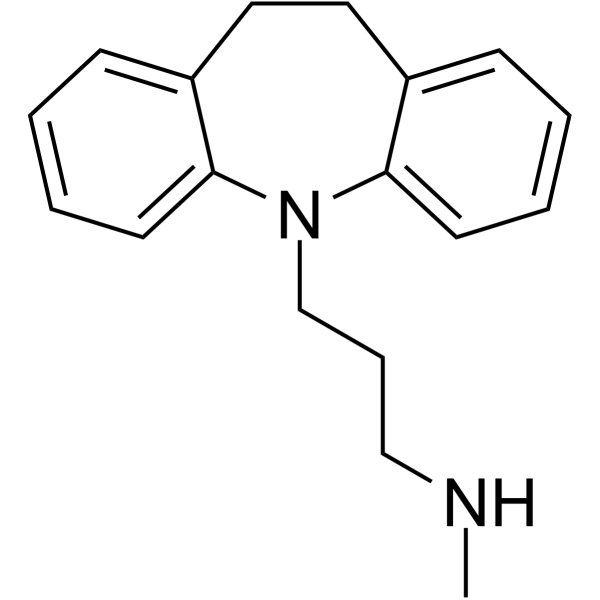 0 ImagesDesipramine is a first-generation tricyclic antidepressant. Desipramine selectively binds to norepinephrine transporter and blocks neuronal norepinephrine reuptake. Desipramine activates MAPK signaling via ERK1/2, JNK, and p38, represses NF-κB and AP-1 activity, and induces apoptosis via ROS elevation, mitochondrial membrane potential reduction, and intracellular calcium increase. Desipramine also shows anyi-inflammatory activity, inhibiting TNF-α production. Desipramine can be used for the research of hepatocellular cancer, inflammation, and neurological diseases.
-
NPD8790
 0 ImagesCat. No.: HY-158423CAS No.: 615281-26-0NPD8790 is a species selective mitochondrial respiratory complex I inhibitor with an IC50 of 2.4 µM for C. elegans complex I. NPD8790 is more selective for nematode species mitochondria than human, bovine, and mouse mitochondria. NPD8790 is an anthelmintic that kills adult soil-transmitted helminths.
-
Norflurazon-13C,d3
 0 ImagesCat. No.: HY-W778236CAS No.: 1346603-47-1Synonyms: SAN 9789-13C,d3Norflurazon-13C,d3 (SAN 9789-13C,d3) is the d3, 13C-labeled Norflurazon (HY-114849). Norflurazon (SAN 9789) is a pre-emergence Herbicide. Norflurazon non-competitively inhibits phytoene desaturase by competing with the enzyme cofactor and disrupts carotenoid biosynthesis, thereby leading to chlorophyll photodegradation and chlorosis. Norflurazon inhibits MGDG synthase, CDP-choline phosphotransferase, Omega-3 FAD7 desaturase, and PG delta-3-trans desaturase, and activates LysoPC-acyltransferase and Omega-3 FAD3 desaturase. Norflurazon inhibits photosynthetic membrane organization, mitochondrial respiration, ATP production, PI3K signaling, and ERK1/2 phosphorylation. Norflurazon activates MAPK P38 phosphorylation and ER stress signaling. Norflurazon induces morphological malformations and cardiovascular effects in zebrafish embryos.
-
NCO-90
 0 ImagesCat. No.: HY-183870CAS No.: 1382354-18-8NCO-90 is a selective SIRT2 inhibitor with an IC50 of 1.0 μM. NCO-90 induces Apoptosis via Caspase activation and mitochondrial superoxide anion production, and also induces Autophagic cell death by increasing LC3-II levels and autophagosome accumulation. NCO-90 exhibits anticancer activity against leukemia. NCO-90 can be used in research related to acute lymphoblastic leukemia and acute myeloid leukemia.
-
SHO1122147
 0 ImagesCat. No.: HY-170369CAS No.: 3066237-61-1SHO1122147 (Compound 7m) affects the mitochondrial electron transport chain, exhibits mitochondrial uncoupling activity (EC50=3.6 μM), and increases the oxygen consumption rate (OCR=69%) and promotes cellular respiration. SHO1122147 is orally active, and can be used in reaearch of obesity and metabolic dysfunction-associated steatohepatitis (MASH).
-
SDZ-FOX-988
 0 ImagesCat. No.: HY-19150CAS No.: 139681-18-8Synonyms: FOX-988SDZ-FOX-988 (FOX-988) is an orally active antidiabetic agent. SDZ-FOX-988 sequesters mitochondrial coenzyme A to inhibit carnitine palmitoyltransferase II. SDZ-FOX-988 induces mitochondrial injury. SDZ-FOX-988 causes a decrease in serum β-hydroxybutyrate or glucose. SDZ-FOX-988 can be used in the research of type 2 diabetes.
-
Mitochondrial-IN-1
 0 ImagesCat. No.: HY-172972CAS No.: 2001090-87-3Mitochondrial-IN (C458) is a potent mitochondrial complex I inhibitor. Mitochondrial-IN demonstrates high protection against Aβ toxicity, favorable pharmacokinetics, and minimal off-target effects.
-
Multitarget AD-IN-3
 0 ImagesCat. No.: HY-178454Multitarget AD-IN-3 is a brain-penetrant neuroprotective agent. Multitarget AD-IN-3 can selectively inhibit MAO-B with an IC50 of 4.42 μM and a SI of 18.12. Multitarget AD-IN-3 can eliminate ROS. Multitarget AD-IN-3 Multitarget AD-IN-3 can inhibit Aβ1-42 self-aggregation and can reverse Aβ1-42-induced mitochondrial membrane depolarization and inhibit apoptosis. Multitarget AD-IN-3 can be used for the research of neurological disease, such as Alzheimer’s disease.
-
2-Methoxycinnamaldehyde (Standard)
 0 ImagesCat. No.: HY-W046353RCAS No.: 1504-74-1Synonyms: o-Methoxycinnamaldehyde (Standard)2-Methoxycinnamaldehyde (Standard) is the analytical standard of 2-Methoxycinnamaldehyde. This product is intended for research and analytical applications. 2-Methoxycinnamaldehyde (o-Methoxycinnamaldehyde) is a natural compound that can be isolated from Cinnamomum cassia. 2-Methoxycinnamaldehyde inhibits topoisomerase-I/II and NF-κB signaling pathway, causes mitochondrial dysfunction, induces lysosomal vesiculation, thereby leading to DNA damage and cell apoptosis. 2-Methoxycinnamaldehyde exhibits antitumor effects.
-
Mitochondrial complex I-IN-1
 0 ImagesCat. No.: HY-184282Mitochondrial complex I-IN-1 is a Mitochondrial complex I inhibitor. Mitochondrial complex I-IN-1 activates the AMPK signaling pathway, inhibits the downstream mTOR/S6 axis, induces Apoptosis and triggers Autophagy. Mitochondrial complex I-IN-1 can be used for the research of non-small cell lung cancer.
-
Apoptosis inducer 34
 0 ImagesApoptosis inducer 34 (Compound 4) is a small molecule compound that induces apoptosis by directly activating the intrinsic apoptotic pathway. Apoptosis inducer 34 promotes Apaf-1 oligomerization to form mature apoptosomes, thereby activating caspase-9 and caspase-3. It significantly activates the apoptotic pathway in Jurkat cells by enhancing the cytochrome c-dependent apoptotic signaling pathway, inducing PARP cleavage and chromosomal DNA fragmentation. Furthermore, Apoptosis inducer 34 exhibits low toxicity to normal cells, demonstrating potential for selective targeting of cancer cells. Apoptosis inducer 34 is a promising candidate for studying cancer related to apoptotic pathways.
-
Santamarine
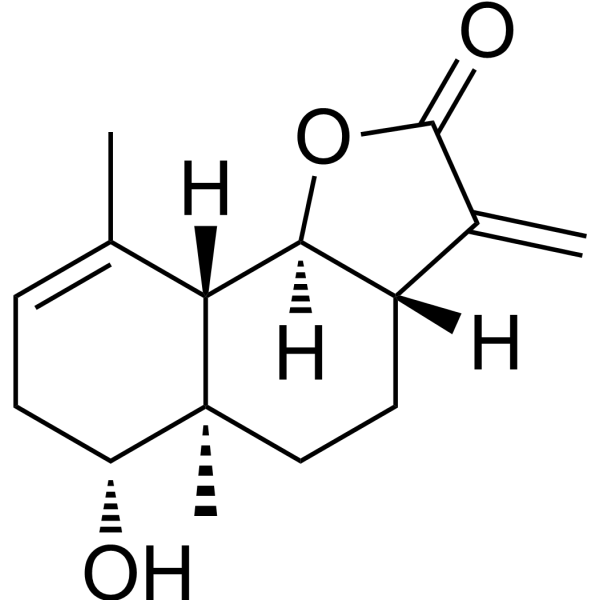 0 ImagesSantamarine (Santamarin; Balchanin) is a sesquiterpene lactone found in Artemisia scoparia. Santamarine shows anti-inflammatory, antioxidant, anticancer and anti-photoaging activities. Santamarine suppresses UVA-induced phosphorylation of JNK and p38 MAPK, nuclear translocation of phosphorylated c-Fos and c-Jun, and AP-1-mediated MMP-1 transcription and secretion. Santamarine suppresses NF-κB signaling, iNOS, COX-2, TNF-α, and IL-1β production. Santamarine inhibits thioredoxin reductase activity, induces ROS production, mitochondrial apoptosis, G2/M cell cycle arrest, and DNA damage, and reduces cancer cell growth. Santamarine can be used for the photoaging, inflammatory diseases and cancer.
-
HNSS peptide
 0 ImagesCat. No.: HY-P12338HNSS peptide is a chimeric hybrid peptide composed of the neuroprotective peptide S14G-Humanin and the mitochondria-targeted antioxidant peptide SS31. HNSS peptide is readily cleared in vivo and can be combined with nanocarriers to improve its stability. HNSS can be delivered via the FGFR1-targeting nanocarrier FGL-NP (Cit), ameliorating mitochondrial dysfunction, Aβ deposition, tau hyperphosphorylation, and cholinergic neuronal damage, and alleviating memory deficits in Alzheimer's disease mice. HNSS peptide is applicable for Alzheimer's disease-related research.
-
MTS peptide
 0 ImagesCat. No.: HY-P12011MTS peptide is a short peptide with a mitochondria-targeting sequence. In F-M-LNP, MTS peptide is displayed on the particle surface via thiol-maleimide conjugation, and is specifically responsible for being recognized by the mitochondrial proteins TOMM20/22, "anchoring" the nanoparticles to the outer mitochondrial membrane, followed by membrane potential-independent bilayer membrane penetration mediated by fluorinated lipids. MTS peptide can be used in the research of Leber's hereditary optic neuropathy.
-
Solenopsin
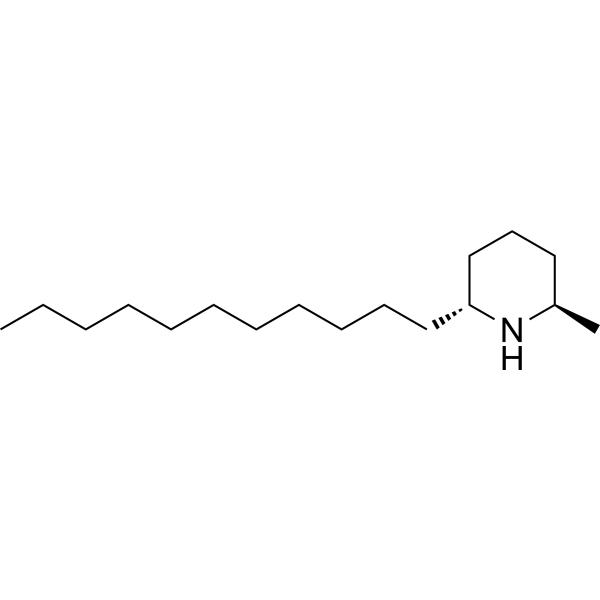 0 ImagesCat. No.: HY-16461CAS No.: 137038-57-4Synonyms: (-)-Solenopsin ASolenopsin ((-)-Solenopsin A) is an ATP-competitive and selective Akt-1 inhibitor with an IC50 of 5-10 μM, and also acts as an RSK1 inhibitor. Solenopsin inhibits the activities of PDK1 in lipid rafts, downregulates PI3K, blocks PI3K-dependent generation of 3-phosphoinositides, and suppresses the phosphorylation of FOXO1a. Solenopsin induces Mitophagy and ROS production, reduces mitochondrial oxygen consumption, and exhibits antiproliferative and antiangiogenic activities. Solenopsin can be used in research related to hyperproliferative skin diseases and malignant diseases.
-
Ciprofloxacin lactate
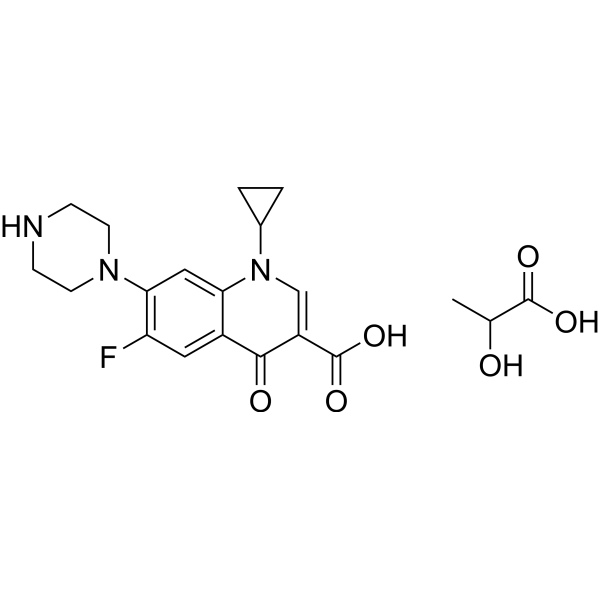 0 ImagesCat. No.: HY-W040298CAS No.: 97867-33-9Synonyms: Bay-09867 lactateCiprofloxacin (Bay-09867) lactate is a potent, orally active topoisomerase IV inhibitor. Ciprofloxacin lactate induces mitochondrial DNA and nuclear DNA damage and lead to mitochondrial dysfunction, ROS production. Ciprofloxacin lactate has anti-proliferative activity and induces apoptosis. Ciprofloxacin lactate is a fluoroquinolone antibiotic, exhibiting potent antibacterial activity.
-
Diquat-d12(dibromide) 1
 0 ImagesCat. No.: HY-122984S1Diquat-d12 dibromide 1 is the deuterium labeled Diquat dibromide (HY-122984). Diquat dibromide is a comprehensive herbicide. Diquat dibromide increases the production of ROS and triggers mitochondrial Autophagy. Diquat dibromide generates free radicals such as superoxide anions through redox cycles, which induce oxidative stress. Diquat dibromide is cytotoxic, reproductive, and neurotoxic. Diquat dibromide is used in cotton, soybean, and other crops to combat noxious weeds.
-
Antibacterial agent 370
 0 ImagesCat. No.: HY-189000Antibacterial agent 370 is an inhibitor of mitochondrial complex III (mitochondrial complex III). Antibacterial agent 370 binds to target proteins through hydrogen bonds and Pi-alkyl interactions, disrupts respiration and ATP synthesis, and inhibits the growth of multiple plant pathogenic fungi (fungal). Antibacterial agent 370 can be used in the research of apple tree canker, apple fruit rot, and other plant pathogenic fungal infections.
-
NOTA-RHAU18
 0 ImagesCat. No.: HY-P11486NOTA-RHAU18 is a conjugate of the chelator NOTA and the peptide RHAU18. NOTA-RHAU18 can be used to synthesize the radiolabeled peptide probe [18F]AlF-NOTA-RHAU18. [18F]AlF-NOTA-RHAU18 targets mitochondrial DNA G4. [18F]AlF-NOTA-RHAU18 can be used to visualize and detect solid tumors in homozygous mice. [18F]AlF-NOTA-RHAU18 can also be used in PET imaging studies.
-
FLAD1-IN-1
 0 ImagesCat. No.: HY-187649CAS No.: 2696100-70-4FLAD1-IN-1 is a FLAD1 inhibitor. FLAD1-IN-1 impairs the activity of mitochondrial complex II by disrupting the intracellular FAD pool, thereby inducing cellular mitochondrial dysfunction and reducing hypoxic tolerance. FLAD1-IN-1 exhibits anticancer activity against hypoxic tumors. FLAD1-IN-1 can be used in the research of lung cancer.




