



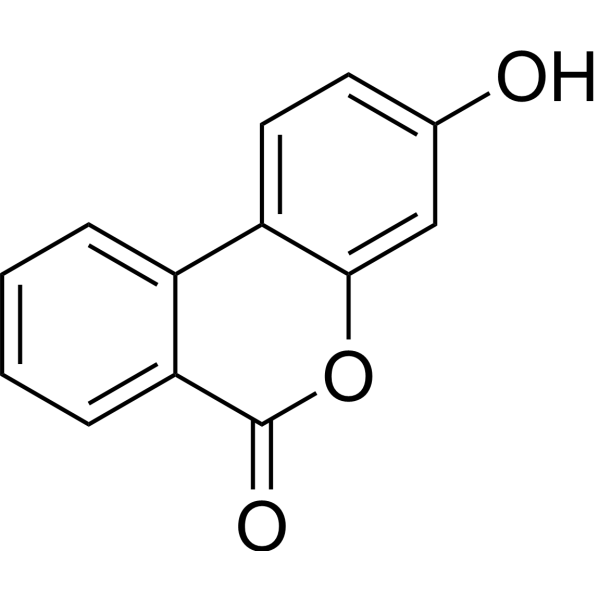
Urolithin B
Based on 6 publication(s) in Google Scholar
Urolithin B is one of Ellagitannins' slow microbial products, and has anti-inflammatory and anti-inflammatory effects. Urolithin B suppresses NF-κB activity. Urolithin B suppresses JNK, ERK and Akt's oxidation, and increases AMPK's oxidation. Urolithin B is also a quantitative change factor for bone and skin quality.
Nur für Forschungszwecke. Wir verkaufen nicht an Patienten.
- Reinheit : 99.85%
- CAS. Nr.: 1139-83-9
- Formel: C13H8O3
- Molecular Weight:212.20
-
Speicherung:Powder -20°C, 3 years , 4°C, 2 years ; In solvent -80°C, 2 years , -20°C, 1 year

To place orders, for customer services and technical support, please contact: MedChemExpress USA
Tel: 609-228-6898 E-mail: [email protected] [email protected]


-
 Biologische Aktivität
-
Chemical Information
-
Lösungsmittel & Löslichkeit
- Protokoll
- Reinheit & Dokumentation
- Verweise
-
 Help & FAQs


-
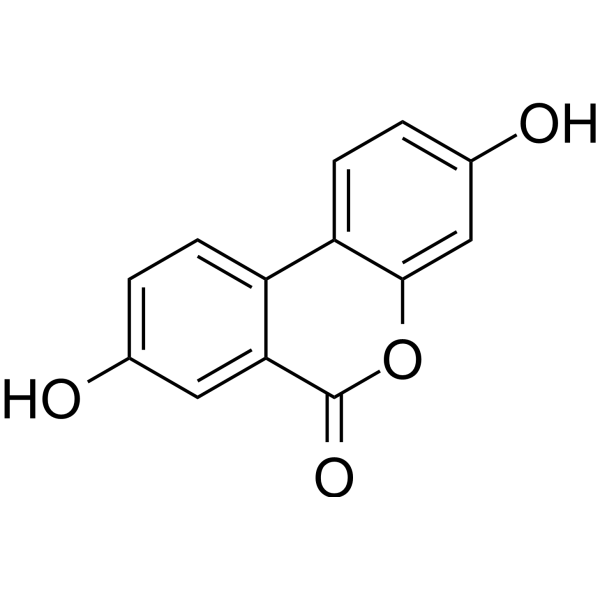
HY-100599
Urolithin AMitophagy Activator -
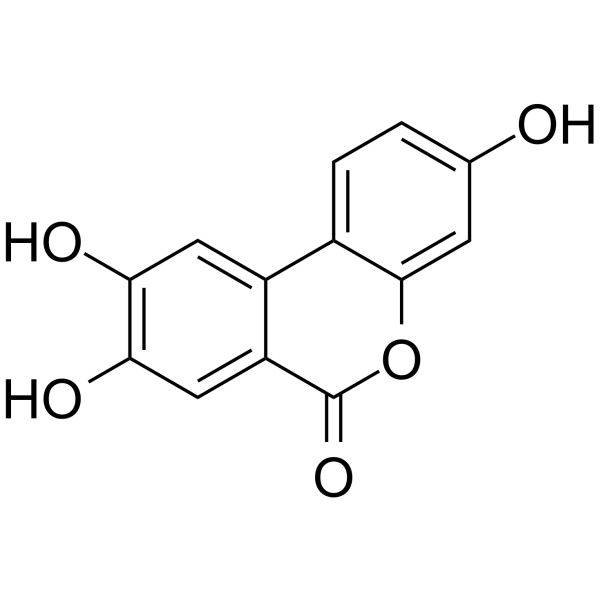
HY-135897
Urolithin CInsulin Secretion Activator -
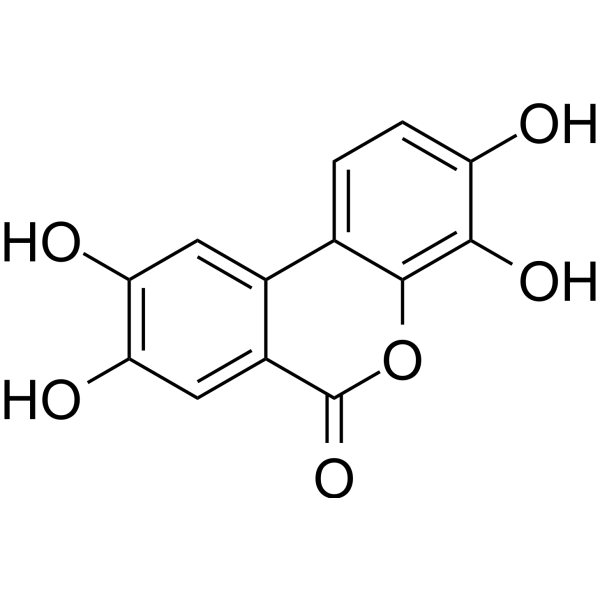
HY-133178
Urolithin DEphA Receptor Antagonist -
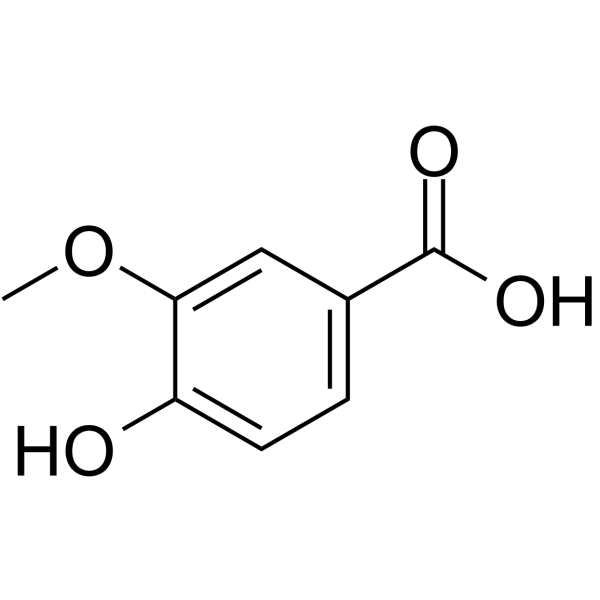
HY-N0708
Vanillic acidFlavouring Agent -
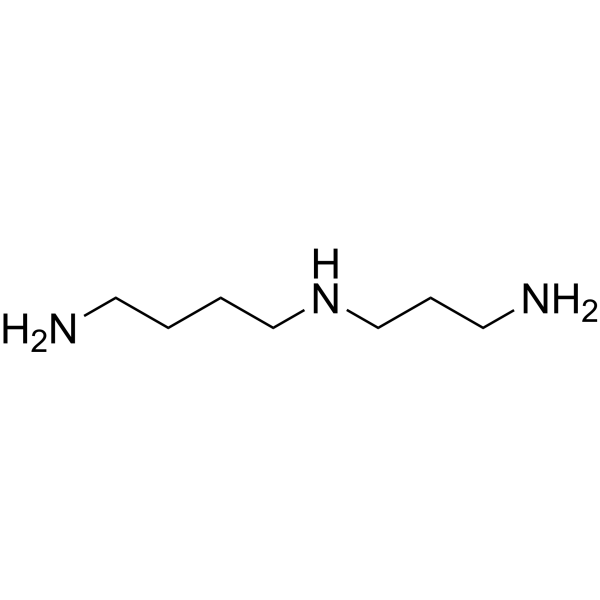
HY-B1776
SpermidinePolyamine Compound -
HY-B0183
Ellagic acidSHP2 Inhibitor -
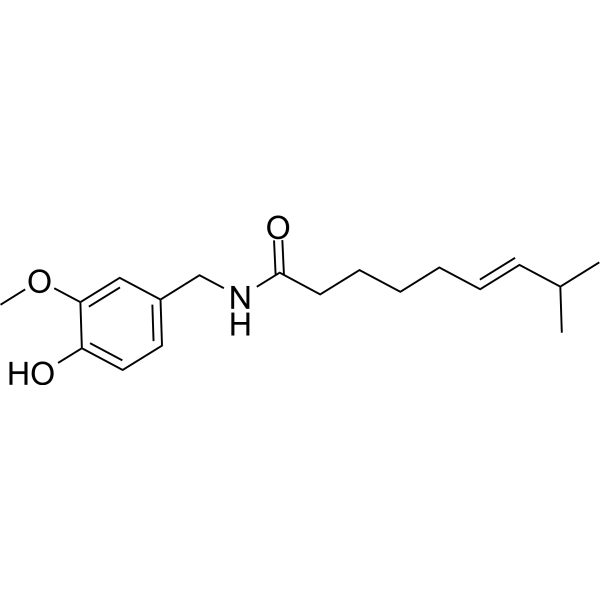
HY-10448
CapsaicinTRPV1 Agonist -
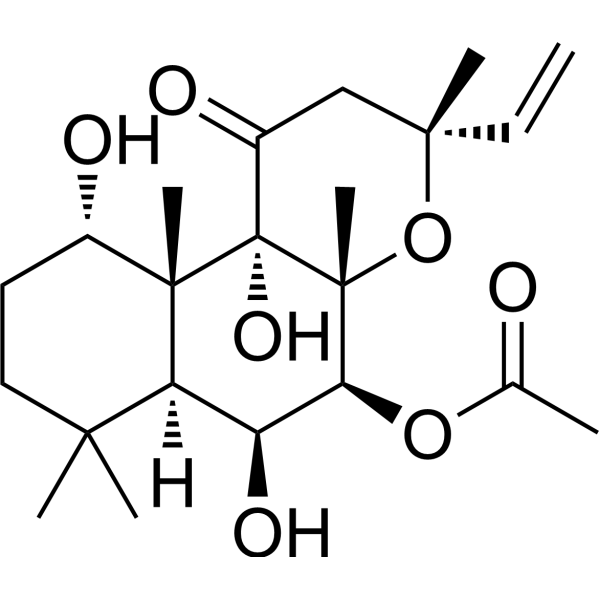
HY-15371
ForskolinAdenylate Cyclase Activator -
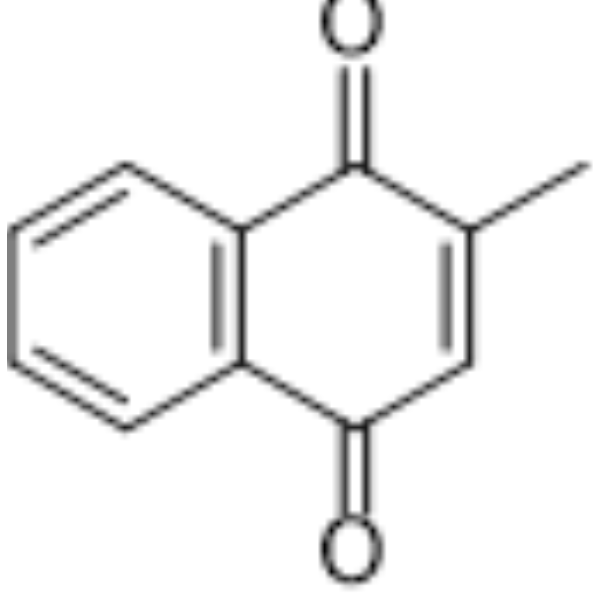
HY-B0332
MenadioneEndogenous Metabolite -
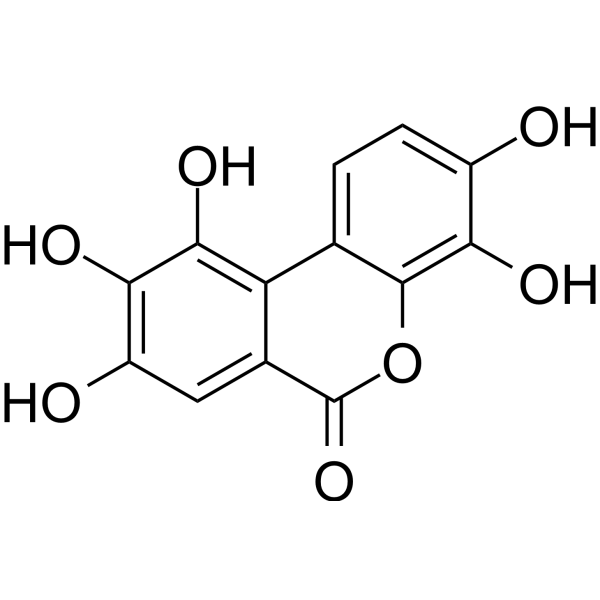
HY-N7922
Urolithin M5NA Inhibitor -

HY-126307R
Urolithin B (Standard)NF-κB Inhibitor -
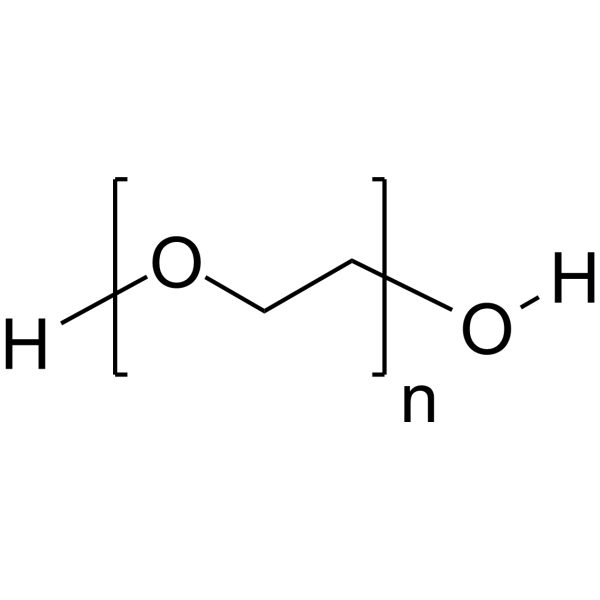
HY-Y0873
PEG300Neutral Polymer
Publications Citing Use of MedChemExpress (MCE) Urolithin B
More- CNS Neurosci Ther. 2025 Apr;31(4):e70379. [Abstract]
- Int Immunopharmacol. 2024 Sep 19;142(Pt B):113151. [Abstract]
- Biochim Biophys Acta Mol Basis Dis. 2024 Apr;1870(4):167056. [Abstract]
- J Cell Mol Med. 2022 Aug;26(16):4428-4439. [Abstract]
- Science Essence Journal. 2025.
- Research Square Preprint. 2021 Oct.
 Customer Validation & Images

-
Cell Proliferation/Viability Assay

-
IF

-
WB

-
RT-PCR

Alle AMPK Isoform-spezifische Produkte anzeigen
MoreAlle Endogenous Metabolite Isoform-spezifische Produkte anzeigen
More

Biologische Aktivität
Beschreibung
IC50 & Target
|
Human Endogenous Metabolite |
In Vitro
Urolithin B (30-100 μM; 24 h) shows anti-inflammatory effects in LPS-stimulated BV2 microglia by modulating pro- and anti-inflammatory molecule. Such like that suppressing NF-κB and AP-1 signaling in LPS-stimulated BV2 cells, and also upregulating AMPK and downregulating the Akt, JNK, and ERK signaling pathway[1].
Urolithin B (15 μM; 24 h) enhances the growth and differentiation of C2C12 muscle ducts by increasing protein synthesis and inhibiting the ubiquitin-proteasome pathway[2].
MedChemExpress (MCE) has not independently confirmed the accuracy of these methods. They are for reference only.
In Vivo
Urolithin B (10 μg/day; mini-osmotic pump delivery, 28 days) induces muscle hypertrophy and reduces muscle atrophy after sciatic nerve transection in mice[2].
MedChemExpress (MCE) has not independently confirmed the accuracy of these methods. They are for reference only.


Chemical Information
-
CAS. Nr. 1139-83-9
-
Appearance Solid
-
Molecular Weight 212.20
-
Formel C13H8O3
-
Color Off-white to light yellow
-
SMILES
O=C1C2=CC=CC=C2C3=CC=C(O)C=C3O1
-
Structure Classification
-
Initial Source
-
Versand
Room temperature in continental US; may vary elsewhere.
-
Speicherung
Powder -20°C 3 years 4°C 2 years In solvent -80°C 2 years -20°C 1 year


Publications (6)
-
Journal Impact Factor
-
Most Recent
-
CNS Neurosci Ther
Alleviation of Microglia Mediating Hippocampal Neuron Impairments and Depression-Related Behaviors by Urolithin B via the SIRT1-FOXO1 Pathway. [Abstract]2025 Apr;31(4):e70379. PMID: 40237232
Urolithin B purchased from MedChemExpress. Usage Cited in: CNS Neurosci Ther. 2025 Apr;31(4):e70379. [Abstract]
Cell viability assay of the conditional medium collected from the BV2 or HT22 cells with LPS or/and Urolithin B (UB) (0, 10, 20, 40 μmol/L) treatment.
Urolithin B purchased from MedChemExpress. Usage Cited in: CNS Neurosci Ther. 2025 Apr;31(4):e70379. [Abstract]
BV2 cells were pretreated with Urolithin B (UB) (0, 10, 20, 40 μmol/L) for 2 h, then treated with LPS (0.5 μg/mL) for 24 h, followed by collecting the medium as conditional medium. HT22 cells were incubated with conditional medium for 24 h, and detected the ratio of live and dead cells by staining the live cells (green) with calcein AM and dead cells (red) with PI.
Urolithin B purchased from MedChemExpress. Usage Cited in: CNS Neurosci Ther. 2025 Apr;31(4):e70379. [Abstract]
The protein levels of Bcl‐2 and Bax of HT22 cells after incubating with Urolithin B (UB) (0, 10, 20, 40 μmol/L) for 2 h, then treated with LPS (0.5 μg/mL) for 24 h.
Urolithin B purchased from MedChemExpress. Usage Cited in: CNS Neurosci Ther. 2025 Apr;31(4):e70379. [Abstract]
Relative mRNA levels of M1 type markers iNOS and CD86 treated with Urolithin B (UB) (0, 10, 20, 40 μmol/L).
-
Int Immunopharmacol
The ellagitannin metabolite urolithin C attenuated cognitive impairment by inhibiting neuroinflammation via downregulation of MAPK/NF-kB signaling pathways in aging mice. [Abstract]2024 Sep 19;142(Pt B):113151. PMID: 39303538 -
Biochim Biophys Acta Mol Basis Dis
Intestinal metabolite UroB alleviates cerebral ischemia/reperfusion injury by promoting competition between TRIM65 and TXNIP for binding to NLRP3 inflammasome in response to neuroinflammation. [Abstract]2024 Apr;1870(4):167056. PMID: 38360072 -
J Cell Mol Med
Urolithin B suppresses osteoclastogenesis via inhibiting RANKL-induced signalling pathways and attenuating ROS activities. [Abstract]2022 Aug;26(16):4428-4439. PMID: 35781786 -
-


Lösungsmittel & Löslichkeit
In Vitro:
DMSO : 200 mg/mL (942.51 mM; Need ultrasonic; Hygroscopic DMSO has a significant impact on the solubility of product, please use newly opened DMSO)
Please refer to the solubility information to select the appropriate solvent. Once prepared, please aliquot and store the solution to prevent product inactivation from repeated freeze-thaw cycles.
Storage method and period of stock solution: -80°C, 2 years; -20°C, 1 year. When stored at -80°C, please use it within 2 years. When stored at -20°C, please use it within 1 year.
Please refer to the solubility information to select the appropriate solvent. Once prepared, please aliquot and store the solution to prevent product inactivation from repeated freeze-thaw cycles.
Storage method and period of stock solution: -80°C, 2 years; -20°C, 1 year. When stored at -80°C, please use it within 2 years. When stored at -20°C, please use it within 1 year.
Konzentration (Stammlösung) × Volumen (Stammlösung) = Konzentration (Ziellösung) × Volumen (Ziellösung)
In Vivo:
Select the appropriate dissolution method based on your experimental animal and administration route.
- For the following dissolution methods, please ensure to first prepare a clear stock solution using an In Vitro approach and then sequentially add co-solvents:
- To ensure reliable experimental results, the clarified stock solution can be appropriately stored based on storage conditions. As for the working solution for In Vivo experiments, it is recommended to prepare freshly and use it on the same day.
- The percentages shown for the solvents indicate their volumetric ratio in the final prepared solution. If precipitation or phase separation occurs during preparation, heat and/or sonication can be used to aid dissolution.
Add each solvent one by one: 10% DMSO 40% PEG300 5% Tween-80 45% Saline
Solubility: ≥ 2.08 mg/mL (9.80 mM); Suspended solution
This protocol yields a suspended solution of ≥ 2.08 mg/mL (saturation unknown). Suspended solution can be used for oral and intraperitoneal injection.
Taking 1 mL working solution as an example, add 100 μL DMSO stock solution (20.8 mg/mL) to 400 μL PEG300, and mix evenly; then add 50 μL Tween-80 and mix evenly; then add 450 μL Saline to adjust the volume to 1 mL.
Preparation of Saline: Dissolve 0.9 g sodium chloride in ddH₂O and dilute to 100 mL to obtain a clear Saline solution.
In Vivo Dissolution Calculator
Please enter the basic information of animal experiments:
-
-
-
-
Recommended: Prepare an additional quantity of animals to account for potential losses during experiments.
Please enter your animal formula composition:
-
%DMSO +
Recommended: Keep the proportion of DMSO in working solution below 2% if your animal is weak.
-
%+
-
+%Tween-80 + +
-
%Saline +
The co-solvents required include: DMSO, . All of co-solvents are available by MedChemExpress (MCE). , Tween 80. All of co-solvents are available by MedChemExpress (MCE).
Working solution concentration: 0.22 mg/mL
Method for preparing stock solution: mg drug dissolved in μL DMSO. Stock solution concentration: mg/mL.
1. Take μL DMSO stock solution;
2. Add μL .
μL , mix evenly;
3. Then add μL Tween 80, mix evenly;
4. Then add μL
Please ensure that the stock solution in the first step is dissolved to a clear state, and add co-solvents in sequence. You can use ultrasonic heating (ultrasonic cleaner, recommended frequency 20-40 kHz), vortexing, etc. to assist dissolution.


Reinheit & Dokumentation
-
Data Sheet (278 KB)
-
SDS (393 KB)
- English - EN (393 KB)
- Français - FR (393 KB)
- Deutsch - DE (393 KB)
- Norwegian - NO (393 KB)
- Español - ES (393 KB)
- Swedish - SV (393 KB)
- Italian - IT (393 KB)
- Korean - KR (393 KB)
- Portuguese - PT (393 KB)
-
Handling Instructions (2659 KB)
Verweise
[1]. Lee G, et al. Anti-inflammatory and antioxidant mechanisms of urolithin B in activated microglia. Phytomedicine. 2019 Mar 1;55:50-57. [Content Brief]
[2]. Rodriguez J, et al. Urolithin B, a newly identified regulator of skeletal muscle mass. J Cachexia Sarcopenia Muscle. 2017 Aug;8(4):583-597. [Content Brief]
[3]. Lv MY, et al. Urolithin B suppresses tumor growth in hepatocellular carcinoma through inducing the inactivation of Wnt/β-catenin signaling. J Cell Biochem. 2019 Oct;120(10):17273-17282. [Content Brief]
[4]. Rodriguez J, et al. Urolithin B, a newly identified regulator of skeletal muscle mass. J Cachexia Sarcopenia Muscle. 2017 Aug;8(4):583-597. [Content Brief]


Complete Stock Solution Preparation Table
Please refer to the solubility information to select the appropriate solvent. Once prepared, please aliquot and store the solution to prevent product inactivation from repeated freeze-thaw cycles.
Storage method and period of stock solution: -80°C, 2 years; -20°C, 1 year. When stored at -80°C, please use it within 2 years. When stored at -20°C, please use it within 1 year.
| Optional Solvent | Concentration Solvent Mass | 1 mg | 5 mg | 10 mg | 25 mg |
|---|---|---|---|---|---|
| DMSO | 1 mM | 4.7125 mL | 23.5627 mL | 47.1254 mL | 117.8134 mL |
| 5 mM | 0.9425 mL | 4.7125 mL | 9.4251 mL | 23.5627 mL | |
| 10 mM | 0.4713 mL | 2.3563 mL | 4.7125 mL | 11.7813 mL | |
| 15 mM | 0.3142 mL | 1.5708 mL | 3.1417 mL | 7.8542 mL | |
| 20 mM | 0.2356 mL | 1.1781 mL | 2.3563 mL | 5.8907 mL | |
| 25 mM | 0.1885 mL | 0.9425 mL | 1.8850 mL | 4.7125 mL | |
| 30 mM | 0.1571 mL | 0.7854 mL | 1.5708 mL | 3.9271 mL | |
| 40 mM | 0.1178 mL | 0.5891 mL | 1.1781 mL | 2.9453 mL | |
| 50 mM | 0.0943 mL | 0.4713 mL | 0.9425 mL | 2.3563 mL | |
| 60 mM | 0.0785 mL | 0.3927 mL | 0.7854 mL | 1.9636 mL | |
| 80 mM | 0.0589 mL | 0.2945 mL | 0.5891 mL | 1.4727 mL | |
| 100 mM | 0.0471 mL | 0.2356 mL | 0.4713 mL | 1.1781 mL |


Urolithin B Related Classifications
HY-126307 Related Classifications
 Powered by Bioz