



Octocrylene
Based on 2 publication(s) in Google Scholar
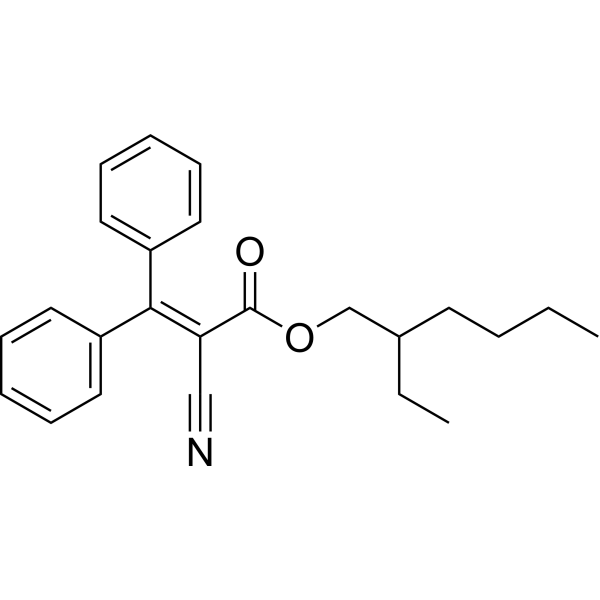
Octocrylene is an organic ultraviolet (UV) filter that absorbs mainly UVB radiation and shorter UVA wavelengths. Octocrylene acts as a partial agonist of PPARγ, which alters the gene transcription profile of lipid metabolism enzymes. In addition, Octocrylene is cytotoxic and genotoxic to human skin fibroblasts and mediates the biosynthesis of estrogens such as estriol in zebrafish larvae, while affecting antioxidant pathways including glutathione transferase and peroxisomes.
Nos produits utilisent uniquement pour la recherche. Nous ne vendons pas aux patients.
- Pureté : 98.68%
- CAS No.: 6197-30-4
- Formule: C24H27NO2
- Masse moléculaire:361.48
-
Stockage:Pure form -20°C, 3 years , 4°C, 2 years ; In solvent -80°C, 6 months , -20°C, 1 month

To place orders, for customer services and technical support, please contact: MedChemExpress USA
Tel: 609-228-6898 E-mail: [email protected] [email protected]


-
 Activité biologique
-
Chemical Information
-
Solvant et solubilité
- Protocole
- Pureté et documentation
- Références
-
 Help & FAQs


-
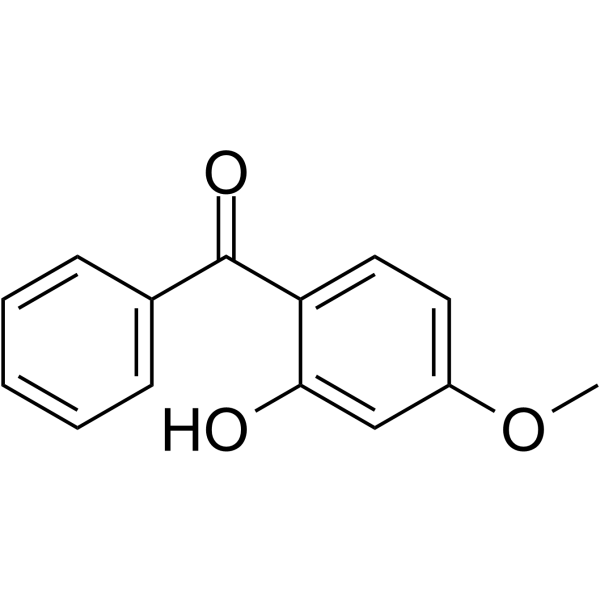
HY-A0067
OxybenzoneUltraviolet Light Filter -
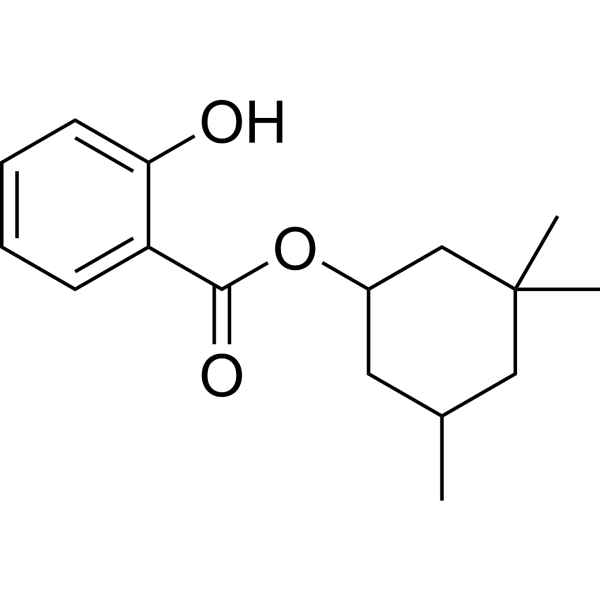
HY-B0928
HomosalateSun-Screening Agent -
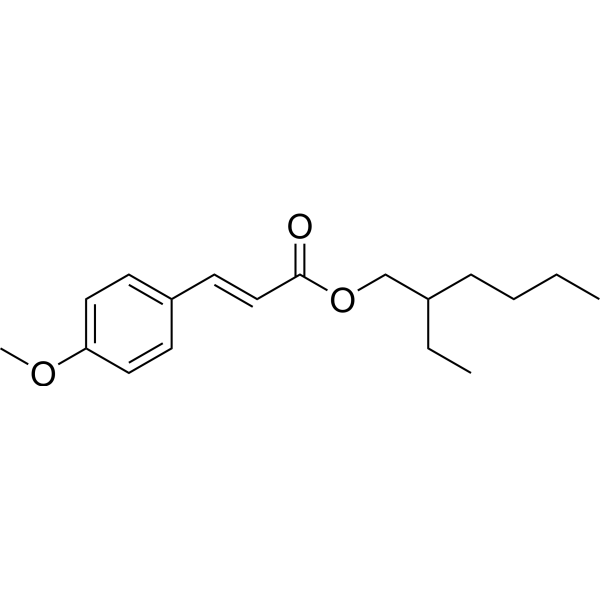
HY-B1234
OctinoxateIngredient of Sunscreens, Thyroid Hormone Receptor Agonist, ultraviolet filter -

HY-A0087R
Octocrylene (Standard)Organic Ultraviolet (UV) Filter -
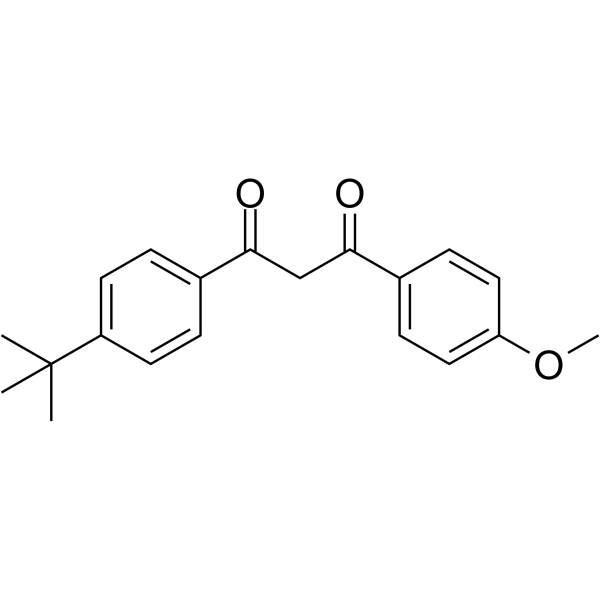
HY-B0316
AvobenzoneLong-Wave UVA Filter -
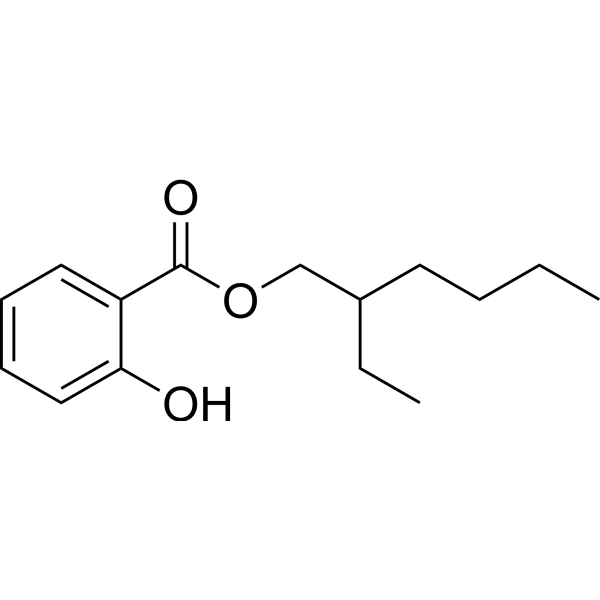
HY-B0929
OctisalateUltraviolet Radiation Absorber -
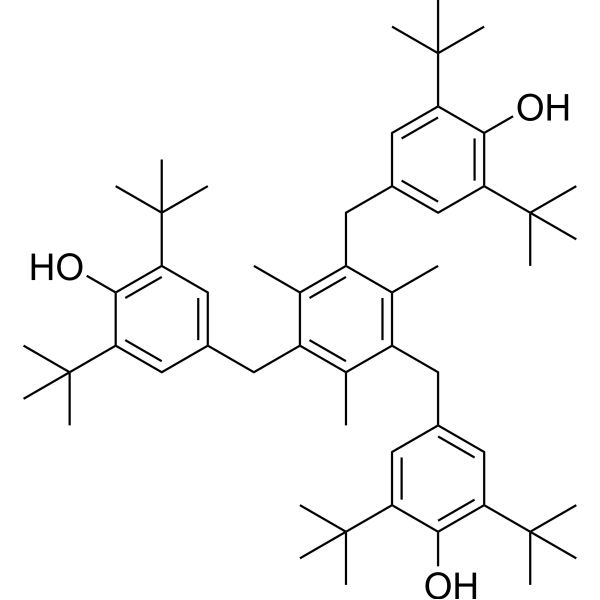
HY-120388
Ionox 330Antioxidant -
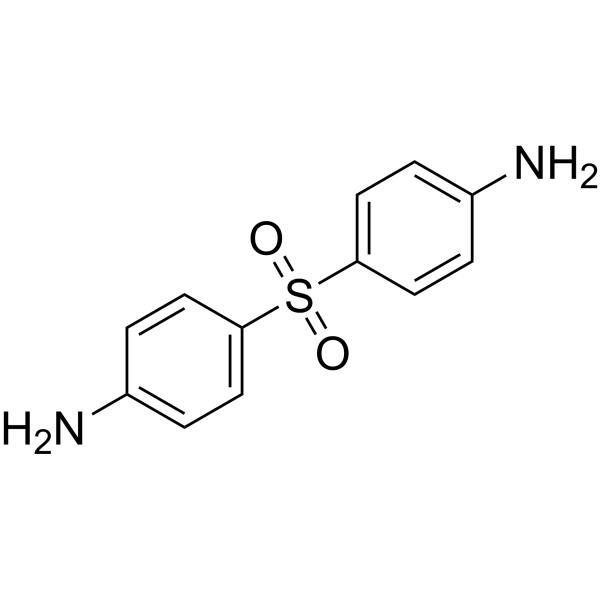
HY-B0688
DapsoneSulfonamide Antibiotic -

HY-W009160
OctrizoleUV Screener/Stabilizer -

HY-W099555R
Octadecyl 3-(3,5-di-tert-butyl-4-hydroxyphenyl)propionate (Standard) -
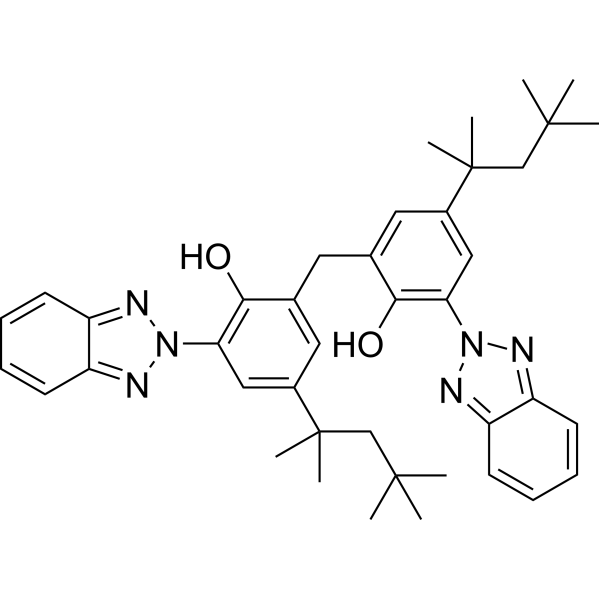
HY-B0897
BisoctrizoleUltraviolet Radiation Absorber -

HY-W014223
2,4′-DihydroxybenzophenoneAnti-Inflammatory Agent
Publications Citing Use of MedChemExpress (MCE) Octocrylene
More

Activité biologique
Description
In Vitro
Octocrylene (260-6500 μM; 24 h) concentration-dependently reduces human skin fibroblast survival (IC50=1390.95 μM) and increases DNA damage and intracellular oxidative stress levels[1]. Octocrylene (25.8 μM, 24 h; 5.5 μM, 96 h) is an activator of the ER pathway in zebrafish liver cell line[3]. Octocrylene (30 μM) promotes adiponectin production during adipogenesis in hBM-MSCs (EC50=29.6 μM) and directly bonds to the peroxisome proliferator-activated receptor PPARγ (Ki=37.8 μM)[4].
MedChemExpress (MCE) has not independently confirmed the accuracy of these methods. They are for reference only.
-
Cell Line:ZFL
-
Concentration:5.5 and 25.8 µM
-
Incubation Time:25.8 μM for 24 h; 5.5 μM for 96 h
-
Result:Increased the expression of CYP1A, CYP3A65, ERα, ERβ1, GPER, VTG1, CYP19A, and DMRT1 genes and downregulated the expression of AhRRB, AIP, ARNTL1A, and 11βHSD after 24 hours of incubation.
In Vivo
MedChemExpress (MCE) has not independently confirmed the accuracy of these methods. They are for reference only.
-
Animal Model:zebrafish larvae[3]
-
Dosage:251.8 μM
-
Administration:Exposure to the drug environment for 96 hours
-
Result:Increased the expression of CYP1A, CYP3A65, ERα, ERβ1, GPER, VTG1, CYP19A, and DMRT1 genes and downregulated the expression of AhRRB, AIP, ARNTL1A, and 11βHSD.


Chemical Information
-
CAS No. 6197-30-4
-
Appearance Liquid (Density: 1.051 g/cm3 )
-
Masse moléculaire 361.48
-
Formule C24H27NO2
-
Color Colorless to light yellow
-
SMILES
O=C(OCC(CC)CCCC)/C(C#N)=C(C1=CC=CC=C1)\C2=CC=CC=C2
-
Livraison
Room temperature in continental US; may vary elsewhere.
-
Stockage
Pure form -20°C 3 years 4°C 2 years In solvent -80°C 6 months -20°C 1 month


Publications (2)
-
Journal Impact Factor
-
Most Recent
-
ACS Appl Mater Interfaces
A Bioinspired Skin UV Filter with Broadband UV Protection, Photostability, and Resistance to Oxidative Damage. [Abstract]2023 Mar 1;15(8):10383-10397. PMID: 36800210 -
Toxicology
Octocrylene exposure impairs mouse oocyte quality by inducing spindle defects and mitochondria dysfunction. [Abstract]2022 Sep:479:153306. PMID: 36049589


Solvant et solubilité
In Vitro:
DMSO : ≥ 100 mg/mL (276.64 mM; Hygroscopic DMSO has a significant impact on the solubility of product, please use newly opened DMSO)
Ethanol : 50 mg/mL (138.32 mM; Need ultrasonic)
* "≥" means soluble, but saturation unknown.
Please refer to the solubility information to select the appropriate solvent. Once prepared, please aliquot and store the solution to prevent product inactivation from repeated freeze-thaw cycles.
Storage method and period of stock solution: -80°C, 6 months; -20°C, 1 month. When stored at -80°C, please use it within 6 months. When stored at -20°C, please use it within 1 month.
Please refer to the solubility information to select the appropriate solvent. Once prepared, please aliquot and store the solution to prevent product inactivation from repeated freeze-thaw cycles.
Storage method and period of stock solution: -80°C, 6 months; -20°C, 1 month. When stored at -80°C, please use it within 6 months. When stored at -20°C, please use it within 1 month.
Concentration (start) × Volume (start) = Concentration (final) × Volume (final)
In Vivo:
Select the appropriate dissolution method based on your experimental animal and administration route.
- For the following dissolution methods, please ensure to first prepare a clear stock solution using an In Vitro approach and then sequentially add co-solvents:
- To ensure reliable experimental results, the clarified stock solution can be appropriately stored based on storage conditions. As for the working solution for In Vivo experiments, it is recommended to prepare freshly and use it on the same day.
- The percentages shown for the solvents indicate their volumetric ratio in the final prepared solution. If precipitation or phase separation occurs during preparation, heat and/or sonication can be used to aid dissolution.
Add each solvent one by one: 10% DMSO 40% PEG300 5% Tween-80 45% Saline
Solubility: ≥ 2.5 mg/mL (6.92 mM); Clear solution
This protocol yields a clear solution of ≥ 2.5 mg/mL (saturation unknown).
Taking 1 mL working solution as an example, add 100 μL DMSO stock solution (25.0 mg/mL) to 400 μL PEG300, and mix evenly; then add 50 μL Tween-80 and mix evenly; then add 450 μL Saline to adjust the volume to 1 mL.
Preparation of Saline: Dissolve 0.9 g sodium chloride in ddH₂O and dilute to 100 mL to obtain a clear Saline solution.
Add each solvent one by one: 10% DMSO 90% (20% SBE-β-CD in Saline)
Solubility: 2.5 mg/mL (6.92 mM); Suspended solution; Need ultrasonic
This protocol yields a suspended solution of 2.5 mg/mL. Suspended solution can be used for oral and intraperitoneal injection.
Taking 1 mL working solution as an example, add 100 μL DMSO stock solution (25.0 mg/mL) to 900 μL 20% SBE-β-CD in Saline, and mix evenly.
Preparation of 20% SBE-β-CD in Saline (4°C, storage for one week): 2 g SBE-β-CD powder is dissolved in 10 mL Saline, completely dissolve until clear.
In Vivo Dissolution Calculator
Please enter the basic information of animal experiments:
-
-
-
-
Recommended: Prepare an additional quantity of animals to account for potential losses during experiments.
Please enter your animal formula composition:
-
%DMSO +
Recommended: Keep the proportion of DMSO in working solution below 2% if your animal is weak.
-
%+
-
+%Tween-80 + +
-
%Saline +
The co-solvents required include: DMSO, . All of co-solvents are available by MedChemExpress (MCE). , Tween 80. All of co-solvents are available by MedChemExpress (MCE).
Working solution concentration: 0.22 mg/mL
Method for preparing stock solution: mg drug dissolved in μL DMSO. Stock solution concentration: mg/mL.
1. Take μL DMSO stock solution;
2. Add μL .
μL , mix evenly;
3. Then add μL Tween 80, mix evenly;
4. Then add μL
Please ensure that the stock solution in the first step is dissolved to a clear state, and add co-solvents in sequence. You can use ultrasonic heating (ultrasonic cleaner, recommended frequency 20-40 kHz), vortexing, etc. to assist dissolution.


Pureté et documentation
-
Fiche technique (277 KB)
-
SDS (458 KB)
- English - EN (458 KB)
- Français - FR (458 KB)
- Deutsch - DE (458 KB)
- Norwegian - NO (458 KB)
- Español - ES (458 KB)
- Swedish - SV (458 KB)
- Italian - IT (458 KB)
- Korean - KR (458 KB)
- Portuguese - PT (458 KB)
-
Instruction de manipulation (2659 KB)
Références
[1]. E Berardesca, et al. Review of the safety of octocrylene used as an ultraviolet filter in cosmetics. J Eur Acad Dermatol Venereol. 2019 Nov;33 Suppl 7:25-33. [Content Brief]
[3]. Meng Q, et al. Toxic effects of octocrylene on zebrafish larvae and liver cell line (ZFL)[J]. Aquatic Toxicology, 2021, 236: 105843. [Content Brief]
[4]. Ko H, et al. Sunscreen filter octocrylene is a potential obesogen by acting as a PPARγ partial agonist[J]. Toxicology letters, 2022, 355: 141-149. [Content Brief]
[5]. de Groot A C, et al. Contact and photocontact allergy to octocrylene: a review[J]. Contact dermatitis, 2014, 70(4): 193-204. [Content Brief]


Complete Stock Solution Preparation Table
Please refer to the solubility information to select the appropriate solvent. Once prepared, please aliquot and store the solution to prevent product inactivation from repeated freeze-thaw cycles.
Storage method and period of stock solution: -80°C, 6 months; -20°C, 1 month. When stored at -80°C, please use it within 6 months. When stored at -20°C, please use it within 1 month.
| Optional Solvent | Concentration Solvent Mass | 1 mg | 5 mg | 10 mg | 25 mg |
|---|---|---|---|---|---|
| Ethanol / DMSO | 1 mM | 2.7664 mL | 13.8320 mL | 27.6640 mL | 69.1601 mL |
| 5 mM | 0.5533 mL | 2.7664 mL | 5.5328 mL | 13.8320 mL | |
| 10 mM | 0.2766 mL | 1.3832 mL | 2.7664 mL | 6.9160 mL | |
| 15 mM | 0.1844 mL | 0.9221 mL | 1.8443 mL | 4.6107 mL | |
| 20 mM | 0.1383 mL | 0.6916 mL | 1.3832 mL | 3.4580 mL | |
| 25 mM | 0.1107 mL | 0.5533 mL | 1.1066 mL | 2.7664 mL | |
| 30 mM | 0.0922 mL | 0.4611 mL | 0.9221 mL | 2.3053 mL | |
| 40 mM | 0.0692 mL | 0.3458 mL | 0.6916 mL | 1.7290 mL | |
| 50 mM | 0.0553 mL | 0.2766 mL | 0.5533 mL | 1.3832 mL | |
| 60 mM | 0.0461 mL | 0.2305 mL | 0.4611 mL | 1.1527 mL | |
| 80 mM | 0.0346 mL | 0.1729 mL | 0.3458 mL | 0.8645 mL | |
| 100 mM | 0.0277 mL | 0.1383 mL | 0.2766 mL | 0.6916 mL |


Octocrylene Related Classifications
HY-A0087 Related Classifications
 Powered by Bioz