



UC-112

Based on 1 Customer Validation
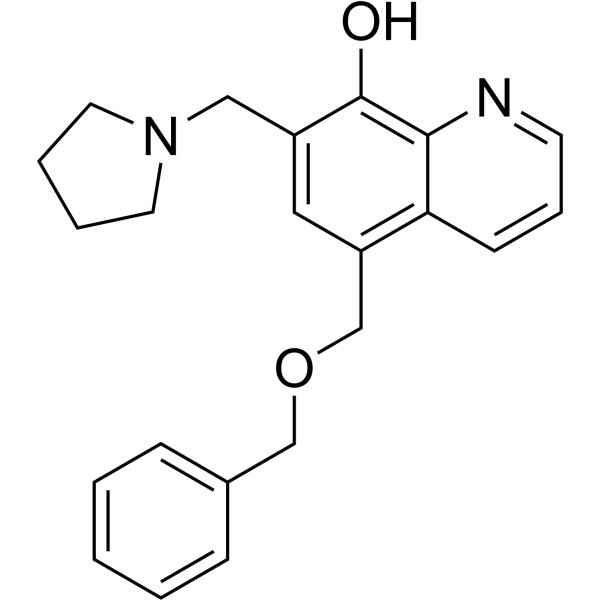
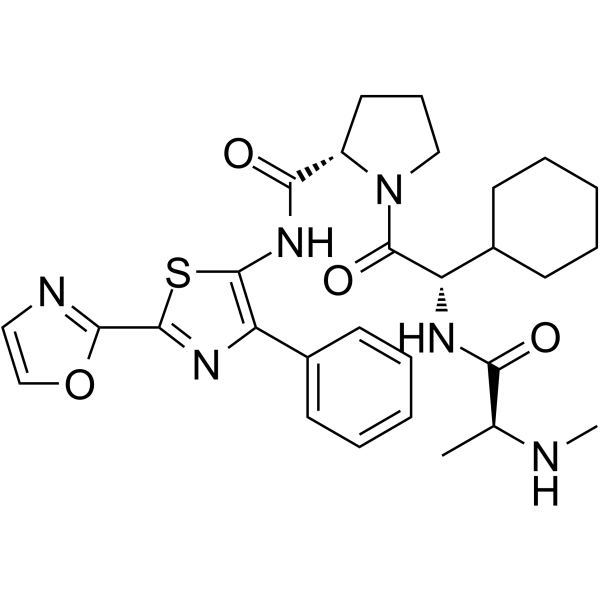
UC-112 is a XIAP inhibitor with anticancer activity. UC-112 selectively downregulates and degrades survivin via the ubiquitin-mediated proteasomal degradation pathway. UC-112 reduces XIAP levels in in vivo tumor models. UC-112 activates caspase-3/7 and caspase-9, and induces cancer cell apoptosis. UC-112 is applicable to studies on melanoma, prostate cancer and cancer-related research.
Nos produits utilisent uniquement pour la recherche. Nous ne vendons pas aux patients.
- Pureté : 98.92%
- CAS No.: 383392-66-3
- Formule: C22H24N2O2
- Masse moléculaire:348.44
-
Stockage:Powder -20°C, 3 years , 4°C, 2 years ; In solvent -80°C, 6 months , -20°C, 1 month

To place orders, for customer services and technical support, please contact: MedChemExpress USA
Tel: 609-228-6898 E-mail: [email protected] [email protected]


-
 Activité biologique
-
Chemical Information
-
Solvant et solubilité
- Protocole
- Pureté et documentation
- Références
-
 Help & FAQs


-
HY-12600
AZD5582 -
HY-15886
Mdivi-1Drp1 Inhibitor -
HY-17473
EmbelinXIAP Inhibitor -
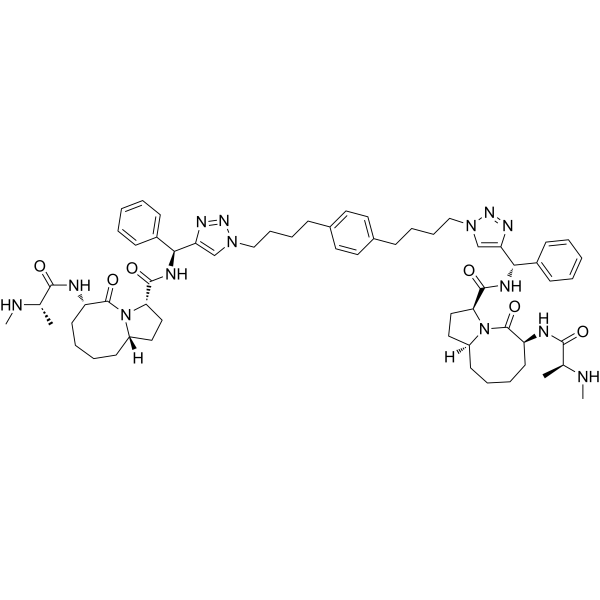
HY-15989
SM-164IAP Antagonist -
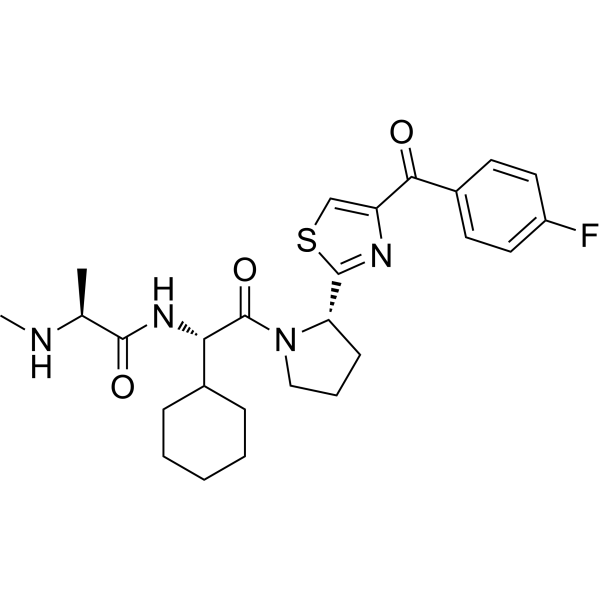
HY-15518
LCL161IAP Inhibitor -
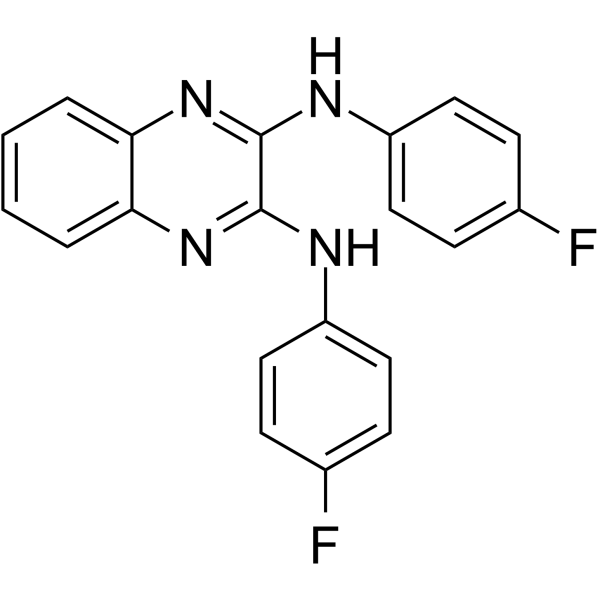
HY-136538
LQZ-7I -
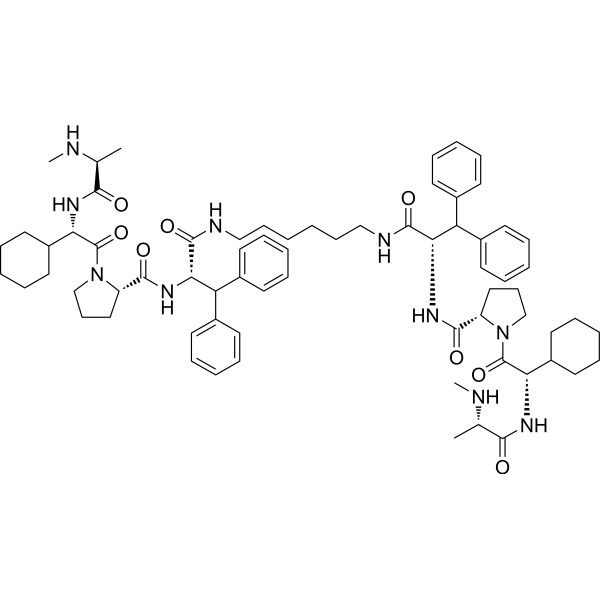
HY-16701
BV6cIAP1/XIAP Antagonist -
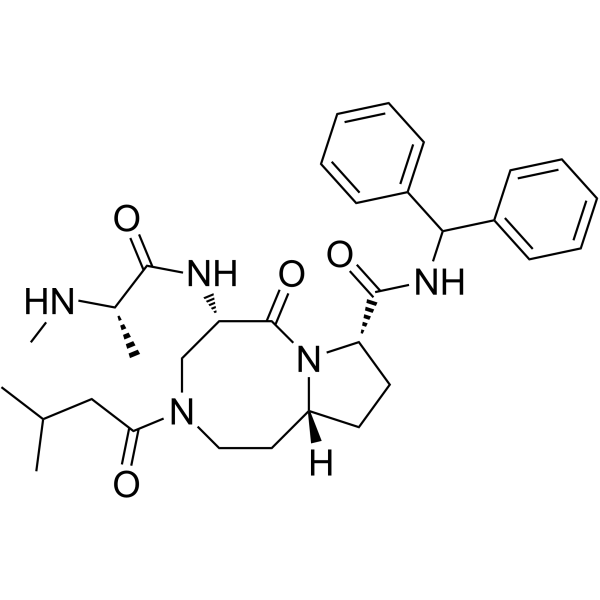
HY-15454
XevinapantSmac Mimetic/IAPs Antagonist -
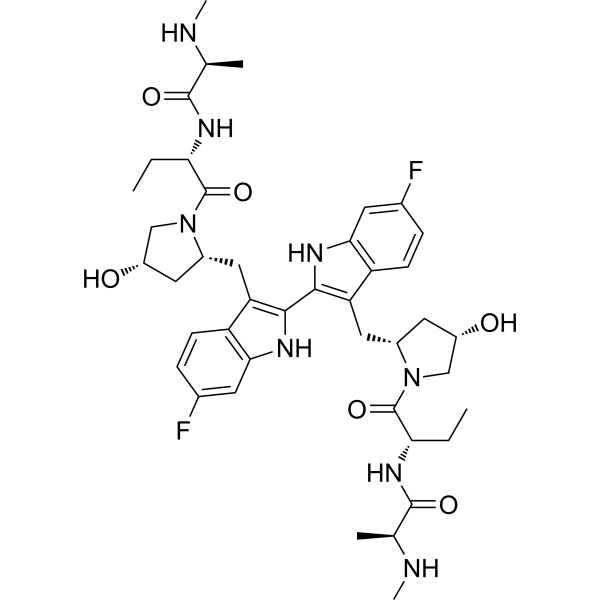
HY-16591
BirinapantXIAP/cIAP1 Antagonist -
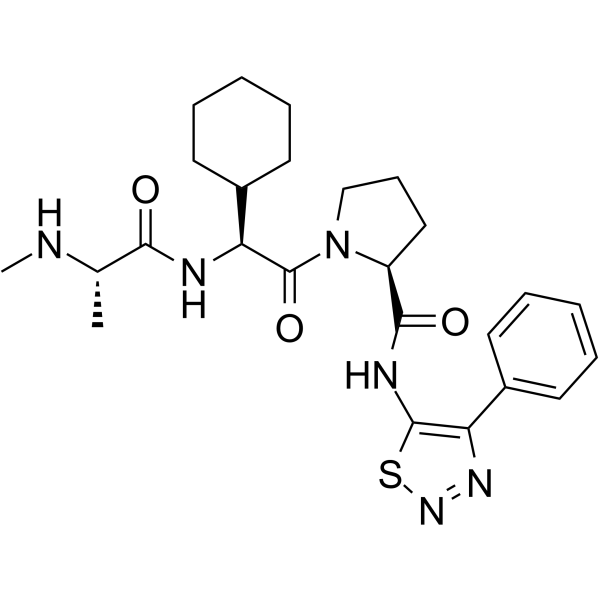
HY-13638
GDC-0152IAP Inhibitor -
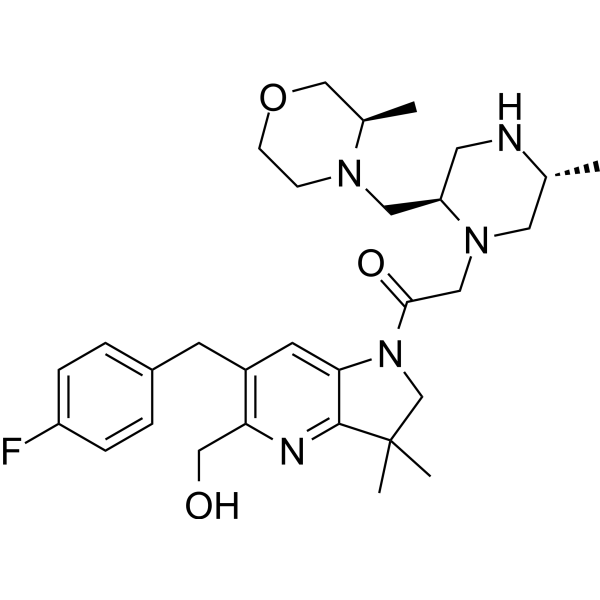
HY-109565
TolinapantIAP Antagonist -
HY-15835
CUDC-427IAP Inhibitor
Voir tous les produits spécifiques à Isoform Caspase
More

Activité biologique
Description
Cellular Effect
|
Cell Line

|
Type | Value | Description | References |
|---|---|---|---|---|
| A-375 | IC50 |
1.6 μM
Compound: 4; UC-112
|
Cytotoxicity against human A-375 cells assessed as inhibition of cell growth
Cytotoxicity against human A-375 cells assessed as inhibition of cell growth
|
[PMID: 38092421] |
| DU-145 | IC50 |
3.4 μM
Compound: 4; UC-112
|
Cytotoxicity against human DU-145 cells assessed as inhibition of cell growth
Cytotoxicity against human DU-145 cells assessed as inhibition of cell growth
|
[PMID: 38092421] |
| M14 | IC50 |
2.5 μM
Compound: 4; UC-112
|
Antiproliferative activity against human M14 cells assessed as reduction cell viability incubated for 48 hrs by MTT assay
Antiproliferative activity against human M14 cells assessed as reduction cell viability incubated for 48 hrs by MTT assay
|
[PMID: 38092421] |
| M14 | IC50 |
3.2 μM
Compound: 4; UC-112
|
Antiproliferative activity against human M14 cells assessed as inhibition of cell growth measured after 48 hrs by SRB assay
Antiproliferative activity against human M14 cells assessed as inhibition of cell growth measured after 48 hrs by SRB assay
|
[PMID: 38092421] |
| PC-3 | IC50 |
0.7 μM
Compound: 4; UC-112
|
Cytotoxicity against human PC-3 cells assessed as inhibition of cell growth
Cytotoxicity against human PC-3 cells assessed as inhibition of cell growth
|
[PMID: 38092421] |
In Vitro
UC-112 (3-10 μM; 48 h) potently inhibits proliferation of A375, M14, PC-3, and DU145 cancer cells with IC50 values ranging from 0.7 to 3.4 μM[1].
UC-112 (4 μM; 24-48 h) potently activates caspase-3/7 and caspase-9 activities in A375 and PC-3 cancer cells after 24 or 48 hours of incubation[1].
UC-112 (400 nM-10 μM; 24 h) selectively downregulates survivin levels in A375, PC-3, and DU145 cancer cells[1].
UC-112-induced survivin downregulation in A375, PC-3, and DU145 cancer cells is rescued by proteasome inhibition, indicating involvement of ubiquitin-mediated degradation[1].
UC-112 (1-4 μM; 24 h) alters cell cycle distribution of A375 melanoma cells, causing S phase accumulation at 1 μM and G0/G1 phase arrest with apoptotic sub-G1 events at 4 μM after 24-hour incubation[1].
UC-112 potently inhibits proliferation of both M14 and P-gp-overexpressing M14/MDR1 multidrug-resistant melanoma cells with low resistance, having IC50 values of 0.87 μM and 1.80 μM, respectively[1].
UC-112 (72 h) inhibits the proliferation of A375 and M14 human melanoma cells with IC50 values of 1.9 ± 0.6 μM and 2.1 ± 0.4 μM, respectively[2].
UC-112 (72 h) inhibits the proliferation of P-gp overexpressing M14/MDR1 human melanoma cells with an IC50 of 3.2 ± 0.5 μM and a resistance index of 1.5[2].
MedChemExpress (MCE) has not independently confirmed the accuracy of these methods. They are for reference only.
-
Cell Line:A375, M14, PC-3, DU145
-
Concentration:3 μM; 10 μM
-
Incubation Time:48 h
-
Result:Achieved 50.7% growth inhibition in A375 cells and 81.1% growth inhibition in M14 cells at 3 μM after 48-hour incubation.
Achieved 65.0% growth inhibition in A375 cells and 99.6% growth inhibition in M14 cells at 10 μM after 48-hour incubation.
Had IC50 values of 1.6 μM (A375), 2.5 μM (M14), 0.7 μM (PC-3), and 3.4 μM (DU145).
-
Cell Line:A375, PC-3, DU145
-
Concentration:400 nM; 1 μM, 4 μM; 10 μM
-
Incubation Time:24 h
-
Result:Suppressed survivin levels in A375, PC-3, and DU145 cells in a dose-dependent manner at 4 μM and 10 μM for 24 hours, achieving 94% and 97% survivin inhibition in A375 cells at 4 μM and 10 μM, respectively, with weaker inhibition of XIAP, cIAP1, and cIAP2.
Significantly downregulated survivin levels (greater than 50% compared to control) in A375 cells at 400 nM for 24 hours.
Required a concentration of 1 μM for 24 hours to achieve similar survivin downregulation in PC-3 cells.
-
Cell Line:A375, PC-3, DU145
-
Concentration:4 μM; 10 μM
-
Incubation Time:24 h
-
Result:Rescued survivin levels in PC-3 and DU145 cells when coincubated with 10 μM MG-132 at 4 μM or 10 μM for 24 hours.
Rescued survivin levels in A375 cells when pretreated with 20 μM or 50 μM MG-132 for 6 hours followed by incubation at 4 μM or 10 μM for 24 hours.
-
Cell Line:A375
-
Concentration:1 μM; 4 μM
-
Incubation Time:24 h
-
Result:Caused A375 cells to accumulate in S phase with a concurrent reduction in G2/M phase cells at 1 μM for 24 hours.
Caused 76% of A375 cells to accumulate in G0/G1 phase (compared to 51% in vehicle control), with a reduction in G2/M phase cells (13% compared to 21% in vehicle control) and increased sub-G1 events indicating apoptosis at 4 μM for 24 hours.
In Vivo
MedChemExpress (MCE) has not independently confirmed the accuracy of these methods. They are for reference only.
-
Animal Model:nude mice (7-8-week-old male; subcutaneous inoculation of human melanoma cells)[1]
-
Dosage:20 mg/kg; 40 mg/kg
-
Administration:i.p.; once daily, 5 days per week; 3 weeks
-
Result:Achieved 65.59% tumor growth inhibition (TGI) compared to vehicle control.
Achieved 95.23% TGI, with average tumor weight reduced to 13.56% of the vehicle control group's average tumor weight.
Reduced both survivin and X chromosome-linked IAP (XIAP) levels in fresh tumor lysates.
Induced extensive tumor cell death observed via hematoxylin and eosin staining.
Caused dose-dependent increases in tumor cell apoptosis detected via terminal deoxynucleotidyl transferase-mediated digoxigenin-deoxyuridine nick-end labeling (TUNEL) assay.
Showed no >10% body weight loss in treated mice.


Chemical Information
-
CAS No. 383392-66-3
-
Appearance Solid
-
Masse moléculaire 348.44
-
Formule C22H24N2O2
-
Color White to off-white
-
SMILES
OC1=C2N=CC=CC2=C(COCC3=CC=CC=C3)C=C1CN4CCCC4
-
Livraison
Room temperature in continental US; may vary elsewhere.
-
Stockage
Powder -20°C 3 years 4°C 2 years In solvent -80°C 6 months -20°C 1 month


Solvant et solubilité
In Vitro:
DMSO : 33.33 mg/mL (95.65 mM; Need ultrasonic; Hygroscopic DMSO has a significant impact on the solubility of product, please use newly opened DMSO)
Please refer to the solubility information to select the appropriate solvent. Once prepared, please aliquot and store the solution to prevent product inactivation from repeated freeze-thaw cycles.
Storage method and period of stock solution: -80°C, 6 months; -20°C, 1 month. When stored at -80°C, please use it within 6 months. When stored at -20°C, please use it within 1 month.
Please refer to the solubility information to select the appropriate solvent. Once prepared, please aliquot and store the solution to prevent product inactivation from repeated freeze-thaw cycles.
Storage method and period of stock solution: -80°C, 6 months; -20°C, 1 month. When stored at -80°C, please use it within 6 months. When stored at -20°C, please use it within 1 month.
Concentration (start) × Volume (start) = Concentration (final) × Volume (final)
In Vivo:
Select the appropriate dissolution method based on your experimental animal and administration route.
- For the following dissolution methods, please ensure to first prepare a clear stock solution using an In Vitro approach and then sequentially add co-solvents:
- To ensure reliable experimental results, the clarified stock solution can be appropriately stored based on storage conditions. As for the working solution for In Vivo experiments, it is recommended to prepare freshly and use it on the same day.
- The percentages shown for the solvents indicate their volumetric ratio in the final prepared solution. If precipitation or phase separation occurs during preparation, heat and/or sonication can be used to aid dissolution.
Add each solvent one by one: 10% DMSO 40% PEG300 5% Tween-80 45% Saline
Solubility: ≥ 2.5 mg/mL (7.17 mM); Clear solution
This protocol yields a clear solution of ≥ 2.5 mg/mL (saturation unknown).
Taking 1 mL working solution as an example, add 100 μL DMSO stock solution (25.0 mg/mL) to 400 μL PEG300, and mix evenly; then add 50 μL Tween-80 and mix evenly; then add 450 μL Saline to adjust the volume to 1 mL.
Preparation of Saline: Dissolve 0.9 g sodium chloride in ddH₂O and dilute to 100 mL to obtain a clear Saline solution.
Add each solvent one by one: 10% DMSO 90% (20% SBE-β-CD in Saline)
Solubility: 2.5 mg/mL (7.17 mM); Suspended solution; Need ultrasonic
This protocol yields a suspended solution of 2.5 mg/mL. Suspended solution can be used for oral and intraperitoneal injection.
Taking 1 mL working solution as an example, add 100 μL DMSO stock solution (25.0 mg/mL) to 900 μL 20% SBE-β-CD in Saline, and mix evenly.
Preparation of 20% SBE-β-CD in Saline (4°C, storage for one week): 2 g SBE-β-CD powder is dissolved in 10 mL Saline, completely dissolve until clear.
In Vivo Dissolution Calculator
Please enter the basic information of animal experiments:
-
-
-
-
Recommended: Prepare an additional quantity of animals to account for potential losses during experiments.
Please enter your animal formula composition:
-
%DMSO +
Recommended: Keep the proportion of DMSO in working solution below 2% if your animal is weak.
-
%+
-
+%Tween-80 + +
-
%Saline +
The co-solvents required include: DMSO, . All of co-solvents are available by MedChemExpress (MCE). , Tween 80. All of co-solvents are available by MedChemExpress (MCE).
Working solution concentration: 0.22 mg/mL
Method for preparing stock solution: mg drug dissolved in μL DMSO. Stock solution concentration: mg/mL.
1. Take μL DMSO stock solution;
2. Add μL .
μL , mix evenly;
3. Then add μL Tween 80, mix evenly;
4. Then add μL
Please ensure that the stock solution in the first step is dissolved to a clear state, and add co-solvents in sequence. You can use ultrasonic heating (ultrasonic cleaner, recommended frequency 20-40 kHz), vortexing, etc. to assist dissolution.


Pureté et documentation
-
Fiche technique (283 KB)
-
SDS (251 KB)
- English - EN (251 KB)
- Français - FR (251 KB)
- Deutsch - DE (251 KB)
- Norwegian - NO (251 KB)
- Español - ES (251 KB)
- Swedish - SV (251 KB)
- Italian - IT (251 KB)
- Korean - KR (251 KB)
- Portuguese - PT (251 KB)
-
Instruction de manipulation (2659 KB)
Références
[1]. Wang J, et al. Discovery of novel second mitochondria-derived activator of caspase mimetics as selective inhibitor of apoptosis protein inhibitors. J Pharmacol Exp Ther. 2014;349(2):319-329. [Content Brief]
[2]. Wang Q, et al. Synthesis and biological evaluation of indole-based UC-112 analogs as potent and selective survivin inhibitors. Eur J Med Chem. 2018;149:211-224. [Content Brief]


Complete Stock Solution Preparation Table
Please refer to the solubility information to select the appropriate solvent. Once prepared, please aliquot and store the solution to prevent product inactivation from repeated freeze-thaw cycles.
Storage method and period of stock solution: -80°C, 6 months; -20°C, 1 month. When stored at -80°C, please use it within 6 months. When stored at -20°C, please use it within 1 month.
| Optional Solvent | Concentration Solvent Mass | 1 mg | 5 mg | 10 mg | 25 mg |
|---|---|---|---|---|---|
| DMSO | 1 mM | 2.8699 mL | 14.3497 mL | 28.6993 mL | 71.7484 mL |
| 5 mM | 0.5740 mL | 2.8699 mL | 5.7399 mL | 14.3497 mL | |
| 10 mM | 0.2870 mL | 1.4350 mL | 2.8699 mL | 7.1748 mL | |
| 15 mM | 0.1913 mL | 0.9566 mL | 1.9133 mL | 4.7832 mL | |
| 20 mM | 0.1435 mL | 0.7175 mL | 1.4350 mL | 3.5874 mL | |
| 25 mM | 0.1148 mL | 0.5740 mL | 1.1480 mL | 2.8699 mL | |
| 30 mM | 0.0957 mL | 0.4783 mL | 0.9566 mL | 2.3916 mL | |
| 40 mM | 0.0717 mL | 0.3587 mL | 0.7175 mL | 1.7937 mL | |
| 50 mM | 0.0574 mL | 0.2870 mL | 0.5740 mL | 1.4350 mL | |
| 60 mM | 0.0478 mL | 0.2392 mL | 0.4783 mL | 1.1958 mL | |
| 80 mM | 0.0359 mL | 0.1794 mL | 0.3587 mL | 0.8969 mL |


UC-112 Related Classifications
HY-12842 Related Classifications
 Powered by Bioz