



NG 52
Based on 17 publication(s) in Google Scholar
NG 52 is a potent, cell-permeable, selective, ATP-compatible and orally active Cdc28p and Pho85p kinase inhibitor with IC50s of 7 μM and 2 μM, respectively. NG 52 also inhibits the activity of phosphoglycerate kinase 1 (PGK1) with an IC50 of 2.5 μM. NG 52 is inactive against yeast kinases Kin28p, Srb10, and Cak1p.
Para uso exclusivo en investigación. No vendemos a pacientes.
- Pureza : 99.88%
- No. CAS: 212779-48-1
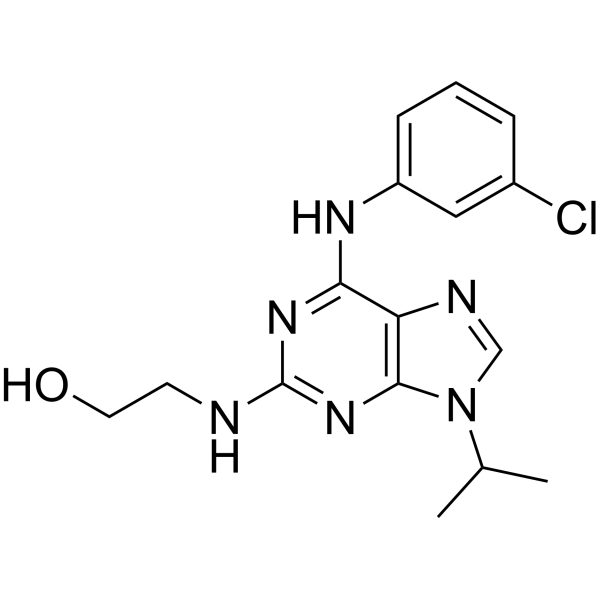
- Fòrmula: C16H19ClN6O
- Peso molecular:346.81
-
Almacenamiento:Powder -20°C, 3 years , 4°C, 2 years ; In solvent -80°C, 2 years , -20°C, 1 year

To place orders, for customer services and technical support, please contact: MedChemExpress USA
Tel: 609-228-6898 E-mail: [email protected] [email protected]


-
 Actividad biológica
-
Chemical Information
-
Solvente y solubilidad
- Pureza y Documentación
- Referencias
-
 Help & FAQs


-
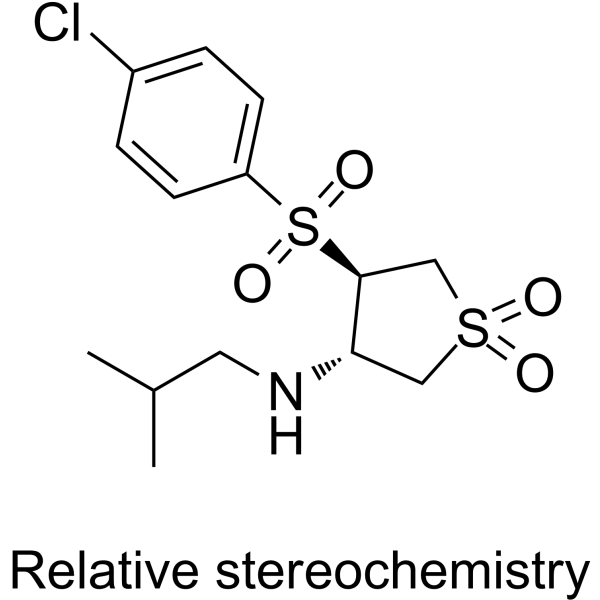
HY-134205A
CBR-470-1PGK1 Inhibitor -
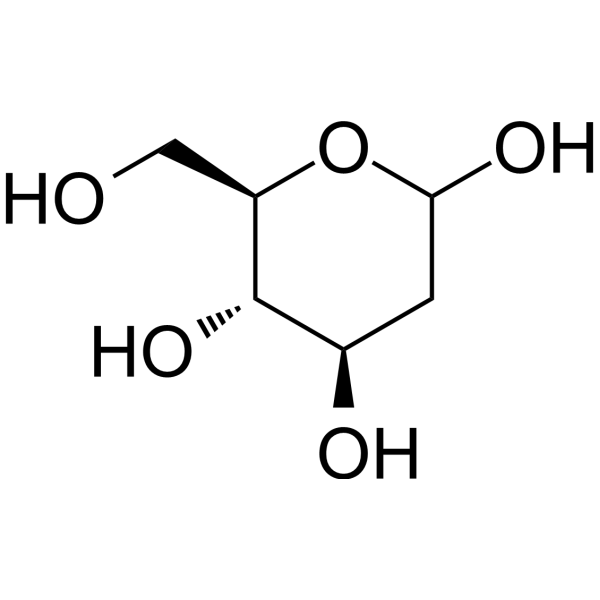
HY-13966
2-Deoxy-D-glucoseGlycolysis Inhibitor -
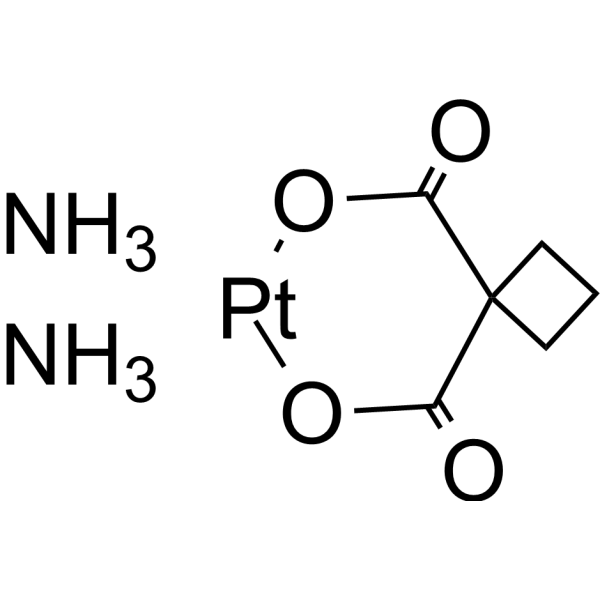
HY-17393
CarboplatinDNA Synthesis Inhibitor -
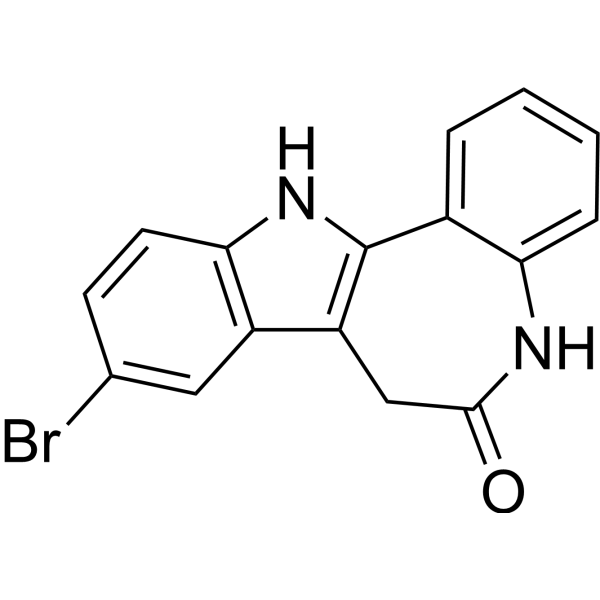
HY-12302
KenpaulloneCDK1/GSK-3β Inhibitor -
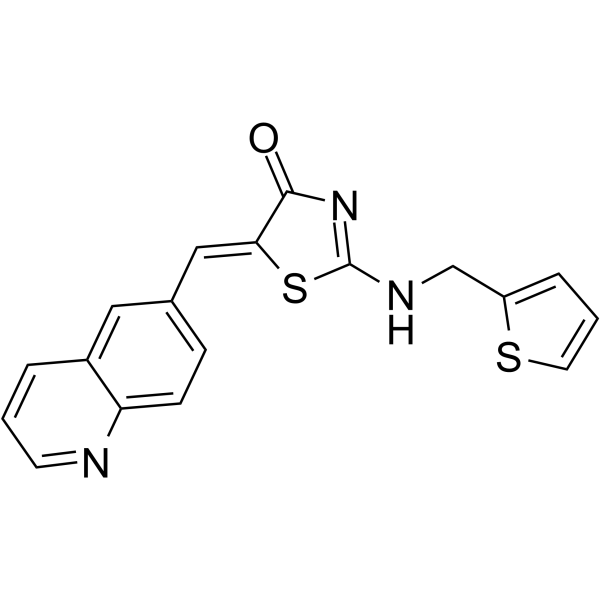
HY-12529
Ro-3306CDK1 Inhibitor -
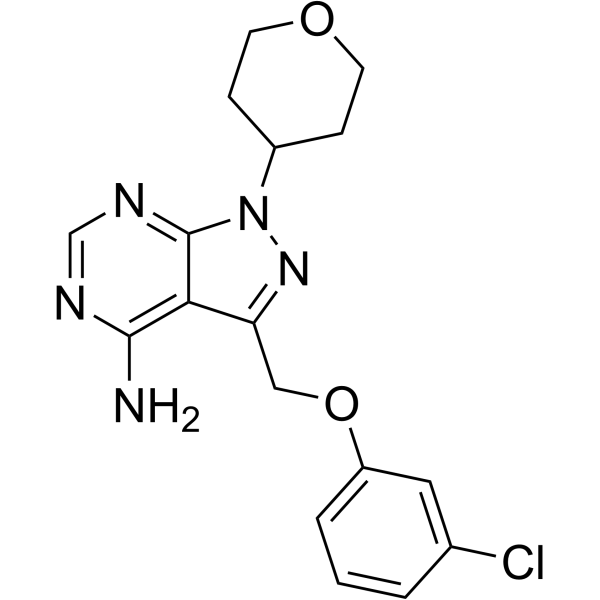
HY-12470
PF-4800567CK1 Inhibitor -

HY-15154R
NG 52 (Standard)Cdc28p/Pho85p/PGK1 Inhibitor -
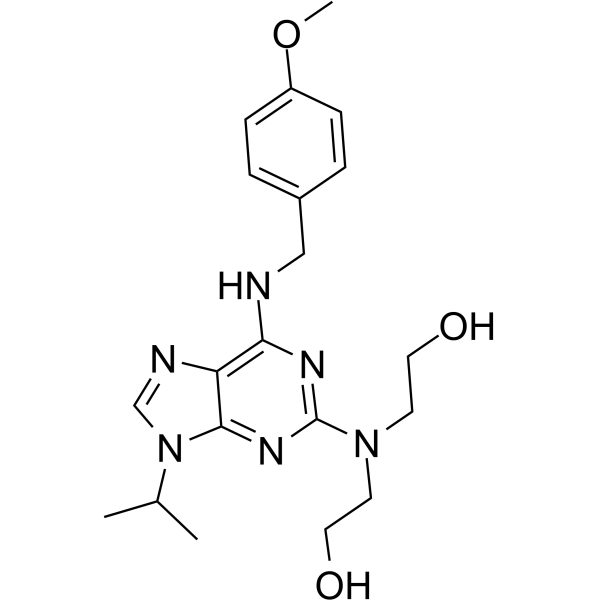
HY-15339
CVT-313CDK2 Inhibitor -
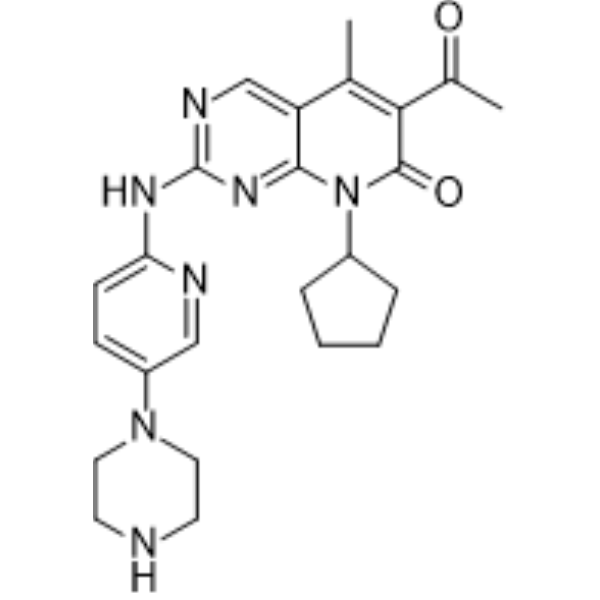
HY-50767
PalbociclibCDK4/6 Inhibitor -
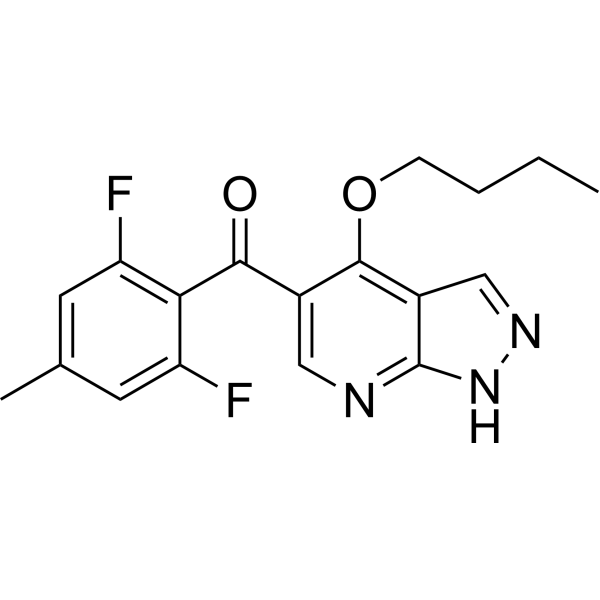
HY-15275
BMS-265246CDK1/2 Inhibitor -
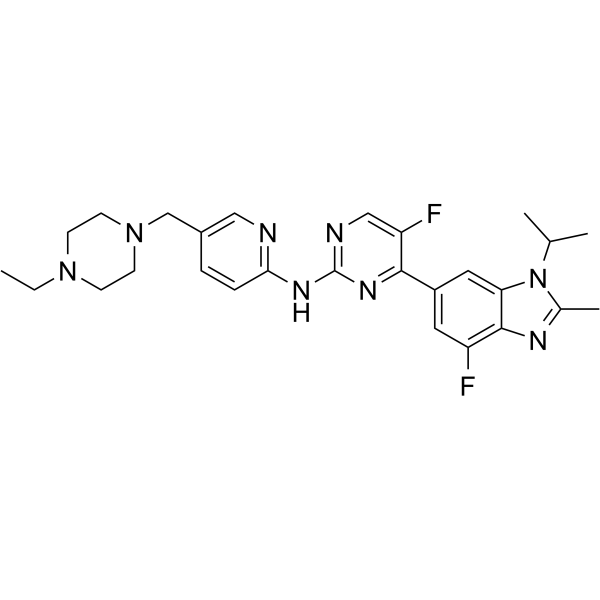
HY-16297A
AbemaciclibCDK4/6 Inhibitor -
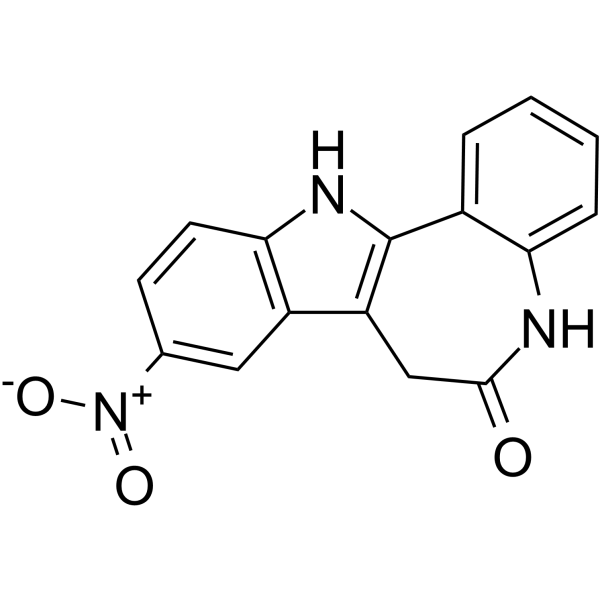
HY-108359
AlsterpaulloneCDK Inhibitor
Publications Citing Use of MedChemExpress (MCE) NG 52
More- Acta Pharmacol Sin. 2021 Apr;42(4):633-640. [Abstract]
- Sci China Life Sci. 2026 Jul 22.
- Food Chem X. 2024 Jan 9:21:101125. [Abstract]
- J Med Chem. 2025 Oct 23;68(20):21394-21411. [Abstract]
- Cancer Cell Int. 2026 Aug 20.
- J Agric Food Chem. 2025 May 28;73(21):12702-12722. [Abstract]
- Eur J Med Chem. 2024 Mar 5:267:116209. [Abstract]
- Respir Res. 2024 Jul 30;25(1):291. [Abstract]
- ACS Appl Bio Mater. 2025 Jul 21;8(7):5930-5937. [Abstract]
- Inflammation. 2024 Oct 29. [Abstract]
- Biochim Biophys Acta Mol Cell Res. 2025 Oct;1872(7):120009. [Abstract]
- FASEB J. 2025 Oct 15;39(19):e71071. [Abstract]
- Vet Res. 2025 Mar 7;56(1):50. [Abstract]
- J Appl Physiol (1985). 2023 Jun 29.
- Vet Microbiol. 2025 Oct 22.
- Res Sq. 2025 Sep 9.
- Ursinus College. 2025.
 Customer Validation & Images

-
WB


Actividad biológica
Descripciòn
|
cdc2-cyclin B 0.34 μM (IC50) |
Pho85p 2 nM (IC50) |
Cdc28p 7 μM (IC50) |
Phosphoglycerate kinase 1 (PGK1) 2.5 μM (IC50) |
In Vitro
NG 52 (Compound 52) inhibits growth in a drug-sensitized yeast strain (S. cerevisiae) with a GI50 of 30 μM. NG 52 is active against cdc2-cyclin B with an IC50 value of 340 nM[1].
NG 52 dose-dependently inhibits the proliferation of glioma U87 and U251 cell lines with GI50 values of 7.8 μM and 5.2 μM, respectively, meanwhile it potently inhibits the proliferation of primary glioma cells[2].
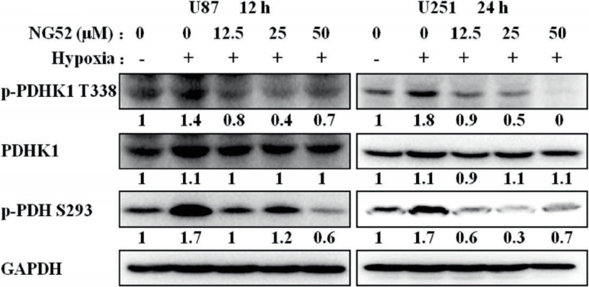
NG 52 (12.5-50 μM) effectively inhibits the phosphorylation of PDHK1 at Thr338 site and the phosphorylation of PDH at Ser293 site in U87 and U251 cells, resulting in more pyruvic acid entering the Krebs cycle with increased production of ATP and ROS[2].
NG 52 can reverse the Warburg effect by enhancing the activity of pyruvate dehydrogenase (PDH) through inhibiting the activity of PGK1, and switched cellular glucose metabolism from anaerobic mode to aerobic mode[2].
MedChemExpress (MCE) has not independently confirmed the accuracy of these methods. They are for reference only. .
-
Cell Line:Glioma U87 and U251 cells
-
Concentration:0 μM, 12.5 μM, 25 μM, 50 μM
-
Incubation Time:6 days
-
Result:Potently inhibited the proliferation of primary glioma cells.
-
Cell Line:Glioma U87 and U251 cells
-
Concentration:0 μM, 12.5 μM, 25 μM, 50 μM
-
Incubation Time:12 hours or 24 hours
-
Result:Potently inhibited the proliferation of primary glioma cells.
In Vivo
MedChemExpress (MCE) has not independently confirmed the accuracy of these methods. They are for reference only.
-
Animal Model:Female nu/nu mice (5-week-old) injected with glioma cells[2]
-
Dosage:50 mg/kg, 100 mg/kg, 150 mg/kg
-
Administration:Oral administration; daily; for 13 days
-
Result:Dose-dependently suppressed the growth of glioma xenograft.


Chemical Information
-
No. CAS 212779-48-1
-
Appearance Solid
-
Peso molecular 346.81
-
Fòrmula C16H19ClN6O
-
Color White to off-white
-
SMILES
ClC1=CC(NC2=NC(NCCO)=NC3=C2N=CN3C(C)C)=CC=C1
-
Synonyms
Compound 52
-
Envío
Room temperature in continental US; may vary elsewhere.
-
Almacenamiento
Powder -20°C 3 years 4°C 2 years In solvent -80°C 2 years -20°C 1 year


Publications (17)
-
Journal Impact Factor
-
Most Recent
-
Acta Pharmacol Sin
2021 Apr;42(4):633-640. PMID: 32737469
NG 52 purchased from MedChemExpress. Usage Cited in: Acta Pharmacol Sin. 2021 Apr;42(4):633-640. [Abstract]
Inhibition of NG52 on the phosphorylation of PDHK1 and PDH in glioma cells is examined by Western blot after glioma cells are treated with NG52 for 12 h under hypoxic conditions.
-
-
Food Chem X
Effects of phosphoglycerate kinase 1 and pyruvate kinase M2 on metabolism and physiochemical changes in postmortem muscle. [Abstract]2024 Jan 9:21:101125. PMID: 38292674 -
J Med Chem
Discovery of Novel Purine Derivatives as Potent and Orally Bioavailable PGK1 Inhibitors for the Treatment of Inflammatory Bowel Disease. [Abstract]2025 Oct 23;68(20):21394-21411. PMID: 41077732 -
-
J Agric Food Chem
Isochlorogenic Acid A Attenuated Periodontitis by Inhibiting Inflammation via ACE/PGK1/STAT1 Signaling. [Abstract]2025 May 28;73(21):12702-12722. PMID: 40368646 -
Eur J Med Chem
Novel inhibitors targeting the PGK1 metabolic enzyme in glycolysis exhibit effective antitumor activity against kidney renal clear cell carcinoma in vitro and in vivo. [Abstract]2024 Mar 5:267:116209. PMID: 38354523 -
Respir Res
Glycolytic enzyme PGK1 promotes M1 macrophage polarization and induces pyroptosis of acute lung injury via regulation of NLRP3. [Abstract]2024 Jul 30;25(1):291. PMID: 39080660 -
ACS Appl Bio Mater
Inhibition of Phosphoglycerate Kinase 1 (PGK1) Decreases Neointimal Hyperplasia after Patch Angioplasty. [Abstract]2025 Jul 21;8(7):5930-5937. PMID: 40527761 -
Inflammation
Pharmacological Inhibition of Phosphoglycerate Kinase 1 Reduces OxiDative Stress and Restores Impaired Autophagy in Experimental Acute Pancreatitis. [Abstract]2024 Oct 29. PMID: 39470963 -
Biochim Biophys Acta Mol Cell Res
PGK1 mediates glycolysis and cell proliferation in endometriosis by regulating DDIT4 nuclear translocation. [Abstract]2025 Oct;1872(7):120009. PMID: 40532826 -
FASEB J
Glycolytic Metabolite 3-Phosphoglycerate Induced by Inflammation Inhibits Chondrocyte Survival. [Abstract]2025 Oct 15;39(19):e71071. PMID: 41020567 -
Vet Res
PGK1 enhances productive bovine herpesvirus 1 infection by stimulating β-catenin-dependent transcription. [Abstract]2025 Mar 7;56(1):50. PMID: 40055833 -
-
-
-


Solvente y solubilidad
In Vitro:
DMSO : 75 mg/mL (216.26 mM; Need ultrasonic; Hygroscopic DMSO has a significant impact on the solubility of product, please use newly opened DMSO)
Please refer to the solubility information to select the appropriate solvent. Once prepared, please aliquot and store the solution to prevent product inactivation from repeated freeze-thaw cycles.
Storage method and period of stock solution: -80°C, 2 years; -20°C, 1 year. When stored at -80°C, please use it within 2 years. When stored at -20°C, please use it within 1 year.
Please refer to the solubility information to select the appropriate solvent. Once prepared, please aliquot and store the solution to prevent product inactivation from repeated freeze-thaw cycles.
Storage method and period of stock solution: -80°C, 2 years; -20°C, 1 year. When stored at -80°C, please use it within 2 years. When stored at -20°C, please use it within 1 year.
Concentration (start) × Volume (start) = Concentration (final) × Volume (final)
In Vivo:
Select the appropriate dissolution method based on your experimental animal and administration route.
- For the following dissolution methods, please ensure to first prepare a clear stock solution using an In Vitro approach and then sequentially add co-solvents:
- To ensure reliable experimental results, the clarified stock solution can be appropriately stored based on storage conditions. As for the working solution for In Vivo experiments, it is recommended to prepare freshly and use it on the same day.
- The percentages shown for the solvents indicate their volumetric ratio in the final prepared solution. If precipitation or phase separation occurs during preparation, heat and/or sonication can be used to aid dissolution.
Add each solvent one by one: 10% DMSO 40% PEG300 5% Tween-80 45% Saline
Solubility: ≥ 2.5 mg/mL (7.21 mM); Clear solution
This protocol yields a clear solution of ≥ 2.5 mg/mL (saturation unknown).
Taking 1 mL working solution as an example, add 100 μL DMSO stock solution (25.0 mg/mL) to 400 μL PEG300, and mix evenly; then add 50 μL Tween-80 and mix evenly; then add 450 μL Saline to adjust the volume to 1 mL.
Preparation of Saline: Dissolve 0.9 g sodium chloride in ddH₂O and dilute to 100 mL to obtain a clear Saline solution.
In Vivo Dissolution Calculator
Please enter the basic information of animal experiments:
-
-
-
-
Recommended: Prepare an additional quantity of animals to account for potential losses during experiments.
Please enter your animal formula composition:
-
%DMSO +
Recommended: Keep the proportion of DMSO in working solution below 2% if your animal is weak.
-
%+
-
+%Tween-80 + +
-
%Saline +
The co-solvents required include: DMSO, . All of co-solvents are available by MedChemExpress (MCE). , Tween 80. All of co-solvents are available by MedChemExpress (MCE).
Working solution concentration: 0.22 mg/mL
Method for preparing stock solution: mg drug dissolved in μL DMSO. Stock solution concentration: mg/mL.
1. Take μL DMSO stock solution;
2. Add μL .
μL , mix evenly;
3. Then add μL Tween 80, mix evenly;
4. Then add μL
Please ensure that the stock solution in the first step is dissolved to a clear state, and add co-solvents in sequence. You can use ultrasonic heating (ultrasonic cleaner, recommended frequency 20-40 kHz), vortexing, etc. to assist dissolution.


Pureza y Documentación
-
Ficha de datos (280 KB)
-
SDS (393 KB)
- English - EN (393 KB)
- Français - FR (393 KB)
- Deutsch - DE (393 KB)
- Norwegian - NO (393 KB)
- Español - ES (393 KB)
- Swedish - SV (393 KB)
- Italian - IT (393 KB)
- Korean - KR (393 KB)
- Portuguese - PT (393 KB)
-
Instrucciones de manejo (2659 KB)
Referencias
[1]. ray NS, Wodicka L, Thunnissen AM et al. Exploiting chemical libraries, structure, and genomics in the search for kinase inhibitors. Science. 1998 Jul 24;281(5376):533-8. [Content Brief]
[2]. Wen-Liang Wang, et al. Pharmacologically inhibiting phosphoglycerate kinase 1 for glioma with NG52. Acta Pharmacol Sin. 2020 Jul 31. [Content Brief]


Complete Stock Solution Preparation Table
Please refer to the solubility information to select the appropriate solvent. Once prepared, please aliquot and store the solution to prevent product inactivation from repeated freeze-thaw cycles.
Storage method and period of stock solution: -80°C, 2 years; -20°C, 1 year. When stored at -80°C, please use it within 2 years. When stored at -20°C, please use it within 1 year.
| Optional Solvent | Concentration Solvent Mass | 1 mg | 5 mg | 10 mg | 25 mg |
|---|---|---|---|---|---|
| DMSO | 1 mM | 2.8834 mL | 14.4171 mL | 28.8342 mL | 72.0856 mL |
| 5 mM | 0.5767 mL | 2.8834 mL | 5.7668 mL | 14.4171 mL | |
| 10 mM | 0.2883 mL | 1.4417 mL | 2.8834 mL | 7.2086 mL | |
| 15 mM | 0.1922 mL | 0.9611 mL | 1.9223 mL | 4.8057 mL | |
| 20 mM | 0.1442 mL | 0.7209 mL | 1.4417 mL | 3.6043 mL | |
| 25 mM | 0.1153 mL | 0.5767 mL | 1.1534 mL | 2.8834 mL | |
| 30 mM | 0.0961 mL | 0.4806 mL | 0.9611 mL | 2.4029 mL | |
| 40 mM | 0.0721 mL | 0.3604 mL | 0.7209 mL | 1.8021 mL | |
| 50 mM | 0.0577 mL | 0.2883 mL | 0.5767 mL | 1.4417 mL | |
| 60 mM | 0.0481 mL | 0.2403 mL | 0.4806 mL | 1.2014 mL | |
| 80 mM | 0.0360 mL | 0.1802 mL | 0.3604 mL | 0.9011 mL | |
| 100 mM | 0.0288 mL | 0.1442 mL | 0.2883 mL | 0.7209 mL |


NG 52 Related Classifications
HY-15154 Related Classifications
 Powered by Bioz