



Ethyl linoleate

Based on 1 Customer Validation
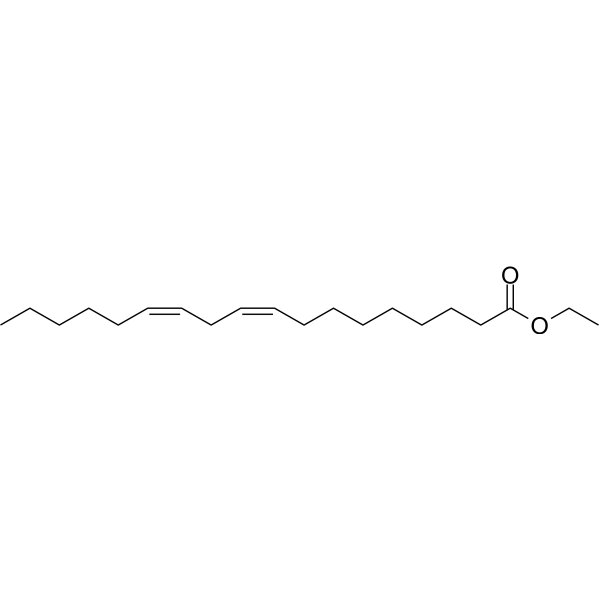
Ethyl linoleate (Linoleic Acid ethyl ester) is an orally active unsaturated fatty acid. Ethyl linoleate inhibits the Akt/GSK3β/β-catenin signaling pathway and the activation of NF-κB. Ethyl linoleate induces heme oxygenase-1 and inhibits tyrosinase. Ethyl linoleate has whitening and anti-inflammatory effects. Ethyl linoleate promotes compound absorption. Ethyl linoleate has a significant influence on atherosclerosis. Ethyl linoleate is used in the research of inflammatory diseases. Ethyl linoleate can be used in cosmetics
For research use only. We do not sell to patients.
- Purity : 99.72%
- CAS No.: 544-35-4
- Formula: C20H36O2
- Molecular Weight:308.50
-
Storage:Pure form -20°C, 3 years , 4°C, 2 years ; In solvent -80°C, 6 months , -20°C, 1 month

To place orders, for customer services and technical support, please contact: MedChemExpress USA
Tel: 609-228-6898 E-mail: [email protected] [email protected]


-
 Biological Activity
-
Chemical Information
-
Solvent & Solubility
- Protocols
- Purity & Documentation
- References
-
 Help & FAQs


-
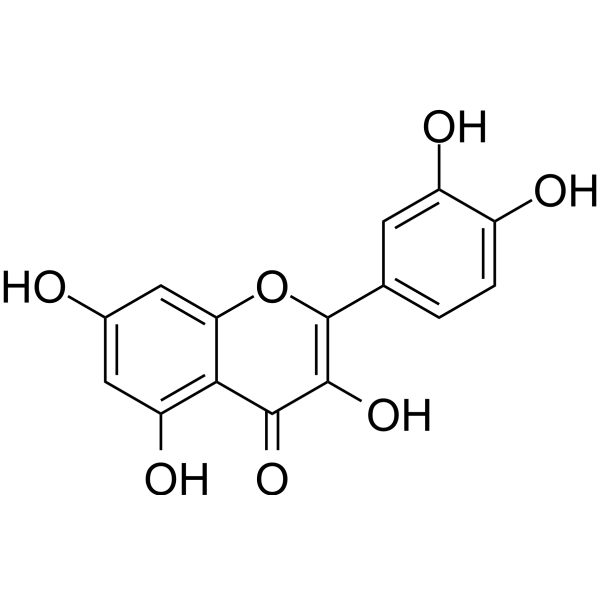
HY-18085
QuercetinFlavonoid Antioxidant -
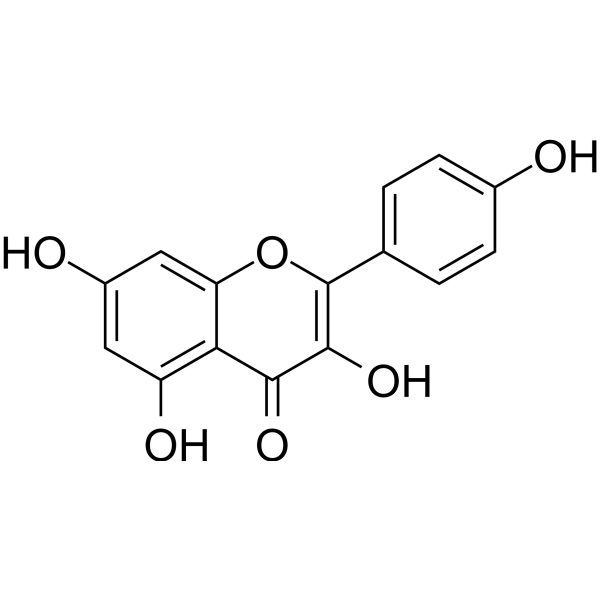
HY-14590
KaempferolEstrogen Receptor α Inhibitor -
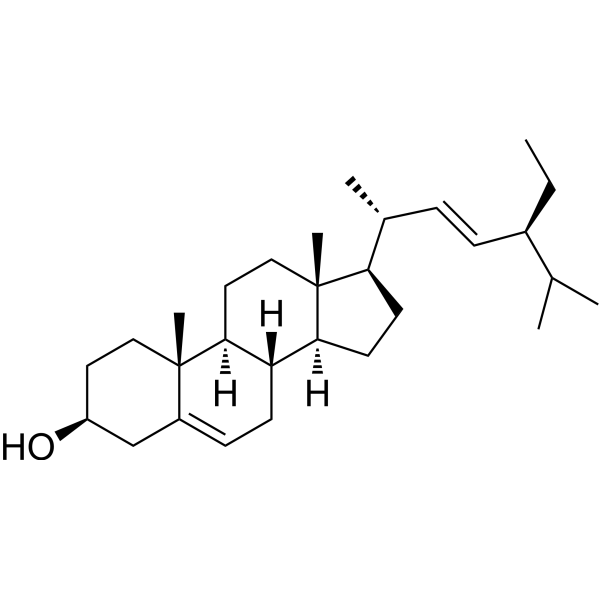
HY-N0131
StigmasterolPlant Sterol -
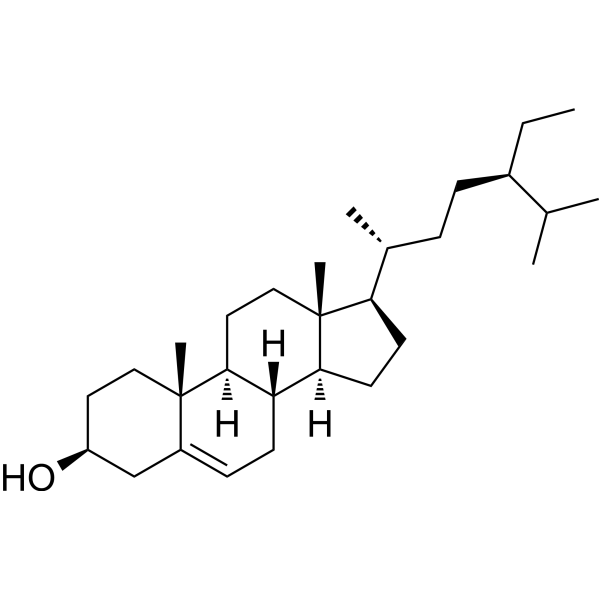
HY-N0171A
Beta-Sitosterol (purity>98%)Dietary Plant Sterols -
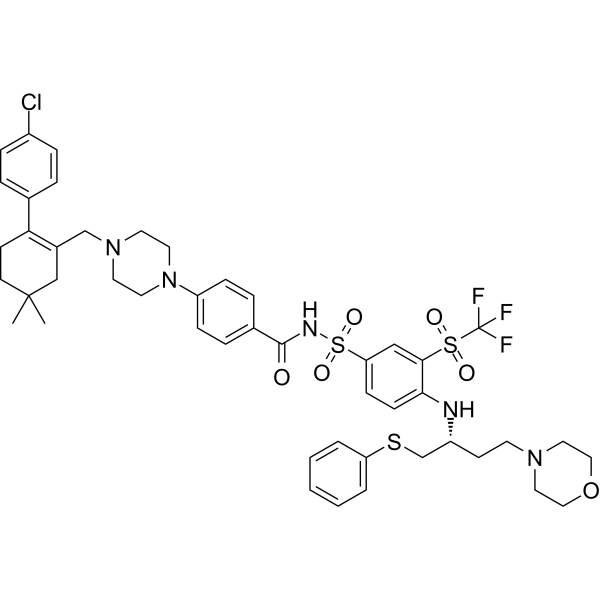
HY-10087
NavitoclaxBcl-2 Inhibitor -
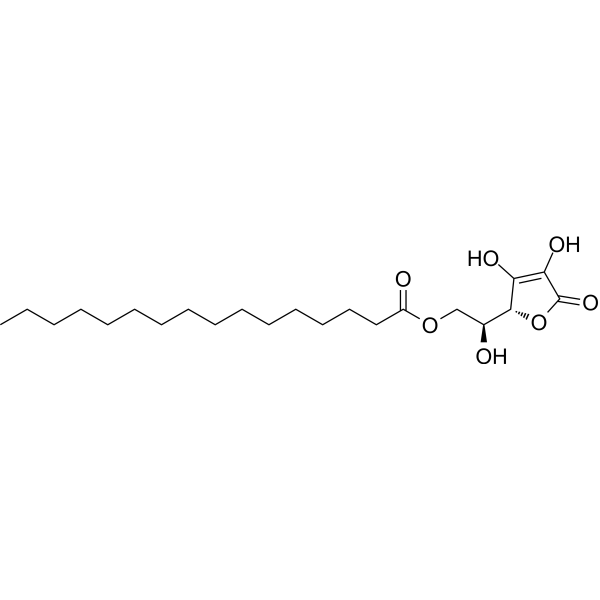
HY-B0987
Ascorbyl palmitateEndogenous Metabolite, Antioxidant, Food Additive -
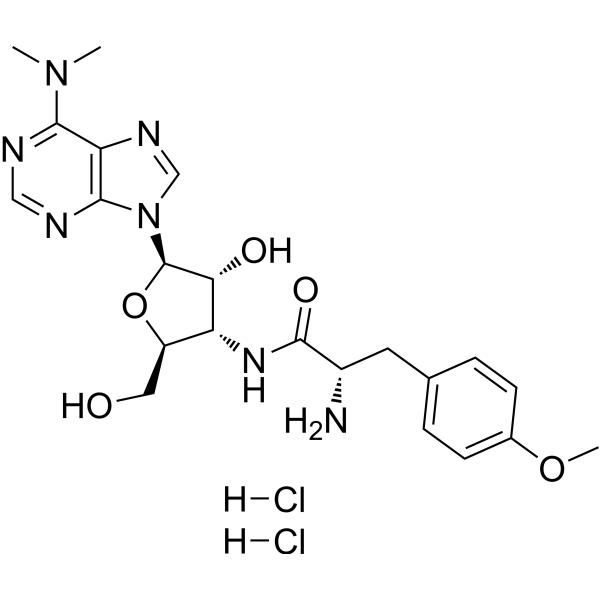
HY-B1743A
Puromycin dihydrochlorideProtein Synthesis Inhibitor -
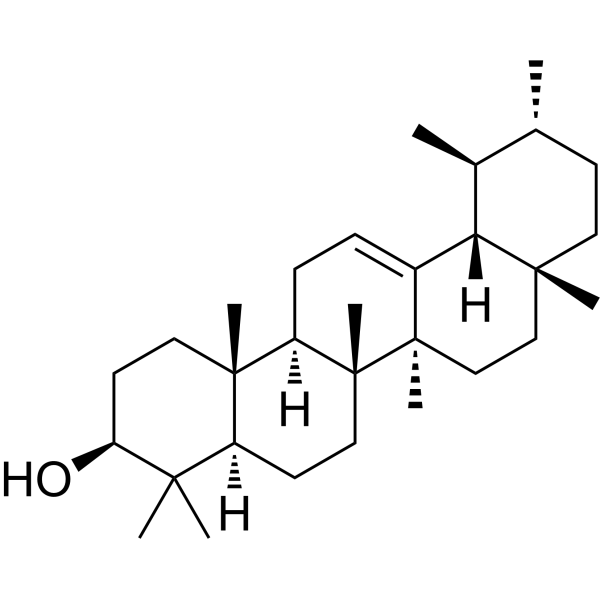
HY-N8423
α-AmyrinPentacyclic Triterpenoid -
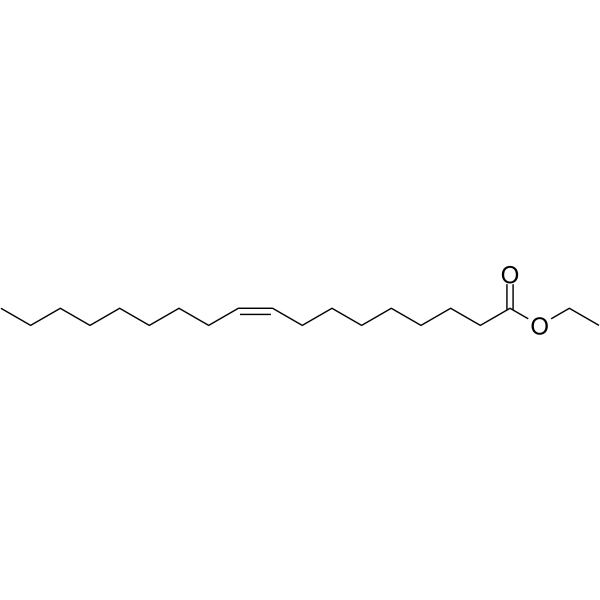
HY-N7103
Ethyl oleateFatty Acid Ester -

HY-W013812R
Ethyl linoleate (Standard)Antiinflammatory Agent -
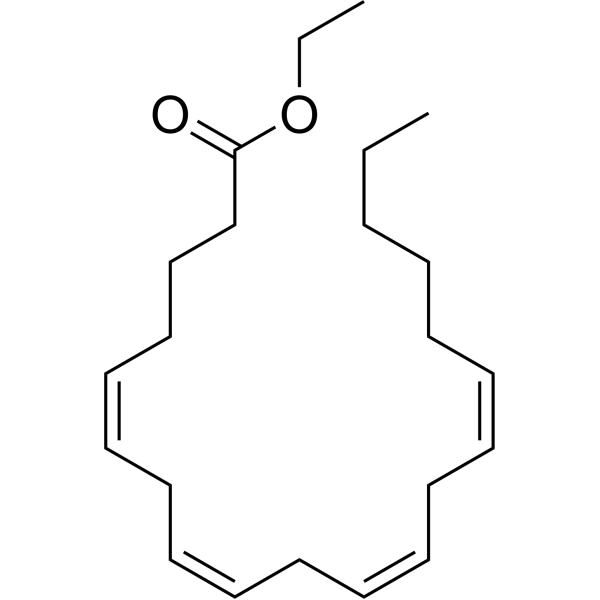
HY-W013214
Ethyl arachidonateEndogenous Metabolite -
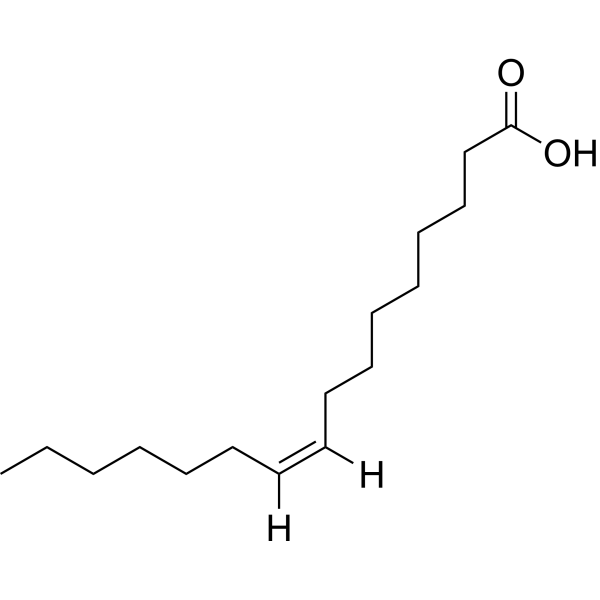
HY-W011873
Palmitoleic acid


Biological Activity
Description
In Vitro
Ethyl linoleate (400 μM; 48 h) significantly inhibits melanin content and intracellular tyrosinase activity in α-MSH (HY-P0252)-induced B16F10 cells[1].
Ethyl linoleate (1-20 μM; 1-24 h) attenuates Lipopolysaccharide-induced pro-inflammatory cytokine production by inducing heme oxygenase-1 in RAW264.7 cells[2].
MedChemExpress (MCE) has not independently confirmed the accuracy of these methods. They are for reference only.
In Vivo
MedChemExpress (MCE) has not independently confirmed the accuracy of these methods. They are for reference only.
-
Animal Model:Young male rabbits (weight: about 1.8 kg at the start; model: high-cholesterol diet-induced atherosclerotic change model)[5]
-
Dosage:10% added to the high-cholesterol diet
-
Administration:Administered by mixing in the diet, 12 weeks
-
Result:Increased the body weight of rabbits.
Accelerated the increase of serum and liver cholesterol levels.
Caused obvious fatty infiltration and degenerative changes in the liver and spleen.
Reduced the atherosclerotic proliferation of the aorta and kidneys.
Clinical Trial
| NCT Number | Sponsor | Condition | Start Date |
Phase

|
|---|---|---|---|---|
| NCT01329991 | 2011-05 | PHASE1 |


Chemical Information
-
CAS No. 544-35-4
-
Appearance Liquid (Density: 0.876 g/cm3)
-
Molecular Weight 308.50
-
Formula C20H36O2
-
Color Colorless to light yellow
-
SMILES
CCCCC/C=C\C/C=C\CCCCCCCC(OCC)=O
-
Synonyms
Linoleic Acid ethyl ester; Mandenol
-
Structure Classification
-
Initial Source
-
Shipping
Room temperature in continental US; may vary elsewhere.
-
Storage
Pure form -20°C 3 years 4°C 2 years In solvent -80°C 6 months -20°C 1 month


Solvent & Solubility
In Vitro:
DMSO : 100 mg/mL (324.15 mM; Need ultrasonic; Hygroscopic DMSO has a significant impact on the solubility of product, please use newly opened DMSO)
Please refer to the solubility information to select the appropriate solvent. Once prepared, please aliquot and store the solution to prevent product inactivation from repeated freeze-thaw cycles.
Storage method and period of stock solution: -80°C, 6 months; -20°C, 1 month. When stored at -80°C, please use it within 6 months. When stored at -20°C, please use it within 1 month.
Please refer to the solubility information to select the appropriate solvent. Once prepared, please aliquot and store the solution to prevent product inactivation from repeated freeze-thaw cycles.
Storage method and period of stock solution: -80°C, 6 months; -20°C, 1 month. When stored at -80°C, please use it within 6 months. When stored at -20°C, please use it within 1 month.
Concentration (start) × Volume (start) = Concentration (final) × Volume (final)
In Vivo:
Select the appropriate dissolution method based on your experimental animal and administration route.
- For the following dissolution methods, please ensure to first prepare a clear stock solution using an In Vitro approach and then sequentially add co-solvents:
- To ensure reliable experimental results, the clarified stock solution can be appropriately stored based on storage conditions. As for the working solution for In Vivo experiments, it is recommended to prepare freshly and use it on the same day.
- The percentages shown for the solvents indicate their volumetric ratio in the final prepared solution. If precipitation or phase separation occurs during preparation, heat and/or sonication can be used to aid dissolution.
Add each solvent one by one: 10% DMSO 40% PEG300 5% Tween-80 45% Saline
Solubility: ≥ 2.5 mg/mL (8.10 mM); Clear solution
This protocol yields a clear solution of ≥ 2.5 mg/mL (saturation unknown).
Taking 1 mL working solution as an example, add 100 μL DMSO stock solution (25.0 mg/mL) to 400 μL PEG300, and mix evenly; then add 50 μL Tween-80 and mix evenly; then add 450 μL Saline to adjust the volume to 1 mL.
Preparation of Saline: Dissolve 0.9 g sodium chloride in ddH₂O and dilute to 100 mL to obtain a clear Saline solution.
In Vivo Dissolution Calculator
Please enter the basic information of animal experiments:
-
-
-
-
Recommended: Prepare an additional quantity of animals to account for potential losses during experiments.
Please enter your animal formula composition:
-
%DMSO +
Recommended: Keep the proportion of DMSO in working solution below 2% if your animal is weak.
-
%+
-
+%Tween-80 + +
-
%Saline +
The co-solvents required include: DMSO, . All of co-solvents are available by MedChemExpress (MCE). , Tween 80. All of co-solvents are available by MedChemExpress (MCE).
Working solution concentration: 0.22 mg/mL
Method for preparing stock solution: mg drug dissolved in μL DMSO. Stock solution concentration: mg/mL.
1. Take μL DMSO stock solution;
2. Add μL .
μL , mix evenly;
3. Then add μL Tween 80, mix evenly;
4. Then add μL
Please ensure that the stock solution in the first step is dissolved to a clear state, and add co-solvents in sequence. You can use ultrasonic heating (ultrasonic cleaner, recommended frequency 20-40 kHz), vortexing, etc. to assist dissolution.


Purity & Documentation
-
Data Sheet (271 KB)
-
SDS (393 KB)
- English - EN (393 KB)
- Français - FR (393 KB)
- Deutsch - DE (393 KB)
- Norwegian - NO (393 KB)
- Español - ES (393 KB)
- Swedish - SV (393 KB)
- Italian - IT (393 KB)
- Korean - KR (393 KB)
- Portuguese - PT (393 KB)
-
Handling Instructions (2659 KB)
References
[1]. Ko GA, et al. Ethyl linoleate inhibits α-MSH-induced melanogenesis through Akt/GSK3β/β-catenin signal pathway. Korean J Physiol Pharmacol. 2018 Jan;22(1):53-61. [Content Brief]
[2]. Park SY, et al. Ethyl linoleate from garlic attenuates lipopolysaccharide-induced pro-inflammatory cytokine production by inducing heme oxygenase-1 in RAW264.7 cells. Int Immunopharmacol. 2014 Apr;19(2):253-61. [Content Brief]
[3]. Wu W, et al. Enhanced bioavailability of silymarin by self-microemulsifying drug delivery system. Eur J Pharm Biopharm. 2006 Jul;63(3):288-94. [Content Brief]
[4]. Zhu JX, et al. Development of self-microemulsifying drug delivery system for oral bioavailability enhancement of berberine hydrochloride. Drug Dev Ind Pharm. 2013 Mar;39(3):499-506. [Content Brief]
[5]. Osumi Y, et al. Effects of ethyl-linoleate on the atheromatous changes caused by high cholesterol diet in the rabbit. Jpn J Pharmacol. 1966 Mar;16(1):83-91. [Content Brief]
[6]. Hyun Jung Koo, et al. Chinese yam extracts containing β-sitosterol and ethyl linoleate protect against atherosclerosis in apolipoprotein E-deficient mice and inhibit muscular expression of VCAM-1 in vitro. J Food Sci. 2014 Apr;79(4):H719-29. [Content Brief]


Complete Stock Solution Preparation Table
Please refer to the solubility information to select the appropriate solvent. Once prepared, please aliquot and store the solution to prevent product inactivation from repeated freeze-thaw cycles.
Storage method and period of stock solution: -80°C, 6 months; -20°C, 1 month. When stored at -80°C, please use it within 6 months. When stored at -20°C, please use it within 1 month.
| Optional Solvent | Concentration Solvent Mass | 1 mg | 5 mg | 10 mg | 25 mg |
|---|---|---|---|---|---|
| DMSO | 1 mM | 3.2415 mL | 16.2075 mL | 32.4149 mL | 81.0373 mL |
| 5 mM | 0.6483 mL | 3.2415 mL | 6.4830 mL | 16.2075 mL | |
| 10 mM | 0.3241 mL | 1.6207 mL | 3.2415 mL | 8.1037 mL | |
| 15 mM | 0.2161 mL | 1.0805 mL | 2.1610 mL | 5.4025 mL | |
| 20 mM | 0.1621 mL | 0.8104 mL | 1.6207 mL | 4.0519 mL | |
| 25 mM | 0.1297 mL | 0.6483 mL | 1.2966 mL | 3.2415 mL | |
| 30 mM | 0.1080 mL | 0.5402 mL | 1.0805 mL | 2.7012 mL | |
| 40 mM | 0.0810 mL | 0.4052 mL | 0.8104 mL | 2.0259 mL | |
| 50 mM | 0.0648 mL | 0.3241 mL | 0.6483 mL | 1.6207 mL | |
| 60 mM | 0.0540 mL | 0.2701 mL | 0.5402 mL | 1.3506 mL | |
| 80 mM | 0.0405 mL | 0.2026 mL | 0.4052 mL | 1.0130 mL | |
| 100 mM | 0.0324 mL | 0.1621 mL | 0.3241 mL | 0.8104 mL |


Ethyl linoleate Related Classifications
HY-W013812 Related Classifications
 Powered by Bioz