



Cephalothin
Based on 5 publication(s) in Google Scholar
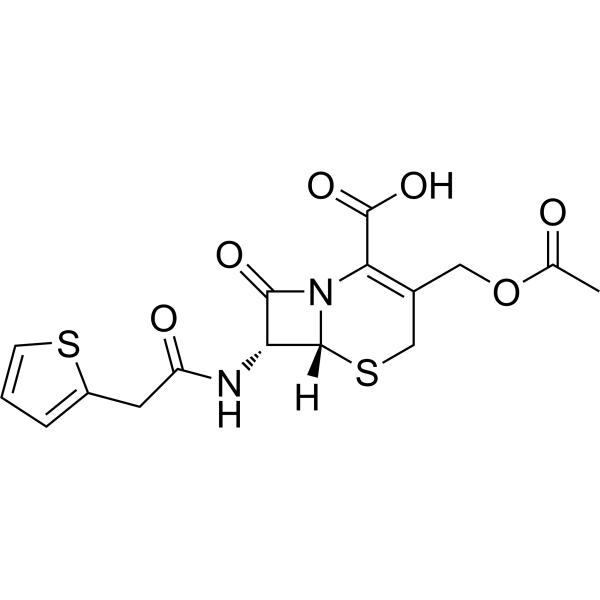
Cephalothin (Cephalotin) is a semi-synthetic cephalosporin antibiotic and beta-lactam antibiotic. Cephalothin inhibits class C β-lactamase AmpC, with an Ki of 0.32 µM. Cephalothin binds to penicillin-binding proteins, interfering with the cross-linking of peptidoglycan in the cell wall and thus hindering the normal synthesis of the bacterial cell wall. Cephalothin shows antibacterial activity against a variety of bacteria. Cephalothin can be used in hematological and nephrotoxicity studies.
Para uso exclusivo en investigación. No vendemos a pacientes.
- Pureza : 99.41%
- No. CAS: 153-61-7
- Fòrmula: C16H16N2O6S2
- Peso molecular:396.44
-
Almacenamiento:
4°C, protect from light, stored under nitrogen
* In solvent : -80°C, 6 months; -20°C, 1 month (protect from light, stored under nitrogen)

To place orders, for customer services and technical support, please contact: MedChemExpress USA
Tel: 609-228-6898 E-mail: [email protected] [email protected]


-
 Actividad biológica
-
Chemical Information
-
Solvente y solubilidad
- Protocolo
- Pureza y Documentación
- Referencias
-
 Help & FAQs


-
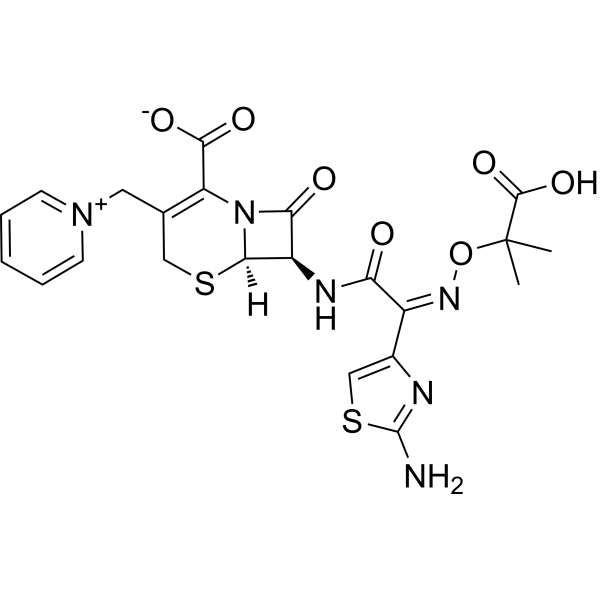
HY-B0593
CeftazidimeAntibiotic -
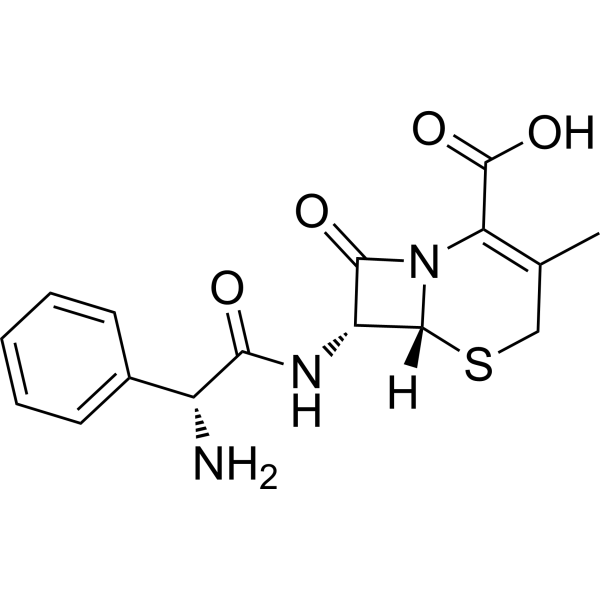
HY-B0200
CephalexinCephalosporin Antibiotic -
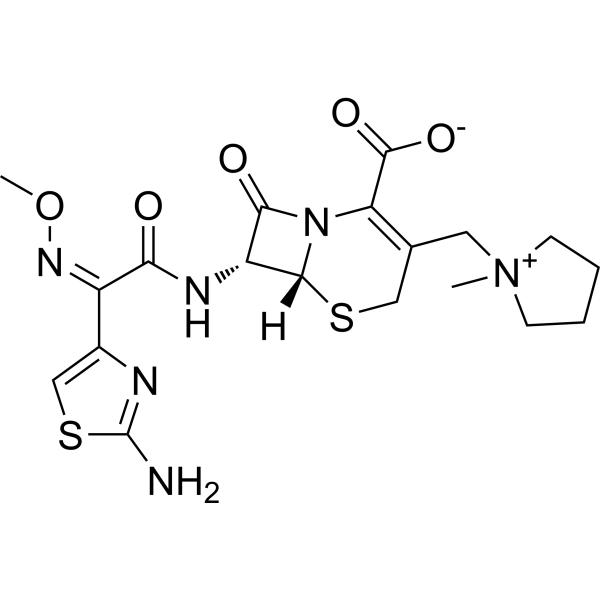
HY-B0692
CefepimeAntibiotic -

HY-B1275AR
Cephalothin (Standard)β-Lactam Antibiotic -
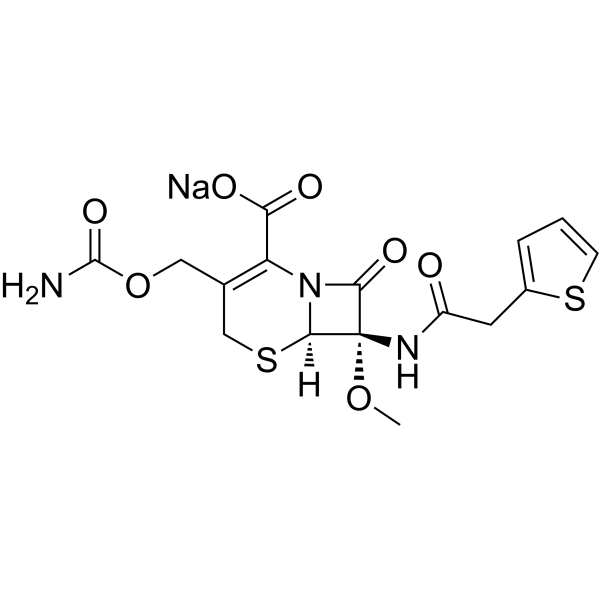
HY-B1117
Cefoxitin sodiumAntibiotic -

HY-B1117R
Cefoxitin sodium (Standard)Antibiotic -
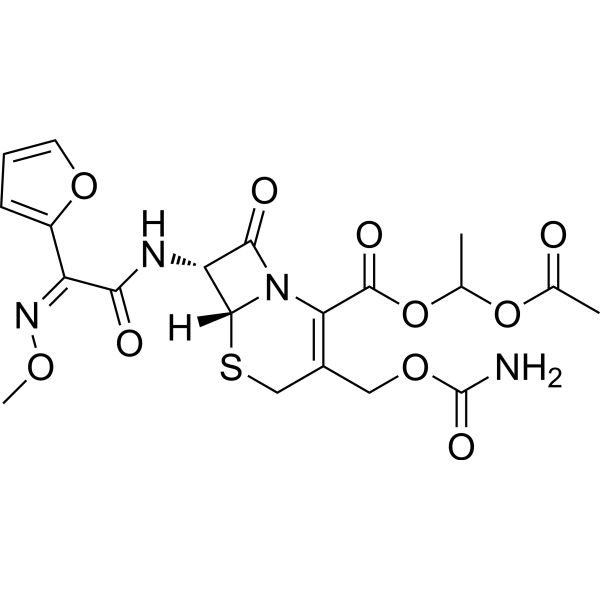
HY-B1325
Cefuroxime axetilBacterial Inhibitor -

HY-B1325R
Cefuroxime axetil (Standard)Bacterial Inhibitor
Publications Citing Use of MedChemExpress (MCE) Cephalothin
MoreVer todos los productos específicos de isoformas Beta-lactamase
MoreVer todos los productos específicos de isoformas Antibiotic
More

Actividad biológica
Descripciòn
IC50 & Target
|
β-lactam |
Cellular Effect
|
Cell Line

|
Type | Value | Description | References |
|---|---|---|---|---|
| CHO | IC50 |
33.3 μM
Compound: Cephalothin
|
Inhibition of mouse OAT3 expressed in CHO cells assessed as inhibition of fluorescein uptake over 20 mins
Inhibition of mouse OAT3 expressed in CHO cells assessed as inhibition of fluorescein uptake over 20 mins
|
[PMID: 23344796] |
In Vitro
Liposome-encapsulated Cephalothin kill bacteria in macrophages infected with Salmonella typhimurium[2].
Cephalothin (1.6-12.5 mM) inhibits ADP-induced shape change, aggregation and release reactions in human citrated platelet-rich plasma[4].
Cephalothin (18 h) is less active than Cefamandole (HY-B1128) against Staphylococcus aureus and less active than Cefamandole or Cefoxitin (HY-B1825) against Haemophilus influenzae[7].
MedChemExpress (MCE) has not independently confirmed the accuracy of these methods. They are for reference only.
In Vivo
Cephalothin (200-800 mg/kg per day; s.c.; per day; 10 days) has a significant protective effect against Gentamicin (HY-A0276A)-related nephrotoxicity in rats when given simultaneously with Gentamicin (HY-A0276A)[6].
Cephalothin (i.m.; 1.0 and 3.5 h post-infection) is less effective than BL-S786 and Cefamandole in protecting mice from lethality in experimental infections caused by Enterobacteriaceae[7].
MedChemExpress (MCE) has not independently confirmed the accuracy of these methods. They are for reference only.
-
Animal Model:Male Fischer 344 rats (weight 200-300 g, 10-12 weeks old; model of gentamicin-induced nephrotoxicity)[6]
-
Dosage:200, 400, 800 mg/kg
-
Administration:Subcutaneous injection, per day, for 10 days
-
Result:Did not cause kidney damage when used alone.
Significantly reduced Gentamicin-induced nephrotoxicity when given simultaneously with Gentamicin.
Showed a loss of protection when injections were separated by 6 h.


Chemical Information
-
No. CAS 153-61-7
-
Appearance Solid
-
Peso molecular 396.44
-
Fòrmula C16H16N2O6S2
-
Color White to off-white
-
SMILES
O=C(C(N12)=C(COC(C)=O)CS[C@]2([H])[C@H](NC(CC3=CC=CS3)=O)C1=O)O
-
Synonyms
Cephalotin
-
Envío
Room temperature in continental US; may vary elsewhere.
-
Almacenamiento
4°C, protect from light, stored under nitrogen
* In solvent : -80°C, 6 months; -20°C, 1 month (protect from light, stored under nitrogen)


Publications (5)
-
Journal Impact Factor
-
Most Recent
-
FASEB J
Enhancing the Susceptibility of Methicillin-Resistant Staphylococcus aureus to β-Lactam Antibiotics Through the Use of 4-Methoxysalicyl Aldehyde. [Abstract]2026 Jan 31;40(2):e71438. PMID: 41524623 -
-
Vet Res Commun
Biological characterization of lipoic acid- and heme-dependent Escherichia coli small colony variants isolated from sheep in Xinjiang, China. [Abstract]2024 Dec;48(6):3859-3872. PMID: 39325108 -
-


Solvente y solubilidad
In Vitro:
DMSO : 100 mg/mL (252.24 mM; Need ultrasonic; Hygroscopic DMSO has a significant impact on the solubility of product, please use newly opened DMSO)
Please refer to the solubility information to select the appropriate solvent. Once prepared, please aliquot and store the solution to prevent product inactivation from repeated freeze-thaw cycles.
Storage method and period of stock solution: -80°C, 6 months; -20°C, 1 month (protect from light, stored under nitrogen). When stored at -80°C, please use it within 6 months. When stored at -20°C, please use it within 1 month.
Please refer to the solubility information to select the appropriate solvent. Once prepared, please aliquot and store the solution to prevent product inactivation from repeated freeze-thaw cycles.
Storage method and period of stock solution: -80°C, 6 months; -20°C, 1 month (protect from light, stored under nitrogen). When stored at -80°C, please use it within 6 months. When stored at -20°C, please use it within 1 month.
Concentration (start) × Volume (start) = Concentration (final) × Volume (final)
In Vivo:
Select the appropriate dissolution method based on your experimental animal and administration route.
- For the following dissolution methods, please ensure to first prepare a clear stock solution using an In Vitro approach and then sequentially add co-solvents:
- To ensure reliable experimental results, the clarified stock solution can be appropriately stored based on storage conditions. As for the working solution for In Vivo experiments, it is recommended to prepare freshly and use it on the same day.
- The percentages shown for the solvents indicate their volumetric ratio in the final prepared solution. If precipitation or phase separation occurs during preparation, heat and/or sonication can be used to aid dissolution.
Add each solvent one by one: 10% DMSO 40% PEG300 5% Tween-80 45% Saline
Solubility: ≥ 2.5 mg/mL (6.31 mM); Clear solution
This protocol yields a clear solution of ≥ 2.5 mg/mL (saturation unknown).
Taking 1 mL working solution as an example, add 100 μL DMSO stock solution (25.0 mg/mL) to 400 μL PEG300, and mix evenly; then add 50 μL Tween-80 and mix evenly; then add 450 μL Saline to adjust the volume to 1 mL.
Preparation of Saline: Dissolve 0.9 g sodium chloride in ddH₂O and dilute to 100 mL to obtain a clear Saline solution.
Add each solvent one by one: 10% DMSO 90% (20% SBE-β-CD in Saline)
Solubility: ≥ 2.5 mg/mL (6.31 mM); Clear solution
This protocol yields a clear solution of ≥ 2.5 mg/mL (saturation unknown).
Taking 1 mL working solution as an example, add 100 μL DMSO stock solution (25.0 mg/mL) to 900 μL 20% SBE-β-CD in Saline, and mix evenly.
Preparation of 20% SBE-β-CD in Saline (4°C, storage for one week): 2 g SBE-β-CD powder is dissolved in 10 mL Saline, completely dissolve until clear.
In Vivo Dissolution Calculator
Please enter the basic information of animal experiments:
-
-
-
-
Recommended: Prepare an additional quantity of animals to account for potential losses during experiments.
Please enter your animal formula composition:
-
%DMSO +
Recommended: Keep the proportion of DMSO in working solution below 2% if your animal is weak.
-
%+
-
+%Tween-80 + +
-
%Saline +
The co-solvents required include: DMSO, . All of co-solvents are available by MedChemExpress (MCE). , Tween 80. All of co-solvents are available by MedChemExpress (MCE).
Working solution concentration: 0.22 mg/mL
Method for preparing stock solution: mg drug dissolved in μL DMSO. Stock solution concentration: mg/mL. * In solvent : -80°C, 6 months; -20°C, 1 month (protect from light, stored under nitrogen)
1. Take μL DMSO stock solution;
2. Add μL .
μL , mix evenly;
3. Then add μL Tween 80, mix evenly;
4. Then add μL
Please ensure that the stock solution in the first step is dissolved to a clear state, and add co-solvents in sequence. You can use ultrasonic heating (ultrasonic cleaner, recommended frequency 20-40 kHz), vortexing, etc. to assist dissolution.


Pureza y Documentación
-
Ficha de datos (279 KB)
-
SDS (393 KB)
- English - EN (393 KB)
- Français - FR (393 KB)
- Deutsch - DE (393 KB)
- Norwegian - NO (393 KB)
- Español - ES (393 KB)
- Swedish - SV (393 KB)
- Italian - IT (393 KB)
- Korean - KR (393 KB)
- Portuguese - PT (393 KB)
-
Instrucciones de manejo (2659 KB)
Referencias
[1]. Morandi S, et al. Structure-based optimization of cephalothin-analogue boronic acids as beta-lactamase inhibitors. Bioorg Med Chem. 2008 Feb 1;16(3):1195-205. Epub 2007 Nov 7. [Content Brief]
[2]. Desiderio JV, et al. Intraphagocytic killing of Salmonella typhimurium by liposome-encapsulated cephalothin. J Infect Dis. 1983 Sep;148(3):563-70. [Content Brief]
[3]. Mobashery S, et al. Reactions of Escherichia coli TEM beta-lactamase with cephalothin and with C10-dipeptidyl cephalosporin esters. J Biol Chem. 1986 Jun 15;261(17):7879-87. [Content Brief]
[4]. Cazenave J-P, et al. Effects of cephalothin and penicillin G on platelet function in vitro. Br J Haematol. 1977 Jan;35(1):135-52. [Content Brief]
[5]. Miraglia GJ, et al. Comparison of the chemotherapeutic and pharmacodynamic activities of cephradine, cephalothin, and cephaloridine in mice. Antimicrob Agents Chemother. 1973 Feb;3(2):270-3. [Content Brief]
[7]. Goering RV, et al. Comparison of BL-S786 with cephalothin, cefamandole and cefoxitin in vitro and in treatment of experimental infections in mice. J Antibiot (Tokyo). 1978 Apr;31(4):363-72. [Content Brief]


Complete Stock Solution Preparation Table
Please refer to the solubility information to select the appropriate solvent. Once prepared, please aliquot and store the solution to prevent product inactivation from repeated freeze-thaw cycles.
Storage method and period of stock solution: -80°C, 6 months; -20°C, 1 month (protect from light, stored under nitrogen). When stored at -80°C, please use it within 6 months. When stored at -20°C, please use it within 1 month.
| Optional Solvent | Concentration Solvent Mass | 1 mg | 5 mg | 10 mg | 25 mg |
|---|---|---|---|---|---|
| DMSO | 1 mM | 2.5224 mL | 12.6122 mL | 25.2245 mL | 63.0612 mL |
| 5 mM | 0.5045 mL | 2.5224 mL | 5.0449 mL | 12.6122 mL | |
| 10 mM | 0.2522 mL | 1.2612 mL | 2.5224 mL | 6.3061 mL | |
| 15 mM | 0.1682 mL | 0.8408 mL | 1.6816 mL | 4.2041 mL | |
| 20 mM | 0.1261 mL | 0.6306 mL | 1.2612 mL | 3.1531 mL | |
| 25 mM | 0.1009 mL | 0.5045 mL | 1.0090 mL | 2.5224 mL | |
| 30 mM | 0.0841 mL | 0.4204 mL | 0.8408 mL | 2.1020 mL | |
| 40 mM | 0.0631 mL | 0.3153 mL | 0.6306 mL | 1.5765 mL | |
| 50 mM | 0.0504 mL | 0.2522 mL | 0.5045 mL | 1.2612 mL | |
| 60 mM | 0.0420 mL | 0.2102 mL | 0.4204 mL | 1.0510 mL | |
| 80 mM | 0.0315 mL | 0.1577 mL | 0.3153 mL | 0.7883 mL | |
| 100 mM | 0.0252 mL | 0.1261 mL | 0.2522 mL | 0.6306 mL |


Cephalothin Related Classifications
HY-B1275A Related Classifications
 Powered by Bioz