



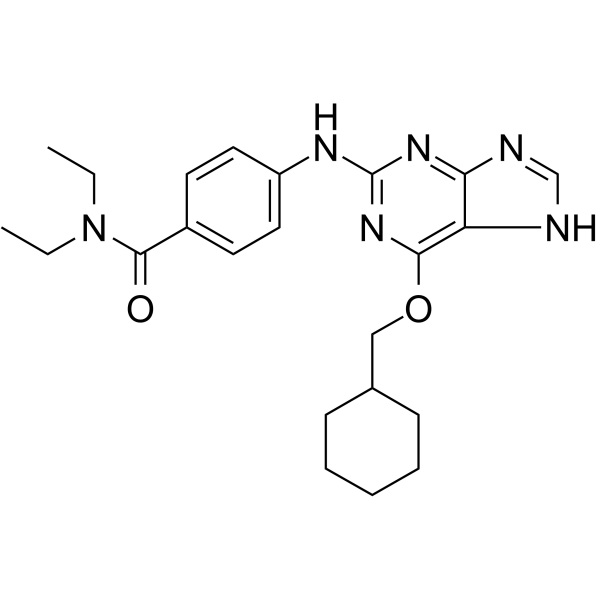
NU6140
Based on 1 publication(s) in Google Scholar
NU6140 is a selective CDK2-cyclin A inhibitor (IC50, 0.41 μM), exhibits 10- to 36-fold selectivity over other CDKs. NU6140 also potently inhibits Aurora A and Aurora B, with IC50s of 67 and 35 nM, respectively. Enhances the apoptotic effect, with anti-cancer activity.
Para uso exclusivo en investigación. No vendemos a pacientes.
- Pureza : 99.53%
- No. CAS: 444723-13-1
- Fòrmula: C23H30N6O2
- Peso molecular:422.52
-
Almacenamiento:Powder -20°C, 3 years , 4°C, 2 years ; In solvent -80°C, 6 months , -20°C, 1 month

To place orders, for customer services and technical support, please contact: MedChemExpress USA
Tel: 609-228-6898 E-mail: [email protected] [email protected]


-
 Actividad biológica
-
Chemical Information
-
Solvente y solubilidad
- Protocolo
- Pureza y Documentación
- Referencias
-
 Help & FAQs


-
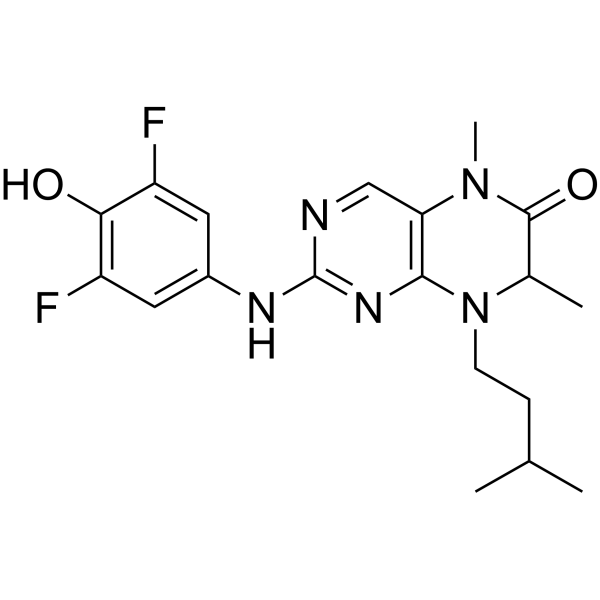
HY-10510
BI-D1870RSK Inhibitor -
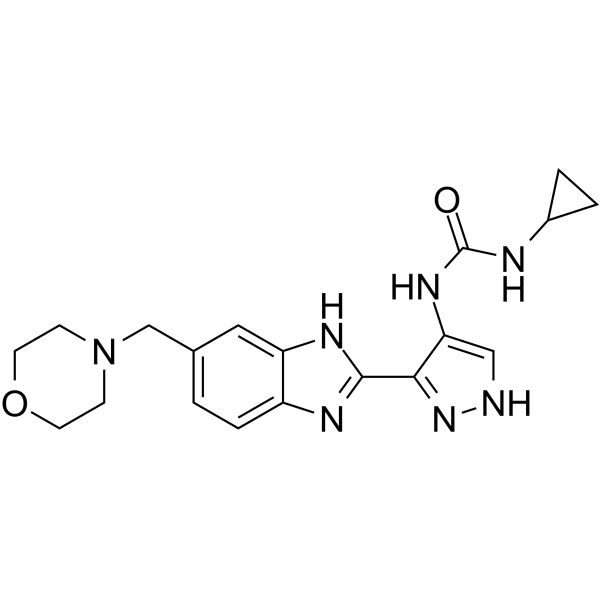
HY-50514
AT9283Aurora/JAK Inhibitor -
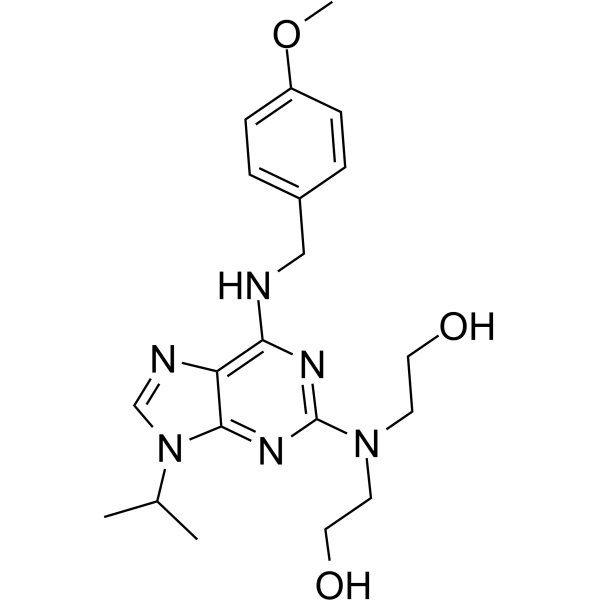
HY-15339
CVT-313CDK2 Inhibitor -
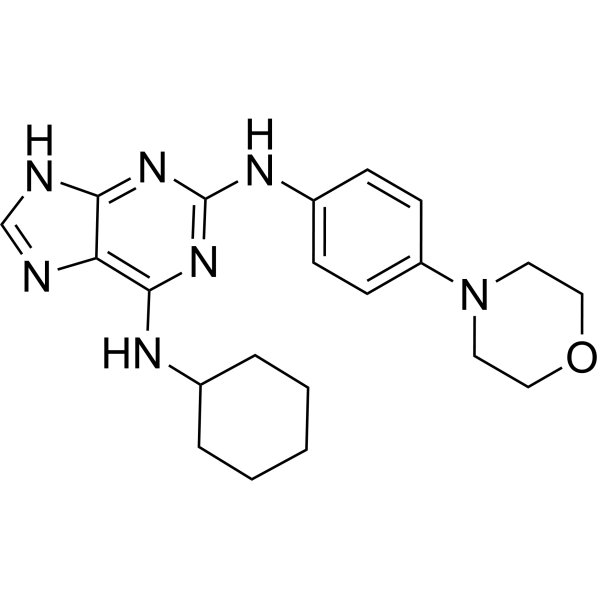
HY-14711
ReversineAutophagy Inducer -

HY-107419R
NU6140 (Standard)Reference Standard -
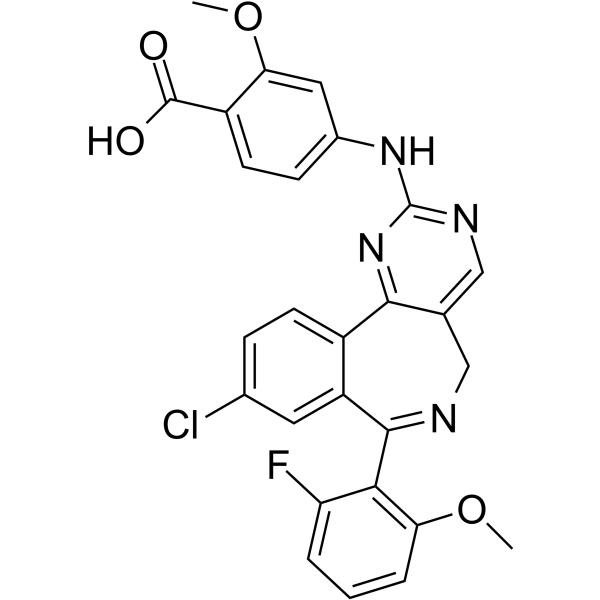
HY-10971
AlisertibAurora A Kinase Inhibitor -
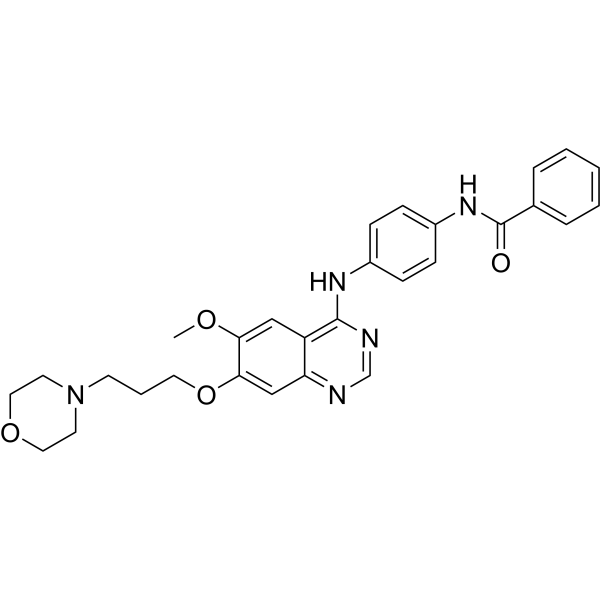
HY-10128
ZM-447439Aurora A/B Inhibitor -
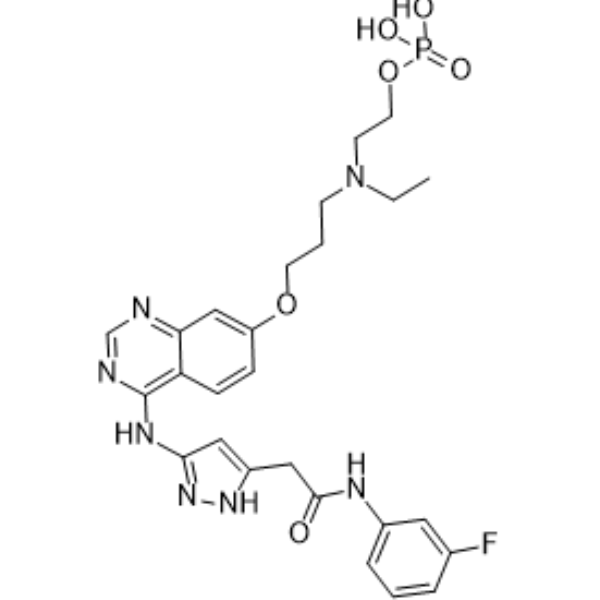
HY-10127
BarasertibAurora B Inhibitor -
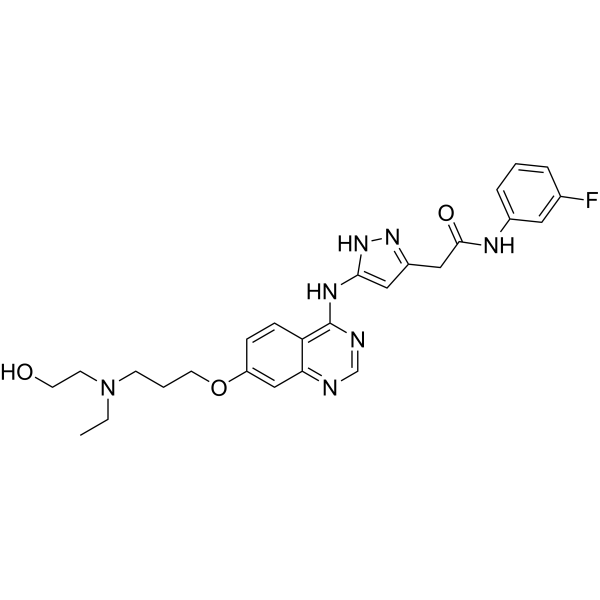
HY-10126
Barasertib-HQPAAurora B Inhibitor -
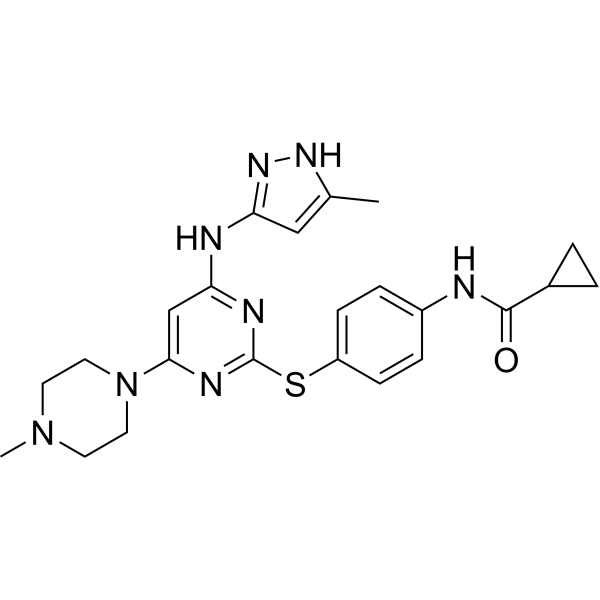
HY-10161
TozasertibAurora A/B/C Inhibitor -
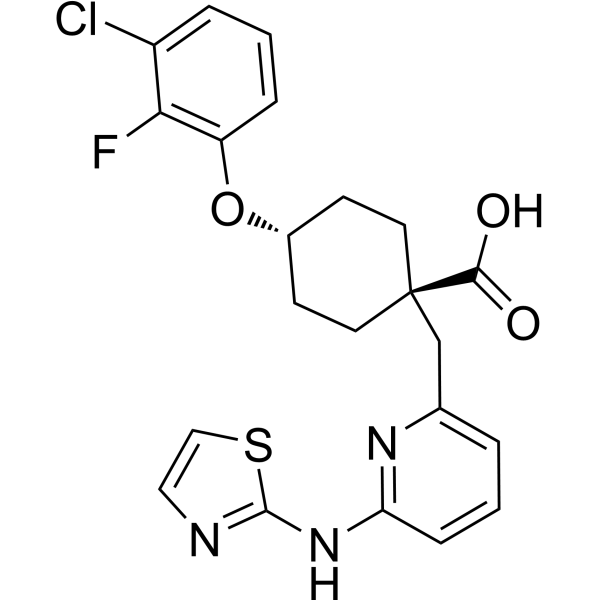
HY-13252
MK-5108Aurora Kinase Inhibitor -
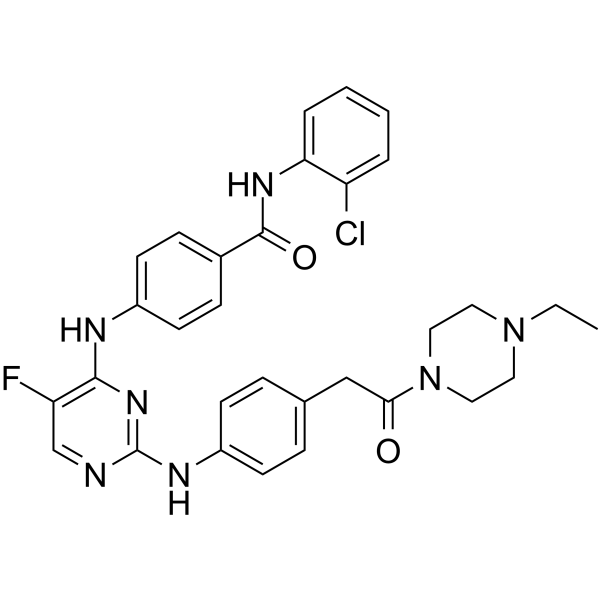
HY-70061
TCS7010Aurora A Inhibitor
Publications Citing Use of MedChemExpress (MCE) NU6140
MoreVer todos los productos específicos de isoformas Aurora Kinase
More

Actividad biológica
Descripciòn
|
cdk2-cyclin A 0.41 μM (IC50) |
CDK1-Cyclin B 6.6 μM (IC50) |
CDK4-Cyclin D 5.5 μM (IC50) |
cdk5-p25 15 μM (IC50) |
cdk7-cyclin H 3.9 μM (IC50) |
Aurora A 67 nM (IC50) |
Aurora B 35 nM (IC50) |
Cellular Effect
|
Cell Line

|
Type | Value | Description | References |
|---|---|---|---|---|
| Sf9 | IC50 |
0.035 μM
Compound: NU6140
|
Inhibition of GST-tagged AURORA B (unknown origin) expressed in baculovirus infected Sf9 cells using MBP as substrate
Inhibition of GST-tagged AURORA B (unknown origin) expressed in baculovirus infected Sf9 cells using MBP as substrate
|
[PMID: 30234987] |
| Sf9 | IC50 |
0.067 μM
Compound: NU6140
|
Inhibition of GST-tagged AURORA A (unknown origin) expressed in baculovirus infected Sf9 cells using MBP as substrate
Inhibition of GST-tagged AURORA A (unknown origin) expressed in baculovirus infected Sf9 cells using MBP as substrate
|
[PMID: 30234987] |
| Sf9 | IC50 |
0.94 μM
Compound: NU6140
|
Inhibition of GST-tagged CDK4/cyclin D1 (unknown origin) expressed in Baculovirus infected Sf9 cells using RPPTLSPIPHIPR peptide as substrate in presence of [gamma-33P]-ATP by radiometric filter binding assay
Inhibition of GST-tagged CDK4/cyclin D1 (unknown origin) expressed in Baculovirus infected Sf9 cells using RPPTLSPIPHIPR peptide as substrate in presence of [gamma-33P]-ATP by radiometric filter binding assay
|
[PMID: 30234987] |
| Sf9 | IC50 |
1.1 μM
Compound: NU6140
|
Inhibition of His-tagged CDK2/cyclin E (unknown origin) expressed in Baculovirus infected Sf9 cells using histone H1 as substrate in presence of [gamma-33P]-ATP by radiometric filter binding assay
Inhibition of His-tagged CDK2/cyclin E (unknown origin) expressed in Baculovirus infected Sf9 cells using histone H1 as substrate in presence of [gamma-33P]-ATP by radiometric filter binding assay
|
[PMID: 30234987] |
| Sf9 | IC50 |
2.3 μM
Compound: NU6140
|
Inhibition of GST-tagged CDK7/cyclinH/MAT1 (unknown origin) expressed in Baculovirus infected Sf9 cells using YSPTSPS-2 KK peptide as substrate as substrate in presence of [gamma-33P]-ATP by radiometric filter binding assay
Inhibition of GST-tagged CDK7/cyclinH/MAT1 (unknown origin) expressed in Baculovirus infected Sf9 cells using YSPTSPS-2 KK peptide as substrate as substrate in presence of [gamma-33P]-ATP by radiometric filter binding assay
|
[PMID: 30234987] |
| Sf9 | IC50 |
5.1 μM
Compound: NU6140
|
Inhibition of GST-tagged CDK9/CyclinT1 (unknown origin) expressed in Baculovirus infected Sf9 cells using YSPTSPS-2 KK peptide as substrate as substrate in presence of [gamma-33P]-ATP by radiometric filter binding assay
Inhibition of GST-tagged CDK9/CyclinT1 (unknown origin) expressed in Baculovirus infected Sf9 cells using YSPTSPS-2 KK peptide as substrate as substrate in presence of [gamma-33P]-ATP by radiometric filter binding assay
|
[PMID: 30234987] |
| Sf9 | IC50 |
5.8 μM
Compound: NU6140
|
Inhibition of His-tagged CDK1/cyclin B1 (unknown origin) expressed in Baculovirus infected Sf9 cells using histone H1 as substrate in presence of [gamma-33P]-ATP by radiometric filter binding assay
Inhibition of His-tagged CDK1/cyclin B1 (unknown origin) expressed in Baculovirus infected Sf9 cells using histone H1 as substrate in presence of [gamma-33P]-ATP by radiometric filter binding assay
|
[PMID: 30234987] |
| Sf9 | IC50 |
8.8 μM
Compound: NU6140
|
Inhibition of GST-tagged CDK5/p25 (unknown origin) expressed in Baculovirus infected Sf9 cells using histone H1 as substrate as substrate in presence of [gamma-33P]-ATP by radiometric filter binding assay
Inhibition of GST-tagged CDK5/p25 (unknown origin) expressed in Baculovirus infected Sf9 cells using histone H1 as substrate as substrate in presence of [gamma-33P]-ATP by radiometric filter binding assay
|
[PMID: 30234987] |
In Vitro
NU6140 is less active on CDK1-cyclin B, CDK4-cyclin D, CDK5-p25 and CDK7-cyclin H, with IC50s of 6.6, 5.5, 15 and 3.9 μM, respectively[1].
NU6140 increases catalytic activity of capase-9 and capase-3, causes increase in the sub-G1 apoptotic cell population[1].
MedChemExpress (MCE) has not independently confirmed the accuracy of these methods. They are for reference only.


Chemical Information
-
No. CAS 444723-13-1
-
Appearance Solid
-
Peso molecular 422.52
-
Fòrmula C23H30N6O2
-
Color White to light yellow
-
SMILES
CCN(CC)C(C(C=C1)=CC=C1NC2=NC(OCC3CCCCC3)=C4C(N=CN4)=N2)=O
-
Envío
Room temperature in continental US; may vary elsewhere.
-
Almacenamiento
Powder -20°C 3 years 4°C 2 years In solvent -80°C 6 months -20°C 1 month


Publications (1)
-
Journal Impact Factor
-
Most Recent


Solvente y solubilidad
In Vitro:
DMSO : 250 mg/mL (591.69 mM; Need ultrasonic; Hygroscopic DMSO has a significant impact on the solubility of product, please use newly opened DMSO)
Please refer to the solubility information to select the appropriate solvent. Once prepared, please aliquot and store the solution to prevent product inactivation from repeated freeze-thaw cycles.
Storage method and period of stock solution: -80°C, 6 months; -20°C, 1 month. When stored at -80°C, please use it within 6 months. When stored at -20°C, please use it within 1 month.
Please refer to the solubility information to select the appropriate solvent. Once prepared, please aliquot and store the solution to prevent product inactivation from repeated freeze-thaw cycles.
Storage method and period of stock solution: -80°C, 6 months; -20°C, 1 month. When stored at -80°C, please use it within 6 months. When stored at -20°C, please use it within 1 month.
Concentration (start) × Volume (start) = Concentration (final) × Volume (final)
In Vivo:
Select the appropriate dissolution method based on your experimental animal and administration route.
- For the following dissolution methods, please ensure to first prepare a clear stock solution using an In Vitro approach and then sequentially add co-solvents:
- To ensure reliable experimental results, the clarified stock solution can be appropriately stored based on storage conditions. As for the working solution for In Vivo experiments, it is recommended to prepare freshly and use it on the same day.
- The percentages shown for the solvents indicate their volumetric ratio in the final prepared solution. If precipitation or phase separation occurs during preparation, heat and/or sonication can be used to aid dissolution.
Add each solvent one by one: 10% DMSO 90% (20% SBE-β-CD in Saline)
Solubility: ≥ 2.08 mg/mL (4.92 mM); Clear solution
This protocol yields a clear solution of ≥ 2.08 mg/mL (saturation unknown).
Taking 1 mL working solution as an example, add 100 μL DMSO stock solution (20.8 mg/mL) to 900 μL 20% SBE-β-CD in Saline, and mix evenly.
Preparation of 20% SBE-β-CD in Saline (4°C, storage for one week): 2 g SBE-β-CD powder is dissolved in 10 mL Saline, completely dissolve until clear.
In Vivo Dissolution Calculator
Please enter the basic information of animal experiments:
-
-
-
-
Recommended: Prepare an additional quantity of animals to account for potential losses during experiments.
Please enter your animal formula composition:
-
%DMSO +
Recommended: Keep the proportion of DMSO in working solution below 2% if your animal is weak.
-
%+
-
+%Tween-80 + +
-
%Saline +
The co-solvents required include: DMSO, . All of co-solvents are available by MedChemExpress (MCE). , Tween 80. All of co-solvents are available by MedChemExpress (MCE).
Working solution concentration: 0.22 mg/mL
Method for preparing stock solution: mg drug dissolved in μL DMSO. Stock solution concentration: mg/mL.
1. Take μL DMSO stock solution;
2. Add μL .
μL , mix evenly;
3. Then add μL Tween 80, mix evenly;
4. Then add μL
Please ensure that the stock solution in the first step is dissolved to a clear state, and add co-solvents in sequence. You can use ultrasonic heating (ultrasonic cleaner, recommended frequency 20-40 kHz), vortexing, etc. to assist dissolution.


Pureza y Documentación
-
Ficha de datos (274 KB)
-
SDS (396 KB)
- English - EN (396 KB)
- Français - FR (396 KB)
- Deutsch - DE (396 KB)
- Norwegian - NO (396 KB)
- Español - ES (396 KB)
- Swedish - SV (396 KB)
- Italian - IT (396 KB)
- Korean - KR (396 KB)
- Portuguese - PT (396 KB)
-
Instrucciones de manejo (2659 KB)
Referencias
[1]. Pennati M, et al. Potentiation of apoptosis by the novel cyclin-dependent kinase inhibitor NU6140: a possible role for survivin down-regulation. Mol Cancer Ther. 2005 Sep;4(9):1328-37. [Content Brief]
[2]. Jorda R, et al. How Selective Are Pharmacological Inhibitors of Cell-Cycle-Regulating Cyclin-Dependent Kinases? Med Chem. 2018 Oct 25;61(20):9105-9120. [Content Brief]


Complete Stock Solution Preparation Table
Please refer to the solubility information to select the appropriate solvent. Once prepared, please aliquot and store the solution to prevent product inactivation from repeated freeze-thaw cycles.
Storage method and period of stock solution: -80°C, 6 months; -20°C, 1 month. When stored at -80°C, please use it within 6 months. When stored at -20°C, please use it within 1 month.
| Optional Solvent | Concentration Solvent Mass | 1 mg | 5 mg | 10 mg | 25 mg |
|---|---|---|---|---|---|
| DMSO | 1 mM | 2.3668 mL | 11.8338 mL | 23.6675 mL | 59.1688 mL |
| 5 mM | 0.4734 mL | 2.3668 mL | 4.7335 mL | 11.8338 mL | |
| 10 mM | 0.2367 mL | 1.1834 mL | 2.3668 mL | 5.9169 mL | |
| 15 mM | 0.1578 mL | 0.7889 mL | 1.5778 mL | 3.9446 mL | |
| 20 mM | 0.1183 mL | 0.5917 mL | 1.1834 mL | 2.9584 mL | |
| 25 mM | 0.0947 mL | 0.4734 mL | 0.9467 mL | 2.3668 mL | |
| 30 mM | 0.0789 mL | 0.3945 mL | 0.7889 mL | 1.9723 mL | |
| 40 mM | 0.0592 mL | 0.2958 mL | 0.5917 mL | 1.4792 mL | |
| 50 mM | 0.0473 mL | 0.2367 mL | 0.4734 mL | 1.1834 mL | |
| 60 mM | 0.0394 mL | 0.1972 mL | 0.3945 mL | 0.9861 mL | |
| 80 mM | 0.0296 mL | 0.1479 mL | 0.2958 mL | 0.7396 mL | |
| 100 mM | 0.0237 mL | 0.1183 mL | 0.2367 mL | 0.5917 mL |


NU6140 Related Classifications
HY-107419 Related Classifications
 Powered by Bioz