



TPOP146
Based on 3 publication(s) in Google Scholar
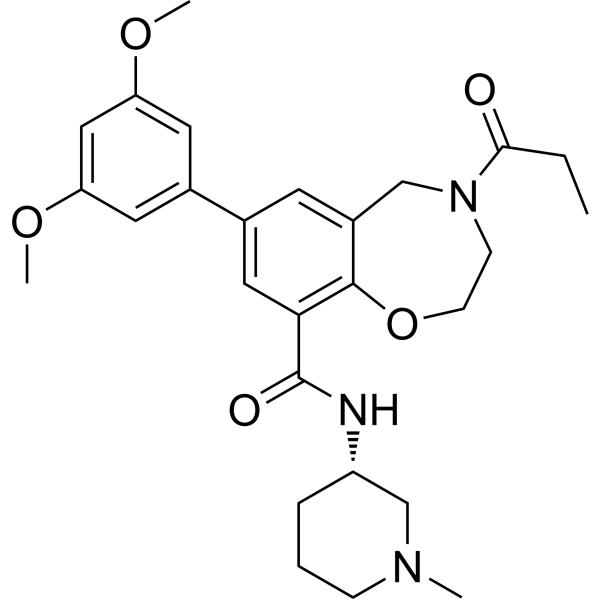
TPOP146 is a selective CBP/P300 benzoxazepine bromodomain inhibitor with Kd values of 134 nM and 5.02 μM for CBP and BRD4.
For research use only. We do not sell to patients.
- Purity : 98.94%
- CAS No.: 2018300-62-2
- Formula: C27H35N3O5
- Molecular Weight:481.58
-
Storage:Powder -20°C, 3 years , 4°C, 2 years ; In solvent -80°C, 2 years , -20°C, 1 year

To place orders, for customer services and technical support, please contact: MedChemExpress USA
Tel: 609-228-6898 E-mail: [email protected] [email protected]


-
 Biological Activity
-
Chemical Information
-
Solvent & Solubility
- Purity & Documentation
- References
-
 Help & FAQs


-
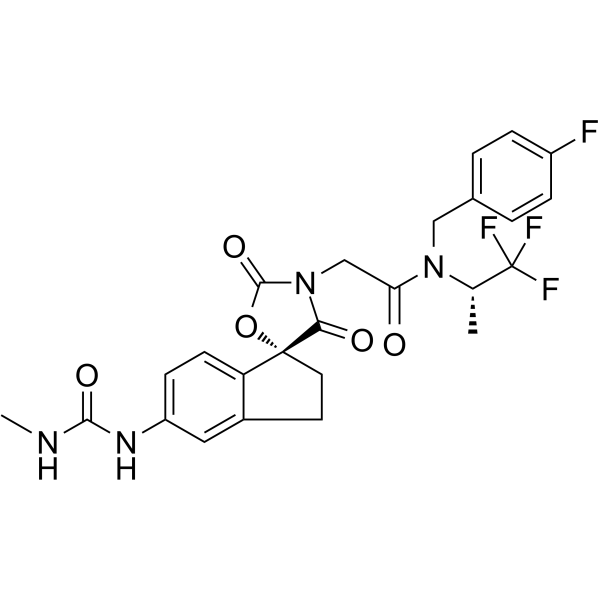
HY-107455
A-485p300/CBP Inhibitor -
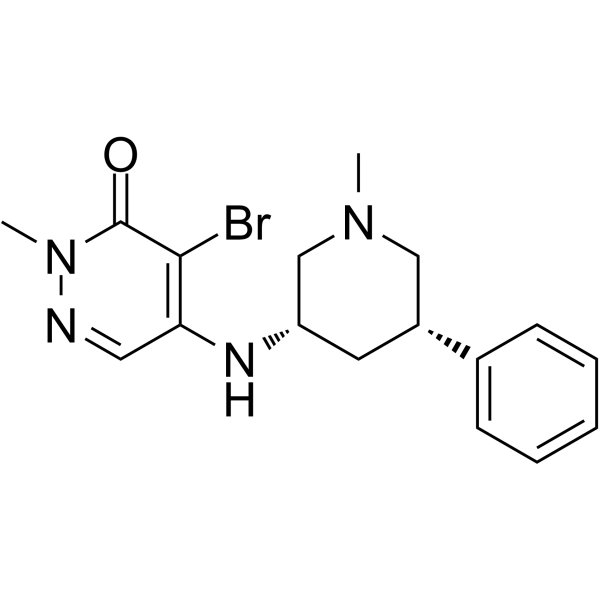
HY-101027A
GSK4028GSK4027 Negative Control -
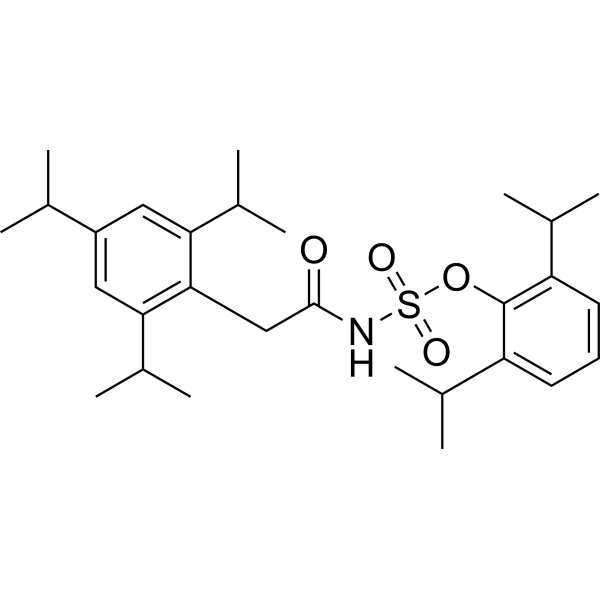
HY-13215
AvasimibeACAT/SOAT Inhibitor -
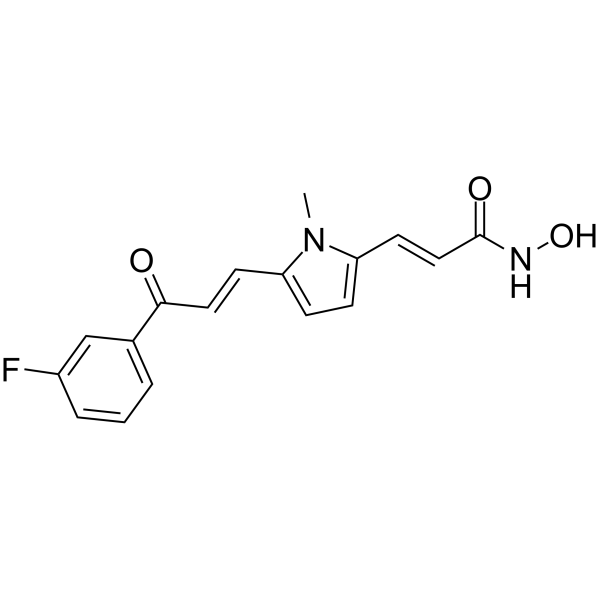
HY-16914
MC1568HDAC Inhibitor -
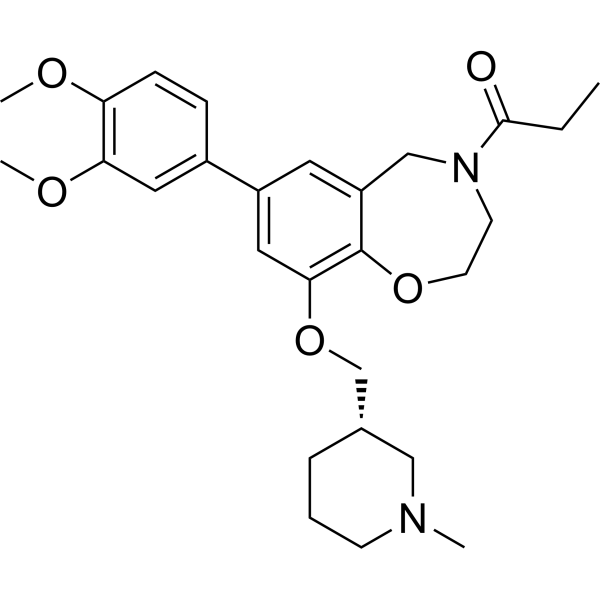
HY-19541
I-CBP112CBP/p300 Bromodomains Inhibitor -
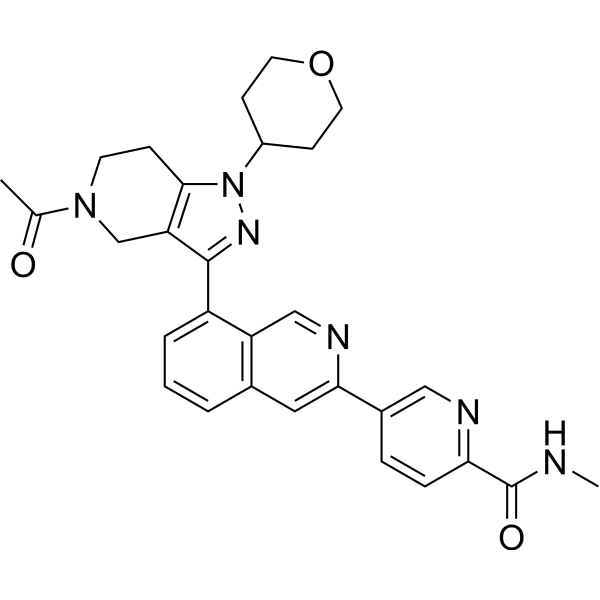
HY-120028
GNE-207CBP Inhibitor -
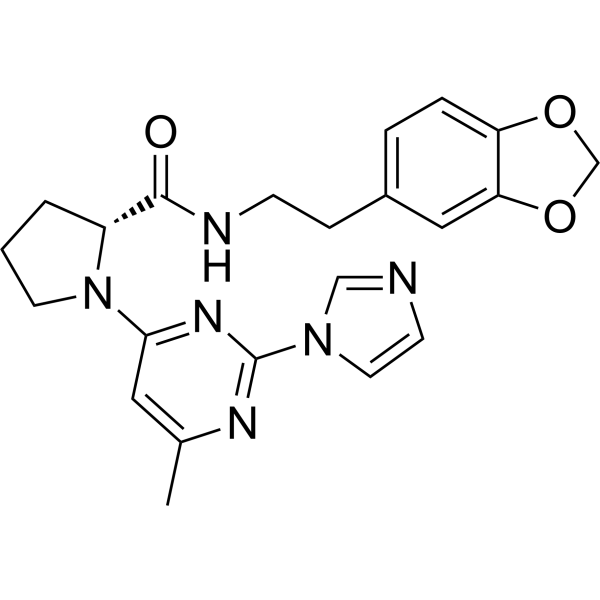
HY-12124
BBS-4iNOS Inhibitor -
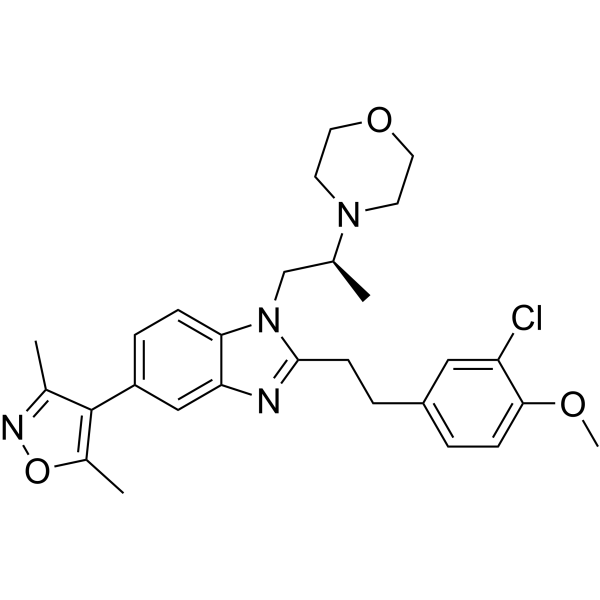
HY-15826
SGC-CBP30CBP/p300 Inhibitor -
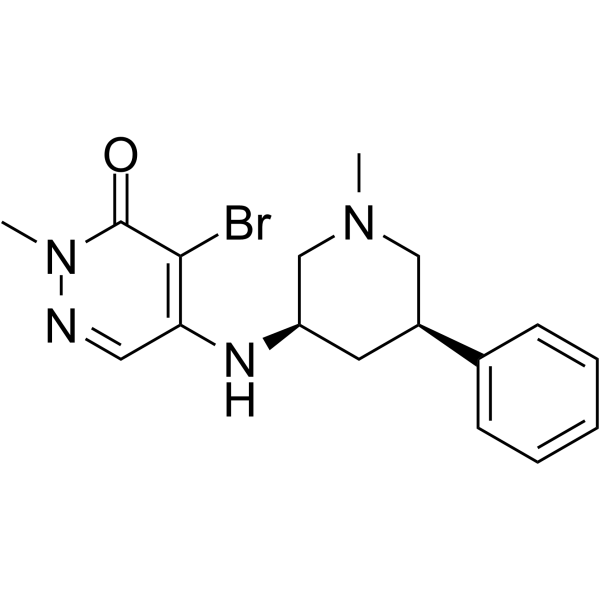
HY-101027
GSK 4027PCAF Probe -
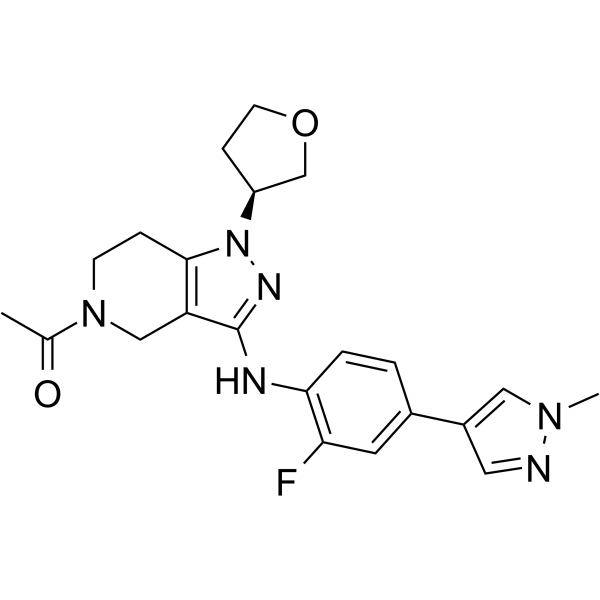
HY-100726
GNE-272CBP/EP300 Inhibitor -

HY-107455R
A-485 (Standard)Reference Standard -
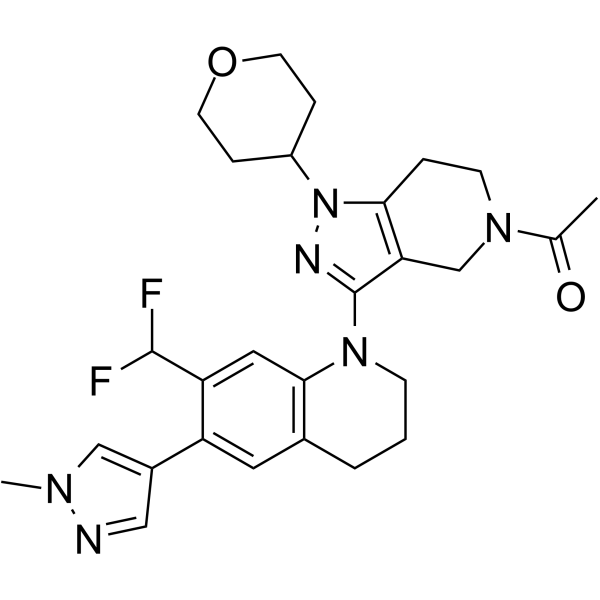
HY-108435
GNE-049CBP Inhibitor
Publications Citing Use of MedChemExpress (MCE) TPOP146
More Customer Validation & Images

-
WB


Biological Activity
Description
IC50 & Target
|
CBP/p300 |
In Vitro
Exposure to 1 μM TPOP146 results in a significant decrease of recovery half-life that is comparable to the construct that contained the bromodomain inactivating mutation N1168F, demonstrating that TPOP146 targets the CBP bromodomain in the nucleus and is capable of competing with acetyl-lysine mediated interactions of the CBP bromodomain in cellular environments[1].
MedChemExpress (MCE) has not independently confirmed the accuracy of these methods. They are for reference only.


Chemical Information
-
CAS No. 2018300-62-2
-
Appearance Solid
-
Molecular Weight 481.58
-
Formula C27H35N3O5
-
Color White to off-white
-
SMILES
COC1=CC(OC)=CC(C2=CC(C(N[C@H]3CCCN(C)C3)=O)=C(OCCN(C(CC)=O)C4)C4=C2)=C1
-
Shipping
Room temperature in continental US; may vary elsewhere.
-
Storage
Powder -20°C 3 years 4°C 2 years In solvent -80°C 2 years -20°C 1 year


Publications (3)
-
Journal Impact Factor
-
Most Recent
-
EBioMedicine
Human tau accumulation promotes glycogen synthase kinase-3β acetylation and thus upregulates the kinase: A vicious cycle in Alzheimer neurodegeneration. [Abstract]2022 Apr;78:103970. PMID: 35339896 -
Clin Transl Med
2024 Mar;14(3):e1623. PMID: 38488468 -
EMBO Rep
2020 Mar 4;21(3):e48328. PMID: 31930681
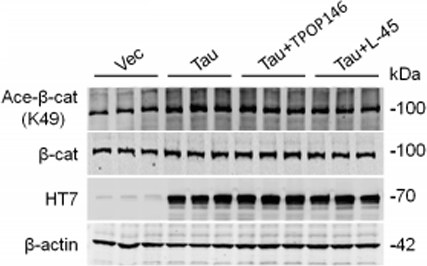
TPOP146 purchased from MedChemExpress. Usage Cited in: EMBO Rep. 2020 Mar 4;21(3):e48328. [Abstract]
Inhibiting acetyltransferases CBP/P300 by TPOP146 (134 nM) or PCAF by L-45 (126 nM) for 24 h did not significantly decrease the K49-acetylated b-cat level in Tau-overexpressing N2a cells (n = 3 biological replicates each group)


Solvent & Solubility
In Vitro:
DMSO : 21.43 mg/mL (44.50 mM; ultrasonic and warming and heat to 60°C; Hygroscopic DMSO has a significant impact on the solubility of product, please use newly opened DMSO)
Please refer to the solubility information to select the appropriate solvent. Once prepared, please aliquot and store the solution to prevent product inactivation from repeated freeze-thaw cycles.
Storage method and period of stock solution: -80°C, 2 years; -20°C, 1 year. When stored at -80°C, please use it within 2 years. When stored at -20°C, please use it within 1 year.
Please refer to the solubility information to select the appropriate solvent. Once prepared, please aliquot and store the solution to prevent product inactivation from repeated freeze-thaw cycles.
Storage method and period of stock solution: -80°C, 2 years; -20°C, 1 year. When stored at -80°C, please use it within 2 years. When stored at -20°C, please use it within 1 year.
Concentration (start) × Volume (start) = Concentration (final) × Volume (final)
In Vivo:
Select the appropriate dissolution method based on your experimental animal and administration route.
- For the following dissolution methods, please ensure to first prepare a clear stock solution using an In Vitro approach and then sequentially add co-solvents:
- To ensure reliable experimental results, the clarified stock solution can be appropriately stored based on storage conditions. As for the working solution for In Vivo experiments, it is recommended to prepare freshly and use it on the same day.
- The percentages shown for the solvents indicate their volumetric ratio in the final prepared solution. If precipitation or phase separation occurs during preparation, heat and/or sonication can be used to aid dissolution.
Add each solvent one by one: 10% DMSO 40% PEG300 5% Tween-80 45% Saline
Solubility: 2.14 mg/mL (4.44 mM); Clear solution; Need ultrasonic
This protocol yields a clear solution of 2.14 mg/mL.
Taking 1 mL working solution as an example, add 100 μL DMSO stock solution (21.4 mg/mL) to 400 μL PEG300, and mix evenly; then add 50 μL Tween-80 and mix evenly; then add 450 μL Saline to adjust the volume to 1 mL.
Preparation of Saline: Dissolve 0.9 g sodium chloride in ddH₂O and dilute to 100 mL to obtain a clear Saline solution.
Add each solvent one by one: 10% DMSO 90% (20% SBE-β-CD in Saline)
Solubility: 2.14 mg/mL (4.44 mM); Clear solution; Need ultrasonic
This protocol yields a clear solution of 2.14 mg/mL.
Taking 1 mL working solution as an example, add 100 μL DMSO stock solution (21.4 mg/mL) to 900 μL 20% SBE-β-CD in Saline, and mix evenly.
Preparation of 20% SBE-β-CD in Saline (4°C, storage for one week): 2 g SBE-β-CD powder is dissolved in 10 mL Saline, completely dissolve until clear.
In Vivo Dissolution Calculator
Please enter the basic information of animal experiments:
-
-
-
-
Recommended: Prepare an additional quantity of animals to account for potential losses during experiments.
Please enter your animal formula composition:
-
%DMSO +
Recommended: Keep the proportion of DMSO in working solution below 2% if your animal is weak.
-
%+
-
+%Tween-80 + +
-
%Saline +
The co-solvents required include: DMSO, . All of co-solvents are available by MedChemExpress (MCE). , Tween 80. All of co-solvents are available by MedChemExpress (MCE).
Working solution concentration: 0.22 mg/mL
Method for preparing stock solution: mg drug dissolved in μL DMSO. Stock solution concentration: mg/mL.
1. Take μL DMSO stock solution;
2. Add μL .
μL , mix evenly;
3. Then add μL Tween 80, mix evenly;
4. Then add μL
Please ensure that the stock solution in the first step is dissolved to a clear state, and add co-solvents in sequence. You can use ultrasonic heating (ultrasonic cleaner, recommended frequency 20-40 kHz), vortexing, etc. to assist dissolution.


Purity & Documentation
-
Data Sheet (279 KB)
-
SDS (251 KB)
- English - EN (251 KB)
- Français - FR (251 KB)
- Deutsch - DE (251 KB)
- Norwegian - NO (251 KB)
- Español - ES (251 KB)
- Swedish - SV (251 KB)
- Italian - IT (251 KB)
- Korean - KR (251 KB)
- Portuguese - PT (251 KB)
-
Handling Instructions (2659 KB)
References


Complete Stock Solution Preparation Table
Please refer to the solubility information to select the appropriate solvent. Once prepared, please aliquot and store the solution to prevent product inactivation from repeated freeze-thaw cycles.
Storage method and period of stock solution: -80°C, 2 years; -20°C, 1 year. When stored at -80°C, please use it within 2 years. When stored at -20°C, please use it within 1 year.
| Optional Solvent | Concentration Solvent Mass | 1 mg | 5 mg | 10 mg | 25 mg |
|---|---|---|---|---|---|
| DMSO | 1 mM | 2.0765 mL | 10.3825 mL | 20.7650 mL | 51.9125 mL |
| 5 mM | 0.4153 mL | 2.0765 mL | 4.1530 mL | 10.3825 mL | |
| 10 mM | 0.2076 mL | 1.0382 mL | 2.0765 mL | 5.1912 mL | |
| 15 mM | 0.1384 mL | 0.6922 mL | 1.3843 mL | 3.4608 mL | |
| 20 mM | 0.1038 mL | 0.5191 mL | 1.0382 mL | 2.5956 mL | |
| 25 mM | 0.0831 mL | 0.4153 mL | 0.8306 mL | 2.0765 mL | |
| 30 mM | 0.0692 mL | 0.3461 mL | 0.6922 mL | 1.7304 mL | |
| 40 mM | 0.0519 mL | 0.2596 mL | 0.5191 mL | 1.2978 mL |


TPOP146 Related Classifications
HY-100697 Related Classifications
 Powered by Bioz