



TNF Receptor
Tumor Necrosis Factor Receptor; TNFR
Tumor necrosis factor (TNF) is a major mediator of apoptosis as well as inflammation and immunity, and it has been implicated in the pathogenesis of a wide spectrum of human diseases, including sepsis, diabetes, cancer, osteoporosis, multiple sclerosis, rheumatoid arthritis, and inflammatory bowel diseases.
TNF-α is a 17-kDa protein consisting of 157 amino acids that is a homotrimer in solution. In humans, the gene is mapped to chromosome 6. Its bioactivity is mainly regulated by soluble TNF-α–binding receptors. TNF-α is mainly produced by activated macrophages, T lymphocytes, and natural killer cells. Lower expression is known for a variety of other cells, including fibroblasts, smooth muscle cells, and tumor cells. In cells, TNF-α is synthesized as pro-TNF (26 kDa), which is membrane-bound and is released upon cleavage of its pro domain by TNF-converting enzyme (TACE).
Many of the TNF-induced cellular responses are mediated by either one of the two TNF receptors, TNF-R1 and TNF-R2, both of which belong to the TNF receptor super-family. In response to TNF treatment, the transcription factor NF-κB and MAP kinases, including ERK, p38 and JNK, are activated in most types of cells and, in some cases, apoptosis or necrosis could also be induced. However, induction of apoptosis or necrosis is mainly achieved through TNFR1, which is also known as a death receptor. Activation of the NF-κB and MAPKs plays an important role in the induction of many cytokines and immune-regulatory proteins and is pivotal for many inflammatory responses.
TNF Receptor Isoform Specific Products
-
TNF Receptor
(690)
View all products
-
TNFRSF1A/
CD120a (8)View all products
-
TNFRSF3/
CD18 (1)View all products
-
TNFRSF4
(5)
View all products
-
TNFRSF5/
CD40 (127)View all products
-
TNFRSF6/
Fas/ (2)CD95 View all products
-
TNFRSF7/
CD27 (2)View all products
-
TNFRSF8/
CD30 (3)View all products
-
TNFRSF9/
4-1BB/ (3)CD137 View all products
-
TNFRSF10B/
DR5/ (1)CD262 View all products
-
TNFRSF12A/
TWEAK (5)View all products
-
TNFRSF16/
NGF Receptor/ (1)CD271 View all products
-
TNFRSF18/
GITR/ (6)CD357 View all products
All Product Categories
-
TNF Receptor Inhibitors
(877)
View all products
-
TNF Receptor Agonists
(35)
View all products
-
TNF Receptor Antagonists
(25)
View all products
-
TNF Receptor Activators
(78)
View all products
-
TNF Receptor Modulators
(8)
View all products
-
TNF Receptor Inducers
(10)
View all products
-
TNF Receptor Controls
(4)
View all products
-
TNF Receptor Ligands
(2)
View all products
-
TNF Receptor Superfamily Proteins
(282)
View all products
-
TNF Receptor Related Products (1235)
Related Products (1235)

-
Recombinant Proteins (282)
-
Antibodies (23)
-
TNF Receptor Signaling Pathway
-
TNF Receptor Isoform Comparison
-
Fowlicidin-2
 0 ImagesCat. No.: HY-P11161Fowlicidin-2 is an alpha helical antibacterial peptide. Fowlicidin-2 can significantly inhibit the production of TNF-α and NO. Fowlicidin-2 can be used in the study of infectious conditions and sepsis.
-
OH14
 0 ImagesOH14 is a cellular FLICE-like inhibitory protein (cFLIP) inhibitor and TNF-related apoptosis-inducing ligand (TRAIL) sensitizer. OH14 selectively binds to the DED1 pocket of cFLIP, disrupting its recruitment to the TRAIL-death inducing signalling complex without affecting procaspase-8 recruitment to FADD, allowing procaspase-8 activation. OH14 promotes TRAIL-mediated apoptosis and impairs cell viability in breast cancer systems when combined with TRAIL. OH14 can be used for the research of breast cancer.
-
p38α-IN-10
 0 ImagesCat. No.: HY-177155CAS No.: 180869-29-8P38α-IN-10 (Compound 8) is an orally active inhibitor of p38α, with an IC₅₀ of 230 nM. P38α-IN-10 has an inhibitory effect on TNF production induced by LPS (HY-D1056). P38α-IN-10 can be used for the study of diseases such as rheumatoid arthritis and septic shock.
-
COX-2-IN-68
 0 ImagesCat. No.: HY-184709COX-2-IN-69 is a selective, orally active COX-2 inhibitor with an IC50 of 0.82 μM. COX-2-IN-69 occupies the secondary pocket of COX-2, interacts with His90 and Arg513, and reduces the serum levels of PGE2, IL-1β and TNF-α. COX-2-IN-69 exerts anti-inflammatory activity in a rat paw edema model. COX-2-IN-69 can be used in inflammation-related research.
-
Nrf2 activator-27
 0 ImagesCat. No.: HY-184690Nrf2 activator-27 is a Nrf2 activator with anti-inflammatory activity. Nrf2 activator-27 increases the expression level of Nrf2, promotes its nuclear translocation, and upregulates the downstream target proteins HO-1 and NQO1. Nrf2 activator-27 reduces the production of NO, TNF-α, IL-1β and IL-6 in LPS-stimulated macrophages. Nrf2 activator-27 can be used for the research of inflammation-related diseases.
-
WK2
 0 ImagesCat. No.: HY-P11616WK2 is an antibacterial agent. WK2 reduces serum TNF-α production induced by Bacterial infection. WK2 reduces wound size and promotes tissue repair in a skin wound infection model. WK2 exerts anti-inflammatory effects in a pneumonia model. WK2 can be used for research on infectious diseases such as pneumonia caused by bacterial infection.
-
Anti-inflammatory agent 54
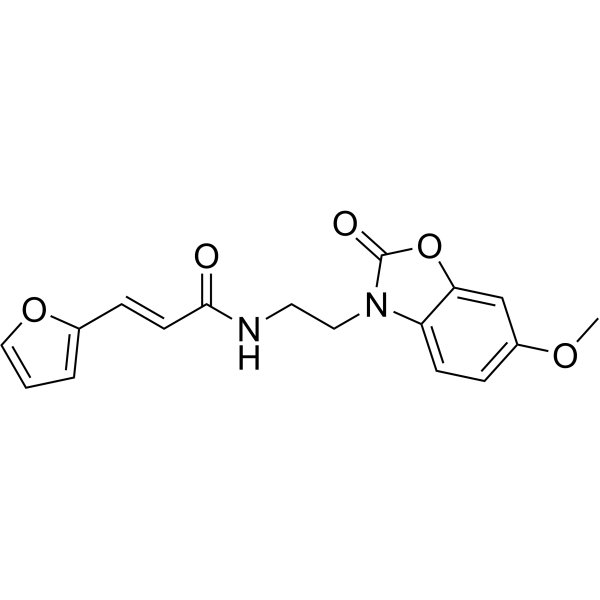 0 ImagesCat. No.: HY-155820CAS No.: 2924156-46-5Anti-inflammatory agent 54 (compound 9c) is a derivative of Coixol and has anti-inflammatory activity. Anti-inflammatory agent 54 inhibits the NF-κB pathway and downregulates the expression of iNOS, TNF-α, IL-6 and IL-1β. Anti-inflammatory agent 54 inhibits LPS-induced nitric oxide (NO) production in RAW264.7 macrophages (IC50: 2.4 μM) and exerts in vivo anti-inflammatory activity in a mouse auricular edema model.
-
Abimufloxacin
 0 ImagesCat. No.: HY-187837CAS No.: 1426216-93-4Synonyms: OPS-2071Abimufloxacin (OPS-2071) is a broad-spectrum quinolone antibacterial agent. Abimufloxacin inhibits the supercoiling activity of DNA gyrase, the decatenation activity of topoisomerase IV, the activation and proliferation of T cells, macrophage activity, as well as the production of TNF-α and IFN-γ. Abimufloxacin exhibits activity against enteropathogenic Gram-positive bacteria, Gram-negative bacteria, quinolone-resistant bacteria, and Crohn's disease-associated bacteria (including Clostridioides difficile and Campylobacter jejuni). Abimufloxacin alleviates colonic inflammation in a mouse model of T cell-mediated colitis. Abimufloxacin can be used in research related to diseases such as intestinal infections and Crohn's disease.
-
Anti-FasL Antibody
 0 ImagesCat. No.: HY-P991868
-
Lss-11
 0 ImagesCat. No.: HY-183143CAS No.: 1392014-36-6Lss-11 is a topoisomerase inhibitor. LSS-11 enhances cell death in cancer cells by inducing apoptosis through increasing the DR5 protein level and PARP1 cleavage. LSS-11 dose-dependently reduces STAT3 phosphorylation, downregulates its target genes MDR1 and MRP1, reduces P-gp protein expressionwithout affecting P-gp transport function. Lss-11 is a chemosensitizer and shows synergistic anticancer effect with Paclitaxel (HY-B0015). Lss-11 can be used for the research of paclitaxel-resistant lung cancer.
-
2-ARA-LysoPtdEtn
 0 ImagesCat. No.: HY-185709CAS No.: 53847-31-7Synonyms: 1-Lyso-2-arachidonoyl-sn-glycero-3-phosphoethanolamine2-ARA-LysoPtdEtn (1-Lyso-2-arachidonoyl-sn-glycero-3-phosphoethanolamine) is an orally active polyunsaturated acyl lysophosphatidylethanolamine. 2-ARA-LysoPtdEtn diminishes formation of LTC4, LTB4, and 12-HETE. 2-ARA-LysoPtdEtn lowers levels of IL-1β, IL-6, TNF-α, and NO. 2-ARA-LysoPtdEtn augments IL-10 levels and upgrades formation of 15-HETE and LXA4. 2-ARA-LysoPtdEtn can be used for the research of peritonitis.
-
10-Hydroxydecanoic acid (Standard)
 0 ImagesSynonyms: NSC 15139 (Standard); 10-HDAA (Standard)10-Hydroxydecanoic acid (Standard) is the analytical standard of 10-Hydroxydecanoic acid. This product is intended for research and analytical applications. 10-Hydroxydecanoic acid (10-HDAA) is a saturated fatty acid derived from 10-hydroxy-trans-2-decenoic acid, which can be isolated from royal jelly. 10-Hydroxydecanoic acid exhibits various biological activities, including anti-inflammatory, insecticidal, anti-malarial, and anti-Leishmania properties, as well as enhancing antigen-specific immune responses. The anti-inflammatory effects of 10-Hydroxydecanoic acid are primarily mediated by inhibiting the activation of NF-κB and the translation of interferon regulatory factor 1 (IRF-1), which reduces the production of interleukin 6 (IL-6) and nitric oxide (NO) in inflammatory cells. Additionally, 10-Hydroxydecanoic acid alleviates neuroinflammatory responses through the p53-autophagy pathway and the p53-NLRP3 pathway. Finally, 10-Hydroxydecanoic acid enhances antigen-specific immune responses by promoting the effective uptake of antigens by microfold cells[1][2][3][4][5].
-
Loganin (Standard)
 0 ImagesSynonyms: Loganoside (Standard)Loganin (Standard) is the analytical standard of Loganin. This product is intended for research and analytical applications. Loganin is a type of iridoid glycoside compound that possesses anti-inflammatory, antioxidant, and antitumor properties, and offers protective effects against acute lung injury and pulmonary fibrosis. Loganin exerts its protective effects against LPS (HY-D1056)-mediated inflammation and oxidative stress by upregulating the Nrf2/HO-1 signaling pathway, and it reduces neuroinflammation caused by spinal cord injury (SCI).
-
Maxadilan TFA
 0 ImagesCat. No.: HY-P3483AMaxadilan TFA is a specific irreversible PAC1 receptor agonist and a potent vasodilator peptide present in the salivary glands of sand flies. Maxadilan TFA exhibits anti-apoptotic activity in hADSCs. Maxadilan TFA inhibits pro-inflammatory cytokines (TNF-α) and enhances anti-inflammatory mediators (IL-10). Maxadilan TFA can activate leukocytes and inhibit vascular permeability through PAC1 receptors. Maxadilan TFA promotes neural differentiation of human adipose-derived stem cells. Maxadilan TFA can be used to study endotoxin shock, atherosclerosis, and neurodegenerative diseases[1][2][3][4][5].
-
N,N-Diethylacetamide
 0 ImagesCat. No.: HY-W008829CAS No.: 685-91-6N,N-Diethylacetamide is a polar solvent widely used in film and fiber manufacturing, as well as in laboratories as a carrier for water-insoluble chemicals. N,N-Diethylacetamide exerts potent anti-inflammatory effects by inhibiting the NF-κB pathway, suppressing the expression of NO and iNOS, and downregulating key inflammatory cytokines such as TNF-α and IL-6, without affecting the MAPK pathway. N,N-Diethylacetamide can be used to study inflammatory preterm birth.
-
Umckalin
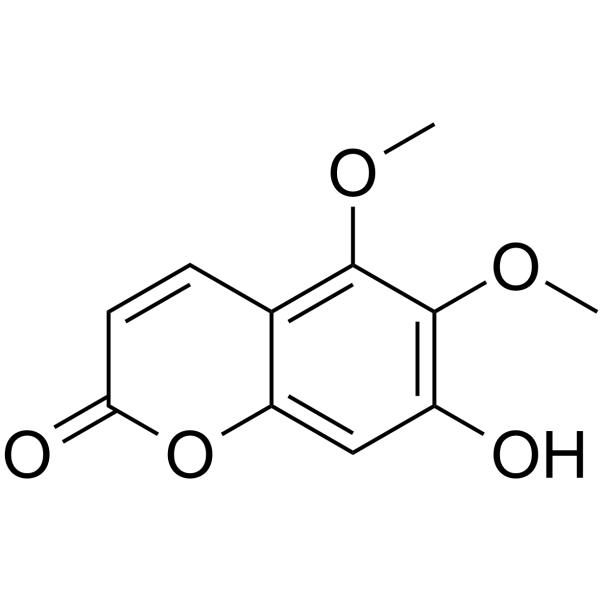 0 ImagesCat. No.: HY-N8712CAS No.: 43053-62-9
-
Semapimod
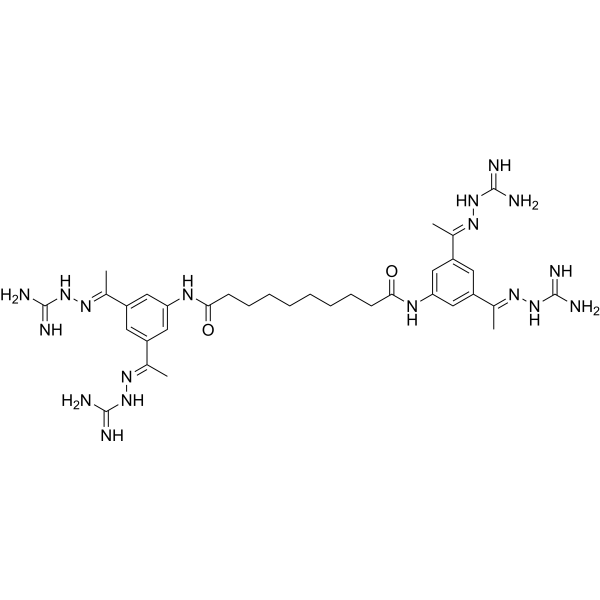 0 ImagesCat. No.: HY-15509CAS No.: 352513-83-8Synonyms: CNI-1493 free base; CPSI-2364Semapimod, an inhibitor of proinflammatory cytokine production, can inhibit TNF-α, IL-1β, and IL-6. Semapimod inhibits TLR4 signaling (IC50≈0.3 μM). Semapimod inhibits p38 MAPK and nitric oxide production in macrophages. Semapimod has potential in a variety of inflammatory and autoimmune disorders.
-
BMS-986090
 0 ImagesCat. No.: HY-P991666BMS-986090 is a humanized monoclonal antibody antagonist targeting CD40. BMS-986090 is promising for research of autoimmune diseases such as systemic lupus erythematosus (SLE) and focal segmental glomerulosclerosis (FSGS).
-
ASP9831
 0 ImagesCat. No.: HY-171780CAS No.: 728013-50-1ASP9831 is an orally active PDE4 inhibitor. ASP9831 inhibits LSP-induced TNF-α production and has anti-inflammatory activity. ASP9831 can be used in fatty liver disease research.




