



JQAD1
Based on 2 publication(s) in Google Scholar
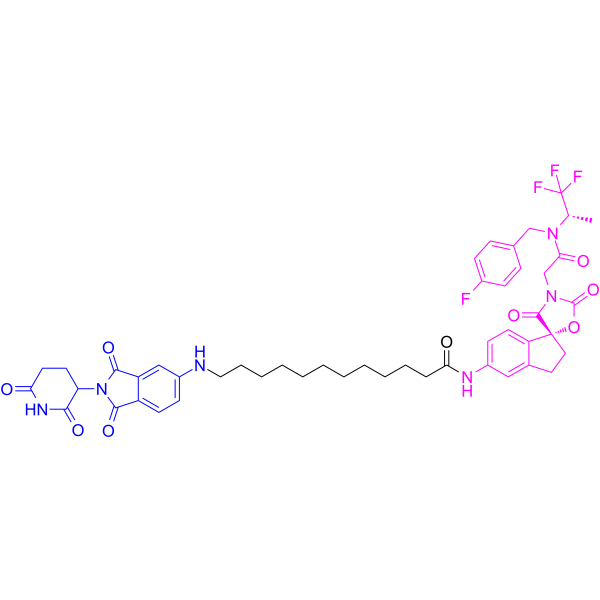
JQAD1 is a EP300 PROTAC degrader. JQAD1 selectively targets EP300 and induces its degradation via the CRBN-dependent proteasomal pathway. JQAD1 reduces the levels of H3K27ac and the expression of MYCN. JQAD1 induces apoptosis (apoptosis) and inhibits cancer cell growth. JQAD1 exerts anti-neuroblastoma effects in vivo in a CRBN-dependent manner. JQAD1 can be used for the research of neuroblastoma.
(Pink: CBP/p300 ligand (HY-107455); Blue: Cereblon ligand (HY-W087383); Black: linker (HY-W105740)).
연구목적의 판매만을 진행합니다. 환자를 대상으로 한 판매는 하지 않습니다.
- Purity : 98.24%
- CAS No.: 2417097-18-6
- 화학식: C48H52F4N6O9
- 분자량:932.95
-
보관:Powder -20°C, 3 years , 4°C, 2 years ; In solvent -80°C, 6 months , -20°C, 1 month

To place orders, for customer services and technical support, please contact: MedChemExpress USA
Tel: 609-228-6898 E-mail: [email protected] [email protected]


-
 Biological Activity
-
Chemical Information
-
용액&용해도
- Protocol
- 순도&문서
- References
-
 Help & FAQs


-
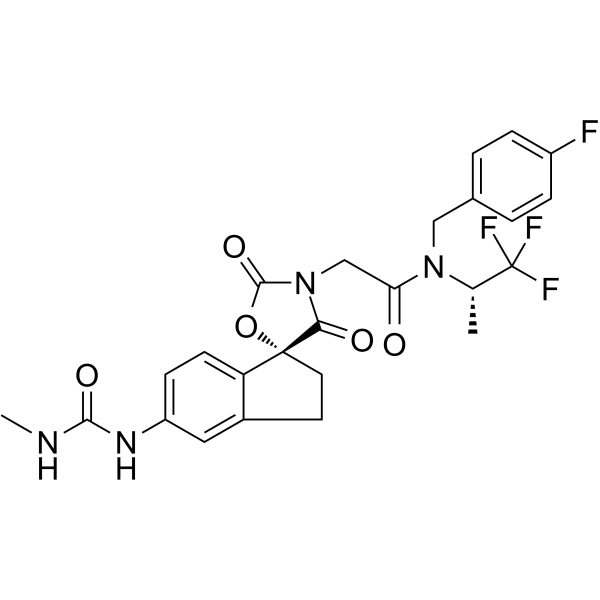
HY-107455
A-485p300/CBP Inhibitor -
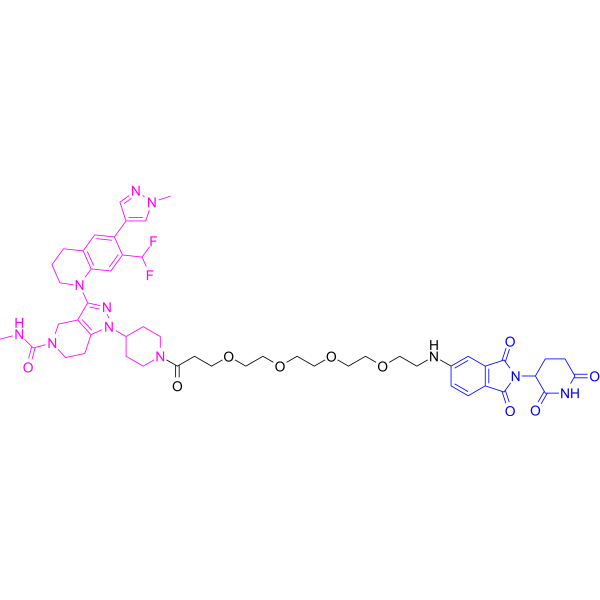
HY-134582
dCBP-1PROTAC p300/CBP Degrader -
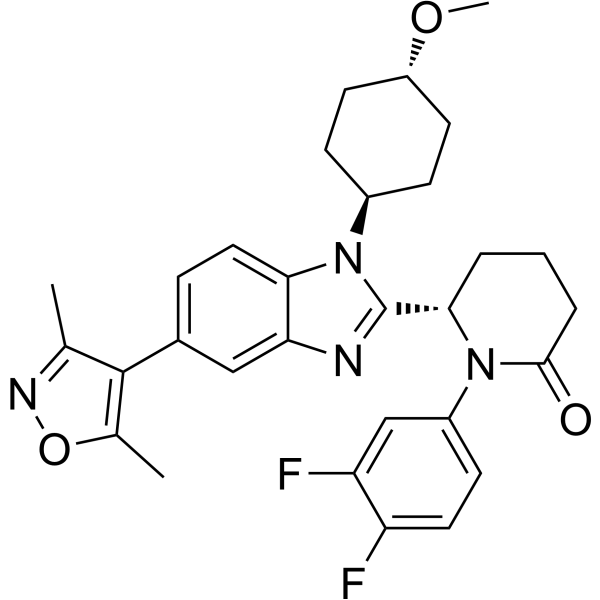
HY-111784
Inobrodibp300/CBP Inhibitor -
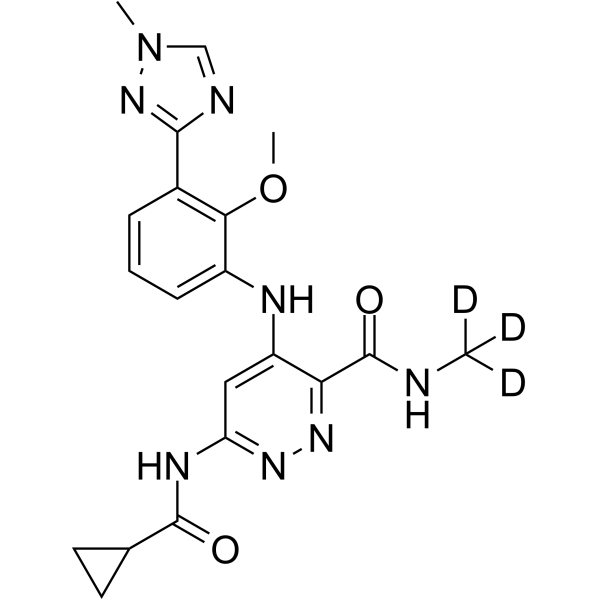
HY-117287
DeucravacitinibTYK2 Inhibitor -
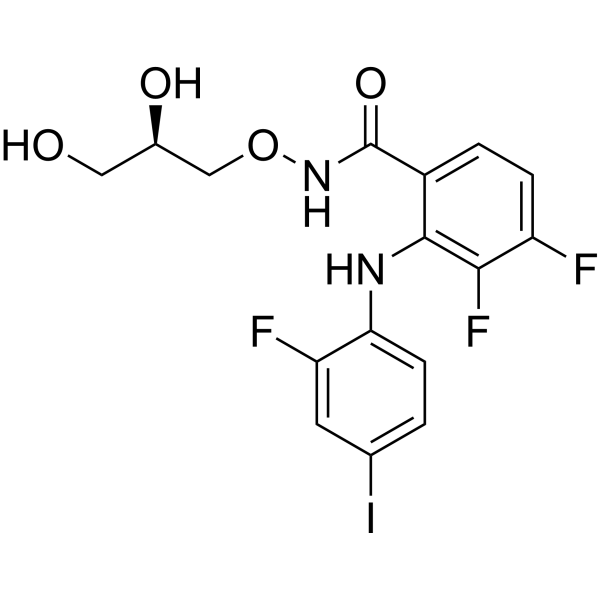
HY-10254
MirdametinibMEK Inhibitor -
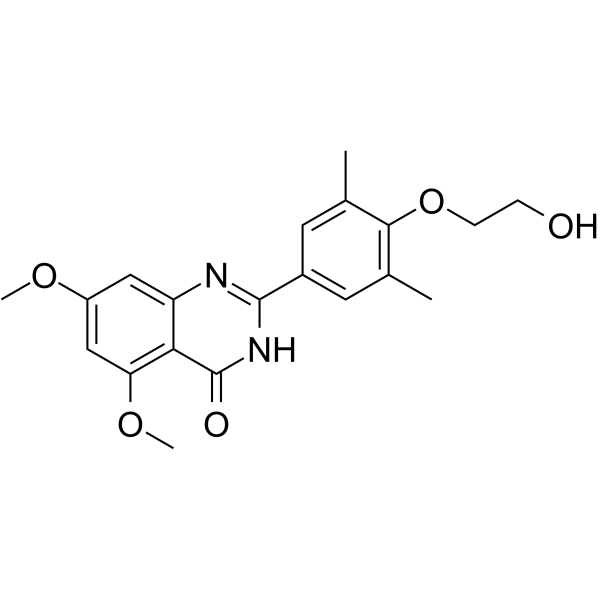
HY-16652
ApabetaloneBET Inhibitor -
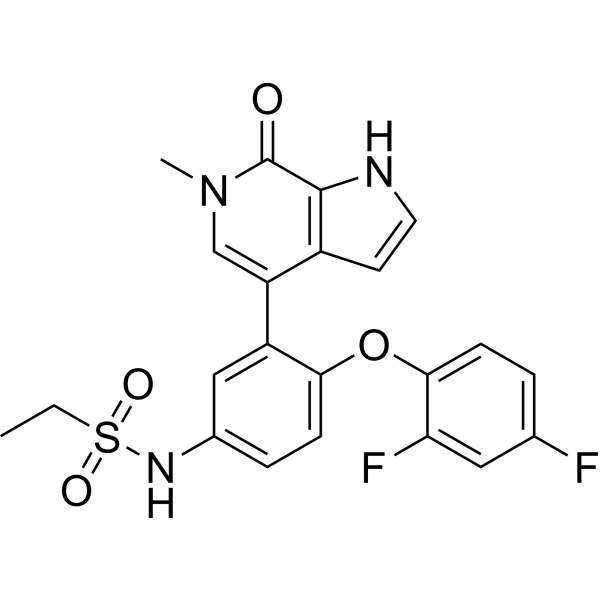
HY-100015
MivebresibBET Inhibitor -
HY-10341
Fasudil HydrochlorideRhoA/ROCK Inhibitor -
HY-N0056
Isochlorogenic acid AAntioxidant -
HY-158113
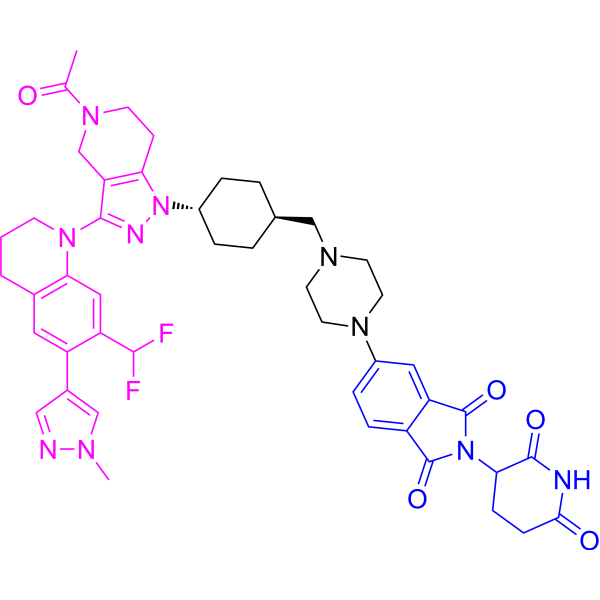
CBPD-409PROTAC CBP/p300 Degrader -
HY-154984
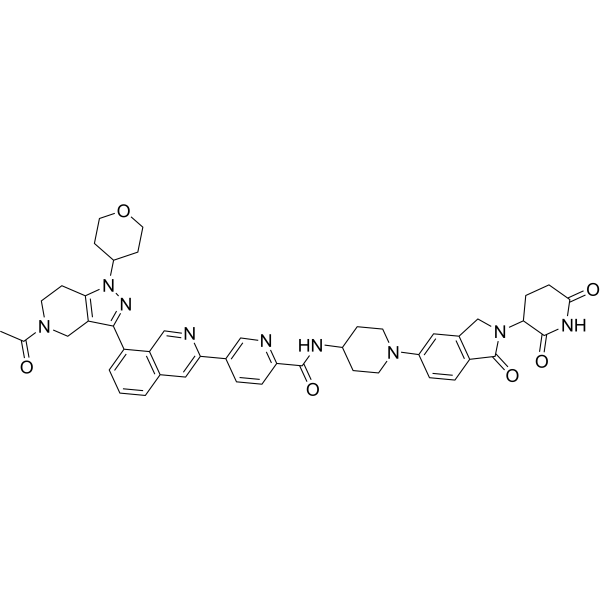
JET-209CBP/p300 PROTAC Degrader -

HY-16652R
Apabetalone (Standard)BET Inhibitor
Publications Citing Use of MedChemExpress (MCE) JQAD1
MoreAll PROTACs Isoforms
MoreAll Caspase Isoforms
More

Biological Activity
제품 설명
IC50 & Target
[1]|
EP300 |
Cellular Effect
|
Cell Line

|
Type | Value | Description | References |
|---|---|---|---|---|
| RS4-11 | IC50 |
91 nM
Compound: JQAD1
|
Cytotoxicity against human RS4-11 cells assessed as inhibition of cell growth incubated for 4 days by cellTiter-Glo assay
Cytotoxicity against human RS4-11 cells assessed as inhibition of cell growth incubated for 4 days by cellTiter-Glo assay
|
[PMID: 37276143] |
In Vitro
JQAD1 forms a ternary complex with EP300 and CRBN in Kelly neuroblastoma cell lysates, and no interaction with CBP is detected[1].
JQAD1 (0.1-10 μM; 24 h) dose-dependently degrades EP300 and reduces H3K27ac levels in Kelly neuroblastoma cells[1].
JQAD1 (0.5-1 μM; 24 h) mediates EP300 degradation, resulting in the loss of MYCN protein in chromatin and whole-cell lysates of Kelly neuroblastoma cells[1].
Treatment with JQAD1 (500 nM; 0-24 h) for 24 h induces genome-wide loss of H3K27ac in Kelly neuroblastoma cells, with a more pronounced loss at super-enhancer regions that regulate CRC genes[1].
JQAD1 (4.3 nM-20 μM; 6 days) inhibits the growth of most MYCN-amplified and some MYCN-non-amplified neuroblastoma cell lines[1].
JQAD1 (10 μM; 1-6 days) restores sensitivity in BE2C neuroblastoma cells overexpressing CRBN, thereby achieving EP300 degradation and growth inhibition[1].
JQAD1 (1 μM-500 nM; 0-96 h) induces rapid, time-dependent apoptosis in Kelly and NGP neuroblastoma cells, which is marked by the cleavage of caspase 3 and PARP1[1].
MedChemExpress (MCE) has not independently confirmed the accuracy of these methods. They are for reference only.
-
Cell Line:Kelly NB cells
-
Concentration:0.1, 0.5, 1, 3, 5, 10 μM
-
Incubation Time:24 h
-
Result:Caused a dose-dependent decrease in EP300 protein levels and parallel loss of the H3K27ac histone modification after 24 hours of treatment.
-
Cell Line:Kelly NB cells
-
Concentration:500 nM
-
Incubation Time:0, 12, 24, 36, 48 h
-
Result:Induced time-dependent loss of EP300 protein, with detectable reduction by 12 hours and near-complete loss by 48 hours.
Kept CBP protein levels stable until 48 hours.
Induced detectable cleaved PARP1 (a marker of apoptosis) by 24 hours, prior to any loss of CBP.
-
Cell Line:Kelly and NGP NB cells
-
Concentration:500 nM (Kelly cells); 1 μM (NGP cells)
-
Incubation Time:0, 6, 24, 48, 72, 96 h
-
Result:Caused a time-dependent increase in sub-G1 apoptotic cells, with ~17% of Kelly cells in sub-G1 by 72 hours and ~42% by 96 hours, and ~11% of NGP cells in sub-G1 by 72 hours and ~25% by 96 hours.
-
Cell Line:Kelly NB cells
-
Concentration:0.5, 1 μM
-
Incubation Time:24 h
-
Result:Caused loss of both EP300 and MYCN proteins from chromatin extracts and whole-cell lysates at both tested concentrations.
Parmacokinetics
| Species | Dose | Route | T1/2 | Cmax |
|---|---|---|---|---|
| Mice[1] | 10 mg/kg | i.p. | 13.3 h | 7 μM |
In Vivo
MedChemExpress (MCE) has not independently confirmed the accuracy of these methods. They are for reference only.
-
Animal Model:NOD.Cg-Prkdcscid Il2rgtm1Wjl/SzJ (NSG) (female, 8 weeks old, subcutaneous xenograft of 2.5 × 10⁶ Kelly human neuroblastoma cells)[1]
-
Dosage:40 mg/kg
-
Administration:i.p.; daily; 14 days (tissue analysis); 21 days (survival and tumor growth studies)
-
Result:Suppressed tumor growth starting at day 3, with statistically significant differences versus vehicle.
Prolonged survival compared with vehicle.
Reduced EP300 immunostaining (with retained CBP immunostaining) in treated tumors.
Preferentially downregulated genes regulated by super-enhancers, including core regulatory circuitry (CRC) genes and MYCN, versus genes regulated by typical enhancers.
Maintained body weight over 15 days of treatment, matching vehicle controls.
-
Animal Model:Balb/c CrbnILE391VAL (humanized CRBN knock-in) (female)[1]
-
Dosage:40 mg/kg
-
Administration:i.p.; daily; 21 days
-
Result:Was well tolerated, with no changes in grooming, behavior, or body weight.
Showed no differences in clinical chemistry (creatinine, aspartate aminotransferase, alanine aminotransferase, alkaline phosphatase, gamma glutamyl transpeptidase, blood urea nitrogen) and peripheral blood counts compared with vehicle controls.
Displayed no gross changes in tissue architecture or immune infiltrate in histopathologic analysis of skin, brain, heart, lung, liver, spleen, kidney, pancreas, small intestine, colon, adrenal gland, and bladder.
Reduced EP300 immunostaining with retained CBP immunostaining in liver tissue.
- RNA extraction experimental
- Detection of Apoptosis
- TUNEL staining for apoptotic DNA fragmentation
- Annexin V plus membrane-impermeant dye apoptosis staining
- Protocol for Cell Counting and Cell Density Analysis
- Somatic Cell Culture
- Apoptosis Solutions
- CCK-8/WST-8 Cell Proliferation Assay
- Cell Counting-Based Growth Curve Assay
- MTT Cell Proliferation Assay
- Cell Viability Determination by MTT Colorimetric Assay


Chemical Information
-
CAS No. 2417097-18-6
-
Appearance Solid
-
분자량 932.95
-
화학식 C48H52F4N6O9
-
Color Light yellow to green yellow
-
SMILES
O=C(N1CC(N([C@@H](C)C(F)(F)F)CC(C=C2)=CC=C2F)=O)[C@](CCC3=C4)(OC1=O)C3=CC=C4NC(CCCCCCCCCCCNC5=CC=C(C6=O)C(C(N6C(CCC7=O)C(N7)=O)=O)=C5)=O
-
선적
Room temperature in continental US; may vary elsewhere.
-
보관
Powder -20°C 3 years 4°C 2 years In solvent -80°C 6 months -20°C 1 month


Publications (2)
-
Journal Impact Factor
-
Most Recent
-
Cell Death Dis
PDHA1-acetylation signaling suppresses cuproptosis to attenuate anti-androgen effect in prostate cancer. [Abstract]2026 Feb 23;17(1):243. PMID: 41730841 -
Proc Natl Acad Sci U S A
A MOZ-TIF2 leukemia mouse model displays KAT6-dependent H3K23 propionylation and overexpression of a set of active developmental genes. [Abstract]2024 Jun 25;121(26):e2405905121. PMID: 38889153


용액&용해도
In Vitro:
DMSO : 100 mg/mL (107.19 mM; Need ultrasonic; Hygroscopic DMSO has a significant impact on the solubility of product, please use newly opened DMSO)
Please refer to the solubility information to select the appropriate solvent. Once prepared, please aliquot and store the solution to prevent product inactivation from repeated freeze-thaw cycles.
Storage method and period of stock solution: -80°C, 6 months; -20°C, 1 month. When stored at -80°C, please use it within 6 months. When stored at -20°C, please use it within 1 month.
Please refer to the solubility information to select the appropriate solvent. Once prepared, please aliquot and store the solution to prevent product inactivation from repeated freeze-thaw cycles.
Storage method and period of stock solution: -80°C, 6 months; -20°C, 1 month. When stored at -80°C, please use it within 6 months. When stored at -20°C, please use it within 1 month.
Concentration (start) × Volume (start) = Concentration (final) × Volume (final)


순도&문서
-
Data Sheet (286 KB)
-
SDS (254 KB)
- English - EN (254 KB)
- Français - FR (254 KB)
- Deutsch - DE (254 KB)
- Norwegian - NO (254 KB)
- Español - ES (254 KB)
- Swedish - SV (254 KB)
- Italian - IT (254 KB)
- Korean - KR (254 KB)
- Portuguese - PT (254 KB)
-
Handling Instructions (2659 KB)
References


Complete Stock Solution Preparation Table
Please refer to the solubility information to select the appropriate solvent. Once prepared, please aliquot and store the solution to prevent product inactivation from repeated freeze-thaw cycles.
Storage method and period of stock solution: -80°C, 6 months; -20°C, 1 month. When stored at -80°C, please use it within 6 months. When stored at -20°C, please use it within 1 month.
| Optional Solvent | Concentration Solvent Mass | 1 mg | 5 mg | 10 mg | 25 mg |
|---|---|---|---|---|---|
| DMSO | 1 mM | 1.0719 mL | 5.3593 mL | 10.7187 mL | 26.7967 mL |
| 5 mM | 0.2144 mL | 1.0719 mL | 2.1437 mL | 5.3593 mL | |
| 10 mM | 0.1072 mL | 0.5359 mL | 1.0719 mL | 2.6797 mL | |
| 15 mM | 0.0715 mL | 0.3573 mL | 0.7146 mL | 1.7864 mL | |
| 20 mM | 0.0536 mL | 0.2680 mL | 0.5359 mL | 1.3398 mL | |
| 25 mM | 0.0429 mL | 0.2144 mL | 0.4287 mL | 1.0719 mL | |
| 30 mM | 0.0357 mL | 0.1786 mL | 0.3573 mL | 0.8932 mL | |
| 40 mM | 0.0268 mL | 0.1340 mL | 0.2680 mL | 0.6699 mL | |
| 50 mM | 0.0214 mL | 0.1072 mL | 0.2144 mL | 0.5359 mL | |
| 60 mM | 0.0179 mL | 0.0893 mL | 0.1786 mL | 0.4466 mL | |
| 80 mM | 0.0134 mL | 0.0670 mL | 0.1340 mL | 0.3350 mL | |
| 100 mM | 0.0107 mL | 0.0536 mL | 0.1072 mL | 0.2680 mL |


JQAD1 Related Classifications
HY-145765 Related Classifications
 Powered by Bioz