1. Search Result
Search Result
Results for "

'Remiz' tomato plants

" in MedChemExpress (MCE) Product Catalog:

2229

Inhibitors & Agonists

23

Screening Libraries

29

Fluorescent Dyes

267

Biochemical Assay Reagents

42

Peptides

3

MCE Kits

1

Inhibitory Antibodies

1129

Natural
Products

229

Isotope-Labeled Compounds

1

Click Chemistry

15

Oligonucleotides

Cat. No. Product Name Target Research Areas Chemical Structure
  • HY-18569
    3-Indoleacetic acid
    20+ Cited Publications

    Indole-3-acetic acid; 3-IAA

    Environmental Pollutants Endogenous Metabolite Metabolic Disease
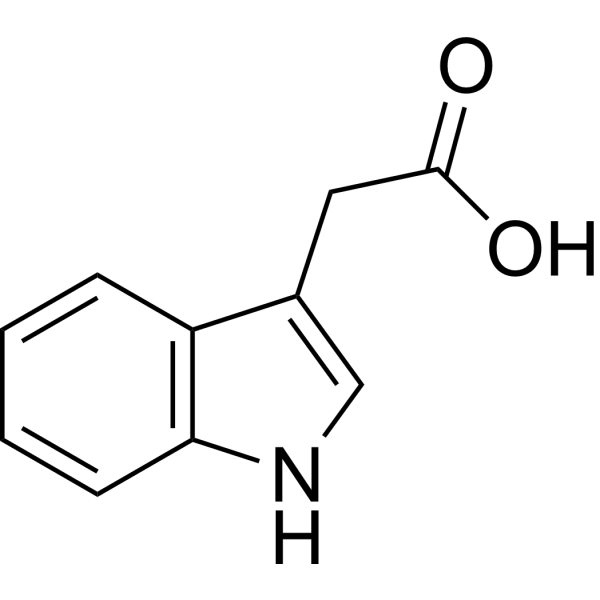
    3-Indoleacetic acid is is an IAA hormone and growth regulator that can promote plant nutritional growth through processes such as cell expansion, differentiation, morphogenesis, and organogenesis .
    3-Indoleacetic acid
  • HY-N0287
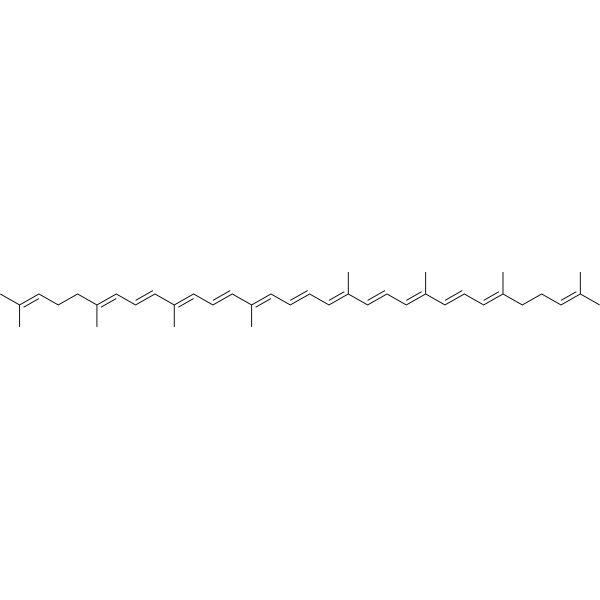
    Lycopene
    15+ Cited Publications

    Reactive Oxygen Species (ROS) Endogenous Metabolite Cardiovascular Disease Cancer
    Lycopene is naturally occurring carotenoids found in tomato, tomato products, and in other red fruits and vegetables; exhibits antioxidant effects.
    Lycopene
  • HY-129038
    GR24
    1 Publications Verification

    Strigolactone GR24

    Biochemical Assay Reagents Others
    (Rac)-GR24 (Strigolactone GR24) is a plant hormone analog. (Rac)-GR24 can mimic the natural germination stimulus of parasitic plant seeds, promoting seed germination in the absence of host plants, thereby reducing the number of parasitic seeds in the soil. (Rac)-GR24 can be used in agricultural research .
    GR24
  • HY-N2166
    Tomatine
    2 Publications Verification

    α-Tomatine; Lycopersicin; Tomatin

    Proteasome Apoptosis Neurological Disease
    Tomatine is a glycoalkaloid, found in the tomato plant (Lycopersicon esculentum Mill.). Tomatine elicits neurotoxicity in RIP1 kinase and caspase-independent manner. Tomatine promotes the upregulation of nuclear apoptosis inducing factor (AIF) in neuroblastoma cells. Tomatine also inhibits 20S proteasome activity .
    Tomatine
  • HY-B1008
    4-Aminobenzoic acid
    1 Publications Verification

    PABA; p-Aminobenzoic acid

    Environmental Pollutants Endogenous Metabolite Bacterial Infection
    4-Aminobenzoic acid is an intermediate in the synthesis of folic acid by bacteria, plants and fungi. 4-Aminobenzoic acid has antibacterial and plant growth regulating properties .
    4-Aminobenzoic acid
  • HY-107846
    Xylan
    2 Publications Verification

    Endogenous Metabolite Others
    Xylan represents the main hemicellulose component in the secondary plant cell walls of flowering plants. Xylan is a polysaccharide made from units of xylose and contains predominantly β-D-xylose units linked as in cellulose .
    Xylan
  • HY-N6933

    Triacontan-1-ol

    Environmental Pollutants Cancer
    1-​Triacontanol is a naturally occurring plant growth regulator. 1-​Triacontanol is a saturated long-chain alcohol that has growth-promoting activities on a number of plants. 1-Triacontanol has anticancer activity .
    1-​Triacontanol
  • HY-N0186
    Indole-3-butyric acid
    1 Publications Verification

    Indolebutyric acid

    Environmental Pollutants Endogenous Metabolite Others
    Indole-3-butyric acid (3-indolebutyric acid) is a plant growth auxin and a good rooting agent. It can promote herbs and woody ornamental plant rooting and used for improving fruit rate. Indole 3-butyric acid is an auxin precursor, and is converted to indole 3-acetic acid (IAA) in a peroxisomal β-oxidation process .
    Indole-3-butyric acid
  • HY-B0853
    Paclobutrazol
    2 Publications Verification

    Environmental Pollutants Fungal Infection
    Paclobutrazol is a triazole-containing plant growth retardant that is known to inhibit the biosynthesis of gibberellins. Paclobutrazol also has antifungal activities. Paclobutrazol, transported acropetally in plants, can also suppress the synthesis of abscisic acid and induce chilling tolerance in plants. Paclobutrazol is typically used to support research on the role of gibberellins in plant biology .
    Paclobutrazol
  • HY-101409

    O-Acetyl-L-serine

    Endogenous Metabolite Infection
    O-Acetylserine (O-Acetyl-L-serine) is an intermediate in the biosynthesis of the amino acid cysteine in bacteria and plants.
    O-Acetylserine
  • HY-W004263

    Arachidyl alcohol

    Environmental Pollutants Fungal Infection
    1-Eicosanol (Arachidyl alcohol) is a long-chain fatty alcohol and volatile organic compound that can be isolated from the leaves of Leea indica and produced by Bacillus velezensis ZJ1. 1-Eicosanol inhibits mycelial growth of Alternaria solani and Botrytis cinerea. 1-Eicosanol is applicable to research related to tomato early blight and tomato gray mold .
    1-Eicosanol
  • HY-N9497

    Galectin Fungal Infection
    Galactinol is a disaccharide carbohydrate serving as a galactosyl donor, which belongs to the raffinose family oligosaccharide pathway and acts as an important osmoprotectant. Galactinol not only induces disease resistance in plants against fungal and bacterial pathogens, but also significantly enhances plant tolerance to abiotic stresses such as drought, high salinity, low temperature and oxidative damage. In addition, Galactinol has the ability to scavenge hydroxyl radicals, can act as a signaling component for root colonization-induced systemic resistance, and is positively correlated with seed longevity in various crops, making it a potential biomarker for evaluating seed vigor. Therefore, Galactinol can be used in the research of various plant diseases including fungal leaf spot, bacterial angular leaf spot, gray mold and soft rot .
    Galactinol
  • HY-125572

    GA7

    Endogenous Metabolite Reactive Oxygen Species (ROS) Fungal Infection
    Gibberellin A7 (GA7) is a terpenoid that serve as an important plant hormone. Gibberellin A7 acts as a growth and response modulator against injuries and parasitism. Gibberellin A7 presents antibiofilm properties at 940 mM concentration. Gibberellin A7 can inhibit flower bud formation in some plants. Gibberellin A7 shows antioxidant activity against peroxyl radicals. Gibberellin A7 exhibits anti-Candida activity against Candia albicans .
    Gibberellin A7
  • HY-18570B

    NAA

    Biochemical Assay Reagents Others
    1-Naphthaleneacetic acid,suitable for plant cell culture (NAA) is a plant growth hormone. 1-Naphthaleneacetic acid,suitable for plant cell culture promotes plant growth and induces root cluster formation. Naphthaleneacetic acid,suitable for plant cell culture is applicable for plant cell culture .
    1-Naphthaleneacetic acid,suitable for plant cell culture
  • HY-B1886

    Phytohormone Others
    Chlorocholine chloride is an effective plant growth regulator. Chlorocholine chloride can inhibit gibberellin (GA) biosynthesis. Chlorocholine chloride can be used for the research of the mechanisms and effects of GA on plant cell growth and differentiation .
    Chlorocholine chloride
  • HY-N10568

    Phytohormone Others
    Gibberellin A9 is a plant hormone that targets gibberellin receptor GID1. Gibberellin A9 binds to GID1 to form a GA-GID1-DELLA protein complex, which promotes the degradation of DELLA proteins. This relieves the inhibitory effect of DELLA proteins on plant growth, thereby promoting plant cell elongation and division, and increasing seed germination rate. Gibberellin A9 is promising for use in studies on plant growth and development, such as stem elongation and flowering induction .
    Gibberellin A9
  • HY-W075256

    Environmental Pollutants Bacterial Others
    Isotianil is a plant defense inducer that has no direct antimicrobial effect but instead activates typical plant defense responses. Isotianil can be used as a plant protection agent for controlling rice blast .
    Isotianil
  • HY-Y1031

    Endogenous Metabolite Metabolic Disease
    3-Ethoxy-3-oxopropanoic acid is an endogenous metabolite. 3-Ethoxy-3-oxopropanoic acid promotes plant growth .
    3-Ethoxy-3-oxopropanoic acid
  • HY-Y1031A

    Endogenous Metabolite Metabolic Disease
    3-Ethoxy-3-oxopropanoic acid potassium is an endogenous metabolite. 3-Ethoxy-3-oxopropanoic acid potassium promotes plant growth .
    3-Ethoxy-3-oxopropanoic acid potassium
  • HY-121584
    Lycoperodine-1
    1 Publications Verification

    Cyclomethyltryptophan

    CaSR Metabolic Disease
    Lycoperodine-1 (Cyclomethyltryptophan) is an active product that can be isolated from tomato fruits (Lycopersicon sculentum). Lycoperodine-1 act as an agonist of Ca 2+ sensing receptors (CaSR) .
    Lycoperodine-1
  • HY-B2008

    DPX-JE874

    Environmental Pollutants Fungal Infection
    Famoxadone is a fungicide active against various oomycetes. Famoxadone induces rapid lysis of zoospores of P. viticola and P. infestans, and inhibits sporangial differentiation, zoospore release, sporangial germination and mycelial growth. Famoxadone exerts a preventive control effect on plant diseases. Famoxadone can be used in research related to grape downy mildew, potato late blight, tomato late blight and plant oomycete diseases .
    Famoxadone
  • HY-W009811

    Environmental Pollutants Insecticide Others
    2-Tridecanone, a nonalkaloid insecticide, is isolated from the wild tomato Lycopersicon hirsutum f. glabratum. 2-Tridecanone is a volatile organic compound .
    2-Tridecanone
  • HY-122464A

    (-)-Jasmonic acid

    Drug Derivative Others
    Jasmonic acid ((-)-Jasmonic acid) is a plant growth regulator and a derivative of Linolenic acid (HY-N0728). Jasmonic acid enhances plant resistance and is widely used as a stress protectant. Jasmonic acid is an endogenous plant hormone and a plant growth inhibitor .
    Jasmonic acid
  • HY-164126

    Others Others
    6-O-Bis-(4,5-dimethoxy-2-nitrobenzyloxyphosphoryl)-D-trehalose is a synthetic compound that interferes with plant sugar signaling. After being absorbed by plants, 6-O-Bis-(4,5-dimethoxy-2-nitrobenzyloxyphosphoryl)-D-trehalose can trigger the release of T6P by light exposure, thereby activating the signaling pathway inside the plant. 6-O-Bis-(4,5-dimethoxy-2-nitrobenzyloxyphosphoryl)-D-trehalose can be used to study plant biosynthesis .
    6-O-Bis-(4,5-dimethoxy-2-nitrobenzyloxyphosphoryl)-D-trehalose
  • HY-P10447

    Fengycin IX; SNA-60-367-3

    Phospholipase Fungal Infection
    Plipastatin A1 (Fengycin IX; SNA-60-367-3) is a lipopeptide with phospholipase A2 inhibitory activity. Plipastatin A1 inhibits conidial germination of Botrytis cinerea in vitro and reduces the incidence of gray mold on tomato leaves. Plipastatin A1 is applicable to research related to gray mold [1][2].
    Plipastatin A1
  • HY-14620A

    Fungal CDK Others
    Farnesene (mixture of isomers) is a farnesene with mixture of isomers. Farnesene is a herbivore-induced plant volatile (HIPV). Farnesene has an important effect on insect resistance in many plant species .
    Farnesene (mixture of isomers)
  • HY-W588263

    IAGlu

    Drug Derivative Others
    Indole-3-acetyl glutamate (IAGlu) is a derivative of the plant hormone indole-3-acetic acid (IAA). As a conjugated form of IAA, Indole-3-acetyl glutamate involves in the transport, storage, and homeostatic regulation of IAA within the plant. Indole-3-acetyl glutamate can be used for research into the effects of plant hormones on the growth and development of plants .
    Indole-3-acetyl glutamate
  • HY-18569R
    3-Indoleacetic acid (standard)
    20+ Cited Publications

    Indole-3-acetic acid (standard); 3-IAA (standard)

    Molecular Glues Reference Standards Endogenous Metabolite Others
    3-Indoleacetic acid (Standard) is the analytical standard of 3-Indoleacetic acid. This product is intended for research and analytical applications. 3-Indoleacetic acid is is an IAA hormone and growth regulator that can promote plant nutritional growth through processes such as cell expansion, differentiation, morphogenesis, and organogenesis .
    3-Indoleacetic acid (standard)
  • HY-NP188

    LEL (FITC)

    Fluorescent Dye Biochemical Assay Reagents Others
    Lycopersicon esculentum (Tomato) Lectin (FITC) is Lycopersicon esculentum (Tomato) Lectin (HY-NP071) labeled with FITC (HY-66019). Lycopersicon esculentum (Tomato) Lectin (FITC) binds to poly-N-acetyllactosamine oligosaccharides. Lycopersicon esculentum (Tomato) Lectin (FITC) is a major component of carbohydrates on the surface of endothelial and epithelial cells .
    Lycopersicon esculentum (Tomato) Lectin (FITC)
  • HY-B2062
    Chlorthal-dimethyl
    1 Publications Verification

    Dimethyl tetrachloroterephthalate

    Environmental Pollutants Biochemical Assay Reagents Others
    Chlorthal-dimethyl (Dimethyl tetrachloroterephthalate) is a plant growth regulator. Chlorthal-dimethyl affects cell division and differentiation, interfering with the normal development of vascular tissue. Chlorthal-dimethyl causes localized swelling of tomato hypocotyls and disrupts normal mitosis in germinating millet seedlings .
    Chlorthal-dimethyl
  • HY-N8491A

    Others Others
    (+)-Dihydrocarvone elicits strong antennal responses of A. mellifera. (+)-Dihydrocarvone influences bee foraging preference for tomato .
    (+)-Dihydrocarvone
  • HY-116541

    ASM

    Environmental Pollutants Fungal Bacterial Infection
    Acibenzolar-S-methyl (ASM) is a plant resistance inducer that mimics pathogen-host interactions and leads to systemic acquired resistance in plants. Acibenzolar-S-methyl helps reduce the use of pesticides and can be used in research to prevent plant diseases .
    Acibenzolar-S-methyl
  • HY-118448

    Antibiotic Bacterial Fungal Parasite Infection
    2,4-Diacetylphloroglucinol is a polyketide antibiotic produced by Pseudomonas fluorescens. 2,4-Diacetylphloroglucinol exhibits broad-spectrum toxicity against various organisms such as bacteria, fungi, oomycetes, and nematodes. 2,4-Diacetylphloroglucinol can also inhibit plant pathogens and affect the root development of tomato seedlings .
    2,4-Diacetylphloroglucinol
  • HY-N0186A
    Indole-3-butyric acid potassium
    1 Publications Verification

    Indolebutyric acid potassium

    Endogenous Metabolite Others
    Indole-3-butyric acid (Indolebutyric acid) potassium is a plant growth auxin and a good rooting agent. It can promote herbs and woody ornamental plant rooting and used for improving fruit rate. Indole 3-butyric acid potassium is an auxin precursor, and is converted to indole 3-acetic acid (IAA) in a peroxisomal β-oxidation process .
    Indole-3-butyric acid potassium
  • HY-W041831

    Ethanedioic acid ammonium

    Environmental Pollutants Biochemical Assay Reagents Others
    Oxalic acid (ammonium) is a oxalic acid bound to ammonium. Oxalic acid has high acidity, reducibility, and chelation ability. Oxalic acid plays important roles in the regulation of plant growth and development, the response to both biotic and abiotic stresses such as plant defense and heavy metals detoxification, and food quality .
    Oxalic acid ammonium
  • HY-NP148

    LEL (Biotin)

    Fluorescent Dye Others
    Lycopersicon esculentum (Tomato) Lectin Biotin is a plant lectin that can be used as a probe to specifically bind biomolecules (such as polysaccharides, peptides, etc.). Lycopersicon esculentum (Tomato) Lectin Biotin is a biological material or organic compound that can be used in life science research .
    Lycopersicon esculentum (Tomato) Lectin (Biotin)
  • HY-N0186B

    IBA

    Biochemical Assay Reagents Others
    Indole-3-butyric acid,suitable for plant cell culture (IBA) is a plant auxin and a good rooting agent. Indole-3-butyric acid,suitable for plant cell culture can promote rooting of herbaceous and woody ornamental plants and is used to increase fruiting rate. Indole-3-butyric acid is an auxin precursor that is converted into indole 3-acetic acid (IAA) during peroxisomal β-oxidation. Indole-3-butyric acid,suitable for plant cell culture can be used for cell culture .
    Indole-3-butyric acid,suitable for plant cell culture
  • HY-W010169
    Sodium 4-aminobenzoate
    1 Publications Verification

    Endogenous Metabolite Bacterial Infection
    Sodium 4-aminobenzoate is an intermediate in the synthesis of folic acid by bacteria, plants and fungi. Sodium 4-aminobenzoate has antibacterial and plant growth regulating properties .
    Sodium 4-aminobenzoate
  • HY-B0853R

    Reference Standards Fungal Infection
    Paclobutrazol (Standard) is the analytical standard of Paclobutrazol. This product is intended for research and analytical applications. Paclobutrazol is a triazole-containing plant growth retardant that is known to inhibit the biosynthesis of gibberellins. Paclobutrazol also has antifungal activities. Paclobutrazol, transported acropetally in plants, can also suppress the synthesis of abscisic acid and induce chilling tolerance in plants. Paclobutrazol is typically used to support research on the role of gibberellins in plant biology .
    Paclobutrazol (Standard)
  • HY-101409R

    O-Acetyl-L-serine (Standard)

    Reference Standards Endogenous Metabolite Infection
    O-Acetylserine (Standard) is the analytical standard of O-Acetylserine. This product is intended for research and analytical applications. O-Acetylserine (O-Acetyl-L-serine) is an intermediate in the biosynthesis of the amino acid cysteine in bacteria and plants.
    O-Acetylserine (Standard)
  • HY-W762060

    Fungal Infection
    Metiram is a polymeric dithiocarbamate pesticide active as a fungicide. Metiram is widely used to protect crops such as tomatoes, potatoes, apples, grapevines, etc. Human and environmental exposure from the representative use of Metiram on potatoes is considered non-negligible. Metiram is considered necessary in the control of serious threats to plant health that cannot be suppressed by other available means, including non-chemical methods .
    Metiram
  • HY-NP0136

    LEL (Fluorescein)

    Fluorescent Dye Others
    Lycopersicon esculentum (Tomato) Lectin (LEL) Fluorescein is a plant lectin that can be used as a probe to specifically bind biomolecules (such as polysaccharides, peptides, etc.).Lycopersicon esculentum (Tomato) Lectin (LEL) Fluorescein is a biological material or organic compound that can be used in life science research .
    Lycopersicon esculentum  (Tomato) Lectin (Fluorescein)
  • HY-N16388

    Autophagy Parasite Infection
    α-Costic acid is a plant sesquiterpene that can induce oxidative stress and autophagy in tomatoes. α-Costic acid has acaricidal activity .
    α-Costic acid
  • HY-B2026

    Fungal Infection
    Propamocarb is a systemic fungicide. Propamocarb is widely used to protect cucumbers, tomatoes and other plants from pathogens .
    Propamocarb
  • HY-N3735

    9-Oxodeoxypeganine; Pegenone

    Others Others
    Deoxyvasicinone is an alkaloid compound isolated from plants .
    Deoxyvasicinone
  • HY-W539799

    2,6-Dimethylpyridine N-oxide

    Biochemical Assay Reagents Others
    2,6-Lutidine N-oxide (2,6-Dimethylpyridine N-oxide) is a plant growth regulator that can improve the initial growth of plants and increase early yield and total yield. Lutidine is the dimethyl derivative of pyridine .
    2,6-Lutidine N-oxide
  • HY-N2166R

    α-Tomatine (Standard); Lycopersicin (Standard); Tomatin (Standard)

    Reference Standards Proteasome Apoptosis Neurological Disease
    Tomatine is a glycoalkaloid, found in the tomato plant (Lycopersicon esculentum Mill.). Tomatine elicits neurotoxicity in RIP1 kinase and caspase-independent manner. Tomatine promotes the upregulation of nuclear apoptosis inducing factor (AIF) in neuroblastoma cells. Tomatine also inhibits 20S proteasome activity .
    Tomatine (Standard)
  • HY-112102

    SSHB

    Environmental Pollutants Endogenous Metabolite PI3K Akt Metabolic Disease
    (22S,23S)-Homobrassinolide is one of the most active brassinosteroids in inducing plant growth in various plant bioassay systems. (22S,23S)-Homobrassinolide shows Akt-dependent anabolic activity in rat skeletal muscle cells. Orally active .
    (22S,23S)-Homobrassinolide
  • HY-N13014

    Others Others
    Indole-3-acetyl β-D-glucopyranose is a glucose esterified derivative of the plant hormone indole-3-acetic acid (IAA). Indole-3-acetyl β-D-glucopyranose is involved in regulating plant growth and can be used to study the metabolism and regulatory mechanisms of plant hormones .
    Indole-3-acetyl β-D-glucopyranose
  • HY-116541R

    ASM (Standard)

    Bacterial Fungal Reference Standards Infection
    Acibenzolar-S-methyl (Standard) is the analytical standard of Acibenzolar-S-methyl. This product is intended for research and analytical applications. Acibenzolar-S-methyl (ASM) is a plant resistance inducer that mimics pathogen-host interactions and leads to systemic acquired resistance in plants. Acibenzolar-S-methyl helps reduce the use of pesticides and can be used in research to prevent plant diseases .
    Acibenzolar-S-methyl (Standard)

Inquiry Online

Your information is safe with us. * Required Fields.

Salutation


Country or Region *

Applicant Name *


Organization Name *

Department *


Email Address *


Product Name *

Cat. No.


Requested quantity *

Phone Number *


Remarks

Inquiry Online

Inquiry Information

Product Name:
Cat. No.:
Quantity:
MCE Japan Authorized Agent:

