1. Search Result
Search Result
Results for "

Biosynthesis

" in MedChemExpress (MCE) Product Catalog:

975

Inhibitors & Agonists

8

Screening Libraries

10

Fluorescent Dye

35

Biochemical Assay Reagents

26

Peptides

1

MCE Kits

289

Natural
Products

3

Recombinant Proteins

96

Isotope-Labeled Compounds

3

Antibodies

6

Click Chemistry

26

Oligonucleotides

Cat. No. Product Name Target Research Area
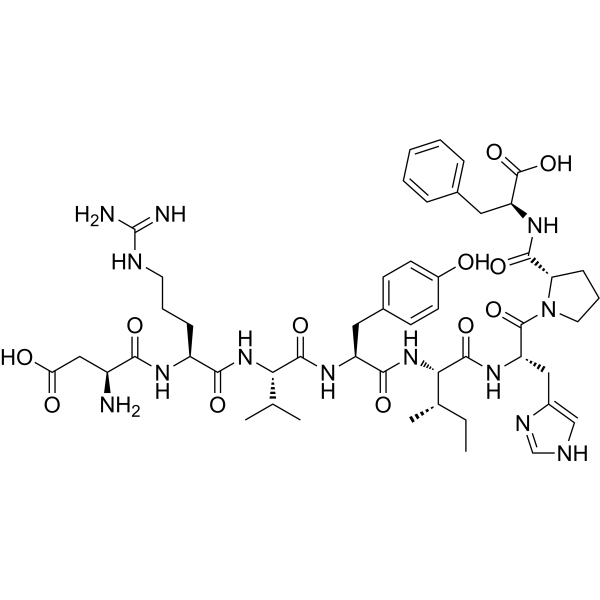
  • HY-13948
    Angiotensin II human
    Maximum Cited Publications
    222 Publications Verification

    Angiotensin II; Ang II; DRVYIHPF

    Angiotensin Receptor Apoptosis Cardiovascular Disease Infection Metabolic Disease Inflammation/Immunology Cancer
    Angiotensin II (Angiotensin II) is a vasoconstrictor and a major bioactive peptide of the renin/angiotensin system. Angiotensin II human plays a central role in regulating human blood pressure, which is mainly mediated by interactions between Angiotensin II and the G-protein-coupled receptors (GPCRs) Angiotensin II type 1 receptor (AT1R) and Angiotensin II type 2 receptor (AT2R). Angiotensin II human stimulates sympathetic nervous stimulation, increases aldosterone biosynthesis and renal actions. Angiotensin II human induces growth of vascular smooth muscle cells, increases collagen type I and III synthesis in fibroblasts, leading to thickening of the vascular wall and myocardium, and fibrosis. Angiotensin II human also induces apoptosis. Angiotensin II induces capillary formation from endothelial cells via the LOX-1 dependent redox-sensitive pathway .
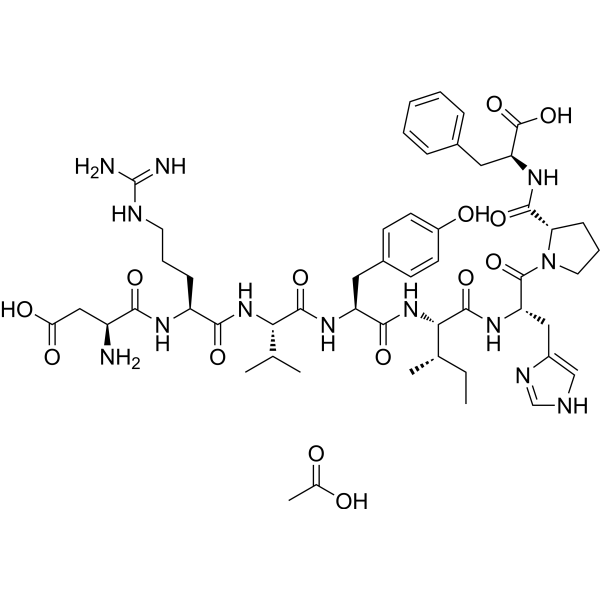
  • HY-13948A
    Angiotensin II human acetate
    Maximum Cited Publications
    222 Publications Verification

    Angiotensin II acetate; Ang II acetate; DRVYIHPF acetate

    Angiotensin Receptor Apoptosis Cardiovascular Disease Infection Metabolic Disease Inflammation/Immunology Cancer
    Angiotensin II human (Angiotensin II) acetate is a vasoconstrictor and a major bioactive peptide of the renin/angiotensin system. Angiotensin II human acetate plays a central role in regulating human blood pressure, which is mainly mediated by interactions between Angiotensin II and the G-protein-coupled receptors (GPCRs) Angiotensin II type 1 receptor (AT1R) and Angiotensin II type 2 receptor (AT2R). Angiotensin II human acetate stimulates sympathetic nervous stimulation, increases aldosterone biosynthesis and renal actions. Angiotensin II human acetate induces growth of vascular smooth muscle cells, increases collagen type I and III synthesis in fibroblasts, leading to thickening of the vascular wall and myocardium, and fibrosis. Angiotensin II human acetate also induces apoptosis. Angiotensin II human acetate induces capillary formation from endothelial cells via the LOX-1 dependent redox-sensitive pathway .
  • HY-W016887

    H-Gly-Pro-OH; Gly-Pro

    Endogenous Metabolite Apoptosis Metabolic Disease Cancer
    Glycyl-L-proline (H-Gly-Pro-OH) is a dipeptide. Glycyl-L-proline can induce MCF-7 cells apoptosis. Glycyl-L-proline can enhance the inhibitory effect of the PRODH/POX knockout on collagen and DNA biosynthesis. Glycyl-L-proline can inhibit Gly-Sar and L-proline transport. Glycyl-L-proline can be used for the researches of cancer and metabolic disease, such as breast cancer .
  • HY-W019599

    L-PCPA

    5-HT Receptor Tryptophan Hydroxylase Neurological Disease
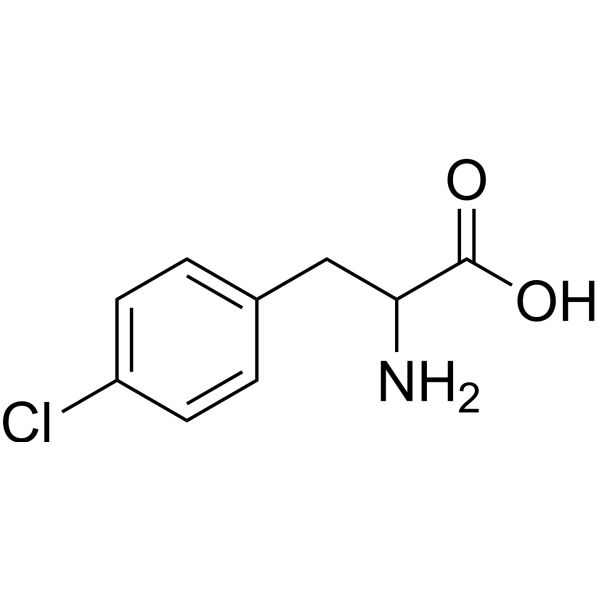
    4-Chloro-L-phenylalanine (L-PCPA) is a tryptophan hydroxylase inhibitor targeting TPH1 and TPH2, with the activity of blocking serotonin biosynthesis. 4-Chloro-L-phenylalanine reduces the levels of serotonin and its metabolites in the brain without impairing the survival of serotonergic neurons. 4-Chloro-L-phenylalanine enhances anhedonic, depression-like and anxiety-like behaviors in mice with depleted noradrenergic and dopaminergic neurons. 4-Chloro-L-phenylalanine acts as a decarboxylation substrate for aromatic L-amino acid decarboxylase from Bacillus atrophaeus. 4-Chloro-L-phenylalanine can be used in studies related to Parkinson's disease .
  • HY-116073

    Acyltransferase Infection Cancer
    L-Penicillamine is an orally active serine palmitoyltransferase (SPT) inhibitor. L-Penicillamine inactivates the PLP cofactor by forming adducts, thereby inhibiting SPT activity and reducing sphingolipid biosynthesis. L-Penicillamine not only blocks tumor access to vitamin B6, but also stabilizes the human papillomavirus 16 E6 oncoprotein monomer and inhibits its polymerization, exhibiting a unique anticancer mechanism. L-Penicillamine effectively delays the growth of Sarcoma-180, induces tumor necrosis and prolongs survival (though long-term use may lead to Pyridoxine (HY-B1328) deficiency and weight loss) .
  • HY-W012906
    L-Allylglycine
    1 Publications Verification

    L-2-Allylglycine

    Amino Acid Decarboxylase GABA Receptor Neurological Disease
    L-Allylglycine (L-2-Allylglycine) is an amino acid derivative. L-Allylglycine is an inhibitor for glutamate decarboxylase (GAD) that reduces the GABA biosynthesis in the brain. L-Allylglycine exhibits convulsant activity .
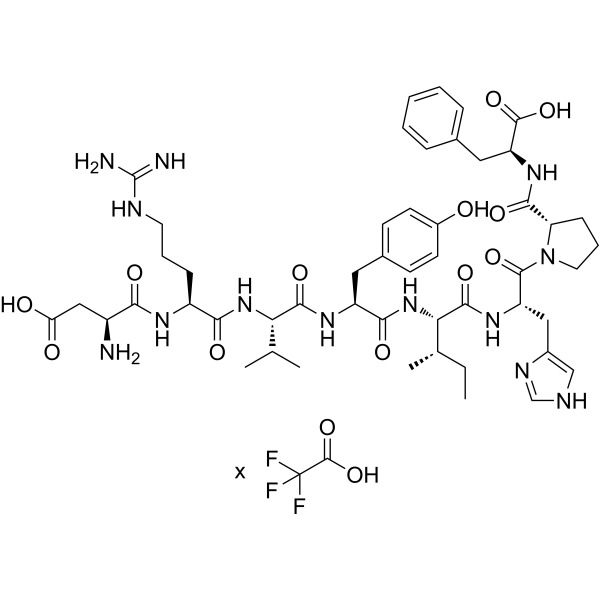
  • HY-13948B
    Angiotensin II human TFA
    Maximum Cited Publications
    222 Publications Verification

    Angiotensin II TFA; Ang II TFA; DRVYIHPF TFA

    Angiotensin Receptor Apoptosis Cardiovascular Disease Metabolic Disease Cancer
    Angiotensin II human (Angiotensin II) TFA is a vasoconstrictor and a major bioactive peptide of the renin/angiotensin system. Angiotensin II human TFA plays a central role in regulating human blood pressure, which is mainly mediated by interactions between Angiotensin II and the G-protein-coupled receptors (GPCRs) Angiotensin II type 1 receptor (AT1R) and Angiotensin II type 2 receptor (AT2R). Angiotensin II human TFA stimulates sympathetic nervous stimulation, increases aldosterone biosynthesis and renal actions. Angiotensin II human TFA induces growth of vascular smooth muscle cells, increases collagen type I and III synthesis in fibroblasts, leading to thickening of the vascular wall and myocardium, and fibrosis. Angiotensin II human TFA also induces apoptosis. Angiotensin II human TFA induces capillary formation from endothelial cells via the LOX-1 dependent redox-sensitive pathway .
  • HY-119543

    Amino Acid Derivatives Others
    O-Succinyl-L-homoserine is a homoserine derivative. O-Succinyl-L-homoserine is an intermediate in the biosynthesis of methionine in Escherichia coli and Salmonella typhimurium .
  • HY-W015595
    L-Allylglycine hydrochloride
    1 Publications Verification

    L-2-Allylglycine hydrochloride

    Amino Acid Decarboxylase GABA Receptor Neurological Disease
    L-Allylglycine (L-2-Allylglycine) hydrochloride is an amino acid derivative. L-Allylglycine hydrochloride is an inhibitor for glutamate decarboxylase (GAD) that reduces the GABA biosynthesis in the brain. L-Allylglycine hydrochloride exhibits convulsant activity .
  • HY-W587753

    Antibiotic Bacterial Infection
    Bacitracin A is an antibiotic, which exhibits antibacterial activity against gram-positive bacteria. Bacitracin A forms complex with long-chain polyisoprenyl pyrophosphates in presence of metal ions, dephosphorylates the lipid carrier intermediate Css-bactoprenyl pyrophosphate, inhibits thus the bacterial cell wall biosynthesis .
  • HY-P3519

    Drug Intermediate Infection
    ACV Tripeptide, a tripeptide, is the first dedicated intermediate in the biosynthetic pathway leading to the penicillin and cephalosporin classes of β-lactam natural products in bacteria and fungi. ACV Tripeptide is is synthesized nonribosomally by the ACV synthetase (ACVS) enzyme, which is encoded by the 11 kb The pchAB gene encodes this enzyme. ACV Tripeptide can be used for the biosynthesis of β-lactam antibiotics .
  • HY-P2200

    BMY-29304

    HIV Antibiotic Infection Inflammation/Immunology
    Siamycin I (BMY-29304), a 21-residue tricyclic peptide, is a secondary metabolite in actinomycetes. Siamycin I is a HIV fusion inhibitor with ED50s of 0.05 to 5.7 μM for acute HIV type 1 (HIV-1) and HIV-2 infections. Siamycin I inhibits the gelatinase and gelatinase biosynthesis-activating pheromone (GBAP) signaling via the FsrC-FsrA two-component regulatory system in a noncompetitive manner. Siamycin I suppresses the expression of both fsrBDC and gelE-sprE transcripts. Siamycin I, a lasso peptide, interacts with lipid II and inhibits cell wall biosynthesis. Siamycin I, an antibiotic, has the potential for enterococcal infections research .
  • HY-W142073

    7-Methyltryptophan

    Amino Acid Derivatives Infection
    7-Methyl-DL-tryptophan (7-Methyltryptophan) is an amino acid derivative, which is a key precursor for biosynthesis of many non-ribosomal peptide antibiotics. 7-Methyl-DL-tryptophan plays an important role in synthesis of high-efficiency antibacterial agents and analogues thereof .
  • HY-P2256
    H3K4(Me2) (1-20)
    1 Publications Verification

    Peptides Others
    H3K4(Me2) (1-20) is a histone peptide. H3K4me2 regulates the recovery of protein biosynthesis and homeostasis following DNA damage .
  • HY-13948BS

    Angiotensin II-13C6,15N TFA; Ang II-13C6,15N TFA; DRVY(I-13C6,15N)HPF TFA

    Isotope-Labeled Compounds Cancer
    Angiotensin II human- 13C6, 15N TFA (Ang II- 13C6, 15N TFA) is 13C- and 15N-labeled Angiotensin II human (TFA) (HY-13948B). Angiotensin II human (Angiotensin II) TFA is a vasoconstrictor and a major bioactive peptide of the renin/angiotensin system. Angiotensin II human TFA plays a central role in regulating human blood pressure, which is mainly mediated by interactions between Angiotensin II and the G-protein-coupled receptors (GPCRs) Angiotensin II type 1 receptor (AT1R) and Angiotensin II type 2 receptor (AT2R). Angiotensin II human TFA stimulates sympathetic nervous stimulation, increases aldosterone biosynthesis and renal actions .
  • HY-P10519

    Bacterial Reactive Oxygen Species (ROS) Infection
    Brevicidine is an antimicrobial peptide with selective bactericidal activity against Gram-negative pathogens. Brevicidine disrupts bacterial morphology by binding to lipopolysaccharide (LPS) on the bacterial cell membrane to form pores. Brevicidine causes dissipation of intracellular proton motive force, outer membrane damage, inhibition of ATP biosynthesis and reactive oxygen species accumulation in bacterial cells. As a sensitizer, Brevicidine exerts synergistic activity when combined with a variety of conventional antibiotics .
  • HY-P4807

    Hez-PBAN

    Peptides Neurological Disease
    Pheromone Biosynthesis Activating Neuropeptide (Helicoverpa assulta, Heliothis zea) (PBAN), a member of the PBAN/Pyrokinin neuropeptide family, characterized by a common amino acid sequence FXPRLamide motif in the C-terminus .
  • HY-133975

    Bacterial Metabolic Disease
    Isoleucylcysteine, a dipeptide composed of isoleucine and cysteine, is an intermediate peptide in bacitracin biosynthesis .
  • HY-P5866

    Manse-AT

    Endogenous Metabolite Endocrinology
    Allatotropin (Manse-AT) is a 13 amino acid neuropeptide. Allatotropin activates inositol 1,4,5-trisphosphate (IP3) pathway, and the biosynthesis of juvenile hormone (JH) in Manduca sexta .
  • HY-P2020

    Bacterial Infection
    Berninamycin A is a cyclic thiopeptide antibiotic first isolated from S. bernensis. It inhibits protein biosynthesis in Gram positive bacteria through binding with ribosomal subunits. Cyclic thiopeptide antibiotics, including berninamycin A, induce the transcriptional activator TipA in Streptomyces.
  • HY-W748000

    PM181104; Baringolin

    Antibiotic Bacterial Infection
    Kocurin (PM181104) is a thiazolyl cyclic-peptide antibiotic. Kocurin inhibits bacterial growth by impeding bacterial protein biosynthesis during the translation phase. Kocurin has strong inhibitory activity against Gram-positive bacteria, but no activity against fungi and Gram-negative bacteria .
  • HY-P10390

    Parasite Infection
    Insecticidal agent 11 (compound Q6) is a potent insect growth regulator (IGR)-based insecticide. Insecticidal agent 11 shows high insecticidal activity against Diploptera punctata by inhibiting juvenile hormone (JH) biosynthesis. Insecticidal agent 11 also exhibits insecticidal activity against Plutella xylostella .
  • HY-P10034

    Pss-PT

    Endogenous Metabolite Endocrinology
    Pheromonotropin (Pseudaletia separata) (Pss-PT) is an armyworm (Pseudaletia separata) pheromone with the C-terminal pentapeptide FXPRL-amide. Pheromonotropin (Pseudaletia separata) belongs to the PK/PBAN family and stimulates sex pheromone biosynthesis in moths, mediating feeding (intestinal muscle contraction), development (embryonic diapause, pupal diapause, and pupation), and defense against natural enemy insects wait .
  • HY-P3519A

    Drug Intermediate Infection
    ACV Tripeptide TFA, a tripeptide, is the first dedicated intermediate in the biosynthetic pathway leading to the penicillin and cephalosporin classes of β-lactam natural products in bacteria and fungi. ACV Tripeptide TFA is is synthesized nonribosomally by the ACV synthetase (ACVS) enzyme, which is encoded by the 11 kb The pchAB gene encodes this enzyme. ACV Tripeptide TFA can be used for the biosynthesis of β-lactam antibiotics .
  • HY-P10519A

    Bacterial Reactive Oxygen Species (ROS) Infection
    Brevicidine TFA is an antimicrobial peptide with selective bactericidal activity against Gram-negative pathogens. Brevicidine TFA disrupts bacterial morphology by binding to lipopolysaccharide (LPS) on the bacterial cell membrane to form pores. Brevicidine TFA causes dissipation of intracellular proton motive force, outer membrane damage, inhibition of ATP biosynthesis and reactive oxygen species accumulation in bacterial cells. As a sensitizer, Brevicidine TFA exerts synergistic activity when combined with a variety of conventional antibiotics .
  • HY-P11646

    COX Metabolic Disease Inflammation/Immunology
    Brazzein is a functional sweetener with antioxidant, anti-inflammatory, and anti-allergic activities.
    Brazzein inhibits COX-2 with an IC50 of 12.62 μM. Brazzein exhibits strong antioxidant effects, showing ABTS radical scavenging activity (IC50 = 12.55 μM) . Brazzein shows no antibacterial or antifungal activity. Brazzein can be used for the research of obesity, metabolic disorder, inflammation .

Inquiry Online

Your information is safe with us. * Required Fields.

Salutation


Country or Region *

Applicant Name *


Organization Name *

Department *


Email Address *


Product Name *

Cat. No.


Requested quantity *

Phone Number *


Remarks

Inquiry Online

Inquiry Information

Product Name:
Cat. No.:
Quantity:
MCE Japan Authorized Agent:

