Search Result
Results for "
Gly-Pro
" in MedChemExpress (MCE) Product Catalog:
1
Isotope-Labeled Compounds
| Cat. No. |
Product Name |
Target |
Research Areas |
Chemical Structure |
-
- HY-D1670
-
|
|
Fluorescent Dye
|
Others
|
|
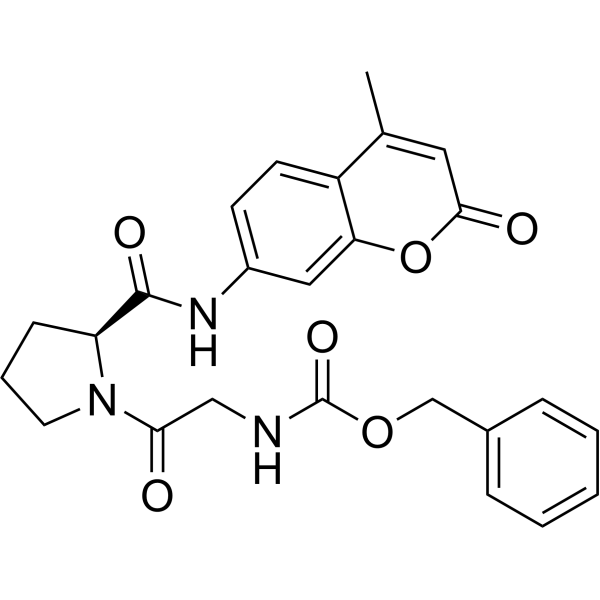
Z-Gly-Pro-AMC is a fluorogenic substrate. Z-Gly-Pro-AMC is hydrolyzed by prolyl endopeptidase to generate highly fluorescent 7-Amino-4-methylcoumarin (HY-D0027). (λex=380 nm, λem=465 nm) .
|
-
-
- HY-W016887
-
|
H-Gly-Pro-OH; Gly-Pro
|
Endogenous Metabolite
Apoptosis
|
Metabolic Disease
Cancer
|
|
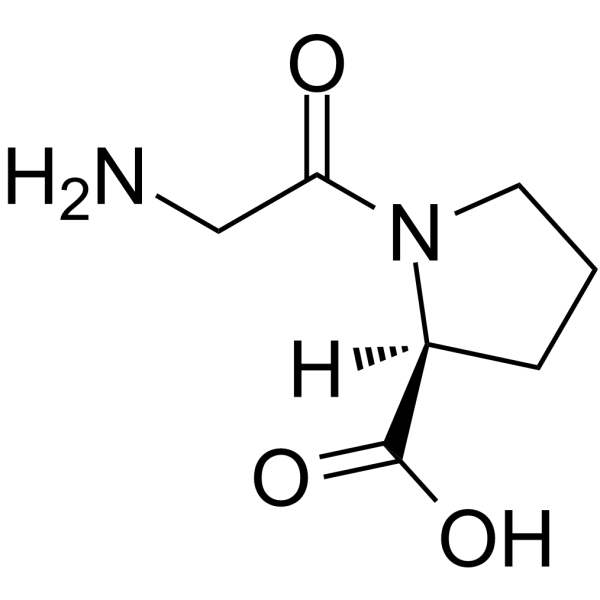
Glycyl-L-proline (H-Gly-Pro-OH) is a dipeptide. Glycyl-L-proline can induce MCF-7 cells apoptosis. Glycyl-L-proline can enhance the inhibitory effect of the PRODH/POX knockout on collagen and DNA biosynthesis. Glycyl-L-proline can inhibit Gly-Sar and L-proline transport. Glycyl-L-proline can be used for the researches of cancer and metabolic disease, such as breast cancer .
|
-
-
- HY-145983
-
|
|
FAP
Prolyl Endopeptidase (PREP)
|
Cancer
|
|
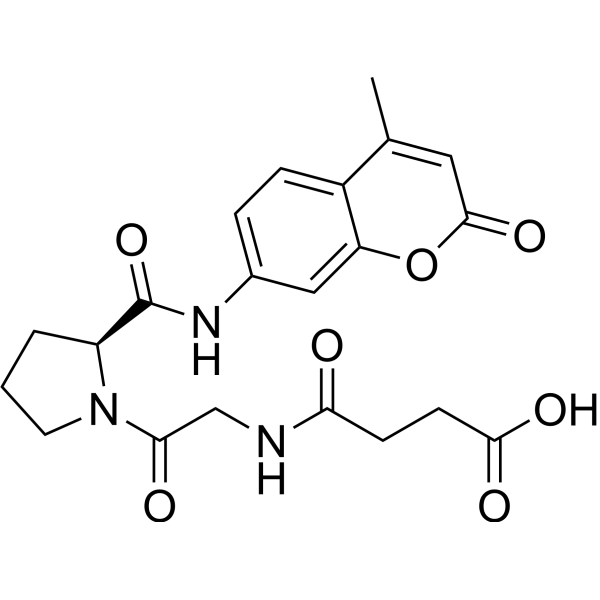
Suc-Gly-Pro-AMC is a fluorescent substrate. Suc-Gly-Pro-AMC is a fibroblast activation protein (FAP) specific substrate. Suc-Gly-Pro-AMC reacts with recombinant porcine prolyl oligopeptidase. Suc-Gly-Pro-AMC can be used to study the activity of FAP, prolyl endopeptidase (PREP). Suc-Gly-Pro-AMC is used in glioma research .
|
-
-
- HY-119244
-
|
|
Dipeptidyl Peptidase
|
Metabolic Disease
|
|
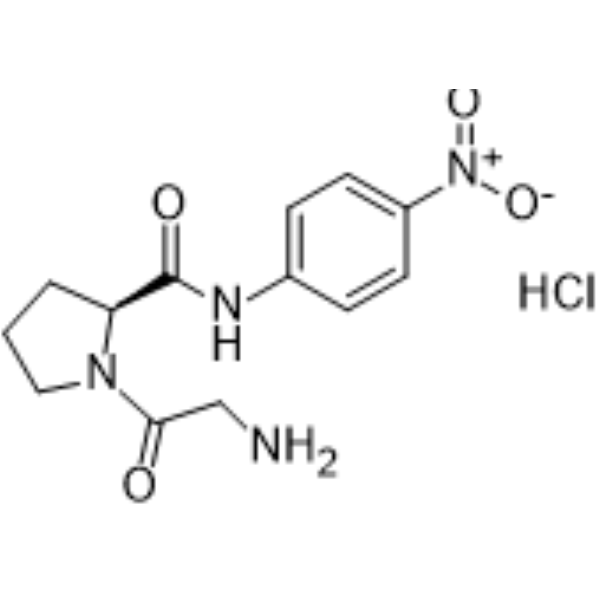
Gly-Pro-pNA hydrochloride is a chromogenic peptide substrate that can be cleaved by the circulating enzyme dipeptidyl peptidase IV (DPP IV). Gly-Pro-pNA hydrochloride is mainly used to detect the activity of aminopeptidases such as DPP IV. Gly-Pro-pNA hydrochloride can be investigated as an experimental antidiabetic agent .
|
-
-
- HY-P2661
-
|
|
Biochemical Assay Reagents
Bacterial
|
Infection
|
|
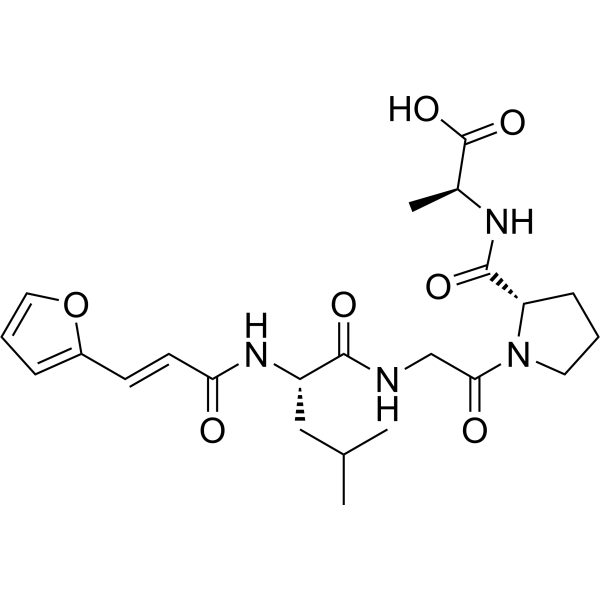
FA-Leu-Gly-Pro-Ala-OH is a furylacryloyl-terminal tetrapeptide that serves as a substrate for bacterial collagenase and spirochete metalloendopeptidase. FA-Leu-Gly-Pro-Ala-OH is specifically hydrolyzed by spirochete collagenase only at the Leu-Gly bond. FA-Leu-Gly-Pro-Ala-OH can be used to determine the equilibrium constant of peptide bond hydrolysis, and also to detect collagenase-mediated cleavage reactions via turbidimetry based on absorbance reduction .
|
-
-
- HY-137834
-
|
|
Fluorescent Dye
|
Others
|
|
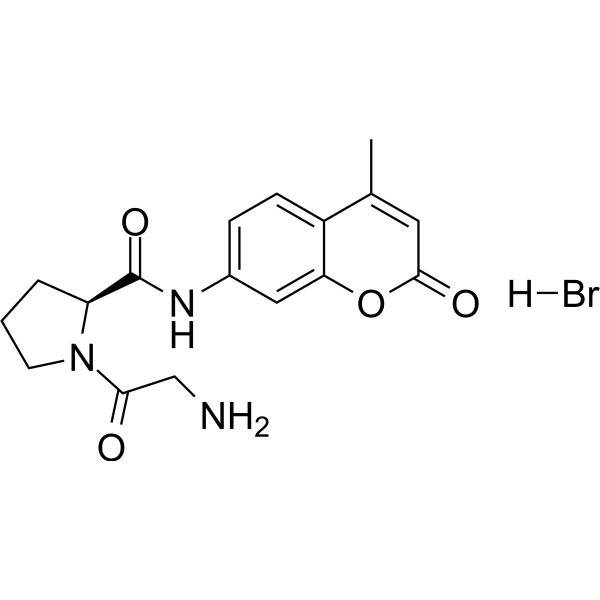
Gly-Pro-AMC hydrobromide is a fluorescent dye, it can be used as a specific fluorescent substrate for detecting Dipeptidyl peptidase IV (DPP-IV) activity .
|
-
-
- HY-P0074
-
GPRP
3 Publications Verification
Gly-Pro-Arg-Pro; Pefa 6003
|
Thrombin
|
Cardiovascular Disease
|
|
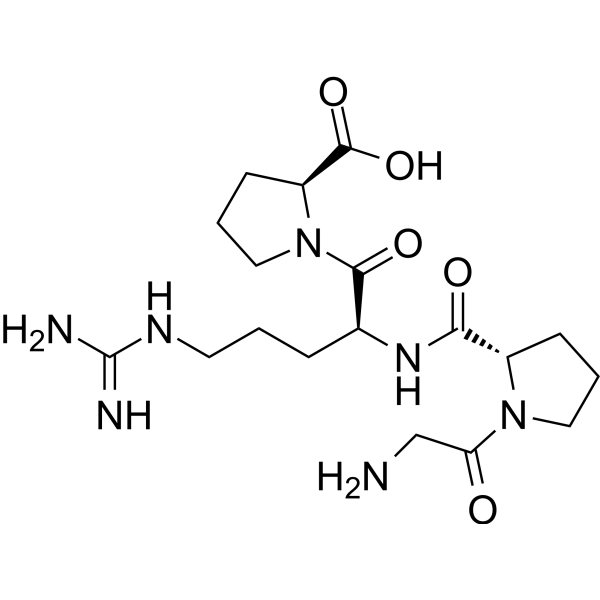
GPRP (Gly-Pro-Arg-Pro; Pefa 6003) is a fibrin polymerization inhibitor that inhibits the interaction between fibrinogen and the platelet membrane glycoprotein Ⅱb/IIIa complex (glycoprotein IIb/IIIa receptor) . GPRP increases the level of free thrombin in activated platelet-rich plasma by reducing the adsorption of thrombin onto fibrin. GPRP inhibits platelet aggregation and prolongs the thrombin-initiated clotting time in plasma. GPRP is applicable for research related to thrombosis and thrombotic diseases .
|
-
-
- HY-P4486
-
|
Pro-Gly-Pro
|
Drug Derivative
|
Others
|
|
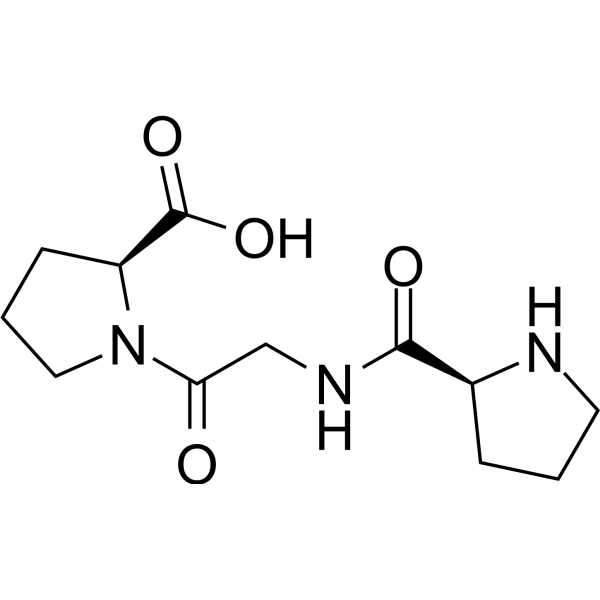
H-Pro-Gly-Pro-OH is a collagen-derived matrikine that has classically been described as a neutrophil chemoattractant. H-Pro-Gly-Pro-OH is perfectly positioned to focus neutrophils on the site required and direct a localized repair response. H-Pro-Gly-Pro-OH activates the transcription of neurotrophins and their receptor genes after cerebral ischemia .
|
-
-
- HY-P0074A
-
|
Gly-Pro-Arg-Pro acetate; Pefa 6003 acetate
|
Integrin
|
Cardiovascular Disease
|
|
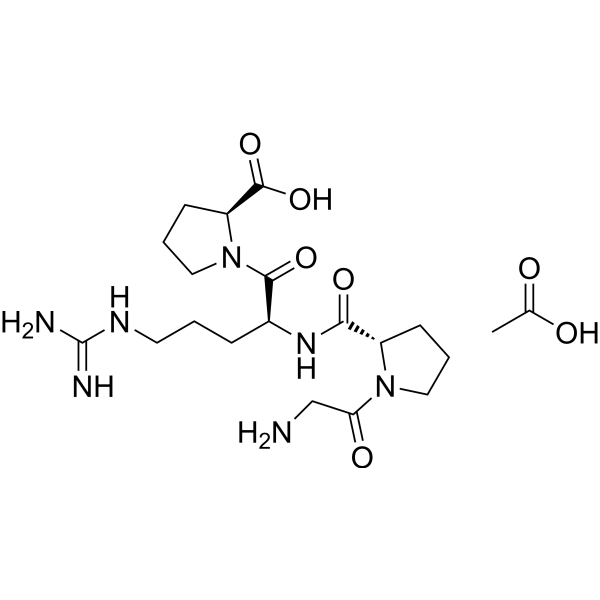
GPRP acetate (Gly-Pro-Arg-Pro acetate) is a fibrin polymerization inhibitor that inhibits the interaction of fibrinogen with the platelet membrane glycoprotein IIb/IIIa complex (GPIIb/IIIa) .
|
-
-
- HY-117483
-
|
|
iGluR
|
Neurological Disease
|
|
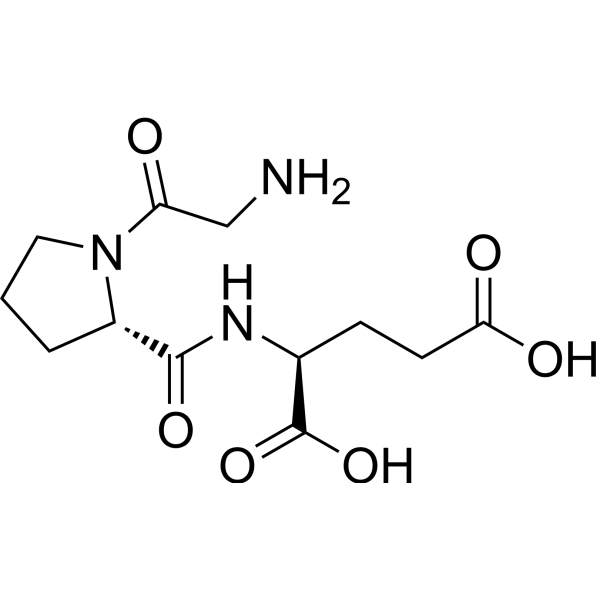
Gly-Pro-Glu is a neuroactive peptide with a potent action on acetylcholine release. Gly-Pro-Glu is the N-terminal tripeptide of insulin-like growth factor-I. Gly-Pro-Glu inhibits glutamate binds to N-methyl-D-aspartate (NMDA) receptor with an IC50 value of 14.7 μM. Gly-Pro-Glu can be used for the research of neuroprotection .
|
-
-
- HY-P4344
-
|
|
MetAP
|
Others
|
|
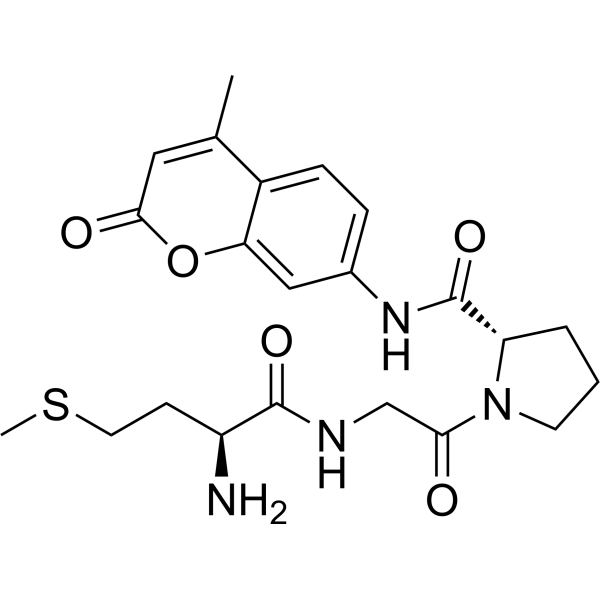
Met-Gly-Pro-AMC is a fluorescent peptide substrate of MetAP2 .
|
-
-
- HY-W016887R
-
|
H-Gly-Pro-OH (Standard); Gly-Pro (Standard)
|
Reference Standards
Endogenous Metabolite
|
Metabolic Disease
|
|
H-Gly-Pro-OH (Standard) is the analytical standard of H-Gly-Pro-OH. This product is intended for research and analytical applications. H-Gly-Pro-OH is an end product of collagen metabolism that is further cleaved by prolidase.
|
-
-
- HY-175350
-
|
OncoFAP glidotin
|
FAP
Microtubule/Tubulin
|
Cancer
|
|
OncoFAP-GlyPro-MMAE is a FAP small molecule-drug conjugate (SMDC) with an IC50 of 0.49 nM. OncoFAP-GlyPro-MMAE consists of a FAP Ligand OncoFAP (HY-145938), a Tubulin inhibitor (MMAE) (HY-15162) and a linker. OncoFAP-GlyPro-MMAE can be used for cancers like renal cancer research .
|
-
-
- HY-P4217
-
|
|
Cathepsin
|
Others
|
|
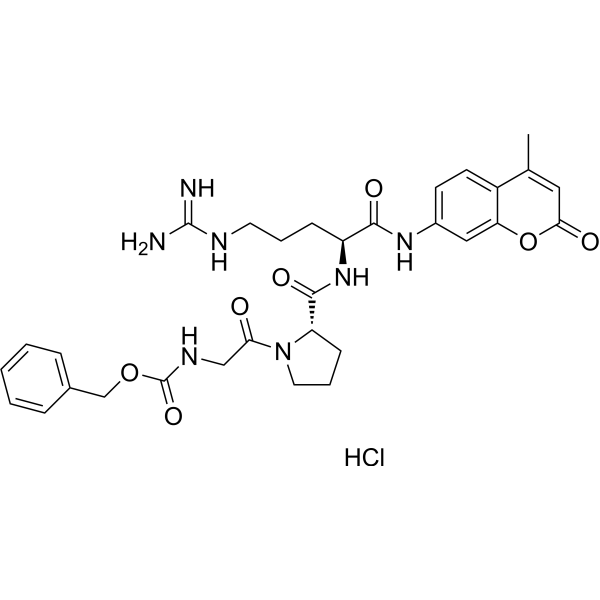
Z-Gly-Pro-Arg-AMC hydrochloride a fluorescent trypsin and cathepsin K substrate. Z-Gly-Pro-Arg-AMC hydrochloride can be used to determine trypsin and cathepsin K activity .
|
-
-
- HY-P4846
-
|
|
CXCR
Apoptosis
IFNAR
TNF Receptor
Interleukin Related
|
Infection
Inflammation/Immunology
|
|
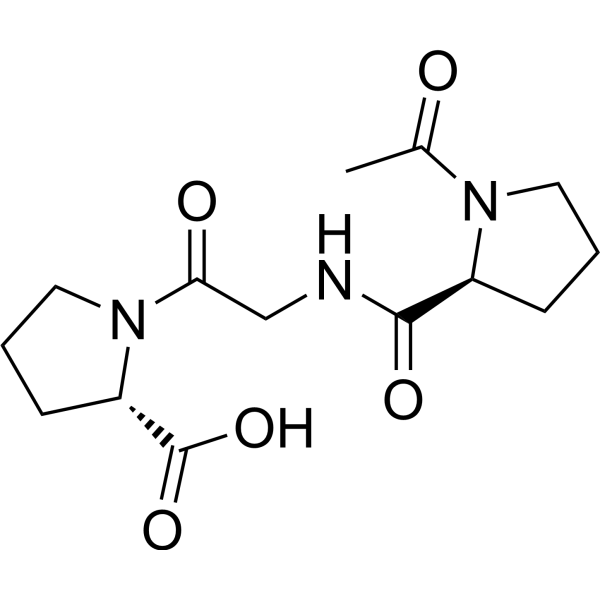
Ac-Pro-Gly-Pro-OH is an endogenous degradation product of extracellular collagen and acts as a CXCR2 agonist . Ac-Pro-Gly-Pro-OH exerts bactericidal activity by generating hydrogen peroxide, inhibits pulmonary inflammation, and reduces immune cell apoptosis (apoptosis). Ac-Pro-Gly-Pro-OH promotes the production of IFN-γ and inhibits the production of TNF-α and IL-6 in leukocytes. Ac-Pro-Gly-Pro-OH increases the survival rate of mice in sepsis models, enhances the bactericidal activity of neutrophils, acts as a neutrophil chemoattractant, induces neutrophil polarization, and regulates inflammatory and repair processes. Ac-Pro-Gly-Pro-OH induces chronic inflammation and tissue remodeling through sustained action. Ac-Pro-Gly-Pro-OH is released via alkaline hydrolysis of corneal proteins in alkali-injured eyes, thereby driving the early infiltration of neutrophils into the cornea. Ac-Pro-Gly-Pro-OH is applicable to research related to sepsis, chronic obstructive pulmonary disease, cystic fibrosis, bronchiolitis obliterans syndrome, severe asthma, idiopathic pulmonary fibrosis, and corneal ulcer .
|
-
-
- HY-W018717
-
-
-
- HY-137220
-
-
-
- HY-P4294
-
|
Gly-Pro-Gly
|
Amino Acid Derivatives
|
Others
|
|
H-Gly-Pro-Gly-OH is a tripeptide containing glycine and proline. H-Gly-Pro-Gly-OH can be used for the synthesis of other polypeptides, such as (Pro Gly Gly)n .
|
-
-
- HY-E70528
-
|
|
Biochemical Assay Reagents
|
Others
|
|
HRV-3C protease fuses with GST is a recombinant protease that combines human rhinovirus (HRV) type 14 3C protease and a GST-tag. HRV-3C protease fuses with GST can specifically recognize the short peptide Leu-Glu-Val-Leu-Phe-Gln-Gly-Pro at 4°C and cleave between Gln and Gly amino acids .
|
-
-
- HY-W095029
-
|
|
Biochemical Assay Reagents
|
Others
|
|
Cbz-Gly-Pro-OH is a biochemical reagent that can be used as a biological material or organic compound for life science related research.
|
-
-
- HY-P3792
-
|
|
Biochemical Assay Reagents
|
Others
|
|
Mca-Pro-Leu-Gly-Pro-D-Lys(Dnp) is a FRET substrate of Thimet oligopeptidase. Mca-Pro-Leu-Gly-Pro-D-Lys(Dnp) can be used for the determination of Thimet oligopeptidase activity .
|
-
-
- HY-134113
-
|
CBZ-Chromozym TH
|
Biochemical Assay Reagents
|
Others
|
|
Z-Gly-Pro-Arg-pNA (z-GPR-pNA) is a photometric substrate in Prostate-Specific Antigen (PSA) activation protease assays. Z-Gly-Pro-Arg-pNA (z-GPR-pNA) can be used for the test of trypsin activity .
|
-
-
- HY-175353
-
|
|
FAP
|
Cancer
|
|
TriOncoFAP-GlyPro-MMAE is a small molecule drug conjugate (SMDC) targeting fibroblast activation protein (FAP) with an IC50 of 13 pmol/L. TriOncoFAP-GlyPro-MMAE combines a FAP-targeting ligand (TriOnco), a cleavable glycine-proline linker, and a cytotoxic payload (MMAE) .
|
-
-
- HY-151871
-
|
|
Dipeptidyl Peptidase
HIV
|
Infection
|
|
ICeD-2 is a inducer of cell death, can induce HIV-1 infected cell kill. ICeD-2-mediated HIV-1 infected cell kill is dependent on HIV-1 protease activity. ICeD-2 potently blocks hydrolysis of Gly-Pro-AMC by dipeptidyl peptidase DPP8 and DPP9. ICeD-2 shows strong stabilization of DPP9 in PBMCs .
|
-
-
- HY-137834A
-
-
-
- HY-P4496
-
|
|
Phosphatase
|
Others
|
|
Tos-Gly-Pro-Lys-pNA is a substrate for the serine protease ALP and can be used to measure the activity of this enzyme .
|
-
-
- HY-P0020A
-
|
tos-GPR-ANBA-IPA acetate
|
Biochemical Assay Reagents
|
Others
|
|
Tos-Gly-Pro-Arg-ANBA-IPA (tos-GPR-ANBA-IPA) acetate is a chromogenic peptide substrate. Tos-Gly-Pro-Arg-ANBA-IPA acetate can be used for luminescence measurement .
|
-
-
- HY-170865
-
|
|
Drug-Linker Conjugates for ADC
|
Cancer
|
|
OncoFAP-GlyPro-MMAF is a Drug-Linker Conjugate for ADC with potent antitumor activity. OncoFAP-GlyPro-MMAF consists of Monomethylauristatin F (HY-15579) and a linker. OncoFAP-GlyPro-MMAF can be used for synthesis of ADCs .
|
-
-
- HY-P11431
-
-
-
- HY-P0020
-
|
tos-GPR-ANBA-IPA
|
Biochemical Assay Reagents
|
Others
|
|
Tos-Gly-Pro-Arg-ANBA-IPA is a chromogenic peptide substrate. Tos-Gly-Pro-Arg-ANBA-IPA can be used for luminescence measurement .
|
-
-
- HY-168772
-
|
H-Gly-Pro-OH TFA
|
Amino Acid Derivatives
|
Others
|
|
Glycyl-L-Proline TFA (H-Gly-Pro-OH TFA) is a dipeptide, which is composed of a glycine and a L-proline. Glycyl-L-Proline TFA can be used in research about the co-relationship between transmembrane potential/proton gradient and intestinal transport .
|
-
-
- HY-178853
-
|
|
Others
|
Inflammation/Immunology
|
|
3,4-Dihydroxybenzeneethanimidamide can selectively react with Gly-Pro, the substrate for prolidase, and the prolidase activity is measured by monitoring the decrease in FL intensities. 3,4-Dihydroxybenzeneethanimidamide can be used for the study of inflammation .
|
-
-
- HY-P2718
-
-
-
- HY-A0299A
-
|
|
Dipeptidyl Peptidase
|
Metabolic Disease
|
|
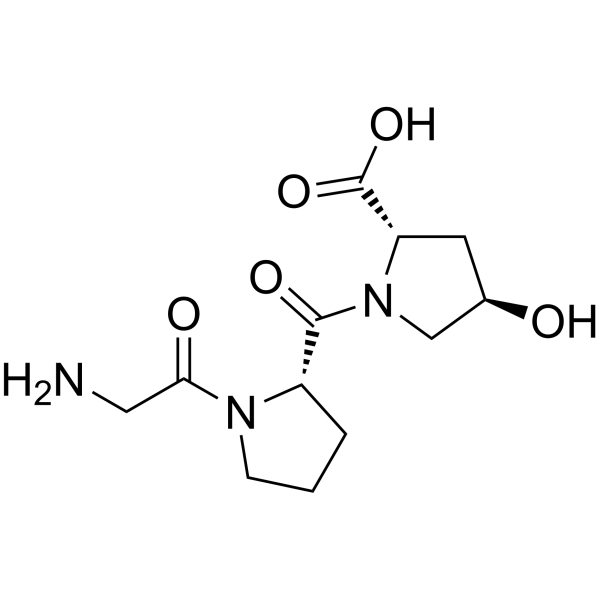
H-Gly-Pro-Hyp-OH acetate is a dipeptidyl peptidase 4 (DPP-4) inhibitor with an IC50 value of 2.51 mM. H-Gly-Pro-Hyp-OH acetate is promising for research of diabetes .
|
-
-
- HY-P2708
-
|
|
Integrin
|
Cardiovascular Disease
|
|
H-Gly-Pro-Arg-Pro-NH2 is a peptide that mimics the N-terminal Gly-Pro-Arg region in the a chain of fibrin protein. H-Gly-Pro-Arg-Pro-NH2 prevents fibrin polymerization .
|
-
-
- HY-P4292
-
|
|
HIV
Amino Acid Derivatives
|
Infection
|
|
H-Gly-Pro-Gly-NH2 is a tripeptide that inhibits HIV-1 replication. H-Gly-Pro-Gly-NH2 inhibits the activity of HIV-1 IIIB and HIV-2 ROD with EC50 values of 35 µM and 30 µM, respectively. H-Gly Pro Gly NH2 inhibits HIV-1 replication in vitro by interfering with capsid formation. H-Gly Pro Gly NH2 has antiviral activity and can be used for virus research .
|
-
-
- HY-P4366
-
-
-
- HY-P4448
-
|
|
Fluorescent Dye
|
Others
|
|
Ac-Gly-Pro-AFC is a fluorogenic substrate for the determination of fibroblast activation protein (FAP) endopeptidase activity .
|
-
-
- HY-163382
-
|
|
Beta-lactamase
Cholinesterase (ChE)
Amyloid-β
|
Neurological Disease
|
|
Cbz-Gly-Pro-Ala-O-cinnamyl (compound 25) is a small peptide targeting BACE-1 and AChE with the IC50 values of 0.02 μM and 1 μM, respectively. Cbz-Gly-Pro-Ala-O-cinnamyl shows neuroprotective effect and can be used for study of Alzheimer’s disease .
|
-
-
- HY-P4593
-
|
|
Thrombin
|
Others
|
|
Z-Gly-Pro-Arg-4MβNA is the cleavage of the substrate of thrombin to release free 4-methoxy-2-naphthylamine (4MβNA). Free 4MβNA can be captured by 5-nitrosalicylaldehyde to produce an insoluble yellow fluorescent and marks the site of thrombin activity .
|
-
-
- HY-P10007
-
|
Z-GPFL-CHO
|
Proteasome
|
Cancer
|
|
Z-Gly-Pro-Phe-Leu-CHO (Z-GPFL-CHO) is a tetrapeptide aldehyde that acts as a highly selective and potent proteasomal inhibitor (Ki = 1.5 µM for branched chain amino acid preferring, 2.3 µM for small neutral amino acid preferring, and 40.5 µM for chymotrypsin-like activities; IC50 = 3.1 µM for peptidyl-glutamyl peptide hydrolyzing activity) .
|
-
-
- HY-156960
-
|
|
Aminopeptidase
Leukotriene Receptor
|
Inflammation/Immunology
|
|
JNJ-40929837 is a selective and orally active LTA4H (leukotriene A4 hydrolase) inhibitor. JNJ-40929837 effectively inhibits aminopeptidase activity and causes serum accumulation of Pro-Gly-Pro. JNJ-40929837 can be used in asthma research .
|
-
-
- HY-156960A
-
|
|
Aminopeptidase
Leukotriene Receptor
|
Inflammation/Immunology
|
|
JNJ-40929837 succinate is a selective and orally active LTA4H (leukotriene A4 hydrolase) inhibitor. JNJ-40929837 succinate effectively inhibits aminopeptidase activity and causes serum accumulation of Pro-Gly-Pro. JNJ-40929837 succinate can be used in asthma research .
|
-
-
- HY-P11367
-
|
|
Fluorescent Dye
Ser/Thr Protease
|
Infection
Metabolic Disease
|
|
Boc-Ala-Gly-Pro-Arg-AMC is a synthetic fluorescent substrate, widely used for the detection of protease activity. Boc-Ala-Gly-Pro-Arg-AMC can be used to detect the activity of serine proteases and the oligopeptide enzyme B of Trypanosoma brucei .
|
-
-
- HY-P2661A
-
|
|
Biochemical Assay Reagents
Bacterial
|
Infection
|
|
FA-Leu-Gly-Pro-Ala-OH TFA is a furylacryloyl-terminal tetrapeptide that serves as a substrate for bacterial collagenase and spirochete metalloendopeptidase. FA-Leu-Gly-Pro-Ala-OH TFA is specifically hydrolyzed by spirochete collagenase only at the Leu-Gly bond. FA-Leu-Gly-Pro-Ala-OH TFA can be used to determine the equilibrium constant of peptide bond hydrolysis, and also to detect collagenase-mediated cleavage reactions via turbidimetry based on absorbance reduction .
|
-
-
- HY-W800711
-
|
|
Biochemical Assay Reagents
|
Others
|
|
SPDP-Gly-Pro-NHS ester is a linker with SPDP and NHS ester moieties. The SPDP is an amine and thiol reactive crosslinker. It is also membrane permeable, allowing it to participate in intracellular crosslinking reactions. The NHS ester is amine reactive and forms stable amide bonds.
|
-
-
- HY-W800713
-
|
|
Biochemical Assay Reagents
|
Others
|
|
SPDP-Gly-Pro-acid is a linker with SPDP and carboxylic acid moieties. The SPDP is an amine and thiol reactive crosslinker. It is also membrane permeable, allowing it to participate in intracellular crosslinking reactions. The terminal carboxylic acid can react with primary amine groups in the presence of activators (e.g. EDC, or HATU) to form a stable amide bond.
|
-
-
- HY-P11627
-
|
|
Endogenous Metabolite
|
Others
|
|
Cyclo(Pro-Hyp) is a collagen-derived cyclic dipeptide, and its related collagen breakdown product Gly-Pro-Hyp promotes the growth of skin fibroblasts and participates in tissue reconstruction, exhibiting biological activity.
|
-
-
- HY-151871A
-
|
|
HIV
Dipeptidyl Peptidase
Drug Isomer
|
Infection
|
|
cis-ICeD-2 is the cis isomer of ICeD-2 (HY-151871). ICeD-2 is a cell death inducer that induces cell death in HIV-1-infected cells. ICeD-2-mediated killing of HIV-1-infected cells is dependent on HIV-1 protease activity. ICeD-2 effectively blocks the hydrolysis of Gly-Pro-AMC by the dipeptidyl peptidases DPP8 and DPP9. ICeD-2 demonstrates strong stability against DPP9 in PBMCs. .
|
-
| Cat. No. |
Product Name |
Type |
-
- HY-D1670
-
|
|
Fluorescent Dye
|
|
Z-Gly-Pro-AMC is a fluorogenic substrate. Z-Gly-Pro-AMC is hydrolyzed by prolyl endopeptidase to generate highly fluorescent 7-Amino-4-methylcoumarin (HY-D0027). (λex=380 nm, λem=465 nm) .
|
-
- HY-137834
-
|
|
Fluorescent Dye
|
|
Gly-Pro-AMC hydrobromide is a fluorescent dye, it can be used as a specific fluorescent substrate for detecting Dipeptidyl peptidase IV (DPP-IV) activity .
|
-
- HY-137834A
-
|
|
Fluorescent Dye
|
|
Gly-Pro-AMC is a biological active peptide. (This is a fluorescent dipeptidylaminopeptidase IV substrate, Abs/Em=353/442 nm.)
|
| Cat. No. |
Product Name |
Target |
Research Area |
-
- HY-W016887
-
|
H-Gly-Pro-OH; Gly-Pro
|
Endogenous Metabolite
Apoptosis
|
Metabolic Disease
Cancer
|
|
Glycyl-L-proline (H-Gly-Pro-OH) is a dipeptide. Glycyl-L-proline can induce MCF-7 cells apoptosis. Glycyl-L-proline can enhance the inhibitory effect of the PRODH/POX knockout on collagen and DNA biosynthesis. Glycyl-L-proline can inhibit Gly-Sar and L-proline transport. Glycyl-L-proline can be used for the researches of cancer and metabolic disease, such as breast cancer .
|
-
- HY-A0299
-
|
Tripeptide 29
|
Peptides
|
Inflammation/Immunology
|
|
H-Gly-Pro-Hyp-OH is a collagen-derived peptide and also a dipeptidyl peptidase-4 inhibitor.\nH-Gly-Pro-Hyp-OH inhibits the activity of dipeptidyl peptidase-4 in vitro. H-Gly-Pro-Hyp-OH binds to the DNA-binding site of the JUN/FOS complex, blocks the formation of the DNA-JUN/FOS complex, and inhibits transcriptional activity. H-Gly-Pro-Hyp-OH is applicable to research related to skin photoaging, UVB-induced skin aging/photoaging, and thrombosis .
|
-
- HY-P2661
-
|
|
Biochemical Assay Reagents
Bacterial
|
Infection
|
|
FA-Leu-Gly-Pro-Ala-OH is a furylacryloyl-terminal tetrapeptide that serves as a substrate for bacterial collagenase and spirochete metalloendopeptidase. FA-Leu-Gly-Pro-Ala-OH is specifically hydrolyzed by spirochete collagenase only at the Leu-Gly bond. FA-Leu-Gly-Pro-Ala-OH can be used to determine the equilibrium constant of peptide bond hydrolysis, and also to detect collagenase-mediated cleavage reactions via turbidimetry based on absorbance reduction .
|
-
- HY-P0074
-
GPRP
3 Publications Verification
Gly-Pro-Arg-Pro; Pefa 6003
|
Thrombin
|
Cardiovascular Disease
|
|
GPRP (Gly-Pro-Arg-Pro; Pefa 6003) is a fibrin polymerization inhibitor that inhibits the interaction between fibrinogen and the platelet membrane glycoprotein Ⅱb/IIIa complex (glycoprotein IIb/IIIa receptor) . GPRP increases the level of free thrombin in activated platelet-rich plasma by reducing the adsorption of thrombin onto fibrin. GPRP inhibits platelet aggregation and prolongs the thrombin-initiated clotting time in plasma. GPRP is applicable for research related to thrombosis and thrombotic diseases .
|
-
- HY-P4486
-
|
Pro-Gly-Pro
|
Drug Derivative
|
Others
|
|
H-Pro-Gly-Pro-OH is a collagen-derived matrikine that has classically been described as a neutrophil chemoattractant. H-Pro-Gly-Pro-OH is perfectly positioned to focus neutrophils on the site required and direct a localized repair response. H-Pro-Gly-Pro-OH activates the transcription of neurotrophins and their receptor genes after cerebral ischemia .
|
-
- HY-P0074A
-
|
Gly-Pro-Arg-Pro acetate; Pefa 6003 acetate
|
Integrin
|
Cardiovascular Disease
|
|
GPRP acetate (Gly-Pro-Arg-Pro acetate) is a fibrin polymerization inhibitor that inhibits the interaction of fibrinogen with the platelet membrane glycoprotein IIb/IIIa complex (GPIIb/IIIa) .
|
-
- HY-117483
-
|
|
iGluR
|
Neurological Disease
|
|
Gly-Pro-Glu is a neuroactive peptide with a potent action on acetylcholine release. Gly-Pro-Glu is the N-terminal tripeptide of insulin-like growth factor-I. Gly-Pro-Glu inhibits glutamate binds to N-methyl-D-aspartate (NMDA) receptor with an IC50 value of 14.7 μM. Gly-Pro-Glu can be used for the research of neuroprotection .
|
-
- HY-P4344
-
|
|
MetAP
|
Others
|
|
Met-Gly-Pro-AMC is a fluorescent peptide substrate of MetAP2 .
|
-
- HY-P4474
-
|
|
Peptides
|
Others
|
|
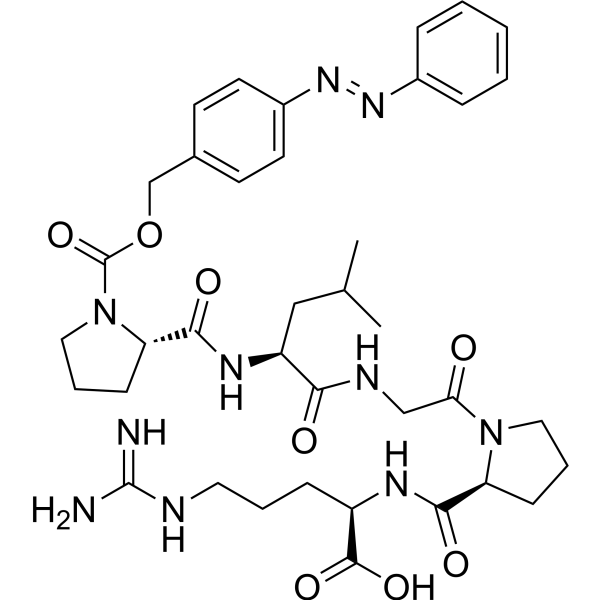
Pz-Pro-Leu-Gly-Pro-d-Arg is a synthetic polypeptide substrate. Pz-Pro-Leu-Gly-Pro-d-Arg can be used to detect the collagenase-like activity of enzymes from various sources, such as Bacillus sp. AH-101 .
|
-
- HY-P3827
-
|
|
Peptides
|
Inflammation/Immunology
|
|
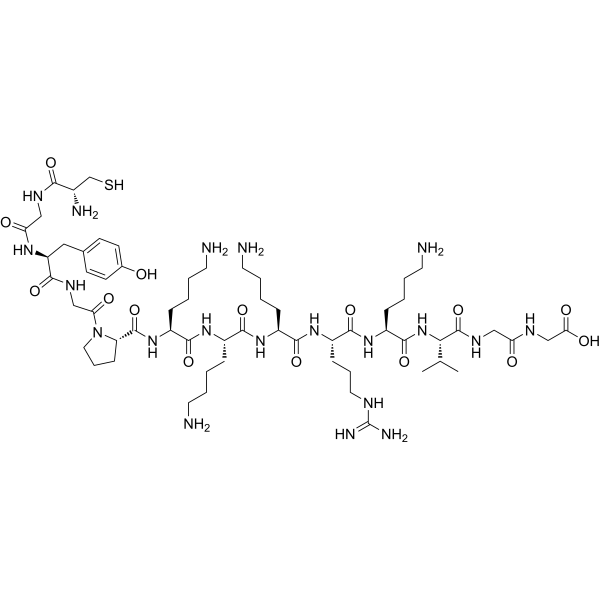
Cys-Gly-Tyr-Gly-Pro-Lys-Lys-Lys-Arg-Lys-Val-Gly-Gly is a13-mer synthetic peptide containing seven amino acids homologous to SV40 T antigen. Cys-Gly-Tyr-Gly-Pro-Lys-Lys-Lys-Arg-Lys-Val-Gly-Gly is capable of inducing nuclear transport .
|
-
- HY-W016887R
-
|
H-Gly-Pro-OH (Standard); Gly-Pro (Standard)
|
Reference Standards
Endogenous Metabolite
|
Metabolic Disease
|
|
H-Gly-Pro-OH (Standard) is the analytical standard of H-Gly-Pro-OH. This product is intended for research and analytical applications. H-Gly-Pro-OH is an end product of collagen metabolism that is further cleaved by prolidase.
|
-
- HY-P4217
-
|
|
Cathepsin
|
Others
|
|
Z-Gly-Pro-Arg-AMC hydrochloride a fluorescent trypsin and cathepsin K substrate. Z-Gly-Pro-Arg-AMC hydrochloride can be used to determine trypsin and cathepsin K activity .
|
-
- HY-P4846
-
|
|
CXCR
Apoptosis
IFNAR
TNF Receptor
Interleukin Related
|
Infection
Inflammation/Immunology
|
|
Ac-Pro-Gly-Pro-OH is an endogenous degradation product of extracellular collagen and acts as a CXCR2 agonist . Ac-Pro-Gly-Pro-OH exerts bactericidal activity by generating hydrogen peroxide, inhibits pulmonary inflammation, and reduces immune cell apoptosis (apoptosis). Ac-Pro-Gly-Pro-OH promotes the production of IFN-γ and inhibits the production of TNF-α and IL-6 in leukocytes. Ac-Pro-Gly-Pro-OH increases the survival rate of mice in sepsis models, enhances the bactericidal activity of neutrophils, acts as a neutrophil chemoattractant, induces neutrophil polarization, and regulates inflammatory and repair processes. Ac-Pro-Gly-Pro-OH induces chronic inflammation and tissue remodeling through sustained action. Ac-Pro-Gly-Pro-OH is released via alkaline hydrolysis of corneal proteins in alkali-injured eyes, thereby driving the early infiltration of neutrophils into the cornea. Ac-Pro-Gly-Pro-OH is applicable to research related to sepsis, chronic obstructive pulmonary disease, cystic fibrosis, bronchiolitis obliterans syndrome, severe asthma, idiopathic pulmonary fibrosis, and corneal ulcer .
|
-
- HY-W018717
-
-
- HY-P4294
-
|
Gly-Pro-Gly
|
Amino Acid Derivatives
|
Others
|
|
H-Gly-Pro-Gly-OH is a tripeptide containing glycine and proline. H-Gly-Pro-Gly-OH can be used for the synthesis of other polypeptides, such as (Pro Gly Gly)n .
|
-
- HY-111922
-
|
Glycyl-Glycyl-L-Proline; Gly-Gly-Pro
|
Peptides
|
Others
|
|
H-Gly-Gly-Pro-OH is a peptide with 3 amino acid.
|
-
- HY-P3792
-
|
|
Biochemical Assay Reagents
|
Others
|
|
Mca-Pro-Leu-Gly-Pro-D-Lys(Dnp) is a FRET substrate of Thimet oligopeptidase. Mca-Pro-Leu-Gly-Pro-D-Lys(Dnp) can be used for the determination of Thimet oligopeptidase activity .
|
-
- HY-134113
-
|
CBZ-Chromozym TH
|
Biochemical Assay Reagents
|
Others
|
|
Z-Gly-Pro-Arg-pNA (z-GPR-pNA) is a photometric substrate in Prostate-Specific Antigen (PSA) activation protease assays. Z-Gly-Pro-Arg-pNA (z-GPR-pNA) can be used for the test of trypsin activity .
|
-
- HY-137834A
-
-
- HY-P4496
-
|
|
Phosphatase
|
Others
|
|
Tos-Gly-Pro-Lys-pNA is a substrate for the serine protease ALP and can be used to measure the activity of this enzyme .
|
-
- HY-P0020A
-
|
tos-GPR-ANBA-IPA acetate
|
Biochemical Assay Reagents
|
Others
|
|
Tos-Gly-Pro-Arg-ANBA-IPA (tos-GPR-ANBA-IPA) acetate is a chromogenic peptide substrate. Tos-Gly-Pro-Arg-ANBA-IPA acetate can be used for luminescence measurement .
|
-
- HY-P4474A
-
|
|
Peptides
|
Others
|
|
Pz-Pro-Leu-Gly-Pro-d-Arg TFA is a synthetic polypeptide substrate. Pz-Pro-Leu-Gly-Pro-d-Arg TFA can be used to detect the collagenase-like activity of enzymes from various sources, such as Bacillus sp. AH-101 .
|
-
- HY-P4921
-
|
|
Peptides
|
Others
|
|
Suc-Gly-Pro-pNA is a polypeptide that can be found by peptide screening. Peptide screening is a research tool that pools active peptides primarily by immunoassay. Peptide screening can be used for protein interaction, functional analysis, epitope screening, especially in the field of agent research and development .
|
-
- HY-P11431
-
-
- HY-P5037
-
|
|
Peptides
|
Others
|
|
Fmoc-Gly-Pro-Hyp-OH is a tripeptide that can be used in peptide synthesis .
|
-
- HY-P0020
-
|
tos-GPR-ANBA-IPA
|
Biochemical Assay Reagents
|
Others
|
|
Tos-Gly-Pro-Arg-ANBA-IPA is a chromogenic peptide substrate. Tos-Gly-Pro-Arg-ANBA-IPA can be used for luminescence measurement .
|
-
- HY-P5962
-
|
|
Peptides
|
Others
|
|
Fmoc-Gly-Pro-Hyp(OtBu)-OH (TFA) is a tripeptide that can be used in peptide synthesis .
|
-
- HY-P2718
-
-
- HY-P2708
-
|
|
Integrin
|
Cardiovascular Disease
|
|
H-Gly-Pro-Arg-Pro-NH2 is a peptide that mimics the N-terminal Gly-Pro-Arg region in the a chain of fibrin protein. H-Gly-Pro-Arg-Pro-NH2 prevents fibrin polymerization .
|
-
- HY-P4292
-
|
|
HIV
Amino Acid Derivatives
|
Infection
|
|
H-Gly-Pro-Gly-NH2 is a tripeptide that inhibits HIV-1 replication. H-Gly-Pro-Gly-NH2 inhibits the activity of HIV-1 IIIB and HIV-2 ROD with EC50 values of 35 µM and 30 µM, respectively. H-Gly Pro Gly NH2 inhibits HIV-1 replication in vitro by interfering with capsid formation. H-Gly Pro Gly NH2 has antiviral activity and can be used for virus research .
|
-
- HY-P4366
-
-
- HY-P4448
-
|
|
Fluorescent Dye
|
Others
|
|
Ac-Gly-Pro-AFC is a fluorogenic substrate for the determination of fibroblast activation protein (FAP) endopeptidase activity .
|
-
- HY-P5037A
-
|
|
Peptides
|
Others
|
|
Fmoc-Gly-Pro-Hyp-OH TFA is a tripeptide that can be used in peptide synthesis .
|
-
- HY-P4593
-
|
|
Thrombin
|
Others
|
|
Z-Gly-Pro-Arg-4MβNA is the cleavage of the substrate of thrombin to release free 4-methoxy-2-naphthylamine (4MβNA). Free 4MβNA can be captured by 5-nitrosalicylaldehyde to produce an insoluble yellow fluorescent and marks the site of thrombin activity .
|
-
- HY-P10007
-
|
Z-GPFL-CHO
|
Proteasome
|
Cancer
|
|
Z-Gly-Pro-Phe-Leu-CHO (Z-GPFL-CHO) is a tetrapeptide aldehyde that acts as a highly selective and potent proteasomal inhibitor (Ki = 1.5 µM for branched chain amino acid preferring, 2.3 µM for small neutral amino acid preferring, and 40.5 µM for chymotrypsin-like activities; IC50 = 3.1 µM for peptidyl-glutamyl peptide hydrolyzing activity) .
|
-
- HY-P11367
-
|
|
Fluorescent Dye
Ser/Thr Protease
|
Infection
Metabolic Disease
|
|
Boc-Ala-Gly-Pro-Arg-AMC is a synthetic fluorescent substrate, widely used for the detection of protease activity. Boc-Ala-Gly-Pro-Arg-AMC can be used to detect the activity of serine proteases and the oligopeptide enzyme B of Trypanosoma brucei .
|
-
- HY-P2661A
-
|
|
Biochemical Assay Reagents
Bacterial
|
Infection
|
|
FA-Leu-Gly-Pro-Ala-OH TFA is a furylacryloyl-terminal tetrapeptide that serves as a substrate for bacterial collagenase and spirochete metalloendopeptidase. FA-Leu-Gly-Pro-Ala-OH TFA is specifically hydrolyzed by spirochete collagenase only at the Leu-Gly bond. FA-Leu-Gly-Pro-Ala-OH TFA can be used to determine the equilibrium constant of peptide bond hydrolysis, and also to detect collagenase-mediated cleavage reactions via turbidimetry based on absorbance reduction .
|
-
- HY-P11627
-
|
|
Endogenous Metabolite
|
Others
|
|
Cyclo(Pro-Hyp) is a collagen-derived cyclic dipeptide, and its related collagen breakdown product Gly-Pro-Hyp promotes the growth of skin fibroblasts and participates in tissue reconstruction, exhibiting biological activity.
|
| Cat. No. |
Product Name |
Category |
Target |
Chemical Structure |
| Cat. No. |
Product Name |
Chemical Structure |
-
- HY-P11431
-
|
|
|
Cyclo(Gly-Pro) is a cyclic dipeptide. Cyclo(Gly-Pro) can be derived from the Nterminus of the IGF-1. Cyclo(Gly-Pro) attenuates nociceptive behaviour and inflammatory response in mice .
|
-
Your information is safe with us. * Required Fields.
Inquiry Information
- Product Name:
- Cat. No.:
- Quantity:
- MCE Japan Authorized Agent:

