173 Results for "

UDP

" in MedChemExpress (MCE) Product Catalog:
Products (173)

173 Results for "UDP" in MCE Product Catalog:

  • Targets Recommended:
19
19 Publications Verification
Cat. No.: HY-N0372
CAS No.: 58749-22-7
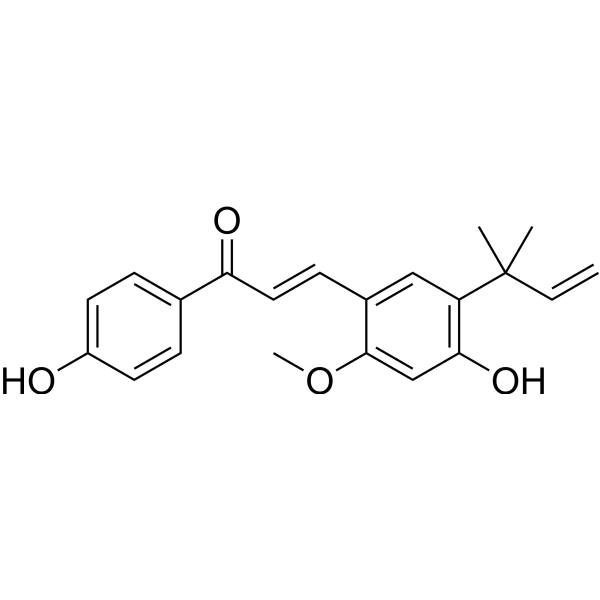
Licochalcone A (LCA), a chalconoid, presents obvious anti-cancer effects, displays broad-spectrum inhibition against UDP-glucuronosyltransferases (UGTs) . Licochalcone A (LCA) exhibits strong inhibitory effects against UGT1A1, 1A3, 1A4, 1A6, 1A7, 1A9, and 2B7 (both IC50 and Ki values lower than 5 μM) .
loading...
    loading...
8
8 Cited Publications
Cat. No.: HY-N7032
CAS No.: 28053-08-9
Synonyms: UDP-D-Glucose disodium
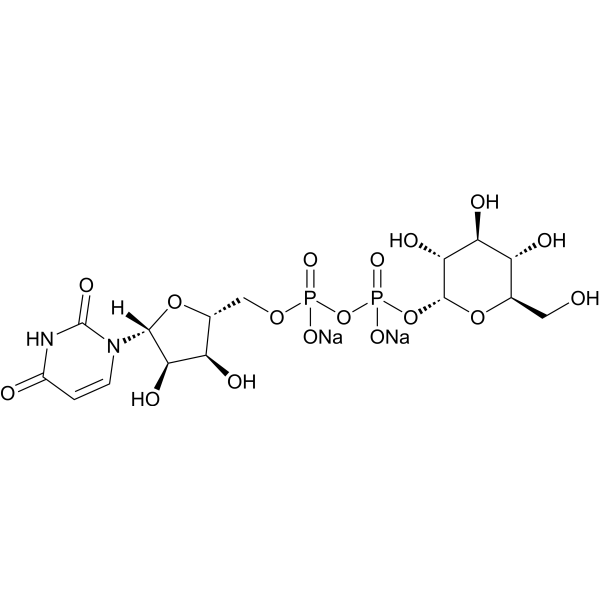
Uridine 5’-diphosphoglucose (UDP-glucose) disodium, secreted by cardiomyocytes during ischemia and reperfu, is a potent agonist of the proinflammatory P2Y14 receptor. It acts an important role in the regulation of inflammation and neutrophil polarization in neutrophils. Uridine 5’-diphosphoglucose disodium is also the precursor of glucose-containing oligosaccharides, polysaccharides, glycoproteins, and glycolipids in animal tissues and in some microorganisms. Uridine 5’-diphosphoglucose disodium is promising for research in counteracting myocardial infarction/reperfusion (MIR)-induced inflammation in the heart tissue.
loading...
    loading...
8
8 Cited Publications
Cat. No.: HY-112174
CAS No.: 91183-98-1
Purity:  99.92%
Synonyms: UDP-α-D-N-Acetylglucosamine disodium
Target:  

OGT

Research Areas:  

Metabolic Disease

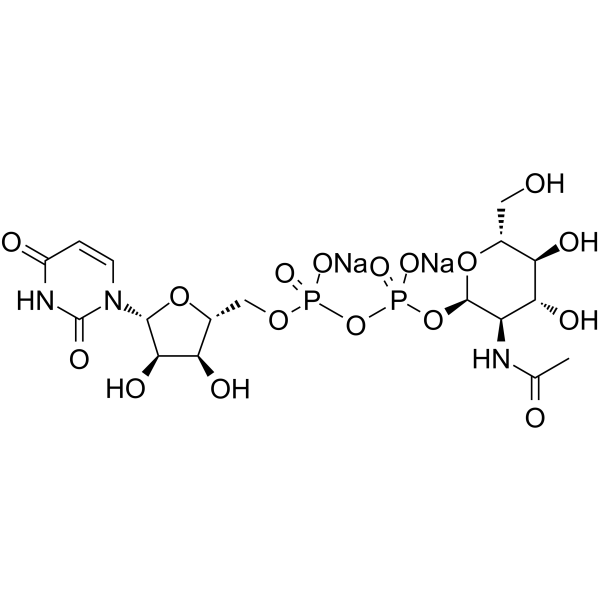
UDP-GlcNAc Disodium Salt (UDP-α-D-N-Acetylglucosamine Disodium Salt) is a donor substrate of O-GlcNAc transferase (OGT).
loading...
    loading...
5
5 Cited Publications
Cat. No.: HY-114364
CAS No.: 137868-52-1
Purity:  99.42%
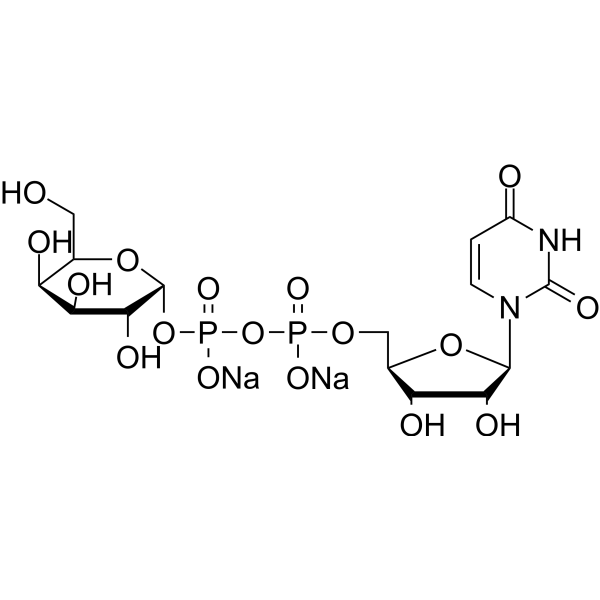
UDP-Galactose disodium is a monosaccharide and a key glycosyl donor molecule in cells that participates in nucleotide sugar metabolism. UDP-Galactose disodium is the natural agonist of the P2Y14 receptor coupled to Gi proteins in the immune system (IC50 = 0.67 μM, hP2Y14). UDP-Galactose disodium can be used to study cell signal transduction and substance metabolism .
loading...
    loading...
3
3 Cited Publications
Cat. No.: HY-19593
CAS No.: 59456-70-1
Target:  

Fungal

Research Areas:  

Infection

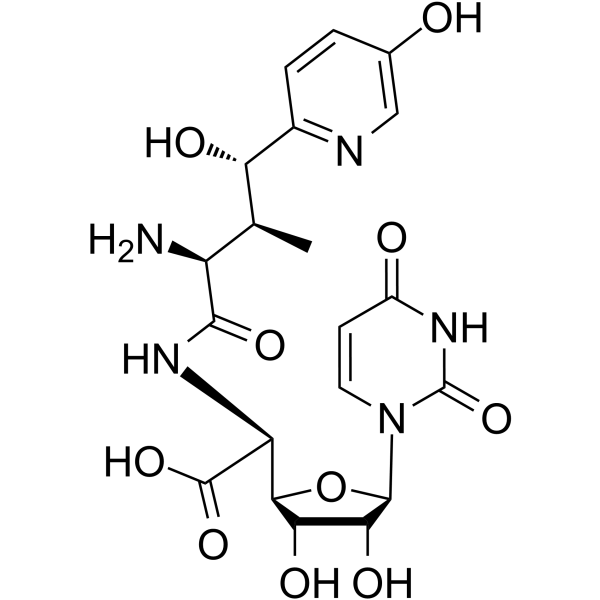
Nikkomycin Z is a nucleoside peptide and an orally active antifungal agent. Nikkomycin Z inhibits chitin synthesis by acting as a competitive analogue of the chitin synthase substrate UDP-N-acetylglucosamine. Nikkomycin Z has antifungal activity .
loading...
    loading...
3
3 Cited Publications
Cat. No.: HY-112942A
CAS No.: 1007117-62-5
Purity:  92.51%
Synonyms: CMP-Neu5Ac sodium salt
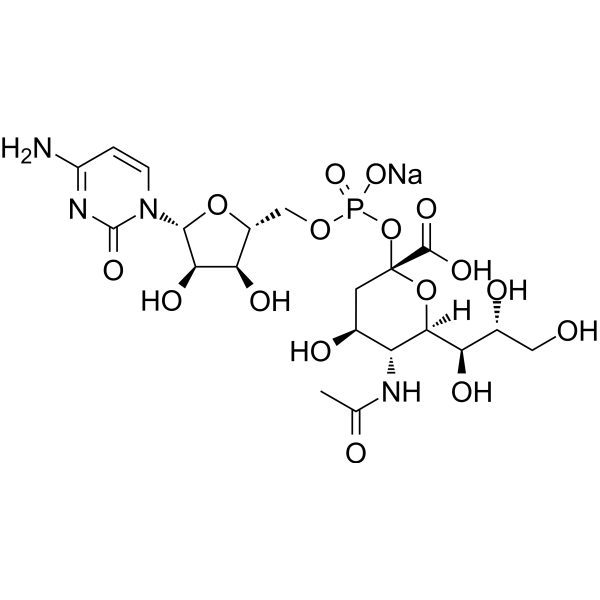
CMP-Sialic acid (CMP-Neu5Ac) sodium salt is an allosteric inhibitor of UDP-GlcNAc 2-epimerase. CMP-Sialic acid sodium salt provides a substrate for Golgi sialyltransferases. CMP-Sialic acid sodium salt is an important sugar nucleotide for biosynthesis of sialic acid and its conjugates .
loading...
    loading...
2
2 Cited Publications
Cat. No.: HY-N11287A
CAS No.: 108320-89-4
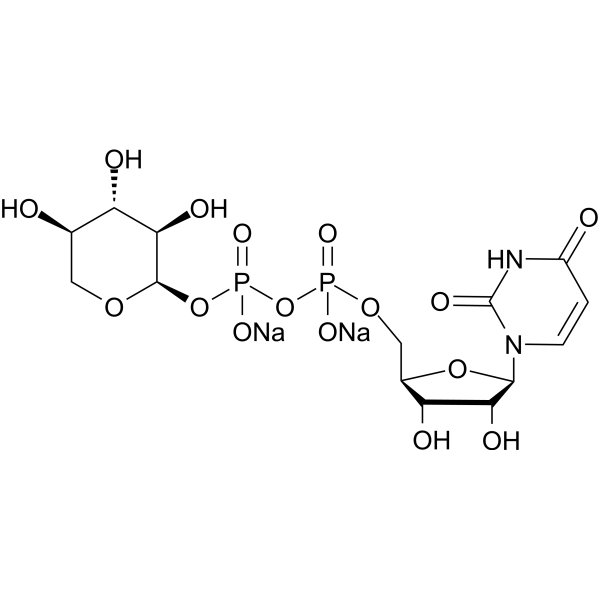
UDP-xylose disodium is an endogenous sugar nucleotide and a catalytic substrate of UDP-xylose disodium synthase (UXS). UDP-xylose disodium is a sugar donor for the synthesis of glycoproteins, polysaccharides, various metabolites and oligosaccharides in plants, vertebrates and fungi, and participates in the synthesis of proteoglycans as a glycosyl donor. UDP-xylose disodium participates in the regulation of the synthesis of extracellular matrix components and can be used to study the mechanism of proteoglycan biosynthesis in glycobiology and related diseases (such as connective tissue diseases)[1][2].
loading...
    loading...
2
2 Cited Publications
Cat. No.: HY-N10573
CAS No.: 1955-26-6
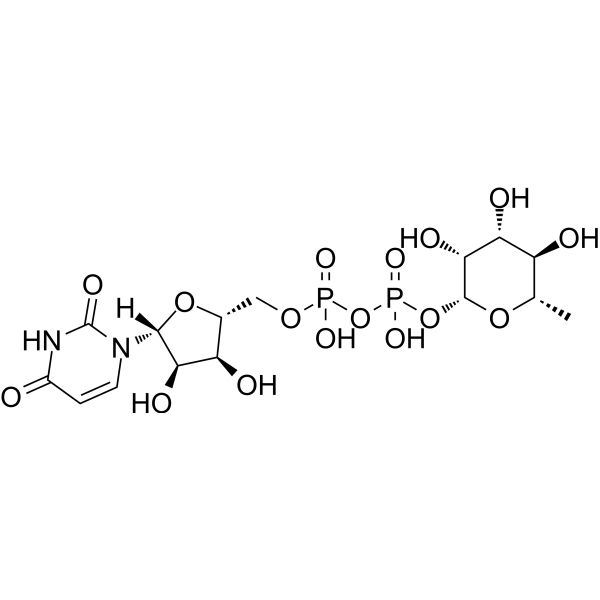
UDP-rhamnose, the activated form of Rhamnose (HY-N1420) in fungi, is a key precursor for fungi to synthesize rhamnose-containing glycans. UDP-rhamnose can be used in the research on the treatment of fungal diseases .
loading...
    loading...
2
2 Cited Publications
Cat. No.: HY-N2574
CAS No.: 511-96-6
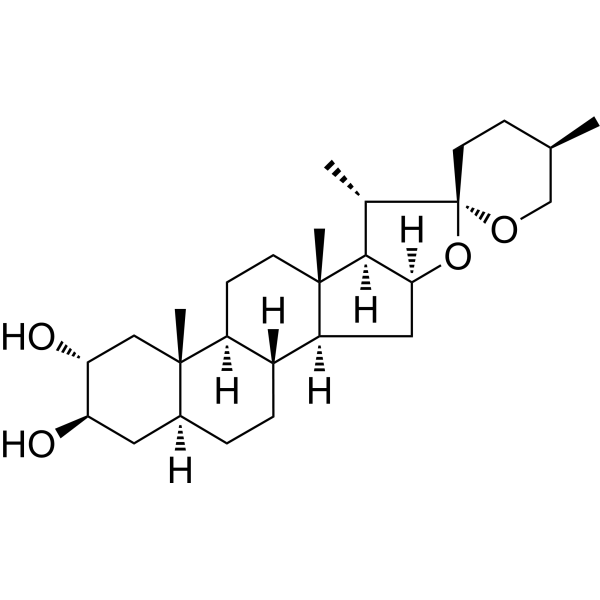
Gitogenin is a natural steroid isolated from the whole plant of Tribulus longipetalus. Gitogenin is a selective inhibitor of UDP-glucuronosyltransferase 1A4 (UGT1A4) and enzyme α-glucosidase with IC50 values of 0.69 μM (use trifluoperazine as a substrate) and 37.2 μM, respectively, and does not inhibit the activities of major human cytochrome P450 isoforms .
loading...
    loading...
2
2 Cited Publications
Cat. No.: HY-N0548
CAS No.: 591-12-8
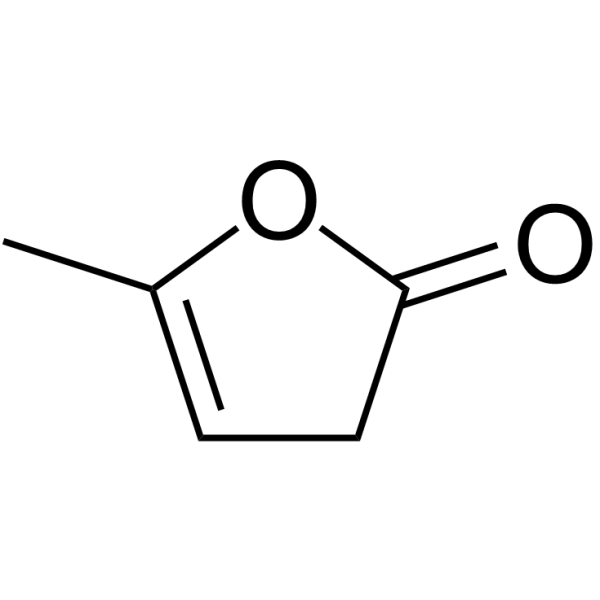
α-Angelica lactone is a naturally occurring anticarcinogen and an vinylogous nucleophile. α-Angelica lactone can give the chiral δ-amino γ,γ-disubstituted butenolide carbonyl derivatives and exhibitselectrophilic trapping at the γ-carbon. α-Angelica lactone exerts strong chemoprotective effects by selective enhancement of glutathione-S-thansferase (GST) and UDP-glucononosyltransferase (UGT) detoxification enzymes .
loading...
    loading...
2
2 Cited Publications
Cat. No.: HY-N0235
CAS No.: 10309-37-2
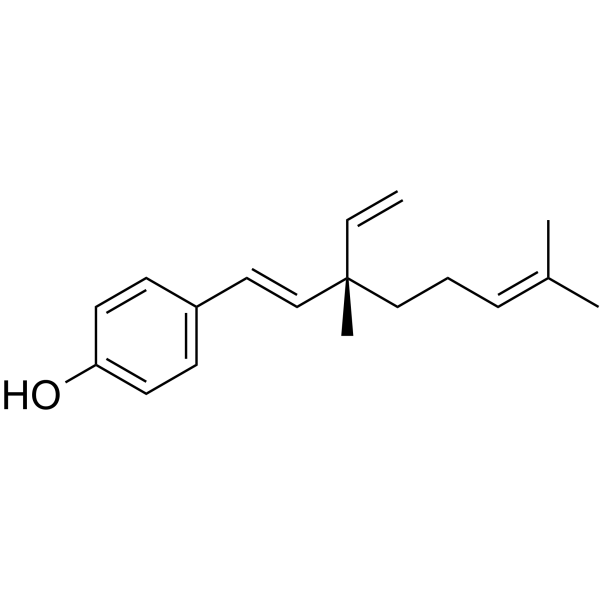
Synonyms: (S)-(+)-Bakuchiol
Bakuchiol is a phytoestrogen that can be obtained from psoralen seeds. Bakuchiol has been proven to be a non-competitive inhibitor of multiple enzymes, including UDP-glucuronosyltransferase 2B7 (UGT2B7) and human carboxylesterase 2 (hCE2) , with IC50s values of 40.9 μM and 7.28 μM, respectively. Bakuchiol exhibits significant research and application potential in areas such as anti-inflammatory , antibacterial , antitumor therapies, as well as drug metabolism regulation.
loading...
    loading...
2
2 Cited Publications
Cat. No.: HY-111832
CAS No.: 79886-50-3
Purity:  99.08%
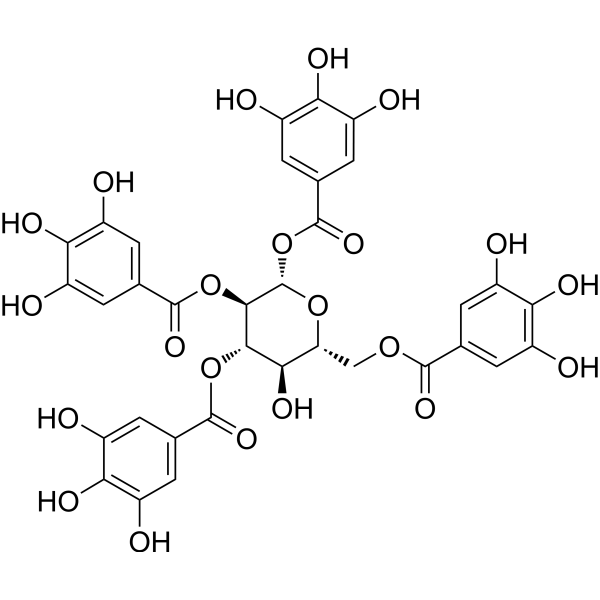
Synonyms: TeGG
1,2,3,6-Tetragalloylglucose (TEgG) is a competitive inhibitor of UDP-glucuronyltransferase UGT1A1, targeting the competitive substrate binding site of UGT1A1. 1,2,3,6-Tetragalloylglucose inhibits UGT1A1-mediated β-estradiol 3-glucuronidation and SN-38 glucuronidation with IC50 of 6.01 μM and 4.31 μM, respectively, and binds to UGT1A1 with Ki of 3.55 μM. 1,2,3,6-Tetragalloylglucose also induces tumor cell apoptosis, inhibit cell proliferation, activates caspase-3 and induces DNA fragmentation in HL-60 cells. 1,2,3,6-Tetragalloylglucose also inhibits HIV integrase and reverse transcriptase, and inhibits HCV protease .
loading...
    loading...
1
1 Cited Publications
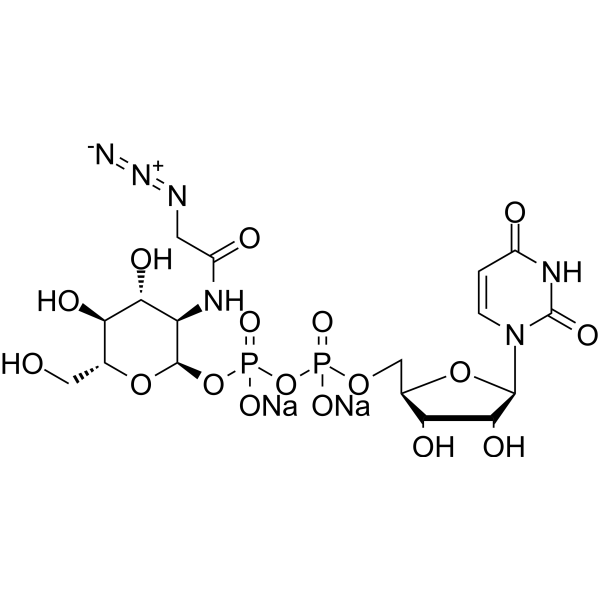
Cat. No.: HY-145934
CAS No.: 653600-61-4
Purity:  99.78%
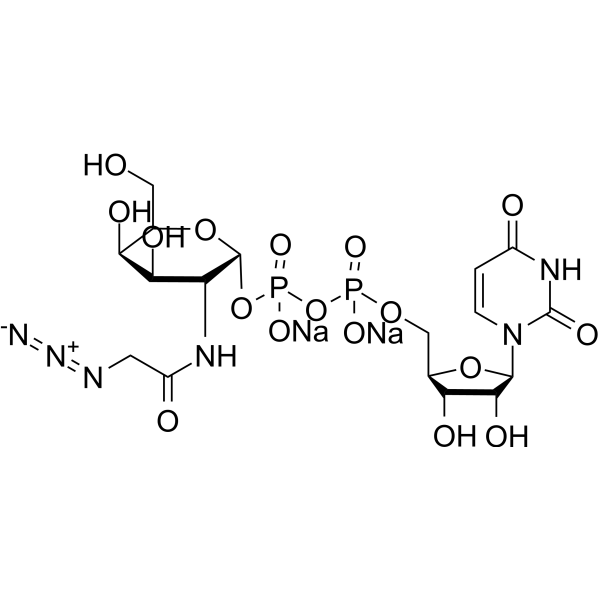
Synonyms: UDP-N-azidoacetylgalactosamine disodium
UDP-GalNAz (UDP-N-azidoacetylgalactosamine) disodium is the analogue of UDP-GalNAc disodium (HY-114365). UDP-GalNAc disodium is the donor substrate of many N-acetylgalactosaminyltransferases, enzymes which transfer GalNAc from the nucleotide sugar to a saccharide or peptide acceptor. UDP-GalNAz disodium is a click chemistry reagent, it contains an Azide group and can undergo copper-catalyzed azide-alkyne cycloaddition reaction (CuAAc) with molecules containing Alkyne groups. It can also undergo strain-promoted alkyne-azide cycloaddition (SPAAC) reactions with molecules containing DBCO or BCN groups .
loading...
    loading...
1
1 Cited Publications
Cat. No.: HY-114365
CAS No.: 108320-87-2
Purity:  99.95%
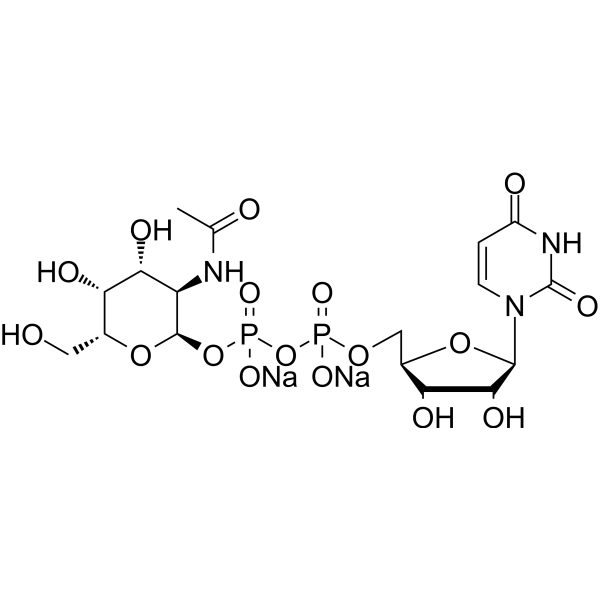
Synonyms: UDP-N-acetyl-D-galactosamine disodium
UDP-GalNAc (UDP-N-acetyl-D-galactosamine) disodium is a sugar nucleotide and a substrate for EpsC115. EpsC115 is a mutant with N-terminal residues 1-115 deleted from the exopolymeric substance (EPS). UDP-GalNAc disodium is a donor substrate for many N-acetylgalactosaminyltransferases, which transfer GalNAc from nucleotide sugars to sugar or peptide acceptors. UDP-GalNAc disodium provides a sugar group donor for glycosylation reactions. UDP-GalNAc disodium can be used in cancer research, such as colorectal and breast cancer .
loading...
    loading...
1
1 Cited Publications
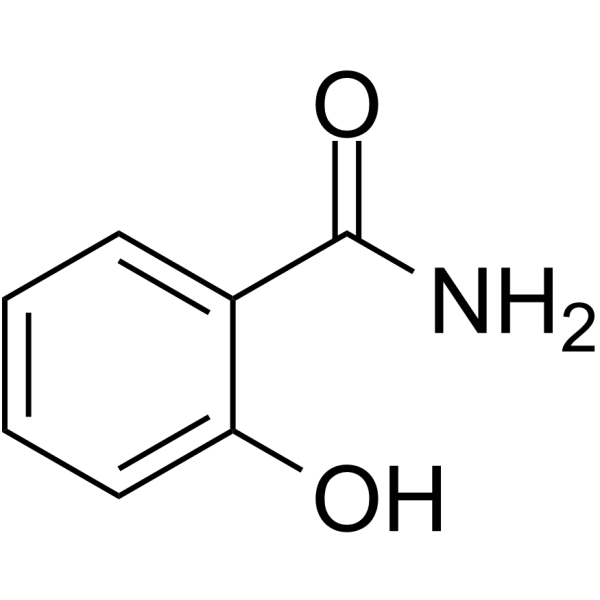
Cat. No.: HY-B0811
CAS No.: 65-45-2
Synonyms: 2-Hydroxybenzamide
Salicylamide is an inhibitor of microsomal UDP-glucuronosyltransferase. Salicylamide is an analgesic and anti-pyretic agent.
loading...
    loading...
1
1 Cited Publications
Cat. No.: HY-N1422
CAS No.: 467-55-0
Hecogenin is a steroid saponin isolated from Agave sisalana and is a selective inhibitor of human UDP-glucuronosyltransferases. Hecogenin has a wide spectrum of pharmacological activities, including anti-inflammatory, antifungal and gastroprotective effects .
loading...
    loading...
1
1 Cited Publications
Cat. No.: HY-113044R
CAS No.: 133-89-1
Synonyms: UDP-D-Glucose (Standard)
Uridine 5′-diphosphoglucose (Standard) (UDP-D-Glucose (Standard)) is the analytical standard of Uridine 5′-diphosphoglucose (HY-113044). This product is intended for research and analytical applications. Uridine 5’-diphosphoglucose (UDP-glucose), secreted by cardiomyocytes during ischemia and reperfu, is a potent agonist of the proinflammatory P2Y14 receptor. It acts an important role in the regulation of inflammation and neutrophil polarization in neutrophils. Uridine 5’-diphosphoglucose is also the precursor of glucose-containing oligosaccharides, polysaccharides, glycoproteins, and glycolipids in animal tissues and in some microorganisms. Uridine 5’-diphosphoglucose is promising for research in counteracting myocardial infarction/reperfusion (MIR)-induced inflammation in the heart tissue.
loading...
    loading...
1
1 Cited Publications
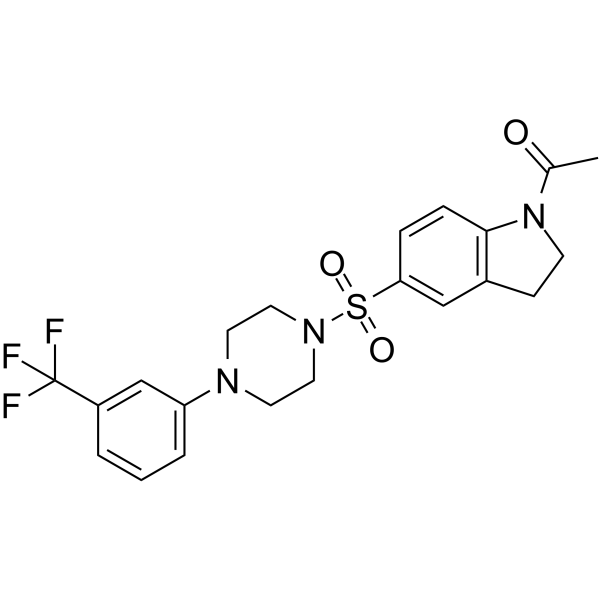
Cat. No.: HY-130836
CAS No.: 901260-40-0
Purity:  98.16%
Target:  

Bacterial

Research Areas:  

Infection

LpxH-IN-AZ1, a sulfonyl piperazine compound, is a potent UDP-2,3-diacylglucosamine pyrophosphate hydrolase LpxH inhibitor. LpxH-IN-AZ1 is a potent inhibitor of Klebsiella pneumoniae LpxH with IC50 of 0.36 μM .
loading...
    loading...
1
1 Cited Publications
Cat. No.: HY-116392H
CAS No.: 80943-40-4
Purity:  99.67%
Research Areas:  

Others

D,L-erythro-PDMP hydrochloride is an erythro isomer of PDMP. D,L-erythro-PDMP hydrochloride causes growth inhibition of cultured rabbit skin fibroblasts. PDMP is an effective inhibitor of UDP-glucose:ceramide glucosyltransferase .
loading...
    loading...
1
1 Cited Publications
Cat. No.: HY-125904
CAS No.: 66592-72-1
Purity:  95.11%
4-Hydroxyretinoic acid (4-HRA) is a derivative of Retinoic acid (HY-14649). 4-Hydroxyretinoic acid is formed via the catalysis of retinol by cytochrome P-450 isoenzymes. 4-Hydroxyretinoic acid also serves as a substrate for UDP-glucuronosyltransferase (s) and recombinant UGT2B7. 4-Hydroxyretinoic acid binds to the nuclear receptor RAR (Retinoic Acid Receptor), activates RAR and RXR-alpha, subsequently regulates gene expression and cell differentiation, and induces cancer cell apoptosis (Apoptosis). 4-Hydroxyretinoic acid also participates in multiple physiological processes such as immunoregulation, neuroprotection and antioxidation .
loading...
    loading...

