
188 Results for "

alpha-synuclein

" in MedChemExpress (MCE) Product Catalog:
Products (188)

188 Results for "alpha-synuclein" in MCE Product Catalog:

45
45 Publications Verification
Cat. No.: HY-114118
CAS No.: 910463-68-2
Purity:  99.84%
Semaglutide is a long-acting, selective, competitive GLP-1R agonist that can penetrate the blood-brain barrier. After activating GLP-1R, Semaglutide promotes insulin secretion, inhibits gastric emptying and appetite, and at the same time enhances autophagy, inhibits oxidative stress and apoptosis. Semaglutide also regulates mitochondrial function and lipid metabolism (such as reducing de novo lipogenesis in the liver). Semaglutide has activities such as lowering blood sugar, reducing weight, neuroprotection (such as improving motor function in Parkinson's disease models, reducing α-synuclein aggregation) and improving hepatic steatosis. Semaglutide can be used for the study of neurodegenerative diseases and liver diseases such as type 2 diabetes, obesity, Parkinson's disease, metabolic associated fatty liver disease (MASLD), and cancer .
loading...
    loading...
45
45 Publications Verification
Cat. No.: HY-114118B
CAS No.: 1997361-85-9
Purity:  99.92%
Semaglutide acetate is a long-acting, selective, competitive GLP-1R agonist that can penetrate the blood-brain barrier. After activating GLP-1R, Semaglutide acetate promotes insulin secretion, inhibits gastric emptying and appetite, and at the same time enhances autophagy, inhibits oxidative stress and apoptosis. Semaglutide acetate also regulates mitochondrial function and lipid metabolism (such as reducing de novo lipogenesis in the liver). Semaglutide acetate has activities such as lowering blood sugar, reducing weight, neuroprotection (such as improving motor function in Parkinson's disease models, reducing α-synuclein aggregation) and improving hepatic steatosis. Semaglutide acetate can be used for the study of neurodegenerative diseases and liver diseases such as type 2 diabetes, obesity, Parkinson's disease, metabolic associated fatty liver disease (MASLD), and cancer .
loading...
    loading...
45
45 Publications Verification
Cat. No.: HY-114118A
Purity:  99.92%
Semaglutide TFA is a long-acting, selective, competitive GLP-1R agonist that can penetrate the blood-brain barrier. After activating GLP-1R, Semaglutide TFA promotes insulin secretion, inhibits gastric emptying and appetite, and at the same time enhances autophagy, inhibits oxidative stress and apoptosis. Semaglutide TFA also regulates mitochondrial function and lipid metabolism (such as reducing de novo lipogenesis in the liver). Semaglutide TFA has activities such as lowering blood sugar, reducing weight, neuroprotection (such as improving motor function in Parkinson's disease models, reducing α-synuclein aggregation) and improving hepatic steatosis. Semaglutide TFA can be used for the study of neurodegenerative diseases and liver diseases such as type 2 diabetes, obesity, Parkinson's disease, metabolic associated fatty liver disease (MASLD), and cancer .
loading...
    loading...
12
12 Cited Publications
Cat. No.: HY-15594A
CAS No.: 929895-45-4
Purity:  98.99%
Synonyms: Phen-DC3 Triflate
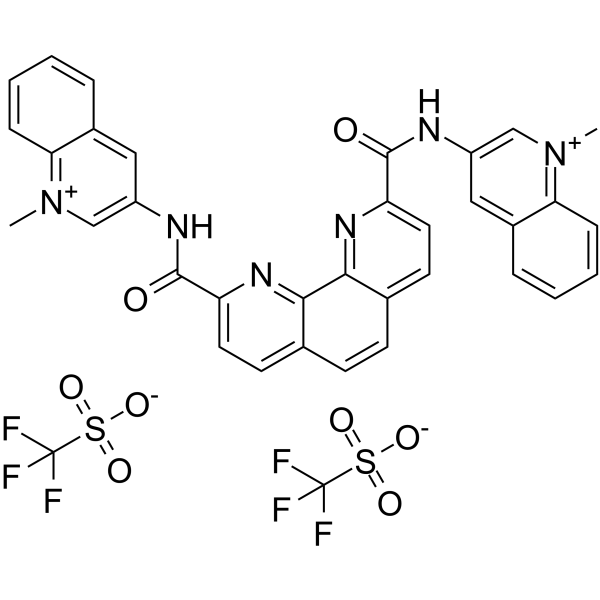
Phen-DC3 Trifluoromethanesulfonate is a bisquinolinium G-quadruplex (G4) ligand. Phen-DC3 Trifluoromethanesulfonate selectively binds to and stabilizes the hybrid quadruplex-duplex hybrid (QDH) derived from the PIM1 promoter. Phen-DC3 Trifluoromethanesulfonate also binds to the c-myc promoter Pu24T G4 via extensive π-stacking, and induces polymerase stalling at α-synuclein DNA and RNA G4 sequences. Phen-DC3 Trifluoromethanesulfonate downregulates LPS (HY-D1056)-induced TNFRSF21, RIPK3 and p-MLKL in VECs, and ameliorates CLP-induced pulmonary vascular leakage in septic rats. Phen-DC3 Trifluoromethanesulfonate can be used in studies related to neurodegenerative diseases and sepsis-associated vascular injury .
loading...
    loading...
9
9 Cited Publications
Cat. No.: HY-153169
CAS No.: 2754428-18-5
Purity:  99.30%
Synonyms: 6PPD-Quinone
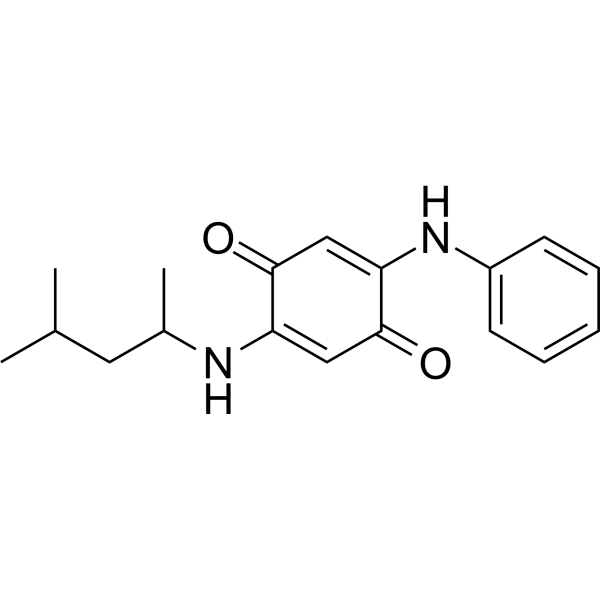
6PPD-Q (6PPD-Quinone) is an environmental pollutant that can be detected in human urine and is widely present in the environment. 6PPD-Q targets and binds to CNR2, CNR1, AA2AR, LCAT, and TRPA1, with CNR2 exhibiting the highest binding affinity, potentially acting as a CNR2 receptor agonist to activate cannabinoid receptors. 6PPD-Q induces intestinal inflammation and barrier damage by disrupting mitochondrial function, reducing neuronal glycolysis metabolites and TCA cycle intermediates, and exacerbating α-synuclein (α-syn) aggregation. 6PPD-Q is applicable in research on environmental toxicology, neurodegenerative diseases, and inflammation-related disorders .
loading...
    loading...
5
5 Cited Publications
Cat. No.: HY-N0901A
CAS No.: 17391-18-3
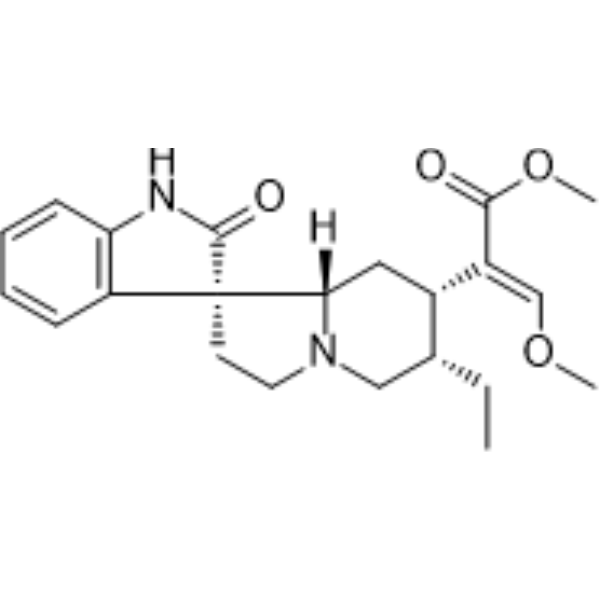
Corynoxine B is an alkaloid-based autophagy inducer and α-synuclein aggregation inhibitor that ameliorates Mn-induced dysregulation of autophagy and enhances α-synuclein (α-syn) clearance in Parkinson's disease mice .
loading...
    loading...
4
4 Cited Publications
Cat. No.: HY-B0512
CAS No.: 127-79-7
Synonyms: RP2632
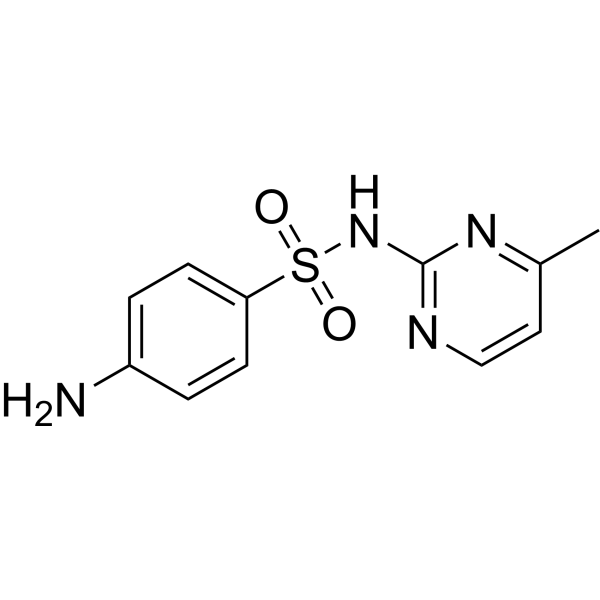
Sulfamerazine (RP2632) is a brain-penetrant and orally active sulfonamide antibiotic and α-synuclein inhibitor with human α-synuclein KD of 352 μM. Sulfamerazine inhibits the synthesis of dihydrofolate by bacteria, thereby inhibiting bacterial growth. Sulfamerazine inhibits α-synuclein fibrillation, reduces α-synuclein aggregation-associated toxicity and α-synuclein aggregate accumulation. Sulfamerazine can be used for the research of Parkinson’s disease and bacterial infection .
loading...
    loading...
4
4 Cited Publications
Cat. No.: HY-N0901
CAS No.: 6877-32-3
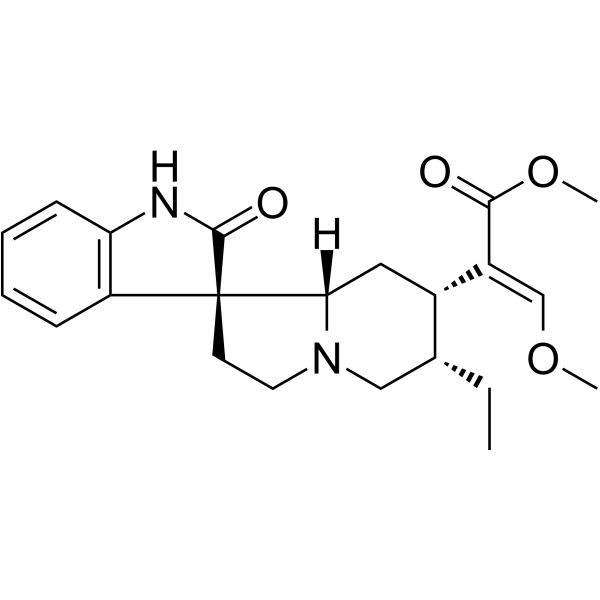
Corynoxine, a tetracyclic oxindole alkaloid, is isolated from the hooks of Uncaria rhynchophylla. Corynoxine is a natural autophagy enhancer that promotes the clearance of alpha-synuclein via Akt/mTOR pathway .
loading...
    loading...
4
4 Cited Publications
Cat. No.: HY-N1501
CAS No.: 5273-86-9
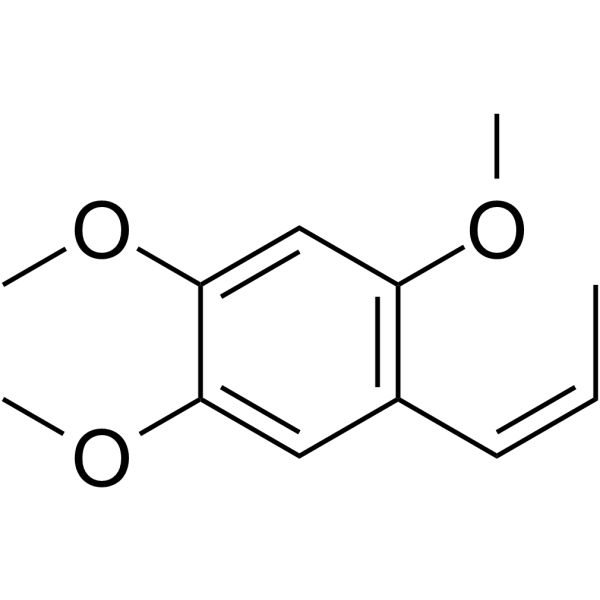
Beta-asarone is an orally active and BBB-penetrable anti-inflammatory agent and neuroprotective agent, which is the major ingredient of Acorus tatarinowii Schott. Beta-asarone can protect nerve cells from apoptosis and autophagy, inhibit expression of α-synuclein, as well as myocardial protection. Beta-asarone can be used in the study of neurological and cardiovascular diseases .
loading...
    loading...
4
4 Cited Publications
Cat. No.: HY-N0743
CAS No.: 63038-10-8
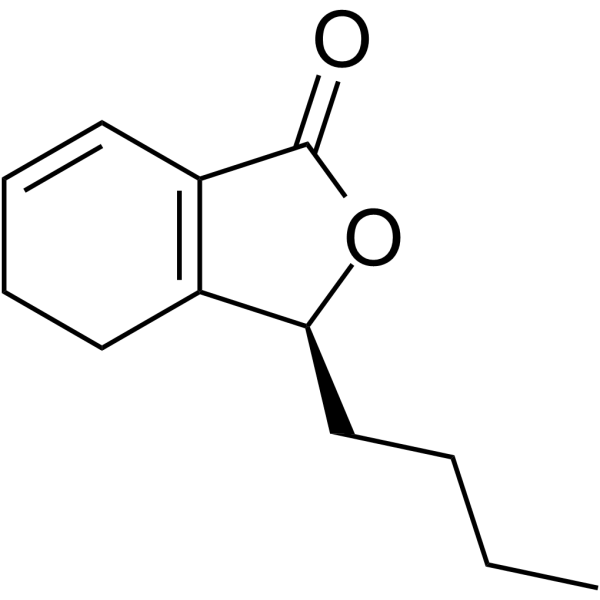
Senkyunolide A is a phthalide, anti-tumor cell proliferation agent with anticancer activity. Senkyunolide A protects neurons from corticosterone (HY-B1618)-induced apoptosis by decreasing protein phosphatase PP2A and α-synuclein phosphorylation and protein level. Senkyunolide A also inhibits osteoarthritis through the NLRP3 signaling pathway and suppresses the expression of CD137, a diagnostic biomarker for atherosclerosis .
loading...
    loading...
2
2 Cited Publications
Cat. No.: HY-135902A
CAS No.: 2741856-68-6
Purity:  98.23%
Synonyms: NSC 377363 hydrochloride
Target:  

DNA/RNA Synthesis

Research Areas:  

Neurological Disease

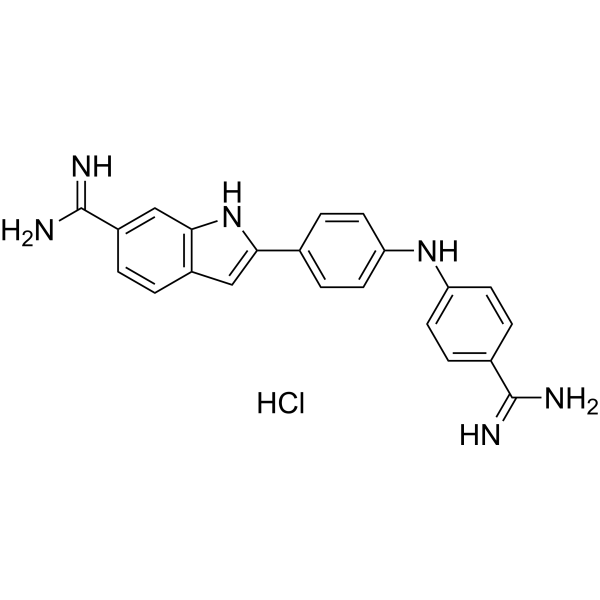
Synucleozid hydrochloride (NSC 377363 hydrochloride) is a potent inhibitor of the?SNCA?mRNA?that encodes α-synuclein protein. Synucleozid selectively?targets the?α-synuclein?mRNA 5′ UTR at the designed IRE site, decreases the amount of?SNCA?mRNA loaded into polysomes and thereby inhibits?SNCA?translation. Synucleozid has the potential for the investigation of Parkinson’s disease .
loading...
    loading...
2
2 Cited Publications
Cat. No.: HY-P70577
Purity:  ≥ 95%, as determined by reducing SDS-PAGE.
Synonyms: alpha-synuclein; Non-A Beta Component of AD Amyloid; Non-A4 Component of Amyloid Precursor; NACP; SNCA; NACP; PARK1
Species:  
Source:  
loading...
    loading...
2
2 Cited Publications
Cat. No.: HY-120475
CAS No.: 1232841-78-9
Synonyms: ATH434
Target:  

α-synuclein

Research Areas:  

Neurological Disease

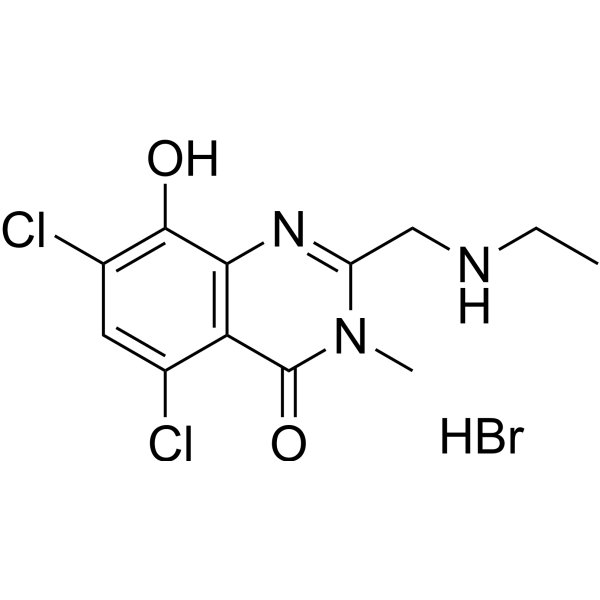
PBT434 is a potent, orally active and cross the blood-brain barrier α-synuclein aggregation inhibitor. PBT434 can be used as a iron chelator and modulates transcellular iron trafficking. PBT434 inhibits iron-mediated redox activity and iron-mediated aggregation of α-synuclein. PBT434 prevents the loss of substantia nigra pars compacta neurons (SNpc). PBT434 has the potential for the research of Parkinson’s disease (PD) .
loading...
    loading...
2
2 Cited Publications
Cat. No.: HY-120475A
CAS No.: 2387898-69-1
Purity:  99.92%
Synonyms: ATH434 mesylate
Target:  

α-synuclein

Research Areas:  

Neurological Disease

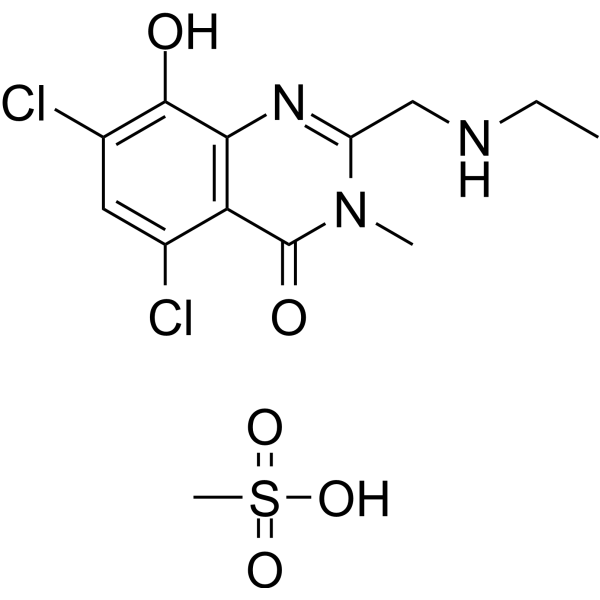
PBT434 methanesulfonate is a potent, orally active and cross the blood-brain barrier α-synuclein aggregation inhibitor. PBT434 methanesulfonate can be used as a iron chelator and modulates transcellular iron trafficking. PBT434 methanesulfonate inhibits iron-mediated redox activity and iron-mediated aggregation of α-synuclein. PBT434 methanesulfonate prevents the loss of substantia nigra pars compacta neurons (SNpc). PBT434 methanesulfonate has the potential for the research of Parkinson’s disease (PD) .
loading...
    loading...
2
2 Cited Publications
Cat. No.: HY-124876
CAS No.: 685121-45-3
Purity:  99.89%
Synonyms: SC-D
Target:  

α-synuclein

Research Areas:  

Neurological Disease

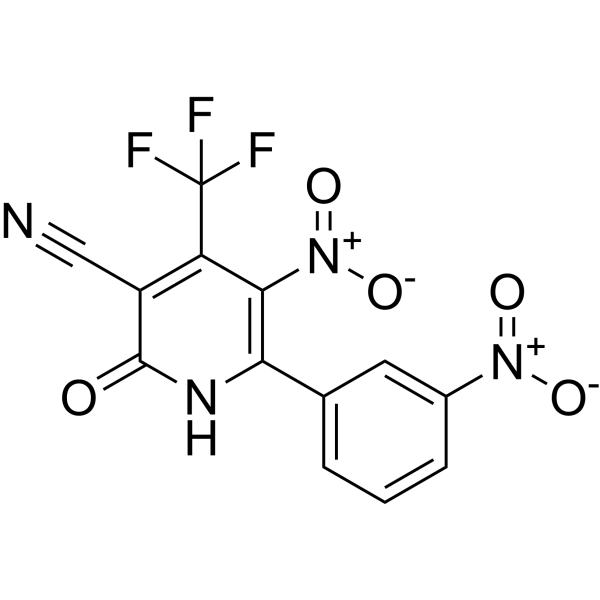
SynuClean-D (SC-D) is an inhibitor of α-synuclein aggregation, disrupts mature amyloid fibrils, prevents fibril propagation, and abolishes the degeneration of dopaminergic neurons in an animal model of Parkinson’s disease .
loading...
    loading...
2
2 Cited Publications
Cat. No.: HY-N2099
CAS No.: 35906-36-6
Synonyms: Senegin III
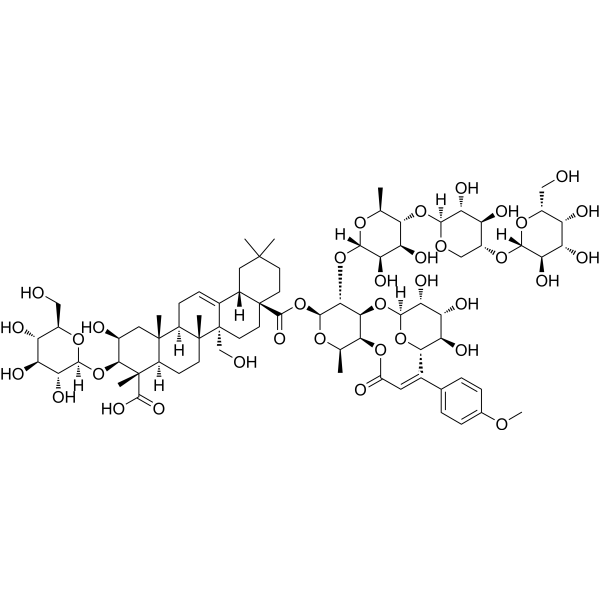
Onjisaponin B is an orally active natural product derived from Polygala tenuifolia. Onjisaponin B inhibits NF-κB p65. Onjisaponin B enhances autophagy and accelerates the degradation of mutant α-synuclein and huntingtin. Onjisaponin B reduces β-amyloid (Aβ) production. Onjisaponin B reduces radiation-induced cell apoptosis. Onjisaponin B has anti-oxidant and anti-inflammatory activities. Onjisaponin B can be used for neurological disease and radiation injury study, and its metabolite tenuifolin (TF) can enter the brain through the BBB .
loading...
    loading...
1
1 Cited Publications
Cat. No.: HY-P71327
Purity:  ≥ 95%, as determined by reducing SDS-PAGE.
Synonyms: alpha-synuclein; Non-A Beta Component of AD Amyloid; Non-A4 Component of Amyloid Precursor; NACP; SNCA; NACP; PARK1
Species:  
Source:  
loading...
    loading...
1
1 Cited Publications
Cat. No.: HY-P82328
Synonyms: SNCA; NACP; PARK1; alpha-synuclein; Non-A beta component of AD amyloid; Non-A4 component of amyloid precursor; NACP

Host:  

Rabbit

Application:  

WB, IHC-P, IP

Reactivity:  

Human, Rat

loading...
    loading...
1
1 Cited Publications
Cat. No.: HY-120034
CAS No.: 1462267-07-7
Purity:  99.53%
NCGC 607 is a noninhibitory small-molecule chaperone of glucocerebrosidase (GCase). NCGC 607 can increase GCase activity, reduce α-synuclein levels, and decrease glycolipid levels. NCGC 607 can be used in the research of Gaucher disease and Parkinson's disease .
loading...
    loading...
1
1 Cited Publications
Cat. No.: HY-107811
CAS No.: 487-03-6
Purity:  99.76%
Harmol is an orally active β-carboline alkaloid. Harmol is a TFEB activator and monoamine oxidase inhibitor. Harmol can induce cell mitosis, Autophagy and Apoptosis. Harmol promotes the degradation of α-synuclein by regulating the autophagy-lysosomal pathway. Harmol has anti-tumor, anti-depressant and anti-aging activities. Harmol improves motor impairment in a mouse Parkinson's disease model .
loading...
    loading...

