1. Search Result
Search Result
Results for "

bacterial agent

" in MedChemExpress (MCE) Product Catalog:

376

Inhibitors & Agonists

6

Screening Libraries

4

Fluorescent Dyes

18

Biochemical Assay Reagents

19

Peptides

52

Natural
Products

21

Isotope-Labeled Compounds

2

Click Chemistry

Targets Recommended:
Cat. No. Product Name Target Research Areas Chemical Structure
  • HY-B1906
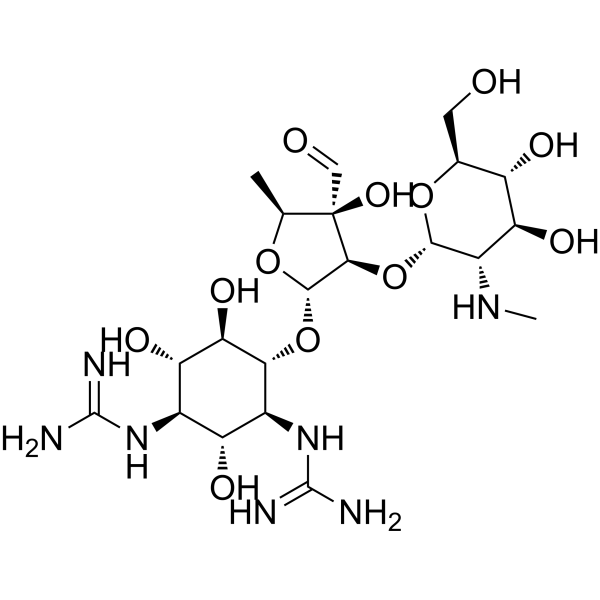
    Streptomycin
    Maximum Cited Publications
    46 Publications Verification

    Agrept; Agrimycin; Streptomycin A

    Environmental Pollutants Antibiotic Bacterial Infection Neurological Disease
    Streptomycin (Agrept) is an effective antibiotic against M. tuberculosis, is used for the research of tuberculosis (TB). Streptomycin also is a bacteriocidal agent that can be used for the research of a number of bacterial infections. Streptomycin can bind strongly to nucleic acids, interferes and blocks protein synthesis while permitting continued RNA and DNA synthesis. Streptomycin, as a common antibiotic used in culture media, also is a blocker of stretch-activated and mechanosensitive ion channels in neurons and cardiac myocytes .
    Streptomycin
  • HY-124617
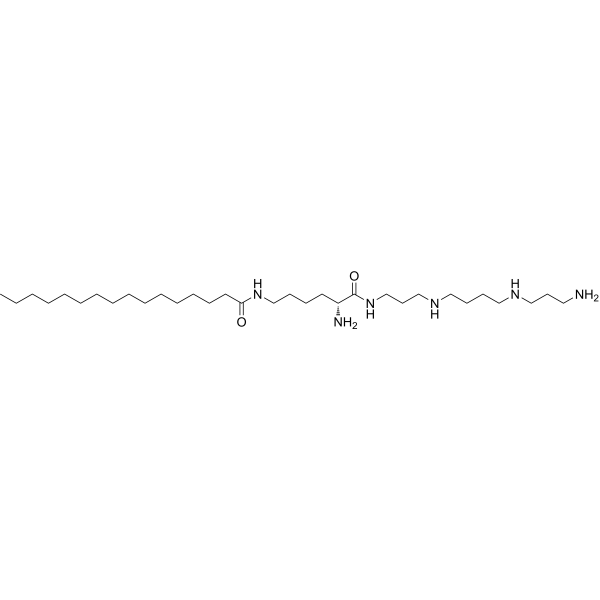
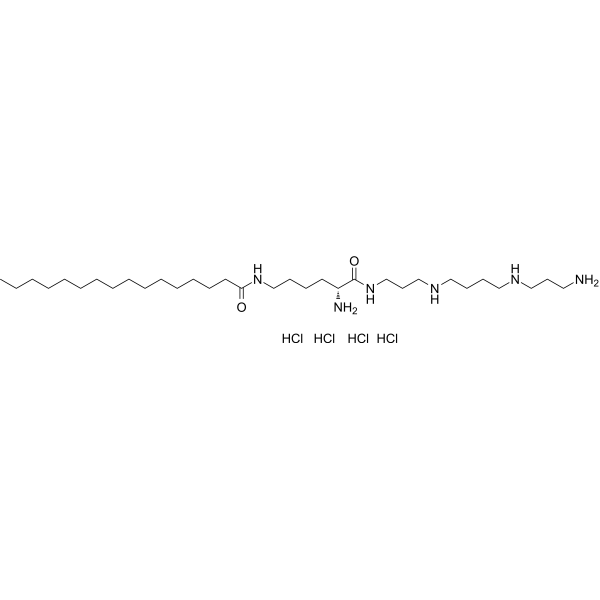
    AMXT-1501
    5+ Cited Publications

    Apoptosis Bacterial Infection Cancer
    AMXT-1501 is a Bacterial agent and polyamine transport system inhibitor. AMXT-1501 targets membrane phospholipids and exhibits antibacterial activity against a variety of Gram-positive and Gram-negative multidrug-resistant bacteria . AMXT-1501 inhibits capsular biosynthesis in Streptococcus pneumoniae . AMXT-1501 targets ornithine decarboxylase and polyamines to inhibit the proliferation of neuroblastoma cells . AMXT-1501 in combination with DFMO (HY-B0744) induces Apoptosis in neuroblastoma cells. AMXT-1501 is applicable to research related to multidrug-resistant bacterial infections, pneumococcal infections, Streptococcus pneumoniae infections, and neuroblastoma .
    AMXT-1501
  • HY-126387

    Bacterial Antibiotic Penicillin-binding protein (PBP) Infection
    Moenomycin complex is a class of antibacterial agents and PBP inhibitors, with Kd values ranging from 94 nM to 1690 nM against various bacterial PBPs. Moenomycin complex inhibits bacterial growth by blocking the transglycosylase activity of class A penicillin-binding proteins (PBPs). Moenomycin complex is used in the research of bacterial infections .
    Moenomycin complex
  • HY-B1597

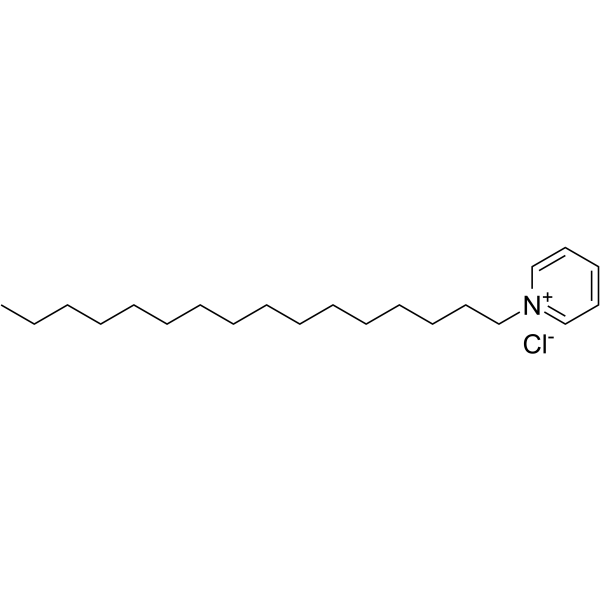
    Benzyldimethylhexadecylammonium chloride

    Bacterial Infection Inflammation/Immunology
    Cetalkonium chloride is an ammonium antiseptic agent used in many topical agents for infections of mouth, throat and eye. Cetalkonium chloride acts as anti-inflammatory amphiphilic agent. Cetalkonium chloride is a cationic surfactant, that improves the precorneal residence time and bioavailability of drugs. Cetalkonium chloride interacts with the negative charges on the bacterial cell membrane, disrupts the integrity of the cell membrane, causes leakage of cell contents and ultimately leading to bacterial death .
    Cetalkonium chloride
  • HY-W004461

    MMTS

    Endogenous Metabolite Bacterial Infection
    S-Methyl thiomethanesulfonate (MMTS) is a sulfur-containing volatile organic compound produced by plants and bacteria and is an effective anti-oomycete agent .
    S-Methyl thiomethanesulfonate
  • HY-14456A
    MAC13243
    2 Publications Verification

    Bacterial Infection
    MAC13243, an antibacterial agent, is an inhibitor of bacterial lipoprotein targeting chaperone, LolA. MAC13243 is an antibacterial agent with Gram-negative selectivity .
    MAC13243
  • HY-117685

    Antibiotic Bacterial Infection
    Cefovecin sodium is an extended-spectrum semisynthetic cephalosporin and bactericidal agent. Cefovecin sodium exerts potent antibacterial activity against multiple bacterial. Cefovecin sodium can be used for the research of bacterial infection .
    Cefovecin sodium
  • HY-B1906R

    Agrept (Standard); Agrimycin (Standard); Streptomycin A (Standard)

    Reference Standards Antibiotic Bacterial Infection Neurological Disease
    Streptomycin (Standard) is the analytical standard of Streptomycin. This product is intended for research and analytical applications. Streptomycin (Agrept) is an effective antibiotic against M. tuberculosis, is used for the research of tuberculosis (TB). Streptomycin also is a bacteriocidal agent that can be used for the research of a number of bacterial infections. Streptomycin can bind strongly to nucleic acids, interferes and blocks protein synthesis while permitting continued RNA and DNA synthesis. Streptomycin, as a common antibiotic used in culture media, also is a blocker of stretch-activated and mechanosensitive ion channels in neurons and cardiac myocytes .
    Streptomycin (Standard)
  • HY-W753904

    Bacterial Infection
    Pradofloxacin, a third-generation fluoroquinolone antibacterial agent. Pradofloxacin can be used for the study of bacterial infections in the dog and cat, such as skin infections .
    Pradofloxacin
  • HY-103658

    Miramistin

    Bacterial Infection
    Myramistin (Miramistin) is an antibacterial agent targeting bacterial cell membrane. Myramistin can bind to the negatively charged surface of bacteria through its cationic properties, disrupt the integrity of the bacterial cell membrane, inhibit bacterial metabolism and growth, and induce cell death, thus exerting antibacterial activity .
    Myramistin
  • HY-161685

    Bacterial Reactive Oxygen Species (ROS) Endogenous Metabolite Infection
    Antibiofilm agent-8 (compound Ru2) enhances antimicrobial activity on visible-light exposure (400-700 nm, 10 J cm-2). Antibiofilm agent-8 generates of oxidative stress via NADH oxidation and ROS generation and compromises bacterial wall .
    Antibiofilm agent-8
  • HY-B0960S

    N-Sulfanilylbenzamide-d4

    Bacterial Autophagy Isotope-Labeled Compounds MDM-2/p53 Caspase PARP DNA-PK Akt Infection Cancer
    Sulfabenzamide (N-Sulfanilylbenzamide)-d4 is the deuterium labeled Sulfabenzamide (HY-B0960). Sulfabenzamide is a sulfonamide antibacterial agent. Sulfabenzamide exhibit antibacterial activity against Staphylococcus aureus (ATCC 25923) and Escherichia coli (ATCC 8739). Sulfabenzamide can promote autophagic cell autophagy in breast cancer cells through p53/ DRAM pathway. Sulfabenzamide increases caspase-3 activity, deactivates PARP1 and DNA-PK, downregulates AKT1 and AKT2. Sulfabenzamide can be used for the researches of breast cancer and bacterial infections .
    Sulfabenzamide-d4
  • HY-143643

    Bacterial Infection
    Antibacterial agent 72 displays the antibacterial activities by targeting the bacterial membrane.
    Antibacterial agent 72
  • HY-148431

    Bacterial Infection
    Antimicrobial agent-14, a benzyl thiophene sulfonamide derivative is an antimicrobial agent, with a MIC of 200 μM against Campylobacter coli ATCC33559. Antimicrobial agent-14 can be used for the research of bacterial foodborne gastroenteritis .
    Antimicrobial agent-14
  • HY-W473763

    Antibiotic Fungal Infection
    3-Methoxy-2, 5-toluquinone is an antibacterial agent with moderate anti-bacterial and fungal effects .
    3-Methoxy-2,5-toluquinone
  • HY-175301

    Bacterial Reactive Oxygen Species (ROS) Infection
    TH16 is an antibacterial agent (MIC=2 μg/mL against methicillin-resistant Staphylococcus aureus, MRSA). TH16 disrupts bacterial cytoplasmic membrane integrity, elevating intracellular reactive oxygen species (ROS) levels to induce bacterial death. TH16 is promising for research of bacterial infection .
    TH16
  • HY-W018811

    Bacterial Infection
    Antibacterial agent 268 (Compound 10e) is an antibacterial agent with antimycobacterial properties. Antibacterial agent 268 shows high anti-bacterial properties at sub-micromolar values (MIC=0.44-0.07 μM) .
    Antibacterial agent 268
  • HY-146047

    Bacterial Infection
    Antibacterial agent 94 (compound 5b) is a potent antibacterial agent. Antibacterial agent 94 show antibacterial activities and show the capability of eradicating MRSA persisters. Antibacterial agent 94 has an effect on bacterial membrane. Antibacterial agent 94 interferes in phosphatidylglycerol (PG) synthesis pathway .
    Antibacterial agent 94
  • HY-174158

    Bacterial Infection
    Antibacterial agent 270 (Compound 3e) is an antibacterial agent that acts on bacterial membrane components phosphatidylglycerol (PG), cardiolipin (CL), and bacterial DNA. Antibacterial agent 270 disrupts bacterial membrane structure and binds to DNA to interfere with genetic information transmission. Antibacterial agent 270 is promising for research of infections caused by methicillin-resistant Staphylococcus aureus (MRSA) .
    Antibacterial agent 270
  • HY-119606

    NSC 66577

    Bacterial Fungal Infection
    Bacimethrin (NSC 66577) is an antibacterial agent and is thiamin biosynthesis antagonist.Bacimethrin inhibits bacterial and yeast growth .
    Bacimethrin
  • HY-N6174

    (+)-Heronapyrrole B; 16-O-Demethylheronapyrrole A

    Bacterial Infection
    Heronapyrrole B ((+)-Heronapyrrole B) is a Gram-positive-selective antibacterial agent (IC50=0.6-1.1 μM against Staphylococcus aureus ATCC9144). Heronapyrrole B is promising for research of bacterial infections and antibiotics .
    Heronapyrrole B
  • HY-161689

    Bacterial Infection
    Antibacterial agent 220 is a potent antibacterial agent that can directly destroy bacterial cell membranes. Antibacterial agent 220 effectively combats Gram-positive and and Gram-negative pathogens, including drug-resistant strains .
    Antibacterial agent 220
  • HY-164369

    Bacterial Infection
    Antibiofilm agent-10 is an antibiofilm agent, which reduces bacterial levels and improves wound healing in recalcitrant pressure ulcers (PUs) in combination with negative pressure wound therapy (NPWT). Antibiofilm agent-10 enhances pathogen killing efficacy of antimicrobials .
    Antibiofilm agent-10
  • HY-147546

    Bacterial Infection
    Antibacterial agent 107 (compound 14) is a potent antibacterial agent. Antibacterial agent 107 shows potent antibacterial activity against Gram-positive bacteria, with a MIC of 1.56 μg/mL (MRSA). Antibacterial agent 107 exhibits low hemolytic activity, high membrane selectivity, and rapid bactericidal activity. Antibacterial agent 107 shows effective in vivo efficacy in the murine model of bacterial keratitis caused by Staphylococcus aureus ATCC29213 .
    Antibacterial agent 107
  • HY-164766

    Fluorescent Dye Infection
    ICG-DBCO-1-Maltotriose is a specific imaging agent for detecting bacterial infections. ICG-DBCO-1-Maltotriose is composed of the fluorescent dye Indocyanine green (ICG) (HY-D0711) and a maltotriose sugar .
    ICG-DBCO-1-Maltotriose
  • HY-119648

    Bacterial Infection
    CCR-11 is an antibacterial agent. CCR-11 can inhibit the proliferation of B. subtilis cells with an IC50 value of 1.2 μM. CCR-11 inhibits HeLa cell proliferation with an IC50 value of 18.1 μM. CCR-11 inhibits bacterial cytokinesis by inhibiting FtsZ assembly. CCR-11 can be used for the research of FtsZ-targeted antibacterial agents .
    CCR-11
  • HY-Q50147

    Bacterial Infection
    Antimicrobial agent-21 (Compound IIm) is a bacterial inhibitor. Antimicrobial agent-21 is active against gram-positive and gram-negative bacterial .
    Antimicrobial agent-21
  • HY-156005

    Bacterial Others
    Antibacterial agent 153 is a broad-spectrum antibacterial agent. Antibacterial agent 153 kills bacteria by acting on the bacterial cell membrane. Antibacterial agent 153 can be used for bacterial infections research .
    Antibacterial agent 153
  • HY-155357

    Bacterial Infection
    Antibacterial agent 160 is a potent antibacterial agents. Antibacterial agent 160 can rapidly kill bacterial and inhibits bacterial biofilm formation. Antibacterial agent 160 affects the normal function of DNA and leads cell death .
    Antibacterial agent 160
  • HY-149089

    Bacterial Infection
    Antibacterial agent 138 has excellent antibacterial activity to multi-drug resistant bacteria. Antibacterial agent 138 inhibits bacterial protein synthesis but bacterial cell walls .
    Antibacterial agent 138
  • HY-173190

    Bacterial DNA/RNA Synthesis Reactive Oxygen Species (ROS) Infection
    Antibacterial agent 271 is an antibacterial agent with significant inhibition against Escherichia coli (MIC: 2.2 μM). Antibacterial agent 271 reduces metabolic activity by disrupting the integrity of bacterial membranes. Antibacterial agent 271 binds to DNA grooves to inhibit replication and induces accumulation of reactive oxygen species (ROS) , ultimately leading to bacterial death. Antibacterial agent 271 shows significant potential in combating bacterial infections .
    Antibacterial agent 271
  • HY-145325

    Bacterial Infection
    Antibacterial agent 66 (Compound 6q), a trifluoromethylpyridine 1,3,4-oxadiazole derivative, shows activity against Xanthomonas oryzae pv. oryzae (Xoo) with an EC50 value of 7.2 μg/mL .
    Antibacterial agent 66
  • HY-178212

    Bacterial Reactive Oxygen Species (ROS) Apoptosis Infection
    Antibacterial agent 292 is a 3-pyrazolylindole derivative. Antibacterial agent 292 is an anti-bacterial agent. Antibacterial agent 292 shows potent inhibitory activity against Xanthomonas oryzae pv oryzae (Xoo) and Xanthomonas axonopodis pv citri (Xac), with EC50 values of 2.54 and 3.49 μg/mL. Antibacterial agent 292 can suppress biofilm formation, bacterial motility, and extracellular polysaccharide production, induce morphological alterations and promote ROS accumulation, ultimately triggers bacterial apoptosis. Antibacterial agent 292 down-regulates the expression of genes associated with the type VI secretion system (T6SS). Antibacterial agent 292 can be used in rice bacterial blight and citrus canker .
    Antibacterial agent 292
  • HY-147876

    Bacterial Fungal Infection
    Antimicrobial agent-3 (Compound U10) is an antimicrobial agent against bacterial, fungal and tubercular infections .
    Antimicrobial agent-3
  • HY-152091

    Fungal Infection Cancer
    Antiproliferative agent-18 (Compound 5k) is an anti-proliferative agent. Antiproliferative agent-18 also displays moderate anti-bacterial and anti-fungi activity .
    Antiproliferative agent-18
  • HY-163342

    Bacterial Infection
    Antibacterial agent 190 (compound 16) is a antibacterial agent. Antibacterial agent 190 shows antibacterial activity. Antibacterial agent 190 reduces the bacterial burden of the peritoneum and blood .
    Antibacterial agent 190
  • HY-175295A

    Bacterial Reactive Oxygen Species (ROS) Infection
    Anti-MRSA agent 33 iodide is an anti-Methicillin (HY-121544)-resistant Staphylococcus aureus (MRSA) agent, with MIC values of 2-4 μg/mL. Anti-MRSA agent 33 iodide demonstrates effective biofilm eradication and minimal cytotoxicity toward mammalian cells. Anti-MRSA agent 33 iodide specifically binds to phosphatidylglycerol (PG) on bacterial membranes, leading to membrane disruption, excessive production of ROS, and metabolic collapse, ultimately resulting in bacterial cell death. Anti-MRSA agent 33 iodide reduces bacterial load in a murine skin infection model .
    Anti-MRSA agent 33 iodide
  • HY-168852

    Bacterial Infection
    Antimicrobial agent-37 (compound 6a) is a potent broad-spectrum antimicrobial agent that has a biofilm-destroying effect, acting on bacterial membranes and cracking them .
    Antimicrobial agent-37
  • HY-162923

    Bacterial Antibiotic Infection
    Antibacterial agent 244 is an orally active compound with broad-spectrum antibacterial activity, primarily targeting Gram-positive bacteria, with a MIC value of 1–4 μg/mL and low hemolytic toxicity (HC50 of 111.6 μg/mL). Antibacterial agent 244 disrupts bacterial transmembrane potential, increases membrane permeability, leading to leakage of cellular contents such as DNA and proteins, ultimately causing bacterial death. Antibacterial agent 244 can be used in research related to Gram-positive bacterial infections .
    Antibacterial agent 244
  • HY-139755

    Bacterial Infection
    Antibacterial agent 38 is an antibacterial agent extracted from patent WO2015063714A1, compound C. Antibacterial agent 38 can be used for the research of bacterial infections .
    Antibacterial agent 38
  • HY-139754

    Bacterial Infection
    Antibacterial agent 37 is an antibacterial agent extracted from patent WO2015063714A1, compound B. Antibacterial agent 37 can be used for the research of bacterial infections .
    Antibacterial agent 37
  • HY-139761

    Bacterial Infection
    Antibacterial agent 44 is an antibacterial agent extracted from patent WO2013030735A1, example 7. Antibacterial agent 44 can be used for the research of bacterial infections .
    Antibacterial agent 44
  • HY-139763

    Bacterial Infection
    Antibacterial agent 46 is an antibacterial agent extracted from patent WO2013030735A1, example 9. Antibacterial agent 46 can be used for the research of bacterial infections .
    Antibacterial agent 46
  • HY-139760

    Bacterial Infection
    Antibacterial agent 43 is an antibacterial agent extracted from patent WO2013030735A1, example 6. Antibacterial agent 43 can be used for the research of bacterial infections .
    Antibacterial agent 43
  • HY-139739

    Bacterial Infection
    Antibacterial agent 31 shows the antibacterial activity against rice bacterial leaf streak.
    Antibacterial agent 31
  • HY-168258

    Bacterial Infection
    Antibiofilm agent-13 (compound 14b) is a potent antibacterial agent that displays a broad-spectrum antimicrobial activity. Antibiofilm agent-13 could disintegrate the integrity of bacterial cell membranes by destroying transmembrane potential and enhancing membrane permeability, and causing the generation of intracellular ROS and the leakage of DNA and proteins, ultimately leading to bacterial death. Antibiofilm agent-13 inhibits both Gram-positive bacteria (MIC of 0.5-1 μg/mL) and Gram-negative bacteria (MIC of 1-32 μg/mL) .
    Antibiofilm agent-13
  • HY-169384

    Bacterial Infection
    Antimycobacterial agent-10 (compound 5) is a DNA gyrase inhibitor with anti-bacterial actiity (IC50=96 nM, M. tuberculosis gyrase).
    Antimycobacterial agent-10
  • HY-W013429

    Bacterial Infection
    4-Glycidyloxycarbazole (compound 8) is an antimicrobial agent that disrupts bacterial biofilm formation .
    4-Glycidyloxycarbazole
  • HY-168705

    Bacterial Infection
    Anti-MRSA agent 20 (Compound a4) is an anti-microbial agent (MIC: < 0.03125 μg/mL) against MRSA). Anti-MRSA agent 20 binds to the ribosomal peptidyl transferase center and inhibits bacterial survival by inhibiting MRSA toxin synthesis and bacterial division. Anti-MRSA agent 20 significantly reduces the MRSA load in the lungs and attenuates lung injury in the MRSA-infected mice (ED50 = 6.48 mg/kg) .
    Anti-MRSA agent 20
  • HY-157142

    Bacterial Infection
    Antibacterial agent 165 (compound 3), a hydroxyquinoline derivative, is a potent bacterial inhibitor. Antibacterial agent 165 inhibits methicillin-resistant Staphylococcus aureus (MRSA) .
    Antibacterial agent 165

Inquiry Online

Your information is safe with us. * Required Fields.

Salutation


Country or Region *

Applicant Name *


Organization Name *

Department *


Email Address *


Product Name *

Cat. No.


Requested quantity *

Phone Number *


Remarks

Inquiry Online

Inquiry Information

Product Name:
Cat. No.:
Quantity:
MCE Japan Authorized Agent:

