



Smurf1-IN-A01
Based on 4 publication(s) in Google Scholar
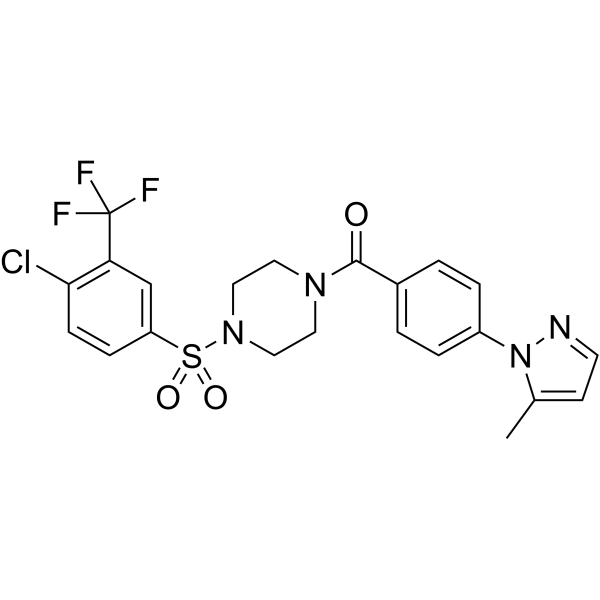
Smurf1-IN-A01 is a Smurf1 inhibitor. Smurf1-IN-A01 has anticancer activity and can be used for the research of osteoporosis and age-related macular degeneration.
For research use only. We do not sell to patients.
- Purity : 99.81%
- CAS No.: 1007647-73-5
- Formula: C22H20ClF3N4O3S
- Molecular Weight:512.93
-
Storage:
4°C, protect from light
* In solvent : -80°C, 6 months; -20°C, 1 month (protect from light)

To place orders, for customer services and technical support, please contact: MedChemExpress USA
Tel: 609-228-6898 E-mail: [email protected] [email protected]


-
 Biological Activity
-
Chemical Information
-
Solvent & Solubility
- Purity & Documentation
- References
-
 Help & FAQs


-
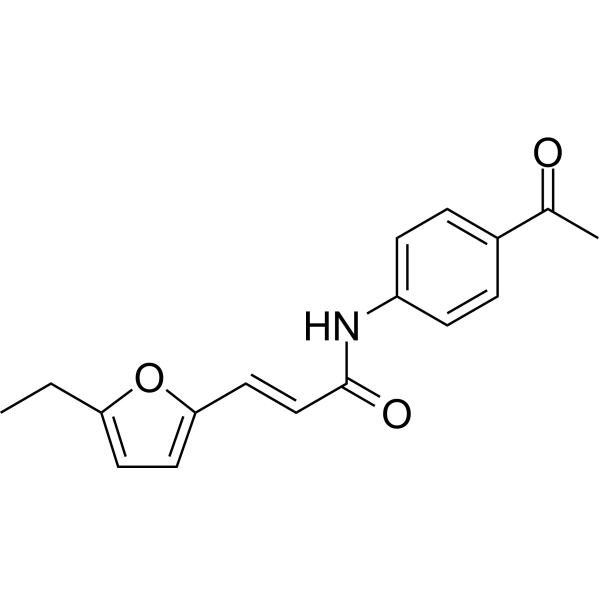
HY-110204
HeclinE1/E2/E3 Enzyme Inhibitor -
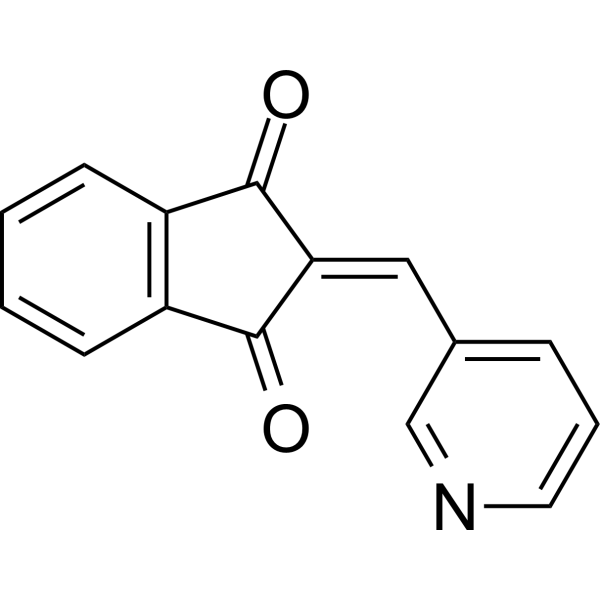
HY-19817
PRT4165E1/E2/E3 Enzyme Inhibitor -
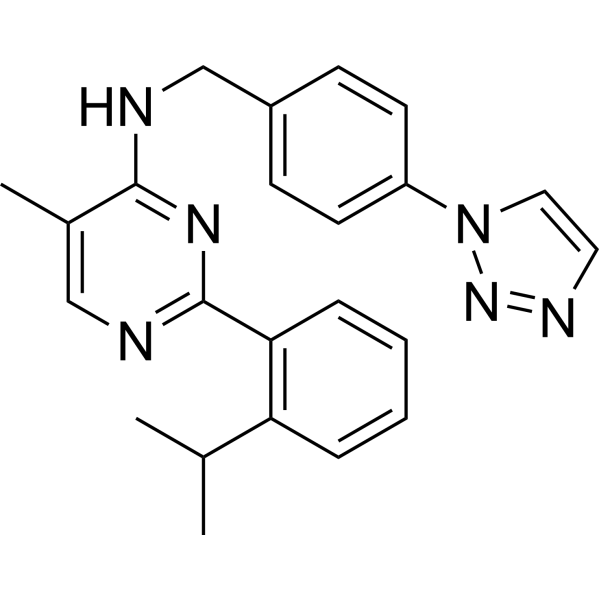
HY-17543
ML-323USP1-UAF1 Inhibitor -
HY-117370
USP25/28 inhibitor AZ1Deubiquitinase Inhibitor -
HY-100900
ML364USP2 Inhibitor -
HY-13811
NSC697923UBE2N Inhibitor -

HY-N10159
1-Benzyl-I3C -
HY-K0202
Protein A/G Magnetic Beads -
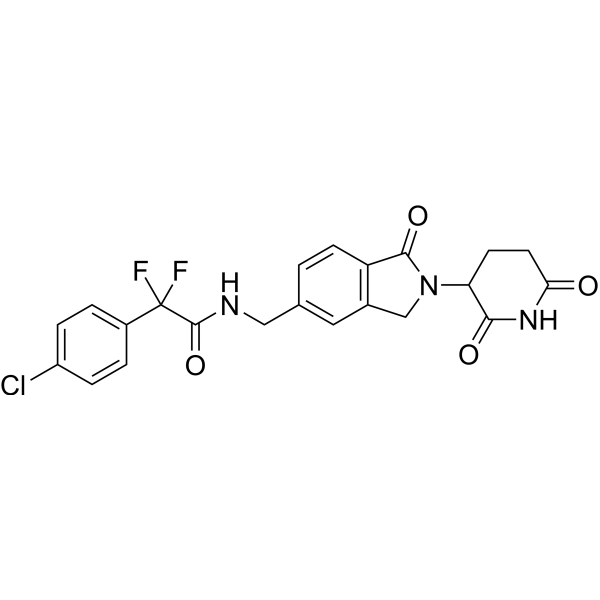
HY-130800
EragidomideGSPT1 Molecular Glue Degrader -
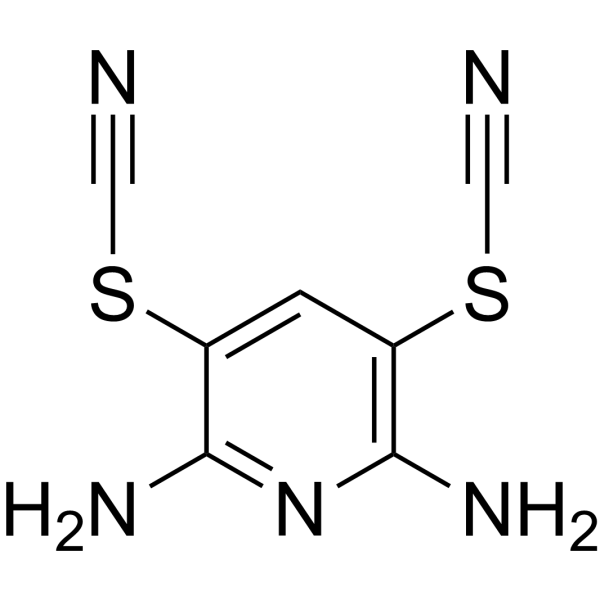
HY-13814
PR-619DUB Inhibitor -
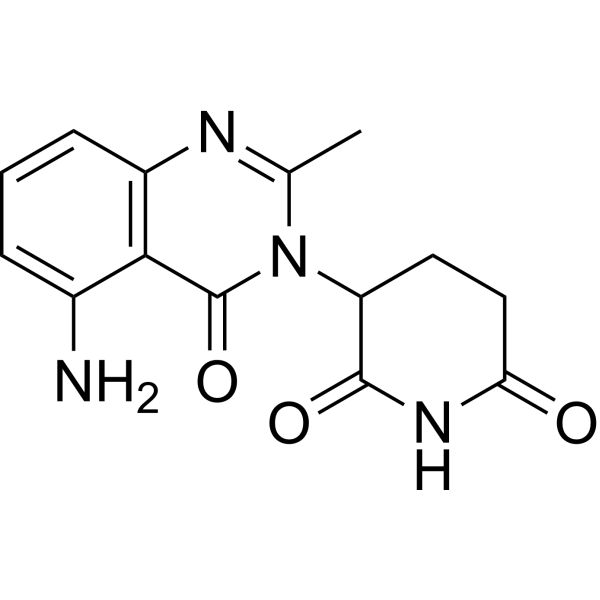
HY-100507
AvadomideCereblon Modulator -
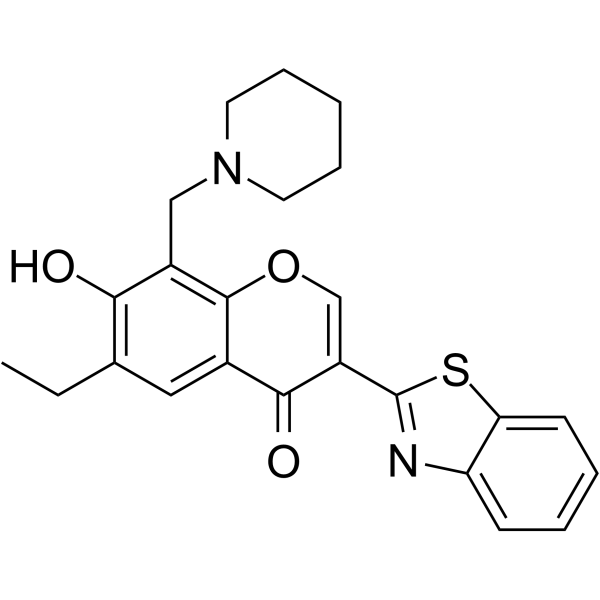
HY-100237
SZL P1-41Selective Skp2 Inhibitor
Publications Citing Use of MedChemExpress (MCE) Smurf1-IN-A01
More

Biological Activity
Description
IC50 & Target
|
IL-1β |
HSP90β |
ERα |
In Vitro
Smurf1-IN-A01 (10 μM, 30-60 min) blocked C-type lectin receptor-2d mediated degradation of MyD88 in RAW264.7 cells upon stimulation with β-glucans[1].
Smurf1-IN-A01 (10 μM, 24 h) attenuates the effect of enhancing the ALP activity and Alizarin red S staining in C3H10T1/2 cells[2].
Smurf1-IN-A01 (10 μM, 12 h) decreases ER alpha protein and ERE-luciferase activity in MCF-7 and T47D cells[3].
MedChemExpress (MCE) has not independently confirmed the accuracy of these methods. They are for reference only. .
In Vivo
MedChemExpress (MCE) has not independently confirmed the accuracy of these methods. They are for reference only.
-
Animal Model:retinal degeneration model mice[4]
-
Dosage:10 μM ,2μL
-
Administration:Injected into vitreous cavity by micro-syringe
-
Result:Reduced drusen-like spots. Resulted outer nuclear layers wider and straighter. Caused inner segment and outer segment hinge of photoreceptor cells disappeared. Down-regulated NLRP3 and inhibited IL-1β. Could decrease the death in NaIO3 retina.


Chemical Information
-
CAS No. 1007647-73-5
-
Appearance Solid
-
Molecular Weight 512.93
-
Formula C22H20ClF3N4O3S
-
Color Light yellow to yellow
-
SMILES
O=S(C1=CC(C(F)(F)F)=C(Cl)C=C1)(N2CCN(C(C3=CC=C(N4C(C)=CC=N4)C=C3)=O)CC2)=O
-
Synonyms
A01
-
Shipping
Room temperature in continental US; may vary elsewhere.
-
Storage
4°C, protect from light
* In solvent : -80°C, 6 months; -20°C, 1 month (protect from light)


Publications (4)
-
Journal Impact Factor
-
Most Recent
-
Blood Adv
The binding of autotaxin to integrins mediates hyperhomocysteinemia-potentiated platelet activation and thrombosis in mice and humans. [Abstract]2022 Jan 11;6(1):46-61. PMID: 34559203 -
-
bioRxiv
Epigenetic Activation of Endothelial Smurf1 via EP300-Mediated H3K27ac Disrupts BMPR2 Signaling in Pulmonary Arterial Hypertension. [Abstract]2025 Oct 31:2025.10.30.685664. PMID: 41279601 -
bioRxiv
A pivotal role for Wnt antagonists in constraining Wnt activity to promote digit joint specification. [Abstract]2025 Jul 21:2025.07.17.665381. PMID: 40747425


Solvent & Solubility
In Vitro:
DMSO : 62.5 mg/mL (121.85 mM; Need ultrasonic; Hygroscopic DMSO has a significant impact on the solubility of product, please use newly opened DMSO)
Please refer to the solubility information to select the appropriate solvent. Once prepared, please aliquot and store the solution to prevent product inactivation from repeated freeze-thaw cycles.
Storage method and period of stock solution: -80°C, 6 months; -20°C, 1 month (protect from light). When stored at -80°C, please use it within 6 months. When stored at -20°C, please use it within 1 month.
Please refer to the solubility information to select the appropriate solvent. Once prepared, please aliquot and store the solution to prevent product inactivation from repeated freeze-thaw cycles.
Storage method and period of stock solution: -80°C, 6 months; -20°C, 1 month (protect from light). When stored at -80°C, please use it within 6 months. When stored at -20°C, please use it within 1 month.
Concentration (start) × Volume (start) = Concentration (final) × Volume (final)
In Vivo:
Select the appropriate dissolution method based on your experimental animal and administration route.
- For the following dissolution methods, please ensure to first prepare a clear stock solution using an In Vitro approach and then sequentially add co-solvents:
- To ensure reliable experimental results, the clarified stock solution can be appropriately stored based on storage conditions. As for the working solution for In Vivo experiments, it is recommended to prepare freshly and use it on the same day.
- The percentages shown for the solvents indicate their volumetric ratio in the final prepared solution. If precipitation or phase separation occurs during preparation, heat and/or sonication can be used to aid dissolution.
Add each solvent one by one: 10% DMSO 40% PEG300 5% Tween-80 45% Saline
Solubility: ≥ 2.08 mg/mL (4.06 mM); Clear solution
This protocol yields a clear solution of ≥ 2.08 mg/mL (saturation unknown).
Taking 1 mL working solution as an example, add 100 μL DMSO stock solution (20.8 mg/mL) to 400 μL PEG300, and mix evenly; then add 50 μL Tween-80 and mix evenly; then add 450 μL Saline to adjust the volume to 1 mL.
Preparation of Saline: Dissolve 0.9 g sodium chloride in ddH₂O and dilute to 100 mL to obtain a clear Saline solution.
In Vivo Dissolution Calculator
Please enter the basic information of animal experiments:
-
-
-
-
Recommended: Prepare an additional quantity of animals to account for potential losses during experiments.
Please enter your animal formula composition:
-
%DMSO +
Recommended: Keep the proportion of DMSO in working solution below 2% if your animal is weak.
-
%+
-
+%Tween-80 + +
-
%Saline +
The co-solvents required include: DMSO, . All of co-solvents are available by MedChemExpress (MCE). , Tween 80. All of co-solvents are available by MedChemExpress (MCE).
Working solution concentration: 0.22 mg/mL
Method for preparing stock solution: mg drug dissolved in μL DMSO. Stock solution concentration: mg/mL. * In solvent : -80°C, 6 months; -20°C, 1 month (protect from light)
1. Take μL DMSO stock solution;
2. Add μL .
μL , mix evenly;
3. Then add μL Tween 80, mix evenly;
4. Then add μL
Please ensure that the stock solution in the first step is dissolved to a clear state, and add co-solvents in sequence. You can use ultrasonic heating (ultrasonic cleaner, recommended frequency 20-40 kHz), vortexing, etc. to assist dissolution.


Purity & Documentation
-
Data Sheet (276 KB)
-
SDS (393 KB)
- English - EN (393 KB)
- Français - FR (393 KB)
- Deutsch - DE (393 KB)
- Norwegian - NO (393 KB)
- Español - ES (393 KB)
- Swedish - SV (393 KB)
- Italian - IT (393 KB)
- Korean - KR (393 KB)
- Portuguese - PT (393 KB)
-
Handling Instructions (2659 KB)
References
[1]. Li F, et al. C-type lectin receptor 2d forms homodimers and heterodimers with TLR2 to negatively regulate IRF5-mediated antifungal immunity [J]. Nature Communications, 2023, 14(1): 6718. [Content Brief]
[2]. Qu M, et al. HSP90β chaperoning SMURF1-mediated LATS proteasomal degradation in the regulation of bone formation [J]. Cellular Signalling, 2023, 102: 110523. [Content Brief]
[3]. Yang H, et al. SMURF1 facilitates estrogen receptor ɑ signaling in breast cancer cells [J]. Journal of experimental & clinical cancer research, 2018, 37(1): 1-12. [Content Brief]
[4]. Li D, et al. Smurf1: A possible therapeutic target in dry age-related macular degeneration [J]. Experimental Eye Research, 2023, 233: 109549. [Content Brief]
[5]. Cao Y, et al. Selective small molecule compounds increase BMP-2 responsiveness by inhibiting Smurf1-mediated Smad1/5 degradation. Sci Rep. 2014 May 14;4:4965. [Content Brief]


Complete Stock Solution Preparation Table
Please refer to the solubility information to select the appropriate solvent. Once prepared, please aliquot and store the solution to prevent product inactivation from repeated freeze-thaw cycles.
Storage method and period of stock solution: -80°C, 6 months; -20°C, 1 month (protect from light). When stored at -80°C, please use it within 6 months. When stored at -20°C, please use it within 1 month.
| Optional Solvent | Concentration Solvent Mass | 1 mg | 5 mg | 10 mg | 25 mg |
|---|---|---|---|---|---|
| DMSO | 1 mM | 1.9496 mL | 9.7479 mL | 19.4958 mL | 48.7396 mL |
| 5 mM | 0.3899 mL | 1.9496 mL | 3.8992 mL | 9.7479 mL | |
| 10 mM | 0.1950 mL | 0.9748 mL | 1.9496 mL | 4.8740 mL | |
| 15 mM | 0.1300 mL | 0.6499 mL | 1.2997 mL | 3.2493 mL | |
| 20 mM | 0.0975 mL | 0.4874 mL | 0.9748 mL | 2.4370 mL | |
| 25 mM | 0.0780 mL | 0.3899 mL | 0.7798 mL | 1.9496 mL | |
| 30 mM | 0.0650 mL | 0.3249 mL | 0.6499 mL | 1.6247 mL | |
| 40 mM | 0.0487 mL | 0.2437 mL | 0.4874 mL | 1.2185 mL | |
| 50 mM | 0.0390 mL | 0.1950 mL | 0.3899 mL | 0.9748 mL | |
| 60 mM | 0.0325 mL | 0.1625 mL | 0.3249 mL | 0.8123 mL | |
| 80 mM | 0.0244 mL | 0.1218 mL | 0.2437 mL | 0.6092 mL | |
| 100 mM | 0.0195 mL | 0.0975 mL | 0.1950 mL | 0.4874 mL |


Smurf1-IN-A01 Related Classifications
HY-110195 Related Classifications
 Powered by Bioz