



CDK3
Cyclin-dependent kinase 3 (CDK3) is a serine/threonine kinase that functions in cell-cycle control, particularly during the G0/G1 transition and early G1 phase progression. CDK3 forms an active complex with cyclin C, and this complex phosphorylates retinoblastoma protein (pRB) at Ser807/811, thereby promoting Rb-dependent exit from cellular quiescence and facilitating re-entry into the proliferative cycle. Mechanistically, CDK3 contributes to cell-cycle progression through regulation of the Rb-E2F signaling axis, a pathway that coordinates transcriptional programs required for G1 entry and subsequent DNA synthesis. In disease models, aberrant CDK3 activity has been linked to oncogenic transformation through phosphorylation-dependent activation of transcription factors, including ATF1, c-Jun, and NFAT3, which enhance proliferation, anchorage-independent growth, and tumor development. Elevated expression of CDK3 and its downstream signaling components has been reported in several cancer models, including skin cancer and nasopharyngeal carcinoma, supporting its relevance to tumor-associated cell-cycle deregulation. Compared with closely related cell-cycle kinases such as CDK2, CDK3 exhibits distinct functions during G0 exit that cannot be fully compensated by CDK2, indicating nonredundant regulatory roles within the CDK family. For experimental applications, CDK3 is frequently investigated as a regulator of quiescence-to-proliferation transitions and as a potential target for development of isoform-selective CDK inhibitors, although achieving kinase selectivity remains a major challenge because of structural similarities among CDK family members[1][2][3][4][5][6].
References:
- [1]. Ren S, et al. Cyclin C/cdk3 promotes Rb-dependent G0 exit. Cell. 2004 Apr 16;117(2):239-51. [Content Brief]
- [2]. Chohan TA, et al. An insight into the emerging role of cyclin-dependent kinase inhibitors as potential therapeutic agents for the treatment of advanced cancers. Biomed Pharmacother. 2018 Nov;107:1326-1341. [Content Brief]
- [3]. Xiao T, et al. Phosphorylation of NFAT3 by CDK3 induces cell transformation and promotes tumor growth in skin cancer. Oncogene. 2017 May 18;36(20):2835-2845. [Content Brief]
- [4]. Solomon DA, et al. Mutational inactivation of PTPRD in glioblastoma multiforme and malignant melanoma. Cancer Res. 2008 Dec 15;68(24):10300-6. [Content Brief]
- [5]. Wang L, et al. CDK3 expression and its clinical significance in human nasopharyngeal carcinoma. Mol Med Rep. 2014 Jun;9(6):2582-6. [Content Brief]
- [6]. Hofmann F, et al. Differential effects of cdk2 and cdk3 on the control of pRb and E2F function during G1 exit. Genes Dev. 1996 Apr 1;10(7):851-61. [Content Brief]
-
CDK3 Related Products (28)
Related Products (28)

-
Recombinant Proteins (6)
- 1
- 2
-
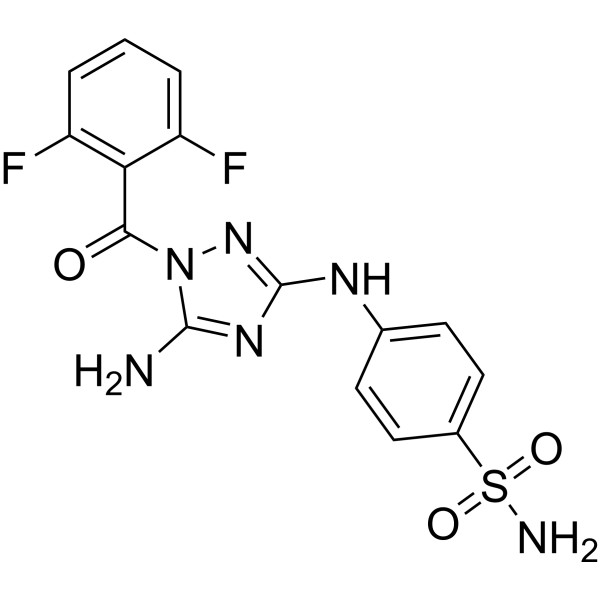
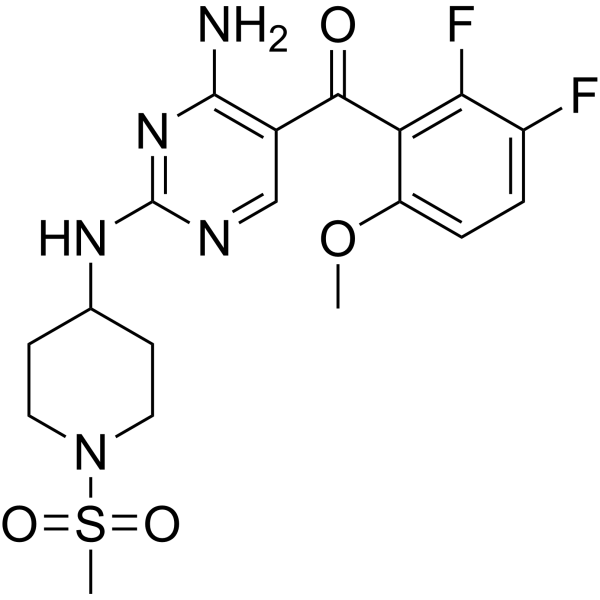
Tambiciclib
 0 ImagesSynonyms: GFH009; JSH-009; SLS009Tambiciclib (GFH009, JSH-009) is an orally active, highly potent and selective CDK9 inhibitor (IC50 = 1 nM), demonstrating >200-fold selectivity over other CDKs, >100-fold selectivity over DYRK1A/B, and excellent selectivity over 468 kinases/mutants. Tambiciclib demonstrates potent in vitro and in vivo antileukemic efficacy in acute myeloid leukemia (AML) mouse models by inhibiting RNA Pol II phosphorylation, downregulating MCL1 and MYC, and inducing apoptosis. Tambiciclib can be used for AML research.
-
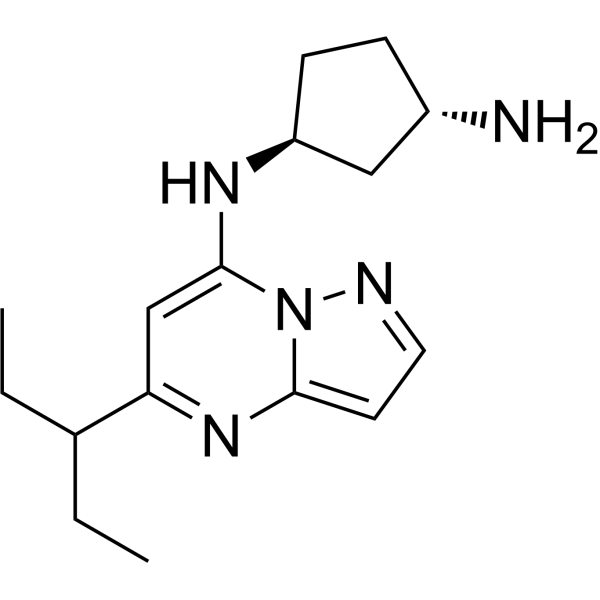
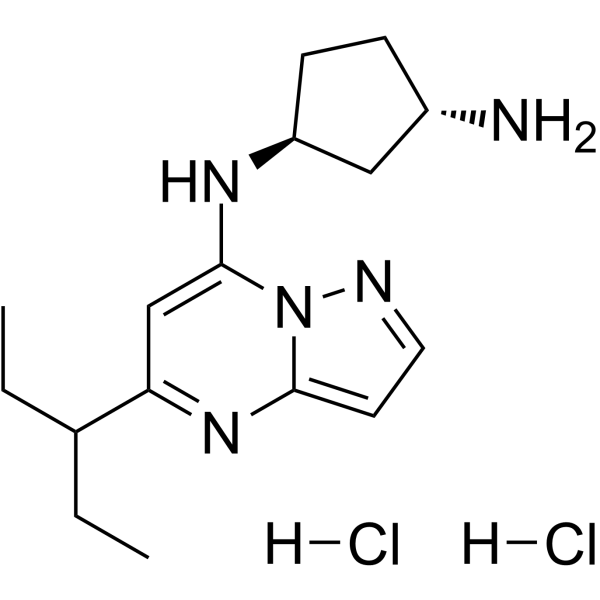
Atuveciclib
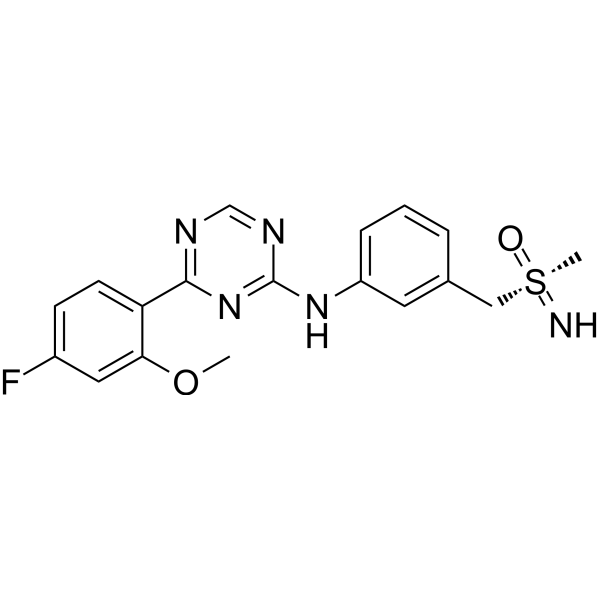 0 ImagesSynonyms: BAY-1143572
-
RGB-286638
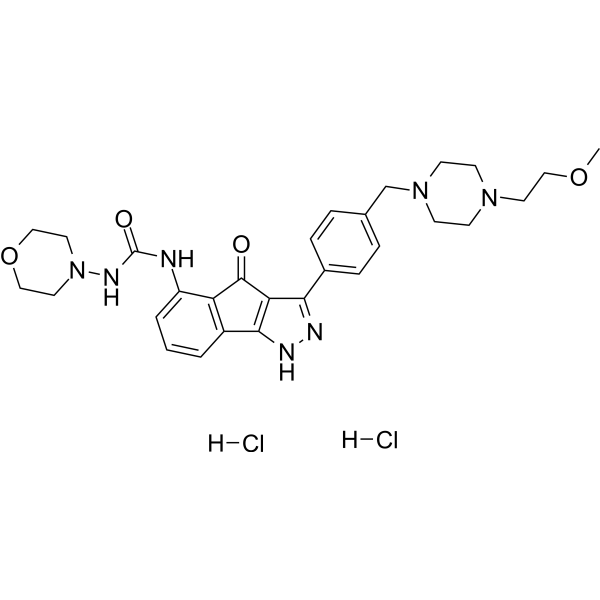 0 ImagesRGB-286638 is a potent inhibitor of CDK and MAPK9. RGB-286638 inhibits the activities of cyclin T1-CDK9, cyclin B1-CDK1, cyclin E-CDK2, cyclin D1-CDK4, cyclin E-CDK3 and p35-CDK5, with IC50 values of 1, 2, 3, 4, 5 and 5 nM, respectively. RGB-286638 inhibits GSK-3β and TAK1, with IC50 values of 3 nM and 5 nM, respectively. RGB-286638 induces caspase-dependent Apoptosis in cells. RGB-286638 delays tumor growth in an orthotopic glioblastoma mouse model. RGB-286638 extends survival in multiple myeloma models. RGB-286638 can be used in research related to glioblastoma and multiple myeloma.
-
Cyproheptadine
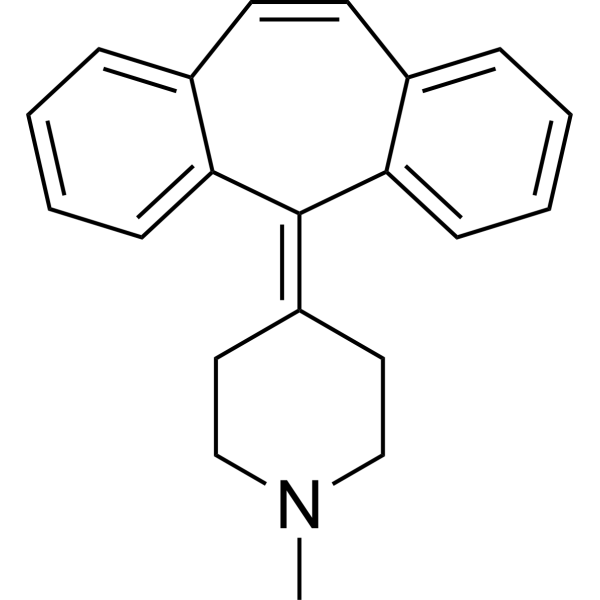 0 ImagesCyproheptadine acts as a p38 MAP kinase activator, CHK2 activator, histamine H1 receptor inhibitor and serotonin receptor inhibitor. Cyproheptadine mediates cell cycle arrest via G1 phase arrest, G1/S transition arrest, G0/G1 phase arrest, reduced expression of cyclins D1/D2/D3, upregulated expression of HBP1, p16, p21, p27, and decreased phosphorylation of retinoblastoma protein. Cyproheptadine induces Apoptosis by increasing PARP and cleaved PARP, as well as activating the mitochondrial caspase pathway. Cyproheptadine inhibits tumor growth with extremely low toxicity to normal cells. Cyproheptadine can be used in research related to hepatocellular carcinoma, multiple myeloma and acute myeloid leukemia.
-
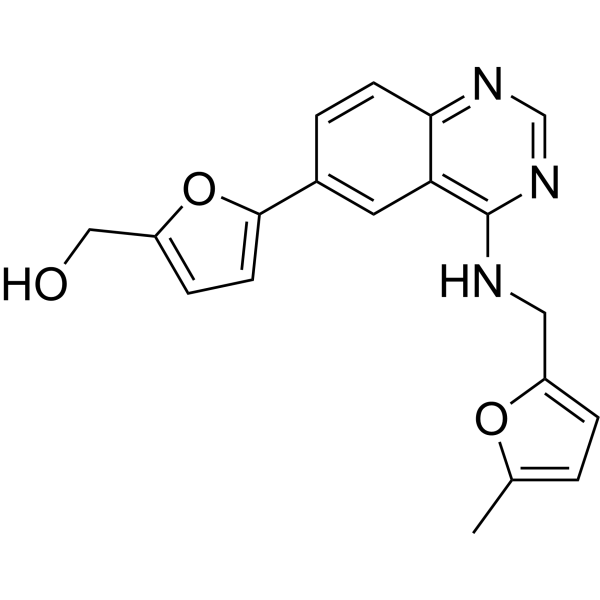
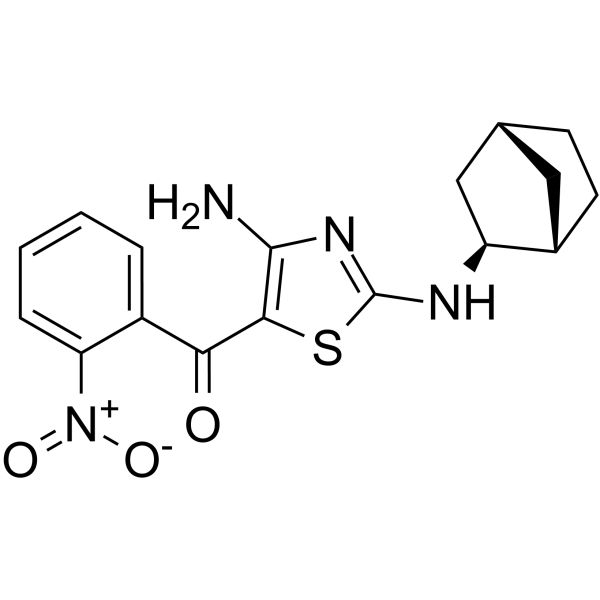
Cyproheptadine hydrochloride
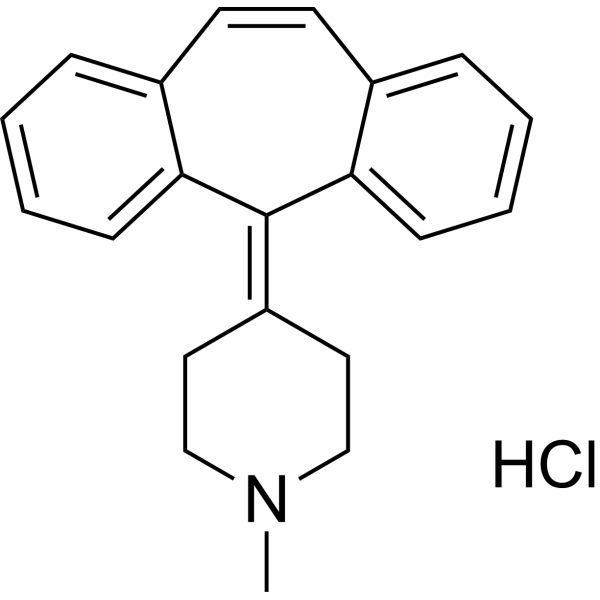 0 ImagesCyproheptadine hydrochloride (Cyproheptadine HCl) acts as a p38 MAP kinase activator, CHK2 activator, histamine H1 receptor inhibitor and serotonin receptor inhibitor. Cyproheptadine hydrochloride mediates cell cycle arrest via G1 phase arrest, G1/S transition arrest, G0/G1 phase arrest, reduced expression of cyclins D1/D2/D3, upregulated expression of HBP1, p16, p21, p27, and decreased phosphorylation of retinoblastoma protein. Cyproheptadine hydrochloride induces Apoptosis by increasing PARP and cleaved PARP, as well as activating the mitochondrial caspase pathway. Cyproheptadine hydrochloride inhibits tumor growth with extremely low toxicity to normal cells. Cyproheptadine hydrochloride can be used in research related to hepatocellular carcinoma, multiple myeloma and acute myeloid leukemia.
-
Ipivivint
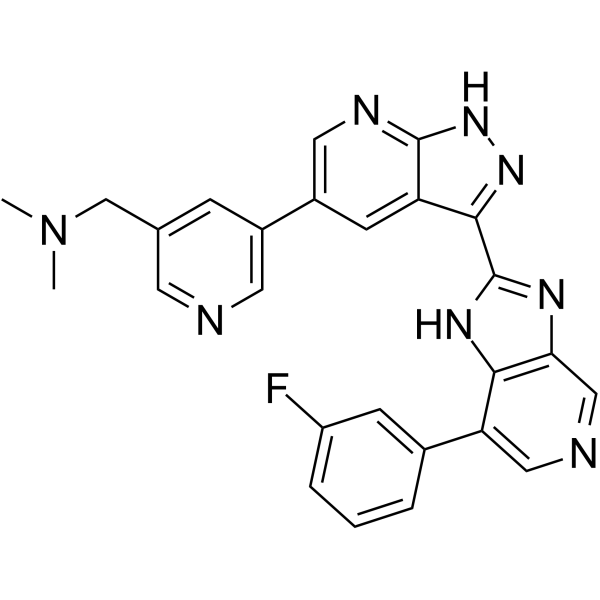 0 ImagesIpivivint (Compound 38) is an orally active and potent CDC-like kinase (CLK) inhibitor with EC50 of 1 nM and 7 nM for CLK2 (human) and CLK3 (human), respectively. Ipivivint also inhibits the Wnt pathway (EC50=13 nM) and tyrosine phosphorylation-regulated kinase 1A (human) (EC50=5 nM).
-
RGB-286638 free base
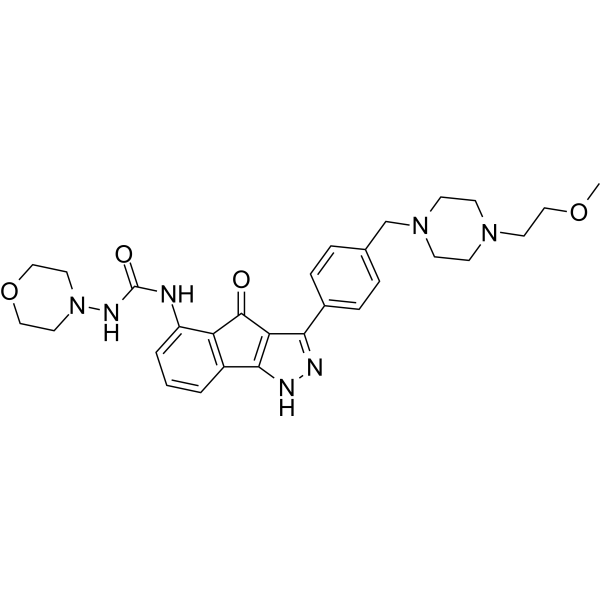 0 ImagesRGB-286638 free base is a potent inhibitor of CDK and MAPK9. RGB-286638 free base inhibits the activities of cyclin T1-CDK9, cyclin B1-CDK1, cyclin E-CDK2, cyclin D1-CDK4, cyclin E-CDK3 and p35-CDK5, with IC50 values of 1, 2, 3, 4, 5 and 5 nM, respectively. RGB-286638 free base inhibits GSK-3β and TAK1, with IC50 values of 3 nM and 5 nM, respectively. RGB-286638 free base induces caspase-dependent Apoptosis in cells. RGB-286638 free base delays tumor growth in an orthotopic glioblastoma mouse model. RGB-286638 free base extends survival in multiple myeloma models. RGB-286638 free base can be used in research related to glioblastoma and multiple myeloma.
-
Vanicoside B
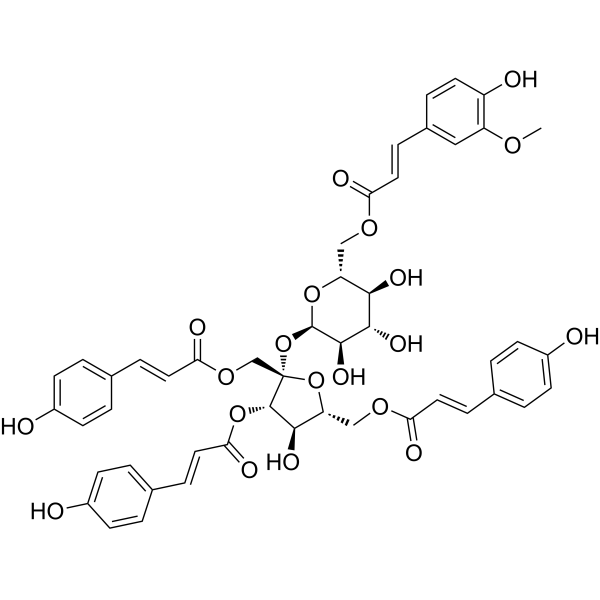 0 ImagesCat. No.: HY-N9561CAS No.: 155179-21-8Vanicoside B is a phenylpropanoyl sucrose derivative, can be isolated from the herb Persicaria dissitiflora. Vanicoside B targets cyclin-dependent kinase 8 (CDK8) and exhibits anti-tumor activity. The potential mechanism is Vanicoside B blocks CDK8-mediated signaling pathways and decreases the expression of epithelial-mesenchymal transition proteins, so that it leads to cell cycle arrest and apoptosis.
-
Cyproheptadine hydrochloride sesquihydrate
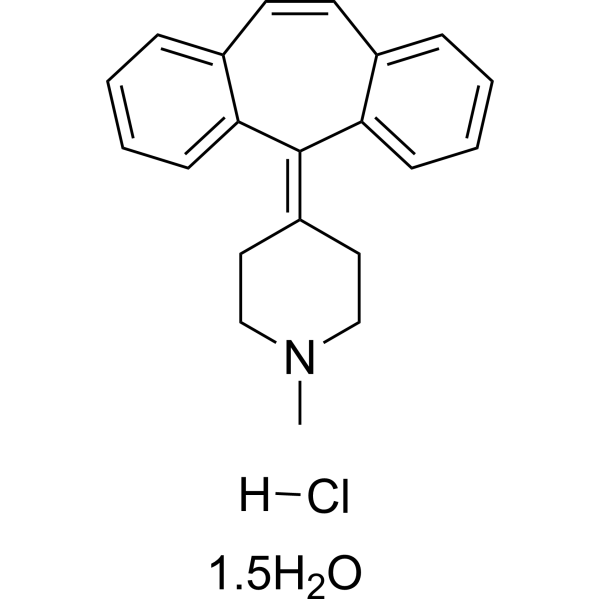 0 ImagesCyproheptadine hydrochloride sesquihydrate acts as a p38 MAP kinase activator, CHK2 activator, histamine H1 receptor inhibitor and serotonin receptor inhibitor. Cyproheptadine hydrochloride sesquihydrate mediates cell cycle arrest via G1 phase arrest, G1/S transition arrest, G0/G1 phase arrest, reduced expression of cyclins D1/D2/D3, upregulated expression of HBP1, p16, p21, p27, and decreased phosphorylation of retinoblastoma protein. Cyproheptadine hydrochloride sesquihydrate induces Apoptosis by increasing PARP and cleaved PARP, as well as activating the mitochondrial caspase pathway. Cyproheptadine hydrochloride sesquihydrate inhibits tumor growth with extremely low toxicity to normal cells. Cyproheptadine hydrochloride sesquihydrate can be used in research related to hepatocellular carcinoma, multiple myeloma and acute myeloid leukemia.
-
NVP-LCQ195
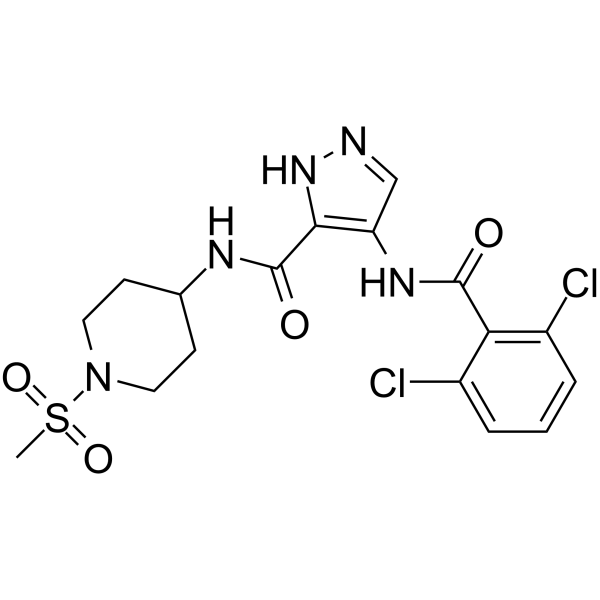 0 ImagesSynonyms: LCQ-195; AT9311NVP-LCQ195 (LCQ-195) is an inhibitor of CDK1/2/3/5/9. NVP-LCQ195 induces cell cycle arrest and eventual apoptotic cell death of multiple myeloma (MM) cells. NVP-LCQ195 triggers decreased amplitude of transcriptional signatures related to oncogenesis, drug resistance and stem cell renewal in MM cell lines.
-
Tambiciclib dimaleate
 0 ImagesSynonyms: GFH009 dimaleate; JSH-009 dimaleate; SLS009 dimaleateTambiciclib (GFH009, JSH-009) dimaleate is an orally active, highly potent and selective CDK9 inhibitor (IC50 = 1 nM), demonstrating >200-fold selectivity over other CDKs, >100-fold selectivity over DYRK1A/B, and excellent selectivity over 468 kinases/mutants. Tambiciclib dimaleate demonstrates potent in vitro and in vivo antileukemic efficacy in acute myeloid leukemia (AML) mouse models by inhibiting RNA Pol II phosphorylation, downregulating MCL1 and MYC, and inducing apoptosis. Tambiciclib dimaleate can be used for AML research.
-
PROTAC CDK2/4/6 Degrader-2
 0 ImagesCat. No.: HY-185121CAS No.: 2541626-49-5PROTAC CDK2/4/6 Degrader-2 is a CDK2/4/6 PROTAC degrader. PROTAC CDK2/4/6 Degrader-2. PROTAC CDK2/4/6 Degrader-2 can be converted into the prodrug PROTAC CDK2/4/6 Degrader-1 (HY-171826) through a one-step reaction with chloromethyl pivalate. PROTAC CDK2/4/6 Degrader-2 degrades CDK2/4/6 and their complex in malignant melanomas cells. PROTAC CDK2/4/6 Degrader-2 induces cell cycle arrest and cell apoptosis in various cancer cells, in particular for melanomas. PROTAC CDK2/4/6 Degrader-2 can be used for malignant melanomas research.
-
CDK6/PIM1-IN-1
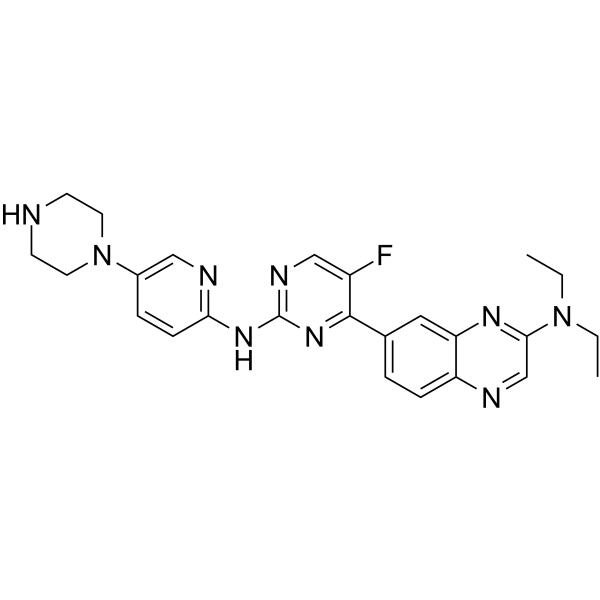 0 ImagesCat. No.: HY-142696CAS No.: 2677026-14-9CDK6/PIM1-IN-1 is a potent and balanced dual CDK6/PIM1 inhibitor with IC50 values of 39 and 88 nM, respectively. CDK6/PIM1-IN-1 inhibits CDK4 (IC50=3.6 nM). CDK6/PIM1-IN-1 significantly inhibits acute myeloid leukemia (AML) cell proliferation, arrest cell cycle at the G1 phase, and promote cell apoptosis. CDK6/PIM1-IN-1 exhibits potent anti-AML activity.
-
Cyproheptadine hydrochloride sesquihydrate (Standard)
 0 ImagesCyproheptadine hydrochloride sesquihydrate (Standard) is the analytical standard of Cyproheptadine hydrochloride sesquihydrate (HY-B1165). This product is intended for research and analytical applications. Cyproheptadine hydrochloride sesquihydrate acts as a p38 MAP kinase activator, CHK2 activator, histamine H1 receptor inhibitor and serotonin receptor inhibitor. Cyproheptadine hydrochloride sesquihydrate mediates cell cycle arrest via G1 phase arrest, G1/S transition arrest, G0/G1 phase arrest, reduced expression of cyclins D1/D2/D3, upregulated expression of HBP1, p16, p21, p27, and decreased phosphorylation of retinoblastoma protein. Cyproheptadine hydrochloride sesquihydrate induces Apoptosis by increasing PARP and cleaved PARP, as well as activating the mitochondrial caspase pathway. Cyproheptadine hydrochloride sesquihydrate inhibits tumor growth with extremely low toxicity to normal cells. Cyproheptadine hydrochloride sesquihydrate can be used in research related to hepatocellular carcinoma, multiple myeloma and acute myeloid leukemia.
- 1
- 2




