



Lorglumide sodium

Based on 1 Customer Validation
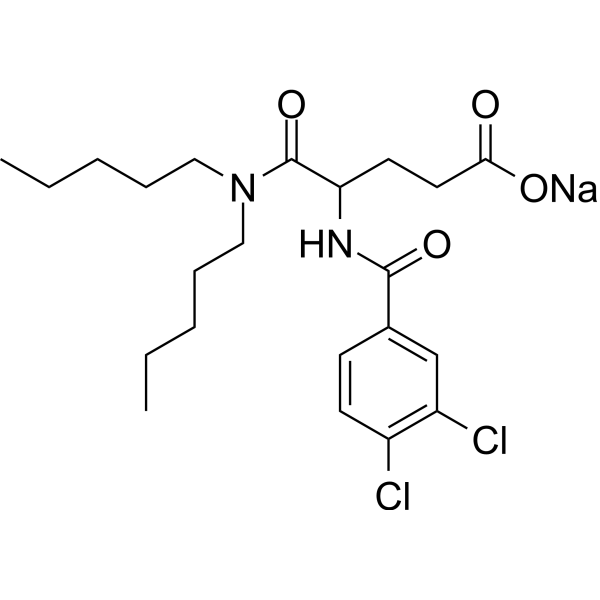
Lorglumide sodium (CR-1409 sodium) is an orally active Cholecystokinin Receptor antagonist. Lorglumide sodium inhibits pancreatic cancer cell proliferation, induces G0/G1 phase arrest and apoptosis, and downregulates MMP-2. Lorglumide sodium inhibits gastrin-stimulated Ornithine decarboxylase activity and DNA synthesis, and shows low CCKA/CCKB selectivity. Lorglumide sodium blocks Caerulein (HY-A0190)-induced exocrine pancreatic secretion and pancreatic tissue hyperplastic changes in rats, and inhibits gallbladder emptying induced by exogenous and endogenous CCK in mice. Lorglumide sodium can be used in research related to pancreatic cancer and pancreatic exocrine function.
For research use only. We do not sell to patients.
- Purity : 99.19%
- CAS No.: 1021868-76-7
- Formula: C22H31Cl2N2NaO4
- Molecular Weight:481.39
-
Storage:
-20°C, sealed storage, away from moisture
* In solvent : -80°C, 6 months; -20°C, 1 month (sealed storage, away from moisture)

To place orders, for customer services and technical support, please contact: MedChemExpress USA
Tel: 609-228-6898 E-mail: [email protected] [email protected]


-
 Biological Activity
-
Chemical Information
-
Solvent & Solubility
- Protocols
- Purity & Documentation
- References
-
 Help & FAQs


-
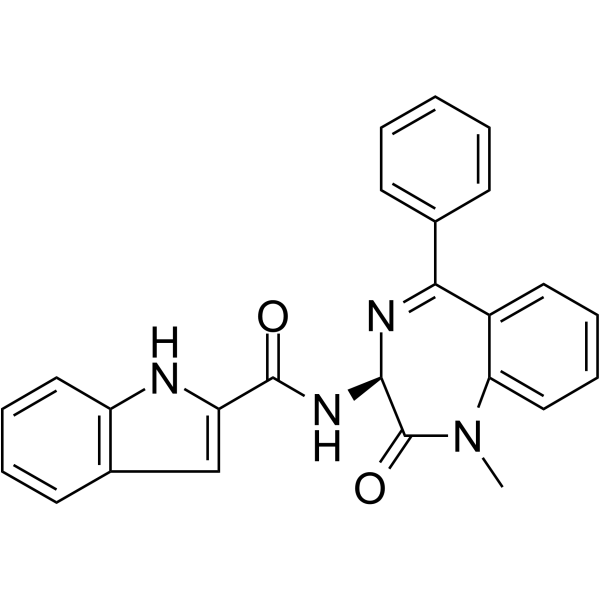
HY-106301
DevazepideCCK Receptor Antagonist -
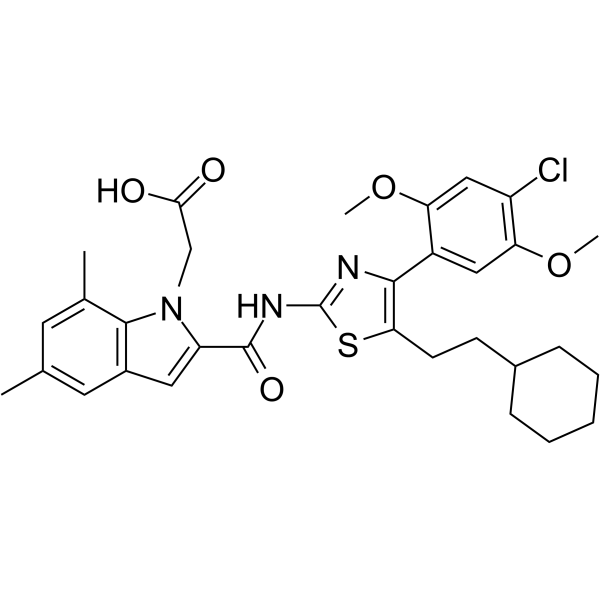
HY-11077
SR 146131Cholecystokinin Receptor Agonist -
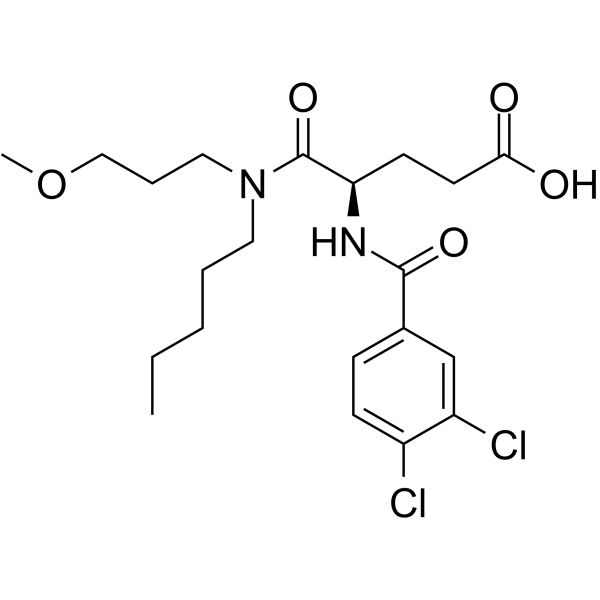
HY-128878
DexloxiglumideCCKR Inhibitor -
HY-103354
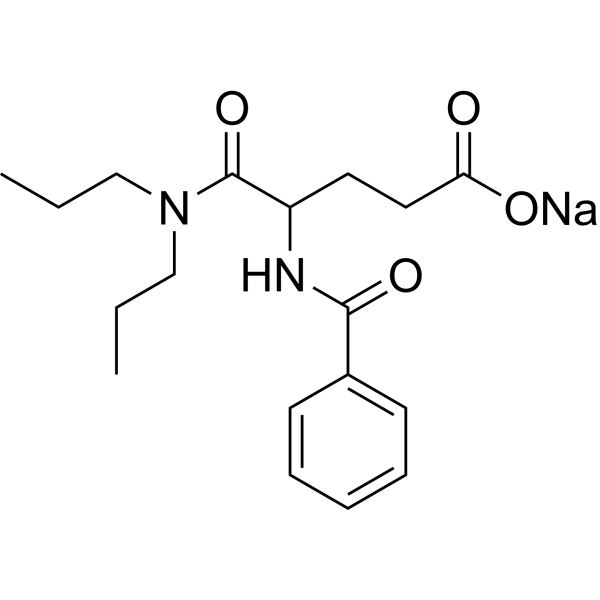
Proglumide sodiumCCK-A/B Receptors Antagonist -
HY-101764
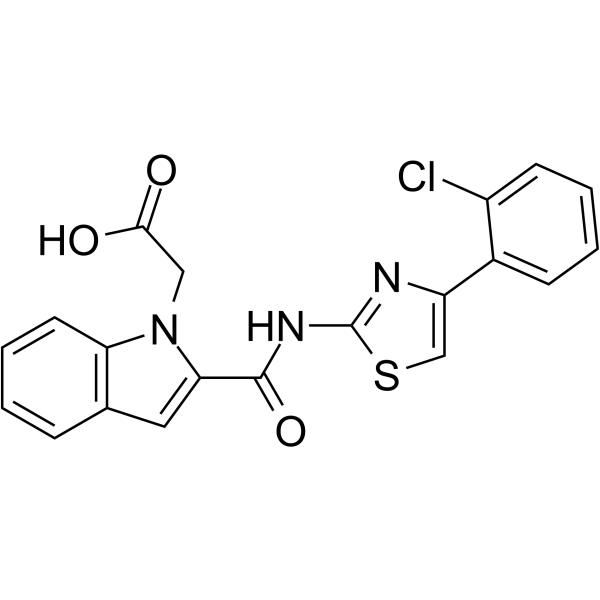
LintitriptCCK1 Receptor Antagonist -

HY-P2671
[Leu15]-Gastrin I (human)Peptide Hormone -

HY-B1439BR
Lorglumide sodium (Standard)Reference Standard -
HY-P1096
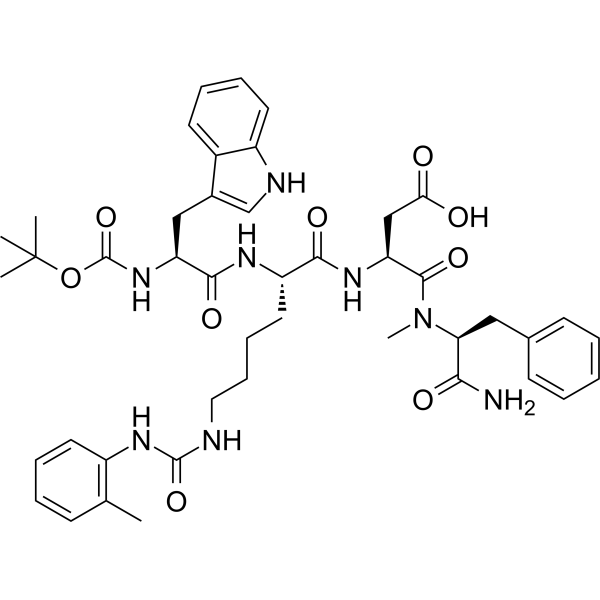
A71623CCKA Agonist -

HY-103354R
Proglumide sodium (Standard)CCK-A/B Receptors Antagonist -
HY-17617
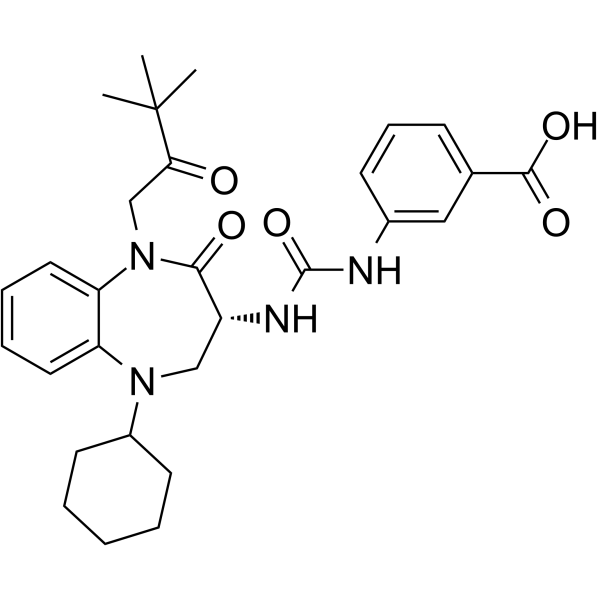
NastorazepideCCK-2 Receptor Antagonist -
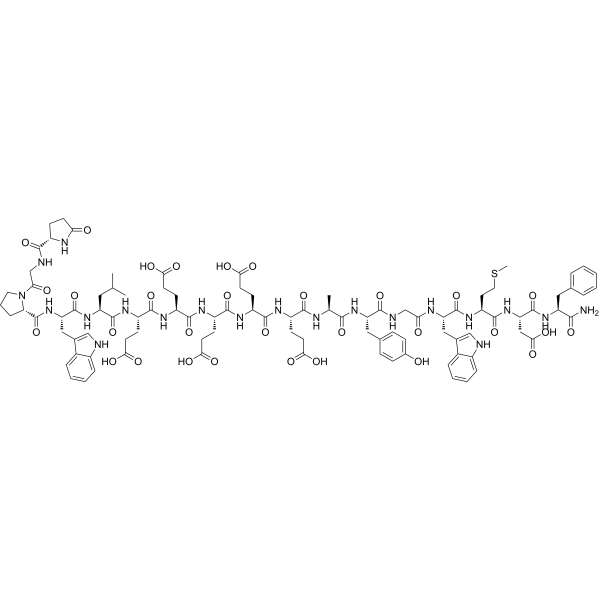
HY-P1097
Gastrin I, humanCCK2 Agonist -
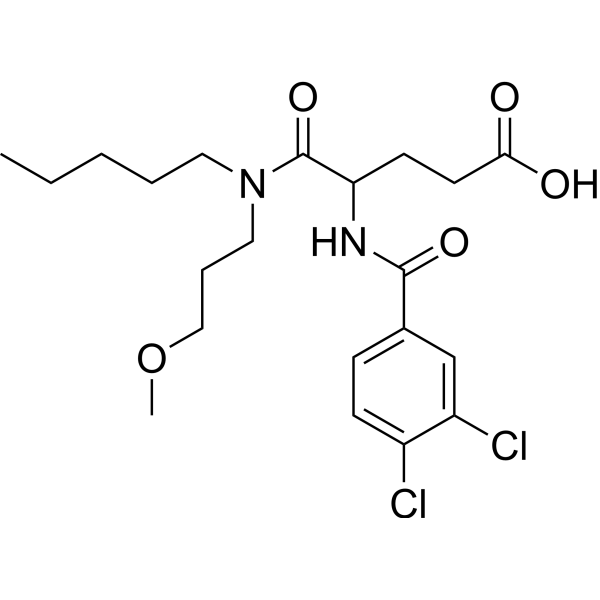
HY-B2154
LoxiglumideCholecystokinin Receptor Antagonist


Biological Activity
Description
|
CCKAR |
CCKBR |
MMP-2 |
Cellular Effect
|
Cell Line

|
Type | Value | Description | References |
|---|---|---|---|---|
| AR-42J cell line | IC50 |
3 μM
|
Displacement of 125I-BH-G2-17ds binding to intact AR42J rat pancreatic acinar tumor cells by cell-based receptor binding assay incubated 30 min at 25°C.
Displacement of 125I-BH-G2-17ds binding to intact AR42J rat pancreatic acinar tumor cells by cell-based receptor binding assay incubated 30 min at 25°C.
|
2393852 |
| AR-42J cell line | IC50 |
15 μM
|
Displacement of 125I-BH-CCK9 binding to intact AR42J rat pancreatic acinar tumor cells by cell-based receptor binding assay incubated 30 min at 25°C.
Displacement of 125I-BH-CCK9 binding to intact AR42J rat pancreatic acinar tumor cells by cell-based receptor binding assay incubated 30 min at 25°C.
|
2393852 |
In Vitro
Lorglumide (10-5-10-4 M; 24 h) sodium reduces Mia PaCa-2 invasion, reported as 77.6 invading cells under the 10-4 M condition marked in Table V[2].
Lorglumide (10-5 M; 24 h) sodium attenuates MMP-2 expression in Mia PaCa-2 cells[2].
Lorglumide (CR1409) sodium displaces gastrin binding on AR42J cells with an IC50 of 3 µM; it competitively antagonizes gastrin-stimulated ODC activity in AR42J cells with a pA2 of 6.5[4].
MedChemExpress (MCE) has not independently confirmed the accuracy of these methods. They are for reference only.
In Vivo
Lorglumide (10 mg/kg; intraperitoneal injection; three times daily; for 5 consecutive days) sodium attenuates Caerulein-induced pancreatic growth and increased enzyme content in vivo, without affecting Bombesin-induced pancreatic growth in vivo[1].
Lorglumide (CR1409) (oral or intraperitoneal) sodium dose-dependently inhibits egg yolk-induced gallbladder emptying in mice, with ED50 values of 1.1 mg/kg for intraperitoneal administration and 5.0 mg/kg for oral administration; it effectively antagonizes CCK-8-induced gallbladder contraction in mice, with ED50 values of 1.9 mg/kg for intraperitoneal administration and 2.0 mg/kg for oral administration[3].
MedChemExpress (MCE) has not independently confirmed the accuracy of these methods. They are for reference only.
- Mitochondrial membrane-potential fluorescent assay
- Annexin V plus membrane-impermeant dye apoptosis staining
- BrdU Incorporation Assay
- Somatic Cell Culture
- CFSE Dye Dilution Proliferation Assay
- Dye-dilution cell tracking and proliferation staining
- CCK-8/WST-8 Cell Proliferation Assay
- Protocol for Cell Cycle
- Cell Counting-Based Growth Curve Assay
- Colony Formation (Clonogenic) Assay
- Cell Viability Determination by MTT Colorimetric Assay
- EdU Incorporation Assay (Click Chemistry-Based DNA Synthesis Measurement)
- Ki-67 Immunostaining Proliferation Assay
- Detection of Apoptosis
- TUNEL staining for apoptotic DNA fragmentation
- PCNA Immunodetection Proliferation Assay
- Flow cytometric DNA-content cell-cycle staining
- Protocol for Cell Counting and Cell Density Analysis
- Mitochondrial membrane-potential and mitochondrial mass staining
- Apoptosis Solutions
- MTT Cell Proliferation Assay


Chemical Information
-
CAS No. 1021868-76-7
-
Appearance Solid
-
Molecular Weight 481.39
-
Formula C22H31Cl2N2NaO4
-
Color White to off-white
-
SMILES
ClC1=C(C=CC(C(NC(CCC(O[Na])=O)C(N(CCCCC)CCCCC)=O)=O)=C1)Cl
-
Synonyms
CR-1409 sodium
-
Shipping
Room temperature in continental US; may vary elsewhere.
-
Storage
-20°C, sealed storage, away from moisture
* In solvent : -80°C, 6 months; -20°C, 1 month (sealed storage, away from moisture)


Solvent & Solubility
In Vitro:
H2O : ≥ 100 mg/mL (207.73 mM)
DMSO : 100 mg/mL (207.73 mM; Need ultrasonic; Hygroscopic DMSO has a significant impact on the solubility of product, please use newly opened DMSO)
* "≥" means soluble, but saturation unknown.
Please refer to the solubility information to select the appropriate solvent. Once prepared, please aliquot and store the solution to prevent product inactivation from repeated freeze-thaw cycles.
Storage method and period of stock solution: -80°C, 6 months; -20°C, 1 month (sealed storage, away from moisture). When stored at -80°C, please use it within 6 months. When stored at -20°C, please use it within 1 month.
* Note: If you choose water as the stock solution, please dilute it to the working solution, then filter and sterilize it with a 0.22 μm filter before use.
Concentration (start) × Volume (start) = Concentration (final) × Volume (final)
In Vivo:
Select the appropriate dissolution method based on your experimental animal and administration route.
- For the following dissolution methods, please ensure to first prepare a clear stock solution using an In Vitro approach and then sequentially add co-solvents:
- To ensure reliable experimental results, the clarified stock solution can be appropriately stored based on storage conditions. As for the working solution for In Vivo experiments, it is recommended to prepare freshly and use it on the same day.
- The percentages shown for the solvents indicate their volumetric ratio in the final prepared solution. If precipitation or phase separation occurs during preparation, heat and/or sonication can be used to aid dissolution.
Add each solvent one by one: 10% DMSO 90% (20% SBE-β-CD in Saline)
Solubility: 2.08 mg/mL (4.32 mM); Suspended solution; Need ultrasonic
This protocol yields a suspended solution of 2.08 mg/mL. Suspended solution can be used for oral and intraperitoneal injection.
Taking 1 mL working solution as an example, add 100 μL DMSO stock solution (20.8 mg/mL) to 900 μL 20% SBE-β-CD in Saline, and mix evenly.
Preparation of 20% SBE-β-CD in Saline (4°C, storage for one week): 2 g SBE-β-CD powder is dissolved in 10 mL Saline, completely dissolve until clear.
For the following dissolution methods, please prepare the working solution directly:
It is recommended to prepare fresh solutions and use them promptly within a short period of time.
The percentages shown for the solvents indicate their volumetric ratio in the final prepared solution. If precipitation or phase separation occurs during preparation, heat and/or sonication can be used to aid dissolution.
Add each solvent one by one: PBS
Solubility: 50 mg/mL (103.87 mM); Clear solution; Need ultrasonic
In Vivo Dissolution Calculator
Please enter the basic information of animal experiments:
-
-
-
-
Recommended: Prepare an additional quantity of animals to account for potential losses during experiments.
Working solution concentration: 0.22 mg/mL
This product has good water solubility, please refer to the measured solubility data in water/PBS/Saline for details.


Purity & Documentation
-
Data Sheet (287 KB)
-
SDS (252 KB)
- English - EN (252 KB)
- Français - FR (252 KB)
- Deutsch - DE (252 KB)
- Norwegian - NO (252 KB)
- Español - ES (252 KB)
- Swedish - SV (252 KB)
- Italian - IT (252 KB)
- Korean - KR (252 KB)
- Portuguese - PT (252 KB)
-
Handling Instructions (2659 KB)
References


Complete Stock Solution Preparation Table
Please refer to the solubility information to select the appropriate solvent. Once prepared, please aliquot and store the solution to prevent product inactivation from repeated freeze-thaw cycles.
Storage method and period of stock solution: -80°C, 6 months; -20°C, 1 month (sealed storage, away from moisture). When stored at -80°C, please use it within 6 months. When stored at -20°C, please use it within 1 month.
| Optional Solvent | Concentration Solvent Mass | 1 mg | 5 mg | 10 mg | 25 mg |
|---|---|---|---|---|---|
| H2O / DMSO | 1 mM | 2.0773 mL | 10.3866 mL | 20.7732 mL | 51.9329 mL |
| 5 mM | 0.4155 mL | 2.0773 mL | 4.1546 mL | 10.3866 mL | |
| 10 mM | 0.2077 mL | 1.0387 mL | 2.0773 mL | 5.1933 mL | |
| 15 mM | 0.1385 mL | 0.6924 mL | 1.3849 mL | 3.4622 mL | |
| 20 mM | 0.1039 mL | 0.5193 mL | 1.0387 mL | 2.5966 mL | |
| 25 mM | 0.0831 mL | 0.4155 mL | 0.8309 mL | 2.0773 mL | |
| 30 mM | 0.0692 mL | 0.3462 mL | 0.6924 mL | 1.7311 mL | |
| 40 mM | 0.0519 mL | 0.2597 mL | 0.5193 mL | 1.2983 mL | |
| 50 mM | 0.0415 mL | 0.2077 mL | 0.4155 mL | 1.0387 mL | |
| 60 mM | 0.0346 mL | 0.1731 mL | 0.3462 mL | 0.8655 mL | |
| 80 mM | 0.0260 mL | 0.1298 mL | 0.2597 mL | 0.6492 mL | |
| 100 mM | 0.0208 mL | 0.1039 mL | 0.2077 mL | 0.5193 mL |
* Note: If you choose water as the stock solution, please dilute it to the working solution, then filter and sterilize it with a 0.22 μm filter before use.


Lorglumide sodium Related Classifications
HY-B1439B Related Classifications
 Powered by Bioz
Keywords
- Lorglumide
- 1021868-76-7
- CR-1409
- CR1409
- CR 1409
- Cholecystokinin Receptor
- MMP
- Ornithine decarboxylase (ODC)
- Apoptosis
- CCK Receptor
- Matrix metalloproteinases
- Ornithine Decarboxylase
- CCK receptor
- CCK-1 receptor
- CCK-B/gastrin receptor
- MMP-2
- amylase release
- apoptosis
- cholecystokinin
- exocrine pancreatic tumors
- gallbladder contraction
- pancreatic cancer
- Inhibitor
- inhibitor
- inhibit