



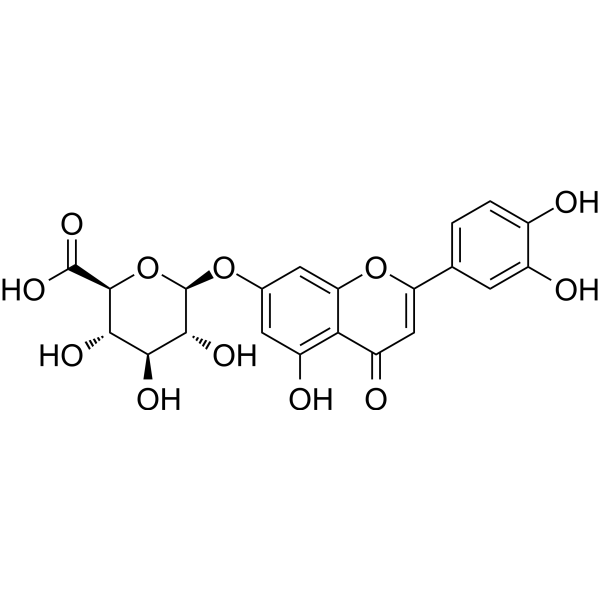
Luteolin 7-O-glucuronide
Based on 5 publication(s) in Google Scholar
Luteolin 7-O-glucuronide could inhibit Matrix Metalloproteinases (MMP) activities, with IC50s of 17.63, 7.99, 11.42, 12.85, 0.03 μM for MMP-1, MMP-3, MMP-8, MMP-9, MMP-13, respectively.
For research use only. We do not sell to patients.
- Purity : 99.98%
- CAS No.: 29741-10-4
- Formula: C21H18O12
- Molecular Weight:462.36
-
Storage:
4°C, protect from light
* In solvent : -80°C, 6 months; -20°C, 1 month (protect from light)

To place orders, for customer services and technical support, please contact: MedChemExpress USA
Tel: 609-228-6898 E-mail: [email protected] [email protected]


-
 Biological Activity
-
Chemical Information
-
Solvent & Solubility
- Protocols
- Purity & Documentation
- References
-
 Help & FAQs


-
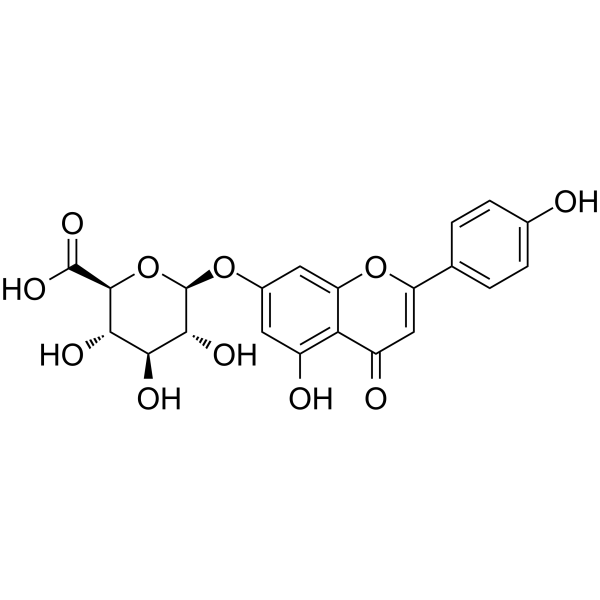
HY-N1454
Apigenin-7-glucuronideMMP Inhibitor -
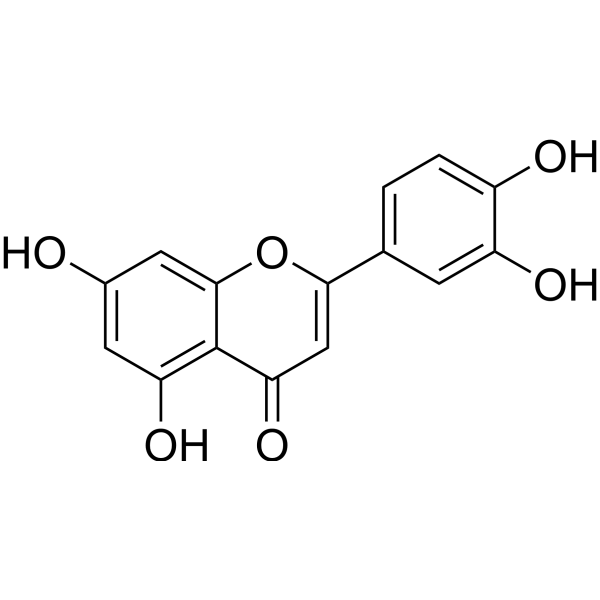
HY-N0162
LuteolinNrf2 Inhibitor -
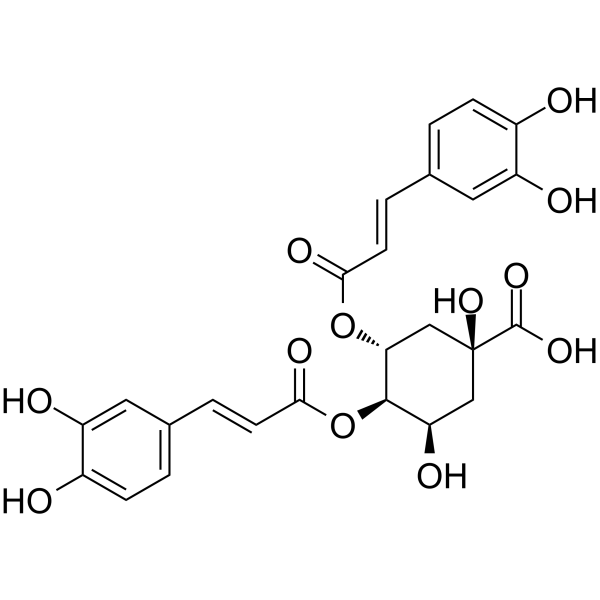
HY-N0057
3,4-Dicaffeoylquinic acidAntioxidant -
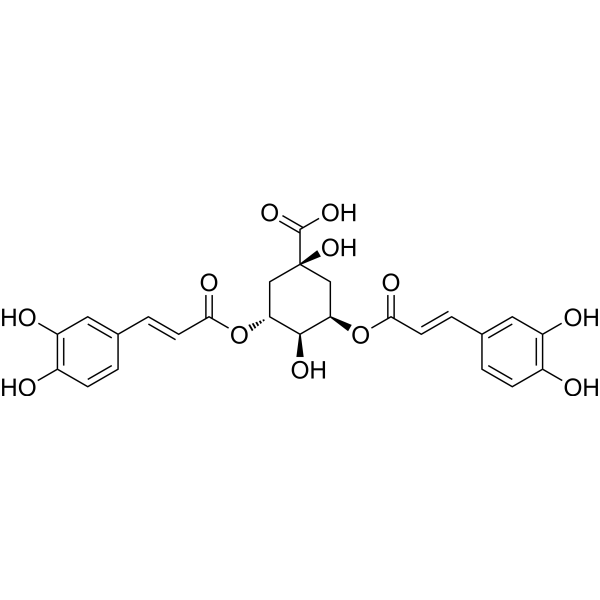
HY-N0056
Isochlorogenic acid AAntioxidant -
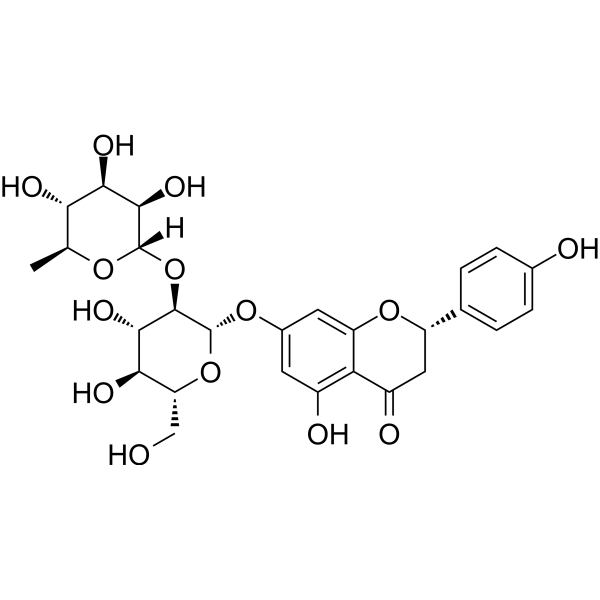
HY-N0153
NaringinCytochrome P450 Inhibitor -
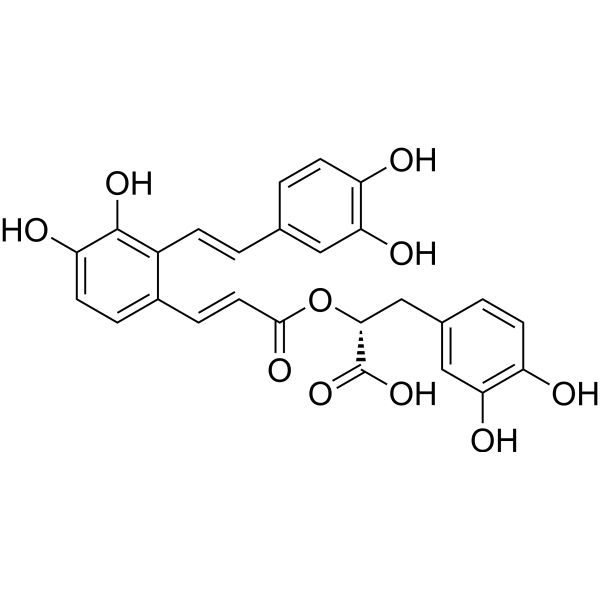
HY-N0318
Salvianolic acid AMMP-9 Inhibitor -
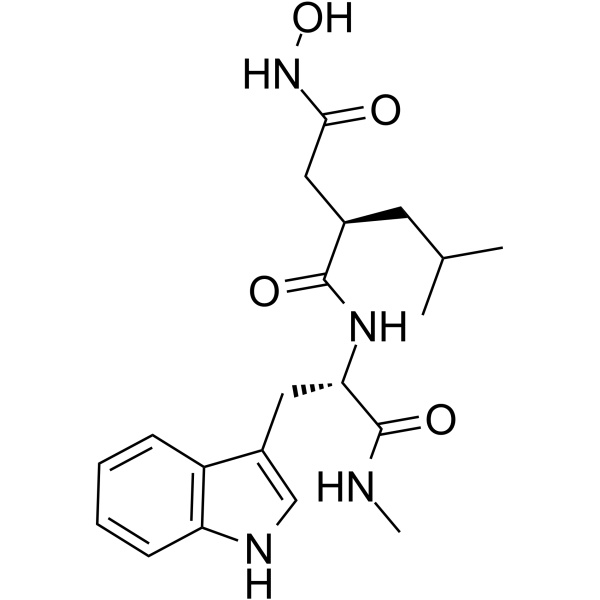
HY-15768
IlomastatMMP Inhibitor -
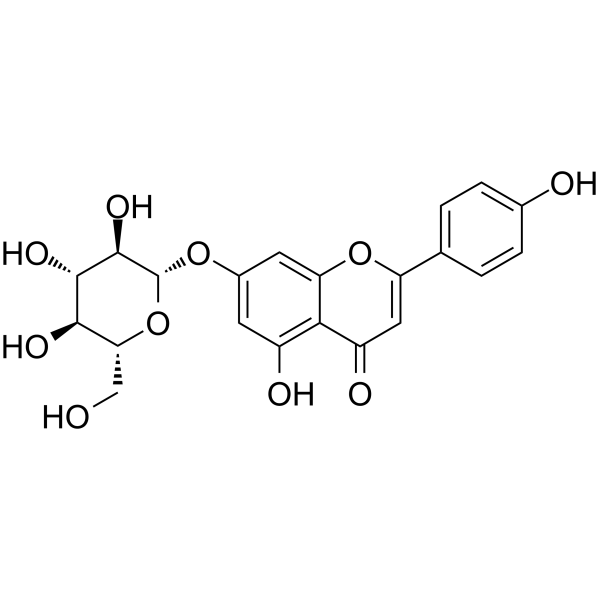
HY-N0578
Apigenin 7-glucosideROS Scavenger -
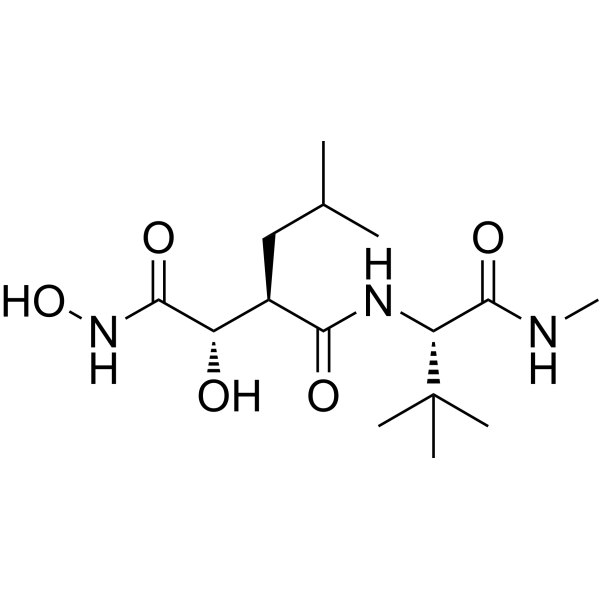
HY-12169
MarimastatMMP Inhibitor -

HY-N1463R
Luteolin 7-O-glucuronide (Standard)MMP Inhibitor -
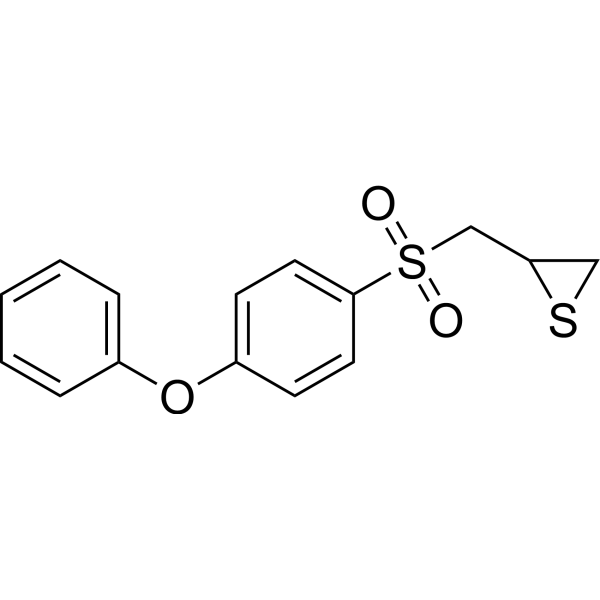
HY-12354
SB-3CTMMP2/9 Inhibitor -
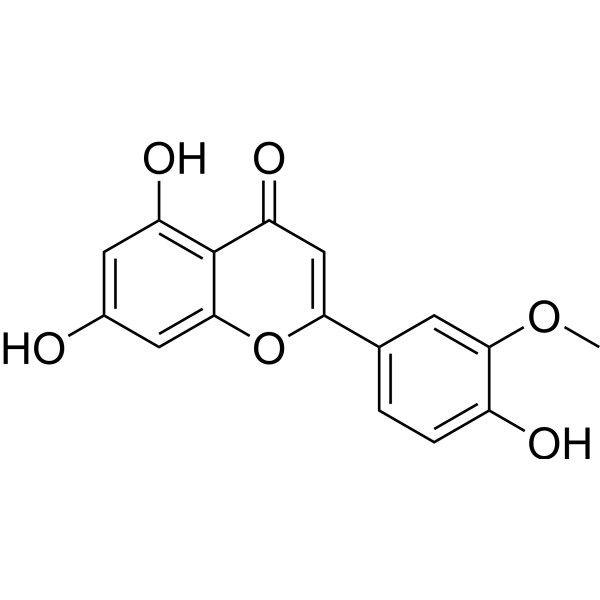
HY-121471
ChrysoeriolAntioxidant Agent
Publications Citing Use of MedChemExpress (MCE) Luteolin 7-O-glucuronide
More Customer Validation & Images

-
Cell Proliferation/Viability Assay


Biological Activity
Description
IC50 & Target
|
MMP-1 17.63 μM (IC50) |
MMP-3 7.99 μM (IC50) |
MMP-8 11.42 μM (IC50) |
MMP-9 12.85 μM (IC50) |
MMP13 0.03 μM (IC50) |
Cellular Effect
|
Cell Line

|
Type | Value | Description | References |
|---|---|---|---|---|
| RAW264.7 | CC50 |
>100 μM
Compound: 21
|
Cytotoxicity against mouse RAW264.7 cells assessed as reduction in cell viability measured after 24 hrs by MTT assay
Cytotoxicity against mouse RAW264.7 cells assessed as reduction in cell viability measured after 24 hrs by MTT assay
|
[PMID: 33667099] |
| RAW264.7 | IC50 |
>100 μM
Compound: 21
|
Inhibition of LPS induced NO production in mouse RAW264.7 cells measured after 24 hrs by Griess reagent based assay
Inhibition of LPS induced NO production in mouse RAW264.7 cells measured after 24 hrs by Griess reagent based assay
|
[PMID: 33667099] |
In Vitro
Luteolin 7-O-glucuronide (0-50 μM, 2 h) inhibits NO production and mRNA expression of inflammatory mediators (COX-2, IL-6, IL-1β, and TNF-α) in LPS-stimulated RAW 264.7 macrophages[2].
Luteolin 7-O-glucuronide (0-50 μM, 2 h) inhibits NF-κB, p38, and JNK activation in LPS-stimulated RAW 264.7 macrophages[2].
MedChemExpress (MCE) has not independently confirmed the accuracy of these methods. They are for reference only.
-
Cell Line:LPS-stimulated RAW 264.7 macrophages
-
Concentration:0-50 μM
-
Incubation Time:2 h
-
Result:Inhibited phosphorylation and degradation of IκB.
Inhibited phosphorylation of p38 and JNK.
In Vivo
MedChemExpress (MCE) has not independently confirmed the accuracy of these methods. They are for reference only.
-
Animal Model:mouse sleep deprivation model[3]
-
Dosage:0.3-3 mg/kg
-
Administration:p.o., once daily for 5 days
-
Result:Reduced the increased immobility time in sleep-deprived mice.
Reduced the increased plasma corticosterone level.
Reduced TNF-α and IL-1β level and increased BDNF mRNA expression in the hippocampus of sleep-deprived mice.


Chemical Information
-
CAS No. 29741-10-4
-
Appearance Solid
-
Molecular Weight 462.36
-
Formula C21H18O12
-
Color White to light yellow
-
SMILES
O[C@H]([C@H]([C@@H]([C@@H](C(O)=O)O1)O)O)[C@@H]1OC2=CC(O)=C3C(C=C(C4=CC=C(O)C(O)=C4)OC3=C2)=O
-
Synonyms
Luteolin 7-glucuronide
-
Structure Classification
-
Initial Source
-
Shipping
Room temperature in continental US; may vary elsewhere.
-
Storage
4°C, protect from light
* In solvent : -80°C, 6 months; -20°C, 1 month (protect from light)


Publications (5)
-
Journal Impact Factor
-
Most Recent
-
Nat Aging
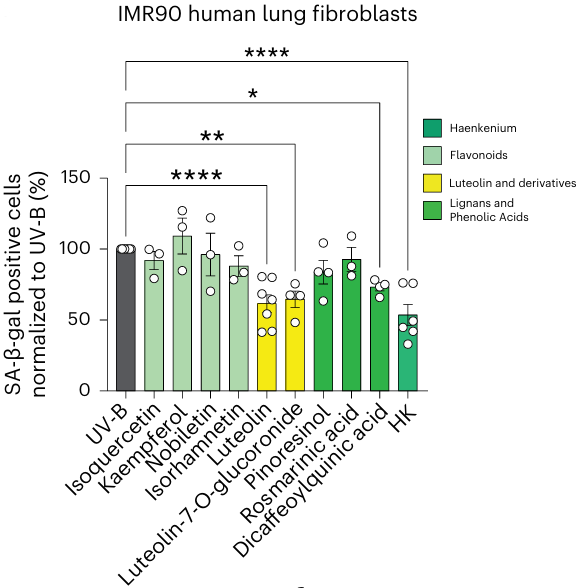
Targeting senescence induced by age or chemotherapy with a polyphenol-rich natural extract improves longevity and healthspan in mice. [Abstract]2024 Sep;4(9):1231-1248. PMID: 38951692
Luteolin 7-O-glucuronide purchased from MedChemExpress. Usage Cited in: Nat Aging. 2024 Sep;4(9):1231-1248. [Abstract]
Quantification of SA-β-Gal assay of UV-B-irradiated IMR90 fibroblasts, treated with the indicated compounds (3,4-Dicaffeoylquinic acid (Dicaffeoylquinic acid), etc.) at 1 μM concentration or 10 μg/mL for HK.
-
Nat Prod Bioprospect
Exploring anti-SARS-CoV-2 natural products: dual-viral target inhibition by delphinidin and the anti-coronaviral efficacy of deapio platycodin D. [Abstract]2025 Jun 13;15(1):39. PMID: 40512442 -
-
Adv Redox Res
Food phytochemicals, epigallocatechin gallate and myricetin, covalently bind to the active site of the coronavirus main protease in vitro. [Abstract]2021 Dec:3:100021. PMID: 35425933 -


Solvent & Solubility
In Vitro:
DMSO : 125 mg/mL (270.35 mM; Need ultrasonic; Hygroscopic DMSO has a significant impact on the solubility of product, please use newly opened DMSO)
Please refer to the solubility information to select the appropriate solvent. Once prepared, please aliquot and store the solution to prevent product inactivation from repeated freeze-thaw cycles.
Storage method and period of stock solution: -80°C, 6 months; -20°C, 1 month (protect from light). When stored at -80°C, please use it within 6 months. When stored at -20°C, please use it within 1 month.
Please refer to the solubility information to select the appropriate solvent. Once prepared, please aliquot and store the solution to prevent product inactivation from repeated freeze-thaw cycles.
Storage method and period of stock solution: -80°C, 6 months; -20°C, 1 month (protect from light). When stored at -80°C, please use it within 6 months. When stored at -20°C, please use it within 1 month.
Concentration (start) × Volume (start) = Concentration (final) × Volume (final)
In Vivo:
Select the appropriate dissolution method based on your experimental animal and administration route.
- For the following dissolution methods, please ensure to first prepare a clear stock solution using an In Vitro approach and then sequentially add co-solvents:
- To ensure reliable experimental results, the clarified stock solution can be appropriately stored based on storage conditions. As for the working solution for In Vivo experiments, it is recommended to prepare freshly and use it on the same day.
- The percentages shown for the solvents indicate their volumetric ratio in the final prepared solution. If precipitation or phase separation occurs during preparation, heat and/or sonication can be used to aid dissolution.
Add each solvent one by one: 10% DMSO 40% PEG300 5% Tween-80 45% Saline
Solubility: ≥ 2.08 mg/mL (4.50 mM); Clear solution
This protocol yields a clear solution of ≥ 2.08 mg/mL (saturation unknown).
Taking 1 mL working solution as an example, add 100 μL DMSO stock solution (20.8 mg/mL) to 400 μL PEG300, and mix evenly; then add 50 μL Tween-80 and mix evenly; then add 450 μL Saline to adjust the volume to 1 mL.
Preparation of Saline: Dissolve 0.9 g sodium chloride in ddH₂O and dilute to 100 mL to obtain a clear Saline solution.
Add each solvent one by one: 10% DMSO 90% (20% SBE-β-CD in Saline)
Solubility: ≥ 2.08 mg/mL (4.50 mM); Clear solution
This protocol yields a clear solution of ≥ 2.08 mg/mL (saturation unknown).
Taking 1 mL working solution as an example, add 100 μL DMSO stock solution (20.8 mg/mL) to 900 μL 20% SBE-β-CD in Saline, and mix evenly.
Preparation of 20% SBE-β-CD in Saline (4°C, storage for one week): 2 g SBE-β-CD powder is dissolved in 10 mL Saline, completely dissolve until clear.
For the following dissolution methods, please prepare the working solution directly:
It is recommended to prepare fresh solutions and use them promptly within a short period of time.
The percentages shown for the solvents indicate their volumetric ratio in the final prepared solution. If precipitation or phase separation occurs during preparation, heat and/or sonication can be used to aid dissolution.
In Vivo Dissolution Calculator
Please enter the basic information of animal experiments:
-
-
-
-
Recommended: Prepare an additional quantity of animals to account for potential losses during experiments.
Please enter your animal formula composition:
-
%DMSO +
Recommended: Keep the proportion of DMSO in working solution below 2% if your animal is weak.
-
%+
-
+%Tween-80 + +
-
%Saline +
The co-solvents required include: DMSO, . All of co-solvents are available by MedChemExpress (MCE). , Tween 80. All of co-solvents are available by MedChemExpress (MCE).
Working solution concentration: 0.22 mg/mL
Method for preparing stock solution: mg drug dissolved in μL DMSO. Stock solution concentration: mg/mL. * In solvent : -80°C, 6 months; -20°C, 1 month (protect from light)
1. Take μL DMSO stock solution;
2. Add μL .
μL , mix evenly;
3. Then add μL Tween 80, mix evenly;
4. Then add μL
Please ensure that the stock solution in the first step is dissolved to a clear state, and add co-solvents in sequence. You can use ultrasonic heating (ultrasonic cleaner, recommended frequency 20-40 kHz), vortexing, etc. to assist dissolution.


Purity & Documentation
-
Data Sheet (279 KB)
-
SDS (393 KB)
- English - EN (393 KB)
- Français - FR (393 KB)
- Deutsch - DE (393 KB)
- Norwegian - NO (393 KB)
- Español - ES (393 KB)
- Swedish - SV (393 KB)
- Italian - IT (393 KB)
- Korean - KR (393 KB)
- Portuguese - PT (393 KB)
-
Handling Instructions (2659 KB)
References
[1]. Crascì L, et al. Correlating In Vitro Target-Oriented Screening and Docking: Inhibition of Matrix Metalloproteinases Activities by Flavonoids. Planta Med. 2017 Jul;83(11):901-911. [Content Brief]
[2]. Cho YC, et al. Anti-Inflammatory and Anti-Oxidative Effects of luteolin-7-O-glucuronide in LPS-Stimulated Murine Macrophages through TAK1 Inhibition and Nrf2 Activation. Int J Mol Sci. 2020 Mar 16;21(6):2007. [Content Brief]
[3]. Ryu D, et al. Luteolin-7-O-Glucuronide Improves Depression-like and Stress Coping Behaviors in Sleep Deprivation Stress Model by Activation of the BDNF Signaling. Nutrients. 2022 Aug 12;14(16):3314. [Content Brief]


Complete Stock Solution Preparation Table
Please refer to the solubility information to select the appropriate solvent. Once prepared, please aliquot and store the solution to prevent product inactivation from repeated freeze-thaw cycles.
Storage method and period of stock solution: -80°C, 6 months; -20°C, 1 month (protect from light). When stored at -80°C, please use it within 6 months. When stored at -20°C, please use it within 1 month.
| Optional Solvent | Concentration Solvent Mass | 1 mg | 5 mg | 10 mg | 25 mg |
|---|---|---|---|---|---|
| DMSO | 1 mM | 2.1628 mL | 10.8141 mL | 21.6282 mL | 54.0704 mL |
| 5 mM | 0.4326 mL | 2.1628 mL | 4.3256 mL | 10.8141 mL | |
| 10 mM | 0.2163 mL | 1.0814 mL | 2.1628 mL | 5.4070 mL | |
| 15 mM | 0.1442 mL | 0.7209 mL | 1.4419 mL | 3.6047 mL | |
| 20 mM | 0.1081 mL | 0.5407 mL | 1.0814 mL | 2.7035 mL | |
| 25 mM | 0.0865 mL | 0.4326 mL | 0.8651 mL | 2.1628 mL | |
| 30 mM | 0.0721 mL | 0.3605 mL | 0.7209 mL | 1.8023 mL | |
| 40 mM | 0.0541 mL | 0.2704 mL | 0.5407 mL | 1.3518 mL | |
| 50 mM | 0.0433 mL | 0.2163 mL | 0.4326 mL | 1.0814 mL | |
| 60 mM | 0.0360 mL | 0.1802 mL | 0.3605 mL | 0.9012 mL | |
| 80 mM | 0.0270 mL | 0.1352 mL | 0.2704 mL | 0.6759 mL | |
| 100 mM | 0.0216 mL | 0.1081 mL | 0.2163 mL | 0.5407 mL |


Luteolin 7-O-glucuronide Related Classifications
HY-N1463 Related Classifications
 Powered by Bioz