



Cancer Immunotherapy
Cancer immunotherapy (CIT) is a type of biological therapy, aiming to improve anti-tumor immune responses with fewer off-target effects than chemotherapy. Several types of immunotherapy include: oncolytic virus therapies, cancer vaccines, cytokine therapies, adoptive cell transfer (ACT), and immune checkpoint inhibitors (ICIs). In particular, ICIs and ACT have obtained immense clinical response, but their efficacy varies from person to person. Immune cells can be harnessed to eliminate tumor cells, such as T cells, B cells, NK cells, and myeloid cells. T cells have potent tumor-killing capability, therefore, a plethora of cancer immunotherapy research have focused on inducing T-cell-mediated anti-tumor responses. CTLA-4 and PD-1 are found on the cell surface of T cells as co-inhibitory receptors. The breakthrough in cancer immunotherapy results from the identification and subsequent targeting of checkpoint mechanisms in T cells with monoclonal antibodies against CTLA-4 and programmed death-ligand 1/programmed death-1 (PD-L1/PD-1).
Several types of cancers (e.g., melanoma, mismatch repair-deficient cancers, bladder cancer, and non-small cell lung cancer) have achieved significant clinical responses in T-cell checkpoint blockade therapies. However, single-mode immunotherapy faces challenges such as low immune response, low tumor infiltration, and complex immunosuppressive tumor microenvironment. Recently, combined therapies based on tumor immunity have received extensive attention in the research of enhancing tumor cells immunogenicity and inhibiting their growth. For example, anti CTLA-4 and PD-1, immune checkpoint blockade (ICB) combined with chemotherapy, anti-angiogenic drugs and kinase inhibitors.
-
S3 peptide TFA
 0 ImagesCat. No.: HY-P12114Purity: 98.19%
S3 peptide is a multifunctional synthetic peptide that acts as a LIMK1 inhibitor with an IC50 of 40 μg/mL. S3 peptide blocks cofilin phosphorylation and SDF-1α (HY-P4911)-induced T cell chemotaxis, and reduces viral particle production of HIV-1 and M-PMV. S3 peptide forms dimers via intermolecular disulfide bonds to bind and disrupt LPS micelles, exerting anti-Gram-negative bacterial activity. S3 peptide serves as a targeting moiety for NKA α1 and is used for the construction of PET tracers. S3 peptide is applicable to research related to HIV-1 infection, M-PMV infection, breast cancer, liver cancer and non-small cell lung cancer.
-
IB001
 0 ImagesCat. No.: HY-P992379Synonyms: BAG3-H2L4
IB001 is a humanized anti-BAG3 antibody that inhibits BAG3, with a KD value of 14.4 nM for human BAG3. IB001 blocks BAG3-dependent monocyte/macrophage activation, interferes with the interaction between BAG3 and IFITM-2, and disrupts tumor microenvironment signaling pathways. IB001 inhibits tumor growth, reduces α-SMA-positive fibroblasts, and blocks BAG3-dependent IL-6 release. IB001 accumulates in a time-dependent manner in pancreatic ductal adenocarcinoma tumors. IB001 can be used for research related to pancreatic ductal adenocarcinoma.
-
Echinatin (Standard)
 0 ImagesCat. No.: HY-N0269RCAS No.: 34221-41-5
Echinatin (Standard) is the analytical standard of Echinatin. This product is intended for research and analytical applications. Echinatin is a chalcone isolated from the Chinese herbal medicine Gancao with hepatoprotective and anti-inflammatory effects. Echinatin can be quickly absorbed and eliminated and extensively distributed with an absolute bioavailability of approximately 6.81% in Rat.

-
PRMT5-IN-57
 0 ImagesCat. No.: HY-184434CAS No.: 3064280-41-4
PRMT5-IN-57 is an orally active andselective MTA-cooperative PRMT5 inhibitor, with an IC50 of 8.39 nM against PRMT5/MTA complex. PRMT5-IN-57 exhibits potent and selective antiproliferative activity against MTAP-null cancer cells. PRMT5-IN-57 demonstrates significant in vivo antitumor efficacy in an HCT116 MTAP-/- CDX model. PRMT5-IN-57 can be used for the research of MTAP-deleted cancers.
-
AJI-9561
 0 ImagesCat. No.: HY-114648CAS No.: 339300-34-4
AJI-9561 is a benzoxazole derivative produced by Streptomyces sp. AJI-9561 exhibits cytotoxicity and antibacterial activity. AJI-9561 inhibits the proliferation of Jurkat T cells and mouse P388 leukemia cells, with its IC50 being 0.88 and 1.63 μM respectively. AJI-9561 can be used for research on anti-cancer and antibacterial properties.
-
PROTAC SHP2 degrader-1
 0 ImagesCat. No.: HY-189468CAS No.: 3128784-74-4
PROTAC SHP2 degrader-1 is a potent SHP2 PROTAC degrader with a DC50 of 7.406 μM. PROTAC SHP2 degrader-1 recruits DCAF16 E3 ligase to induce ubiquitination and proteasomal degradation of SHP2, thereby inhibiting the RAS/MAPK and PI3K/AKT/mTOR signaling pathways while simultaneously inducing IFN-γ/JAK/STAT1, apoptosis, and cell cycle arrest. PROTAC SHP2 degrader-1 can be used for cancer research.
-
Griseofulvin-13C,d3
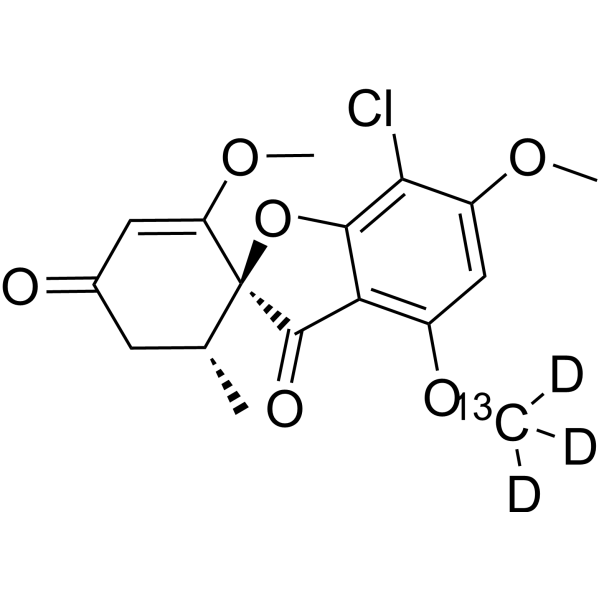 0 ImagesCat. No.: HY-17583S1CAS No.: 1329612-29-4
Griseofulvin-13C,d3 is the 13C- and deuterium labeled Griseofulvin.
-
PD-L1/HDAC6-IN-1 TFA
 0 ImagesCat. No.: HY-172200APurity: 99.55%
PD-L1/HDAC6-IN-1 TFA is an orally active dual inhibitor of PD-L1 and HDAC6, with IC50 values of 26.8 nM and 78 nM, respectively. PD-L1/HDAC6-IN-1 TFA binds to human and murine PD-L1 proteins with high affinity, while it reduces STAT3 phosphorylation and downregulates PD-L1 expression by inhibiting HDAC6, thus blocking the PD-1/PD-L1 interaction. PD-L1/HDAC6-IN-1 TFA exhibits potent anti-tumor activity in a mouse melanoma model. PD-L1/HDAC6-IN-1 is suitable for research on tumor immune regulation related to melanoma.
-
KRAS G12D inhibitor 16
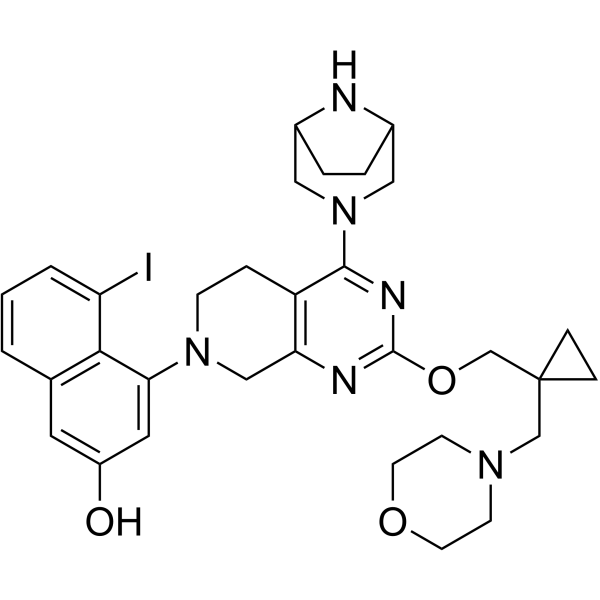 0 ImagesCat. No.: HY-148260CAS No.: 2648221-12-7
KRAS G12D inhibitor 16 is a KRAS G12D inhibitor. KRAS G12D inhibitor 16 has inhibitory activity against KRAS G12D and KRAS G12D mutation with IC50 value of 0.7 nM and 0.35 μM, respectively. KRAS G12D inhibitor 16 can be used for the research of many malignant tumor, such as pancreatic ductal adenocarcinomas (PDAC), colon and rectal carcinomas (CRC), non-small cell lung carcinomas (NSCLC).
-
(±)-Dehydroaltenusin
 0 ImagesCat. No.: HY-100513CAS No.: 34279-44-2
(±)-Dehydroaltenusin, an antibiotic, is a selective eukaryotic DNA polymerase α (pol α) inhibitor with an IC50 of 0.68 μM. (±)-Dehydroaltenusin can be isolated from fungus Alternaria tenuis. (±)-Dehydroaltenusin competitively inhibits the DNA template primer (Ki: 0.23 μM) and non-competitively suppresses the 2'-deoxyribonucleoside 5'-triphosphate substrate (Ki: 0.18 μM). (±)-Dehydroaltenusin induces the cancer cell S-phase cycle arrest and apoptosis. (±)-Dehydroaltenusin can be used for cancers like human adenocarcinoma research.
-
2-Hydroxymelatonin
 0 ImagesCat. No.: HY-N9409CAS No.: 229018-17-1
2-Hydroxymelatonin is a major hydroxylated metabolite of Melatonin (HY-B0075). It is enzymatically produced in plants by melatonin 2-hydroxylase (M2H/AsMT), while in animals, it is generated in trace amounts via CYP450 or spontaneous oxidation. 2-Hydroxymelatonin acts as a respiratory burst oxidase homolog (RBOH)-dependent ROS burst inducer, thereby regulating stress tolerance, seed germination and growth in plants. In animal cells, 2-Hydroxymelatonin synergizes with BMP-4 to promote osteogenesis, and exerts pro-apoptotic and anti-metastatic activities against colorectal cancer cells. 2-Hydroxymelatonin can be used in studies related to plant premature senescence, osteoporosis and colorectal cancer.
-
MEN1112
 0 ImagesCat. No.: HY-P991665Synonyms: OBT357NF; OBT357
MEN1112 (OBT357NF; OBT357) is a defucosylated humanized monoclonal antibody targeting Bst1/CD157, with an EC50 of 0.4 nM. MEN1112 binds to Bst1/CD157 on acute myeloid leukemia cells, triggers slow antigen internalization, induces antibody-dependent cell-mediated cytotoxicity, and mediates the lysis of acute myeloid leukemia cells and blasts. MEN1112 is applicable for research related to acute myeloid leukemia.

-
HCVcc-IN-2
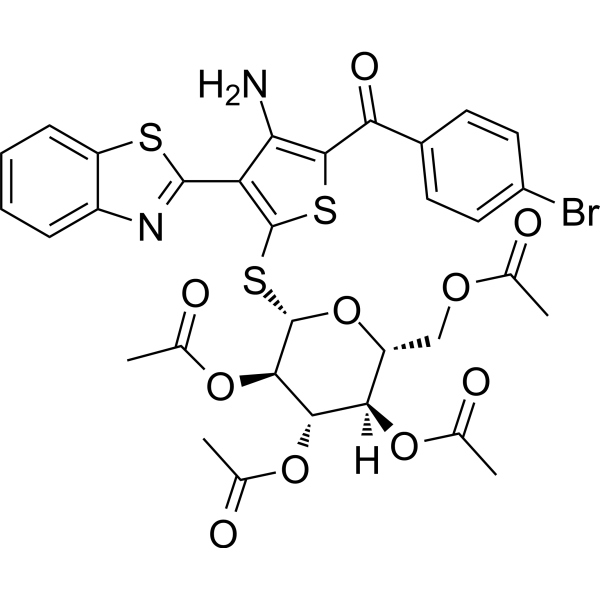 0 ImagesCat. No.: HY-151589CAS No.: 2977251-02-6
HCVcc-IN-2 is a benzothiazole-2-thiophene S-glycoside derivative with antitumor and antiviral activity. HCVcc-IN-2 has high inhibition against the three cell line from CNS cancer (SF-539 and SNB-75), colon cancer (HCT-116), and renal cancer (A498).
-
M802
 0 ImagesCat. No.: HY-P992401
M802 is an anti-HER2/CD3 bispecific antibody, with a Kd of 0.578 nM for human HER2 and a Kd of 71.2 nM for human CD3. M802 inhibits the PI3K/AKT and MAPK signaling pathways, suppresses tumor cell proliferation, activates caspase-3, and promotes tumor cell apoptosis (apoptosis). M802 recruits and activates CD3-positive immune cells, mediates cytotoxicity against HER2-positive tumor cells, and induces immune cells to secrete IFN-γ, TNF-α, IL-2 and IL-6. M802 exhibits anti-tumor efficacy in mice with gastric cancer xenografts. M802 can be used in research related to HER2-positive breast cancer, HER2-positive gastric cancer and other cancers. The recommended isotype control is human IgG1 kappa (HY-P99001).
-
Ketoprofen (lysinate) (Standard)
 0 ImagesCat. No.: HY-B0227ARCAS No.: 57469-78-0Synonyms: RP-19583 (lysinate) (Standard)
Ketoprofen (lysinate) (Standard) is the analytical standard of Ketoprofen (lysinate). This product is intended for research and analytical applications. Ketoprofen (RP-19583) lysinate is a non-steroidal anti-inflammatory agent. Ketoprofen lysinate can inhibit the activity of cyclooxygenase with IC50 values of 2 nM (COX-1) and 26 nM (COX-2). which is potential in the research of inflammation, immunology, and metabolic disease such as obesity.
-
PI3K/PIKK-IN-2
 0 ImagesCat. No.: HY-181855CAS No.: 3109464-36-7
PI3K/PIKK-IN-2 (Compound 2) is an inhibitor of PI3K/PIKK. PI3K/PIKK-IN-2 can be used in preparing antibody-drug conjugates (ADCs).
-
Cycloguanil-d6 nitrate
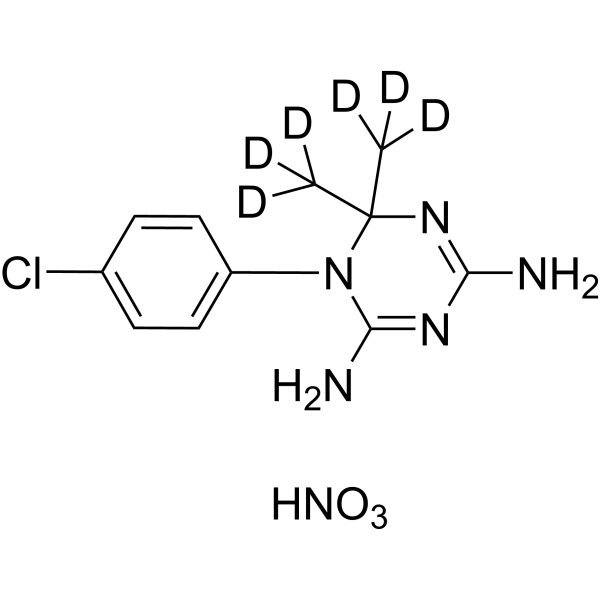 0 ImagesCat. No.: HY-12784S1CAS No.: 2070015-19-7Synonyms: Chlorguanide triazine-d6 nitrate
Cycloguanil-d6 (Chlorguanide triazine-d6) nitrate is the deuterium labeled Cycloguanil nitrate. Cycloguanil nitrate is a dihydrofolate reductase (DHFR) inhibitor with an IC50 of 10.8 μM against human DHFR. Cycloguanil nitrate blocks the folate metabolic pathway, thereby affecting nucleotide synthesis and interfering with DNA replication. Cycloguanil nitrate inhibits DHFR in Plasmodium and is thus used in malaria research. Cycloguanil nitrate also potently inhibits DHFR in human cancer cells and blocks the transcriptional activity of STAT3, thereby exhibiting anticancer activity.
-
8-Acetonyldihydronitidine
 0 ImagesCat. No.: HY-N21597CAS No.: 80330-39-8
8‑Acetonyldihydronitidine is a naturally occurring benzophenanthridine alkaloid with antibacterial, antifungal, and anti-proliferative activities against colorectal cancer cells. 8‑Acetonyldihydronitidine inhibits Staphylococcus aureus and exerts a potent antifungal effect against Cladosporium cladosporioides. 8‑Acetonyldihydronitidine activates the p53 signaling pathway, upregulates the expression of target genes including p21, BAX, and FAS, downregulates cyclin A and cyclin B, and induces cell cycle arrest and apoptosis, thereby suppressing the proliferation of colorectal cancer cells. 8‑Acetonyldihydronitidine is used in research related to colorectal cancer, fungal infections, and bacterial infections.



