



Cancer Immunotherapy
Cancer immunotherapy (CIT) is a type of biological therapy, aiming to improve anti-tumor immune responses with fewer off-target effects than chemotherapy. Several types of immunotherapy include: oncolytic virus therapies, cancer vaccines, cytokine therapies, adoptive cell transfer (ACT), and immune checkpoint inhibitors (ICIs). In particular, ICIs and ACT have obtained immense clinical response, but their efficacy varies from person to person. Immune cells can be harnessed to eliminate tumor cells, such as T cells, B cells, NK cells, and myeloid cells. T cells have potent tumor-killing capability, therefore, a plethora of cancer immunotherapy research have focused on inducing T-cell-mediated anti-tumor responses. CTLA-4 and PD-1 are found on the cell surface of T cells as co-inhibitory receptors. The breakthrough in cancer immunotherapy results from the identification and subsequent targeting of checkpoint mechanisms in T cells with monoclonal antibodies against CTLA-4 and programmed death-ligand 1/programmed death-1 (PD-L1/PD-1).
Several types of cancers (e.g., melanoma, mismatch repair-deficient cancers, bladder cancer, and non-small cell lung cancer) have achieved significant clinical responses in T-cell checkpoint blockade therapies. However, single-mode immunotherapy faces challenges such as low immune response, low tumor infiltration, and complex immunosuppressive tumor microenvironment. Recently, combined therapies based on tumor immunity have received extensive attention in the research of enhancing tumor cells immunogenicity and inhibiting their growth. For example, anti CTLA-4 and PD-1, immune checkpoint blockade (ICB) combined with chemotherapy, anti-angiogenic drugs and kinase inhibitors.
-
Nerolidol-d4
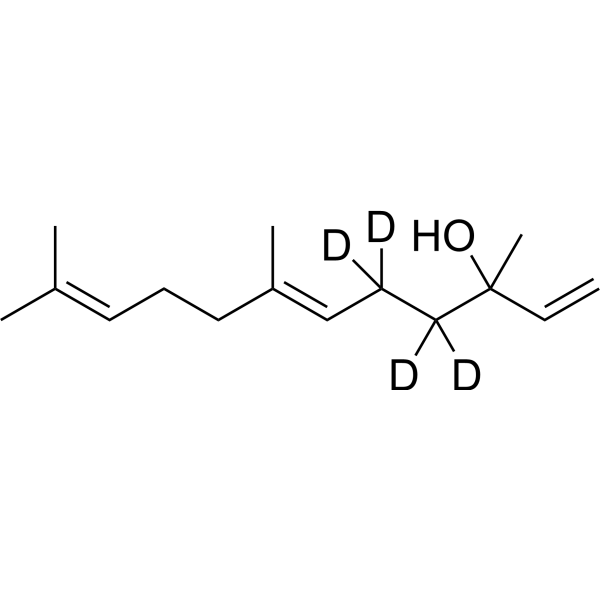 0 ImagesCat. No.: HY-N1944S
Nerolidol-d4 is deuterated labeled Nerolidol (HY-N1944). Nerolidol has multiple natural membrane activities, possesses anti-cancer, anti-inflammatory, antibacterial and anti-insect activity. Nerolidol Suppresses parasitic activity, suppresses bloodsucking diseases, bloodworm diseases, and other diseases. Nerolidol can protect the cells from lipid and protein properties, damage to DNA, and protect the cells from damage.
-
Tubulin-IN-61
 0 ImagesCat. No.: HY-179160
Tubulin-IN-61 is a tubulin polymerization inhibitor with an IC50 of ≤7.63 μM. Tubulin-IN-61 induces early apoptosis and triggers significant G2/M phase arrest. Tubulin-IN-61 elevates intracellular ROS levels. Tubulin-IN-61 shows high activity against MCF-7 cells with an IC50 of 5.61 μM. Tubulin-IN-61 can be used for the research of breast cancer.
-
OI-3
 0 ImagesCat. No.: HY-P992430
OI-3 is a monoclonal antibody targeting CD146 (MCAM). OI-3 specifically binds to CD146 on the surface of human mesothelioma cells and undergoes endocytosis; both chimeric (chOI-3) and murine (mOI-3) variants possess this activity. When conjugated with 212Pb to form 212Pb-TCMC-OI-3, OI-3 acts as a cytotoxic agent that delivers α-emitting radionuclides to induce targeted cytotoxicity. OI-3 can be used in research related to malignant peritoneal mesothelioma.
-
PROTAC PARP1 degrader-5
 0 ImagesCat. No.: HY-181967
PROTAC PARP1 degrader-5 is a PARP1 PROTAC degrader with a DC50 of 0.12 μM. PROTAC PARP1 degrader-5 hijacks the ubiquitin-proteasome system via catalytic ternary complex formation to drive sustained PARP1 degradation. PROTAC PARP1 degrader-5 induces DNA damage, drives marginal cytosolic double-stranded DNA accumulation in tumor cells, and up-regulates PD-L1 surface expression in tumor cells. PROTAC PARP1 degrader-5 shows tumor growth inhibition activity in murine melanoma models when encapsulated in lipid nanoparticles. PROTAC PARP1 degrader-5 can be used for the research of cancer, such as melanoma.
-
PROTAC BRD4 Degrader-31
 0 ImagesCat. No.: HY-174210
PROTAC BRD4 Degrader-3 is a potent BRD4 PROTAC degrader with DC50 values of 164 nM and 80 nM at 4 h and 24 h, respectively. PROTAC BRD4 Degrader-3 induces the ubiquitination and subsequent proteasomal degradation of BRD4 by recruiting the ubiquitin E3 ligase KLHDC2. PROTAC BRD4 Degrader-3 can be used in breast cancer research.
-
JAK2-IN-9
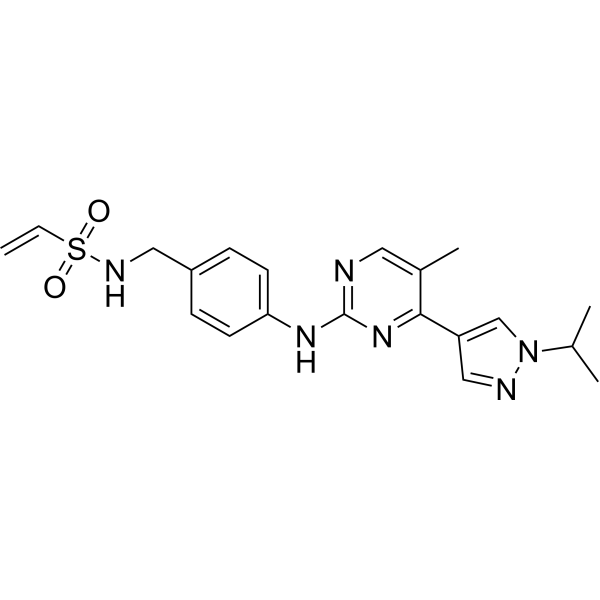 0 ImagesCat. No.: HY-155746CAS No.: 2568842-26-0
JAK2-IN-9 is an orally active selective JAK2 inhibitor with a human IC50 of 5 nM. JAK2-IN-9 inhibits JAK2 kinase activity, blocks JAK2 phosphorylation, and suppresses the activation of the downstream JAK2-STAT signaling pathway. JAK2-IN-9 inhibits the phosphorylation of STAT3, STAT5 and AKT in cancer cells. JAK2-IN-9 induces cancer cell apoptosis (apoptosis) and cell cycle arrest. JAK2-IN-9 can be used for the research of myeloproliferative neoplasms.
-
TPP-C8-CO-DSG bromide
 0 ImagesCat. No.: HY-184737
TPP-C8-CO-DSG bromide is a derivative of Diosgenin (HY-N0177) and an anticancer agent. TPP-C8-CO-DSG bromide downregulates Bcl-2 expression and upregulates Bax expression. TPP-C8-CO-DSG bromide promotes the cleavage of Caspase 9, Caspase 3 and PARP-1. TPP-C8-CO-DSG bromide depolarizes mitochondrial membrane potential, reduces intracellular ATP production, and induces intracellular ROS accumulation. TPP-C8-CO-DSG bromide promotes Apoptosis. TPP-C8-CO-DSG bromide exhibits anticancer activity against prostate cancer, breast cancer, lung adenocarcinoma, cervical cancer and colorectal cancer. TPP-C8-CO-DSG bromide can be used in the research of cervical cancer.
-
FMP
 0 ImagesCat. No.: HY-168877
FMP is a Platinum(IV) complexe. FMP significantly upregulates the expression of γ-H2AX and p53. FMP increases the production of ROS. FMP markedly upregulates the expressions of Apoptosis-related proteins (DR5, Fas, caspase-8, Cyt-c, caspase-3, cleaved-PARP1, Bax). FMP shows antiproliferative activity against breast cancer.
-
3,4-Dicaffeoylquinic acid (Standard)
 0 ImagesCat. No.: HY-N0057RCAS No.: 14534-61-3Synonyms: 3,4-Di-O-caffeoylquinic acid (Standard); Isochlorogenic acid B (Standard)
3,4-Dicaffeoylquinic acid (Standard) is the analytical standard of 3,4-Dicaffeoylquinic acid. This product is intended for research and analytical applications. 3,4-Dicaffeoylquinic acid (3,4-Di-O-caffeoylquinic acid), naturally isolated from Laggera alata, has antioxidative, DNA protective, neuroprotective and hepatoprotective properties. 3,4-Dicaffeoylquinic acid exerts apoptosis-mediated cytotoxicity and α-glucosidase inhibitory effects. 3,4-Dicaffeoylquinic acid possesses a unique mechanism of anti-influenza viral activity, that is, enhancing viral clearance by increasing TRAIL.
-
NHNB
 0 ImagesCat. No.: HY-115442CAS No.: 106359-61-9
NHNB is a selective HDAC8 inhibitor (IC50 = 66.0 μM) and Peptidoglycan N-acetylglucosamine (GlcNAc) deacetylases (PGNGdacs) inhibitor. NHNB shows antibacterial and bactericidal activity against B. anthracis and B. cereus. NHNB can be used for the research of acute myeloid leukemia, Bacillus anthracis infection, and Bacillus cereus infection.
-
Argyrin B
 0 ImagesCat. No.: HY-N13917CAS No.: 174423-36-0
Argyrin B, a natural product cyclic peptide, is a reversible, non-competitive immunoproteasome inhibitor. Argyrin B shows selective inhibition of the β5i and β1i sites of the immunoproteasome over the β5c and β1c sites of the constitutive proteasome with nearly 20-fold selective inhibition of β1i over the homologous β1c. Argyrin B has antibacterial effects.
-
HRG038
 0 ImagesCat. No.: HY-176070
HRG038 is a covalent CUL4DCAF16-base PROTAC-liked BRD4 degrader. HRG038 induces proteasome- and Cullin E3 ligase-dependent degradation, covalently targets cysteine residue C173 on DCAF16 to mediate BRD4 degradation, and induces reduction in BRD3 levels. HRG038 shows selective loss of the short BRD4 isoform over the long isoform in non-cancer cells, degrades both BRD4 isoforms in breast cancer cells, and does not impair cell viability in non-cancer cells. HRG038 can be used for the research of breast cancer.
-
CP-46665 dihydrochloride
 0 ImagesCat. No.: HY-135254CAS No.: 72618-10-1Synonyms: CP-46665-1
CP-46665 dihydrochloride is an anticancer agent that inhibits the incorporation of tritiated thymidine into leukemia cells and human solid tumor cells in vitro. It can lead to the loss of surface characteristics in tumor cells and disrupt cell membranes, inhibiting cell proliferation.
-
LIB3S0280
 0 ImagesCat. No.: HY-172620Purity: 99.89%
LIB3S0280 is a potent TBK1 inhibitor with an IC50 value of 493.9 nM. LIB3S0280 exhibits better anticancer effects in pancreatic cancer cell lines with high TBK1 expression. LIB3S0280 inhibits TBK1 downstream signaling pathways, including PI3K/AKT and NF-κB. LIB3S0280 induces G2/M arrest, apoptosis and cellular senescence. LIB3S0280 can be used for pancreatic ductal adenocarcinoma (PDAC) research.
-
BAT1006
 0 ImagesCat. No.: HY-P991233
BAT1006 is a monoclonal antibody targeting HER2 extracellular domain II with enhanced antibody-dependent cell-mediated cytotoxicity (ADCC) for the study of HER2-positive locally advanced/metastatic solid tumors. BAT1006 has an approximately 5-fold enhanced ADCC effect compared to pertuzumab (HY-P9912) and exhibits potent anti-tumor activity in the HER2-positive Calu-3 xenograft mouse model.
-
Edultin
 0 ImagesCat. No.: HY-N19810CAS No.: 15591-75-0Synonyms: Libanotine; Cnidimine
Edultin (Libanotine; Cnidimine) is an angular furanocoumarin. Edultin potently inhibits TPA (HY-18739)-induced early signals associated with tumor promotion (phospholipid metabolism). Edultin exerts mild inhibitory effects on some clinically isolated strains of Pseudomonas aeruginosa and Staphylococcus aureus. Edultin can be used in studies related to tumor promotion and bacterial infections.
-
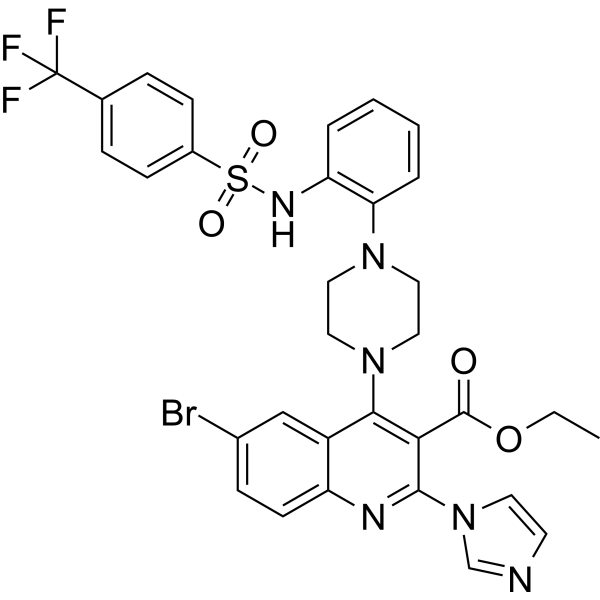
USP1-IN-14
 0 ImagesCat. No.: HY-179292CAS No.: 3084277-96-0
-
Cyproheptadine-d3
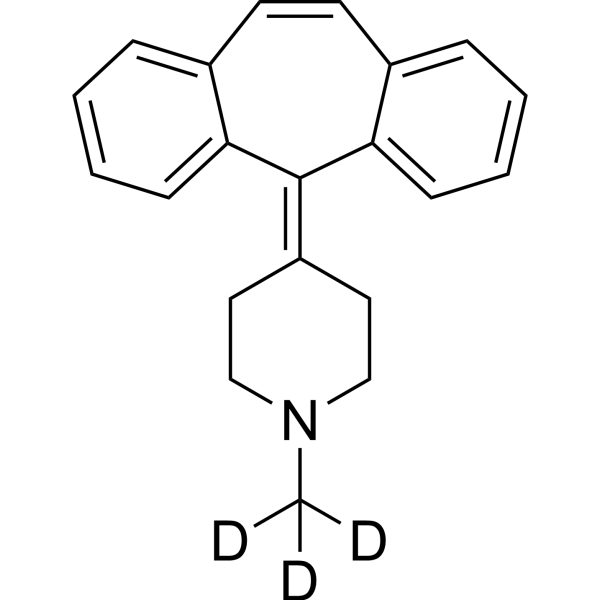 0 ImagesCat. No.: HY-B1622SCAS No.: 2712455-05-3
Cyproheptadine-d3 is the d3-labeled Cyproheptadine (HY-B1622). Cyproheptadine acts as a p38 MAP kinase activator, CHK2 activator, histamine H1 receptor inhibitor and serotonin receptor inhibitor. Cyproheptadine mediates cell cycle arrest via G1 phase arrest, G1/S transition arrest, G0/G1 phase arrest, reduced expression of cyclins D1/D2/D3, upregulated expression of HBP1, p16, p21, p27, and decreased phosphorylation of retinoblastoma protein. Cyproheptadine induces Apoptosis by increasing PARP and cleaved PARP, as well as activating the mitochondrial caspase pathway. Cyproheptadine inhibits tumor growth with extremely low toxicity to normal cells. Cyproheptadine can be used in research related to hepatocellular carcinoma, multiple myeloma and acute myeloid leukemia.
-
REGN6569
 0 ImagesCat. No.: HY-P992450
REGN6569 is a fully human IgG1 monoclonal antibody targeting glucocorticoid-induced tumor necrosis factor receptor-related protein (GITR) with high specificity for GITR. REGN6569 exerts stronger in vitro antibody-dependent cell-mediated cytotoxicity (ADCC) against regulatory T cells expressing GITR. REGN6569 selectively depletes regulatory T cells via antibody-dependent cell-mediated cytotoxicity and increases the proportion of proliferative natural killer (NK) cells in peripheral blood. REGN6569 is applicable for advanced solid malignancies. Isotype control: HY-P99001.



