



AChE
Acetylcholinesterase (AChE) is the principal cholinergic enzyme that rapidly hydrolyzes acetylcholine at cholinergic synapses and neuromuscular junctions, thereby terminating neurotransmission and maintaining synaptic signaling fidelity[1]. Mechanistically, AChE regulates cholinergic pathway activity through efficient acetylcholine clearance, a process that is essential for normal neuronal communication and neuromuscular function[1]. Beyond its catalytic role, AChE displays multiple molecular forms and has been implicated in cellular interactions, neuronal activity modulation, and pathological states, supporting broader biological functions outside classical neurotransmission[1]. In neurodegenerative disease models, particularly Alzheimer’s disease (AD), altered cholinergic signaling is closely associated with cognitive impairment, and cholinesterase inhibition remains a major symptomatic therapeutic strategy[2][3]. Compared with the related isoform butyrylcholinesterase (BChE), AChE is the predominant cholinesterase in the brain and plays a primary role in synaptic acetylcholine hydrolysis, whereas BChE may compensate when AChE activity is reduced and exhibits distinct pathological changes during AD progression[3][4]. For experimental and translational applications, reversible and dual AChE/BChE inhibitors, including rivastigmine, are widely used to enhance cholinergic neurotransmission and investigate mechanisms underlying neurodegeneration and cognitive dysfunction[2][3].
References:
- [1]. Massoulié J, et al. Structure and functions of acetylcholinesterase and butyrylcholinesterase. Prog Brain Res. 1993;98:139-46. [Content Brief]
- [2]. Walczak-Nowicka ŁJ, et al. Acetylcholinesterase Inhibitors in the Treatment of Neurodegenerative Diseases and the Role of Acetylcholinesterase in their Pathogenesis. Int J Mol Sci. 2021 Aug 27;22(17):9290. [Content Brief]
- [3]. Nordberg A, et al. A review of butyrylcholinesterase as a therapeutic target in the treatment of Alzheimer's disease. Prim Care Companion CNS Disord. 2013;15(2):PCC.12r01412. [Content Brief]
- [4]. Geula C, et al. Butyrylcholinesterase, cholinergic neurotransmission and the pathology of Alzheimer's disease. Drugs of Today (Barcelona, Spain : 1998). 2004 Aug;40(8):711-721. [Content Brief]
-
AChE Related Products (483)
Related Products (483)

-
AChE/BChE-IN-38
 0 ImagesCat. No.: HY-189414AChE/BChE-IN-38 is a dual inhibitor of acetylcholinesterase (AChE) and butyrylcholinesterase (BChE) (IC50 = 1.22 μM and 0.40 μM; Ki = 0.94 μM and 0.60 μM). AChE/BChE-IN-38 decreases BACE1 and HTR6 mRNA expression in neuroblastoma cells. AChE/BChE-IN-38 improves cognitive and behavioral parameters in a Scopolamine-induced Alzheimer's disease zebrafish model. AChE/BChE-IN-38 is useful for research on Alzheimer's disease.
-
AChE/BuChE/MAO-B-IN-1
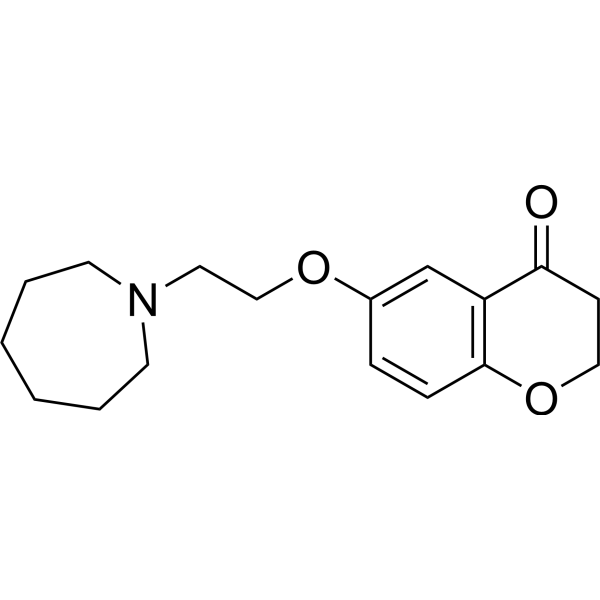 0 ImagesCat. No.: HY-151562CAS No.: 2834758-29-9AChE/BuChE/MAO-B-IN-1 (compound 19) is an inhibitor of human acetyl- (hAChE), butyrylcholinesterase (hBuChE) and monoamine oxidase-B (hMAO-B) with IC50s of 4.8 μM, 13.7 μM, and 1.11 μM, respectively. AChE/BuChE/MAO-B-IN-1 also exhibits high affinity to both the σ1 and σ2 receptors with Ki values of 42.8 nM (human σ1 receptor) and 191 nM (rat σ2 receptor), respectively. AChE/BuChE/MAO-B-IN-1 can be used for Alzheimer’s disease research.
-
Skimmianine (Standard)
 0 ImagesSkimmianine (Standard) is the analytical standard of Skimmianine. This product is intended for research and analytical applications. Skimmianine is an orally active furoquiniline alkaloid present mainly in the Rutaceae family. Skimmianine has analgesic, antispastic, sedative, and anti-inflammatory properties. Skimmianine inhibits acetylcholinesterase (AChE) (IC50 = 8.6 μg/mL). Skimmianine exhibits cytotoxicity against a variety of cancer cell lines and genotoxicity. Skimmianine has antioxidant and anti-inflammatory effects on ischemia-reperfusion (IR) injury. Skimmianine exerts anti-inflammatory effects through activation of the phosphatidylinositol-3-kinase (PI3K)-protein kinase B (AKT) pathway. Skimmianine is neuroprotective by targeting the NF-κB activation pathway to prevent neuroinflammation. Skimmianine inhibits the release of histamine, intracellular Ca2+ signaling and protein kinase C signaling.
-
Trimethylammonium chloride-13C3
 0 ImagesCat. No.: HY-W585905CAS No.: 286013-00-1Trimethylammonium chloride-13C3 is the 13C-labeled Trimethylammonium chloride (HY-Y0504). Trimethylammonium chloride (Hegzadesil) is a non-competitive Acetylcholinesterase inhibitor. Trimethylammonium chloride reversibly blocks the deacetylation of acetylcholinesterase.
-
Monarsen
 0 ImagesCat. No.: HY-148412CAS No.: 864021-55-6Synonyms: EN101; ODN 7040; BL 7040Monarsen (EN101) is a synthetic 20-base antisense oligodeoxynucleotide directed against the human AChE gene. Monarsen is used in the study of Autoimmune myasthenia gravis (MG), a neuromuscular disorder caused by autoantibodies directed against the acetylcholine receptor (AChR).
-
AChE-IN-12
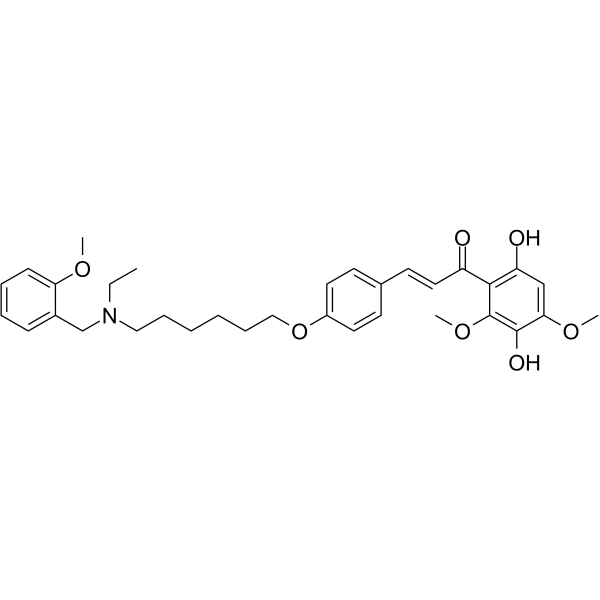 0 ImagesCat. No.: HY-144790CAS No.: 2764664-52-8AChE-IN-12 is a potent and blood-brain barrier (BBB) penetrant acetylcholinesterase (AChE) with IC50s of 0.41 μM and 1.88 μM for rat AChE and electric eel AChE. AChE-IN-12 is also a good antioxidant (ORAC = 3.3 eq), selective metal chelator and huMAO-B inhibitor (IC50 = 8.8 μM). AChE-IN-12 has remarkable inhibition of self- and Cu2+-induced Aβ1-42 aggregation, as well as exhibits a good neuroprotective effect. AChE-IN-12 can be used for researching Alzheimer’s disease.
-
Echothiopate chloride
 0 ImagesCat. No.: HY-16183ACAS No.: 120087-68-5Synonyms: Echothiophate chlorideEchothiopate chloride (Echothiophate chloride) is an acetylcholinesterase (AChE) inhibitor. Echothiopate chloride irreversibly inhibits acetylcholinesterase, prevents the enzymatic hydrolysis of acetylcholine, and increases the local acetylcholine concentration in the ciliary muscle, thereby driving muscarinic receptor downregulation and regulatory hyposensitivity to Pilocarpine Hydrochloride. Echothiopate chloride can be used in the study of glaucoma.
-
Lycoramine
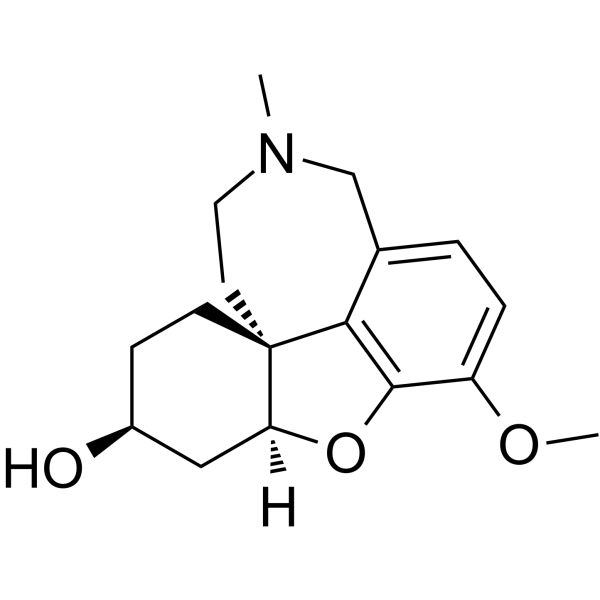 0 ImagesLycoramine is a blood-brain barrier-penetrating Acetylcholinesterase inhibitor and Galanthamine (HY-76299) derivative. Lycoramine induces Amyloid-beta plaque clearance. Lycoramine induces reversal of cognitive decline and memory improvement. Lycoramine can be used for research on Alzheimer's disease and myasthenia gravis.
-
AChE/BuChE-IN-3
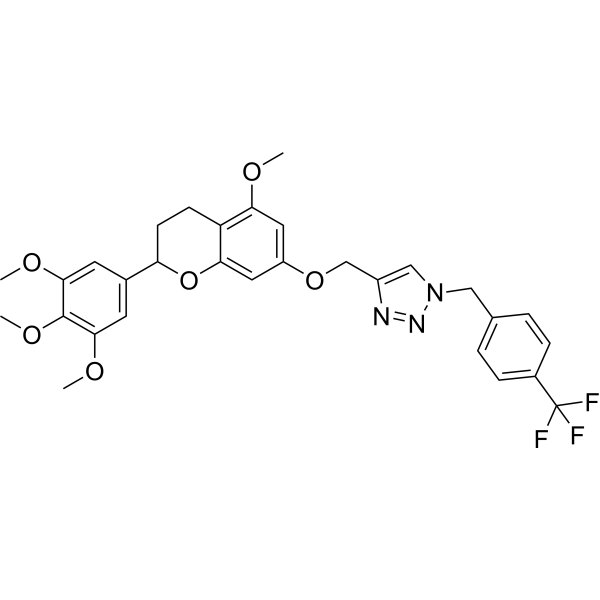 0 ImagesCat. No.: HY-147939CAS No.: 2742707-47-5AChE/BuChE-IN-3 is a potent and blood-brain barrier (BBB) penetrant AChE and BuChE dual inhibitor with IC50s of 0.65 μM and 5.77 μM for AChE and BuChE. AChE/BuChE-IN-3 also inhibits Aβ1-42 aggregation. AChE/BuChE-IN-3 has effectively neuroprotective activities and nearly no toxicity on SH-SY5Y cells. AChE/BuChE-IN-3 can be used for researching Alzheimer's disease.
-
AChE/BChE-IN-24
 0 ImagesCat. No.: HY-159880CAS No.: 3053509-06-8AChE/BChE-IN-24 (compound 5k) is a neuroprotective agent through cholinesterase inhibition. AChE/BChE-IN-24 inhibits AChE and BChE with IC50 values of 16.38 μM and 10.44 μM, respectively.
-
hAChE-IN-8
 0 ImagesCat. No.: HY-163514hAChE-IN-8 (Compound S-12) is a orally effective and selective inhibitor of hAChE (IC50=0.486 μM). hAChE-IN-8 also inhibits BACE-1 (IC50=0.542 μM), and does not inhibit Dyrk1A (IC50>10 μM). hAChE-IN-8 can reduce Aβ aggregation, has good blood-brain barrier penetration. hAChE-IN-8 is mainly used in Alzheimer's disease research.
-
Lakoochin C
 0 ImagesCat. No.: HY-N17425CAS No.: 2170152-91-5Lakoochin C is an inhibitor of acetylcholinesterase (AChE) (IC50 = 61.86 μM) and butyrylcholinesterase (BChE) (IC50 = 47.21 μM). Lakoochin C may be used in research related to Alzheimer's disease.
-
AChE-IN-64
 0 ImagesCat. No.: HY-49373CAS No.: 148305-62-8AChE-IN-64 (compound C4) is an AChE inhibitor (IC50: 36.9 µM), and can be used for cognitive disorders research.
-
eeAChE-IN-3
 0 ImagesCat. No.: HY-162681eeAChE-IN-3 (compound YS3g) is an orally active, potent EeAChE and IL-6 inhibitor with IC50s of 0.54 μM, 0.49 μM, 8.54 μM and 0.57 μM for EeAChE, RatAChE, RatBuChE and IL-6, respectively. eeAChE-IN-3 improves STZ (HY-13753) (Streptozotocin; HY-13753)-induced learning and memory impairment in mice. eeAChE-IN-3 has the potential for Alzheimer's disease (AD) research.
-
Eseroline
 0 ImagesCat. No.: HY-W856819CAS No.: 469-22-7Eseroline is a potent μ-opioid receptor agonist, which is the hydrolytic metabolite of Physostigmine (HY-N6608). Eseroline is a selective and competitive acetylcholinesterase (AChE) inhibitor, with its Ki values for AChE and BuChE being 0.1 μM and 200 μM respectively. Eseroline has nicotinic acetylcholine receptor allosteric enhancing ligand (nAChR-APL) activity, meaning it does not activate the receptor but significantly enhances the signal transduction of Ach triggered by the receptor. Eseroline is neurotoxic, causing cell membrane damage (LDH leakage) and energy metabolism collapse (ATP depletion). Eseroline can be used for the study of Alzheimer's disease.
-
Gallamine
 0 ImagesGallamine is an allosteric, selective muscarinic M2 acetylcholine receptor antagonist (EC50: 130 nM for [3H]NMS dissociation from porcine muscarinic M2 receptors). Gallamine is also an acetylcholinesterase inhibitor (IC50s : 1070 μM, 1480 μM, 235 μM for EeAChE, hAChE, hBChE, respectively (in the absence of MeCN)). Gallamine increases free norepinephrine levels. Gallamine can be used as a muscle relaxant.
-
BChE-IN-26
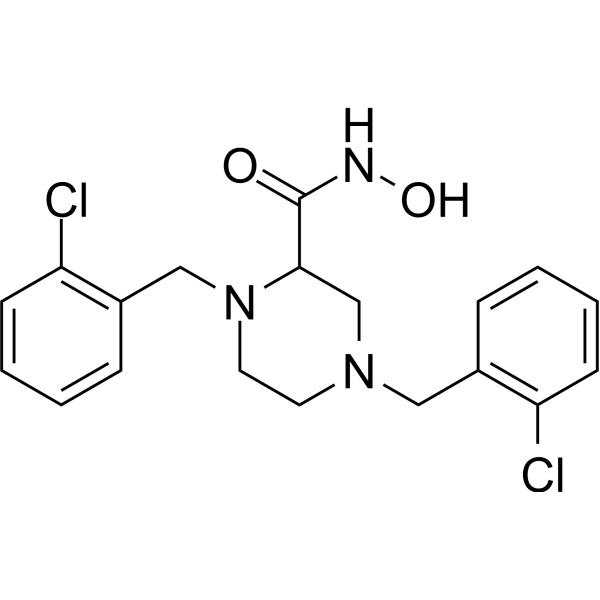 0 ImagesCat. No.: HY-161156BChE-IN-26 (Compound 7b) is a selective AChE and BChE inhibitor with Ki value of 35 μM and 1.6 μM. BChE-IN-26 has cytotoxicity to human neuroblastoma (SH-SY5Y) cell line. BChE-IN-26 can be used for the research of Alzheimer’s disease.
-
(+)-Quinolactacin A1
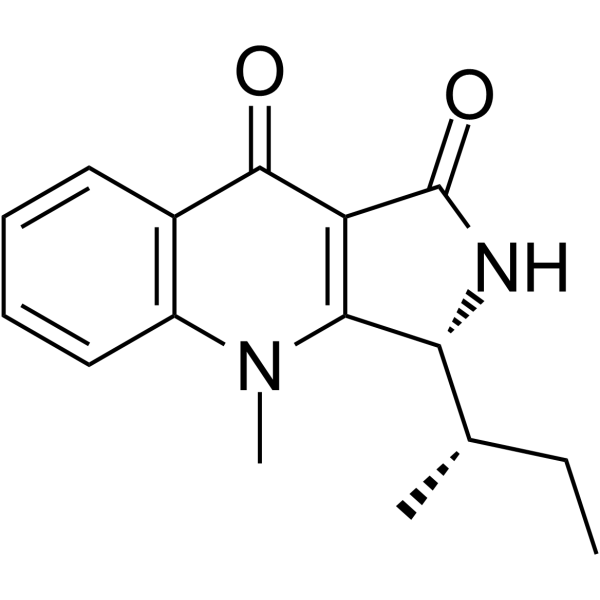 0 ImagesCat. No.: HY-N7480ACAS No.: 815576-68-2(+)-Quinolactacin A1 is a potent acetylcholinesterase (AChE) inhibitor from solid state fermentation of Penicillium citrinum 90648. (+)-Quinolactacin A1 can be used for the research of Alzheimer disease.
-
Cyanofenphos
 0 ImagesCat. No.: HY-120131CAS No.: 13067-93-1Cyanofenphos is an orally active organophosphate insecticide and brain AChE inhibitor with neurotoxicity. Cyanofenphos induces delayed neurotoxicity such as ataxia and paralysis. Cyanofenphos also causes symptoms including somnolence, reduced feed intake and weight loss in hens. Cyanofenphos has a unique self-antagonistic effect: repeated low-dose pre-treatment not only reduces subsequent acute toxicity, but also exacerbates delayed neurotoxicity and attenuates enzyme inhibition, with the protective effect peaking at 24 h after the last pre-treatment. Cyanofenphos is commonly used in studies related to delayed neurotoxicity.
-
α-Glucosidase-IN-68
 0 ImagesCat. No.: HY-162639CAS No.: 1624628-01-8α-Glucosidase-IN-68 (Compound 2) is an inhibitor for α-Glucosidase, AChE, and BChE, with IC50 of 0.251, 0.774 and 0.793 μM, respectively. α-Glucosidase-IN-68 exhibits antioxidant efficacy, with IC50 of 0.69 μM and 0.02 μM, in DPPH and ABTS experiments. α-Glucosidase-IN-68 exhibits antidiabetic effect in Streptozotocin (HY-13753)-induced diabetic rat models.



