



Bcl-2 Family
Bcl-2 is a family of evolutionarily related proteins. These proteins govern mitochondrial outer membrane permeabilization (MOMP) and can be either pro-apoptotic (Bax, Bad, Bak and Bok among others) or anti-apoptotic (including Bcl-2 proper, Bcl-xL, and Bcl-w, among an assortment of others). There are a total of 25 genes in the Bcl-2 family known to date. Human genes encoding proteins that belong to this family include: Bak1, Bax, Bal-2, Bok, Mcl-1.
Bcl-2 Family Isoform Specific Products
-
Bcl-2 Family
(450)
View all products
-
Bcl-2
(325)
View all products
-
Bcl-xL
(123)
View all products
-
Bcl-W
(17)
View all products
-
Mcl-1
(97)
View all products
-
Bfl-1
(11)
View all products
-
Bcl-B
(6)
View all products
-
Bax
(217)
View all products
-
Bak
(14)
View all products
-
Bim
(14)
View all products
-
BNIP3
(1)
View all products
-
Bad
(10)
View all products
All Product Categories
-
Bcl-2 Family Inhibitors
(565)
View all products
-
Bcl-2 Family Agonists
(5)
View all products
-
Bcl-2 Family Antagonists
(9)
View all products
-
Bcl-2 Family Activators
(90)
View all products
-
Bcl-2 Family Modulators
(150)
View all products
-
Bcl-2 Family Inducers
(13)
View all products
-
Bcl-2 Family Degraders
(21)
View all products
-
Bcl-2 Family Controls
(2)
View all products
-
Bcl-2 Family Ligands
(9)
View all products
-
Bcl-2 Family Related Products (1042)
Related Products (1042)

-
Antibodies (31)
-
Bcl-2 Family Signaling Pathway
-
Bcl-2 Family Isoform Comparison
-
Dth
 0 ImagesCat. No.: HY-175397Synonyms: DFHBI-thalidomideDth (DFHBI-thalidomide) is an RNA aptamer-based PROTAC degrader. Dth can degrade a variety of endogenous proteins (such as mCherry, p50, p65 and E2F1) by replacing the 3′ module on the RNA scaffold with the RNA aptamer corresponding to the target protein. Dth upregulates IκB-α and Bax, and downregulates Bcl-2 and VEGF. Dth generates green fluorescence upon binding to the Broccoli RNA aptamer, enabling the tracing of RNA scaffolds. Dth can be used in cancer-related research.
-
CSN5-IN-3
 0 ImagesCat. No.: HY-181795CSN5-IN-3 (Compound 30) is a CSN5 inhibitor with an IC50 of 0.58 μM. CSN5-IN-3 inhibits the enzymatic activity of CSN5, leading to increased accumulation of NEDD8-Cul1 and promoting the degradation of PD-L1. CSN5-IN-3 downregulates Bcl-2, and upregulates P53 and Cleaved caspase-3. CSN5-IN-3 exhibits anticancer activity against triple-negative breast cancer.
-
ZM484
 0 ImagesCat. No.: HY-178036ZM484 is a potent dual p53-MDM2/TOP1 inhibitor that exhibits antiproliferative and antitumor activity both in vitro and in vivo. ZM484 effectively upregulates p53 and MDM2 proteins and maintains TOP1 inhibitory activity by the release of camptothecin (CPT) and a potent p53-MDM2 inhibitor. ZM484 induces cell cycle arrest and apoptosis by regulating the expression of key apoptosis- and cycle-related proteins, including caspase-3, Bcl-2, and Cyclin B1. ZM484 can be used for colorectal cancer research.
-
Apoptosis inducer 28
 0 ImagesCat. No.: HY-169124Apoptosis Inducer 28 (Compound X1) is an apoptosis-inducing agent with anticancer activity in vitro. Apoptosis Inducer 28 can arrest the cell cycle at the G1 phase, promote cell death, and induce apoptosis by disrupting mitochondrial membrane potential. Apoptosis inducer 28 can also decrease the production of reactive oxygen species, downregulate the gene expression of BAX, Bcl-xL, and Bcl-2, while upregulating the gene expression of PAR-4.
-
BRD-K44839765
 0 ImagesCat. No.: HY-169267CAS No.: 303066-86-6BRD-K44839765 is selective against Bcl-2 with an IC50 value of 5.6 μM in IMR-90 cell. BRD-K44839765 has oral activity.
-
Lisaftoclax-d8
 0 ImagesCat. No.: HY-129179SSynonyms: APG-2575-d8; Bcl-2/Bcl-xl inhibitor 1-d8Lisaftoclax-d8 is the deuterated-labeled Lisaftoclax (HY-129179). Lisaftoclax is an orally active, selective BCL-2 inhibitor with a Ki of < 0.1 nM against human BCL-2. Lisaftoclax selectively binds to BCL-2, disrupts the BCL-2:BIM complex, and antagonizes the antiapoptotic function of BCL-2. Lisaftoclax induces BAX/BAK-dependent, caspase-mediated apoptosis, upregulates the pro-death proteins BIM and Noxa, and downregulates mitochondrial respiratory function and ATP production. Lisaftoclax can be used in the research of hematological malignancies including chronic lymphocytic leukemia, multiple myeloma, and diffuse large B-cell lymphoma.
-
Bcl2l1 Rat Pre-designed siRNA Set A
 0 ImagesCat. No.: HY-RS01423
Bcl2l1 Rat Pre-designed siRNA Set A contains three designed siRNAs for Bcl2l1 gene (Rat), as well as a negative control, a positive control, and a FAM-labeled negative control.
-
Bcl-2-IN-18
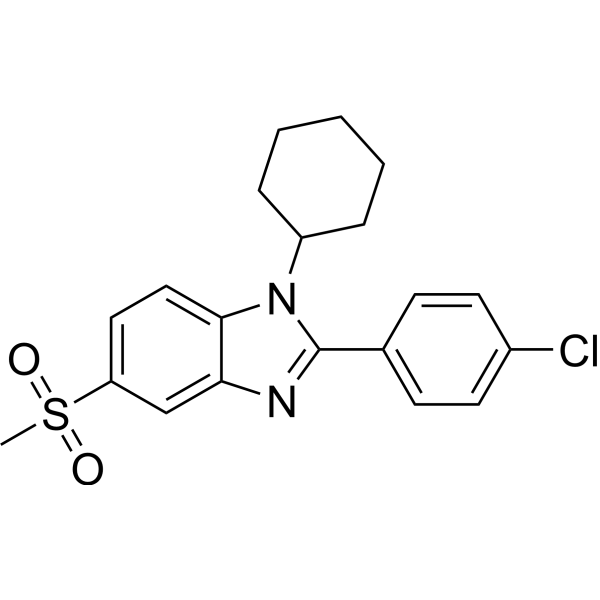 0 ImagesCat. No.: HY-163308CAS No.: 3028970-71-7
-
Anti-Bcl-2 Antibody
 0 ImagesCat. No.: HY-P990344The Anti-Bcl-2 Antibody is a humanized antibody expressed in CHO cells, targeting Bcl-2. The Anti-Bcl-2 Antibody has a huIgG1 heavy chain and a huκ light chain, with a predicted molecular weight (MW) of 145.74 kDa. The isotype control for Anti-Bcl-2 Antibody can be referenced as Human IgG1 kappa, Isotype Control (HY-P99001).
-
PI3K/mTOR-IN-17
 0 ImagesCat. No.: HY-174855PI3K/mTOR-IN-17 is a dual PI3K and mTOR inhibitor with IC50 values of 1.21 μM (PI3K), and 0.21 μM (mTOR). PI3K/mTOR-IN-17 induces cells caspase-mediated apoptosis by arresting their growth in the G1-phase. PI3K/mTOR-IN-17 upregulates the levels of caspases-3, 7, 8, and 9, p53 expression and Bax/Bcl-2 ratio. PI3K/mTOR-IN-17 suppresses the PI3K/mTOR signaling pathway. PI3K/mTOR-IN-17 can be used for research of cancer, such as non-small cell lung cancer (NSCLC).
-
P53/TLR2 modulator-1
 0 ImagesCat. No.: HY-173309P53/TLR2 modulator-1 (Compound Z9) is a modulator that targets both the P53 pathway and TLR2 simultaneously, exhibiting anti-radiation activity. P53/TLR2 modulator-1 reduces apoptosis by inhibiting the radiation-induced expression of P53 and Bax. At the same time, it activates the TLR2 pathway, upregulates the expression of downstream proteins MyD88 and P65, and promotes the secretion of cytokines such as IL-6, thus exerting an anti-radiation effect. P53/TLR2 modulator-1 shows significant anti-radiation activity against both AHH-1 cells and HUVECs. It can also increase the survival rate of C57BL/6J mice irradiated with a lethal dose of radiation and reduce the damage to their hematopoietic system, the villous structure of the small intestine, and the spleen caused by radiation. P53/TLR2 modulator-1 can be used in the research of radiation injury-related diseases.
-
Phoyunbene B
 0 ImagesCat. No.: HY-N9778CAS No.: 886747-62-2Phoyunbene B is a similar substance to Resveratrol (HY-16561). Phoyunbene B exhibits stronger growth inhibitory activity against human liver cancer cells HepG2 compared to Resveratrol. Phoyunbene B induces G2/M phase cell cycle arrest and apoptosis. Phoyunbene B increases Bax/Bcl-2 and activates Caspase-3. Phoyunbene B inhibits the invasion and migration of cancer cells. Phoyunbene B can be used for research on liver cancer.
-
Mcl1 Mouse Pre-designed siRNA Set A
 0 ImagesCat. No.: HY-RS08231
Mcl1 Mouse Pre-designed siRNA Set A contains three designed siRNAs for Mcl1 gene (Mouse), as well as a negative control, a positive control, and a FAM-labeled negative control.
-
Bax inhibitor peptide, negative control
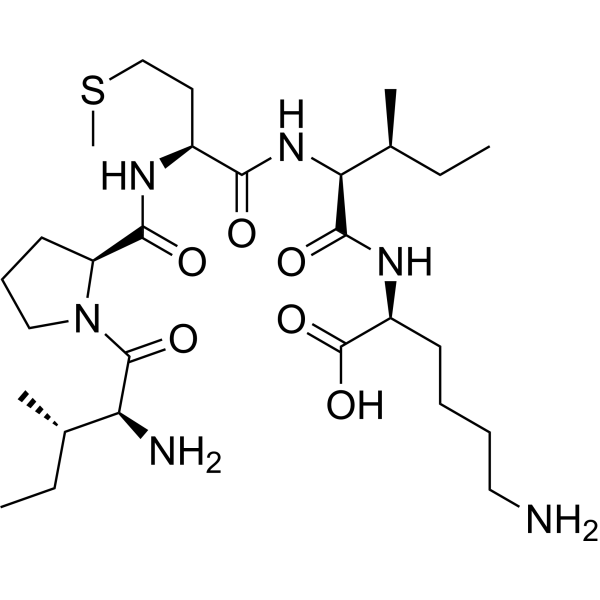 0 ImagesCat. No.: HY-103271CAS No.: 1315378-74-5Bax inhibitor peptide, negative control is a inhibitor of Bax. Bax inhibitor peptide, negative control inhibits Bax translocation to mitochondria and Bax-mediated apoptosis in vitro.
-
CDK2-IN-49
 0 ImagesCat. No.: HY-179161CDK2-IN-49 (Compound 5j) is a CDK2 inhibitor with an IC50 of 0.25 μM. CDK2-IN-49 shows potent activity against CDK7 with an IC50 of 0.14 μM. CDK2-IN-49 induces Apoptosis by raising the levels of p53 and Bax protein expression while reducing the amount of Bcl-2. CDK2-IN-49 inhibits cell division. CDK2-IN-49 can be used in the research of cancer.
-
MTAAAR
 0 ImagesCat. No.: HY-P12337MTAAAR is a polypeptide obtained from the enzymatic hydrolysis of C-phycocyanin (HY-D1025) and possesses neuroprotective activity. MTAAAR enhances the activities of antioxidant enzymes SOD, CAT, and GSH-Px, reduces ROS, inhibits apoptosis and acetylcholinesterase (AChE) activity in brain tissue, and decreases protein carbonyl content. In the MPTP (HY-W114750)-induced zebrafish Parkinson's disease model, MTAAAR exhibits antioxidant effects, inhibits autophagy and apoptosis, reverses the loss of dopaminergic neurons and cerebral blood vessels, and alleviates motor deficits. MTAAAR can be used for research on Parkinson's disease.
-
Tau Protein Phosphorylation-IN-1
 0 ImagesCat. No.: HY-175841CAS No.: 3075165-36-2Tau Protein Phosphorylation-IN-1 is a tau protein phosphorylation inhibitor that potently protects PC12 cells against Aβ25–35-induced cytotoxicity (EC50 = 1.93 μM), and can penetrate the blood-brain barrier (BBB).Tau Protein Phosphorylation-IN-1 reverses the hyperphosphorylation of tau, significantly inhibits the expression of certain immune-related cytotoxic factors, suppresses the MAPK and NF-κB signaling pathways, and significantly inhibits the expression of RAGE and the apoptosis factors Bax/Bcl-2, both in vitro and in vivo. Tau Protein Phosphorylation-IN-1 relieves nerve damage, and improves learning and memory in an Alzheimer’s disease (AD) mouse model. Tau Protein Phosphorylation-IN-1 can be used for AD research.
-
Beclanorsen sodium
 0 ImagesCat. No.: HY-177618ASynonyms: SPC2996 sodium
-
Tubulin polymerization-IN-88
 0 ImagesCat. No.: HY-181074Tubulin polymerization-IN-88 is a tubulin inhibitor that blocks tubulin polymerization, leading to microtubule destabilization and disruption of the mitotic spindle. Tubulin polymerization-IN-88 induces G2/M phase arrest and apoptosis in cancer cells, and inhibits cancer cell migration and self-renewal of cancer stem cells. It exhibits in vitro anti-proliferative activity against cancer cells with selectivity over normal cells. Tubulin polymerization-IN-88 also demonstrates in vivo anti-cancer activity without significant toxicity. Tubulin polymerization-IN-88 is applicable for research on glioblastoma, lung cancer, endometrial cancer, ovarian cancer, and leukemia.
-
Multi-kinase-IN-8
 0 ImagesCat. No.: HY-179439Multi-kinase-IN-8 is a muti-kinase inhibitor. Multi-kinase-IN-8 inhibits COX-1 (IC50 of 12.6 μM), COX-2 (IC50 of 0.05 μM) and VEGFR-2 (IC50 of 0.12 nM). Multi-kinase-IN-8 inhibits tumor-associated carbonic anhydrases (CA IX and CA XII with Ki of 31.5 nM and 386.9 nM, respectively). Multi-kinase-IN-8 triggers cell cycle arrest and apoptosis through upregulation of Caspase 9 and Bax along with downregulation of Bcl 2. Multi-kinase-IN-8 suppresses PGE2, p-VEGFR-2, MMP-9 and HIF-1α and exhibits growth-inhibitory activity against breast cancer, lung cancer, and colorectal adenocarcinoma.




