



Bcl-2 Family
Bcl-2 is a family of evolutionarily related proteins. These proteins govern mitochondrial outer membrane permeabilization (MOMP) and can be either pro-apoptotic (Bax, Bad, Bak and Bok among others) or anti-apoptotic (including Bcl-2 proper, Bcl-xL, and Bcl-w, among an assortment of others). There are a total of 25 genes in the Bcl-2 family known to date. Human genes encoding proteins that belong to this family include: Bak1, Bax, Bal-2, Bok, Mcl-1.
Bcl-2 Family Isoform Specific Products
-
Bcl-2 Family
(450)
View all products
-
Bcl-2
(325)
View all products
-
Bcl-xL
(123)
View all products
-
Bcl-W
(17)
View all products
-
Mcl-1
(97)
View all products
-
Bfl-1
(11)
View all products
-
Bcl-B
(6)
View all products
-
Bax
(217)
View all products
-
Bak
(14)
View all products
-
Bim
(14)
View all products
-
BNIP3
(1)
View all products
-
Bad
(10)
View all products
All Product Categories
-
Bcl-2 Family Inhibitors
(565)
View all products
-
Bcl-2 Family Agonists
(5)
View all products
-
Bcl-2 Family Antagonists
(9)
View all products
-
Bcl-2 Family Activators
(90)
View all products
-
Bcl-2 Family Modulators
(150)
View all products
-
Bcl-2 Family Inducers
(13)
View all products
-
Bcl-2 Family Degraders
(21)
View all products
-
Bcl-2 Family Controls
(2)
View all products
-
Bcl-2 Family Ligands
(9)
View all products
-
Bcl-2 Family Related Products (1042)
Related Products (1042)

-
Antibodies (31)
-
Bcl-2 Family Signaling Pathway
-
Bcl-2 Family Isoform Comparison
-
MAHS-4
 0 ImagesCat. No.: HY-187514MAHS-4 is an inhibitor of thymidylate synthase (TS) and dihydrofolate reductase (DHFR), with IC50 values of 1.918 μM and 83.53 μM, respectively. MAHS-4 inhibits thymidylate biosynthesis, reduces tetrahydrofolate pool maintenance, and interferes with extracellular matrix remodeling. MAHS-4 induces G2/M phase cell cycle arrest, activates endogenous caspase-dependent apoptosis, decreases MMP protein levels, inhibits cell migration, increases intracellular NO levels, and promotes autophagy activity. MAHS-4 is applicable for cancer-related research.
-
NGI-189
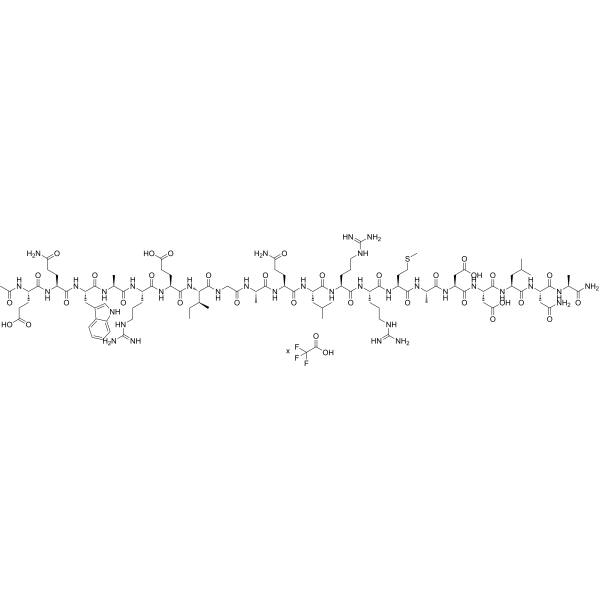
 0 ImagesNGI‑189 is a selective OST‑A inhibitor. NGI‑189 inhibits the STT3A catalytic subunit of the OST complex and reduces N‑glycosylation of target glycoproteins. NGI‑189 blocks oncogenic and bypass signaling, reduces phosphorylation of EGFR, AKT, p70S6K and S6RP, and induces cell cycle arrest and apoptosis. NGI‑189 markedly suppresses tumor growth and induces tumor regression in non‑small cell lung cancer (NSCLC) xenograft models. NGI‑189 can be used for the research of EGFR‑mutant non‑small cell lung cancer.
-
Spicamycin
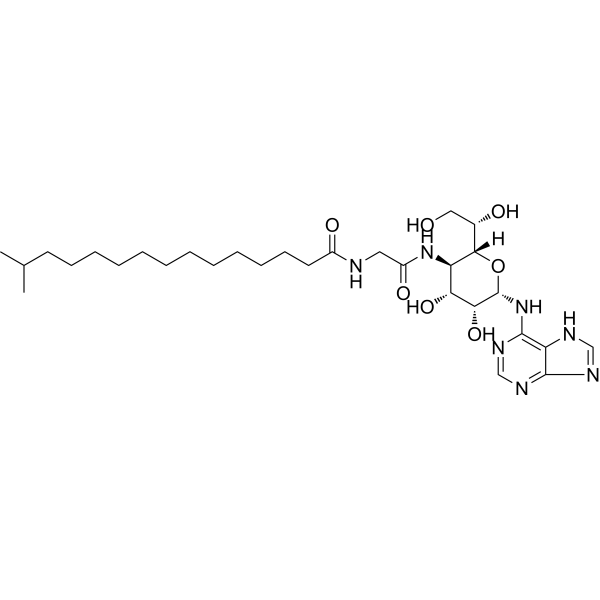 0 ImagesCat. No.: HY-127130CAS No.: 87099-85-2Spicamycin, an adenine nucleoside antibiotic with antifungal and antitumor activities. Spicamycin is also a potent inducer of differentiation of myeloid leukemia cells. Spicamycin induces apoptosis in NB4 cells via down-regulation of Bcl-2 expression and modulation of PML protein.
-
Amantadine in Methanol (Standard)
 0 ImagesCat. No.: HY-B0402R1CAS No.: 768-94-5Synonyms: 1-Adamantanamine in Methanol (Standard); 1-Aminoadamantane in Methanol (Standard)Amantadine in Methanol (Standard) is the solution of Amantadine (Standard). This product is intended for research and analytical applications. Amantadine (1-Adamantanamine) is an orally avtive and potent antiviral agent with activity against influenza A viruses. Amantadine inhibits several ion channels such as NMDA and M2, and also inhibits Coronavirus ion channels. Amantadine also has anti-orthopoxvirus and anticancer activity. Amantadine can be used for Parkinson's disease, postoperative cognitive dysfunction (POCD) and COVID-19 research[4].
-
VEGFR-2/AKT-IN-2
 0 ImagesCat. No.: HY-169431VEGFR-2/AKT-IN-2 (Compound 5) is a VEGFR-2/AKT inhibitor (IC50: 0.061 μM for VEGFRin HepG2 cell). VEGFR-2/AKT-IN-2 reduces total and phosphorylated AKT as well as up-regulates BAX and Caspase-3 and down-regulates Bcl-2 in cells, thereby promoting Apoptosis. VEGFR-2/AKT-IN-2 causes cell cycle arrest in S phase. VEGFR-2/AKT-IN-2 inhibits the growth of human liver tumor cells.
-
PROTAC Bcl-xL degrader-4
 0 ImagesCat. No.: HY-176740CAS No.: 2930759-37-6PROTAC Bcl-xL degrader-4 is a Bcl-xL PROTAC degrader. PROTAC Bcl-xL degrader-4 exhibits cytotoxicity against hepatocellular carcinoma cells, inhibits their migration and colony formation, and shows low cytotoxicity toward normal cells. PROTAC Bcl-xL degrader-4 induces apoptosis by reducing mitochondrial membrane potential and activating the MAPK signaling pathway. PROTAC Bcl-xL degrader-4 significantly suppresses tumor growth in xenograft tumor mouse models. PROTAC Bcl-xL degrader-4 can be used in hepatocellular carcinoma-related research.
-
Bcl-2-IN-3
 0 ImagesCat. No.: HY-136714CAS No.: 383860-03-5
-
α-D-Glucosyl hesperidin
 0 ImagesCat. No.: HY-N18905CAS No.: 161713-86-6α-D-Glucosyl hesperidin is an orally effective structural modification derivative of Hesperidin (HY-15337) with anti-apoptotic (apoptosis) and antioxidant activities. α-D-Glucosyl hesperidin upregulates the expression of the Bcl-2 gene, while downregulating the expressions of the Bax and caspase-3 genes. α-D-Glucosyl hesperidin increases total antioxidant capacity, SOD and catalase levels, and decreases malondialdehyde and glutathione levels. α-D-Glucosyl hesperidin improves sperm motility, viability and plasma membrane function, while restoring reproductive organ weight and seminiferous tubule structure. α-D-Glucosyl hesperidin increases fertility index and exerts a synergistic protective effect with Proanthocyanidins (HY-N0794) in male rats with testicular ischemia-reperfusion injury. α-D-Glucosyl hesperidin can be used in the research of testicular ischemia-reperfusion injury.
-
BI-3812 (Standard)
 0 ImagesCat. No.: HY-111381RCAS No.: 2166387-64-8BI-3812 (Standard) is the analytical standard of BI-3812 (HY-111381). This product is intended for research and analytical applications. BI-3812, a chemical probe, is a highly efficient BCL6 inhibitor that is capable of suppressing the BTB domain of BCL6, with an IC50 value of ≤ 3 nM, exhibiting antitumor activity.
-
BP1002
 0 ImagesCat. No.: HY-188138BP1002 is an antisense oligonucleotide targeting BCL-2. BP1002 silences BCL-2 expression by targeting the translation initiation site of Bcl-2 mRNA. Its backbone carries ethoxy modifications, which confer nuclease resistance, reduce off-target effects, and lower toxicity. BP1002 prolongs survival in non-Hodgkin's lymphoma xenograft models. BP1002 can be used in studies of acute myeloid leukemia, aggressive non-Hodgkin's lymphoma, and Venetoclax (HY-15531)-resistant hematological malignancies.
-
FI-700
 0 ImagesCat. No.: HY-111268CAS No.: 866883-79-6FI-700 is an orally active FLT3 inhibitor with an IC50 of 20 nM. FI-700 induces G1 phase cell cycle arrest by inhibiting autophosphorylation of mutant FLT3 and the downstream STAT5/MAPK pathway. FI-700 triggers the mitochondrial apoptosis pathway by downregulating anti-apoptotic proteins Mcl-1 and Bcl-XL, altering the conformation of Bax, and activating caspase-3. FI-700 can be used in research related to acute myeloid leukemia.
-
Clorgyline hydrochloride (Standard)
 0 ImagesSynonyms: M&B 9302 hydrochloride (Standard)Clorgyline hydrochloride (Standard) (M&B 9302 hydrochloride (Standard)) is the analytical standard of Clorgyline hydrochloride (HY-14197A). This product is intended for research and analytical applications. Clorgyline hydrochloride (M&B 9302 hydrochloride) is a selective, irreversible monoamine oxidase A (MAO-A) inhibitor that can cross the blood-brain barrier and exhibits activity against the 5-HT Receptor at very high doses. Clorgyline hydrochloride regulates monoamine neurotransmitter levels, the release of dopamine and acetylcholine, the uptake and effects of Tyramine (HY-W007606), noradrenergic function, circadian locomotor activity rhythms, feeding behavior, and body weight. Clorgyline hydrochloride induces tumor-suppressive transcriptional programs, secretory differentiation, androgen signaling regulation, Bcl-2 expression, and radioprotective effects in non-malignant cells. Clorgyline hydrochloride is used in the research of high-grade prostate cancer, Huntington's disease, major affective disorder, radiation-induced normal tissue toxicity, and obesity.
-
DT2216 (Standard)
 0 ImagesCat. No.: HY-130604RCAS No.: 2365172-42-3DT2216 (Standard) is the analytical standard of DT2216 (HY-130604). This product is intended for research and analytical applications. DT2216 is a potent and selective BCL-XL (Bcl-2 family member) degrader based on PROTAC technology. DT2216 causes effective degradation of BCL-XL protein by recruiting Von Hippel-Lindau (VHL) E3 ubiquitin ligase. DT2216 inhibits various BCL-XL-dependent leukemia and cancer cells but considerably less toxic to platelets.
-
Barakol
 0 ImagesCat. No.: HY-167825CAS No.: 24506-68-1Barakol is an anticancer and anxiolytic agent identified in Cassia siamea. Barakol inhibits MMP-3 activity and enhances the cytotoxicity and antimetastatic effects of Doxorubicin (HY-15142) against cancer cells. Barakol induces apoptosis via reactive oxygen species (ROS) production, upregulation of the Bax/Bcl-2 protein ratio, and activation of caspase-9. Barakol exerts anxiolytic activity with diazepam-like effects, increases spontaneous longitudinal smooth muscle contraction of rat ileum in a concentration-dependent manner (EC50 = 0.3 mM), and inhibits norepinephrine-induced contraction suppression. Barakol can be used in research related to anxiety, intestinal motility, and neuroblastoma.
-
Dihydrokaempferol (Standard)
 0 ImagesDihydrokaempferol (Standard) is the analytical standard of Dihydrokaempferol. This product is intended for research and analytical applications. Dihydrokaempferol is isolated from Bauhinia championii (Benth). Dihydrokaempferol induces apoptosis and inhibits Bcl-2 and Bcl-xL expression. Dihydrokaempferol is a good candidate for new antiarthritic agents.
-
ASO-4625
 0 ImagesCat. No.: HY-188136ASO-4625 is a 20-nucleotide gapmer antisense oligonucleotide with a full phosphorothioate backbone and 2'-O-(2-methoxy) ethyl ribose modifications, which targets BCL2 mRNA and BCL2L1 mRNA. ASO-4625 downregulates Bcl-2 expression via an RNase H-dependent antisense mechanism with 100% complementarity, and downregulates Bcl-xL expression via the same mechanism with three mismatches. ASO-4625 induces Apoptosis and acts as a chemosensitizer. ASO-4625 does not significantly modulate the expression of Bcl-W, survivin, Akt, or p53 mRNA. ASO-4625 can be used in studies of breast cancer and non-small cell lung cancer.
-
L-Azetidine-2-carboxylic acid (Standard)
 0 ImagesL-Azetidine-2-carboxylic acid is a proline analog. L-Azetidine-2-carboxylic acid upregulates the lipid autophagy marker LC3-II via activation of the PERK pathway. L-Azetidine-2-carboxylic acid increases pro-apoptotic BAX protein. L-Azetidine-2-carboxylic acid induces ATF6 cleavage and upregulates phosphorylated eIF2α levels. L-Azetidine-2-carboxylic acid induces ER stress, inducing protein misfolding and aggregation. L-Azetidine-2-carboxylic acid shows teratogenic, pro-inflammatory and pro-apoptotic effects.
-
(-)BI97D6
 0 ImagesCat. No.: HY-115529CAS No.: 1430067-36-9(-)BI97D6 is a broad-spectrum inhibitor of the Bcl-2 protein family, inhibiting Mcl-1, Bcl-2, Bcl-xL and Bcl-1 with IC50 values of 0.025, 0.031, 0.076 and 0.122 μM, respectively. (-)BI97D6 stimulates cell death through the Bak and Bax mediated mitochondrial apoptosis pathway. In addition, (-)BI97D6 inhibits Mcl-1 and can effectively induce apoptosis in acute myeloid leukemia (AML) cells.
-
TFGF-18
 0 ImagesCat. No.: HY-171031CAS No.: 2222662-20-4TFGF-18 is a GSK-3β inhibitor (IC50: 0.59 μM). TFGF-18 inhibits LPS-induced microglia activation and proinflammatory mediators release via inhibiting GSK-3β and downstream p65/NF-κB signaling. TFGF-18 inhibits neuronal apoptosis and oxidative stress, inhibits expressions of Bax, caspase3 and cleaved-caspase3 and increases the expression of Bcl-2. TFGF-18 has neuroprotection effect, inhibit neuroinflammation and attenuates cognitive impairment.




