



COX-2
Cyclooxygenase-2 (COX-2) is an inducible enzyme catalyzing the conversion of arachidonic acid to prostaglandin endoperoxides, central to prostanoid biosynthesis and inflammatory signaling[1][2]. Mechanistically, COX-2 activity is regulated by both its catalytic and allosteric subunits, allowing modulation by fatty acids and selective inhibitors, distinguishing it from constitutive COX-1[2]. COX-2 is strongly upregulated in response to pro-inflammatory cytokines, hypoxia, and tumor microenvironment signals, orchestrating prostaglandin E2 (PGE2) production and downstream activation of NF-κB and PI3K-Akt pathways[3][4][5]. In disease models, COX-2 contributes to cancer progression, atherosclerosis, and migraine through modulation of immune responses, vascular smooth muscle activity, and neuronal-glial interactions[6][7][5]. Compared with COX-1, COX-2 expression is more context-dependent and spatially regulated, being highly inducible in endothelial cells, arterial versus venous smooth muscle, and neuronal populations under stress or inflammatory stimuli[8][9][10]. Experimental studies demonstrate COX-2 as a critical mediator of ischemic preconditioning in the heart, providing cardioprotection via PGE2 and PGI2 signaling[11]. Selective COX-2 inhibitors, including synthetic NSAIDs and dual COX/LOX modulators, are utilized to interrogate COX-2 function and develop anti-inflammatory therapies with reduced gastrointestinal and cardiovascular side effects[3][12]. Agonist studies further highlight receptor-mediated induction of COX-2, exemplifying its role in colon carcinoma and trigeminal ganglia models[13][7].
References:
- [1]. Smith FG, et al. Cyclooxygenase (COX) Inhibitors and the Newborn Kidney. Pharmaceuticals (Basel). 2012 Oct 25;5(11):1160-76. [Content Brief]
- [2]. Ahmadi M, et al. Non-steroidal anti-inflammatory drugs: recent advances in the use of synthetic COX-2 inhibitors. RSC Med Chem. 2022 Feb 14;13(5):471-496. [Content Brief]
- [3]. Bolli R, et al. Discovery of a new function of cyclooxygenase (COX)-2: COX-2 is a cardioprotective protein that alleviates ischemia/reperfusion injury and mediates the late phase of preconditioning. Cardiovasc Res. 2002 Aug 15;55(3):506-19. [Content Brief]
- [4]. Kirkby NS, et al. COX-2 protects against atherosclerosis independently of local vascular prostacyclin: identification of COX-2 associated pathways implicate Rgl1 and lymphocyte networks. PLoS One. 2014 Jun 2;9(6):e98165. [Content Brief]
- [5]. Segelcke D, et al. The role of the spinal cyclooxygenase (COX) for incisional pain in rats at different developmental stages. Eur J Pain. 2020 Feb;24(2):312-324. [Content Brief]
- [6]. Chatzipieris FP, et al. Recent advances in dual COX/LOX inhibitor design (2020-2024). Life. 2026;16(1):163. [Content Brief]
- [7]. Yang WL, et al. Cholinergic receptor up-regulates COX-2 expression and prostaglandin E(2) production in colon cancer cells. Carcinogenesis. 2000 Oct;21(10):1789-93. [Content Brief]
- [8]. Hsieh HL, et al. c-Src-dependent EGF receptor transactivation contributes to ET-1-induced COX-2 expression in brain microvascular endothelial cells. J Neuroinflammation. 2012 Jul 2;9:152. [Content Brief]
- [9]. Neeb L, et al. IL-1β stimulates COX-2 dependent PGE₂ synthesis and CGRP release in rat trigeminal ganglia cells. PLoS One. 2011 Mar 4;6(3):e17360. [Content Brief]
- [10]. Chen S, et al. 288 The COX-2 pathway as a mediator of resistance to anti-PD-1 therapy. J Immunother Cancer. 2021;9(Suppl 2):A312.
- [11]. Bishop-Bailey D, et al. Differential induction of cyclooxygenase-2 in human arterial and venous smooth muscle: role of endogenous prostanoids. Arterioscler Thromb Vasc Biol. 1998 Oct;18(10):1655-61. [Content Brief]
- [12]. Majumder M, et al. COX-2 Elevates Oncogenic miR-526b in Breast Cancer by EP4 Activation. Mol Cancer Res. 2015 Jun;13(6):1022-33. [Content Brief]
- [13]. Scott KF, et al. Functional coupling and differential regulation of the phospholipase A2-cyclooxygenase pathways in inflammation. J Leukoc Biol. 1999 Oct;66(4):535-41. [Content Brief]
- [14]. Smith WL, et al. Interactions of fatty acids, nonsteroidal anti-inflammatory drugs, and coxibs with the catalytic and allosteric subunits of cyclooxygenases-1 and -2. J Biol Chem. 2019 Feb 1;294(5):1697-1705. [Content Brief]
-
COX-2 Related Products (516)
Related Products (516)

-
RNP-11
 0 ImagesCat. No.: HY-187563RNP-11 is a selective COX-2 inhibitor with an IC50 of 42.85 μg/mL against human COX-2, and also acts as a bactericide and anti-inflammatory agent. RNP-11 inhibits the production of pro-inflammatory cytokines (IL-6, TNF-α, IL-1β, disrupts bacterial cell membranes and induces bacterial cell death. RNP-11 exhibits activity against strains of Staphylococcus and Enterococcus, including Methicillin (HY-121544)-resistant Staphylococcus aureus and Vancomycin (HY-B0671)-resistant Enterococcus faecium. RNP-11 reduces the load of Staphylococcus aureus, exerting dual effects of pathogen clearance and inflammatory response alleviation in a mouse skin infection model,. RNP-11 can be used in research related to infections caused by Staphylococcus, Staphylococcus aureus and Enterococcus faecium.

-
MCI
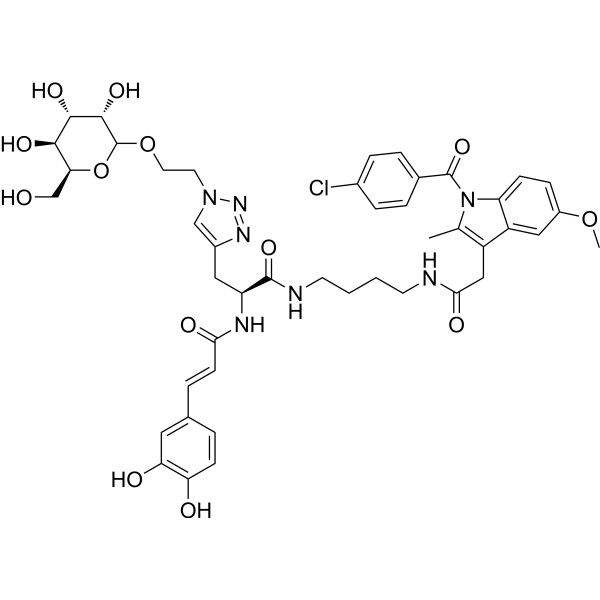 0 ImagesCat. No.: HY-155031MCI alleviates inflammation by macrophage reprogramming via targeting ROS scavenging and COX-2 downregulation. MCI inhibits COX-2 with an IC50 value of 1.23 μM. MCI has significant anti-inflammatory effects in collagen-induced arthritis (CIA) models. MCI can be used in research for rheumatoid arthritis (RA).
-
COX-2-IN-59
 0 ImagesCat. No.: HY-179125COX-2-IN-59 is a potent and selective COX-2 inhibitor with an IC50 of 0.052 μM. COX-2-IN-59 exhibits 200-fold selectivity over COX-1 (IC50 = 11.16 μM). COX-2-IN-59 reduces COX-2 levels, induces cell cycle arrest, and triggers apoptosis by increasing Bax expression, decreasing Bcl-2 levels, and activating caspase-3. COX-2-IN-59 can be used for the research of colon cancer.
-
XO/COX/LOX-IN-1
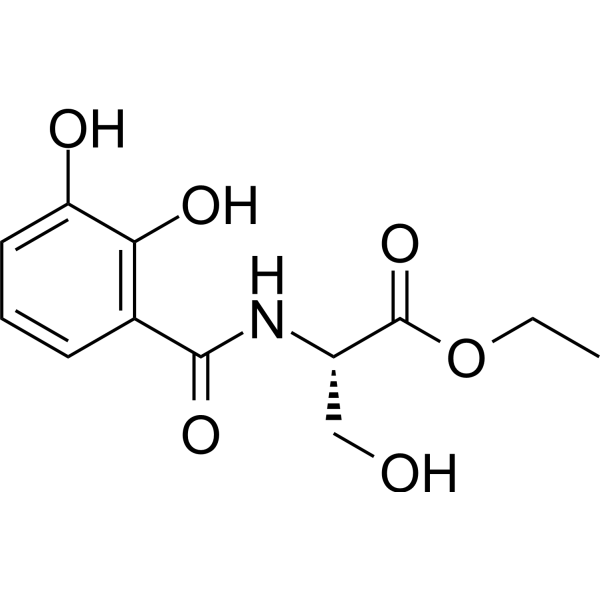
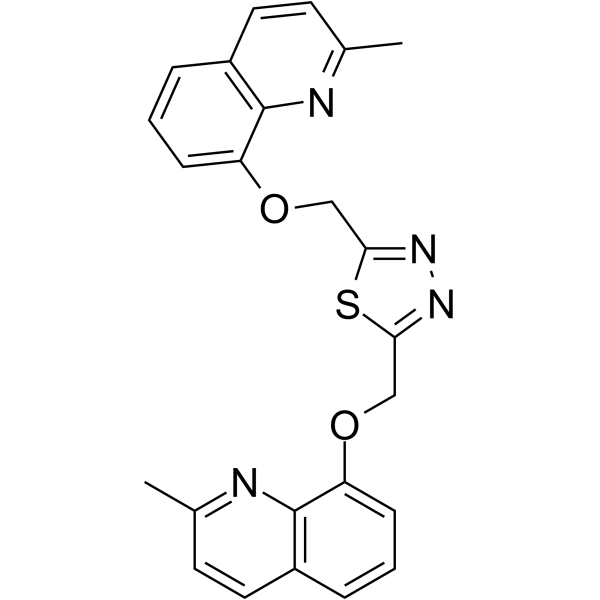 0 ImagesCat. No.: HY-151173CAS No.: 2831329-35-0XO/COX/LOX-IN-1 is a XO/COX/LOX inhibitor with an IC50 of 3.2 μM against rat XO, 10.83 μM against 5-LOX, 12.67 μM against COX-1, and 8.31 μM against COX-2. XO/COX/LOX-IN-1 binds to the active sites of XO, 5-LOX, COX-1 and COX-2, thereby blocking enzyme activities associated with uric acid, leukotriene, prostaglandin synthesis and inflammatory pathways. XO/COX/LOX-IN-1 can be used in the research of hyperuricemia and inflammation.
-
Sampsonione P
 0 ImagesCat. No.: HY-N21705CAS No.: 1562672-80-3Sampsonione P is an RXRα inhibitor isolated and extracted from Hypericum sampsonii. Sampsonione P inhibits RXRα transcriptional activity and can downregulate the expression of pro-inflammatory proteins such as iNOS and COX-2, thereby exerting anti-inflammatory effects. Sampsonione P has antitumor activity. Sampsonione P can be used for research on inflammatory diseases and cancer.

-
Myristinin B/C
 0 ImagesCat. No.: HY-N16865Myristinin B/C is a mixture of Myristinin B and Myristinin C. Myristinin B/C is a flavan compound found in Horsfieldia amygdaline and Myristica cinnamomea. Myristinin B/C can selectively inhibit COX-2 activity with an IC50 of 2.1 μg/mL. Myristinin B/C can reduce the production of prostaglandin E2 (PGE2) and inhibit phospholipase A2 (PLA2), thereby blocking the release of inflammatory mediators. Myristinin B/C can inhibit Candida albicans with an IC50 of 6 μg/mL. Myristinin B/C can be used for the research of inflammation and infection, such as rheumatoid arthritis.
-
DRF-4848
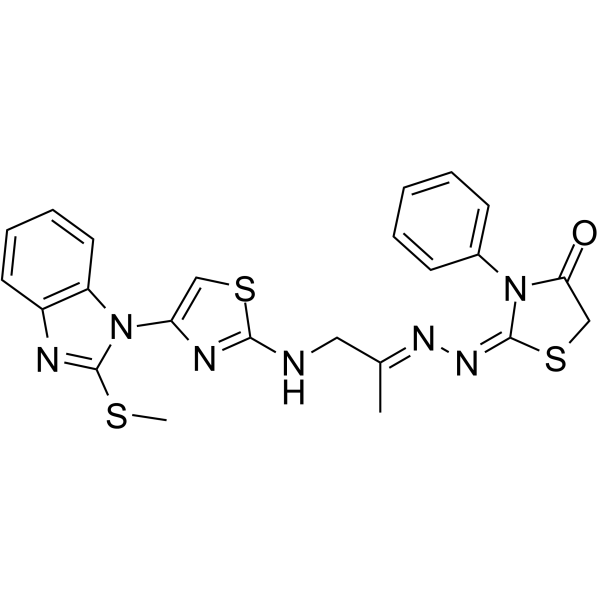
 0 ImagesCat. No.: HY-105290CAS No.: 376588-53-3DRF-4848 is a COX-2 inhibitor. DRF-4848 can be used for the research of inflammation.
-
20(S)-Ginsenoside Rg3 (Standard)
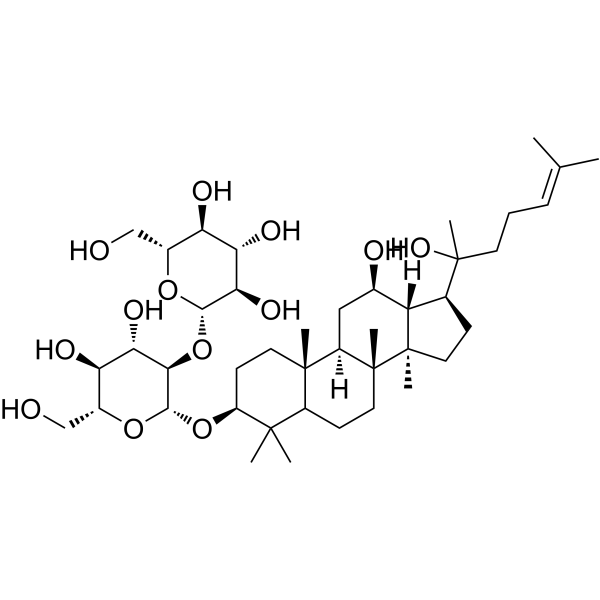 0 ImagesSynonyms: 20(S)-Propanaxadiol(Standard); S-ginsenoside Rg3 (Standard)20(S)-Ginsenoside Rg3 (Standard) is the analytical standard of 20(S)-Ginsenoside Rg3. This product is intended for research and analytical applications. 20(S)-Ginsenoside Rg3 is the main component of Panax ginseng C. A. Meyer. Ginsenoside Rg3 inhibits Na+ and hKv1.4 channel with IC50s of 32.2±4.5 and 32.6±2.2 μM, respectively. 20(S)-Ginsenoside Rg3 also inhibits Aβ levels, NF-κB activity, and COX-2 expression.
-
Anti-inflammatory agent 56
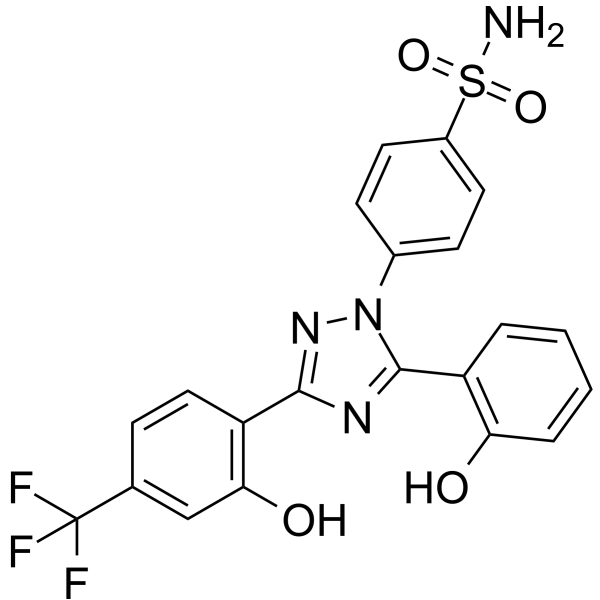 0 ImagesCat. No.: HY-155997CAS No.: 2413127-32-7Anti-inflammatory agent 56 (Compound 9) is a selective COX-2 inhibitor (IC50: 0.54 μM). Anti-inflammatory agent 56 has anti-oxidant and anti-inflammatory effects. Anti-inflammatory agent 56 inhibits oxidative stress induced cell death. Anti-inflammatory agent 56 inhibits oxidative stress and neuroinflammation by inhibiting Keap1, COX-2 and iNOS. Anti-inflammatory agent 56 has low acute toxicity in mice (LD50: 1000 mg/kg).
-
Anti-inflammatory agent 112
 0 ImagesCat. No.: HY-181156Anti-inflammatory agent 112 is an inducible nitric oxide synthase (iNOS) inhibitor, a COX-2 inhibitor, and an anti-inflammatory agent. Anti-inflammatory agent 112 suppresses i-NOS and COX-2 protein expression, reduces nitric oxide, IL-6, and TNF-α production, and attenuates lipopolysaccharide (LPS)-induced inflammatory responses. Anti-inflammatory agent 112 can be used for the research of inflammatory disorders.
-
EGFR/COX-2-IN-2
 0 ImagesCat. No.: HY-178440EGFR/COX-2-IN-2 (Compound 10a) is a dual inhibitor targeting epidermal growth factor receptor (EGFR) (IC50= 6.0 μM) and cyclooxygenase-2 (COX-2) (IC50=50 μM). EGFR/COX-2-IN-2 induces S-phase cell cycle arrest and apoptosis. EGFR/COX-2-IN-2 is promising for research of cancers and inflammation-related diseases.
-
Jusneesiinol
 0 ImagesCat. No.: HY-N21710CAS No.: 216955-78-1Jusneesiinol is a lignan-class prostaglandin synthesis inhibitor and COX-1/COX-2 inhibitor that exerts central analgesic, peripheral analgesic, and antipyretic effects by inhibiting prostaglandin formation, antagonizing prostaglandin receptors, and inhibiting lipid peroxidation. Jusneesiinol can be used in research on pain and fever.
-
Leupeptin hemisulfate (Standard)
 0 ImagesLeupeptin hemisulfate (Standard) is the analytical standard of Leupeptin hemisulfate (HY-18234A ). This product is intended for research and analytical applications. Leupeptin hemisulfate is a broad-spectrum protease inhibitor. By inhibiting the activation of the PTEN/PI3K/Akt/NF-κB/ERK1/2/p38 signaling pathway, Leupeptin hemisulfate significantly reduces LPS-induced NO and ROS production, mitochondrial membrane potential hyperpolarization, phagocytic activity, pro-inflammatory cytokine release, and M1 polarization in mouse peritoneal macrophages, and reverses autophagic flux impairment. It also decreases Concanavalin A (HY-P2149)-induced proliferation index of mouse splenic lymphocytes and the Th1/IL-10 and Th2/IL-10 cytokine ratios, thereby modulating innate and adaptive immune responses. Leupeptin hemisulfate inhibits blood coagulation and tumorigenesis in mouse skin. Leupeptin hemisulfate can be used in research on chronic inflammatory diseases and skin tumorigenesis.
-
HDAC6-IN-71
 0 ImagesCat. No.: HY-180829CAS No.: 3062867-16-4HDAC6-IN-71 (Compound 24) is a HDAC6 inhibitor with IC50 values for HDAC6 and HDAC1 of 13.68 and 443.12 nM respectively. HDAC6-IN-71 effectively inhibits the production of NO by mouse macrophages, with its IC50 being 2.31 μM. HDAC6-IN-71 inhibits the HDAC6-NF-κB signaling pathway, reduces the levels of phosphorylated IκB-α and IKK-α/β, and suppresses the expression of downstream inflammatory proteins COX-2 and iNOS. HDAC6-IN-71 significantly alleviates ulcerative colitis in mice.
-
Triptolidenol
 0 ImagesCat. No.: HY-N11784CAS No.: 99694-86-7Triptolidenol, a traditional Chinese medicine, is an epoxy diterpene lactone that can be isolated from Tripterygium wilfordii. Triptolidenol has anti-inflammatory and anticancer activities. Triptolidenol significantly inhibits tumor cell proliferation and migration, arrests cell cycle arrest at S phase and induces apoptosis by activating the cytochrome c/caspase cascade signaling pathway. Triptolidenol disrupts NF-κB/COX-2 pathway by inhibiting IKKβ at ATP-binding sites. Triptolidenol can be used for chronic nephritis and kidney cancer like clear cell renal cell carcinoma (ccRCC) research.




