



CXCR Inhibitor


-
Anti-Mouse CXCR6 Antibody (Cx6Mab-1)
 0 ImagesCat. No.: HY-P991781Purity: 99.32%
Anti-Mouse CXCR6 Antibody (Cx6Mab-1) is a monoclonal antibody targeting mouse CXC chemokine receptor 6 (mCXCR6), with a KD of 1.7 nM against CHO/mCXCR6-overexpressing cells. Anti-Mouse CXCR6 Antibody (Cx6Mab-1) binds to the N-terminal domain epitope of mCXCR6 containing Ser8, Ala9, Leu10, Tyr11, Gly13 and His14, and interacts with both overexpressed and endogenous forms of the receptor. Anti-Mouse CXCR6 Antibody (Cx6Mab-1) can be used in studies related to mouse lymphoma.

-
Anti-Human/Mouse/Monkey CXCR3 Antibody (9C5)
 0 ImagesCat. No.: HY-P992014Purity: 99.33%
-
Olaptesed pegol sodium scrambled negative control
 0 ImagesCat. No.: HY-160041B
Olaptesed pegol sodium scrambled negative control is the sequence scrambled negative control of Olaptesed pegol sodium.
-
CXCR2-IN-3
 0 ImagesCat. No.: HY-179387
CXCR2-IN-3 is a CXCR2 inhibitor with an IC50 of 11.37 μM. CXCR2-IN-3 mediates CXCR2-Ca2+ signalling inhibition halted autophagic flux, subsequently facilitating ROS-mediated apoptotic cell death. CXCR2-IN-3 suppresses the CXCR2-NLRP3 canonical pathway, suppressing pre-tumorigenic markers. CXCR2-IN-3 causes autophagy-dependent cell death in polyploid giant cancer cells (PGCCs). CXCR2-IN-3 can be used for the research of oral squamous cell carcinoma (OSCC).

-
Corydalmine hydrochloride
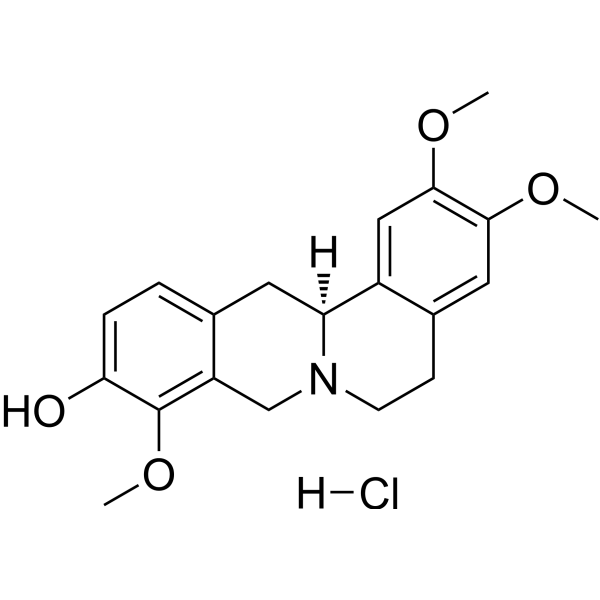 0 ImagesCat. No.: HY-N2573ACAS No.: 2428393-60-4Synonyms: L-Corydalmine hydrochloride; TLZ-16-CL
Corydalmine hydrochloride inhibits spore germination of some plant pathogenic as well as saprophytic fungi. Corydalmine hydrochloride acts as an oral analgesic agent, exhibiting potent analgesic activity. Corydalmine hydrochloride alleviates Vincristine-induced neuropathic pain in mice by inhibiting an NF-κB-dependent CXCL1/CXCR2 signaling pathway.
-
TJX7
 0 ImagesCat. No.: HY-P992476
TJX7 is a recombinant antibody targeting CXCL13/BCA-1/BLC.
-
PROTAC STING Degrader-2
 0 ImagesCat. No.: HY-158036CAS No.: 3023095-61-3
PROTAC STING Degrader-2 is a STING PROTAC degrader with a DC50 of 0.53 μM. PROTAC STING Degrader-2 reduces the phosphorylation levels of TBK1 and IRF3. PROTAC STING Degrader-2 decreases the mRNA expression levels of IFN-β, CXCL10 and TNF-α, and blocks luciferase secretion. PROTAC STING Degrader-2 can be used in the research of autoimmune diseases.
-
AMD 3329 octahydrobromide
 0 ImagesCat. No.: HY-164682CAS No.: 170861-77-5
AMD 3329 octahydrobromide is a potent and selective anti-HIV-1 and HIV-2 compound with activity to inhibit viral replication. AMD 3329 blocks viral invasion by binding to the chemokine receptor CXCR4. AMD 3329 exhibits EC50 values as low as 0.8 and 1.6 nM when inhibiting HIV-1 and HIV-2 replication, showing better antiviral efficacy than AMD3100. AMD 3329 significantly inhibits the binding of specific CXCR4 monoclonal antibodies and the Ca(2+) flux induced by SDF-1alpha. AMD 3329 is also able to effectively interfere with virus-induced syncytium formation, with an EC50 value of 12 nM.

-
DOTA-CXCR4-L
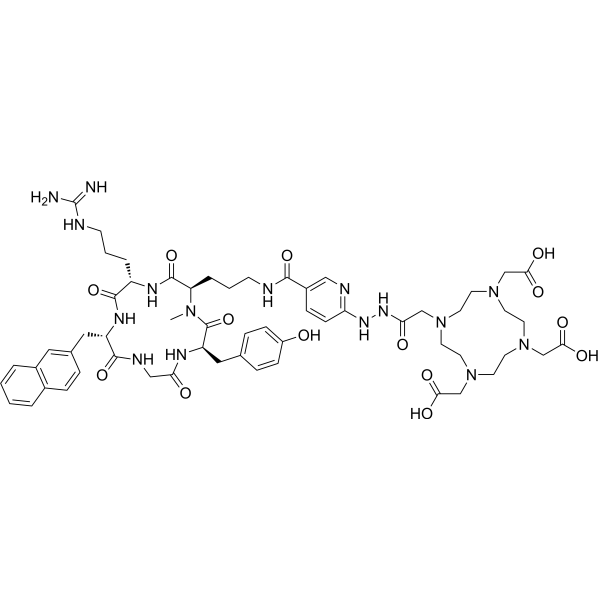 0 ImagesCat. No.: HY-P5297
DOTA-CXCR4-L is a CXCR4 targeting peptide. DOTA-CXCR4-L can be used in the study of cancers, including glioblastoma and triple-negative breast cancer. NODAGA-LM3 can be labeled with [68Ga]/[177Lu] for the synthesis/research of Radionuclide-Drug Conjugates (RDCs).
-
PMX464
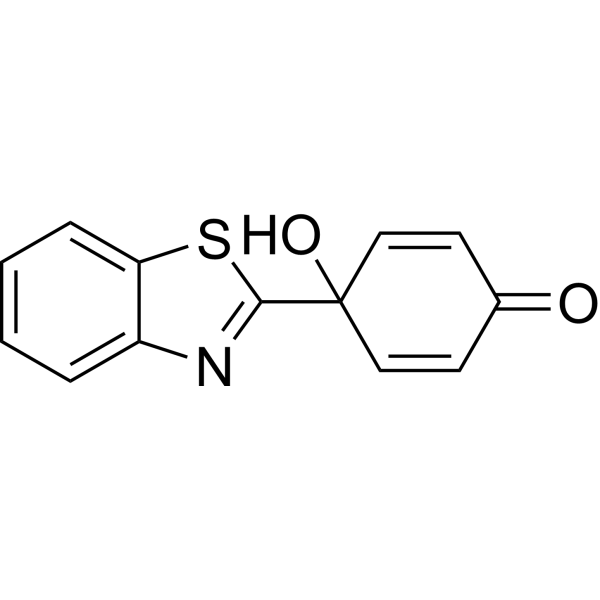 0 ImagesCat. No.: HY-108534CAS No.: 485842-97-5Synonyms: AW 464
PMX464 (AW 464) is a thiol-reactive quinol compound and an inhibitor of the thioredoxin-thioredoxin reductase (Trx/TrxR) system, with an IC50 value of 6.5 μM against TrxR. PMX464 acts by irreversibly inhibiting the thioredoxin (Trx-1) system, blocking HIF-1α transcriptional activation and the NF-κB inflammatory pathway, inducing apoptosis, attenuating platelet function and inhibiting thrombosis, and specifically disrupting the trypanothione antioxidant metabolic network in parasites. PMX464 is used in research concerning malignant tumors (colorectal cancer, breast cancer, renal cancer, and leukemia), pulmonary inflammation, African sleeping sickness, and antithrombotic applications.
-
cGAS-IN-9
 0 ImagesCat. No.: HY-147129CAS No.: 2369750-66-1
cGAS-IN-9 is a cyclic guanosine monophosphate-adenosine monophosphate synthase (cGAS) inhibitor, with IC50 values of 27.5 nM and 5.15 μM against human and murine cGAS, respectively. cGAS-IN-9 shows weak inhibitory activity against human soluble adenylate cyclase, with an IC50 of 26.4 μM. cGAS-IN-9 inhibits dsDNA-induced expression of IFNB1 and CXCL10, as well as activation of the NF-κB pathway, in human immune cells. cGAS-IN-9 can be used in research related to cGAS-dependent inflammatory diseases.
-
BC-1485
 0 ImagesCat. No.: HY-114366CAS No.: 2035085-19-7
BC-1485 is a small molecule inhibitor of Fibrosis-inducing E3 ligase 1 (FIEL1). BC-1485 protects PIAS4 from ubiquitin-mediated degradation. BC-1485 decreases α-SMA, BAL and CXCL1. BC-1485 ameliorates fibrotic lung injury in murine models.
-
Centella asiatica extract
 0 ImagesCat. No.: HY-N18667CAS No.: 84696-21-9
Centella asiatica extract is an orally active herbal extract. Centella asiatica extract scavenges free radicals, increases stratum corneum hydration, improves epidermal barrier function, and reduces skin redness and skin pH. Centella asiatica extract inhibits pro-inflammatory cytokines, suppresses p38 MAPK phosphorylation, reduces mast cell infiltration, and decreases the expression of TNF-α, IL-4, IL-5, IL-6, IL-17, CXCL9, iNOS and COX-2. Centella asiatica extract upregulates the expression of BDNF and downregulates the expression of VGLUT1, and exhibits neuroprotective effects under hypoxic conditions. Centella asiatica extract inhibits pro-inflammatory M1 macrophage polarization and prevents adipose tissue senescence. Centella asiatica extract can be used in studies related to hypoxia-induced neurological dysfunction, atopic dermatitis, and obesity-induced insulin resistance.
-
CXCR4-IN-1
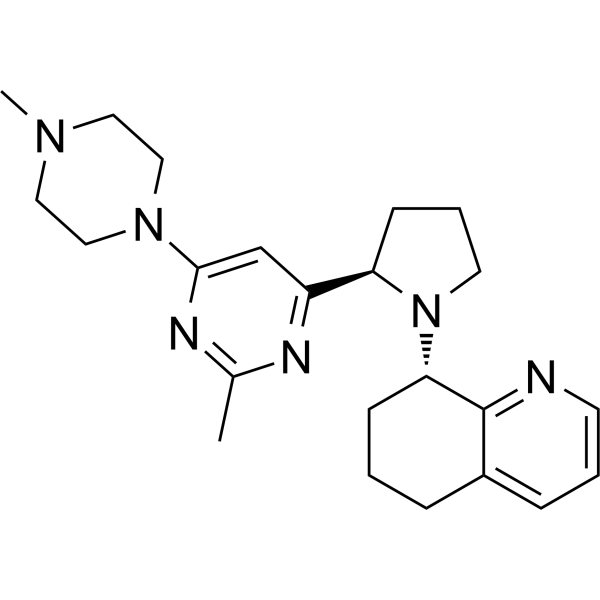 0 ImagesCat. No.: HY-153464CAS No.: 2304750-48-7
CXCR4-IN-1 (Example C5) is a CXCR4 inhibitor (IC50: 20 nM). CXCR4-IN-1 can be used for research of cancer, HIV, diabetic retinopathy, inflammation, etc.



